

Contents 30
Overview
Cape Verde is an archipelago of ten volcanic islands off Senegal, about six hours' flight from Paris or London. Sal and Boa Vista bring beaches and winter sun, Santo Antão and Fogo hiking and a volcano, Santiago and São Vicente history and music: on a first trip, pair a beach island with a mountain island.
Cape Verde has ten islands, nine of them inhabited, set in the Atlantic some 500 km off the coast of Senegal. A former Portuguese colony, independent since 1975, it speaks Portuguese and Cape Verdean Creole and lives to the rhythm of morna, the music Cesária Évora took around the world. For European travellers, it is one of the closest sunny destinations in winter. The islands run on UTC−1, one hour behind London in winter (GMT) and two hours behind in summer.
The islands are very different from one another, and choosing between them is your first decision. Sal and Boa Vista, flat and desert-like, have the big beaches, the resort hotels and the kitesurfing. Santo Antão is a mountain island of green valleys and the best place in the country for hiking. Fogo is all about its 2,829 m volcano and the inhabited caldera at its foot. Santiago is home to the capital, Praia, and to Cidade Velha, the country's first UNESCO World Heritage Site. São Vicente means Mindelo, with its music bars and its carnival. Maio, Brava and São Nicolau are quieter and harder to reach, so they fall outside the scope of a first trip.
This guide compares the islands, explains which combinations work with inter-island flights and ferries, and covers the 12 places not to miss, from the Santa Maria pier to the crater of Pico do Fogo. It also covers the budget, the best season and the entry requirements, including the mandatory EASE pre-registration.
If you're still weighing up several winter-sun destinations, our selection of where to go in January compares Cape Verde with other options a few hours from Europe, and our comparison Canary Islands or Madeira in winter covers the two neighbouring archipelagos on the European side.
12 places to take with you
In the guide's order, ready for Google Maps or your GPS.
Book the activities from this guide
Our picks for Cape Verde, well rated and free to cancel.
-
Book this activity
Sal island tour in a day
environ 35 à 45 € par personne, transport et guide inclus
-
Book this activity
Quad biking through the Viana Desert to the Cabo Santa Maria wreck
environ 90 € par quad, guide inclus
-
Book this activity
Hike from the Cova crater to the Paúl valley
environ 65 € par personne, guide et transfert inclus
Affiliate links: Travel Advice earns a commission if you book, at no extra cost to you. Learn more

Fontainhas (Santo Antão)
The village appears suddenly around a bend in the path: a handful of colourful houses perched on a ridge, above a terraced ravine dropping down to the ocean.
Fontainhas is a hamlet on the north coast of Santo Antão, a few kilometres from Ponta do Sol. For a long time it could only be reached on foot, and it has become the most photographed view on the island.
You get there on the cobbled path that leaves Ponta do Sol and winds along the cliff side: about an hour's walk each way, with ocean views at every turn. If you have the energy, carry on to Corvo and Cruzinha, on one of the finest coastal paths in the country.
Less famous than the Paúl valley, it's still the place that sums up Santo Antão best in a single morning's walk.
The path is narrow and has no railings in places: skip it if you suffer from vertigo or when it rains.

Cidade Velha
At the end of a cobbled lane, the black pebble beach of Cidade Velha is lined with the fishermen's painted boats, facing the white stone pillory that has stood on the square since the 16th century.
Founded by the Portuguese around 1462 as Ribeira Grande, it was the first European colonial town in the tropics and a hub of the Atlantic slave trade. The historic centre has been a UNESCO World Heritage Site since 2009, the first in Cape Verde to be listed.
Walk up Rua Banana, one of the oldest colonial streets in Africa, visit the ruins of the cathedral and the church of Nossa Senhora do Rosário, then climb to Fort São Filipe for the view over the bay. Allow half a day.
This is where you understand the country's history, its mixed heritage and the weight of slavery, better than in any museum in Praia.
Come in the morning, before the heat, and finish with grilled fish in one of the small seafront restaurants.

Pico do Fogo and Chã das Caldeiras
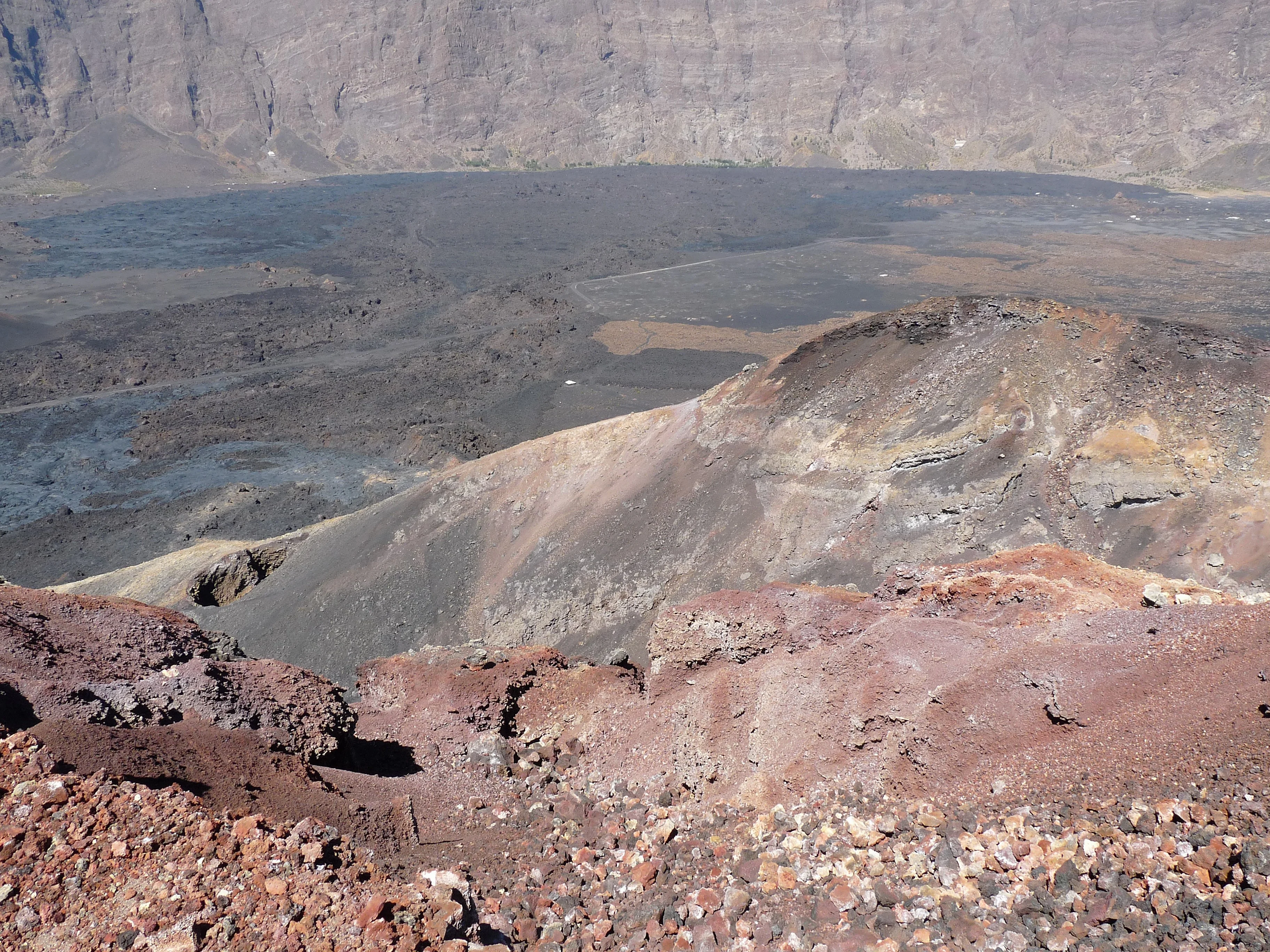
Inside the caldera, everything is black, grey and ochre: frozen lava flows, vines planted in the ash, and above them the perfect cone of Pico do Fogo filling the sky.
The volcano rises to 2,829 m, the highest point in Cape Verde. Its last eruption, from November 2014 to February 2015, buried much of the villages of Portela and Bangaeira, on the floor of the Chã das Caldeiras caldera; the residents have since come back to tend their vines and rebuild.
The climb up the cone is done with a guide, starting from the caldera at around 1,700 m: three to four hours of steep ascent, then a fast descent sliding down through the ash. If you're less sporty, settle for Pico Pequeno, the 2014 crater, and a local wine tasting.
It's the most spectacular landscape in the archipelago, and one of the few inhabited calderas you can explore on foot.
A guide costs about €35 to €40 per person; bring ankle-high boots, gaiters if you have them, and at least two litres of water.

Santo Antão valleys (Paúl, Cova, Ribeira Grande)
Once you cross the pass, the contrast is striking: Santo Antão's southern slopes are dry and rocky, while the northern side spills over with sugar cane, banana and mango trees clinging to dizzying terraces.
The westernmost island of the archipelago, Santo Antão owes its greenery to the trade winds that hit its peaks. Its deep valleys, Paúl, Ribeira Grande and Ribeira da Torre, are linked by a network of cobbled paths that locals once used to reach the coast.
The classic hike starts at the Cova crater, an old volcano now farmed, and heads down the Paúl valley to the sea: about three to five hours, almost all downhill, with plunging views at every bend. Along the way, stop to taste grogue at a family distillery.
This is the island that breaks the image of Cape Verde as pure desert, and the best hiking destination in the country.
Don't go down in thick mist: the path runs along sheer drops.

Santa Maria (Sal)
In Santa Maria, the morning starts on the pier: fishermen land tuna and wahoo there and cut them up on the spot, watched by the first swimmers of the day.
Once a salt workers' village and now the country's main beach resort, Santa Maria stretches along the south of Sal on a beach of golden sand several kilometres long, sheltered from the trade winds and lapped by turquoise water.
Days are spent swimming, at kitesurf and windsurf schools, diving and on boat trips, and evenings in the bars and restaurants of the pedestrian streets. You can walk around the centre in an hour.
It's the easiest base for a first beach holiday: direct flights to Sal, plenty of places to stay and tours to the rest of the island.
The beaches west of the pier are calmer; to the east, the wind picks up and the kitesurfers take over.

Mindelo (São Vicente)
In Mindelo, music spills out of the bars as soon as night falls: a guitar, a cavaquinho, a voice singing morna, and the street joining in on the chorus.
A British coaling port in the 19th century, Mindelo became the cultural capital of Cape Verde and the hometown of Cesária Évora, the "barefoot diva". Morna, the melancholy music she carried around the world, has been on UNESCO's list of Intangible Cultural Heritage since 2019.
Wander through the colonial centre with its pastel façades, around Praça Nova and the municipal market, follow the bay to the replica of Lisbon's Belém Tower, then end the evening in a live music bar. The carnival, in February, is the most famous in the country.
It's the liveliest town in the archipelago, and the obligatory stop before the ferry to Santo Antão.
On a clear day, head up Monte Verde, the highest point on São Vicente, for the view over the bay and Santo Antão.

Boa Vista beaches (Santa Mónica, Chaves)
On Santa Mónica beach, you can walk for an hour without meeting anyone: golden sand as far as the eye can see, dunes inland and the Atlantic rolling in.
Boa Vista, the country's third-largest island, is almost entirely fringed with beaches. Santa Mónica, in the south-west, runs for about twenty kilometres; Chaves beach, near Sal Rei, is backed by white dunes. The island is also one of the Atlantic's major nesting sites for loggerhead turtles.
Reach the southern beaches by 4x4 or on a tour, walk, swim when the sea allows and, in summer, watch the turtles nest at night with an approved guide. Allow a day to cover the southern beaches.
This is the island for wide open spaces and peace and quiet, while Sal is livelier.
For the turtles (July to October), always go with an approved guide; approaching them on your own on the nesting beaches is prohibited.

Pedra de Lume salt flats
At the bottom of the crater, the water is so salty that you float effortlessly, lying back as if on a mattress, between white salt pans and the ochre slopes of the volcano.
The Pedra de Lume salt flats fill the crater of an old volcano on Sal's east coast. Their salt made the island's fortune and gave it its name (sal means salt): it was exported in the 19th and early 20th centuries, notably to Africa, and you can still see the pylons of the cableway that carried it down to the port.
You enter through a tunnel cut into the crater wall, swim in the brine pools, rinse off under the showers and finish at the little harbour of Pedra de Lume. Allow one to one and a half hours on site.
It's the most unusual experience on Sal, and an easy stop between Santa Maria and the north coast.
There's an entry fee of a few euros; bring a towel and sandals, as the bottom of the pools is rough.

Buracona and the Blue Eye (Olho Azul)
At Buracona, waves crash against black volcanic rock, then, in a nearby crack, the midday sun lights up a pool of almost unreal blue: the Olho Azul, the "Blue Eye".
On Sal's north-west coast, lava has formed a jagged platform of natural pools and sea caves. The Olho Azul is a cavity where light enters through an underwater opening, creating an intense blue glow when the sun is high.
Swim in the natural pool when the sea is calm, then queue at the edge of the crack to see the Blue Eye. The stop lasts about an hour and is often combined with Pedra de Lume and the lemon sharks of Shark Bay.
It's the most spectacular landscape on Sal, an otherwise flat and desert-like island.
Don't swim in the natural pool in heavy swell, as the waves surge in violently.

Tarrafal (Santiago)
After two hours on the road through Santiago's mountains, the bay of Tarrafal comes into view: a beach of pale sand, coconut palms, fishing boats and the calmest water on the island.
This fishing village in the north of Santiago is the favourite beach escape for people from Praia. Its name is also linked to the former Chão Bom prison camp, opened under the Portuguese dictatorship and now turned into a Museum of Resistance.
Swim, snorkel in the nearby coves, watch the fishermen come back in the late afternoon and visit the camp museum, a few kilometres away. The drive from Praia crosses the Serra Malagueta and the market town of Assomada.
It's the best beach on Santiago, and far quieter than those on Sal.
If you pass through on a Wednesday or Saturday, stop at the Assomada market, one of the liveliest on the island.

The Plateau, Praia
Perched on a headland above the port, the Plateau has kept its grid of streets, its colourful colonial façades and its shady pedestrian street, where you can sip a coffee and watch the capital go by.
Praia, the capital of Cape Verde on the island of Santiago, is the country's largest city. The Plateau is its historic and administrative centre, with the presidential palace, the church of Nossa Senhora da Graça and Alexandre Albuquerque square.
You can walk around the Plateau in an hour or two, head down to the noisy, colourful Sucupira market, then visit the ethnographic museum. Praia is mainly a stopover on the way to Cidade Velha and Tarrafal.
This is where you see everyday Cape Verde, far from the resorts of Sal.
Save Sucupira for the morning, when the market is at its busiest.

Viana Desert (Boa Vista)
A few kilometres from Sal Rei, the landscape changes completely: golden sand dunes, a few acacias, and the feeling that you've landed in a corner of the Sahara in the middle of the Atlantic.
The Viana Desert covers part of north-west Boa Vista. Its sand is carried by winds from Africa, some 500 km to the east, giving the island a Saharan look found nowhere else in the archipelago.
Explore it on foot at sunrise or sunset, or by quad bike and 4x4 on tours that often combine the dunes with the wreck of the Cabo Santa Maria, which ran aground on the north coast in 1968.
It's the landscape that sets Boa Vista apart from Sal, its more built-up neighbour.
If you go by quad, choose an operator that sticks to the authorised tracks so the dune vegetation isn't damaged.
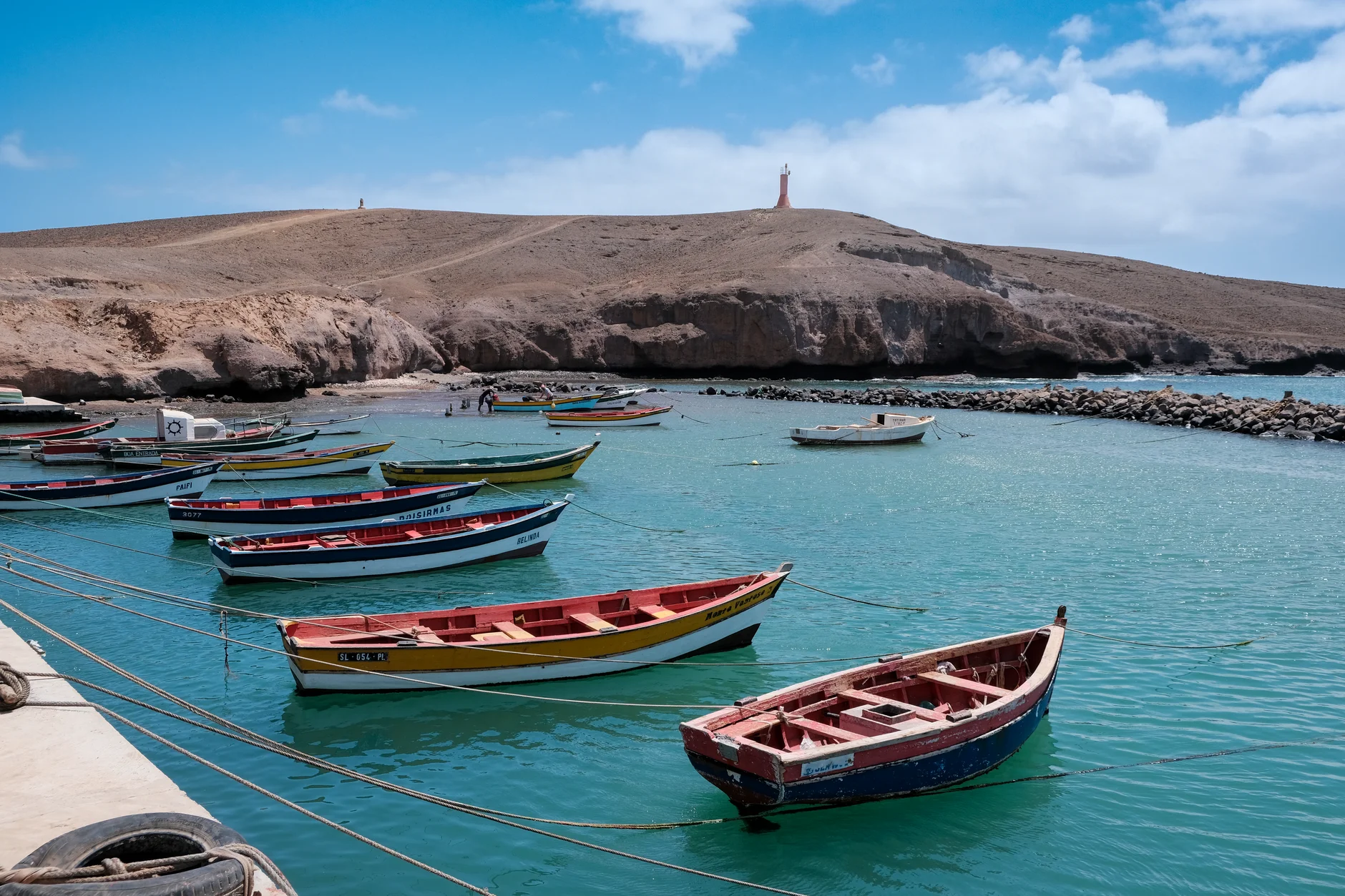
Sal island tour in a day
Leave Santa Maria in the morning, stop in Espargos and Palmeira, then swim in the Pedra de Lume salt flats, visit Buracona's Blue Eye just as the sun lights it up and drop by the lemon sharks of Shark Bay. The highlight: floating effortlessly in the salt crater.
Suitable for everyone, families included; bring swimwear, a towel, sunscreen and a little cash for entry fees if they're not included. Book the day before in high season.
- environ 6 h, prise en charge à l'hôtel comprise
- environ 35 à 45 € par personne, transport et guide inclus
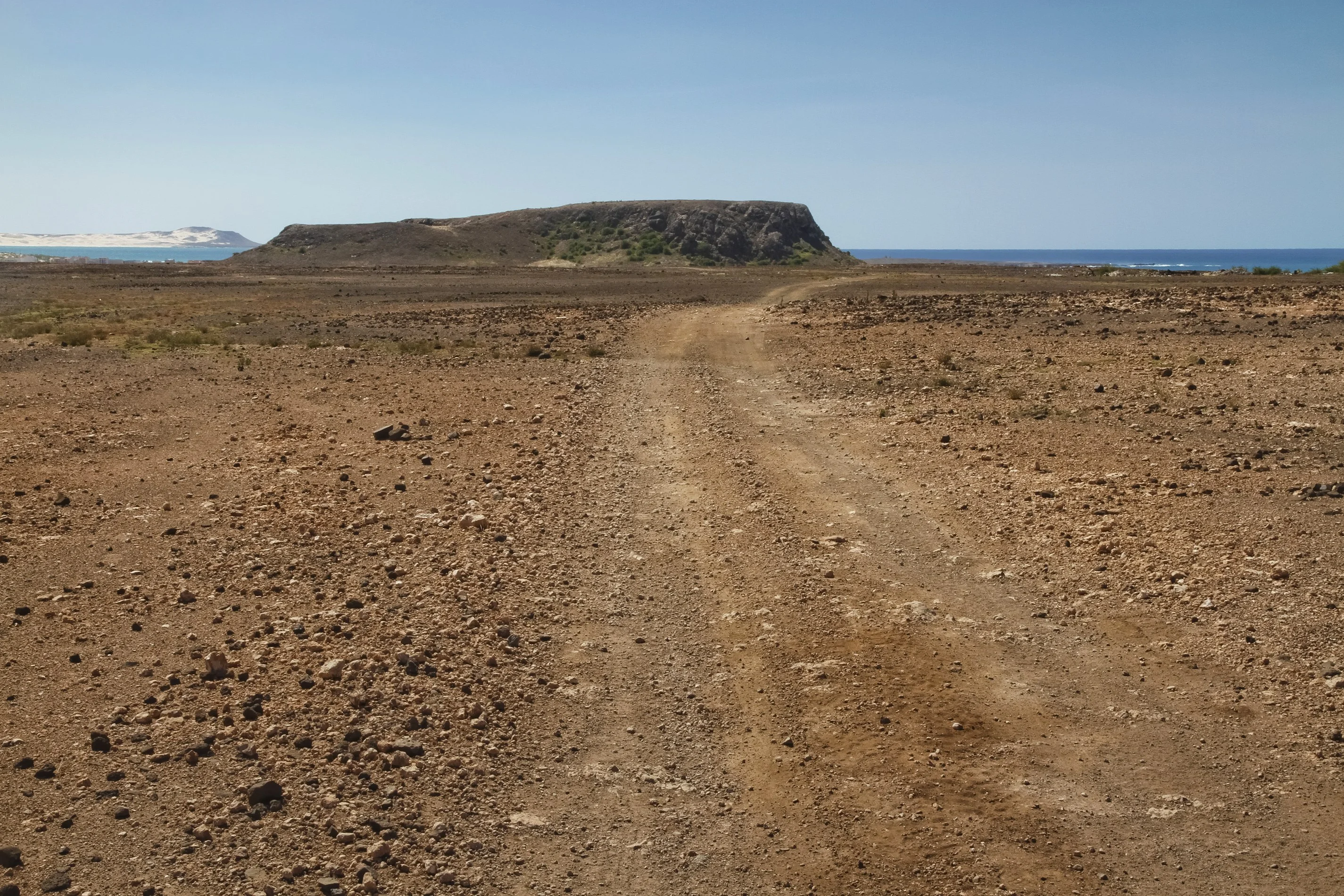
Quad biking through the Viana Desert to the Cabo Santa Maria wreck
A briefing in Sal Rei, then sandy tracks towards the north of Boa Vista: across the dunes of the Viana Desert, a stop at the rusty wreck of the Cabo Santa Maria, stranded on the beach since 1968, and back through the villages of the interior.
The driver needs a driving licence, and passengers can ride along; wear sunglasses and a scarf against the sand. Avoid the hottest hours.
- 2 h de quad
- environ 90 € par quad, guide inclus
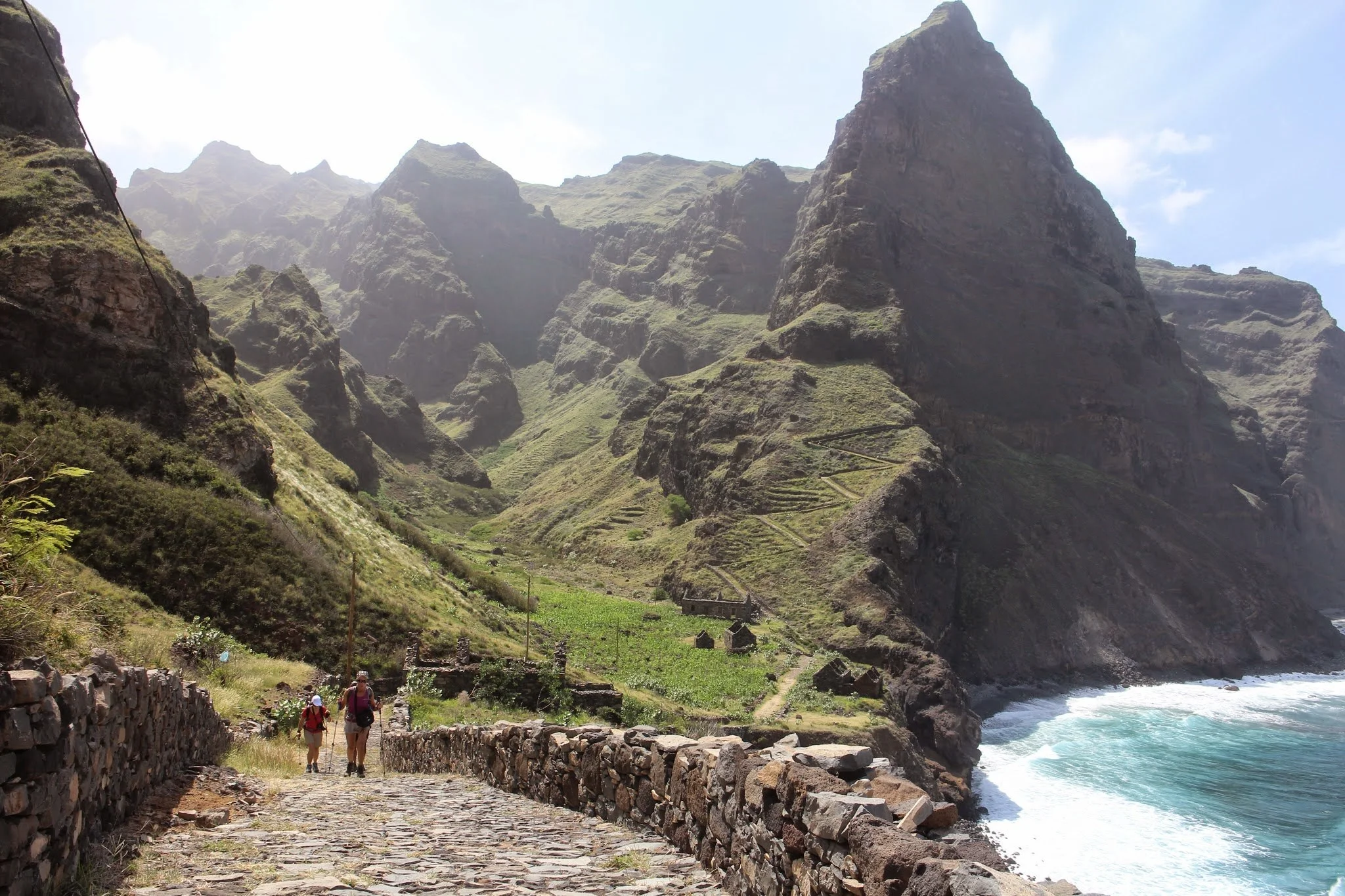
Hike from the Cova crater to the Paúl valley
A transfer from Porto Novo to the Cova crater, farmed at the bottom like a garden, then a walk down a cobbled path into the Paúl valley: sugar-cane terraces, banana trees, hilltop villages and a stop at a grogue distillery. The highlight: the viewpoint on the crater rim, as the valley opens up a thousand metres below.
Moderate level, almost all downhill but hard on the knees; hiking boots, water and a windproof jacket are essential. Take the 8 am ferry from Mindelo.
- environ 5 h de marche, transferts compris
- environ 65 € par personne, guide et transfert inclus
Climbing Pico do Fogo
Set off at dawn from Chã das Caldeiras with a local guide, climb steeply over the cinders to the crater rim at 2,829 m, then make a spectacular descent sliding through the ash. The highlight: walking around the crater, with the caldera, the 2014 lava flows and the ocean below.
Only for walkers in good physical shape; ankle-high boots, gloves, water and a windproof jacket are a must. Sleep in a guesthouse in the caldera the night before.
- une journée, dont 3 à 4 h de montée
- environ 45 € par personne, guide inclus
Kitesurfing taster in Santa Maria
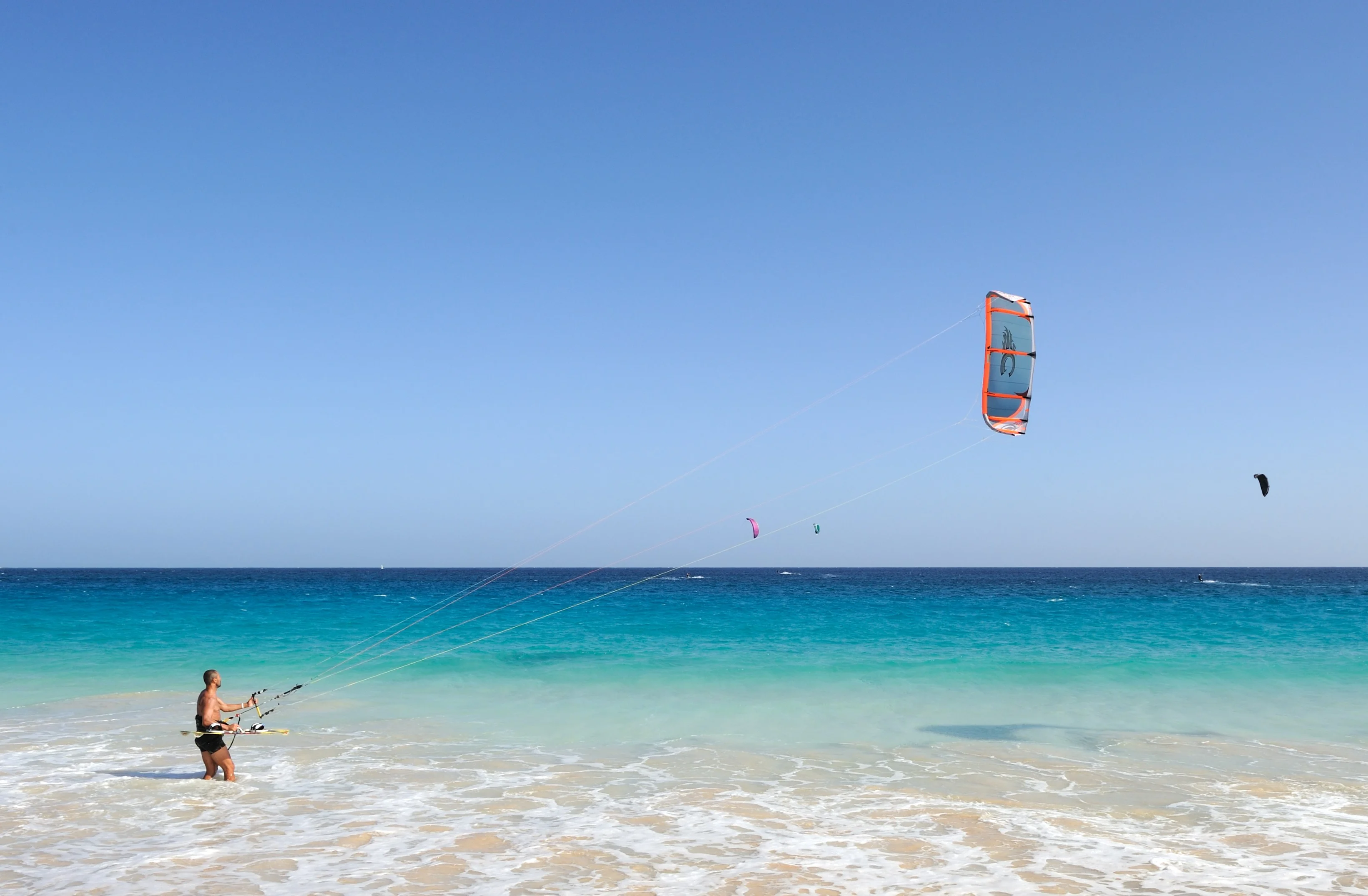
A first lesson on the beach to understand the wind and fly the kite, then into the water, in the shallows, pulled along by the kite before you try to stand up on the board. The highlight: your first metres gliding over turquoise water.
Open from teenage years to anyone comfortable in the water; expect several sessions before you can ride on your own. The Santa Maria schools provide wetsuits and helmets; the best season is December to April.
- 2 à 3 h par séance
- environ 80 à 100 € la séance, matériel et moniteur inclus
Getting there
You reach Cape Verde by air in about six hours from Paris or London, on a direct winter flight or via Lisbon. Four airports take international flights: Sal, Boa Vista, Praia (Santiago) and São Vicente.
Cape Verde has four international airports: Sal (Amílcar Cabral, near Espargos), Boa Vista (Aristides Pereira), Praia on Santiago (Nelson Mandela) and São Vicente (Cesária Évora, near Mindelo). From France or the UK, expect about six hours on a direct flight.
Direct flights depend on the season: Transavia links Paris-Orly with Praia, and direct scheduled flights or tour-operator charters serve Sal and Boa Vista in winter, from France as well as from the UK. Check the current year's schedules before you build your itinerary, as they change often. Otherwise, TAP and Cabo Verde Airlines fly via Lisbon, with a stopover that stretches the journey to ten hours or more.
Your arrival airport shapes the whole trip. For a beach holiday, land on Sal or Boa Vista. For hiking, aim for São Vicente: the ferry to Santo Antão leaves from Mindelo. To combine history and the volcano, Praia is the best gateway, with domestic flights to Fogo. An open-jaw ticket (arriving on one island, leaving from another) saves you from backtracking.
On arrival, taxis wait outside every terminal; on Sal, Santa Maria is about twenty minutes from the airport. A transfer booked in advance saves you from haggling after an overnight flight.
Getting around
Between islands, you travel by plane (Bestfly domestic flights) or ferry (CV Interilhas), with frequent delays: keep a spare day before your flight home. On each island, aluguers, shared minibuses, are the cheapest way to get around.
Between the islands, you have two options. Domestic flights, run by Bestfly, link Sal, Boa Vista, Santiago, São Vicente and Fogo; they're fast but expensive and often rescheduled. Ferries run by CV Interilhas serve most islands; the most useful route for travellers links Mindelo (São Vicente) and Porto Novo (Santo Antão) in about an hour, several times a day. Santo Antão has no working airport, so you can only get there by ferry.
Delays, cancellations and timetable changes are part of travelling in Cape Verde. Book domestic flights ahead, buy ferry tickets a few days in advance in high season, and never schedule an inter-island trip the day before your international flight: one spare day is the minimum.
On each island, aluguers (shared Hiace minibuses or pick-ups) leave from the main squares when they're full and cost a few hundred escudos per ride. Agree on taxi fares before you get in. Car hire is mostly available on Sal, Boa Vista and Santiago; on Boa Vista, part of the island is only reachable by 4x4 or quad bike. People drive on the right.
On Santo Antão and Fogo, the easiest way to reach trailheads such as the Cova crater or Chã das Caldeiras is to hire a driver or join an organised tour.
What to do
People come to Cape Verde for the beaches of Sal and Boa Vista, hiking in Santo Antão's valleys, climbing Pico do Fogo, the old town of Cidade Velha and the music of Mindelo. Kitesurfing, quad biking in the Viana Desert and turtle watching round it off.
Each island has its speciality, and the best trips combine two or three. Sal: Santa Maria beach, the salt lake of Pedra de Lume where you float as in the Dead Sea, the blue pool of Buracona and kitesurfing. Boa Vista: the empty beaches of Santa Mónica and Chaves, the dunes of the Viana Desert, the wreck of the Cabo Santa Maria and, in season, nesting turtles.
Santo Antão is best explored on foot, from the walk down the Cova crater into the Paúl valley to the coastal path from Ponta do Sol to Fontainhas. Fogo means climbing Pico do Fogo, 2,829 m, with a guide, and a night in the Chã das Caldeiras caldera, where locals grow vines and coffee.
For culture, Cidade Velha, on Santiago, tells five centuries of colonial history and the slave trade, and Mindelo keeps morna alive in its bars, especially at weekends. The 12 places and 5 activities below are ranked by how much they bring to a first trip.
Food
Cape Verde's national dish is cachupa, a slow-cooked stew of corn, beans and meat or fish. You'll also eat plenty of grilled fish and lobster, and taste grogue, the sugar-cane spirit of Santo Antão.
Cachupa is the dish every Cape Verdean claims as their own: corn, beans, cassava or sweet potato, and meat or fish, simmered for hours. The "rica" version is the most generous; the next day it's fried up again for breakfast with an egg, as cachupa guisada.
On the coast, grilled fish (tuna, wahoo, grouper) and lobster dominate the menus, usually served with rice, chips and vegetables. Small local restaurants serve a dish of the day for much less than the seafront places in Santa Maria.
For drinks, grogue, a sugar-cane spirit distilled mainly on Santo Antão, is drunk neat or as ponche, sweetened with cane honey. Fogo produces volcanic wine in Chã das Caldeiras, coffee and a well-known goat's cheese. The local beer is Strela.
Tap water often comes from desalination plants: drink bottled water, especially outside the big hotels.
Itineraries
With one week, stick to one or two nearby islands, such as Sal then Boa Vista, or São Vicente then Santo Antão. With two weeks, combine a beach island, Santo Antão for hiking, and Santiago or Fogo for history and the volcano.
One week: beach and desert (Sal + Boa Vista)
Four nights in Santa Maria: beach, an island tour with Pedra de Lume and Buracona, a kitesurfing taster. Fly or take the boat to Boa Vista for three nights: Santa Mónica beach, the Viana Desert by quad bike, the wreck of the Cabo Santa Maria. The simplest itinerary, with no ferry constraints.
One week: hiking and music (São Vicente + Santo Antão)
Arrive in Mindelo and spend two nights enjoying the town and its morna bars. Take the ferry to Porto Novo, then four nights on Santo Antão: the walk from Cova down to the Paúl valley, the coastal path from Ponta do Sol to Fontainhas, the Ribeira Grande valley. Head back to Mindelo the day before your flight.
Two weeks: the grand tour
Four nights on Sal for the beach, a flight to São Vicente, two nights in Mindelo, four nights of hiking on Santo Antão, back to Mindelo, then a flight to Praia: Cidade Velha and Tarrafal in three nights. With one or two extra days, add Fogo and a night in Chã das Caldeiras to climb the volcano.
Whatever you choose, keep a buffer night on the island your international flight leaves from. For more winter-sun ideas, see our selection of where to go in January.
Climate & seasons
When to go to Cape Verde?
Monthly averages over the past 5 years (Open-Meteo).
Best months
- January
- February
- March
- April
- May
- June
- July
- August
- September
- October
- November
- December
| Jan | Feb | Mar | Apr | May | Jun | Jul | Aug | Sep | Oct | Nov | Dec | |
|---|---|---|---|---|---|---|---|---|---|---|---|---|
| Our take | ||||||||||||
| Weather | ||||||||||||
| High | 23° | 23° | 22° | 23° | 23° | 24° | 25° | 27° | 27° | 27° | 26° | 24° |
| Rain (mm) | 1 | 11 | 0 | 1 | 0 | 1 | 3 | 57 | 63 | 12 | 10 | 7 |
| Beach | Beach June | Beach July | Beach August | Beach September | Beach October | Beach November | Beach December | |||||
| Hiking & nature | Hiking & nature January | Hiking & nature February | Hiking & nature March | Hiking & nature April | Hiking & nature May | Hiking & nature June | Hiking & nature July | Hiking & nature November | Hiking & nature December |
What to do by season (autumn)
-
Beach
Warm air and water, little rain.
-
Hiking & nature
Mild temperatures, stable conditions.
When to go
The best time to visit Cape Verde is November to June: dry weather, around 25 °C in the afternoon in winter and a sea of about 22 to 23 °C. August to October brings the rare rains, humid heat and rougher swell.
Cape Verde's climate is dry and tropical, softened by the trade winds. From November to June, the dry season brings near-constant sunshine, afternoons around 25 °C in January and a sea that drops to about 22 to 23 °C in midwinter: pleasant for swimming, a little cool if you feel the cold. It's the ideal season to escape the European winter.
From December to March, two things can affect your trip. The trade winds blow hard over Sal and Boa Vista, which kitesurfers love but which makes some beaches windy. Dry, dusty haze from the Sahara, the harmattan (bruma seca in Creole), sometimes veils the sky for a few days, mostly on the eastern islands.
From August to October, the rainy season brings short but sometimes heavy showers, muggier heat and a warmer sea. It's also when the valleys of Santo Antão turn green again. Loggerhead turtles come to nest on the beaches of Boa Vista and Sal in summer, with a peak from August to October.
- Beach and sun: November to May.
- Hiking on Santo Antão and Fogo: November to April, while the heat stays moderate.
- Kitesurfing and windsurfing on Sal: December to April, with steady trade winds.
- Mindelo Carnival: in February, the week before Ash Wednesday.
Budget
Expect about €50 to €75 per person per day on a budget (roughly $60–90 / £45–65), €90 to €120 mid-range and €140 to €200 in a resort, excluding flights. The tourist islands of Sal and Boa Vista are the most expensive.
Cape Verde imports much of what it consumes, which pushes up prices, especially on the tourist islands of Sal and Boa Vista. Santo Antão, Fogo and Santiago are noticeably cheaper. Typical 2026 prices, per person per day, excluding international flights:
- Budget: €50 to €75, about $60–90 / £45–65 (simple guesthouse room at €25-40, aluguers, dishes of the day, hikes without a guide).
- Mid-range: €90 to €120, about $105–140 / £80–105 (boutique hotel, a few tours, seafront restaurants).
- Comfort: €140 to €200, about $160–230 / £120–175 (all-inclusive resort, domestic flights, private tours).
A return flight from France costs about €250 to €650 depending on the season and airline, more over Christmas and the February holidays. Add the airport security tax (TSA), paid during EASE pre-registration (about €31), domestic flights and ferries between islands, and a guide for Pico do Fogo (about €35 to €40 per person).
The currency is the Cape Verdean escudo (CVE), pegged to the euro (about 110 CVE to €1). Euros are accepted in many hotels and agencies on Sal and Boa Vista, but often at a rounded, unfavourable rate: withdraw escudos from ATMs in town.
Work out your budget
Backpacker
350 – €525
50 – €75 per person per day
Mid-range
630 – €840
90 – €120 per person per day
Upscale
980 – €1,400
140 – €200 per person per day
On top of that
- International flights (return) 250 – €650
- Airport security tax (TSA) paid via EASE €31
- Mindelo – Porto Novo ferry (one way, rough estimate) €10
- Guide for the Pico do Fogo climb €40
Extras total €81
On-the-ground estimate, international flights excluded unless stated. Prices vary by season and how early you book. Figures updated on 22/10/2026.
Where to stay
For the beach, stay in Santa Maria (Sal) or in Sal Rei and along the coast of Boa Vista; for hiking, in Ponta do Sol or the Paúl valley on Santo Antão; for local life, in Mindelo. Expect about €25 to €70 a night in a guesthouse and €100 to €180 in a resort.
Santa Maria (Sal) is the most convenient base for a first beach holiday: the town sits on a long stretch of golden sand, with restaurants, kitesurf schools and tour departures. Pick a place within walking distance of the centre rather than an isolated resort if you want to go out in the evening.
Boa Vista is the quieter choice: small guesthouses in Sal Rei, the island's only town, and large all-inclusive hotels set apart on the south and west coasts. It's the wilder of the two islands, but getting around requires a vehicle or organised tours.
In Mindelo (São Vicente), the guesthouses and small hotels of the colonial centre put you close to the music bars and the morning ferry to Santo Antão. On Santo Antão, stay in Ponta do Sol, on the north coast, or in a guesthouse in the Paúl valley, right at the start of the trails.
On Fogo, spend a night in Chã das Caldeiras, inside the caldera, so you can tackle the volcano at dawn; the guesthouses there were rebuilt after the 2014-2015 eruption. On Santiago, Praia works as a stopover and Tarrafal as a beach base in the north.
Typical prices in 2026: €25 to €40 for a simple room in a guesthouse on the less touristy islands, €40 to €70 in a guesthouse on Sal or in Mindelo, €100 to €180 in an all-inclusive resort on Sal or Boa Vista. Book early for Christmas, the February holidays and the Mindelo carnival.
Safety
Cape Verde is one of the safest countries in West Africa for travellers. The main risks are petty crime in Praia and Mindelo, currents on exposed beaches, and mountain hiking without a guide on Fogo.
The archipelago has a reputation for being calm and welcoming. Petty crime (bag snatching, pickpocketing) mostly affects Praia and, to a lesser extent, Mindelo and Santa Maria: don't flash your phone or jewellery, especially at night, and take a taxi rather than walking long distances after dark.
The main danger is the sea. Many beaches exposed to the trade winds have strong waves and currents, particularly on Boa Vista; swim where locals swim and respect the flags.
When hiking, set off early, carry enough water and stay off the ridges of Santo Antão in misty weather. The climb up Pico do Fogo is done with a local guide: the cone is steep and the descent through the ash calls for ankle-high boots.
The French foreign ministry has also flagged a regional measles alert: make sure your vaccinations are up to date and check the official travel advice for your country before you leave.
Formalities
EU citizens and UK travellers don't need a visa for a short tourist stay, but online EASE pre-registration is mandatory at least five days before arrival, along with payment of the airport security tax. Without it, the tax is doubled at the border.
Cape Verde waives visas for European Union citizens on short tourist stays, as long as they register online. UK travellers can also stay up to 30 days without a visa, according to gov.uk; other nationalities should check the rules before booking. EASE pre-registration is done on the official platform ease.gov.cv, at least five days before arrival, and includes payment of the airport security tax (TSA), about €31 per person. Since 1 July 2026, the tax is doubled for travellers who turn up at the border without pre-registering. Children under two are exempt.
Beware of third-party websites that charge several times the official price: the official platform is all you need. Keep your EASE confirmation on your phone or printed out.
A passport is required; make sure it's valid for at least six months after your arrival date, the rule applied by the Cape Verdean authorities according to the UK government. For stays of more than 30 days, check with the consulate. Read the UK Foreign Office travel advice before you leave.
No vaccinations are required when arriving from Europe; a yellow fever certificate is only asked of travellers coming from a country at risk. To stay connected between islands, a local eSIM saves you roaming charges, since Cape Verde is outside EU roaming rules.
Tips
In Cape Verde, keep a spare day before your flight home, do your EASE pre-registration on the official site, withdraw escudos rather than paying in euros, and learn the local motto: "no stress".
- Safety margin: domestic flights and ferries are often delayed or cancelled. Never plan an inter-island trip the day before you fly home.
- EASE on the official site: pre-register on ease.gov.cv, at least five days before arrival; third-party sites charge more.
- Escudos: euros are accepted everywhere on Sal, but at a rounded rate. Withdraw escudos and keep small change for the aluguers.
- One beach island + one mountain island: this combination gives you the best overview of the country in 10 to 14 days.
- The Santo Antão ferry: the sea can be rough between Mindelo and Porto Novo, so come prepared if you get seasick.
- The local pace: "no stress" is the motto printed on T-shirts all over Sal. Service takes its time, and you'll enjoy the trip more if you go with it.
- Wind and sun: the trade winds hide how strong the sun is; wear sunscreen and a hat even when it feels cool.
If your trip also takes you to mainland West Africa, our guide to Dakar and its highlights pairs well with a stay in Cape Verde.
FAQ
For a first trip to Cape Verde, choose Sal or Boa Vista for the beach, Santo Antão for hiking, Santiago for history and Fogo for the volcano; in ten days, one beach island and one mountain island are enough.
Which Cape Verde island should you choose for a first trip?
Sal or Boa Vista for beach and sun without complicated logistics, Santo Antão for hiking, Santiago for the history of Cidade Velha, Fogo for the volcano. In ten days, pair a beach island with a mountain island.
Do you need a visa for Cape Verde?
Not for a short tourist stay if you're an EU citizen, and UK travellers can stay up to 30 days visa-free; other nationalities should check. EASE pre-registration is mandatory at least five days before arrival, with payment of the airport security tax, about €31. Without pre-registration, the tax is doubled on arrival.
When should you go to Cape Verde for winter sun?
From November to May, the weather is dry and sunny, with around 25 °C in the afternoon in January. The sea drops to about 22 to 23 °C in midwinter. The rain falls mostly from August to October.
How do you get from one island to another in Cape Verde?
By domestic flight with Bestfly or by ferry with CV Interilhas. Santo Antão can only be reached by ferry from Mindelo, in about an hour. Delays are common: keep a spare day before your flight home.
How much does a trip to Cape Verde cost?
Expect €50 to €75 a day on a budget (roughly $60–90 / £45–65), €90 to €120 mid-range, plus €250 to €650 for a return flight from France depending on the season.
Can you climb Pico do Fogo without a guide?
The climb up the main cone is done with a local guide, booked in Chã das Caldeiras or through an agency. Expect to pay about €35 to €40 per person and to spend a full day walking.
Which currency should you use in Cape Verde?
The Cape Verdean escudo, pegged to the euro (about 110 CVE to €1). Euros are accepted in tourist areas, but at a rounded rate: withdraw escudos from ATMs.
Sources
The figures in this guide come from the sources below, checked on the publication date.
Leave a comment
Share your thoughts or travel experience. Your email will not be published.