

Contents 22
Overview
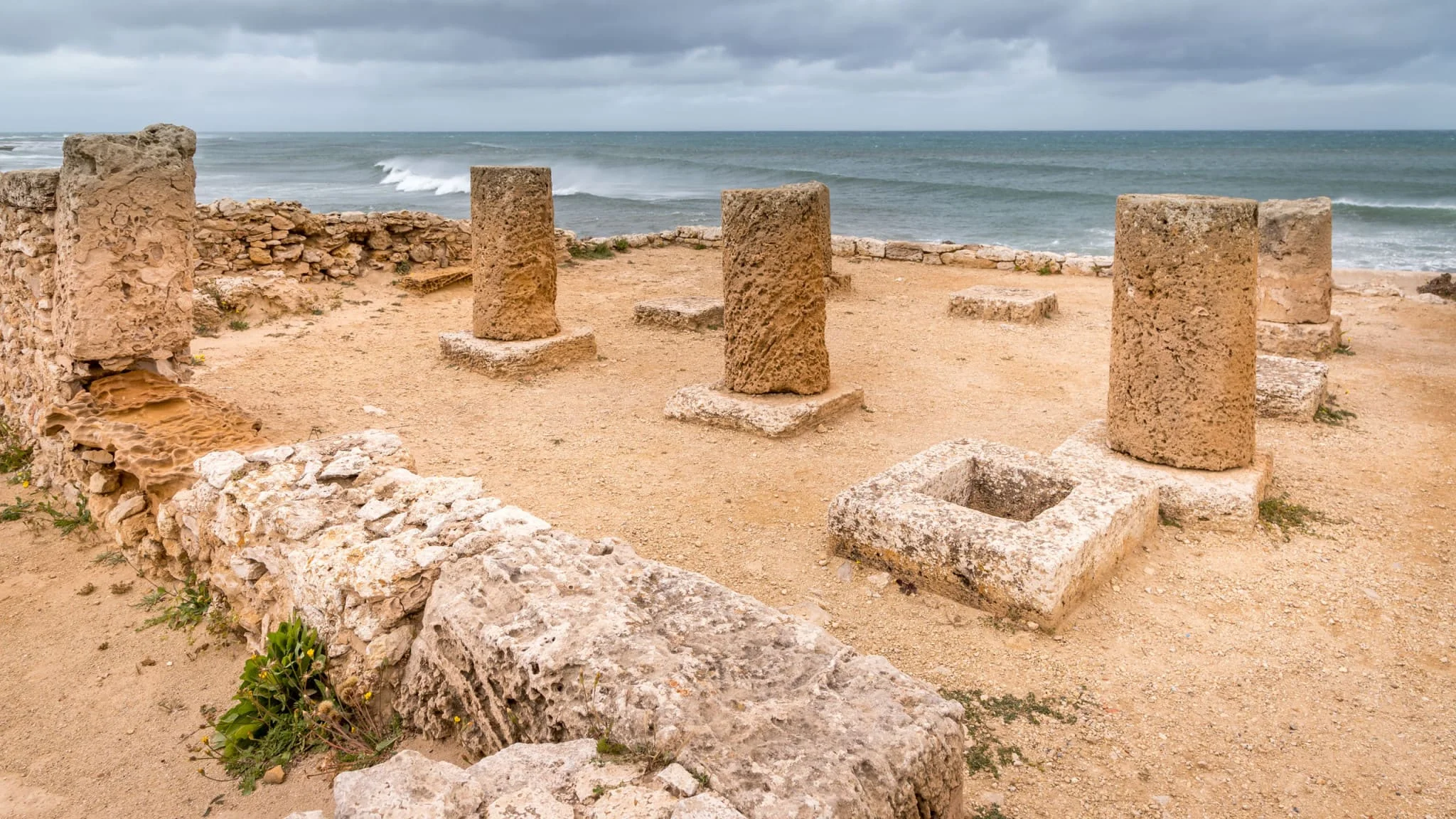
Ghar el Melh is a coastal village in Tunisia's Bizerte governorate, about 50 km from Tunis, known for its Ottoman forts and protected lagoon.
Tucked between a still lagoon and Djebel Nadour, Ghar el Melh is no seaside resort. It is a village of fishers and market gardeners, roughly 50 km north of Tunis, in the Bizerte governorate. You come here for the quiet, the history and the nature, not for package hotels.
The site was once called Rusucmona in antiquity, then Porto Farina. The modern town was developed in 1638 under the dey Usta Mourad. For centuries, the port sheltered a fearsome privateer fleet, guarded by three forts built facing the sea.
Today, Ghar el Melh holds a rare set of distinctions. Its three Ottoman forts joined the ICESCO Islamic World Heritage List in February 2026. The lagoon is a UNESCO-IHP ecohydrology demonstration site since 2023, paired with a Ramsar designation. And its ramli crops, grown on sand watered by the lagoon, have been recognised as Globally Important Agricultural Heritage by the FAO since 2020. It is hard to pack more into a few square kilometres.
6 places to take with you
In the guide's order, ready for Google Maps or your GPS.
Book the activities from this guide
Our picks for Bizerte, well rated and free to cancel.
-
Book this activity
Private day trip: Utica, Bizerte, Cap Angela and Ichkeul
€79 per person, private tour (GetYourGuide price 2026)
Affiliate links: Travel Advice earns a commission if you book, at no extra cost to you. Learn more

Sidi Ali El Mekki Beach and Cape
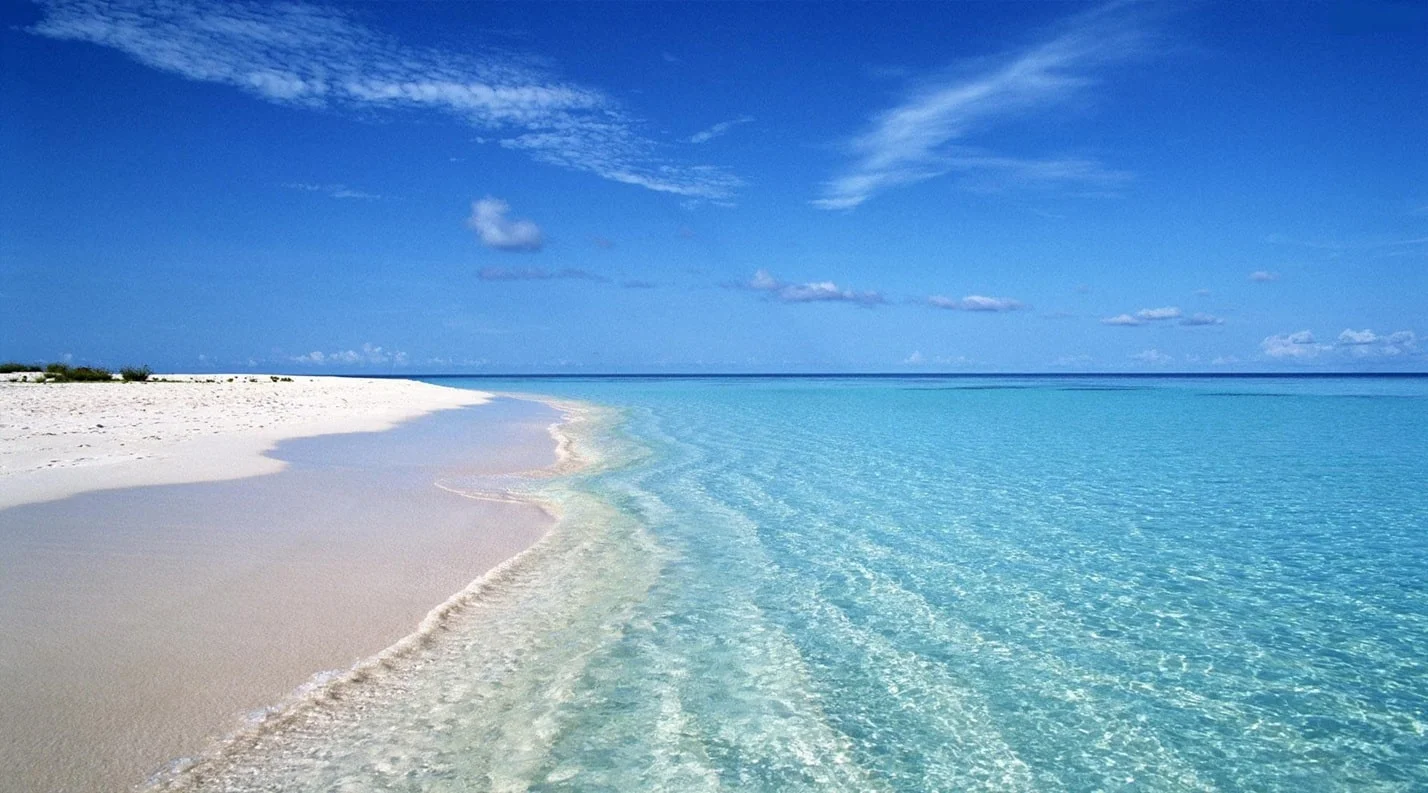
At the end of a bumpy track, golden sand and turquoise water appear like a reward. Cape Sidi Ali El Mekki unrolls one of the wildest beaches in northern Tunisia.
The site takes its name from a local saint's marabout and marks the entrance to the Gulf of Tunis. Long preserved, it remains one of the few large, near-pristine shores on the coast, far from any urban sprawl.
You come here to swim in clear water, walk along the rocky coastline and picnic facing the open sea. A few fishers' huts dot the shore.
This beach is our favourite: few Tunisian beaches still offer such raw nature, set apart from mass tourism.

The three Ottoman forts
Ghar el Melh owes its skyline to its three 17th-century forts, built when the former Porto Farina was the base of the Tunis deys' fleet: Borj el Loutani, overlooking the old port, Borj el Wustani, in the centre, long used as a prison, and Borj Lazaret, the former quarantine fort.
Their architecture blends Ottoman military craft with the influence of the Andalusians who took refuge in the town. In February 2026, ICESCO added these fortifications to the list of heritage of the Islamic world, together with Sidi Bou Said.

The lagoon and the ramli gardens
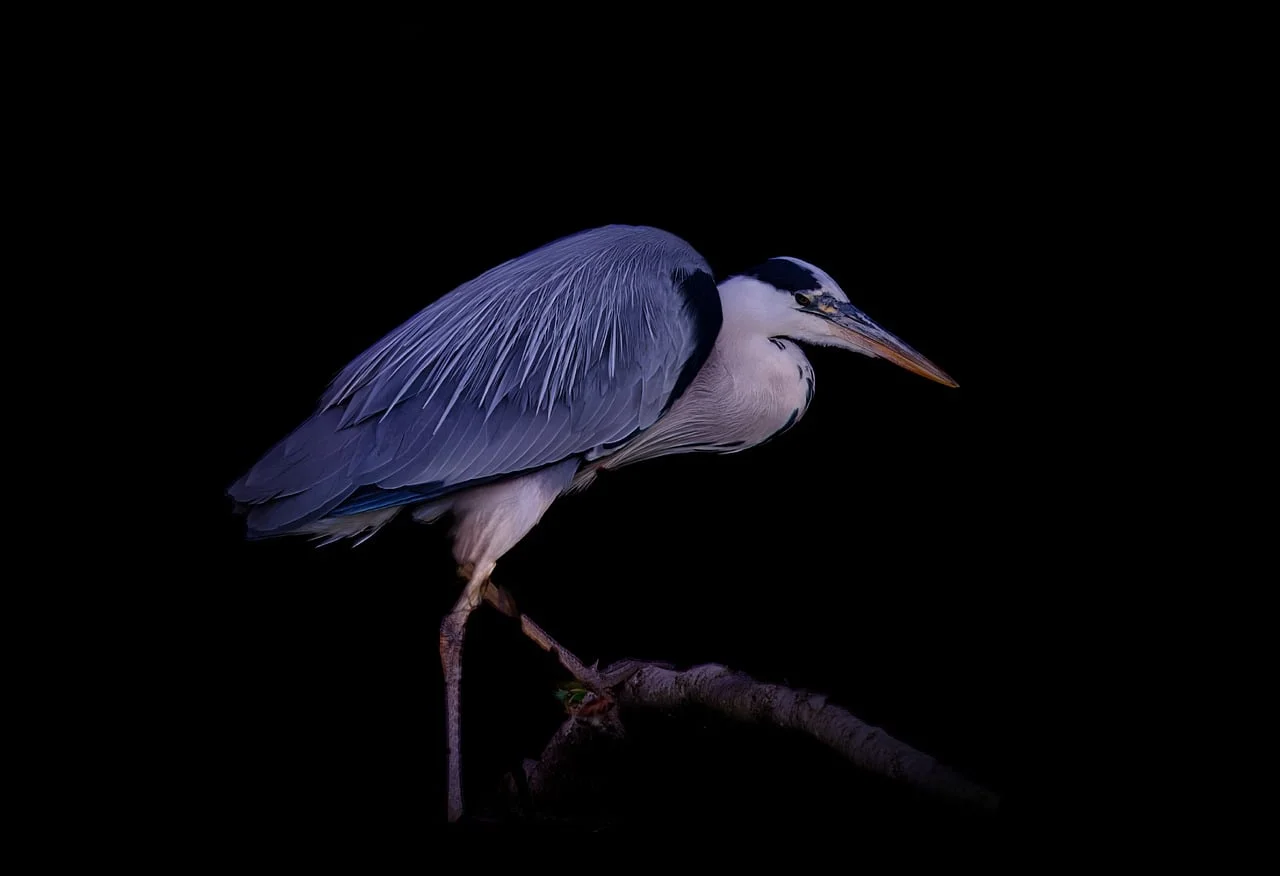
A remnant of the ancient Gulf of Utica, filled in by silt from the Medjerda, the Ghar el Melh lagoon has been a Ramsar site since 2007 together with the Medjerda delta. Flamingos, herons and waders feed here in winter.
On its shores, ramli ("on the sand") farming is a technique inherited from the Andalusians in the 17th century: potatoes, onions or lettuce grow on sandy plots whose roots draw on fresh water pushed up by the tide. The FAO recognised it as Globally Important Agricultural Heritage on 15 June 2020.

Old Fishing Port (Porto Farina)
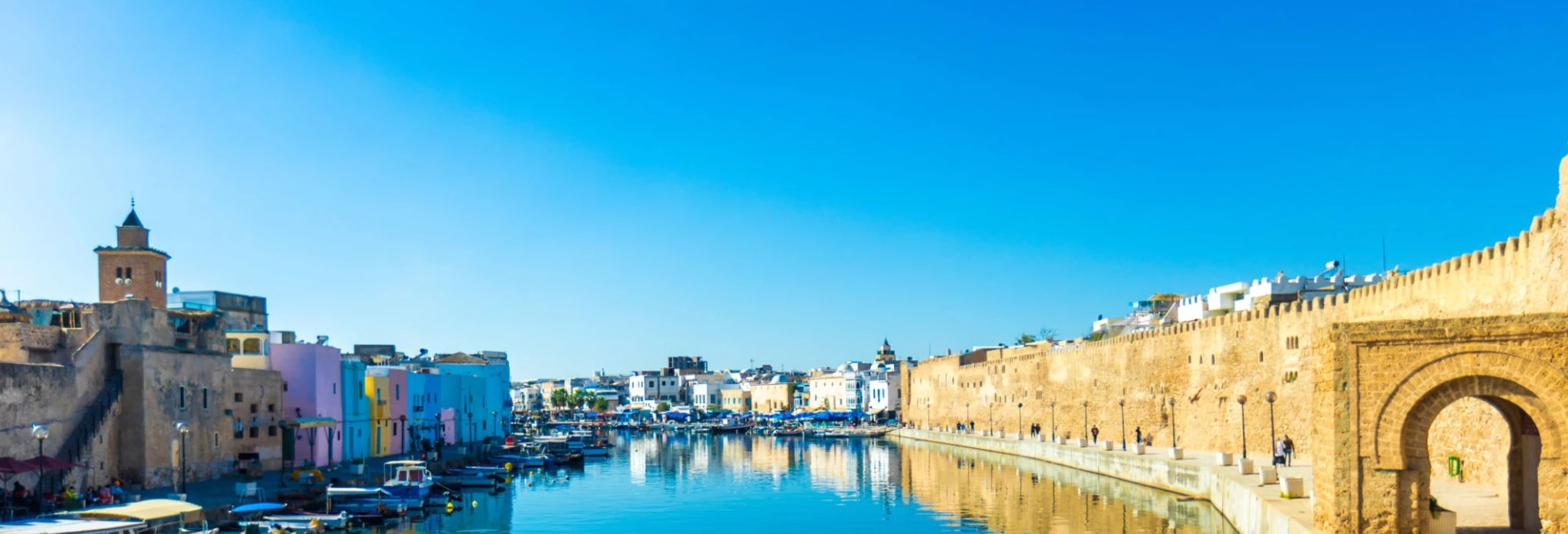
At daybreak, the old port comes alive with engines, drying nets and brightly coloured boats returning from the night. The smell of brine and fresh fish drifts across the quay.
This port, the former Porto Farina, sat at the heart of the corsair power of the city founded in 1638. Its Ottoman forts, listed by ICESCO in 2026, still watch over the basin from the heights.
You can wander freely, watch the catch being unloaded, chat with the sailors and pick your fish for lunch. Photographers love the morning light on the hulls.
It is the best place to capture the living soul of Ghar el Melh, between historical memory and the daily life of the fishers.

Djebel Nadour (Viewpoint)
From up here, everything opens out: the glittering lagoon, the ribbon of beach, the forts in miniature and the sea stretching to the horizon. The wind carries the scents of scrubland and sea.
Djebel Nadour rises above Ghar el Melh and once served as a lookout post, its name evoking surveillance. Its silhouette closes off the village's northern horizon.
You climb up on foot, or by vehicle for part of the way, to enjoy the panorama over the whole bay. It is the best viewpoint for grasping the site's unique geography.
Of all the local lookouts, this one offers the most complete view over the lagoon and its ramli sand gardens.

Raf Raf Beach and Pilau Islet
A long stretch of fine sand, lined with pines and green hills, facing a rock set on the blue water: this is Raf Raf, one of the postcards of northern Tunisia.
Offshore stands Pilau islet (Pilaou), a small uninhabited rock that has become the emblem of the site. The resort has been one of the most popular in the Bizerte region for decades.
You swim, sunbathe, sometimes rent a boat to reach the islet, and have lunch in the seafront restaurants. Access is easier than at Sidi Ali El Mekki.
It is the most practical beach option for combining a swim with heritage during a stay in Ghar el Melh.
Birdwatching on the Ramsar Lagoon
At the edge of the Ramsar-listed lagoon, time slows down. Flamingos, herons and other waterbirds populate this calm stretch of water, recognised by UNESCO-IHP for its ecohydrology. A boat or a local guide takes you close to the banks and the ramli sand gardens, without disturbing the wildlife.
The high point is dawn or dusk, when the birds grow active and the light coats the water in gold. The activity delights nature lovers, photographers and curious families alike. Bring binoculars, water and a hat, and book your guide or boat the day before with a local.
- Half day
- EUR 20-40 with guide/boat
Fresh Fish Lunch at the Port
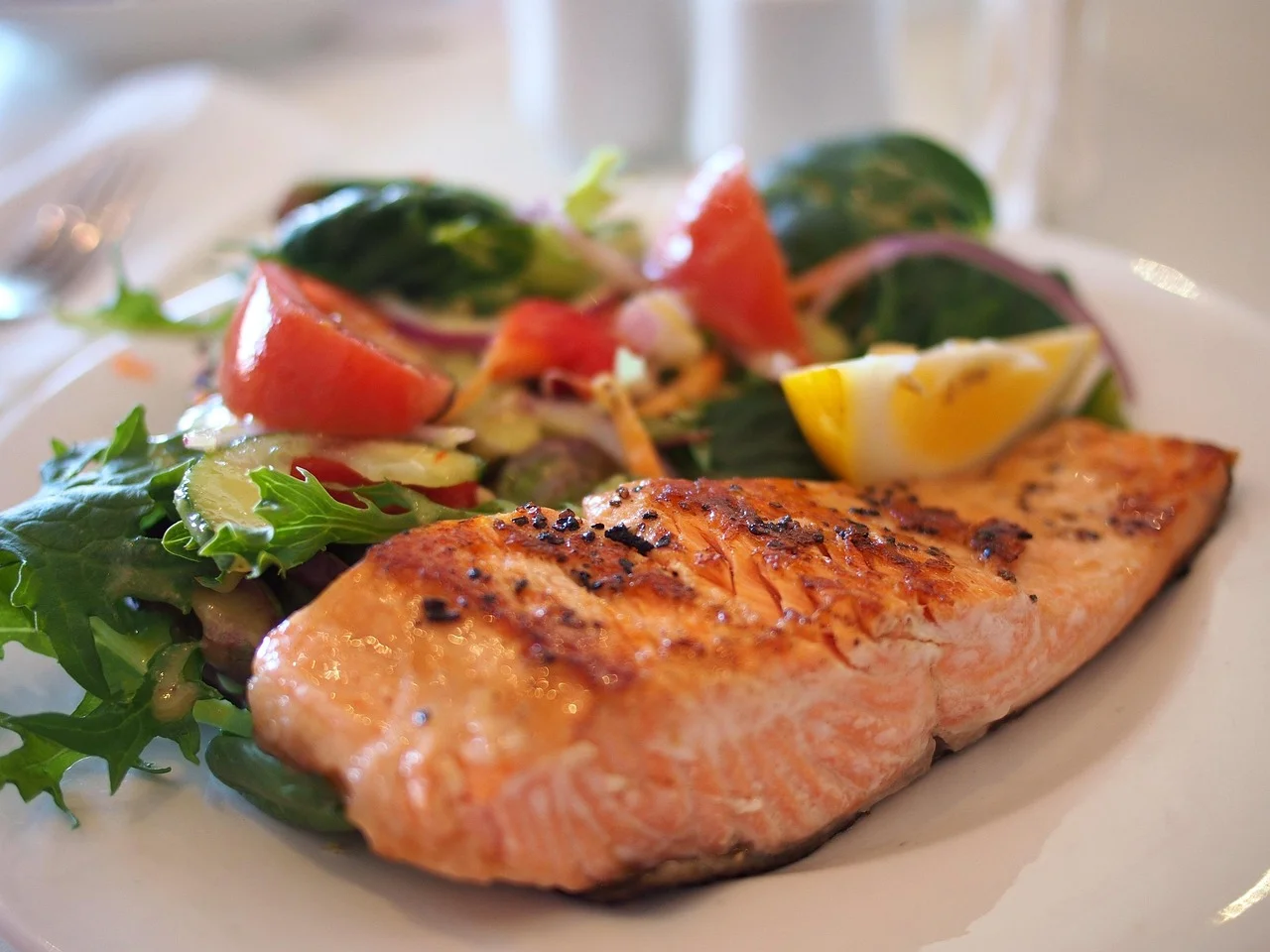
Seated near the port, you pick your fish from the day's catch, then it is simply grilled, dressed with olive oil and lemon. Squid, sea bream, red mullet and a hearty Tunisian complet poisson make up a generous meal, served with salads and homemade harissa.
The high point is that incomparable freshness, just metres from the boats that brought in the catch. The experience appeals as much to food lovers as to travellers curious about local cooking. Come around midday, ask the price by weight before ordering, and let the restaurateur recommend the catch of the day.
- 1 to 2 hrs
- EUR 10-25 per person
Private day trip: Utica, Bizerte, Cap Angela and Ichkeul
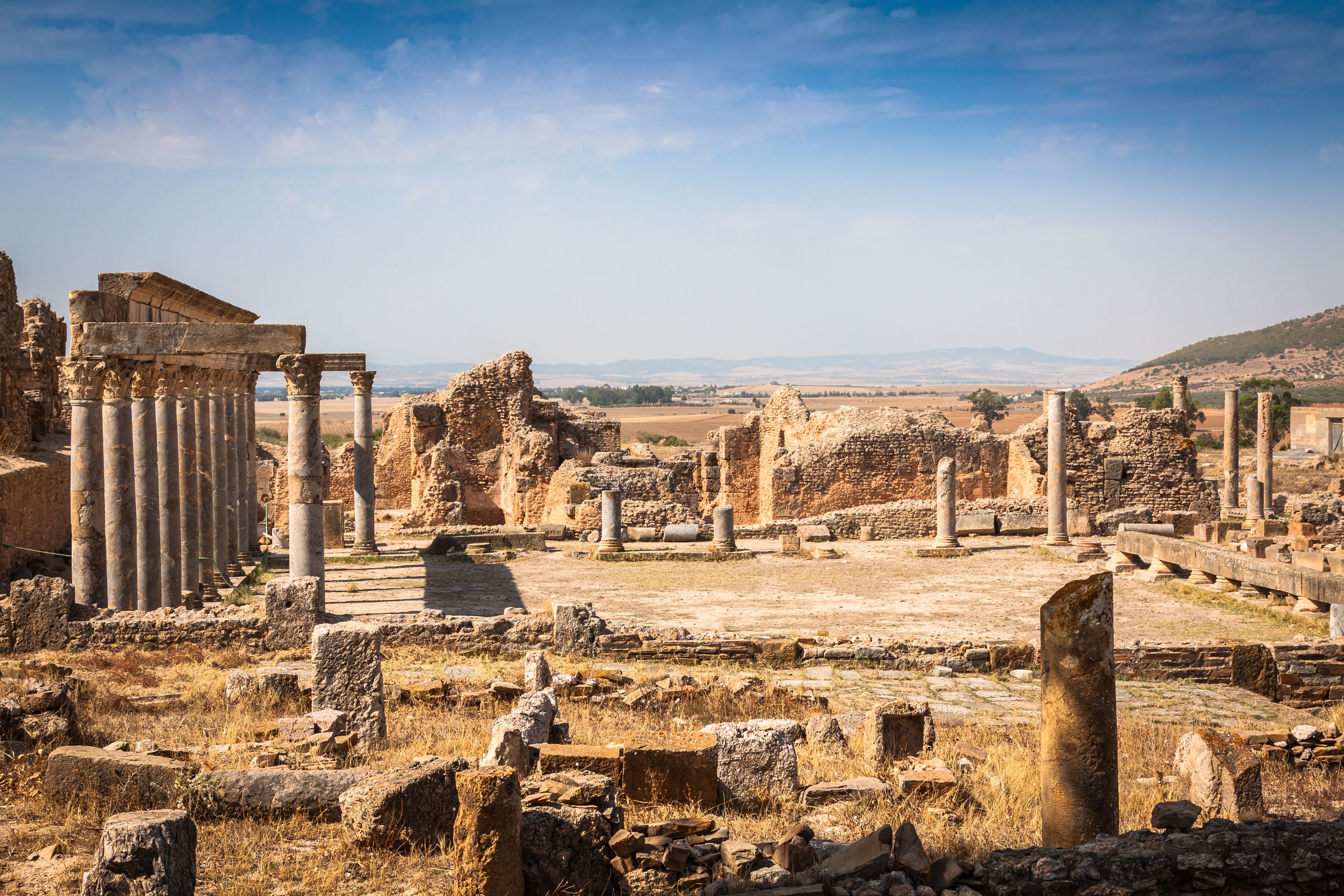
To explore the region further without a car, a day with a driver-guide links Ghar el Melh's neighbouring sights: the Phoenician and Roman ruins of Utica, about fifteen kilometres away, Bizerte's old port, Cap Angela, billed as Africa's northern tip, and UNESCO-listed Lake Ichkeul. The highlight: the tip of Cap Angela, at the end of the cliffs.
The tour is private, with pick-up in the Hammamet and Tunis area, but it does not stop in Ghar el Melh: keep another day for the village. Allow €79 per person on GetYourGuide, with free cancellation.
- 8-9 hrs
- €79 per person, private tour (GetYourGuide price 2026)
Getting there
You reach Ghar el Melh by car from Tunis in about 55 minutes, or by louage (shared taxi); the village has no train station.
The nearest airport is Tunis-Carthage, around 50 km away, roughly 55 minutes by road. It is the natural arrival point for most international travellers.
A car is still the simplest option. Allow about 55 minutes from Tunis and 35 minutes from Bizerte. The road runs past farmland and coastline, and it is a pleasant drive.
Without a car, the louage (shared collective taxi) does the job for a few dinars. These taxis leave once they are full, so build a little flexibility into your timing.
There is no train station in Ghar el Melh. If you want to travel by rail, take the Tunis-Bizerte line, then finish by louage from Bizerte. The ideal solution is still to rent a vehicle so you can explore the surrounding sites at your own pace.
Bizerte is the handiest base for exploring the area: see our Bizerte guide, Tunisia's oldest city and its old port.
Getting around
A car or scooter is recommended; the forts and port are walkable, but the beaches sit several kilometres away.
On the ground, having your own transport is best. A car or a scooter gives you the freedom to string together the village, the lagoon, Djebel Nadour and the nearby beaches without depending on anyone.
The heart of the village is easy to explore on foot. The three forts and the old port sit close together, and you can wander from one to the next with ease. Pack good shoes, as some paths are stony.
To reach Sidi Ali El Mekki beach, you take a slightly bumpy track and often finish on foot. A vehicle with a little ground clearance helps, especially in high season when access at the end of the track sometimes comes with a fee. Without a car, arrange a round-trip louage, or go with a local who knows the area.
What to do
The highlights are the three Ottoman forts, the lagoon with its ramli sand gardens, the old port, and the beaches of Sidi Ali El Mekki and Raf Raf.
The three Ottoman forts are Ghar el Melh's signature. Built in the 17th century to protect the port from rival corsairs, they still command the bay. Listed on the ICESCO Islamic World Heritage List in February 2026, they can be visited on foot and offer superb views over the lagoon and the sea.
The lagoon is the site's other marvel. A Ramsar wetland and recognised by UNESCO-IHP for its ecohydrology, it shelters a rich birdlife. Along its edges, the famous ramli sand gardens grow vegetables on sandy plots irrigated by the freshwater table. The FAO recognised them as Globally Important Agricultural Heritage in 2020. Ask a gardener to explain this one-of-a-kind technique.
Do not miss the old fishing port and its timeless atmosphere. For nature, climb Djebel Nadour for the panorama, then head off for a swim at Sidi Ali El Mekki or Raf Raf, two of the loveliest beaches in the region.
Food
Local cooking revolves around fish and seafood from the port, served in simple, tasty eateries.
In Ghar el Melh, you eat what the sea provides. Fresh fish and seafood landed at the port go straight onto the plate. It is hard to get more local or more straightforward.
The village gargotes and small restaurants serve grilled fish, squid, and sometimes a proper Tunisian complet poisson: fish, rice, méchouia salad, tastira and fries brought together in one generous spread. Prices stay gentle compared with the tourist areas.
Try the Tunisian classics you will find everywhere too: egg brik, salads, homemade harissa and mint tea. The vegetables from the ramli gardens, when in season, add a unique local touch. Ask the fisher or the restaurateur for the catch of the day, as that is often where the best meal hides.
Itineraries
One day is enough for the forts, the port and the lagoon; allow two days to add the beaches and Djebel Nadour.
On a day trip from Tunis or Bizerte, you see the essentials. In the morning, explore the three forts and the old port. In the afternoon, follow the lagoon, watch the birds and have someone explain the ramli sand gardens. A fish lunch at the port rounds off the outing perfectly.
With two days, the trip can breathe. Keep the first day for the village heritage. On the second day, climb Djebel Nadour for the panorama, then treat yourself to a long beach afternoon at Sidi Ali El Mekki or Raf Raf.
A night here or in Raf Raf changes everything: you catch the morning and evening light, the best for photographing the lagoon and the forts. It is also when the village settles back into its quiet rhythm, once the day visitors have gone.
Climate & seasons
When to go to Tunisia?
Monthly averages over the past 5 years (Open-Meteo).
Best months
- January
- February
- March
- April
- May
- June
- August
- September
- October
- November
- December
| Jan | Feb | Mar | Apr | May | Jun | Jul | Aug | Sep | Oct | Nov | Dec | |
|---|---|---|---|---|---|---|---|---|---|---|---|---|
| Our take | ||||||||||||
| Weather | ||||||||||||
| High | 16° | 17° | 18° | 20° | 24° | 30° | 34° | 33° | 31° | 26° | 21° | 18° |
| Rain (mm) | 39 | 44 | 43 | 36 | 76 | 14 | 0 | 6 | 28 | 44 | 43 | 60 |
When to go
May-June and September-October for walks and swimming, November-March for the lagoon's birds; avoid July-August.
Spring and early autumn are perfect for Ghar el Melh. From May to June, then September to October, temperatures stay pleasant. It is also the right time to walk toward Sidi Ali El Mekki without battling the heat.
Avoid July and August if you can. The heat climbs hard, the nearby beaches fill with holidaymakers from Tunis, and the place loses some of its peaceful charm. If you do come in summer, plan your visits for early morning or late afternoon.
Winter, from December to January, stays cool and sometimes wet. It is, however, the best season for waterbirds: from November to March, flamingos and waders winter on the lagoon. Swimming is out and the days are short. Spring remains the best balance of light, nature and quiet.
Budget
Budget around 30 euros per day as a backpacker, 60 euros for mid-range comfort and 110 euros for upscale, accommodation and meals included.
Ghar el Melh is still an affordable destination. In backpacker mode, around 30 euros (about 32 USD / 26 GBP) per person per day covers simple accommodation, gargote meals and local transport. The village suits small budgets well.
For a more comfortable stay, plan on roughly 60 euros (about 65 USD / 51 GBP) per day: a pleasant guesthouse, fish restaurants and a bit of vehicle hire. In upscale mode, expect around 110 euros (about 118 USD / 94 GBP) per day, especially if you stay at a nice hotel in Bizerte.
Keep one important detail in mind: the Tunisian dinar cannot be exported. Change your money on arrival and keep your exchange receipts, as they may be requested to convert any leftover dinars back when you leave. On the ground, carry cash above all, since ATMs and card payments are rare in the village.
Work out your budget
Backpacker
€210
€30 per person per day
Mid-range
€420
€60 per person per day
Upscale
€770
€110 per person per day
On-the-ground estimate, international flights excluded unless stated. Prices vary by season and how early you book. Figures updated on 11/09/2026.
Where to stay
Accommodation stays limited to a few guesthouses; many visitors stay in Bizerte or Raf Raf, or come for the day.
Ghar el Melh is an authentic village, not a hotel destination. The options come down to a handful of guesthouses and rooms with local hosts. That is exactly what makes it charming: here, you sleep in peace, to the rhythm of the village.
Many travellers prefer to base themselves in Bizerte, 35 minutes away, where the choice of hotels is wider. The neighbouring resort of Raf Raf also offers a few seafront options, handy if you want to combine heritage and beach.
Another very common approach is the day trip from Tunis or Bizerte. The forts, the port and the lagoon are easy to see in a few hours. If you really want to feel the soul of the place, try a night here all the same. Book ahead, since rooms are few and fill quickly in spring.
Safety
The Bizerte region is rated heightened vigilance by France Diplomatie, like most of the country; the advised-against zones are very far from Ghar el Melh.
Ghar el Melh and the Bizerte region fall within a heightened vigilance zone according to France Diplomatie. That is the level covering almost all of northern and coastal Tunisia, where the vast majority of people live and travel. Nothing alarming, but normal care is sensible.
The zones genuinely advised against are the Saharan south and the western mountain ranges along the borders. They sit very far from Ghar el Melh, with no bearing on a coastal stay in the north of the country.
As everywhere in Tunisia, the terrorist threat remains present in general terms: avoid gatherings, keep a low profile and follow local guidance. In the village, the mood is calm and welcoming. Watch your belongings on the busy summer beaches, and keep your embassy's contact details handy as a precaution.
Formalities
French citizens need no visa for stays under 90 days; a passport valid at least 3 months at entry is required (ID cards are no longer accepted), with no mandatory vaccine.
Entry into Tunisia is simple. French citizens need no visa for a tourist stay of under 90 days, and other nationalities should check their own requirements before travelling. Since 1 January 2025, all visitors, package tours included, must present a passport valid for at least 3 months at the date of entry: ID cards are no longer accepted. Always confirm the current rules before you go.
On health, no vaccine is mandatory for entry. The universal vaccinations (DTP) and hepatitis A and B are recommended. A measles alert was issued on 13 March 2026, so check that your MMR vaccination is up to date, especially for children.
Check official sources to prepare your trip: the UK travel advice for Tunisia details formalities, health and safety. Carry a copy of your passport and travel insurance, as it always helps if something goes wrong.
Tips
Bring enough cash, water and supplies for the remote beaches, respect the village's calm, and ask locals to approach the ramli sand gardens.
First reflex: carry enough cash. ATMs are rare in the village and many shops do not take cards. Withdraw your dinars in Bizerte or Tunis before you arrive.
For Sidi Ali El Mekki, bring water, supplies, shade and sunscreen. The beach is beautiful but isolated, with few shops. You can easily spend half a day there, so it pays to be well equipped.
Respect the village's calm. Ghar el Melh moves slowly, far from mass tourism, and its residents value that. To get close to the famous ramli gardens, ask the fishers or gardeners politely: many are happy to explain their ramli crops. A smile and a few words of Arabic or French open many doors here.
FAQ
No, Ghar el Melh is not a UNESCO World Heritage site: its forts come under ICESCO, but its lagoon does hold a UNESCO ecohydrology distinction and a Ramsar designation.
Is Ghar el Melh a UNESCO site?
Not in the World Heritage sense, but the site has collected several designations. The three Ottoman forts, built in the 17th century to protect the port from corsairs, appear on the ICESCO Islamic World Heritage List as of February 2026. The lagoon has been a UNESCO-IHP ecohydrology demonstration site since 2023, the first coastal one in Africa and the Mediterranean, and also carries a Ramsar designation. The ramli sand gardens complete the picture, listed by the FAO as Globally Important Agricultural Heritage since 2020.
What are the ramli sand gardens?
They are market-garden plots cultivated on strips of sand at the lagoon's edge, naturally irrigated by a thin layer of freshwater sitting just beneath the surface. This ancestral technique, known as ramli cropping, has been recognised as Globally Important Agricultural Heritage by the FAO since 2020. It grows vegetables where you would expect only sand, and is part of why Ghar el Melh has collected so many international designations. To get close to the plots, ask the fishermen or growers politely on site.
How long do you need to visit Ghar el Melh?
One day is enough for the essentials: the three Ottoman forts and the old port in the morning, the lagoon and its ramli sand gardens in the afternoon, with a fish lunch at the harbour. That is the usual pattern, as a day trip from Tunis or Bizerte. Two days give the stay room to breathe: keep the first for the village heritage, the second for climbing Djebel Nadour and a long afternoon on the beach at Sidi Ali El Mekki or Raf Raf. Staying overnight changes the evening light.
How do you get to Ghar el Melh without a car?
Take a louage, the shared taxi, for a few dinars from Tunis or Bizerte. These taxis leave when they are full, so allow some flexibility in your timing. By train, reach Bizerte from Tunis first, then finish by louage. On the ground a vehicle is still handy for the beaches: the track to Sidi Ali El Mekki is bumpy and often ends on foot. The village core, though, is easily walkable, with the three forts close to one another.
What is the best time to come?
May-June then September-October offer the best climate and few crowds: temperatures stay pleasant, the lagoon fills with migratory birds and the village keeps its calm, which is the whole point of coming. It is also the right moment to walk out to Sidi Ali El Mekki without suffering in the heat. Avoid July and August if you can: the heat climbs sharply and the nearby beaches fill with Tunisians on holiday. Winter, December and January, stays cool and sometimes wet.
Is Ghar el Melh safe for tourists?
Yes, the village is calm and welcoming. The Bizerte region sits in a heightened vigilance zone according to French official advice, the level that covers almost all of northern Tunisia and the coast, where the vast majority of people live and travel: nothing alarming, but normal attention applies. The genuinely advised-against areas are the Saharan south and the western mountain ranges along the borders, far removed from a coastal stay in the north. Bring cash, as ATMs are scarce in the village.
Where can you swim near Ghar el Melh?
Two beaches share the area. Sidi Ali El Mekki, wild and beautiful, has to be earned at the end of a bumpy track that often finishes on foot: bring water, food, shade and sunscreen, as it is isolated with few shops. Raf Raf is easier to reach, with its famous Pilau islet offshore and a few seafront places to stay. Both pair well with a second day in the area, after a first spent on the forts, the old port and the lagoon.
Do French citizens need a visa?
No, no visa is needed for a tourist stay of under 90 days. Since January 2025, however, your passport must be valid for at least 3 months at the date of entry. On health, no vaccination is compulsory, though routine DTP cover plus hepatitis A and B are recommended, and a measles alert was issued on 13 March 2026: check your MMR status, especially for children. Remember too that the Tunisian dinar is non-exportable: change money locally and keep your receipts.
Sources
The figures in this guide come from the sources below, checked on the publication date.
Leave a comment
Share your thoughts or travel experience. Your email will not be published.