

Contents 15
The Bazaruto Archipelago lies off Inhambane Province, in southern Mozambique, about 15 km from the town of Vilankulo. It comprises five islands: Bazaruto (the largest, around 110 km²), Benguerra, Magaruque, Santa Carolina and the small islet of Bangué. The whole area is protected within the Bazaruto Archipelago National Park, created in 1971 as the country's first marine park and co-managed since December 2017 by the NGO African Parks and ANAC, Mozambique's national conservation agency.
Its ecological distinction: the archipelago shelters the last viable dugong population in the western Indian Ocean, estimated at 250-350 animals. Sea turtles, dolphins and manta rays are also found here and, from June to October, migrating humpback whales. On land, Bazaruto Island has dunes rising up to 90 m and freshwater lakes inhabited by Nile crocodiles.
This guide covers the four islands you can visit, Two Mile Reef, three boat outings (a speedboat day trip, dugongs, a dhow at sunset), then access via Vilankulo, the season, entry formalities (eVisa) and safety.
5 places to take with you
In the guide's order, ready for Google Maps or your GPS.
Book the activities from this guide
Our picks for Vilanculos, well rated and free to cancel.
-
Book this activity
Speedboat day trip to Bazaruto and Two Mile Reef
€220 per person, lunch included (GetYourGuide price 2026)
Affiliate links: Travel Advice earns a commission if you book, at no extra cost to you. Learn more

Bazaruto Island
Bazaruto is the largest island in the archipelago (about 110 km²) and gives it its name. Beyond the white-sand beaches, it stands out for its interior: dunes up to 90 m high, among the tallest on any barrier island, and freshwater lakes where Nile crocodiles live and flamingos and pelicans feed.
Land wildlife is discreet: small antelope (suni, red duiker), bushbuck, monkeys and rich birdlife. There are no lions or elephants on the island, despite the "safaris" sometimes advertised. Climbing to the top of a dune is part of most day trips from Vilankulo.
The island is reached by light aircraft (about 15 minutes) or by boat from Vilankulo.

Two Mile Reef
Two Mile Reef is the park's best-known reef: it borders the channel between the south of Bazaruto Island and the north of Benguerra. Drop-offs, coral heads and clear water draw turtles, rays, reef sharks and schools of fish; dugongs are rarely met underwater.
The site suits scuba diving with a dive centre as well as snorkelling, which is done on day trips from Vilankulo. The sea is calmest and visibility best in the dry season, from May to October.

Benguerra Island
Benguerra is the archipelago's second-largest island. It mixes white-sand beaches, lagoons, dunes and untouched vegetation, with a few upscale lodges (including Azura and Kisawa) and fishing villages.
Its northern tip borders the Two Mile Reef channel, the park's best-known reef, making it a handy base for diving and snorkelling. Kayaking, boat trips and sport fishing round out what the lodges offer.
Benguerra is reached by light aircraft (about 15 minutes) or by boat from Vilankulo.

Magaruque Island
Magaruque is a small island close to Vilankulo, fringed with beaches and coral reefs, with a deep channel near the shore: you can snorkel straight off the beach.
The surrounding waters shelter sea turtles, reef fish and sometimes dolphins. The island has few facilities and is mostly visited on a day trip, by boat or dhow from Vilankulo.

Santa Carolina Island
Santa Carolina, nicknamed "Paradise Island", is the archipelago's only rocky island and the only one uninhabited today. It lies between Bazaruto Island and the mainland.
A Portuguese settlement was founded here in 1855; the island later served as a penal colony, then hosted a hotel now in ruins. Its beaches and reefs are explored on a boat trip from Vilankulo or from the neighbouring lodges.
Boat trip in search of dugongs
The archipelago shelters the western Indian Ocean's last viable dugong population, estimated at 250-350 animals, grazing the seagrass beds in the park's shallow waters. Trips run by the lodges and by Vilankulo operators combine looking for dugongs with watching dolphins, turtles and rays. The highlight: a round head breaking the surface above the seagrass.
Sightings are never guaranteed: the animal is shy and the population can sustain only a very small number of human-caused deaths each year. Choose an operator that keeps to the park's distance rules and aim for calm seas, in the dry season (May-October).
- Half day
- Depends on the operator or lodge
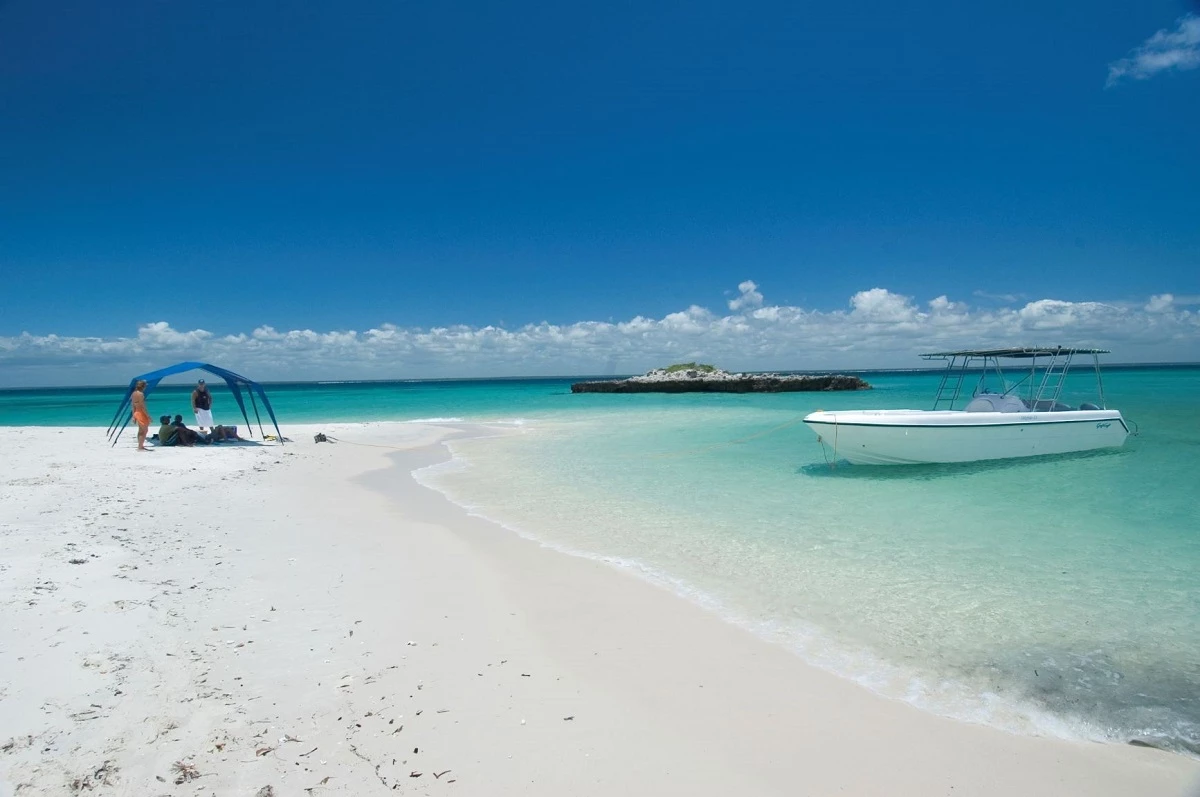
Speedboat day trip to Bazaruto and Two Mile Reef
Departure from the Aguia Negra hotel in Vilankulo, about 1.5 hours by speedboat, then a day between Bazaruto and Benguerra islands: a climb to the top of a dune for the view over the archipelago, guided snorkelling on Two Mile Reef, lunch and time on a secluded beach. The highlight: the panorama from the dune crest over the turquoise sandbanks.
Allow €220 per person on GetYourGuide, meals and soft drinks included, with free cancellation up to 24 hours before; guides speak Portuguese and English. Park conservation fees may be extra: ask when booking. Not suitable for non-swimmers or people prone to seasickness.
- 9 hrs
- €220 per person, lunch included (GetYourGuide price 2026)
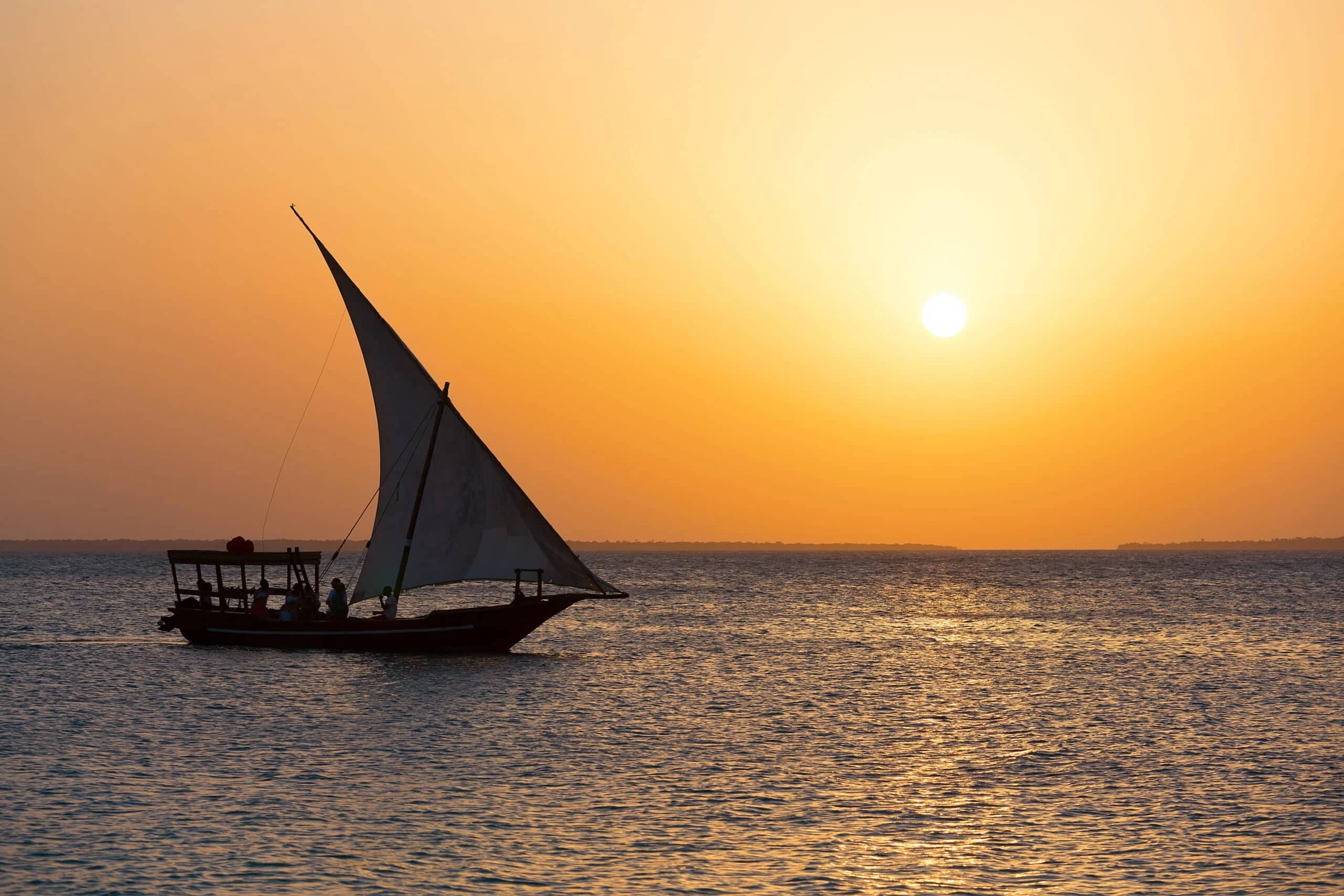
Sunset aboard a dhow
The dhow is the traditional wooden sailing boat of the East African coast, still used by Vilankulo's fishermen. The late-afternoon trip glides past the archipelago's sandbanks and islets, sail filled by the breeze, until sunset. The highlight: the sun sinking behind the mainland as the boat slides over flat water.
The island lodges and several Vilankulo operators run it; ask about the duration and what is included (drinks, snorkelling). Bring a light jacket: the breeze turns cool once the sun has set.
- 2-3 hrs
- Depends on the operator or lodge
Getting there
Fly to Vilankulo (flights from Maputo and a direct flight from Johannesburg, about 2 hrs), then take a boat (30-60 minutes) or light aircraft (about 15 minutes) to the islands.
The gateway is Vilankulo (Vilanculos), on the mainland, linked by domestic flights to Maputo and by a direct flight to Johannesburg (about 2 hrs). From Europe, you usually connect through Johannesburg or Maputo.
From Vilankulo, the islands are reached by boat (30-60 minutes depending on the island, about 1.5 hours by speedboat to the Bazaruto sites) or by light aircraft (around 15 minutes), often arranged by the lodges. Day trips leave from the hotels on Vilankulo's seafront.
What to do
Snorkelling and diving at Two Mile Reef, climbing Bazaruto's dunes, looking for dugongs, a dhow at sunset and trips to Magaruque or Santa Carolina.
Most of the action is at sea. The typical day from Vilankulo combines a boat crossing, a climb up one of Bazaruto's dunes, snorkelling on Two Mile Reef and lunch on a beach. Certified divers go out with the lodge dive centres or those in Vilankulo; others will find reefs reachable from the beach on Magaruque.
For wildlife, dugong and dolphin trips are best on calm seas, and humpback whales pass through from June to October. At the end of the day, a dhow, the coast's wooden sailing boat, glides past the sandbanks until sunset. The islands have no shops or ATMs: everything is arranged from Vilankulo or with your lodge.
Climate & seasons
When to go to Mozambique?
Monthly averages over the past 5 years (Open-Meteo).
Best months
- April
- May
- June
- July
- August
- September
- October
- November
Avoid
- February
| Jan | Feb | Mar | Apr | May | Jun | Jul | Aug | Sep | Oct | Nov | Dec | |
|---|---|---|---|---|---|---|---|---|---|---|---|---|
| Our take | ||||||||||||
| Weather | ||||||||||||
| High | 28° | 28° | 27° | 27° | 25° | 24° | 23° | 24° | 25° | 25° | 26° | 28° |
| Rain (mm) | 137 | 235 | 120 | 62 | 62 | 54 | 36 | 30 | 10 | 31 | 50 | 109 |
| Beach | Beach April | Beach May | Beach June | Beach September | Beach October | Beach November | ||||||
| Hiking & nature | Hiking & nature May | Hiking & nature June | Hiking & nature July | Hiking & nature August | Hiking & nature September | Hiking & nature October |
What to do by season (autumn)
-
Beach
Warm air and water, little rain.
-
Hiking & nature
Mild temperatures, stable conditions.
When to go
May to October, in the dry season: calm seas, the best visibility and humpback whales from June to October. December to March brings rain and rougher seas.
The dry season, from May to October, is the best time: calm seas for the crossings, top underwater visibility and pleasant temperatures. It is also humpback whale season, as they travel along the Mozambican coast from June to October, peaking in August and September.
From December to March, the rainy season brings humid heat, showers and rougher seas, which can cancel trips. High season (South African holidays and the dry season) fills the lodges quickly: book early.
Where to stay
Accommodation splits between lodges on the islands (Bazaruto, Benguerra) and more affordable options in Vilankulo, on the mainland, where transfers depart.
The Bazaruto Archipelago is best known for its boutique lodges, set directly on Bazaruto and Benguerra islands. Properties such as the Anantara Bazaruto Island Resort, Azura Benguerra and Kisawa Sanctuary offer beachfront villas, often committed to the national park's conservation.
For more modest budgets, the town of Vilankulo (Vilanculos), on the mainland, has hotels, guesthouses and beachfront lodges. It is also the departure point for boat or light-aircraft transfers to the islands, so you can combine mainland nights with day excursions.
Island accommodation often runs on a full-board, pre-paid basis, as there are no shops or ATMs on site. Book well ahead, especially during the dry season (May to October), the most popular time.
Safety
The archipelago (Inhambane Province) lies outside the areas France Diplomatie advises against, which cover Cabo Delgado and Niassa, about 1,000 km to the north. Malaria is present; police: 119.
Safety. The archipelago is in Inhambane Province, in the south of the country. France Diplomatie (updated 10 September 2026) advises against all travel to the whole of Cabo Delgado and the eastern third of Niassa Province, and against all but essential travel to the rest of Niassa, where terrorist attacks have hit villages and tourist facilities in the special reserve. These provinces are about 1,000 km north of Bazaruto as the crow flies. Check your government's current travel advice before leaving.
Health. Malaria is present: mosquito protection and preventive treatment to discuss with a doctor. France Diplomatie also reports a rise in measles cases (alert of 13 March 2026): check your vaccinations. Drink bottled water.
Emergencies and money. Police: 119; on the islands, your lodge or operator is the first point of contact. The currency is the metical (MZN); there are no ATMs on the islands: withdraw cash in Maputo or Vilankulo.
Formalities
French travellers apply for a tourist visa online at evisa.gov.mz, 5-7 days before departure (about €40, 30 days maximum); the passport must be valid 6 months beyond the stay with 2 blank pages.
For a tourist stay, French travellers apply online on the official portal evisa.gov.mz, choosing "visa de turismo" (tourist visa). France Diplomatie advises starting the process 5 to 7 days before travelling. It costs about €40 (650 MZN visa fee plus 2,400 MZN service charge), paid on the portal, for a stay of 30 days maximum.
The passport must be valid 6 months beyond the end of the stay and have 2 blank pages. The application requires a passport copy, a return ticket, a prepaid accommodation booking, proof of funds and ID photos.
A yellow fever vaccination certificate is required from travellers coming from a country at risk of transmission. Other nationalities should check their own government's advice; French citizens can check the France Diplomatie travel advice before booking.
FAQ
Short answers to the most common questions: islands, access, season, dugongs, visa, safety and day trips.
Which islands make up the Bazaruto Archipelago?
Five islands: Bazaruto (the largest), Benguerra, Magaruque, Santa Carolina and the small islet of Bangué. Inhaca Island, sometimes wrongly listed, is not part of it: it lies near Maputo, about 500 km to the south as the crow flies.
How do you get to the Bazaruto Archipelago?
Via Vilankulo, linked by domestic flights to Maputo and a direct flight from Johannesburg (about 2 hrs). From Vilankulo, the islands are reached by boat (30-60 minutes, 1.5 hours for speedboat trips to Bazaruto) or by light aircraft (about 15 minutes).
When is the best time to visit?
The dry season, May to October: calm seas, the best underwater visibility, and humpback whales from June to October. From December to March, the rainy season brings humid heat and rougher seas.
Can you see dugongs at Bazaruto?
Yes, the archipelago shelters the western Indian Ocean's last viable dugong population (250-350 animals). The animal is shy: sightings are never guaranteed and must follow park rules.
Is Bazaruto a UNESCO site?
No. Bazaruto is a national park created in 1971, co-managed by African Parks and ANAC since 2017. Mozambique's UNESCO tentative-list site is the Quirimbas Archipelago, in the north.
Do you need a visa for Mozambique?
Yes: French citizens apply for a tourist visa online at evisa.gov.mz, 5-7 days before departure, for about €40 and 30 days maximum. The passport must be valid 6 months beyond the stay with 2 blank pages. Other nationalities should check their own government's advice.
Is the archipelago safe despite insecurity in Mozambique?
Inhambane Province lies outside the areas France Diplomatie advises against, which cover Cabo Delgado and Niassa, about 1,000 km to the north. Check current travel advice before you go.
Can you visit the archipelago without staying on the islands?
Yes. Day trips from Vilankulo reach Bazaruto, Benguerra or Magaruque (€220 per person for the speedboat day to Bazaruto and Two Mile Reef on GetYourGuide in 2026). Staying on the islands means a lodge, on a full-board basis.
Sources
The figures in this guide come from the sources below, checked on the publication date.
Leave a comment
Share your thoughts or travel experience. Your email will not be published.