

Contents 28
Dakar sits at the tip of the Cap-Vert peninsula, the westernmost point of mainland Africa. The Plateau, the administrative and shopping district, faces Gorée Island; to the north, the Médina, Fann, Ouakam, Les Almadies, Ngor and Yoff stretch along the corniche and the beaches.
Three days are enough for Gorée, the Museum of Black Civilisations, the corniche and its monuments, then a trip to Lac Rose. Carry CFA francs in cash for taxis and markets.
Overview
Senegal's capital at Africa's western tip, Dakar is explored between the Plateau, Gorée, the Médina and the western corniche out to the beaches of Ngor and Yoff.
Senegal's capital, Dakar spreads over the Cap-Vert peninsula, whose Pointe des Almadies marks the western tip of mainland Africa. The Plateau holds the ministries, markets and the port where ferries leave for Gorée; the Médina, founded in 1914, is the great working-class district.
Along the western corniche come Soumbédioune, Fann, the Mosque of the Divinity in Ouakam, the African Renaissance Monument on the Mamelles, then the beaches of Ngor and Yoff.
13 places to take with you
In the guide's order, ready for Google Maps or your GPS.
Book the activities from this guide
Our picks for Dakar, well rated and free to cancel.
-
Book this activity
Guided tour of Gorée Island
€55 per person, ferry and entry included (GetYourGuide price 2026)
-
Book this activity
Lac Rose by quad, pirogue and camel
€69 per person, lunch included (GetYourGuide price 2026)
-
Book this activity
Dakar tour by car rapide
€39 per person, monument entry included (GetYourGuide price 2026)
Affiliate links: Travel Advice earns a commission if you book, at no extra cost to you. Learn more

Gorée Island
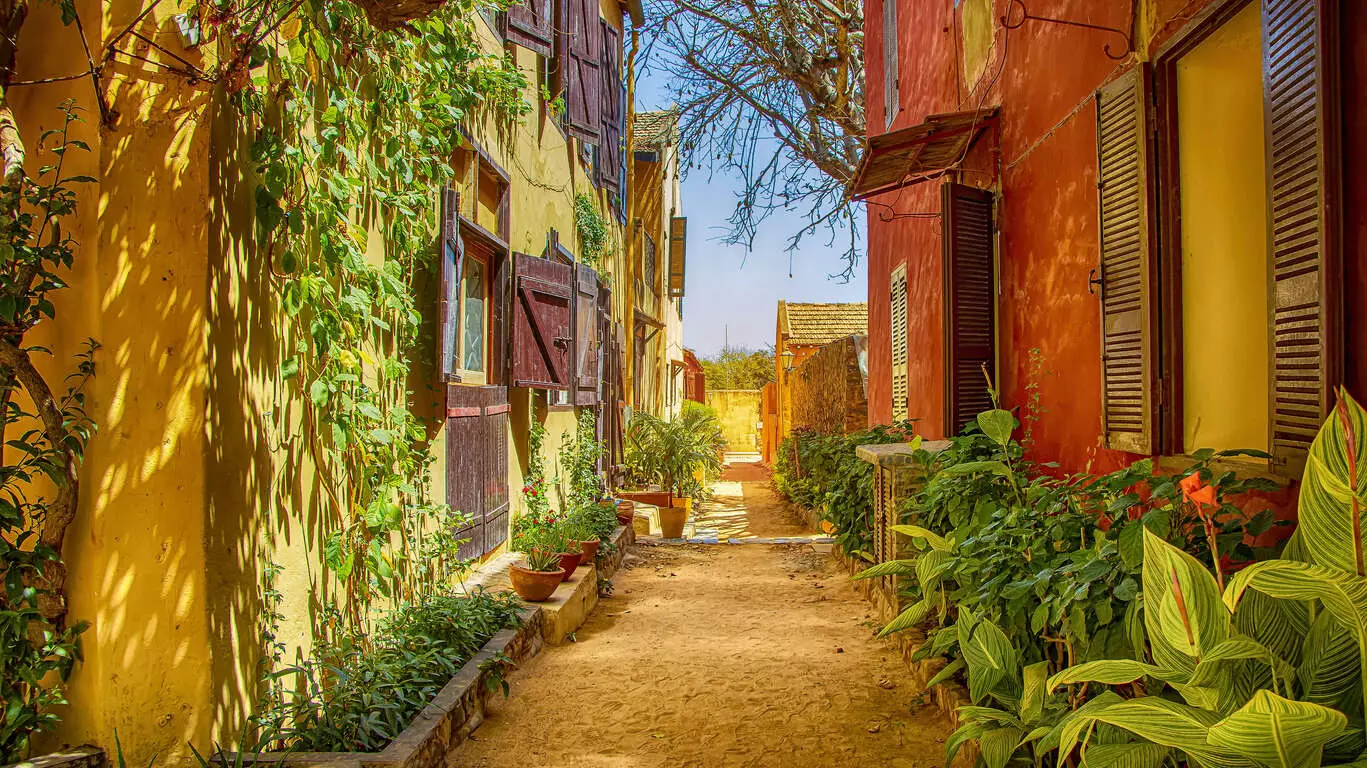
Twenty minutes by ferry from Dakar port, Gorée has been a UNESCO World Heritage Site since 1978. From the 15th to the 19th century, the island was one of the slave-trading centres on the African coast, held in turn by the Portuguese, Dutch, English and French.
The House of Slaves, with its "door of no return" opening onto the ocean, is its most visited memorial. Car-free lanes lined with balconied houses and bougainvillea climb to the Castel, which looks back at Dakar.

African Renaissance Monument
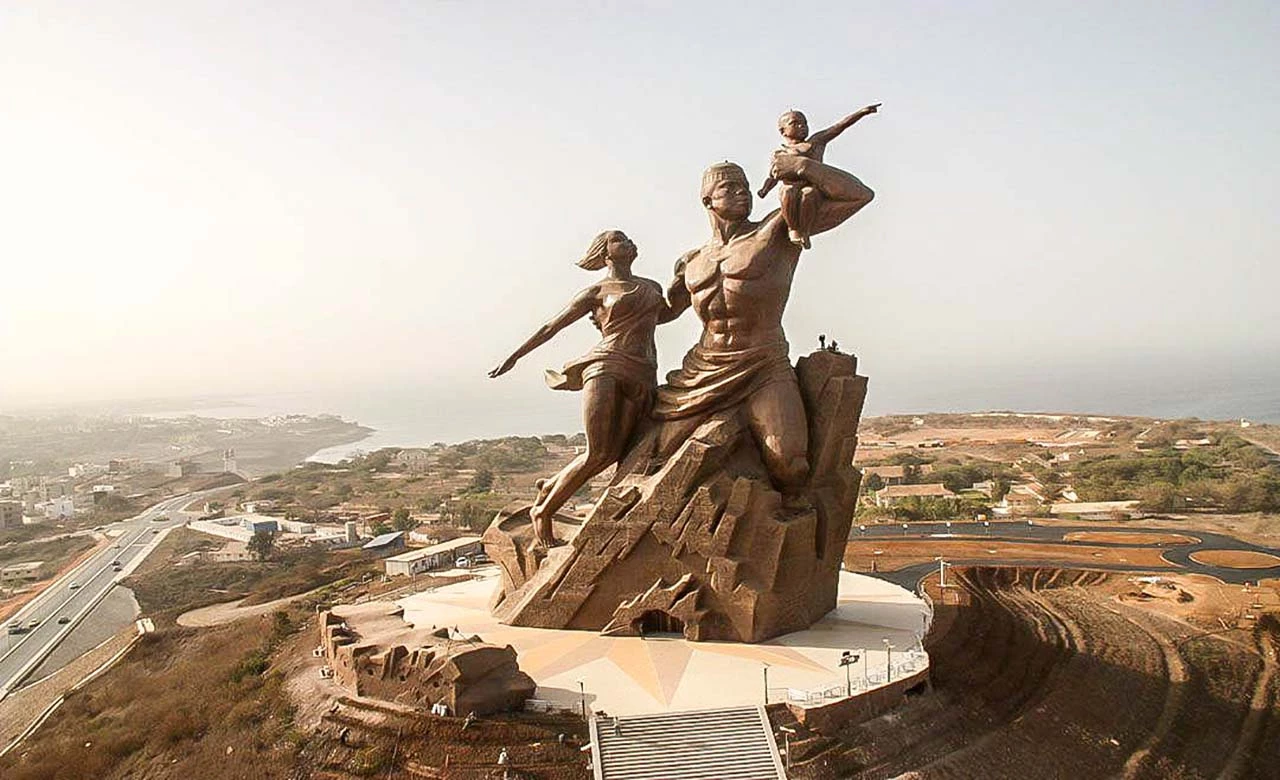
Opened in April 2010, the monument stands on top of one of the two Mamelles hills, in Ouakam. About fifty metres tall, it depicts a man carrying a child and leading a woman, facing the ocean. It was designed from an idea by architect Pierre Goudiaby Atepa and built by the North Korean company Mansudae.
Its cost caused fierce controversy in Senegal. A lift takes you up to a viewing platform in the statue's head, overlooking the Cap-Vert peninsula.

Museum of Black Civilisations
Opened in December 2018, next to the Grand Théâtre national, the museum fulfils an idea put forward by Léopold Sédar Senghor at the 1966 World Festival of Black Arts. Its circular building is inspired by the impluvium huts of Casamance.
Its galleries cover the history of African peoples and their diasporas, from the first tools to contemporary creations, with masks, textiles, sculptures and works by living artists.

Sandaga Market
In the heart of the Plateau, Sandaga has been Dakar's great market for decades: fabrics, wax prints, clothing, electronics, spices. Its historic building, weakened by a fire in 2013, was demolished in 2021 to be rebuilt; trading carries on in the surrounding streets, notably Avenue Lamine-Guèye.
A few streets away, Kermel Market, under its restored hall, is calmer for fruit, flowers and crafts.

Lac Rose (Lake Retba)
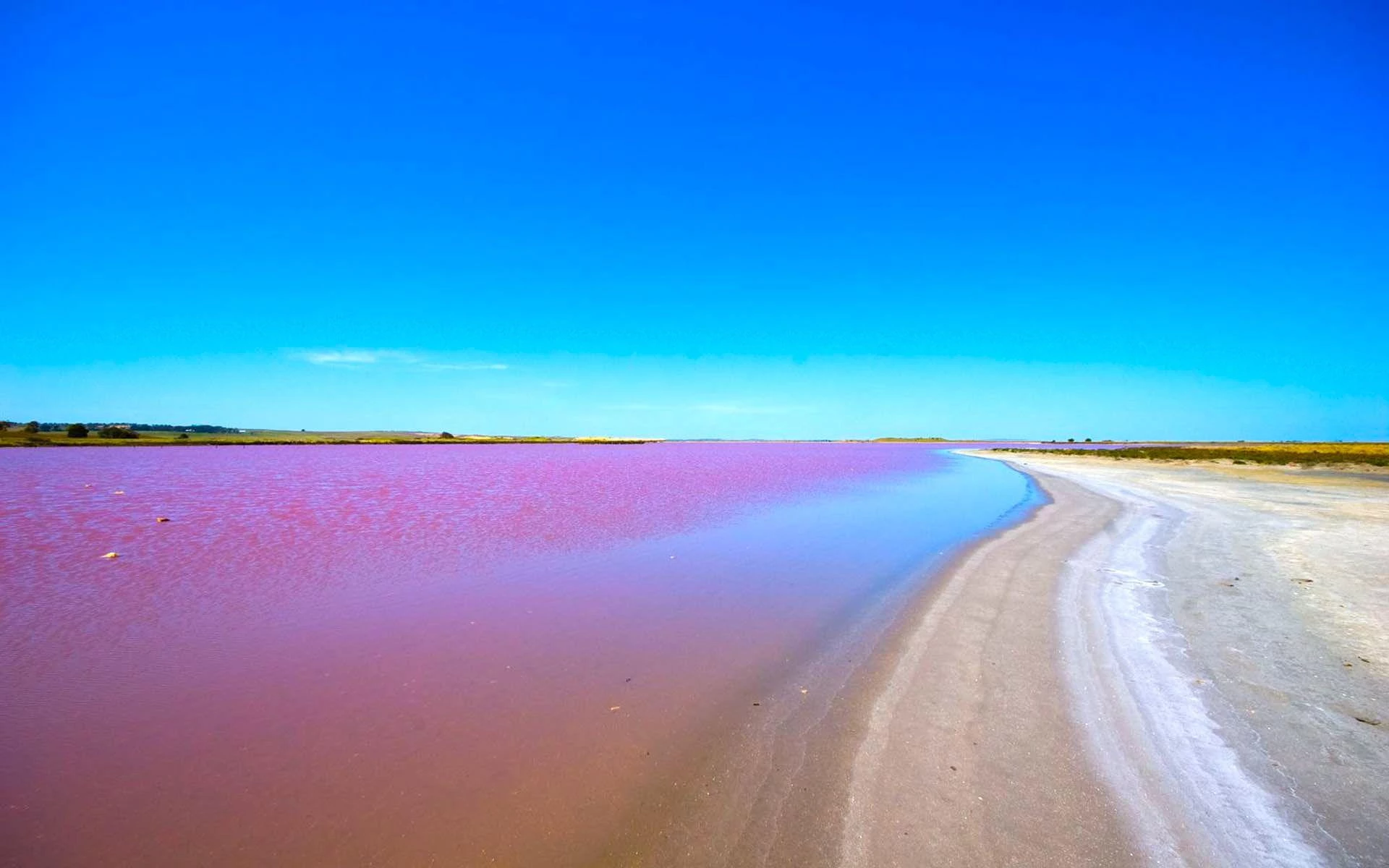
About 35 km north-east of Dakar, behind the coastal dunes, Lake Retba owes its pink hue to a micro-alga, Dunaliella salina, which thrives in its very salty water. Workers harvest the salt by hand from pirogues, then pile it into white mounds on the shore.
You float almost as in the Dead Sea; around it, the dunes are explored by 4x4, quad or camel down to the beach.

Mosque of the Divinity
Set on the ocean's edge, on the western corniche in Ouakam, the mosque was built from 1992 to 1997 by Mohamed Gorgui Seyni Guèye and his community, without cranes or concrete mixers. According to its founder, its design came to him in a dream in 1973.
Its two white minarets and green domes stand out against the sea; it was inaugurated on 1 October 1997.

Médina of Dakar
The Médina was born in 1914: during a plague epidemic, the colonial administration moved the Plateau's African residents to a "segregation village", first called Ponty-Ville. El Hadj Malick Sy renamed it Médina, after Islam's holy city.
Today it is one of Dakar's most crowded and lively districts: tailors' workshops, street trading, sports grounds and the Great Mosque on its edge. Youssou N'Dour grew up here.

Yoff Beach
Yoff, a former Lebu fishing village, has a long beach where painted pirogues are hauled ashore when the boats come back in the late afternoon. The district, north of the city near the old airport, still lives to the rhythm of the tides and the fish market.
The beach doubles as a football pitch and a training ground for wrestlers. Further south-west, Ngor and its island, reached by pirogue, are more geared to swimming and surfing.

Senegalese food around Kermel market
Kermel market, on rue Parent in the Plateau, is a good starting point to see fish, fruit and spices before sitting down to eat.
Ceebu jën (thieboudienne), rice with fish and vegetables cooked in a tomato sauce, is the national dish; its culinary art has been on UNESCO's intangible heritage list since 2021. Yassa (chicken or fish with onions and lemon) and mafé (peanut-butter stew) complete the trio.
On the street: dibi (grilled mutton), accara (black-eyed pea fritters) and spiced Touba coffee. To drink, bissap (hibiscus) and bouye (baobab fruit); for dessert, thiakry, millet couscous with sweetened curdled milk.

Hann Forest and Zoological Park
Created in the early 20th century as a trial garden, Hann Park is one of Dakar's largest green spaces, between Hann Bay and the motorway. Its avenues shaded by tall trees hold a small zoo and a lake.
Dakar residents come to jog, picnic and stroll with their families, especially at weekends.

Soumbédioune craft village
On the western corniche, facing Soumbédioune Bay, the craft village gathers workshops of woodcarvers, jewellers, leatherworkers and weavers, who work in front of visitors.
On the beach next door, fishing pirogues land their catch late in the day; grills cook it on the spot.

Galleries and the Plateau art scene
Dakar hosts the Biennale of Contemporary African Art, Dak'Art, held in even-numbered years: for several weeks, official and "off" exhibitions take over the city.
The rest of the year, the Plateau's galleries, including the Galerie nationale d'art, and cultural centres show Senegalese and African painters, photographers and visual artists.

Langue de Barbarie National Park (Saint-Louis)
Created in 1976, the park covers about 2,000 hectares some twenty kilometres south of Saint-Louis, on the sand spit between the Senegal River and the ocean. It protects a refuge for migratory birds: pelicans, cormorants, flamingos, terns.
About 260 km from Dakar, it pairs with Saint-Louis, former capital of French West Africa whose island is a UNESCO World Heritage Site: allow two days at least.
Guided tour of Gorée Island
Ferry tickets are booked in advance; a local guide meets you at the Gorée landing for three hours in the lanes: the House of Slaves, the history museum, Government Square and the climb to the Castel. The highlight: the "door of no return", facing the ocean.
Allow €55 per person on GetYourGuide, ferry, municipal tax and entry fees included, with free cancellation. Tours in French, English or Spanish; lunch on the island is optional.
- 3 hrs
- €55 per person, ferry and entry included (GetYourGuide price 2026)
Lac Rose by quad, pirogue and camel
On the shore of Lake Retba: three quarters of an hour by quad through the dunes to the beach, a thirty-minute pirogue crossing of the lake with the salt harvesters, then a horse or camel ride and lunch by the water, with pool access. The highlight: the white salt mounds against the pink water.
Allow €69 per person on GetYourGuide, with free cancellation; transport from Dakar costs extra. A 4x4 option is available for families.
- 3-4 hrs
- €69 per person, lunch included (GetYourGuide price 2026)
Dakar tour by car rapide
Leave from the TER station aboard a painted car rapide, Dakar's iconic minibus: Kermel Market, Independence Square, the presidential palace and the cathedral on the Plateau, then Soumbédioune, the corniche to the Mosque of the Divinity and the African Renaissance Monument. The highlight: the view over the whole peninsula from the monument.
Allow €39 per person on GetYourGuide, local guide and monument entry included, with free cancellation. Tours in French, English or German; the route may vary with traffic.
- 3 hrs
- €39 per person, monument entry included (GetYourGuide price 2026)
Getting there
Blaise Diagne airport (DSS) is 45 km from Dakar; since 28 September 2026 the TER train reaches the centre in 55 minutes for 4,000 FCFA.
International flights land at Blaise Diagne International Airport (DSS), in Diass, about 45 km south-east of Dakar. Direct flights from Paris take around 5 to 6 hours.
Since 28 September 2026, the TER train has been extended 19 km to the airport: it reaches central Dakar in 55 minutes for 4,000 FCFA (about €6) in second class. Taxis, hotel shuttles and ride-hail cars take the toll motorway in 1 to 1.5 hours depending on traffic; agree the taxi fare before setting off.
Getting around
TER train for the airport and suburbs, BRT buses across the city, negotiated taxis and ride-hail at night.
- TER: the regional express train links Dakar station to Diamniadio and, since 28 September 2026, to Blaise Diagne airport.
- BRT: bus rapid transit on dedicated lanes crosses the city from the centre to Guédiawaye.
- Taxis: yellow and black, without meters; agree the fare before getting in.
- Ride-hail: apps operate in Dakar and are handy at night.
- Cars rapides and Ndiaga Ndiaye: painted minibuses, very cheap but packed; best tried on a guided tour.
What to do
Visit Gorée and the Museum of Black Civilisations, walk the Médina and the corniche, and head out to Lac Rose.
- History: Gorée Island and the House of Slaves, the Museum of Black Civilisations.
- City: the Médina, Sandaga and Kermel markets, the western corniche and its monuments.
- Sea: the pirogues coming in at Yoff and Soumbédioune, Ngor Island.
- Day trips: Lac Rose 35 km away, Saint-Louis and the Langue de Barbarie over two days.
Food
Try ceebu jën at lunchtime, yassa, mafé, dibi and accara, with a bissap or a Touba coffee.
- Ceebu jën (thieboudienne): rice with fish and vegetables, the national dish, served at lunchtime.
- Yassa and mafé: chicken or fish with lemony onions, peanut stew.
- On the street: dibi (grilled mutton), accara (black-eyed pea fritters), grilled fish at Soumbédioune.
- Drinks: bissap, bouye (baobab) and Touba coffee.
Itineraries
Three days: Gorée and the Plateau, the museum, Médina and corniche, then Lac Rose and Yoff.
- Day 1: morning ferry to Gorée, lunch on the island, then Kermel Market and the Plateau.
- Day 2: Museum of Black Civilisations, the Médina, then the western corniche: Soumbédioune, the Mosque of the Divinity and the Renaissance Monument at sunset.
- Day 3: Lac Rose and its dunes, back via Yoff beach for the pirogues.
Climate & seasons
When to go to Senegal?
Monthly averages over the past 5 years (Open-Meteo).
Best months
- January
- February
- March
- April
- May
- June
- July
- October
- November
- December
| Jan | Feb | Mar | Apr | May | Jun | Jul | Aug | Sep | Oct | Nov | Dec | |
|---|---|---|---|---|---|---|---|---|---|---|---|---|
| Our take | ||||||||||||
| Weather | ||||||||||||
| High | 28° | 27° | 25° | 26° | 26° | 28° | 29° | 29° | 30° | 31° | 31° | 29° |
| Rain (mm) | 3 | 1 | 0 | 0 | 2 | 5 | 47 | 159 | 106 | 20 | 4 | 3 |
| Beach | Beach January | Beach February | Beach March | Beach April | Beach May | Beach June | Beach July | Beach October | Beach November | Beach December | ||
| City sightseeing | City sightseeing January | City sightseeing February | City sightseeing March | City sightseeing April | City sightseeing May | City sightseeing June | City sightseeing July | City sightseeing September | City sightseeing December |
What to do by season (autumn)
-
Beach
Warm air and water, little rain.
-
City sightseeing
Pedestrian-friendly most of the year.
When to go
November to May, the dry season, is the best time, especially December-February; the rains fall from July to October.
From November to May, the dry season brings clear skies and mild evenings cooled by the trade wind; December to February is the most pleasant period, with occasional dusty harmattan.
From July to October, the rainy season brings humid heat and showers, especially in August and September. Dakar hosts the Youth Olympic Games from 31 October to 13 November 2026: book early for those dates.
Budget
CFA franc (XOF), 1 EUR = 655.957 XOF. Cash is essential; TER centre-airport 4,000 FCFA, Gorée ferry about €9 return.
The currency is the West African CFA franc (XOF), pegged to the euro: 1 EUR = 655.957 XOF. Cash rules in markets, taxis and local eateries; ATMs are plentiful in Dakar and upmarket hotels and restaurants take cards.
Some 2026 benchmarks: the TER train from the centre to the airport costs 4,000 FCFA (about €6) in second class; a Gorée operator quotes about €9 for a foreign visitor's return ferry and €2.50 for the House of Slaves. Keep small notes for taxis, whose fares are negotiated.
Where to stay
The Plateau for sightseeing, Les Almadies and Ngor for the sea, Mermoz-Fann for value.
- Plateau: closest to the Gorée ferry, markets and museums; busy by day, quiet at night.
- Les Almadies and Ngor: seafront hotels, restaurants and beaches, far from the centre (30 to 45 minutes depending on traffic).
- Mermoz, Fann and Point E: residential areas with guesthouses and good value between the centre and the corniche.
- Yoff: a fishing-village feel, handy for the beach and surfing.
Safety
Theft is common: no jewellery or large sums, no swimming on unsupervised beaches, no road travel at night. Emergencies: police 17, fire brigade 18.
According to France Diplomatie (updated 15 September 2026), theft and muggings are common in Dakar: whatever the district, avoid carrying jewellery and large sums. The sea is dangerous and often unsupervised, and night-time travel between towns is advised against.
Parts of Casamance, the border with Mali and the southern part of the border with Mauritania are advised against except for essential reasons.
Emergencies: police 17, fire brigade 18. French Consulate General in Dakar: +221 33 839 52 62.
Formalities
No visa for French citizens under three months; passport valid for more than 6 months. Yellow fever strongly recommended, malaria all year, check your diphtheria booster.
Visa: according to France Diplomatie (updated 15 September 2026), French citizens are exempt from visas for stays under three months; beyond that, a residence card is obtained locally. Your passport must be valid for more than 6 months.
Currency: non-residents must declare in writing on arrival any foreign currency worth more than one million CFA francs.
Health: yellow fever vaccination is strongly recommended, and required if you arrive from an endemic area. Malaria is present all year: take preventive treatment and protect against mosquitoes. In 2026 France Diplomatie reports a diphtheria epidemic: check that your diphtheria-tetanus-polio booster is up to date.
FAQ
Quick answers on visas, the season, the airport, Gorée, currency, vaccinations and safety in Dakar.
Do I need a visa to visit Dakar?
Not as a French citizen: visa exemption for stays under three months, with a passport valid for more than 6 months.
When is the best time to visit Dakar?
The dry season, from November to May, with December to February the mildest period. Most rain falls from July to October.
How do I get from the airport to the centre?
Since 28 September 2026, the TER train links Blaise Diagne airport to central Dakar in 55 minutes for 4,000 FCFA in second class. Taxis and ride-hail are still an option, taking 1 to 1.5 hours.
How do I get to Gorée Island?
By ferry from the Dakar port terminal; the crossing takes about twenty minutes. Arrive 30 minutes before departure.
What currency is used?
The CFA franc (XOF), pegged at 1 EUR = 655.957 XOF. Carry cash for markets and taxis.
Do I need vaccinations for Senegal?
Yellow fever is strongly recommended (required if arriving from an endemic area), malaria is present all year and an up-to-date diphtheria booster is advised in 2026.
Is Dakar safe?
It can be visited without major difficulty, but theft is common: avoid carrying jewellery and large sums, and do not swim on unsupervised beaches. In an emergency: police 17, fire brigade 18.
Sources
The figures in this guide come from the sources below, checked on the publication date.
Leave a comment
Share your thoughts or travel experience. Your email will not be published.