

Canary Islands or Madeira in winter? For sunshine and swimming, southern Tenerife wins: around 22 °C in the afternoon, two to four rainy days a month and a sea close to 19 °C. Madeira is barely cooler, but Funchal gets three to four times more rain. Its real strength is hiking.
Both archipelagos are part of the EU and use the euro, so for European travellers a national ID card is enough. Paperwork won't decide it for you. What matters is what you want from a week of winter sun: a beach and a sunlounger, or dizzying trails above a sea of clouds. Here is the comparison, point by point, using official figures.
Book the activities from this article
Our picks for Tenerife and Madeira, well rated and free to cancel.
-
Book this activity
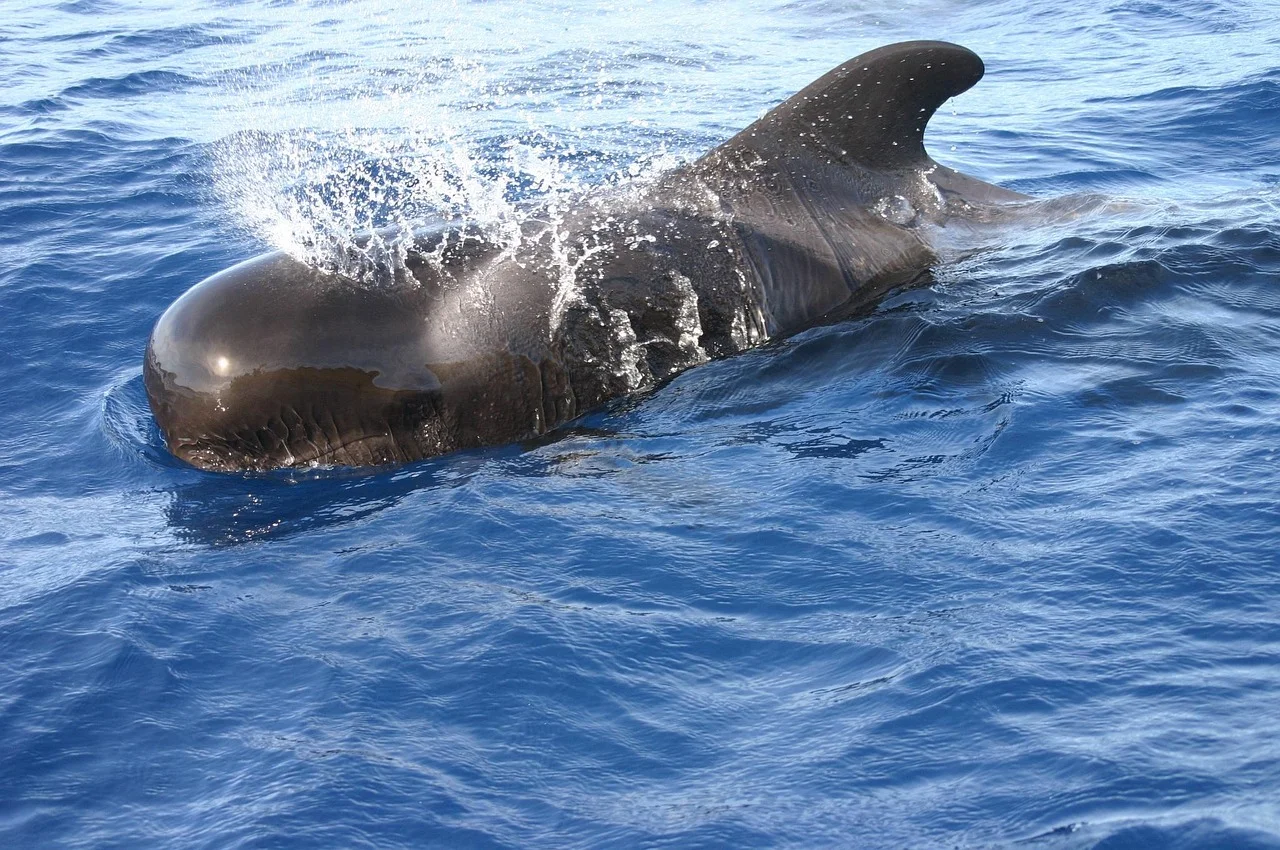
Pilot whales and dolphins from Los Cristianos (Tenerife)
€28 to €34 per person depending on the date (GetYourGuide price 2026)
-
Book this activity
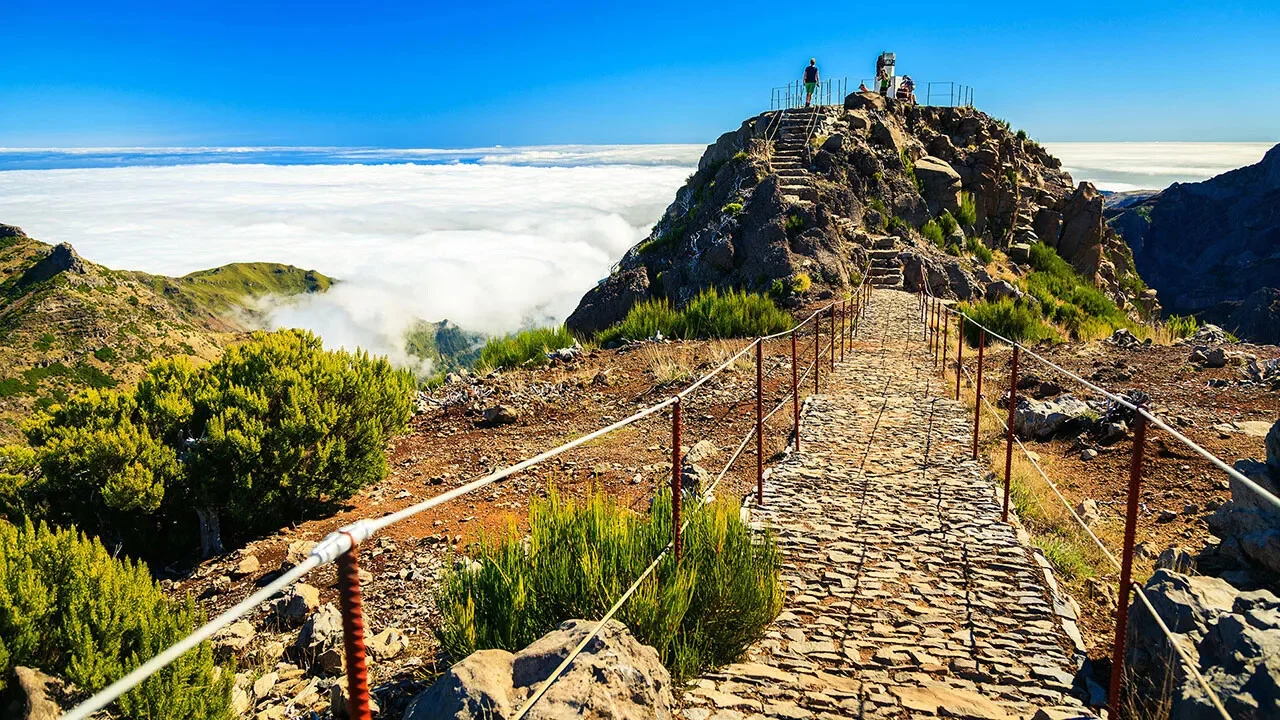
Guided sunrise hike on Pico Ruivo (Madeira)
€65 per person, transfer included (GetYourGuide price 2026)
-
Book this activity
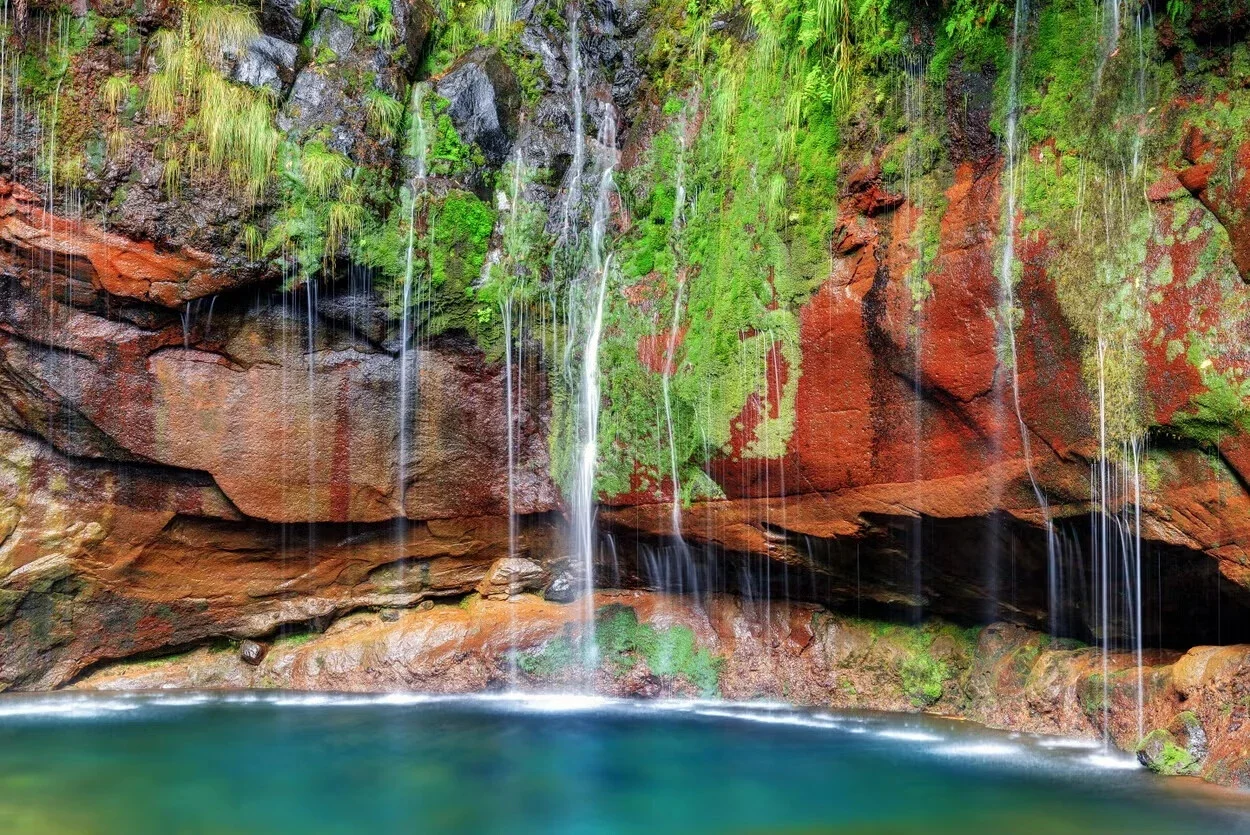
Rabaçal levadas: Risco and 25 Fontes (Madeira)
€48 per person, transfer included (GetYourGuide price 2026)
Affiliate links: Travel Advice earns a commission if you book, at no extra cost to you. Learn more
Temperatures and sunshine: southern Tenerife comes out ahead
From December to March, Tenerife South airport records average highs of 21.7 to 23.1 °C, against 19.9 to 21.0 °C in Funchal. The temperature gap is small, 1 to 2 °C. Rain is where the two really differ.
According to AEMET climate normals, southern Tenerife sees 1.8 rainy days in January for 17 mm, and between 190 and 225 hours of sunshine a month in winter. In Funchal, IPMA records 6.2 rainy days in January for 67 mm, and 8.6 days in December, the wettest month. Nights stay mild: average lows of 14 to 15.5 °C in Funchal, with not a single day of frost.
- December: 22.8 °C at Tenerife South, 21.0 °C in Funchal.
- January: 21.7 °C against 20.0 °C.
- February: 22.0 °C against 19.9 °C.
- March: 23.1 °C against 20.6 °C.
One caveat: these figures apply to the south coasts. Northern Tenerife, around Puerto de la Cruz, is cloudier and greener. On Madeira, the north of the island gets more rain than Funchal. Either way, book your stay on the south coast if sunshine is the priority.
Swimming and beaches: the Canaries are well ahead
For a winter swim, the Canary Islands win: the sea is around 19 °C off Tenerife in February, and the archipelago has proper sandy beaches. Madeira offers mostly pebbles and natural pools, with water close to 18 °C.
Water at 18 or 19 °C is still cool: you can swim, just not for hours. Satellite readings give roughly 19 °C off Tenerife in February and about 18 °C in Funchal from January to March. Treat these as ballpark figures, not official normals.
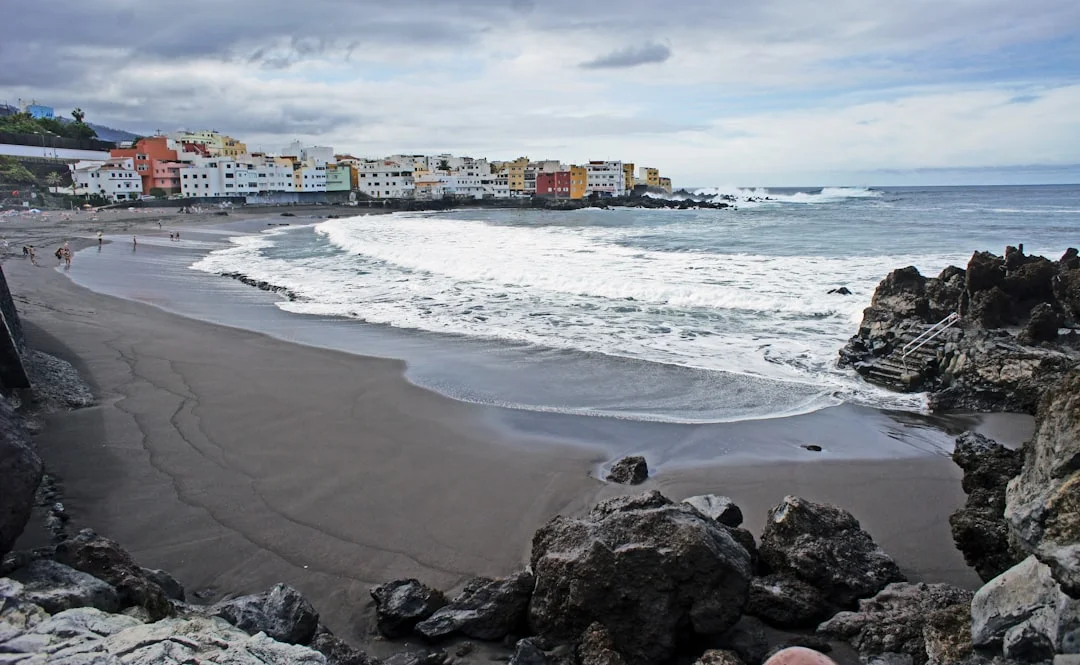
The Canaries offer several kinds of beach. Tenerife has black volcanic sand in the north and developed beaches in the south, around Los Cristianos. Fuerteventura and Lanzarote, flatter and drier, are about golden sand, dunes and wind, which draws surfers. Gran Canaria has the Maspalomas dunes.
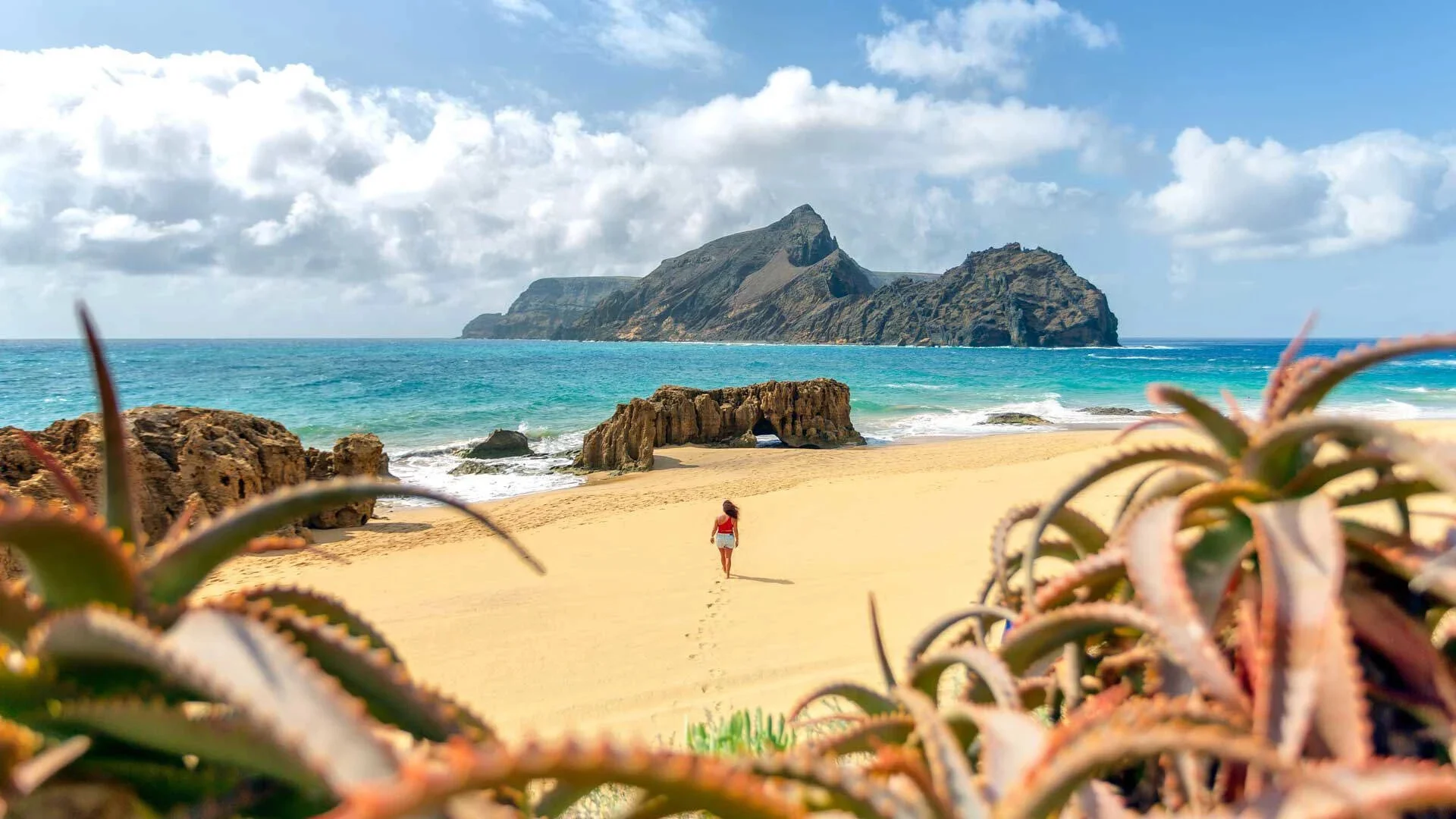
Madeira, by contrast, drops straight into the ocean. You swim in the lava rock pools of Porto Moniz, from pebble beaches or at the Lido in Funchal. For sand, take the ferry to Porto Santo and its 9 km golden beach, about 2 hours 30 minutes away. Sailings are less frequent in winter (Ferryscanner), so check the timetable before you count on it.
Hiking: Madeira is in a league of its own
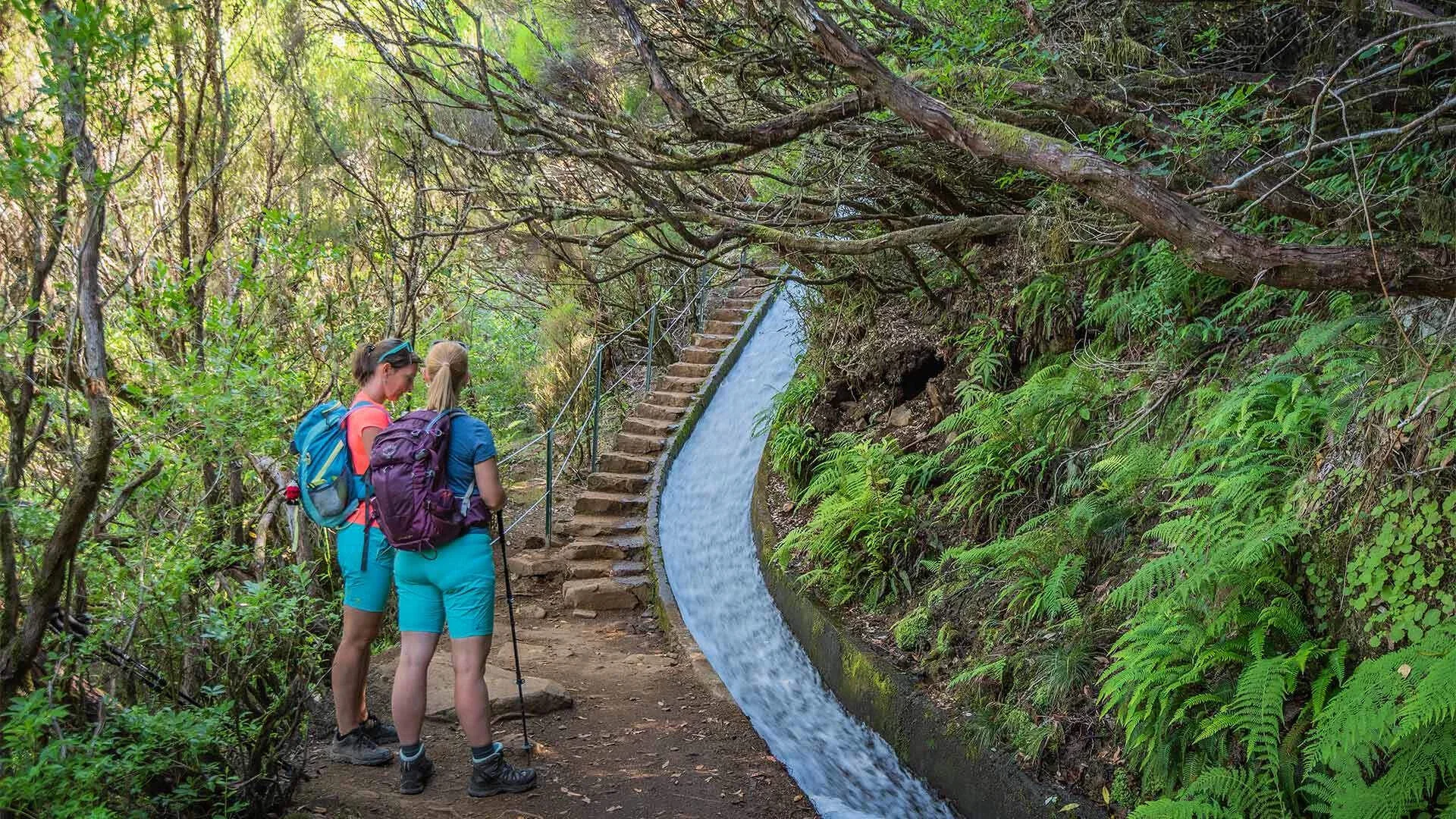
For hiking, nothing matches Madeira: hundreds of kilometres of levadas, the irrigation channels lined with footpaths, plus the ridges of Pico do Arieiro and Pico Ruivo above a sea of clouds. You now have to book and pay for the trails.
Since 2026, Madeira's official trails are booked on the public SIMplifica platform, in 30-minute slots. Non-residents pay €4.50 per trail per person, according to the IFCN, the regional forestry office. Watch out for the PR1, the famous ridge walk between Pico do Arieiro and Pico Ruivo: since the August 2024 wildfire, it has only been open as an out-and-back between Arieiro and the Pedra Rija viewpoint, and the section on to Ruivo was still closed on 14 September 2026 (IFCN trail list). You can reach Pico Ruivo on the PR1.2 from Achada do Teixeira. The full PR1 will cost €10.50 when it reopens: check its status on the IFCN list before you go.
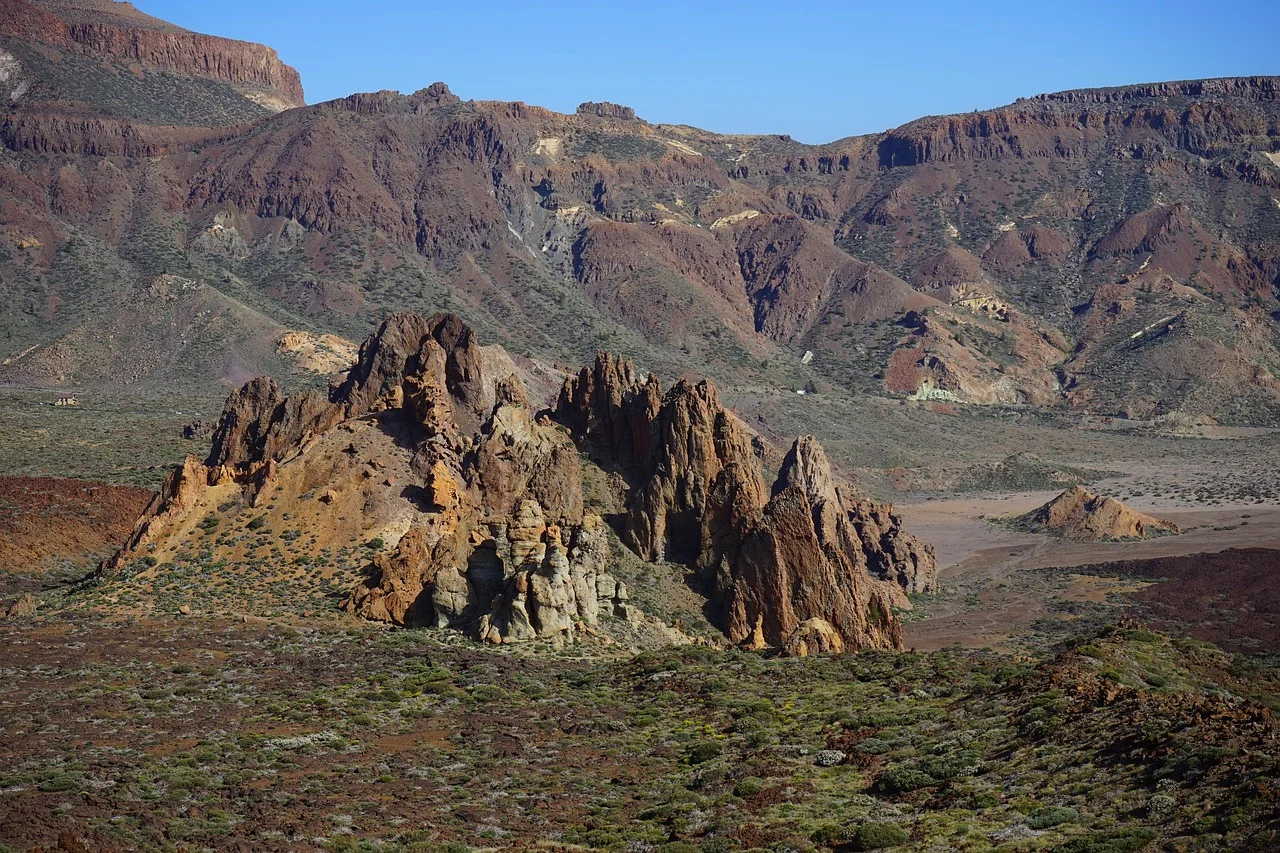
The Canaries have big walks too. Tenerife has Mount Teide, Spain's highest peak at 3,715 m, and the laurel forest of Anaga in the north-east. The cable car climbs to La Rambleta, at 3,555 m. The final stretch to the crater, trail 10, requires a booking: since 19 January 2026, non-residents pay a €15 eco-tax there, free for under-14s, according to the Cabildo de Tenerife. The cable car ticket doesn't include it. La Palma, greener and quieter, is the other island for walkers.
For route details, see our guide to things to do in Madeira, from the levadas to Pico Ruivo.
Getting there: the Canaries have far more flights
A direct flight takes about 3 hours 50 minutes from Paris to Funchal and 4 hours 20 minutes from Paris to Tenerife. In midwinter, though, the Canaries have many more direct routes and departure cities than Madeira.
Take France as an example. Transavia, which flies to both archipelagos, sells its winter season from 25 October 2026 to 27 March 2027 out of Paris-Orly, Nantes, Lyon, Marseille and Montpellier, with the Canaries and Madeira "at the heart of the programme" (Air Journal). For Funchal, the comparison site Partir.com also lists direct flights from Nantes (3 h 15) and Bordeaux (3 h 05). It shows no direct easyJet flight between Paris-Charles de Gaulle and Funchal from December to February.
The Canaries benefit from competition between several low-cost airlines and four large islands with airports. In December, a Paris-Tenerife ticket most often sells for €100 to €150, while Partir.com shows an average fare of €204 to Funchal. The two sites measure prices differently, so read it as a trend, not an exact gap.
Our advice: check the direct flights from your own airport first, then pick the island. From a smaller regional airport, a stopover usually matters more than a two-degree difference.
Budget: more choice in the Canaries, a few extra fees in Madeira
The Canaries have more flights and hotels, so more competition on prices. Madeira adds small fees, such as Funchal's tourist tax and the paid trails.
In Funchal, the tourist tax is €2 per person per night, capped at 7 nights, with under-12s exempt (Times of Madeira). A week therefore costs €14 per adult. Add €4.50 per official trail if you hike.
In the Canaries, the extra costs sit elsewhere: the €15 eco-tax for the summit of Teide, the cable car, and hotel prices that climb over the holidays. Winter is the archipelago's high season: Gran Canaria expected 85% occupancy at Christmas 2025. Book early for Christmas and February half-term, when school holidays push up prices on both sides.
On either island, a hire car makes a big difference. On Madeira it saves you from coach tours, and on Tenerife it links the sunny south with the villages of the north.
Atmosphere and crowds: big resorts or a garden island
The Canary Islands welcomed a record 18.6 million tourists in 2025, according to the regional public broadcaster RTVC. Madeira, smaller, keeps the feel of Funchal, the garden city, and its hillside villages.
In the Canaries, the south of Tenerife and Gran Canaria holds the big beach resorts, clubs and hotel complexes. Off Los Cristianos, boat trips head out to the pilot whales and dolphins that live year-round off southern Tenerife. The pressure has sparked a local movement: on 20 April 2024, tens of thousands of residents marched under the banner "Canarias tiene un límite" (the Canaries have a limit), calling for a cap on tourism and for housing (RTVC). For a more local feel, head for northern Tenerife, La Laguna, La Palma or the villages of Lanzarote.
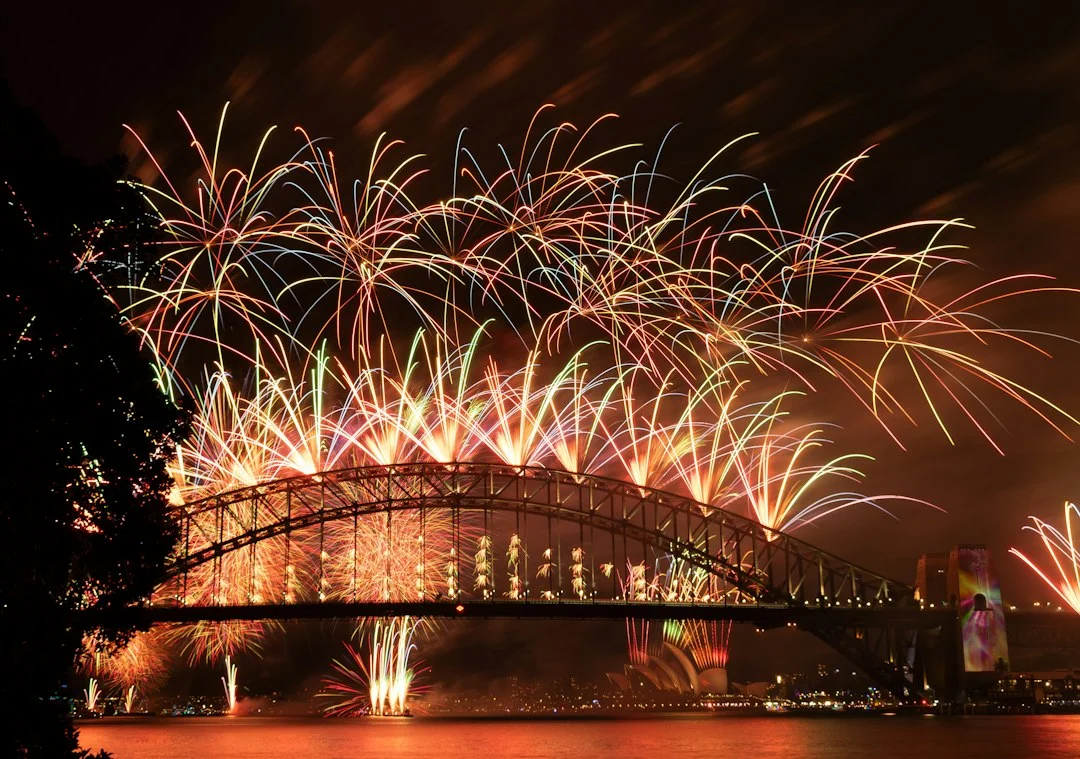
Madeira works differently. Funchal mixes an old town, a market and botanical gardens, and the island unfolds from one viewpoint to the next. Evenings are earlier and quieter than in Playa de las Américas. New Year's Eve is the exception: Funchal's fireworks draw the crowds, and the island is fully booked.
Our verdict by type of traveller
For sun and beaches, pick southern Tenerife or Fuerteventura. For hiking and scenery, pick Madeira. In between, it comes down to your flights and your pace.
- Reliable sun and swimming: southern Tenerife, Gran Canaria or Fuerteventura. Southern Tenerife gets two to four rainy days a month, and the whole archipelago has sandy beaches.
- Hikers: Madeira. The levadas and the Pico do Arieiro ridges, booked ahead on SIMplifica.
- Families: Tenerife or Gran Canaria, for lifeguarded beaches, plenty of direct flights and hotels with pools.
- Couples after some quiet: Madeira, or La Palma in the Canaries.
- Tight budget: the Canaries, where competition between airlines keeps fares down.
- Surf and wind: Fuerteventura or Lanzarote.
Still undecided? Our pick of where to go in December compares other winter-sun destinations, and our guide to Tenerife, between volcano and black-sand beaches covers the archipelago's most visited island.
Frequently asked questions
Is it warmer in the Canary Islands or Madeira in winter?
Slightly warmer in the Canaries. In January, Tenerife South airport records an average high of 21.7 °C, against 20.0 °C in Funchal. The clearer gap is rain: 1.8 rainy days in January in southern Tenerife, against 6.2 in Funchal.
Can you swim in Madeira in winter?
Yes, but the water is around 18 °C from January to March, and sandy beaches are rare on the main island. The natural pools of Porto Moniz and the Lido in Funchal are the easiest options. For a proper beach, go to Porto Santo.
Do you have to pay to hike in Madeira?
Yes, if you're not a resident, on the official trails. Expect €4.50 per trail per person, with a mandatory time-slot booking on the SIMplifica platform. The full PR1, between Pico do Arieiro and Pico Ruivo, will cost €10.50 when it reopens: on 14 September 2026, only the Arieiro to Pedra Rija section was open.
Which Canary Island is best in winter?
Southern Tenerife and Gran Canaria for sunshine and flight choice, Fuerteventura for sand and wind, Lanzarote for volcanic landscapes, La Palma for quiet hiking.
Activities to book
Three outings to get a taste of each island, each with a GetYourGuide offer we picked and checked (partner links, free cancellation up to 24 hours before). The rest of the programme is in our Tenerife and Madeira guides.
Pilot whales and dolphins from Los Cristianos (Tenerife)
Two hours at sea along Tenerife's south coast aboard the Peter Pan, a boat limited to 60 passengers whose lower decks put you at water level for sightings. The crew follows responsible whale-watching rules. A guide commentates in English, French, Italian and Spanish, and a 15 to 20-minute swim stop ends the trip if the sea allows.
Good for families and couples: boarding at Los Cristianos harbour at 9:45, 11:45 or 13:45, and a 3-hour option with lunch is available. Water, snorkelling gear and towels are provided. Sightings are very common but never guaranteed, and the boat is not wheelchair accessible.
- 2 to 3 hrs
- €28 to €34 per person depending on the date (GetYourGuide price 2026)
Guided sunrise hike on Pico Ruivo (Madeira)
A pre-dawn pick-up from your hotel, about an hour's drive to Achada do Teixeira, then a guided climb by headtorch up the roughly 260 m of ascent to the summit of Pico Ruivo, Madeira's highest point. The highlight: the sun rising over the sea of clouds, hot tea in hand.
For fit walkers who want the view without driving mountain roads in the dark: return transfer included, slow pace, free cancellation. Bring a warm jacket, as it is cold on the summit before dawn, especially in winter.
- 5 hrs
- €65 per person, transfer included (GetYourGuide price 2026)
Rabaçal levadas: Risco and 25 Fontes (Madeira)
A day trip with transfer from your accommodation to the Rabaçal valley, then about 11 km of walking along the levadas, with a detour to the Risco waterfall and a break at the 25 Fontes pool. The highlight: the Risco waterfall dropping into the laurel forest.
A way to discover the levadas with a guide, without handling the time-slot booking or the mountain drive. Moderate difficulty, about 4 hours 30 minutes of walking: wear good shoes and bring a headtorch for the tunnel. Free cancellation.
- 7 hrs
- €48 per person, transfer included (GetYourGuide price 2026)
Sources
The figures in this guide come from the sources below, checked on the publication date.
- www.aemet.es
- www.ipma.pt
- seatemperature.net
- weather2travel.com
- ifcn.madeira.gov.pt
- ifcn.madeira.gov.pt
- www.timesofmadeira.com
- tenerifemassostenible.tenerife.es
- www.air-journal.fr
- www.partir.com
- www.partir.com
- www.liligo.fr
- www.ou-et-quand.net
- rtvc.es
- rtvc.es
- rtvc.es
- www.visitmadeira.com
- www.ferryscanner.com
Leave a comment
Share your thoughts or travel experience. Your email will not be published.