

Contents 33
Andalusia, in southern Spain, was shaped by Rome and then by eight centuries of al-Andalus before the Christian conquest. That past can be read at Granada's Alhambra, Córdoba's Mezquita and Seville's Alcázar, three UNESCO World Heritage Sites.
Beyond the cities, the region offers the white villages of the Cádiz sierra, two coastlines, the Sierra Nevada and the Doñana marshes. This guide covers 18 places, 2026 prices and the best season.
Overview
Andalusia brings together Granada's Alhambra, Córdoba's Mezquita and Seville's cathedral-Alcázar ensemble, three UNESCO sites, with the white villages, two coastlines and the Sierra Nevada.
Andalusia, in southern Spain, has eight provinces between the Mediterranean and the Atlantic. Its most visited heritage lies in three UNESCO sites: the Alhambra, the Generalife and the Albaicín in Granada, Córdoba's historic centre with its Mezquita, and the cathedral, Alcázar and Archivo de Indias in Seville. Add the white villages between Ronda and Arcos, the Costa del Sol, the Atlantic coast of Cádiz and the Sierra Nevada.
Two of these cities have their own guide: Seville and Córdoba.
18 places to take with you
In the guide's order, ready for Google Maps or your GPS.
Book the activities from this guide
Our picks for Andalusia, well rated and free to cancel.
-
Book this activity
Guided hike on the Caminito del Rey
from €30 per person, entry included (GetYourGuide price 2026)
-
Book this activity
« How the Andalusian Horses Dance » show in Jerez
from €27 per person (GetYourGuide price 2026)
-
Book this activity
Day trip to Ronda and Setenil de las Bodegas from Málaga
from €35 per person (GetYourGuide price 2026)
Affiliate links: Travel Advice earns a commission if you book, at no extra cost to you. Learn more

Granada and the Alhambra
On the hill above Granada, the Alhambra brings together the Alcazaba fortress, the Nasrid Palaces, the Palace of Charles V and, a little higher, the gardens of the Generalife. The Court of the Lions and the Hall of the Ambassadors, covered in stucco and muqarnas domes, are the heart of the visit. The whole site, with the Albaicín district opposite, is a UNESCO World Heritage Site.
In town, the Royal Chapel holds the tombs of the Catholic Monarchs. In the evening, the Mirador de San Nicolás, in the Albaicín, gives the view of the Alhambra at sunset.

Seville
The Andalusian capital gathers in its centre three monuments listed together by UNESCO in 1987: the cathedral and its Giralda, a former minaret climbed by ramps, the Real Alcázar and its gardens, and the Archivo de Indias. A few minutes' walk away, Plaza de España and María Luisa Park were laid out for the 1929 Ibero-American Exposition.
The lanes of Santa Cruz, the Triana district across the Guadalquivir and the flamenco tablaos fill the evenings. Everything is covered in our Seville guide.

Córdoba
Capital of the Umayyad caliphate in the 10th century, Córdoba keeps its great mosque, begun in 785 and turned into a cathedral in 1236: a forest of columns with red-and-white arches, with a Renaissance cathedral built in its centre. Around it, the Judería, the Alcázar of the Christian Monarchs and the Roman Bridge over the Guadalquivir form a UNESCO-listed historic centre.
In May, residents open their flower-filled patios to the public. Eight kilometres away, the palace-city of Medina Azahara rounds off the visit. Details in our Córdoba guide.

Málaga
Picasso's birthplace, Málaga is Andalusia's main gateway thanks to its airport. Above the centre, the Alcazaba, a Muslim palace-fortress, and Gibralfaro Castle, linked by the walls, look out over the port and the bay. Below, the Roman theatre lies at the foot of the Alcazaba.
The Picasso Museum occupies a palace in the old town, not far from the painter's birthplace on Plaza de la Merced. In the evening, espetos, sardines grilled on skewers over a wood fire, are eaten on Malagueta beach.

Ronda
Ronda is cut in two by the Tajo gorge, spanned by the Puente Nuevo, completed in the late 18th century, its stone piers plunging to the bottom of the ravine. On one side, the old town and its lanes, the Arab baths by the river and the Mondragón Palace; on the other, the Mercadillo district and the Real Maestranza bullring, among the oldest in Spain.
From the Alameda del Tajo promenade, balconies overhang the valley. The Sierra de Grazalema begins west of town.

Doñana National Park
Between Huelva, Seville and Cádiz, at the mouth of the Guadalquivir, Doñana combines marshes, shifting dunes, pine woods and lagoons. It is a major stopover for migratory birds between Europe and Africa and one of the last refuges of the Iberian lynx. The national park is a UNESCO World Heritage Site.
The interior is explored by off-road vehicle with a driver-guide, on routes set by the park authority and run by approved companies, such as the El Acebuche-La Plancha loop (about 4 hours, 70 km). Marked trails also start from the visitor centres.

Cádiz
Founded by the Phoenicians about 3,000 years ago, Cádiz sits on a peninsula almost entirely surrounded by the Atlantic. The old town is explored on foot, from the cathedral and its golden dome to the Roman theatre, rediscovered in the Pópulo district, and the Torre Tavira, a former watchtower with a camera obscura.
La Caleta beach, between the forts of San Sebastián and Santa Catalina, is the most photographed at sunset. In February, the Cádiz carnival, famous for its satirical songs, fills the city.

Jerez de la Frontera
Jerez gave its name to sherry: the big bodegas in the centre, with their whitewashed cellars, offer tours with tastings of fino, amontillado or oloroso. It is also the city of the Andalusian horse: the Royal Andalusian School of Equestrian Art stages its show « How the Andalusian Horses Dance ».
In the centre, the Almohad Alcázar, the cathedral and the Santiago and San Miguel districts, cradles of flamenco, are explored on foot. In May, the Feria del Caballo gathers riders and carriages.

Sierra Nevada
South-east of Granada, the Sierra Nevada holds Mulhacén, 3,479 m, the highest peak on the Iberian Peninsula. In winter, the Pradollano ski resort welcomes skiers less than an hour's drive from Granada; in summer, trails lead to glacial lakes and summits.
On the southern slope, the white villages of the Alpujarras, such as Pampaneira, Bubión or Capileira, cling to terraced hillsides, with their flat roofs and chimneys.

Marbella
Behind the seafront and its hotels, Marbella keeps a small old town of white lanes around Plaza de los Naranjos, lined with orange trees and the 16th-century town hall. The seaside promenade runs along Venus and Fontanilla beaches.
Six kilometres west, Puerto Banús gathers yachts, luxury boutiques and night bars. Marbella is also a base for Ronda and the white villages inland.

Nerja
At the eastern end of the Costa del Sol, Nerja spreads at the foot of the Sierra de Almijara. The Balcón de Europa, a promenade above the sea, separates small coves; Burriana beach, longer, is the liveliest.
Four kilometres away, the Nerja Cave unfolds huge chambers of rock formations, where prehistoric paintings and traces of occupation were found. Inland, the white village of Frigiliana and the walk up the bed of the Río Chíllar round off a stay.

Antequera
At the crossroads of Seville, Granada and Málaga, Antequera is known for its Menga and Viera dolmens, among the largest megalithic monuments in Europe, and the El Romeral tholos, inscribed on the UNESCO World Heritage list along with the landscapes of El Torcal and the Peña de los Enamorados.
The old town, below the Alcazaba, lines up baroque churches and the collegiate church of Santa María la Mayor. About twenty minutes south, El Torcal natural park displays limestone rocks sculpted by erosion.

Costa del Sol
The Costa del Sol is the coastline of the province of Málaga, from Nerja in the east to Estepona in the west. In between, Torremolinos, Benalmádena and Fuengirola line up town beaches, promenades and hotels, served by the commuter train from Málaga airport.
The coast suits beach holidays from April to October. A few kilometres inland, white villages such as Mijas or Casares offer a contrast with the resorts.

Cabo de Gata-Níjar Natural Park
In the province of Almería, Cabo de Gata-Níjar natural park protects a volcanic coastline, one of the driest in Europe: dark cliffs, coves and undeveloped beaches such as Mónsul, los Genoveses or los Muertos. The salt flats near the lighthouse attract flamingos.
The villages of San José, Las Negras and Agua Amarga serve as bases; Rodalquilar keeps the remains of old gold mines. The clear water suits snorkelling.

Arcos de la Frontera
Perched on a sandstone ridge above the Guadalete, Arcos is the first of the white villages on the road from Jerez. Its steep lanes climb to Plaza del Cabildo, where a viewpoint overlooks the cliff and the plain, facing the basilica of Santa María and the castle.
The church of San Pedro, at the other end of the ridge, and the maze of vaulted passages between the two churches make up most of the visit, in half a day.

Setenil de las Bodegas
About fifteen kilometres north of Ronda, Setenil was built into the river gorge: many houses shelter under huge rock overhangs that serve as their roofs. The streets of Cuevas del Sol and Cuevas de la Sombra, one sunny, the other in the rock's shadow, are the most striking.
Above the village, the tower of the old Nasrid fortress and the church of the Encarnación look out over the rooftops.

Baeza and Úbeda
In the province of Jaén, among the olive groves, Baeza and Úbeda are only 9 km apart. Their centres, remodelled in the 16th century along the ideas of the Italian Renaissance, largely by the architect Andrés de Vandelvira, have been listed together as a UNESCO World Heritage Site since 2003.
In Baeza, the cathedral, Plaza del Pópulo and the Jabalquinto Palace; in Úbeda, Plaza Vázquez de Molina, the Chapel of El Salvador and the Deán Ortega Palace, now a parador.

Itálica
In Santiponce, 9 km north-west of Seville, Itálica was born in 206 BC, when Scipio, victor over the Carthaginians at the battle of Ilipa, settled his legionaries there. The city was the birthplace of the emperors Trajan and Hadrian.
Its amphitheatre was among the largest in the Empire by capacity; you can also walk the streets of the upper town and the houses with mosaics, including the House of the Birds. The Roman theatre, in the village, held about 3,000 spectators.
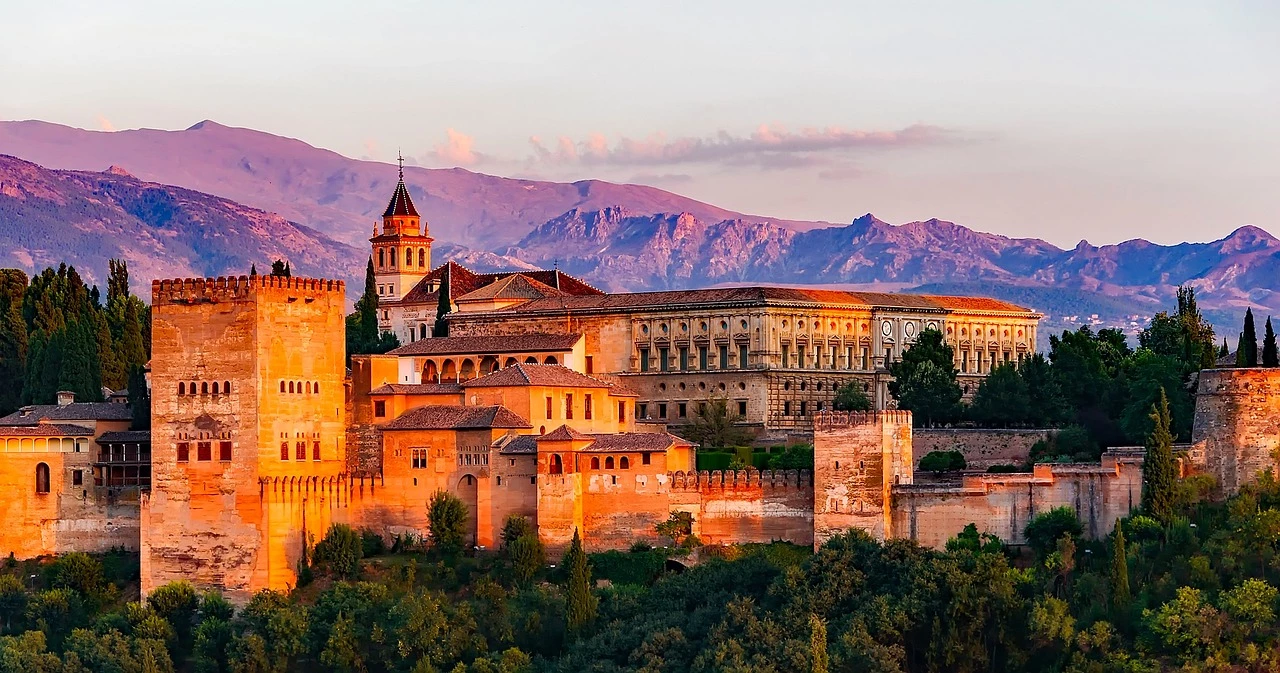
Visit to the Alhambra, the Nasrid Palaces and the Generalife
A morning on the Alhambra hill: the Alcazaba and its watchtower, the Nasrid Palaces with the Court of the Myrtles and the Court of the Lions, the Palace of Charles V, then the gardens and the Patio de la Acequia at the Generalife. The highlight: stepping into the Hall of the Ambassadors, under its inlaid wooden dome.
The general ticket costs €22.27 from the official ticket office, on sale until the day before; it is nominative and entry to the Nasrid Palaces is at the printed time. Book weeks ahead in spring and summer.
- 3 hrs
- €22.27 for the official general ticket; guided tour extra
Guided hike on the Caminito del Rey
The Caminito del Rey is a linear trail of about 7.7 km, including walkways fixed to the walls of the Gaitanejo gorge and the Desfiladero de los Gaitanes, in the north of the province of Málaga. With a guide, you receive the compulsory helmet at the entrance, then follow the walkways to the suspension bridge. The highlight: crossing the bridge above the gorge.
Allow from €30 per person on GetYourGuide, entry included, with free cancellation up to 24 hours before. Tours in English or Spanish; otherwise the compulsory ticket is booked on the official platform.
- about 3 hrs (2 hrs on the walkways)
- from €30 per person, entry included (GetYourGuide price 2026)
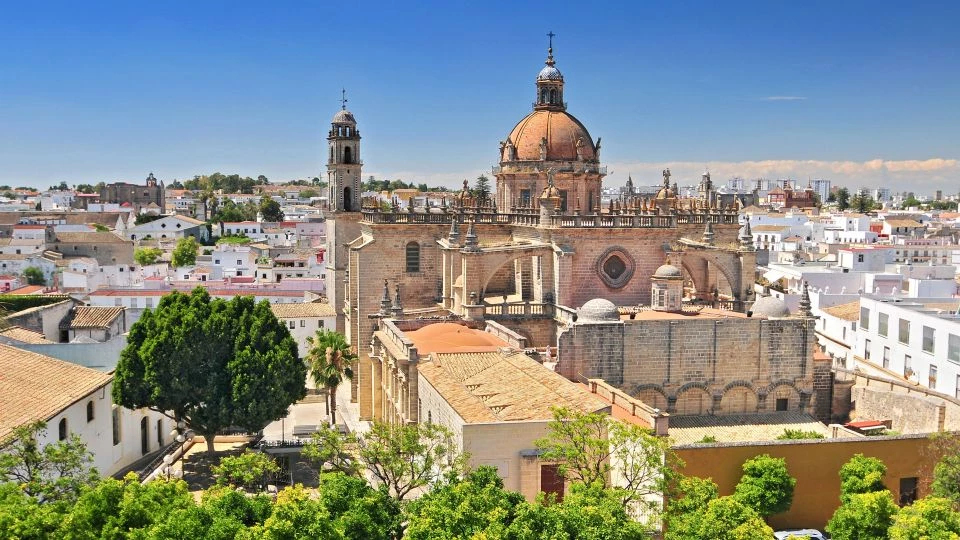
« How the Andalusian Horses Dance » show in Jerez
The show of the Royal Andalusian School of Equestrian Art, in Jerez: Andalusian horses and riders in 18th-century costume perform classical dressage routines, Spanish walk, pirouettes and long-rein work, to Spanish music. The highlight: the airs above the ground performed by the horses.
Allow from €27 per person on GetYourGuide, ticket sold by the School's foundation, with free cancellation up to 24 hours before. The show does not run every day; the venue is wheelchair accessible.
- 1.5 hrs
- from €27 per person (GetYourGuide price 2026)
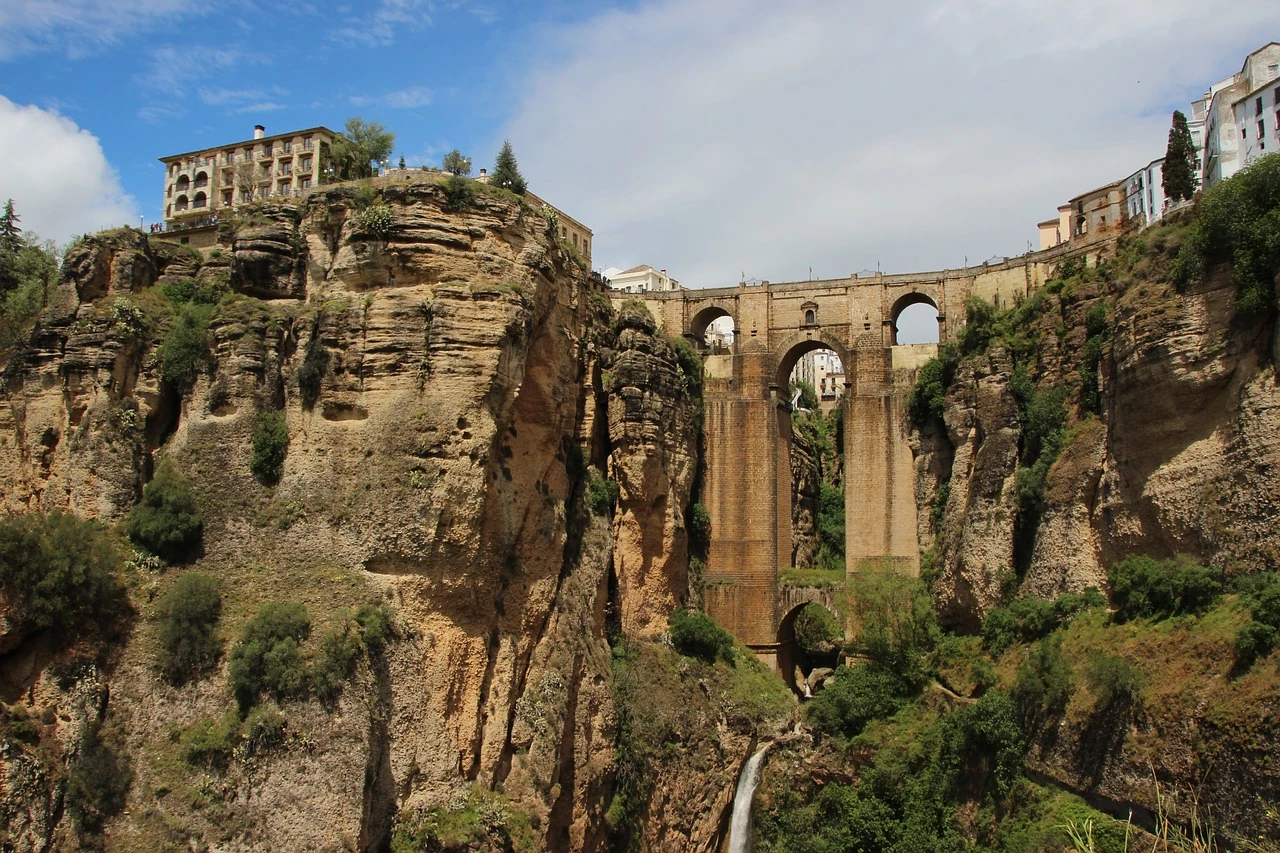
Day trip to Ronda and Setenil de las Bodegas from Málaga
A day by coach from Málaga: about four hours in Ronda, on your own with an audio guide or with a guide depending on the option, for the Puente Nuevo, the bullring and the old town, then Setenil de las Bodegas and its houses under the rock, toured by little train. The highlight: the Puente Nuevo above the Tajo gorge.
Allow from €35 per person on GetYourGuide, with free cancellation up to 24 hours before; one option adds wine and tapas in Ronda. Departure possible from central Málaga.
- 1 day
- from €35 per person (GetYourGuide price 2026)
Getting there
Via Málaga, Seville or Granada airports, or by high-speed train from Madrid: under 2 hours to Córdoba, about 2.5 hours to Seville or Málaga.
Andalusia has three main airports: Málaga-Costa del Sol (AGP), the busiest, Seville (SVQ) and Granada (GRX). From Madrid, Renfe high-speed trains reach Córdoba in under two hours, Seville and Málaga in about two and a half hours.
Once there, the train is enough for the Seville-Córdoba-Málaga axis; a hire car becomes necessary for the white villages, Cabo de Gata or the Sierra Nevada. Check timetables on renfe.com before setting off.
Getting around
Train for Seville, Córdoba and Málaga, bus for Granada and Ronda, car for the white villages and natural parks.
High-speed trains link Seville, Córdoba and Málaga in about an hour between each stop; Granada is also served from Madrid and Málaga. For Ronda, Cádiz, Jerez and mid-sized towns, regional trains and coaches (notably Alsa) take over.
A hire car becomes essential for the white villages between Ronda and Arcos, Cabo de Gata, the Sierra Nevada or Baeza and Úbeda. In historic centres, often with restricted access, leave it in a public car park.
What to do
The Alhambra, the Mezquita and Seville's Alcázar first, then Ronda and the white villages, the Caminito del Rey, Jerez and its horses, and the coast.
A first trip often follows the Seville-Córdoba-Granada triangle: Seville's Alcázar and cathedral, Córdoba's Mezquita, the Alhambra and the Albaicín in Granada. Add Ronda and Setenil for the white villages, the Caminito del Rey for a cliff walk, Jerez for sherry and the equestrian show.
For nature, Doñana is explored by off-road vehicle with a guide, Cabo de Gata for its volcanic coves and the Sierra Nevada for the mountains, less than an hour from Granada.
Food
Gazpacho and salmorejo, fried fish on the coast, Iberian ham, sherry from Jerez: Andalusia is best discovered through tapas.
Andalusia is the land of cold soups: liquid gazpacho and Córdoba's thicker salmorejo, served with ham and egg. On the coast, pescaíto frito (fried fish) and, in Málaga, espetos, sardines grilled on skewers over a wood fire; in Cádiz, tortillitas de camarones, shrimp fritters.
Inland, Iberian ham, rabo de toro (oxtail stew) and olive oil from Jaén. In Jerez and Sanlúcar, fino and manzanilla go with tapas. Lunch is around 2 pm and dinner rarely before 9 pm.
Climate & seasons
When to go to Spain?
Monthly averages over the past 5 years (Open-Meteo).
Best months
- February
- April
- May
- September
- November
Avoid
- July
- August
| Jan | Feb | Mar | Apr | May | Jun | Jul | Aug | Sep | Oct | Nov | Dec | |
|---|---|---|---|---|---|---|---|---|---|---|---|---|
| Our take | ||||||||||||
| Weather | ||||||||||||
| High | 16° | 19° | 20° | 24° | 29° | 33° | 38° | 37° | 31° | 28° | 20° | 17° |
| Rain (mm) | 66 | 40 | 129 | 40 | 18 | 16 | 0 | 3 | 34 | 111 | 53 | 92 |
| Beach | Beach April | Beach May | Beach June | Beach July | Beach August | Beach September | ||||||
| City sightseeing | City sightseeing January | City sightseeing February | City sightseeing March | City sightseeing April | City sightseeing May | City sightseeing October | City sightseeing November | City sightseeing December |
What to do by season (autumn)
-
Beach
Warm air and water, little rain.
-
City sightseeing
Pedestrian-friendly most of the year.
When to go
In spring (April to June) and autumn (September-October); in summer, Seville and Córdoba often exceed 40 °C.
The best times are spring (April to June) and autumn (September to October), with mild weather and smaller crowds. Summer is very hot inland: Seville and Córdoba often exceed 40 °C in the afternoon, while the coast stays more bearable. Winter is mild on the coast and allows skiing in the Sierra Nevada.
In spring, Holy Week, Seville's April Fair and Córdoba's patios in May draw big crowds: book accommodation and the major sites early. For a truly warm winter, head for Tenerife and Mount Teide.
Budget
Allow €22.27 for the Alhambra, €15 for the Mezquita, €15.50 for Seville's Alcázar and €13 online for Seville cathedral; €27 to €35 for the main excursions.
The major monuments charge entry: €22.27 for the Alhambra, €15 for Córdoba's Mezquita (free from 8:30 to 9:30 am Monday to Saturday), €15.50 for Seville's Alcázar and €13 online for the cathedral and the Giralda. Free entry: under-12s at the Alhambra, under-10s at the Mezquita.
For outings, a guided Caminito del Rey starts at €30, the Jerez equestrian show at €27 and a day trip to Ronda and Setenil from Málaga at €35 (GetYourGuide prices 2026). Tapas at the bar keep meals cheap.
Where to stay
Seville, Granada and Málaga as bases, one night in Córdoba and in Ronda; paradores are housed in monuments.
For a first trip, three bases are enough: Seville for the west (Córdoba, Cádiz, Jerez, Doñana), Granada for the Alhambra and the Sierra Nevada, Málaga for the Costa del Sol, Ronda and Antequera. A night in Córdoba lets you see the Mezquita during the free morning hour; a night in Ronda, to enjoy the Tajo without the day-trippers.
The state-run paradores are housed in monuments, such as the Granada parador within the Alhambra grounds or the Úbeda one in a Renaissance palace. During Holy Week and the fairs, book several weeks ahead.
Safety
Andalusia is safe; watch for pickpockets in city centres and for the summer heat. Emergencies: 112; Policía Nacional: 091; Policía Local: 092.
Andalusia poses no particular risk. Pickpockets mostly target the areas around the major monuments of Seville, Granada and Córdoba, crowded transport and Costa del Sol beaches: keep your bag and phone in front of you and leave nothing visible in the car.
In summer, heat is the main danger inland: drink often and avoid walking between 2 pm and 6 pm. Useful numbers: 112 (emergencies), 091 (Policía Nacional), 092 (Policía Local), 061 (medical emergencies in Andalusia).
Formalities
Spain is in the Schengen Area and the eurozone: a valid ID card or passport is enough for EU nationals, and no vaccine is required.
Spain is part of the Schengen Area. Citizens of the European Union, the EEA and Switzerland enter with a valid identity card or passport. Other travellers should check the rules for their nationality: many countries are visa-exempt for 90 days in any 180-day period.
Since 10 April 2026, the European Entry/Exit System (EES) records at the border the fingerprints and photo of non-EU short-stay travellers; the ETIAS authorisation is not yet in service and no launch date has been set (September 2026). EU nationals use the European Health Insurance Card; no vaccine is required. The currency is the euro.
FAQ
Book the Alhambra in advance (€22.27), visit in spring or autumn and allow 5 to 7 days for Seville, Córdoba and Granada.
Do you need to book the Alhambra in advance?
Yes. The general ticket costs €22.27 and is sold online until 11:59 pm the day before the visit; in high season, slots sell out weeks ahead. The Nasrid Palaces can only be visited at the time printed on the ticket, and collecting tickets at the machines requires ID and the bank card used to pay. Under-12s enter free, with a ticket booked at the same time as the others.
Can you visit Córdoba's Mezquita for free?
Yes: Monday to Saturday from 8:30 to 9:30 am, without groups and except on celebration days. Otherwise, the general ticket costs €15.
When is the best time to visit Andalusia?
Spring (April to June) and autumn (September to October). In summer, Seville and Córdoba often exceed 40 °C; winter stays mild on the coast and allows skiing in the Sierra Nevada.
How do you get around Andalusia?
Trains link Seville, Córdoba, Málaga and Granada; buses serve Ronda and mid-sized towns. A hire car is still the best way to reach the white villages, Cabo de Gata and the Sierra Nevada.
Do you need a visa to visit Spain?
Not for EU citizens, who travel with their ID card. Since 10 April 2026, the EES records non-EU travellers at the border; the ETIAS authorisation is not yet in service and no launch date has been set (September 2026).
How many days should you plan for Andalusia?
Allow 5 to 7 days for Seville, Córdoba and Granada, and 10 to 14 days to add Ronda, the white villages, Cádiz and the coast. For a week, stick to the rail axis; beyond that, a car becomes useful.
Is Andalusia a safe destination?
Yes. The main risks are pickpocketing in the centres of Seville, Granada and Málaga and on beaches, and the heat in summer. Emergency number: 112.
Sources
The figures in this guide come from the sources below, checked on the publication date.
Leave a comment
Share your thoughts or travel experience. Your email will not be published.