

Contents 30
Seville, the capital of Andalusia, gathers in its historic centre three monuments inscribed together on the UNESCO World Heritage List in 1987: the cathedral and its Giralda, the Alcázar and the Archivo de Indias. Around them lie the lanes of Santa Cruz, the 1929 Plaza de España and, across the Guadalquivir, the Triana district and its tablaos.
This guide ranks its 15 must-sees, then gives the essentials for planning your stay: access from the airport and Madrid, where to stay, seasons, budget, formalities and safety.
Overview
Seville, the capital of Andalusia, gathers in its historic centre the cathedral and the Giralda, the Alcázar and the Archivo de Indias, inscribed by UNESCO in 1987.
Seville, the capital of Andalusia, spreads across both banks of the Guadalquivir. Its historic centre, one of the largest in Spain, holds the cathedral and its Giralda, the Alcázar and the Archivo de Indias, inscribed together on the UNESCO World Heritage List in 1987.
The city was Roman, then an Almohad capital, then the port holding the monopoly on trade with the Americas in the 16th century. From this it keeps Mudéjar palaces, the lanes of Santa Cruz and, across the river, Triana and its ceramicists. Plaza de España and María Luisa Park date from the 1929 exposition.
15 places to take with you
In the guide's order, ready for Google Maps or your GPS.
Book the activities from this guide
Our picks for Seville, well rated and free to cancel.
-
Book this activity
Day trip to Córdoba and its Mosque-Cathedral
from €79 per person (GetYourGuide price 2026)
-
Book this activity
Skip-the-line guided tour of the Alcázar, the cathedral and the Giralda
from €74 per person, entry included (GetYourGuide price 2026)
-
Book this activity
Flamenco show at the Flamenco Dance Museum
from €33 per person (GetYourGuide price 2026)
Affiliate links: Travel Advice earns a commission if you book, at no extra cost to you. Learn more

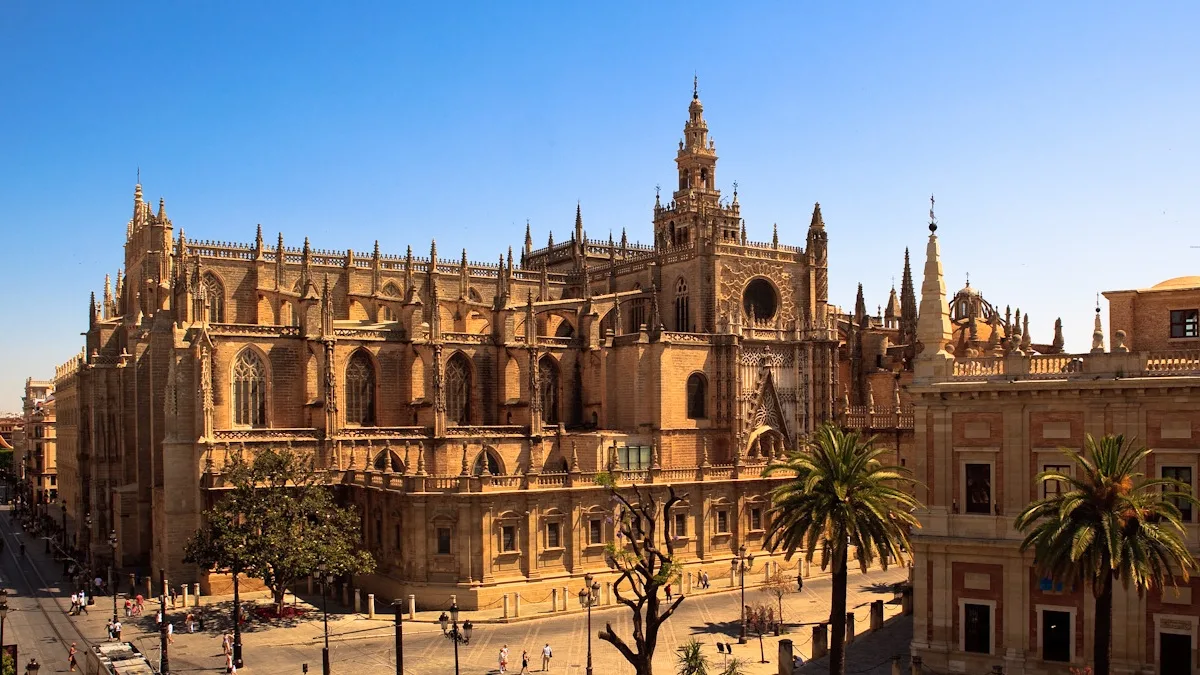
Seville Cathedral and the Giralda
Saint Mary's Cathedral was built in the 15th century on the site of the great Almohad mosque; it is one of the largest Gothic cathedrals in the world. Inside, the gilded altarpiece of the Capilla Mayor and the tomb of Christopher Columbus, carried by four heralds, hold most visitors' attention.
The Giralda, the mosque's former minaret that became a bell tower after the Christian conquest, is climbed by a series of ramps, with no steps, up to the bell terrace and its view over the roofs of Santa Cruz. The ticket (€13 online, €14 at the ticket office in 2026) also covers the church of El Salvador.

Royal Alcázar of Seville
The Alcázar is a royal palace founded in the Umayyad period and reworked for more than a thousand years. Its heart, the Mudéjar palace of Peter I of Castile (1364), combines stucco, wooden ceilings and azulejos made by Muslim craftsmen for a Christian king; the Courtyard of the Maidens is its most photographed space.
The gardens, with their pools, orange trees and the Grutesco gallery, take almost as long as the rooms. The general ticket costs €15.50 in 2026 (€8 reduced); the upper floor of the Cuartos Reales is an extra €5.50.

Plaza de España
Plaza de España was built from 1914 to 1928 by the architect Aníbal González for the 1929 Ibero-American Exposition. Its huge half-circle of brick and ceramics, in the Andalusian Regionalist style, opens onto María Luisa Park.
At the foot of the façades, azulejo benches depict the Spanish provinces, each with its map and a scene from its history. A canal runs along the square, crossed by four bridges, and you can hire a rowing boat on it.

Santa Cruz quarter
Santa Cruz, Seville's former Jewish quarter, is a maze of white lanes between the cathedral, the Alcázar and the Murillo gardens. Flower-filled patios can be glimpsed behind iron gates, and small squares, Doña Elvira, Santa Cruz or Los Venerables, punctuate the walk.
The quarter is also full of tapas bars and ceramics shops. You wander it freely on foot, ideally after leaving the Alcázar, one of whose gates opens onto Plaza de la Alianza.

General Archive of the Indies
The General Archive of the Indies occupies the former Lonja, the merchants' exchange built at the end of the 16th century to plans by Juan de Herrera, between the cathedral and the Alcázar. Since 1785 it has held the records of the Spanish administration of the Americas and the Philippines.
Inside you see the great marble staircase, the galleries with mahogany shelving and exhibitions of maps and manuscripts. Together with the cathedral and the Alcázar, it forms the ensemble inscribed by UNESCO in 1987.

Real Maestranza bullring
The bullring of the Real Maestranza de Caballería, beside the Guadalquivir, was built in masonry between 1761 and 1881, making it one of the oldest in Spain. Its white and ochre façade, oval ring and arcaded galleries are typical of Sevillian Baroque.
A guided tour takes you into the stands, the bullfighters' chapel and the bullfighting museum, without attending a bullfight. Bullfights, which are controversial, take place mainly during the April Fair.

Torre del Oro
The Torre del Oro is a twelve-sided Almohad tower, raised in the 13th century on the bank of the Guadalquivir to control access to the port. A chain stretched to a twin tower on the far bank then closed the river to ships.
Today it houses Seville's small naval museum, with charts, models and navigation instruments, and a terrace looking out over Triana and the Maestranza. Entry is cheap.

Metropol Parasol (Las Setas)
The Metropol Parasol, nicknamed "Las Setas" (the mushrooms), is a wooden structure by the German architect Jürgen Mayer, opened in 2011 on Plaza de la Encarnación. Its six parasols shelter a market, a raised square and, underground, the Antiquarium with its Roman remains uncovered during construction.
At the top, a walkway circles the parasols with a 360° view over the city. The ticket covers the viewpoint, the "Feeling Sevilla" experience and, after dark, the Aurora light show.

Casa de Pilatos
Casa de Pilatos is a 15th and 16th-century palace built by the Enríquez de Ribera family and later passed to the Dukes of Medinaceli, whose foundation runs it today. It blends Mudéjar, Gothic and Italian Renaissance around a large courtyard of azulejos and ancient statues.
On the ground floor you walk through the main courtyard, the rooms with wooden ceilings, the Chapel of the Flagellation and the gardens. The upper floor, with its paintings and furniture, can only be seen on a guided tour.

Guadalquivir riverside
The Paseo de Cristóbal Colón follows the east bank of the Guadalquivir, from the Torre del Oro past the Maestranza bullring to the Triana bridge. On the far bank, Calle Betis lines up Triana's colourful façades and their terraces.
The route is flat, shaded in places and lined by a cycle lane. Cruise boats leave from the quay near the Torre del Oro.

Triana
Triana, on the west bank of the Guadalquivir, is the old quarter of potters, sailors and the Roma families who shaped Sevillian flamenco. You enter it by the Isabel II bridge, known as the Triana bridge (1852), which leads straight to the covered market.
Triana market stands on the site of the Castle of San Jorge, seat of the Inquisition, whose remains can be visited underground. Around it, the ceramics workshops of Calle Alfarería and the bars of Calle Betis define the district.

Casa de la Memoria, flamenco tablao
Casa de la Memoria is a tablao set in an old house on Calle Cuna, in central Seville. Shows take place in an intimate courtyard: singing, guitar and dance a few metres from the audience.
Every evening, Sevillian artists take turns in a programme that changes regularly. It is a good choice for a restrained flamenco, with no dinner or tourist frills.

Aire de Sevilla Arab baths
Aire de Sevilla is a contemporary bathhouse set in an old palace on Calle Aire, on the edge of Santa Cruz. These are not historic baths: the circuit is inspired by Arab baths, with hot, warm and cold pools, a hammam and a saltwater bath.
The lighting is dim and the number of bathers is limited in each slot. You can add a massage when booking; it is a welcome break after a day of sightseeing in summer.

María Luisa Park
María Luisa Park is named after Infanta María Luisa Fernanda, Duchess of Montpensier, who gave these gardens to the city in 1893. It was redesigned for the 1929 Ibero-American Exposition, from which it keeps pavilions, fountains and ceramic benches.
Its shaded paths link Plaza de España, to the north-east, with Plaza de América, to the south, home to the archaeological museum and the museum of popular arts and customs. It is the coolest place in the city in the afternoon.

Lebrija Palace
Lebrija Palace, on Calle Cuna, is a 16th-century mansion bought in the early 20th century by the Countess of Lebrija, who gathered her archaeological collection there. Its floors are covered with Roman mosaics, several of them from the Roman city of Itálica, north of Seville.
The main courtyard, the azulejos and the Mudéjar ceilings can be seen on the ground floor; the upper floor, with the countess's apartments, library and furniture, only opens on a guided tour.
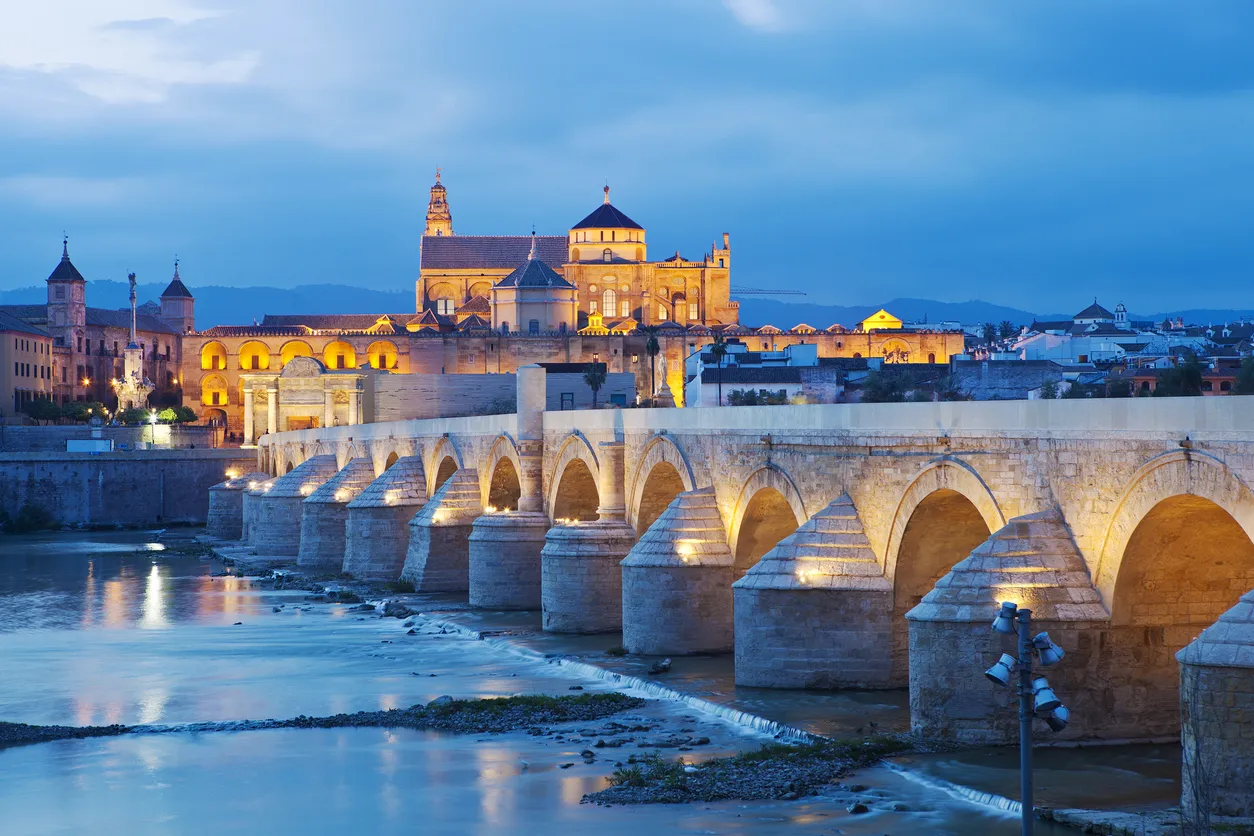
Day trip to Córdoba and its Mosque-Cathedral
A day by coach with a guide: a short stop in Carmona, the road to Córdoba, then a visit to the Mosque-Cathedral, its hundreds of columns and red-and-white arches, before a walk through the Judería and free time. The highlight: stepping into the mosque's forest of columns.
Allow from €79 per person on GetYourGuide, with free cancellation up to 24 hours before; mosque entry, with priority access, is included depending on the option chosen. On your own, the AVE train links Seville to Córdoba in about 45 minutes.
- 10 hrs
- from €79 per person (GetYourGuide price 2026)
Skip-the-line guided tour of the Alcázar, the cathedral and the Giralda
A licensed guide takes you past the queues and through all three monuments: the palaces and gardens of the Alcázar, the cathedral with Christopher Columbus's tomb, then the climb up the Giralda. The highlight: the Courtyard of the Maidens, explained room by room.
Allow from €74 per person on GetYourGuide, entry included, with free cancellation up to 2 days before. Tours in French, English, Spanish, Italian or Portuguese depending on the slot.
- 2.5 to 3 hrs
- from €74 per person, entry included (GetYourGuide price 2026)
Flamenco show at the Flamenco Dance Museum
An hour of flamenco in the 18th-century courtyard of the Flamenco Dance Museum, founded by the dancer Cristina Hoyos: live singing, guitar and dance, trailing dresses and castanets, in an intimate room. The highlight: the alegrías danced a few metres from the audience.
Allow from €33 per person on GetYourGuide, with free cancellation up to 24 hours before; one option adds a museum visit. The venue is wheelchair accessible.
- 1 hr
- from €33 per person (GetYourGuide price 2026)
Guided small-boat trip on the Guadalquivir
Ninety minutes on the river in a boat for twelve people at most: the Torre del Oro, the Triana bridge, the façades of Calle Betis, Los Remedios and the banks leading to La Cartuja, with the captain's commentary. The highlight: passing under the Triana bridge with the district above you.
Allow from €25 per person on GetYourGuide, one drink included, with free cancellation up to 24 hours before. Commentary in Spanish or English; a private option is available.
- 1.5 hrs
- from €25 per person, one drink included (GetYourGuide price 2026)
Getting there
Seville-San Pablo airport (SVQ) is about 8 km from the centre, linked by the EA bus; from Madrid, the AVE reaches Santa Justa station in about 2 hrs 30.
By air: Seville-San Pablo airport (SVQ) is about 8 km north-east of the centre. Tussam's special EA bus line links it to the centre and Plaza de Armas in around thirty minutes; taxis wait outside the terminal.
By train: the AVE links Madrid to Seville-Santa Justa station in about 2 hrs 30, and Córdoba in about 45 minutes. By car: motorways to Córdoba (about 140 km), Málaga and Granada (about 250 km); in the historic centre, use a public car park.
Córdoba and its mosque are under an hour away by train: our Córdoba guide covers the visit.
Getting around
On foot in the historic centre; Sevici bikes, Tussam buses, the tram and metro line 1 for the rest, taxis and ride-hailing at night.
The historic centre is walkable: from the cathedral to Plaza de España takes about twenty minutes. The city is flat and criss-crossed by cycle lanes; Sevici bike-share has stations in every district.
Tussam buses serve the whole city, the Metrocentro tram runs from Plaza Nueva towards Nervión and metro line 1 crosses the urban area. Taxis, Uber and Cabify are handy at night; avoid driving in the centre, whose streets are narrow and often restricted to residents.
What to do
The cathedral and the Alcázar in the morning, Santa Cruz and Plaza de España in the afternoon, the Guadalquivir banks and a tablao in the evening; Córdoba as a day trip.
A typical day starts at the Alcázar at opening time, continues at the cathedral and up the Giralda, then through the lanes of Santa Cruz. In the afternoon, Plaza de España and María Luisa Park offer shade; at sunset, go up the Metropol Parasol or walk along the Guadalquivir to Triana.
In the evening, a flamenco show in a tablao, then tapas around the Alameda or Calle Betis. For a day trip, Córdoba and its Mosque-Cathedral are 45 minutes away by AVE.
Food
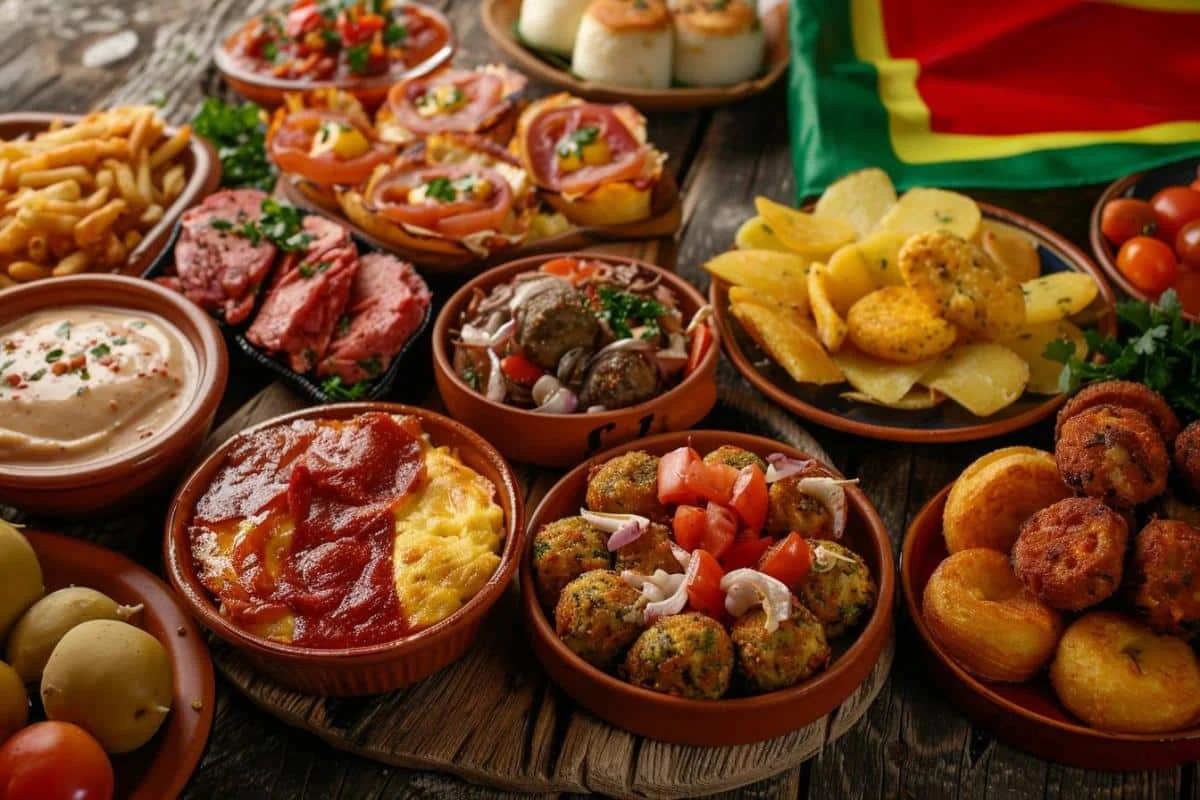
Salmorejo, espinacas con garbanzos, pescaíto frito and jamón ibérico, tasted as tapas at the bar, at Triana market or around the Alameda.
Seville eats in tapas, standing at the bar or on a terrace. The classics: salmorejo, a cold cream of tomato and bread, espinacas con garbanzos (spinach with chickpeas and cumin), pescaíto frito, montaditos and jamón ibérico. In summer, gazpacho is drunk chilled.
Sevillians dine late, rarely before 9 pm. Triana market has bars inside, while the Alameda de Hércules and Calle Betis gather the evening terraces; carry some cash for the small bars.
Climate & seasons
When to go to Spain?
Monthly averages over the past 5 years (Open-Meteo).
Best months
- February
- April
- May
- September
- November
Avoid
- July
- August
| Jan | Feb | Mar | Apr | May | Jun | Jul | Aug | Sep | Oct | Nov | Dec | |
|---|---|---|---|---|---|---|---|---|---|---|---|---|
| Our take | ||||||||||||
| Weather | ||||||||||||
| High | 16° | 19° | 20° | 24° | 29° | 33° | 38° | 37° | 31° | 28° | 20° | 17° |
| Rain (mm) | 66 | 40 | 129 | 40 | 18 | 16 | 0 | 3 | 34 | 111 | 53 | 92 |
| City sightseeing | City sightseeing January | City sightseeing February | City sightseeing March | City sightseeing April | City sightseeing May | City sightseeing October | City sightseeing November | City sightseeing December |
What to do by season (autumn)
-
City sightseeing
Pedestrian-friendly most of the year.
When to go
March to May and September to November; summer regularly exceeds 40 °C, winter stays mild but cool at night.
Spring (March-May): the best season, mild and in bloom, with Holy Week and its processions, then the April Fair, usually held two weeks after Easter. Hotels are then full and expensive: book early.
Summer (June-August): the heat regularly tops 40 °C in the afternoon. Sightsee from 9 am to 1 pm, then at dusk. Autumn (September-November): still hot in September, ideal in October. Winter (December-February): mild, sunny days, cool nights, fewer people at the monuments.
Budget
Allow €13 for the cathedral and the Giralda (online), €15.50 for the Alcázar, from €25 for a boat trip and €33 for a flamenco show; Plaza de España and the park are free.
The major monuments charge entry: €13 online for the cathedral and the Giralda (€14 at the ticket office), €15.50 for the Alcázar, plus €5.50 for the Cuartos Reales. Plaza de España, María Luisa Park, Santa Cruz and the riverbanks are free. Children under 13 enter the cathedral and the Alcázar for free.
For outings, a flamenco show starts at around €25 to €33, a 90-minute Guadalquivir cruise at €25 and a guided trip to Córdoba at €79 (GetYourGuide prices 2026). Tapas are ordered one by one, so eating at the bar can be cheap.
Where to stay
Santa Cruz and the historic centre to do everything on foot, Triana for neighbourhood life, the Alameda de Hércules for nightlife, Nervión for lower prices near the station.
Historic centre and Santa Cruz: at the foot of the cathedral and the Alcázar, boutique hotels in patio houses; the most convenient and the most expensive. Triana: across the bridge, a lively district ten minutes' walk from the cathedral.
Alameda de Hércules: north of the centre, with bars and restaurants busy until late. Nervión: a modern district near Santa Justa station, with cheaper, well-connected hotels. For Holy Week and the Fair, book several months ahead.
Safety
Seville is a safe city; watch for pickpockets around the monuments and for the summer heat. Emergencies: 112; Policía Nacional: 091; Policía Local: 092.
Seville poses no particular risk. Pickpockets mostly target the areas around the cathedral, the Alcázar, Plaza de España and crowded transport: keep your bag and phone in front of you. Be wary of people offering a sprig of rosemary near the cathedral before asking for money.
In summer, heat is the main danger: drink often, cover your head and avoid walking between 2 pm and 6 pm. Useful numbers: 112 (emergencies), 091 (Policía Nacional), 092 (Policía Local), 061 (medical emergencies in Andalusia).
Formalities
Spain is in the Schengen Area and the eurozone: a valid ID card or passport is enough for EU nationals, and no vaccine is required.
Spain is part of the Schengen Area. Citizens of the European Union, the EEA and Switzerland enter with a valid identity card or passport. Other travellers should check the rules for their nationality: many countries are visa-exempt for 90 days in any 180-day period.
Since 10 April 2026, the European Entry/Exit System (EES) records at the border the fingerprints and photo of non-EU short-stay travellers; the ETIAS authorisation is not yet in service and no launch date has been set (September 2026). EU nationals use the European Health Insurance Card; no vaccine is required. The currency is the euro.
FAQ
When to go, how many days to stay, what to book, how to get in from the airport and where to see flamenco: the essentials in short answers.
When is the best time to visit Seville?
Spring, March to May, and autumn, September to November, have the most pleasant temperatures for exploring Seville on foot. Summer regularly exceeds 40 °C: if you come then, sightsee early in the morning and keep the afternoon for indoor visits or a siesta. Holy Week and the April Fair are the liveliest times, but also the most expensive for accommodation.
How many days do you need in Seville?
Three days cover the must-sees: the cathedral and the Giralda, the Alcázar, Plaza de España, Santa Cruz and Triana. The historic centre is walkable, leaving time for a tablao in the evening. Add a day for Córdoba, about 45 minutes away by AVE.
Should you book the cathedral and the Alcázar?
Yes, book online: they are Seville's two busiest sites. The cathedral ticket costs €13 online versus €14 at the ticket office in 2026, the Alcázar €15.50. Pick an opening slot, before the heat and the groups.
How do you get from Seville airport to the centre?
SVQ airport (San Pablo) is about 8 km north-east of the centre. Tussam's special EA bus line reaches the centre in around thirty minutes; a taxi takes about the same outside rush hour.
Can you do a day trip to Córdoba or Granada from Seville?
Yes. Córdoba is about 140 km away, 45 minutes by AVE from Santa Justa: it is the easiest trip, for the Mosque-Cathedral and the Judería. Granada is about 250 km away, a very long day; for the Alhambra, whose tickets are name-specific, book several weeks ahead or stay overnight.
How do you get around Seville?
The historic centre is walkable: the cathedral, the Alcázar, Santa Cruz and Plaza de España are close together. Beyond that, Sevici bike-share, Tussam buses, the tram and metro line 1 fill the gaps. Avoid driving in the centre.
Where can you see a flamenco show in Seville?
In the tablaos of the centre, such as Casa de la Memoria, at the Flamenco Dance Museum or in the venues of Triana, a district tied to flamenco's history. The rooms are small: book ahead, especially in spring and autumn. A show usually lasts about an hour.
Sources
The figures in this guide come from the sources below, checked on the publication date.
Leave a comment
Share your thoughts or travel experience. Your email will not be published.