

Contents 36
Barcelona reads in three layers: the Roman and medieval city of the Barri Gòtic, the Eixample grid where Gaudí set the Sagrada Família, Casa Batlló and La Pedrera, then the seafront of beaches and harbour. This guide brings together the 18 places that shape a first visit, from Montjuïc hill to the monastery of Montserrat, with the booking rules in force in 2026 (timed, named tickets, the Gaudí centenary), transport from the airport and a realistic budget for three or four days.
To go further in Spain: our guides to Seville, Majorca and Ibiza.
Overview
The capital of Catalonia, Barcelona blends Gaudí's modernist architecture (Sagrada Família, Park Güell, Casa Batlló, UNESCO-listed), a medieval centre, city beaches and a renowned food scene. Compact, it is explored on foot and by metro.
Barcelona, the capital of Catalonia, is a Mediterranean city where Antoni Gaudí's modernist architecture meets a medieval core (the Barri Gòtic), urban beaches and a renowned Catalan cuisine.
Several Gaudí masterpieces, the Sagrada Família, Park Güell, Casa Batlló and Casa Milà, are inscribed on the UNESCO World Heritage List, as are Domènech i Montaner's Palau de la Música and Hospital de Sant Pau. 2026 marks the centenary of Gaudí's death, a particularly busy year around the Sagrada Família.
The city is compact: it is explored on foot and with an efficient metro. It is also an ideal base for a day trip to Montserrat, the mountain monastery some 50 km away.
18 places to take with you
In the guide's order, ready for Google Maps or your GPS.
Book the activities from this guide
Our picks for Barcelone, well rated and free to cancel.
-
Book this activity
Sagrada Família entry ticket with audio guide
€34 per person, audio guide included (GetYourGuide price 2026)
-
Book this activity
Park Güell guided tour with skip-the-line entry
€25 per person, entry included (GetYourGuide price 2026)
-
Book this activity
Montserrat half-day trip: monastery, funicular, Black Virgin and vineyard
€39 per person, transport included (GetYourGuide price 2026)
Affiliate links: Travel Advice earns a commission if you book, at no extra cost to you. Learn more

Sagrada Família
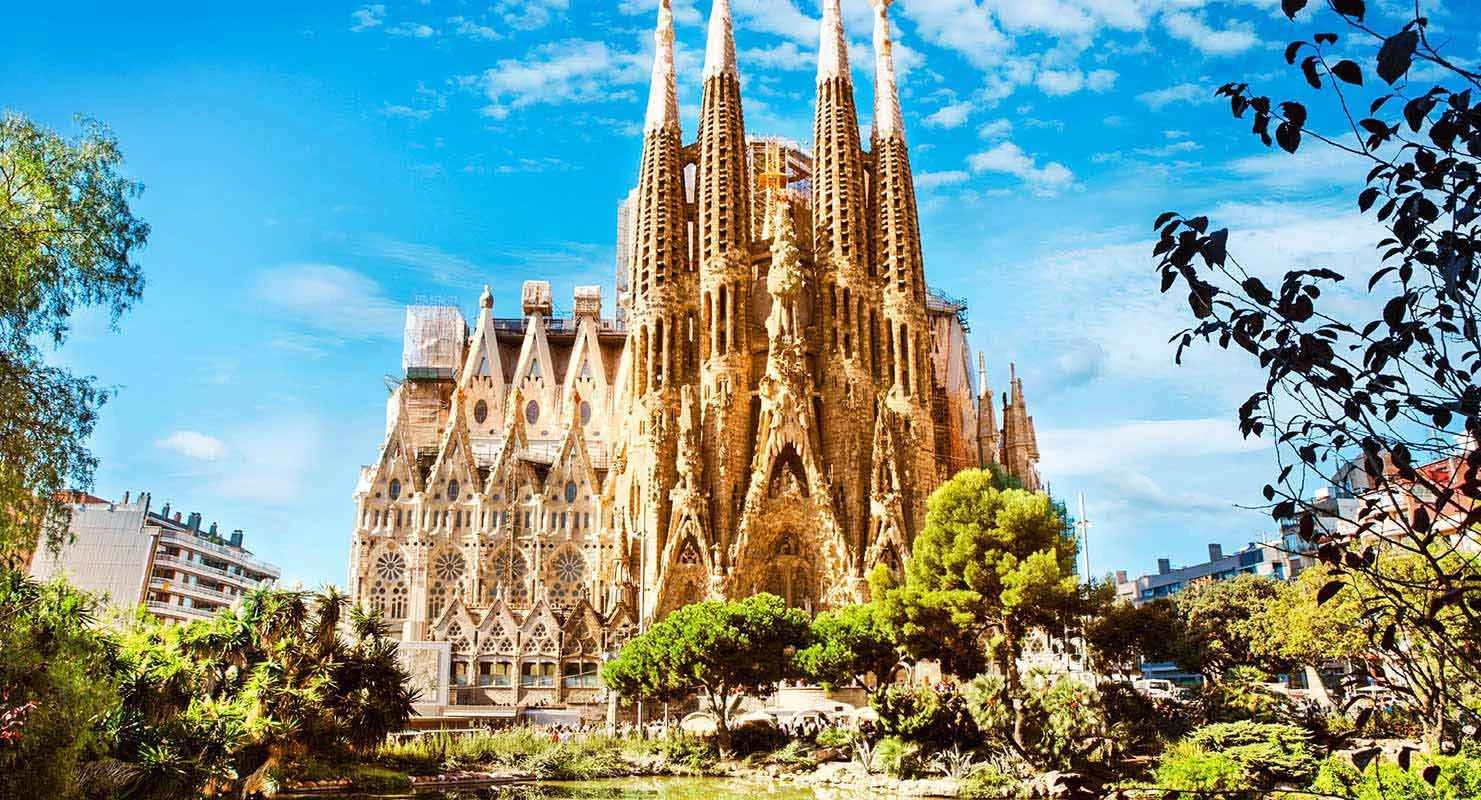
The Sagrada Família has been under construction since 1882, and Antoni Gaudí gave it forty-three years of his life, the last twelve exclusively, before dying under a tram in 1926. He knew he would only see the crypt and the Nativity façade completed and left plaster models for the rest. The building resumed after the Civil War and accelerated in the 2000s with computer-aided stone cutting; the nave was consecrated by Benedict XVI in 2010, and the towers of the Virgin Mary (2021) and the four Evangelists (2023) now rise above the roof.
Inside, the columns branch like trees to hold a vault fifty metres up, and the light changes with the hour: blues and greens through the Nativity side in the morning, reds and oranges through the Passion side in the afternoon. The Passion façade, carved by Josep Maria Subirachs in angular figures, answers the exuberant Nativity façade Gaudí completed himself. The central tower of Jesus Christ, which will make the basilica the tallest church in the world at 172.5 m, is the one the foundation aims to finish for the 2026 centenary of Gaudí's death; work on the Glory façade and the surroundings will continue for years.

Park Güell
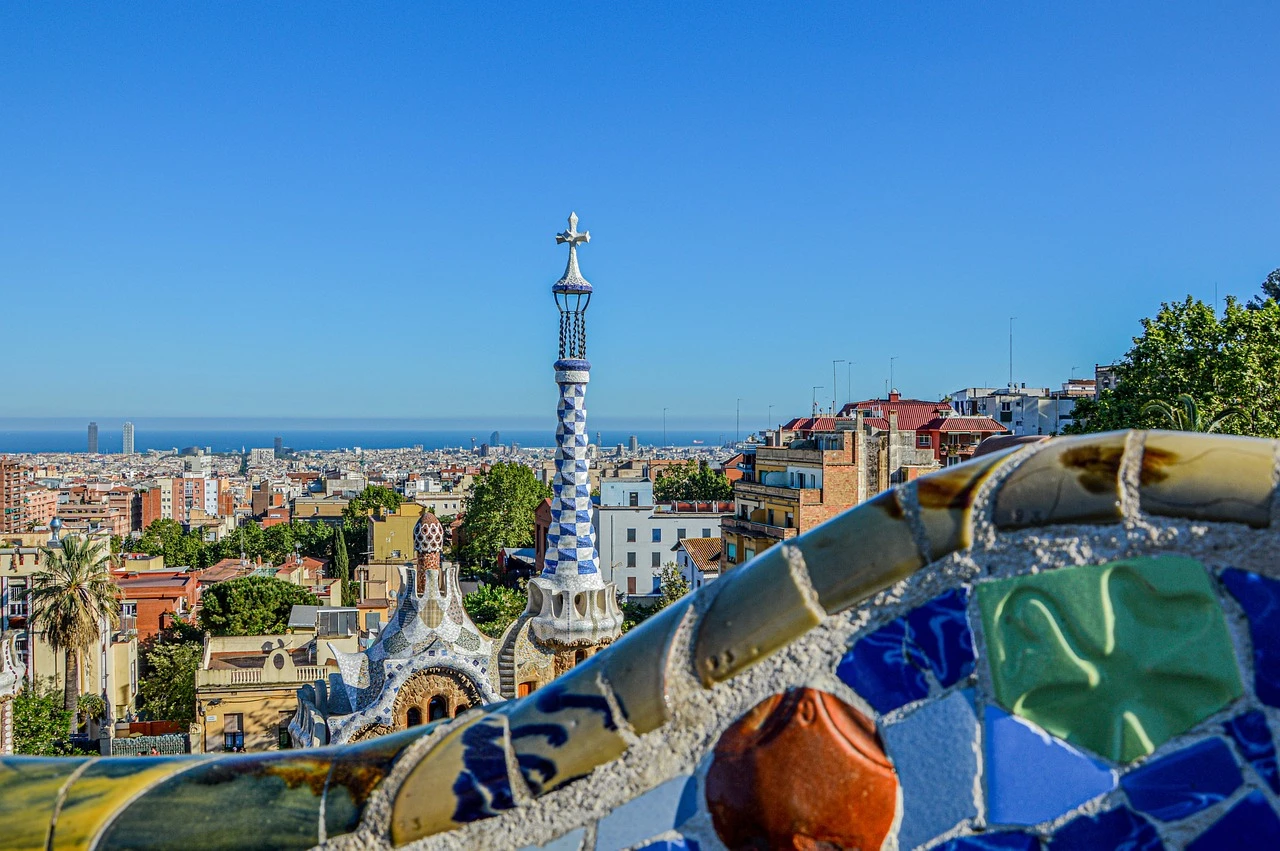
Park Güell began in 1900 as a failed property venture: Eusebi Güell wanted a garden city of sixty villas on the Carmel hill, Gaudí laid out the roads, viaducts and communal spaces, and only two houses were ever sold. The city bought the estate in 1922 and opened it as a park. What remains is Gaudí's most playful work: the two gingerbread lodges at the entrance, the mosaic salamander on the staircase, the Hypostyle Room with its eighty-six Doric columns, and above it the great terrace whose serpentine bench, covered in broken-tile trencadís by Josep Maria Jujol, looks out over the whole city to the sea.
The Monumental Zone around these works has been ticketed since 2013 to limit the crowds, while the woods, paths and viewpoints of the rest of the park stay free. The pink house where Gaudí lived from 1906 to 1925 is now the Gaudí House Museum, with his furniture and a separate ticket. From the Turó de les Tres Creus at the top, the view takes in the Sagrada Família, Montjuïc and the harbour.

Casa Batlló and Casa Milà (La Pedrera)
Five hundred metres apart on Passeig de Gràcia, Gaudí's two apartment buildings show what he could do with a bourgeois commission. Casa Batlló (1904-1906) is a remodelling: he wrapped an existing house in a façade of bone-like balconies and glittering glass, topped it with a scaly roof that reads as the dragon slain by Saint George, and lit the interior through a blue-tiled light well. The block it stands on is nicknamed the "Block of Discord" for the rival modernista houses of Puig i Cadafalch and Domènech i Montaner next door.
Casa Milà (1906-1912), known as La Pedrera, "the quarry", was built from scratch: a wave of grey limestone with wrought-iron balconies by Jujol, two inner courtyards, a self-supporting structure with no load-bearing walls, and a roof terrace where the chimneys stand like helmeted sentinels. The attic under its catenary brick arches holds an exhibition on Gaudí's methods, and a period apartment shows how a family lived there in 1910.

Gothic Quarter (Barri Gòtic)
The Barri Gòtic sits on the Roman colony of Barcino, founded around 10 BC: four columns of the Temple of Augustus survive in a courtyard on Carrer del Paradís, and stretches of the 4th-century wall and towers stand at Plaça Nova and along Carrer del Sotstinent Navarro. The medieval city grew inside and over them. The cathedral, built between 1298 and 1448 with a neo-Gothic façade added in the 1890s, keeps thirteen white geese in its cloister in memory of Saint Eulàlia, and Plaça del Rei next door is the finest medieval square in the city, framed by the Royal Palace and the Tinell hall.
Much of what looks medieval is in fact early 20th-century: the Bridge of Sighs over Carrer del Bisbe dates from 1928, when the quarter was restyled for the 1929 Exhibition. The quieter corners are Plaça de Sant Felip Neri, its church wall still scarred by a 1938 bombing, the Jewish quarter of the Call with its small synagogue, and Plaça Reial with its palms and lampposts designed by the young Gaudí. Underneath Plaça del Rei, the MUHBA museum lets you walk over the excavated Roman streets.

Montjuïc hill
Montjuïc is the 173 m hill that closes Barcelona to the south-west, between the harbour and the Plaça d'Espanya. Its castle, a fortress that fired on the city as often as it defended it, was the prison and execution ground of the Franco years; today it is a small paid museum with the best view over the port and the coast. The hill was landscaped for the 1929 International Exhibition, which left the Palau Nacional (now the MNAC, with the finest Romanesque frescoes in Europe), the Magic Fountain, the Poble Espanyol village of replica Spanish architecture and Mies van der Rohe's German Pavilion, rebuilt in 1986.
The 1992 Olympics added the stadium, the Palau Sant Jordi and Calatrava's communications tower, and the Fundació Joan Miró by Josep Lluís Sert holds the largest collection of the painter's work. Between them lie botanical gardens, the Jardins de Joan Brossa and the cactus garden of Mossèn Costa i Llobera above the port. The Telefèric de Montjuïc cable car climbs from the funicular station to the castle in a few minutes.

La Rambla
La Rambla runs 1.2 km from Plaça de Catalunya down to the Columbus monument at the harbour, along the bed of a stream that marked the medieval city wall until the 18th century. It is really five Rambles end to end, and the names tell the story: Canaletes with its fountain (drink from it and you will return to Barcelona, the legend says), the Rambla dels Estudis of the old university, the flower stalls of the Rambla de Sant Josep, the Rambla dels Caputxins beside the Liceu opera house, and the Rambla de Santa Mònica near the port.
Along the way are the Boqueria market, the Liceu (rebuilt after the 1994 fire), Miró's pavement mosaic at Pla de l'Os, the Palau de la Virreina exhibition space and the Gothic Quarter on one side and the Raval on the other. The boulevard is being redesigned from the harbour end to widen the central promenade, so expect works in places until the late 2020s.

Picasso Museum (El Born)
The Picasso Museum occupies five medieval palaces on Carrer de Montcada, the street of the merchant nobility of El Born, and it is the painter's own creation: he chose Barcelona, where he had lived from 1895 to 1904, and his friend Jaume Sabartés gave the founding collection in 1963. It is the place to understand the young Picasso, from the academic canvases painted at fourteen (Science and Charity, First Communion) to the Blue Period, and it holds the complete series of 58 variations on Velázquez's Las Meninas that he gave to the city in 1968.
The Gothic courtyards and staircases of the palaces are part of the visit. Two doors down, the Museu de Cultures del Món and the chocolate shops of the same street, then the basilica of Santa Maria del Mar and the Born Centre de Cultura i Memòria, built over the streets razed after 1714, fill an afternoon in the quarter.

Montserrat monastery and mountain
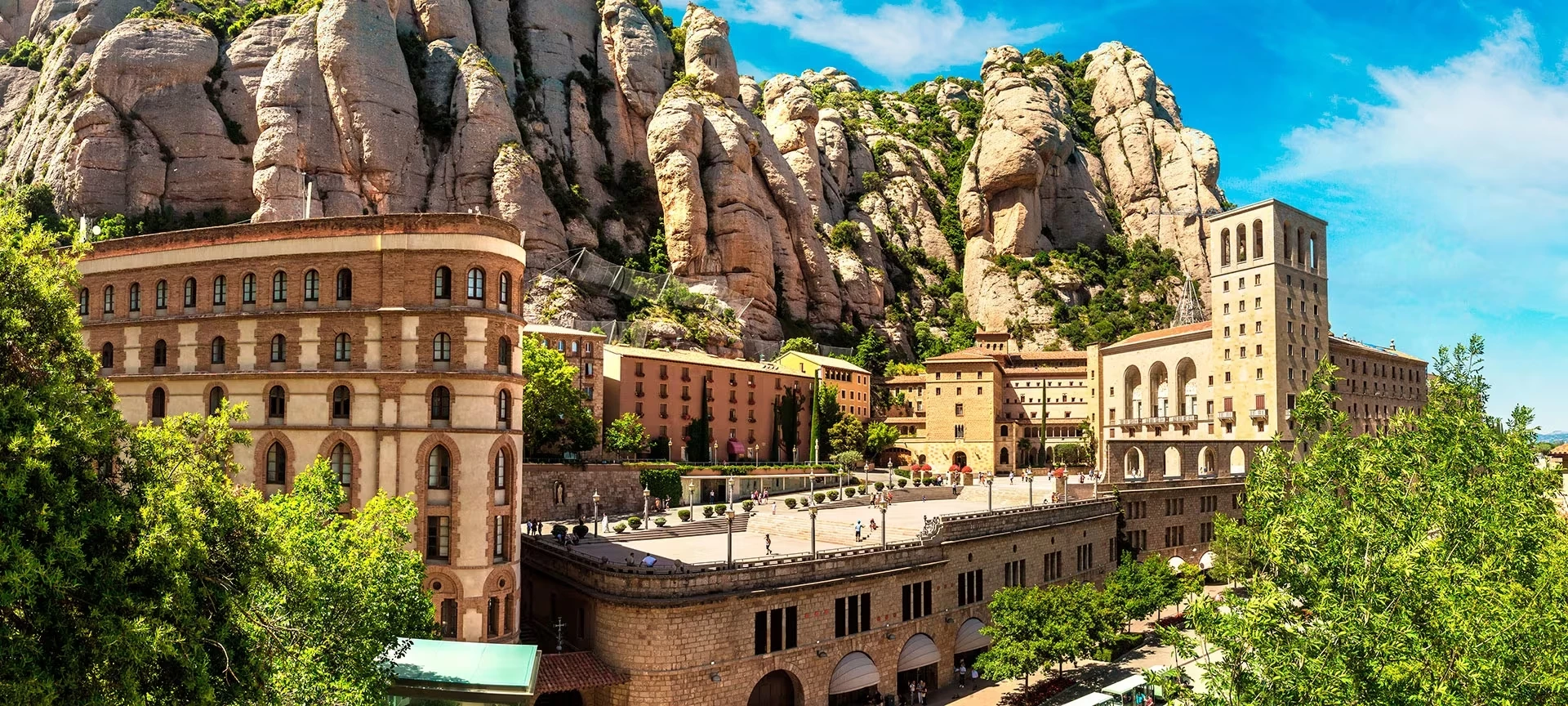
Montserrat, the "serrated mountain", rises to 1,236 m some 50 km north-west of Barcelona, a wall of rounded conglomerate needles visible from the city on a clear day. Halfway up, at 720 m, the Benedictine monastery founded in 1025 shelters the Moreneta, the 12th-century Black Virgin who is the patron saint of Catalonia; pilgrims queue to touch the sphere she holds, and the Escolania boys' choir, one of the oldest in Europe, sings at 1 pm on most days. The monastery museum has a small but real collection with Caravaggio, El Greco, Monet, Picasso and Dalí.
Above the basilica, the Sant Joan funicular climbs to the upper trails: the walk to Sant Jeroni, the summit, takes about an hour and a half each way through the rock spires, and the shorter path to the Santa Cova chapel, where the statue was found, follows a rosary of modernista monuments. Getting there is part of the day: the FGC R5 train from Plaça d'Espanya to Monistrol de Montserrat (about an hour), then the rack railway, or to Montserrat-Aeri for the cable car straight up the cliff.

La Boqueria market
The Mercat de Sant Josep de la Boqueria opens onto La Rambla through a modernista iron-and-glass arch of 1914, but the market is far older: traders sold meat here at the city gate from the 13th century, and the present hall was built from 1840 on the site of a demolished convent. Under the iron roof, some 200 stalls sell fish landed at the port, Iberian ham, Catalan sausages, mushrooms from the Pyrenees, saffron, cheeses and the mountains of fruit that the front stalls cut into cups for tourists.
The real life of the market is in its bars: Pinotxo, the counter run for decades by Juanito Bayén, and El Quim de la Boqueria, where cooks fry eggs with baby squid on the plancha in front of you. Locals shop early and the stalls at the back, away from La Rambla, are cheaper and less staged.

Palau de la Música Catalana
Built between 1905 and 1908 by Lluís Domènech i Montaner for the Orfeó Català choral society, the Palau de la Música Catalana is the concert hall that shows modernisme was not only Gaudí. The brick façade on a cramped corner of Sant Pere is covered in mosaic columns and a sculpted prow of allegories; inside, the auditorium is lit by day through walls of stained glass and an inverted dome of coloured glass that hangs like a drop of sun over the stalls. The stage is framed by the muses of Eusebi Arnau, half sculpture and half mosaic, and by a bust of Beethoven facing one of Anselm Clavé.
UNESCO listed it in 1997 together with the Hospital de Sant Pau by the same architect. The hall still hosts more than 300 concerts a year, from the Orfeó and symphonic seasons to flamenco and jazz; guided tours run daily through the foyer, the rehearsal room and the auditorium.

Recinte Modernista de Sant Pau
Ten minutes' walk up the Avinguda de Gaudí from the Sagrada Família, the Hospital de la Santa Creu i Sant Pau is the largest modernista complex in the world: Lluís Domènech i Montaner designed it from 1902 as a garden city for the sick, twenty-seven pavilions of brick, ceramic and stained glass set at an angle to the Eixample grid and linked by a kilometre of underground galleries. Each ward had its own garden, sunlight and ventilation, a hygienic programme dressed in mosaics of saints, angels and Catalan history. The hospital worked here until 2009, when it moved to new buildings on the same site.
The restored pavilions opened to visitors in 2014 as the Recinte Modernista. The visit takes in the administration building with its great hall and stairway, the Sant Salvador pavilion re-created as a 1920s ward, the tunnels and the gardens between the domed pavilions. It has been on the UNESCO list with the Palau de la Música since 1997.

Barceloneta beach
Barceloneta is the fishermen's quarter laid out in the 18th century on a triangle of reclaimed land, a grid of narrow streets where the flats were once forbidden to exceed two storeys so the citadel could fire over them. Its beach, about 1.1 km of coarse sand, was cleaned up and opened to the city for the 1992 Olympics, when the old shanties and factories on the shore came down. Today it is the most central and the most crowded of Barcelona's beaches, with showers, lifeguards, volleyball nets and the sculpture of stacked cubes by Rebecca Horn, L'Estel Ferit, at its northern end.
The Passeig Marítim runs along the sand to the Port Olímpic, Frank Gehry's golden fish and the two towers of the Hotel Arts and Mapfre. The quarter behind keeps its bars with vermouth and bombas (breaded potato balls with spicy sauce), a Barceloneta invention, and the Sunday paella tradition. Quieter sand lies further north at Bogatell and Mar Bella.

Spotify Camp Nou
Camp Nou, opened in 1957 and renamed Spotify Camp Nou in 2022, is being rebuilt in place under the Espai Barça project begun in June 2023. FC Barcelona played two seasons at the Olympic stadium on Montjuïc and returned to a half-finished ground on 22 November 2025, with just over 45,000 seats; through 2026 the works continue around the matches and the capacity has grown to about 62,000 with the opening of the Gol Nord. The upper tiers, hospitality areas and the full roof are still to come: the club plans a further temporary move to Montjuïc between June 2027 and January 2028 to install the roof, and completion for the 2028-2029 season at 105,000 seats.
For visitors, the club museum remains the most visited in Catalonia, with the trophy room, the Messi and Cruyff displays and immersive rooms; what can be seen of the stadium itself (viewpoint over the works, pitchside access) changes as the site progresses, so the tour on offer on your date may differ from the classic one.

Gràcia
Gràcia was an independent town until 1897, and it still behaves like one: a tight grid of low houses and small squares above the Diagonal, where the Eixample's wide blocks give way to streets you cross in three strides. Its squares are its living rooms, each with a character: the clock tower of Plaça de la Vila de Gràcia, the terraces of Plaça del Sol, the plane trees of Plaça de la Virreina in front of the church of Sant Joan. Carrer Verdi has the independent cinemas, Travessera de Gràcia the neighbourhood shops, and Casa Vicens, Gaudí's first house (1885), stands on Carrer de les Carolines.
For one week in mid-August the Festa Major de Gràcia turns some twenty streets into competing stage sets built by the residents out of cardboard, plastic and paint, with concerts every night; it is the most popular street festival in the city and entirely free.

Tibidabo
Tibidabo is the 512 m summit of the Collserola range that closes Barcelona to the north-west, and the whole city lies below it, from the Sagrada Família to the sea. Two things share the top. The amusement park, opened in 1901 and one of the oldest in Europe still running, keeps its period rides: the 1928 aeroplane that circles out over the void, the Ferris wheel, the automata museum and the red carousel. Beside it rises the church of the Sagrat Cor, begun in 1902 and finished in 1961, a neo-Gothic pile crowned by a bronze Christ with open arms visible from every district.
The church terraces and a lift to the base of the statue give the widest view in Barcelona; Norman Foster's Collserola communications tower, a few hundred metres away, has its own viewing floor. Getting up is part of the outing: the FGC to Avinguda Tibidabo, then the historic Tramvia Blau or a bus to the Tibidabo funicular, which climbs the last stretch.

Parc de la Ciutadella
The Ciutadella park takes its name from the fortress Philip V built after taking the city in 1714, razing part of the Ribera quarter to make room for it; Barcelona hated the citadel for 150 years and demolished it as soon as it could, turning the ground into its first public park for the 1888 Universal Exhibition. Of the fortress remain the chapel, the governor's palace and the arsenal, now the seat of the Parliament of Catalonia. The exhibition left the Arc de Triomf at the entrance, the Castle of the Three Dragons by Domènech i Montaner, the Umbracle and the Hivernacle glasshouses.
The centrepiece is the Cascada, a monumental fountain designed by Josep Fontserè in 1881 with the young Gaudí working on its hydraulics, topped by a golden quadriga. Around it are a boating lake, lawns where the city picnics and drums on Sunday afternoons, the mammoth statue children climb on and, in the southern half, the Barcelona zoo.

Bunkers del Carmel (Turó de la Rovira)
The Turó de la Rovira is a 262 m hill behind Park Güell whose flat top holds the concrete platforms of an anti-aircraft battery built in 1937 to defend the city against the bombing raids of the Civil War. After the war the gun positions were squatted by migrant families who built a shanty town, Els Canons, that lasted until 1990; the outlines of their houses are still traced on the ground. The site was cleared and opened as a viewpoint in 2011, and Barcelonans simply call it the Bunkers.
The reward is the only 360-degree view of Barcelona from within the city: the Sagrada Família and the Agbar tower in front, the sea behind them, Montjuïc to the right, Tibidabo and Collserola at your back. It has become the sunset spot of the city, so the crowds are real on summer evenings, and the small MUHBA display on the battery explains what you are standing on.

AIRE Ancient Baths (El Born)
What Barcelona calls its "Arab baths" is not a medieval monument but AIRE Ancient Baths, a thermal spa opened in a former warehouse at Passeig de Picasso 22, facing the Ciutadella park. Under brick vaults lit by candles, the circuit moves between pools at different temperatures, from the icy frigidarium to the hot caldarium, a salt-water flotation pool, a steam room and a room of contrasting jets, modelled on the Roman and Ottoman bath sequence. Massages and wine or oil rituals are sold on top of the basic entry.
It is a two-hour pause after days of walking rather than a heritage visit. The genuine 12th-century Banys Àrabs are in Girona, an hour away by train and an easy day trip that pairs with the cathedral and the old Jewish quarter there.
Sagrada Família entry ticket with audio guide
A timed entry to the basilica with an audio guide on your phone that walks you from the Nativity façade through the forest of columns to the Passion façade, the museum of models under the apse; the crypt where Gaudí is buried can only be seen during services. The highlight comes inside, when the afternoon sun turns the west windows red and orange across the nave.
The most booked activity in Barcelona, with more than 120,000 reviews, useful when the official site shows your dates sold out: about €34 per person on GetYourGuide, free cancellation, against €26 for the official ticket, which already includes the audio guide on the app. The ticket is nominative, so bring photo ID; tower access is not included in this version.
- 1.5 to 2 hrs
- €34 per person, audio guide included (GetYourGuide price 2026)
Park Güell guided tour with skip-the-line entry
A guide leads a small group through the Monumental Zone: the gatehouses, the dragon staircase, the Hypostyle Room and the serpentine bench on the terrace, explaining the failed garden city, Gaudí's engineering tricks and Jujol's trencadís mosaics. The highlight: the terrace at the end, with the whole city and the sea below, once you understand what you are looking at.
Good for anyone who wants the stories rather than a bare ticket, and a simple way to secure a slot when the official site is sold out. About €25 per person on GetYourGuide, entry included, free cancellation; arrive on time, as the park refuses latecomers beyond 30 minutes.
- 1.5 hrs
- €25 per person, entry included (GetYourGuide price 2026)
Montserrat half-day trip: monastery, funicular, Black Virgin and vineyard
Coach from central Barcelona to the mountain, a funicular ride up among the rock needles, then free time at the monastery: the basilica, the queue to the Black Virgin, the viewpoints over the Llobregat valley. On the way back, a stop at a Penedès vineyard with a tasting. The highlight is the first sight of the serrated ridge from the road, then the silence of the upper viewpoints after the funicular.
Included: transport, the funicular, the guide and the vineyard stop; lunch at the estate is a paid option chosen at booking. Suits those who would rather not juggle FGC trains, rack railway and cable-car timetables. About €39 per person on GetYourGuide, free cancellation. Bring walking shoes and a layer, it is cooler at 720 m.
- Half day (about 5 hrs)
- €39 per person, transport included (GetYourGuide price 2026)
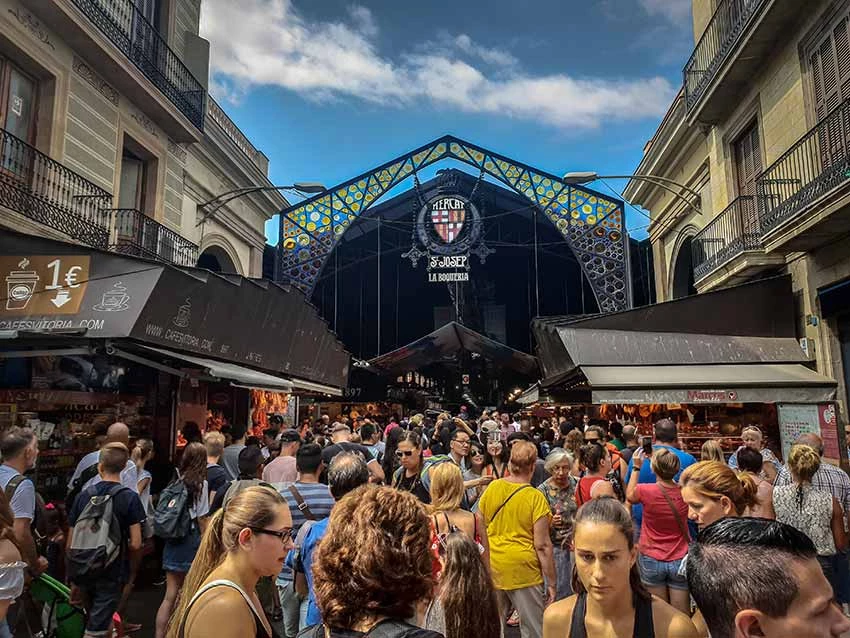
Tapas, wine and vermouth tour through the old town
Three hours on foot through the Barri Gòtic and El Born with a local guide, stopping in four or five bars that tourists rarely find: a vermouth at a marble counter, pa amb tomàquet with Iberian ham, bombas, a plate of grilled botifarra, a glass of Priorat, a crema catalana to finish. The highlight: the bodega stop where the guide explains the vermouth ritual and the bar has not changed since the 1950s.
Plan it for your first evening, as it doubles as an orientation of the old town and a list of addresses for the rest of the stay; enough food to replace dinner. About €66 per person on GetYourGuide, food and drinks included, free cancellation; vegetarian options on request when booking.
- 3 hrs
- €66 per person, tastings included (GetYourGuide price 2026)
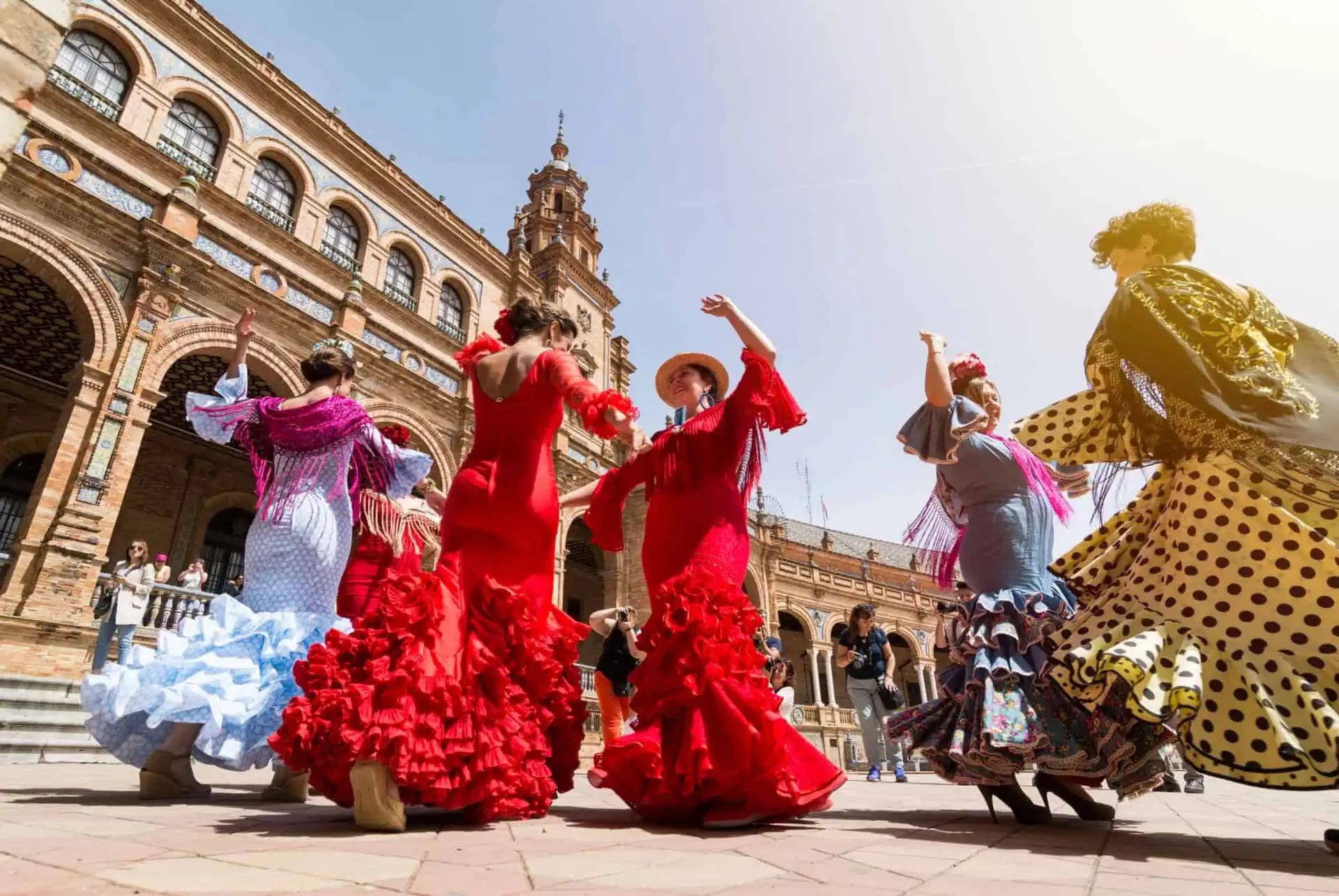
Flamenco show at the City Hall theatre
An hour of flamenco in a former theatre off Plaça de Catalunya: a singer, a guitarist and two or three dancers on a bare stage, no dinner, no folklore costumes, the cante and the footwork close enough to feel through the floor. The highlight is the solo bulería at the end, when the dancer answers the singer beat for beat.
Flamenco is Andalusian rather than Catalan, and this is one of the honest ways to see it in Barcelona without the tourist-dinner package: about €25 per person on GetYourGuide, free cancellation, several sittings each evening. Arrive 20 minutes early for a front seat; photos are not allowed during the performance.
- 1 hr
- €25 per person (GetYourGuide price 2026)
Getting there
Barcelona-El Prat airport (BCN) reaches the centre via the Aerobús (about 35 min), metro L9 Sud (special airport fare, with a transfer) or the Rodalies R2 Nord train (about 20 min to Sants). From France, the TGV/AVE links Paris to Barcelona-Sants in about 6h30.
By air: Barcelona-El Prat (BCN) is about 15 km from the centre. Three main options:
- Aerobús: to Plaça de Catalunya in about 35 minutes; single ticket under €10, bought online or at the stop.
- Metro L9 Sud: about 30 minutes on the line, with a special airport fare (the standard T-casual is not valid at airport stations); a transfer is needed for the historic centre.
- Rodalies R2 Nord: train from T2 to Barcelona-Sants (about 20 minutes) and Passeig de Gràcia; from T1, take the free shuttle to T2 first.
By train: from Paris, the TGV / AVE reaches Barcelona-Sants in about 6h30; Girona and Figueres are 40 minutes and an hour away by high-speed train.
By car: the AP-7 motorway from the French border is free since 2021, but the city has a low-emission zone (ZBE) on weekdays that bars older vehicles, and parking is scarce: leave the car at the hotel or a park-and-ride.
Getting around
Metro (8 lines), bus, tram and FGC on one fare system: buy a T-casual (10 journeys, zone 1) rather than singles, walk the old town, and use Bicing-style rentals or the bus for the seafront. Airport stations need a special ticket.
Barcelona's metro (eight lines run by TMB, plus the FGC suburban lines from Plaça de Catalunya and Plaça d'Espanya) reaches every sight in the guide, usually within a few minutes' walk. Buses fill the gaps and the tram serves the Diagonal and Poblenou. All share one fare system: the T-casual, ten journeys in zone 1 with free changes within 75 minutes, is the ticket most visitors need and is far cheaper than single fares (2026 prices on tmb.cat). It is personal and not valid at the airport metro stations, which require the special airport ticket. The Hola Barcelona card gives unlimited travel for 2 to 5 days including the airport, worth it only if you ride a lot.
The metro runs from 5 am to midnight Sunday to Thursday, until 2 am on Friday and all night on Saturday. The old town, the Eixample around Passeig de Gràcia and the seafront are pleasant on foot, and the flat grid makes cycling easy: rental shops and e-scooters are everywhere, though the city's Bicing scheme is for residents. Taxis are black and yellow, metered and affordable; Cabify and Uber operate with licensed cars. The Montjuïc funicular is part of the metro network, the cable cars and the Tibidabo funicular are not.
What to do
Book the Sagrada Família and Park Güell before you fly, walk the Barri Gòtic and El Born, spend an afternoon on Montjuïc, eat at the Boqueria, watch the sunset from the Bunkers and take the train to Montserrat.
Start with the two sites that need booking, the Sagrada Família and Park Güell, then let the rest follow the geography. In the old town, the cathedral, Plaça del Rei and the Roman walls fill a morning, the Picasso Museum and Santa Maria del Mar an afternoon, and the Boqueria the lunch in between. Passeig de Gràcia is the modernista walk: Casa Batlló, La Pedrera and, a short metro ride away, the Sant Pau pavilions and the Palau de la Música. Montjuïc takes a half day with the MNAC, the Miró foundation and the cable car to the castle, finishing at the Magic Fountain on show nights.
Beyond the monuments, Barcelona is a city of neighbourhoods and evenings: vermouth on a square in Gràcia, a flamenco tablao, a tapas crawl through El Born, sunset from the Bunkers del Carmel or from the Sagrat Cor terraces on Tibidabo, a swim at Barceloneta before dinner. With an extra day, take the FGC train to Montserrat, or the high-speed train to Girona for its cathedral, Jewish quarter and the real Arab baths. Football fans should check the format of the Spotify Camp Nou tour for their dates, as the stadium is still under construction.
Food
Pa amb tomàquet with everything, bombas and vermouth in Barceloneta, fideuà and arròs negre by the sea, escalivada, botifarra and calçots in season, crema catalana to finish; eat late, lunch at 2 pm and dinner from 9 pm.
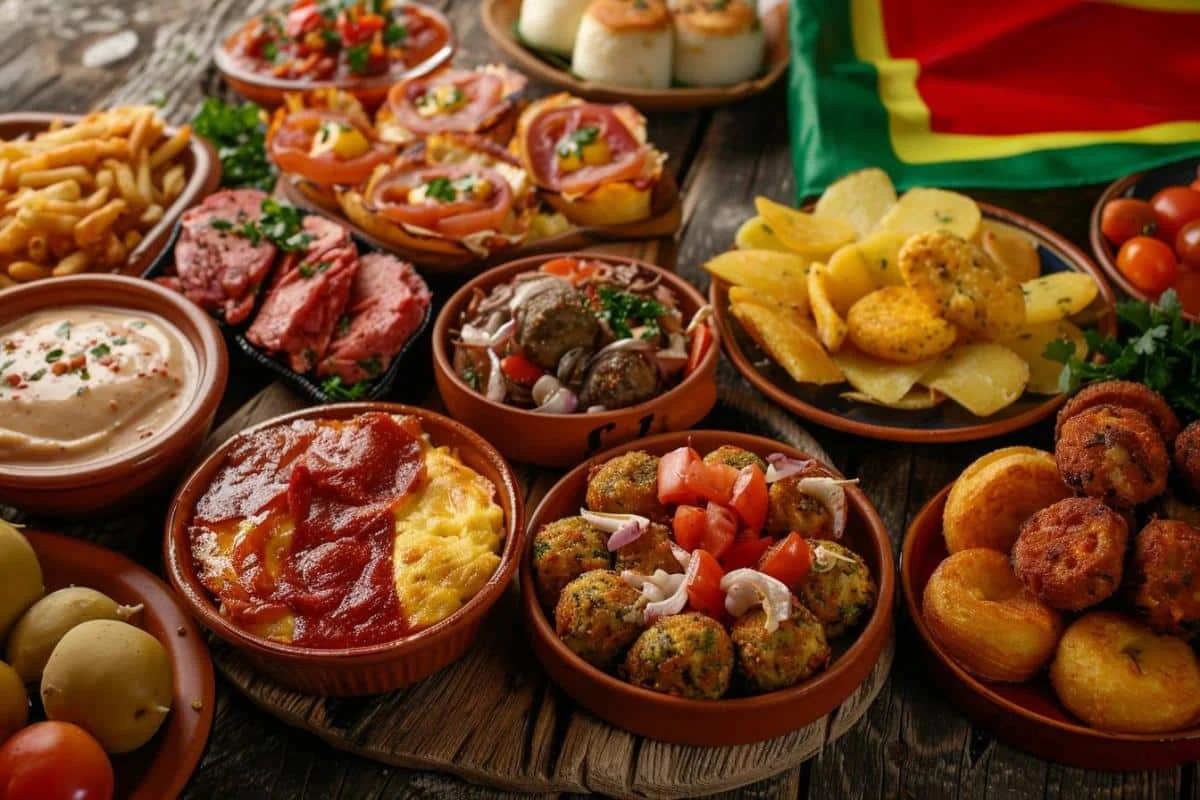
Catalan cooking starts with pa amb tomàquet, bread rubbed with tomato, oil and salt, served with everything from cured ham to grilled botifarra sausage. From the sea come fideuà (the noodle cousin of paella), arròs negre blackened with squid ink and suquet fish stew, best eaten on a Sunday in Barceloneta, where the bars also invented the bomba, a breaded potato ball with spicy sauce, taken with a glass of vermouth at midday. From the land: escalivada of roasted peppers and aubergines, esqueixada of shredded salt cod, calçots, the sweet spring onions grilled over vine cuttings and dipped in romesco sauce from January to April. Dessert is crema catalana under its burnt sugar, or mel i mató, fresh cheese with honey.
Timetables matter: lunch runs from 2 to 4 pm, often as a fixed-price menú del dia that is the best value in town, and dinner starts at 9 pm; many kitchens close in between. The markets (Boqueria, Santa Caterina with its coloured roof, Sant Antoni) have counters for lunch, El Born and Poble-sec have the tapas streets, and Gràcia the neighbourhood bodegas. Drink cava from the Penedès, wines from Priorat and Montsant, and skip the sangria pitchers on La Rambla.
Itineraries
Two days for Gaudí and the old town, three to add Montjuïc and the seafront, four for Montserrat or Girona; book the Sagrada Família and Park Güell slots first and build the days around them.
Day 1, Gaudí and the Eixample. Sagrada Família at opening (booked), walk up Avinguda de Gaudí to the Sant Pau pavilions, lunch in the Eixample, then Casa Batlló and La Pedrera on Passeig de Gràcia; end on the Pedrera roof at sunset or with a vermouth in Gràcia.
Day 2, the old town. Cathedral and Barri Gòtic early, the Boqueria for lunch, La Rambla to the harbour, then El Born: the Picasso Museum, Santa Maria del Mar and the Ciutadella park; tapas crawl in El Born or a flamenco show in the evening.
Day 3, hills and sea. Park Güell at the first slot (booked), a walk up to the Bunkers del Carmel, then metro and funicular to Montjuïc for the MNAC or the Miró foundation and the cable car to the castle; down to Barceloneta for a swim and a seafood dinner, or the Magic Fountain if it is a show night.
Day 4, out of town. The FGC train to Montserrat with the rack railway, the choir at 1 pm and a walk on the upper trails; or the high-speed train to Girona for the cathedral, the Jewish quarter and the Arab baths. Football fans can use the morning for the Camp Nou museum and tour, in whatever format the works allow.
Climate & seasons
When to go to Spain?
Monthly averages over the past 5 years (Open-Meteo).
Best months
- January
- February
- April
- May
- June
- July
- August
- October
- November
- December
| Jan | Feb | Mar | Apr | May | Jun | Jul | Aug | Sep | Oct | Nov | Dec | |
|---|---|---|---|---|---|---|---|---|---|---|---|---|
| Our take | ||||||||||||
| Weather | ||||||||||||
| High | 14° | 15° | 16° | 18° | 22° | 27° | 29° | 29° | 26° | 23° | 18° | 16° |
| Rain (mm) | 18 | 31 | 69 | 58 | 59 | 34 | 50 | 47 | 115 | 68 | 51 | 48 |
| Hiking & nature | Hiking & nature January | Hiking & nature February | Hiking & nature March | Hiking & nature April | Hiking & nature May | Hiking & nature September | Hiking & nature October | Hiking & nature November | Hiking & nature December | |||
| City sightseeing | City sightseeing January | City sightseeing February | City sightseeing March | City sightseeing April | City sightseeing May | City sightseeing June | City sightseeing July | City sightseeing August | City sightseeing September | City sightseeing October | City sightseeing November | City sightseeing December |
What to do by season (autumn)
-
Hiking & nature
Mild temperatures, stable conditions.
-
City sightseeing
Pedestrian-friendly most of the year.
When to go
The shoulder seasons (April-June and September-October) are ideal: warm weather (about 15-25 °C), sea still swimmable in September and fewer crowds than July-August. Summer is busy and hot; winter is quieter and cheaper but cooler.
Spring (April to June) and early autumn (September-October): the best times. Warm, pleasant weather (about 15-25 °C), the sea still swimmable in September, and far fewer crowds than the summer peak. Sant Jordi on 23 April fills the streets with books and roses, and the Sónar festival comes in June.
Summer (July-August): hot and very touristy, crowded beaches and high prices, but a festive atmosphere: the Festa Major de Gràcia in mid-August and the Grec festival on Montjuïc.
Winter (November to March): cooler and quieter, with lower accommodation rates; ideal for museums and architecture without the crowds. La Mercè, the city festival with its human towers and fire runs, closes the season around 24 September. Note: in 2026 the Gaudí centenary boosts visitor numbers around the Sagrada Família, especially in June. If it is winter sun you are after, the highlights of Tenerife are a much milder alternative.
Budget
Around €80-100 a day in a hostel with market lunches and one paid sight; €180-250 in a mid-range hotel with restaurants and the Gaudí tickets; Barcelona is one of the most expensive cities in Spain and prices peak from June to September.
Barcelona is one of the most expensive cities in Spain, on a par with Madrid and well above Andalusia. Beds are the main cost: a dorm or a simple double in a hostel for the low budget, a three-star double in the Eixample for a mid-range stay, with rates that climb steeply from June to September, during the Mobile World Congress (early March) and around big matches. Add the tourist tax, roughly €8-12 per person per night since April 2026. A menú del dia at lunch, a tapas dinner and a coffee at the counter keep food reasonable; terraces on La Rambla and the seafront cost double.
The Gaudí sites are the other big line: Sagrada Família €26 (€36 with a tower), La Pedrera €25, Casa Batlló from about thirty euros, Park Güell's Monumental Zone by paid timed ticket; the Picasso Museum is €15 and the MNAC €12, both with free slots. The free list is long, though: the Barri Gòtic, the Boqueria, the beaches, the Ciutadella, Montjuïc's parks and the Magic Fountain, the Bunkers, Gràcia and the outside of every Gaudí building. For transport, a T-casual of ten journeys beats single tickets from the first day.
Where to stay
The Eixample for a central, quiet base near Gaudí; El Born or the Barri Gòtic for atmosphere (and noise); Gràcia for village life; Barceloneta or Poblenou for the beach; the Raval is cheapest but rough at night.
The Eixample, the 19th-century grid around Passeig de Gràcia, is the safest bet for a first stay: central, well served by metro, quieter than the old town at night, with the modernista houses on the doorstep and the widest range of hotels, from chains to apartments in period buildings. El Born and the Barri Gòtic put you among the medieval lanes, tapas bars and the Picasso Museum; the flip side is noise until late and rooms that are often small and dark. The Raval, west of La Rambla, has the cheapest beds and the MACBA, but parts of it feel rough after dark.
Gràcia suits those who want a village feel, terraces and local life, twenty minutes from the centre by metro. Barceloneta and Poblenou are the choices for the beach, Poblenou being calmer and more residential with the new tech district around it. Wherever you stay, note that Barcelona is phasing out tourist apartment licences by 2028 and enforcing the existing ones: book only apartments that display an official HUT number, and expect the tourist tax to be charged per person per night on arrival.
Safety
Violent crime is rare, but Barcelona has a serious pickpocketing problem on La Rambla, in the metro and on the beach: nothing in back pockets, bags closed and in front, nothing left on the sand. Emergency number 112.
Barcelona is safe in the sense that violent crime against visitors is rare, and unsafe in the sense that it is one of the pickpocketing capitals of Europe. The hotspots are La Rambla and its side streets, the metro (especially L3 between Catalunya and Drassanes and the airport line), the Sagrada Família queues, Barceloneta beach and the old town late at night. The methods are classic: a distraction (a map, a petition, a stain on your jacket, a football trick), then a hand in the bag. Keep phones and wallets in front pockets or a zipped bag worn in front, never leave a bag on a café chair or on the sand while you swim, and ignore the three-card games on La Rambla.
In the Raval and around Plaça Reial, be alert after midnight, and refuse drinks or drugs offered on the street. Beach hawkers and unlicensed massage sellers are a nuisance rather than a danger. Tap water is safe though many locals prefer bottled for the taste. Summers bring heat waves: shade and water from noon to 5 pm. The emergency number is 112; the Mossos d'Esquadra police have a station on La Rambla (Nou de la Rambla) for reporting thefts, which you will need for insurance.
Formalities
Spain is in the EU and the Schengen area: EU citizens need only a valid ID card or passport, non-EU visitors travel visa-free for up to 90 days in 180. EES has run since 10 April 2026; ETIAS is not yet in service and has no launch date (September 2026). Currency euro; tourist tax with a €5 municipal surcharge since 1 April 2026.
Spain is a member of the European Union and the Schengen area. French and EU nationals enter freely with a valid national ID card or passport; no visa is required. French ID cards issued between 2004 and 2013 remain valid five years beyond the printed date, but France Diplomatie recommends travelling with a valid passport to avoid problems with airlines.
Visa-exempt non-EU visitors (UK, US, Canada and others): tourist stays are limited to 90 days in any 180-day period with a valid passport. EES: since 10 April 2026, the EU Entry/Exit System registers non-EU short-stay travellers at the external border (passport, photo, fingerprints); no advance step is needed. ETIAS: the travel authorisation is not yet in service and no launch date has been set (September 2026); check the official EU website before you travel. EU citizens are affected by neither.
Currency: the euro (EUR); contactless payment is widespread. Tourist tax: Barcelona charges a per-person, per-night tax (Catalan regional tax plus a municipal surcharge). Since 1 April 2026 the municipal surcharge is €5 a night, rising gradually to €8 by 2029; expect roughly €8-12 a night in total depending on the accommodation category, often paid on arrival.
Tips
Book Gaudí tickets as soon as your dates are fixed, use the free museum slots, learn the meal times, carry ID for nominative tickets, and remember that Catalan, not only Spanish, is the language of the street signs.
- Book in this order: Sagrada Família first (nominative, timed, weeks ahead in 2026), then Park Güell, then Casa Batlló and La Pedrera; the Picasso Museum and MNAC free slots also need an online reservation.
- Photo ID: nominative tickets are checked against a passport or ID card at the Sagrada Família.
- Meal times: lunch 2-4 pm, dinner from 9 pm; a restaurant full at 7 pm is a tourist restaurant. The menú del dia at lunch is the value meal.
- Language: street signs, menus and announcements are in Catalan first; Spanish is understood everywhere, English in the tourist areas. A bon dia goes a long way.
- Mondays: most museums close, including Picasso and the MNAC; the Gaudí houses and the Sagrada Família stay open.
- Sundays: shops close (except in the old town in season) and the Boqueria is shut, but museums have free first-Sunday slots.
- Dress: swimwear and bare torsos are fined away from the beach, and the Sagrada Família enforces covered shoulders and knees.
- Balconing and noise: the city fines drinking in the street and noise after 11 pm; tourist flats are under close watch.
FAQ
Visa, best time to go, length of stay, booking the Sagrada Família and Park Güell, getting in from the airport, the Montserrat day trip and the tourist tax: the essentials before your Barcelona trip.
Do French citizens need a visa to visit Barcelona?
No. Spain belongs to the European Union and the Schengen area, so French and other EU nationals need neither a visa nor ETIAS: a valid national ID card or passport is enough. For visa-exempt non-EU visitors, the EES border registration has applied since 10 April 2026, and ETIAS is not yet in service, with no launch date set (September 2026). The currency is the euro and contactless payment is widespread. Do budget for the tourist tax, charged per person per night in Barcelona.
When is the best time to visit Barcelona?
The shoulder seasons work best: April to June and September to October, with warm, pleasant weather around 15 to 25 °C, a sea still swimmable in September and far smaller crowds than the summer peak. July and August are hot and very touristy, with packed beaches and high prices, though the evenings have a festive buzz. Winter, November to March, is cooler and quieter, with lower accommodation rates, ideal for museums and architecture. One caveat for 2026: the Gaudí centenary swells visitor numbers, especially in June.
How many days do you need in Barcelona?
Three to four days cover the major Gaudí sites, including the Sagrada Família, Park Güell, Casa Batlló and Casa Milà, all UNESCO world heritage, plus the medieval Barri Gòtic, Montjuïc, the beach and the markets. The city is compact and best explored on foot with an efficient metro to fill the gaps. Add a fifth day for a trip to Montserrat, the mountain monastery some 50 km away, reached by FGC train from Plaça Espanya.
How do I book the Sagrada Família?
Online only at sagradafamilia.org, with a time slot (check the day's opening status on the site too): there is no box office and tickets are nominative (photo ID required). Basilica €26, with a tower €36 (official site, 2026). In the centenary year, book weeks ahead, especially for June.
Do I need to book Park Güell?
Yes for the Monumental Zone, which sells timed tickets online: you must arrive at the checkpoint at the time printed on the ticket, with a 30-minute tolerance, and there is no re-entry once you leave. The woods and viewpoints of the rest of the park are free.
How do I get to the centre from Barcelona airport (BCN)?
Barcelona-El Prat airport sits about 15 km from the centre, with three options. The Aerobús reaches Plaça de Catalunya in about 35 minutes. The L9 Sud metro takes around 30 minutes at a special airport fare, since the standard T-casual ticket is not valid at airport stations, and needs a transfer for the old town. The Rodalies R2 Nord train runs from T2 to Barcelona-Sants in about 20 minutes; from T1, take the free shuttle to T2 first.
What day trip can I take from Barcelona?
Montserrat, the mountain monastery some 50 km away, is the obvious day trip. Take the FGC R5 train from Plaça Espanya, allow about an hour, then the rack railway (€15 return) or the cable car (€15 return) for the final climb. The basilica is free, combined tickets cover the whole journey, and the boys' choir sings at 1 pm on most days. Girona, an hour away by high-speed train, is the other classic outing.
How much is Barcelona's tourist tax in 2026?
Barcelona charges a tourist tax per person per night, made up of the Catalan regional tax plus a municipal surcharge. Since 1 April 2026 that municipal surcharge has risen to €5 a night, with further increases planned up to €8 by 2029. In total, expect roughly €8 to €12 per person per night depending on the accommodation category. The amount is often settled on arrival and does not always appear in the price shown at booking, so build it into your budget.
Sources
The figures in this guide come from the sources below, checked on the publication date.
- www.diplomatie.gouv.fr
- sagradafamilia.org
- sagradafamilia.org
- parkguell.barcelona
- www.casabatllo.es
- www.lapedrera.com
- www.fcbarcelona.com
- www.museunacional.cat
- museupicassobcn.cat
- www.barcelona.cat
- ajuntament.barcelona.cat
- turistren.cat
- aeridemontserrat.com
- travel-europe.europa.eu
- whc.unesco.org
- whc.unesco.org
- commons.wikimedia.org
- commons.wikimedia.org
- commons.wikimedia.org
Leave a comment
Share your thoughts or travel experience. Your email will not be published.