

Contents 24
Córdoba, capital of the Umayyad caliphate in the 10th century, keeps from that era the great mosque that became a cathedral and, 8 km away, the palace-city of Medina Azahara. Its historic centre, a UNESCO World Heritage Site, is explored on foot, from the Judería to the Roman Bridge over the Guadalquivir.
This guide covers the ten places to see, 2026 prices, the best season and the districts to stay in.
Overview
Former capital of the Umayyad caliphate, Córdoba has a UNESCO-listed historic centre that you explore on foot, from the Mezquita to the Roman Bridge.
Capital of the Umayyad caliphate from 929 to 1031, Córdoba keeps from that era its great mosque, which became a cathedral in 1236, and, 8 km away, the ruins of the palace-city of Medina Azahara. Its historic centre, a UNESCO World Heritage Site since 1984 and extended in 1994, is explored on foot: the Mezquita, the Roman Bridge, the Alcázar of the Christian Monarchs and the Judería are a few minutes from each other.
In spring, the city lives to the rhythm of its festivals: the flower-filled patios open their doors in May, before the fair at the end of the month.
10 places to take with you
In the guide's order, ready for Google Maps or your GPS.
Book the activities from this guide
Our picks for Cordoba, well rated and free to cancel.
-
Book this activity
Flamenco show at the Tablao Cardenal
from €25 per person, one drink included (GetYourGuide price 2026)
-
Book this activity
Skip-the-line guided tour of the Mosque-Cathedral
from €30 per person (GetYourGuide price 2026)
-
Book this activity
Guided tour of Medina Azahara with an archaeologist
from €20 per person, entry included (GetYourGuide price 2026)
Affiliate links: Travel Advice earns a commission if you book, at no extra cost to you. Learn more

Mosque-Cathedral of Córdoba
Begun in 785 under the emir Abd al-Rahman I, then enlarged several times until the late 10th century, the great mosque of Córdoba became a cathedral in 1236, after the Christian conquest. You enter through the Courtyard of the Orange Trees, then walk into the prayer hall and its forest of columns topped with two-tone red-and-white arches, up to the mihrab and its mosaics.
In the middle, a Renaissance cathedral was built inside the mosque itself, so you pass from one world to the other in a few steps. The bell tower, a former minaret, is visited separately, in half-hour slots.

Alcázar of the Christian Monarchs
The present building was raised in 1328 on the orders of Alfonso XI, on the site of the former Umayyad fortress; a royal residence since the conquest of 1236, it later housed the Inquisition, then a prison from 1822 to 1931. You can visit its towers and wall walk, the rooms with Roman mosaics and the royal baths.
The terraced gardens, with their long pools, cypresses and orange trees, take up most of the visit and look out on the cathedral tower.

Judería (Jewish Quarter) and synagogue
North-west of the Mezquita, the Judería is a tangle of whitewashed lanes, carriage doors opening onto patios and small squares. The philosopher and physician Maimonides, born in Córdoba in the 12th century, has his statue on the little Plaza de Tiberiades.
On Calle Judíos, the medieval synagogue is one of the few preserved in Spain: a small room whose walls are covered in stucco and Hebrew inscriptions. Nearby, the narrow, flower-lined Calleja de las Flores frames the cathedral tower.

Roman Bridge
Built in the 1st century AD, under Augustus, to carry the Via Augusta over the Guadalquivir, the bridge has been rebuilt several times and has sixteen arches. Today it is for pedestrians only.
Halfway across stands a statue of the Archangel Raphael, the city's protector. From the south bank, at the foot of the Calahorra Tower, you get the classic view of the bridge, the Puerta del Puente and the outline of the Mezquita.

Medina Azahara (Madinat al-Zahra)
Eight kilometres west of Córdoba, at the foot of the Sierra Morena, the first caliph of al-Andalus, Abd al-Rahman III, had a palace-city built around 936-940 to house his residence and government. Destroyed less than a century later, it has been a UNESCO World Heritage Site since 2018.
You explore its terraces, porticoes, the House of Ja'far and the caliph's reception halls. The visitor centre museum shows finds from the excavations before you go up to the site.

Palacio de Viana
North of the centre, on Plaza de Don Gome in the Santa Marina district, this palace with 14th-century origins grew around twelve patios and a garden. Each courtyard has its own style: orange trees, pools, arcaded galleries, pots of geraniums.
Inside, the rooms keep the collections of the Marquises of Viana: paintings, ceramics, tapestries, azulejos, firearms, embossed leather (guadamecíes) and a library from the 16th to 18th centuries.

Patios of Córdoba (San Basilio district)
In Córdoba's traditional houses, life revolves around a patio lined with flowerpots hung on the walls, a well or a fountain. Every May, during the Festival of the Patios, inscribed on UNESCO's Intangible Cultural Heritage list in 2012, residents open these courtyards to the public and compete for the most beautiful.
The San Basilio district, behind the Alcázar, has several of the best known. Outside the festival, some patios can be visited all year, and the Palacio de Viana has twelve of them.

Calahorra Tower
This fortified tower has guarded the southern end of the Roman Bridge since the Middle Ages; its present form dates from 1333 and it has been a national monument since 1931. It houses the Museo Vivo de al-Andalus, which tells the story of caliphal Córdoba and the coexistence of Muslim, Jewish and Christian cultures through models and audio-guided rooms.
The rooftop terrace gives one of the best views of the bridge and the Mezquita across the river.

Archaeological Museum of Córdoba
Housed in a Renaissance palace on Plaza Jerónimo Páez, between the Mezquita and the Corredera, the museum traces the city's history from prehistory to the Islamic period: Roman sculptures and mosaics from Corduba, capitals, ceramics and bronzes from the caliphate.
In the basement, you walk among the remains of the Roman theatre found under the building, a good complement to a visit to Medina Azahara.

Caliphal Baths (Baños del Alcázar Califal)
Beneath the Plaza del Campo Santo de los Mártires, next to the Alcázar, the baths of the former caliphs' palace survive, dated to the 10th century. The route follows the cold, warm and hot rooms, vaulted and pierced with star-shaped skylights, with the remains of the underfloor heating system.
The site is small and takes half an hour; it pairs well with the Alcázar to picture the palace quarter before the Christian conquest.
Flamenco show at the Tablao Cardenal
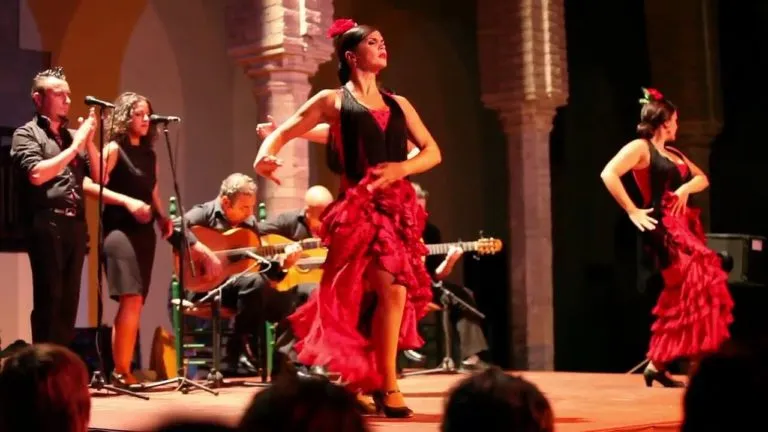
Eighty minutes of flamenco at the Tablao Cardenal, in the historic centre: seven artists on stage, singing, guitar and dance, in a room where the audience sits a few metres from the dancers. The highlight: the zapateado, when the rhythm of the heels takes over from the guitar.
Allow from €25 per person on GetYourGuide, one drink included, with free cancellation up to 24 hours before. Shows are in the evening; the venue is wheelchair accessible.
- 1 hr 20 min
- from €25 per person, one drink included (GetYourGuide price 2026)
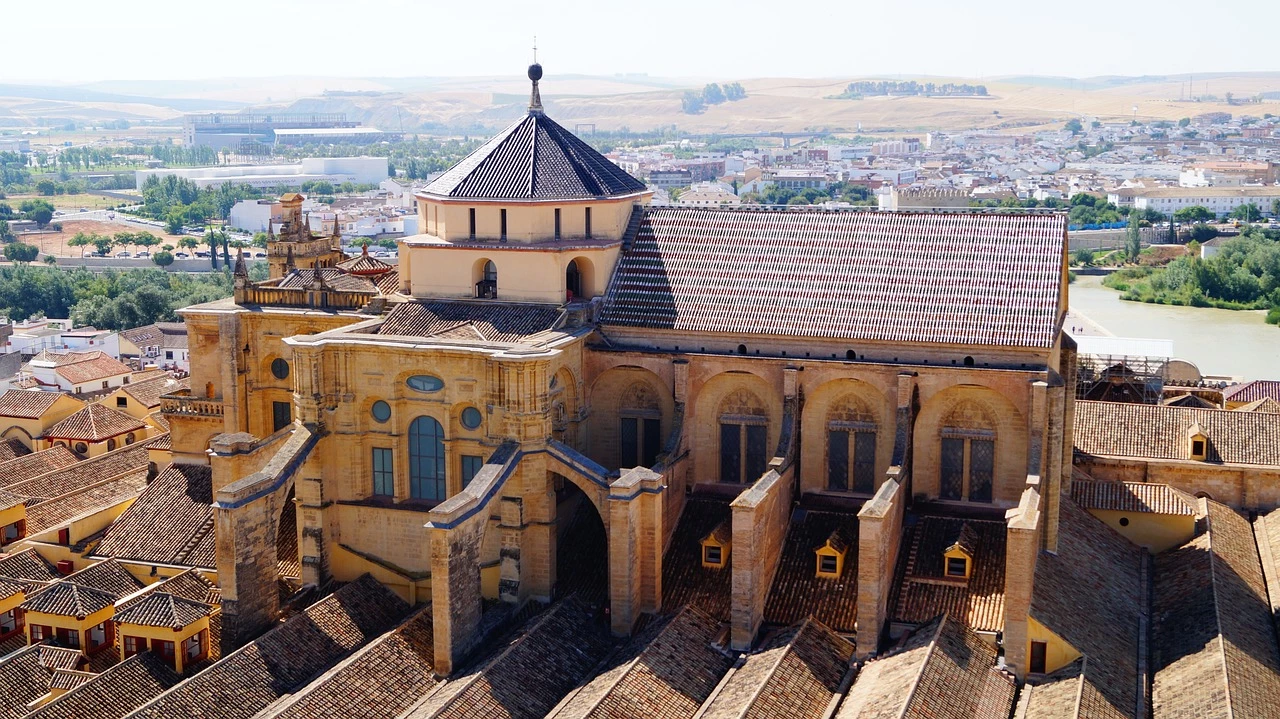
Skip-the-line guided tour of the Mosque-Cathedral
An hour and a half in the Mezquita with an art historian: the Courtyard of the Orange Trees, the successive enlargements of the prayer hall since Abd al-Rahman I, the 10th-century mihrab, then the cathedral built in the heart of the mosque after the Christian conquest. The highlight: the mihrab and its gilded mosaics, explained piece by piece.
Allow from €30 per person on GetYourGuide, with free cancellation up to 24 hours before. Tours in French, English or Spanish depending on the slot; wheelchair accessible.
- 1.5 hrs
- from €30 per person (GetYourGuide price 2026)
Guided tour of Medina Azahara with an archaeologist
Three hours in the caliphate's palace-city with an archaeologist guide: the portico, the House of Ja'far built over three earlier houses, the outside of the Salón Rico where Abd al-Rahman III received his guests. The highlight: the view from the terraces over the Guadalquivir valley.
Allow from €20 per person on GetYourGuide, entry included, with free cancellation up to 24 hours before; one option adds minibus transport from Córdoba. Tour in Spanish.
- 3 hrs
- from €20 per person, entry included (GetYourGuide price 2026)
Getting there
Córdoba is on the Madrid-Seville high-speed line: under 2 hours from Madrid, about 45 minutes from Seville.
Córdoba is served by the Madrid-Seville high-speed line: allow under two hours from Madrid and about 45 minutes from Seville; fast trains also link it to Málaga. The station is north of the centre, about a 20-minute walk from the Mezquita or a few minutes by bus or taxi.
For an international flight, aim for Seville or Málaga airports, then take the train. Seville combines very well with Córdoba on the same trip: see the must-sees of Seville.
Getting around
The historic centre is explored on foot; Aucorsa city buses and taxis are for the station and outlying districts.
The historic centre is compact: from the station to the Mezquita, then from the Judería to the Palacio de Viana, everything is on foot. Narrow lanes and restricted access make a car pointless in the centre; if you have one, leave it in a car park on the edge.
Aucorsa city buses link the station, outlying districts and the riverbanks; licensed metered taxis complete the offer. For Medina Azahara, 8 km away, you need a taxi, a car or an organised tour with transport.
What to do
The Mezquita at opening time, the Judería and the Alcázar in the morning, the Palacio de Viana in the afternoon, the Roman Bridge at sunset; Medina Azahara as a half-day trip.
A typical day starts at the Mezquita at 8:30 am, during the free hour, then continues through the Judería and at the Alcázar of the Christian Monarchs before the heat. In the afternoon, the Palacio de Viana and its twelve patios or the Archaeological Museum offer shade; at sunset, cross the Roman Bridge to the Calahorra Tower.
In the evening, a flamenco show in a tablao, then tapas around the Corredera. Keep half a day for Medina Azahara, the caliphate's palace-city, 8 km away.
Food
Salmorejo, flamenquín and rabo de toro are the classics of Córdoba's taverns; tapas are cheaper around Plaza de la Corredera.
Córdoba's signature dish is salmorejo, a cold cream of tomato, bread, garlic and olive oil, served with diced ham and hard-boiled egg. Flamenquín, a breaded and fried roll of pork and ham, and rabo de toro, oxtail stewed in wine, are the other tavern classics. Mazamorra, a cold almond and garlic soup, and berza, a cabbage and chickpea stew, are rarer on menus.
For dessert, pastel cordobés is a puff pastry filled with cabello de ángel (squash jam). Wines from the Montilla-Moriles area, in the south of the province, recall sherry. For good-value tapas, head for the bars around Plaza de la Corredera rather than the terraces facing the Mezquita; lunch is around 2 pm.
Climate & seasons
When to go to Spain?
Monthly averages over the past 5 years (Open-Meteo).
Best months
- January
- February
- April
- May
- September
- November
Avoid
- July
- August
| Jan | Feb | Mar | Apr | May | Jun | Jul | Aug | Sep | Oct | Nov | Dec | |
|---|---|---|---|---|---|---|---|---|---|---|---|---|
| Our take | ||||||||||||
| Weather | ||||||||||||
| High | 15° | 18° | 19° | 23° | 28° | 33° | 38° | 38° | 31° | 27° | 19° | 16° |
| Rain (mm) | 57 | 49 | 129 | 48 | 29 | 23 | 0 | 1 | 27 | 81 | 64 | 87 |
| City sightseeing | City sightseeing January | City sightseeing February | City sightseeing March | City sightseeing April | City sightseeing May | City sightseeing October | City sightseeing November | City sightseeing December |
What to do by season (autumn)
-
City sightseeing
Pedestrian-friendly most of the year.
When to go
Spring and autumn; May for the Festival of the Patios. In July and August, the heat often exceeds 40 °C.
Spring (March to May) and autumn (late September to November) are the most pleasant seasons for walking around the centre. Córdoba is one of the hottest cities in Spain: in July and August, temperatures often exceed 40 °C in the afternoon, and several monuments then open in the morning only. Winter is mild but houses are cool.
May brings the big festivals: the Cruces de Mayo early in the month, the Festival of the Patios, then the Feria de Nuestra Señora de la Salud at the end of the month. Holy Week, in March or April, also draws crowds: book accommodation early for these dates.
Budget
Allow €15 for the Mezquita (free from 8:30 to 9:30 am except Sundays) and €4 for the bell tower; Medina Azahara is free for EU citizens.
The Mezquita costs €15 (€12 reduced, €8 for ages 10-14) and another €4 for the bell tower; the free morning hour, Monday to Saturday, lets you see it without paying. Medina Azahara is free for EU citizens and costs €1.50 for other visitors. The Roman Bridge, the Judería and the streets of San Basilio are free.
For outings, a flamenco show starts at €25 with a drink, a guided tour of the Mezquita at €30 and a guided tour of Medina Azahara at €20 (GetYourGuide prices 2026). Tapas at the bar keep meals cheap.
Where to stay
The Judería and historic centre to do everything on foot; Santa Marina or San Pedro for more calm and lower prices.
The Judería and the streets around the Mezquita put everything within walking distance, but prices there are the highest and the lanes fill up during the day. San Basilio, behind the Alcázar, is more residential and close to the patios. To the north and east, Santa Marina and San Pedro, around Plaza de la Corredera, have more affordable guesthouses a 10- to 15-minute walk from the monuments.
Near the station, modern hotels suit a one-night stop. In May, during the Patios and the fair, book several weeks ahead.
Safety
Córdoba is a safe city; watch for pickpockets around the Mezquita and for the summer heat. Emergencies: 112; Policía Nacional: 091; Policía Local: 092.
Córdoba poses no particular risk. Pickpockets mostly target the areas around the Mezquita and the Roman Bridge and the crowded lanes of the Judería: keep your bag and phone in front of you.
In summer, heat is the main danger: drink often, cover your head and avoid walking between 2 pm and 6 pm. Useful numbers: 112 (emergencies), 091 (Policía Nacional), 092 (Policía Local), 061 (medical emergencies in Andalusia).
Formalities
Spain is in the Schengen Area and the eurozone: a valid ID card or passport is enough for EU nationals, and no vaccine is required.
Spain is part of the Schengen Area. Citizens of the European Union, the EEA and Switzerland enter with a valid identity card or passport. Other travellers should check the rules for their nationality: many countries are visa-exempt for 90 days in any 180-day period.
Since 10 April 2026, the European Entry/Exit System (EES) records at the border the fingerprints and photo of non-EU short-stay travellers; the ETIAS authorisation is not yet in service and no launch date has been set (September 2026). EU nationals use the European Health Insurance Card; no vaccine is required. The currency is the euro.
FAQ
Two days are enough for Córdoba; the Mezquita costs €15 but is free Monday to Saturday from 8:30 to 9:30 am.
How many days do you need in Córdoba?
Two days are enough for the Mezquita, the Alcázar, the Roman Bridge, the Judería and the Palacio de Viana. Add half a day for Medina Azahara, 8 km away.
How much does the Mezquita cost?
The general ticket costs €15 (€12 for over-65s and students aged 15 to 26), free for under-10s. Entry is free Monday to Saturday from 8:30 to 9:30 am (last entry 9:20), without groups and except on celebration days. The bell tower climb costs €4.
Can you do Córdoba as a day trip from Seville?
Yes: the fast train takes about 45 minutes. A day covers the Mezquita, the Judería, the Roman Bridge and the Alcázar, but not Medina Azahara.
How do you get to Medina Azahara?
By taxi, car or organised tour to the visitor centre, 8 km west; a shuttle bus then goes up to the site, the only way to reach it. Entry is free for EU citizens. The site is closed on Mondays.
When is the Festival of the Patios?
In May, over about ten days: residents open their flower-filled patios to the public. Dates change every year; check the tourist office website before booking.
Can you visit Córdoba on foot?
Yes, the historic centre is compact and a car is pointless there. You only need transport for Medina Azahara.
Sources
The figures in this guide come from the sources below, checked on the publication date.
Leave a comment
Share your thoughts or travel experience. Your email will not be published.