

In Paris, November averages a high of 11.2°C, 66 mm of rain and twelve days of precipitation. In Muscat, six hours away by plane, it is 30°C and the rain adds up to three millimetres across the entire month. That is the whole point of November: a dead month in Europe, a prime season elsewhere, and prices that follow.
November is a pivot month. The monsoon retreats from Southeast Asia, the heat drops in the Gulf and on the Red Sea, summer lingers in the Canaries. It is also a treacherous month: Sri Lanka and central Vietnam are entering their wettest season. The ten destinations below are ordered by distance, each with real temperatures, expected rainfall and the catch where there is one.
The climate figures quoted here are November averages calculated over the last five years (2021-2025) from Open-Meteo reanalysis data, measured as close as possible to each city named rather than at country level. Flight budgets depend far too much on when you book to be quoted here as firm prices.
Marrakech and Agadir: 25°C, three hours from Paris
Morocco is the simplest answer to November gloom: 25.5°C in Marrakech, 25.1°C in Agadir, and fewer than three rainy days a month in both. No jet lag, three hours in the air, and the crushing summer heat is gone.
Marrakech in November is the city at its most liveable: you can walk the medina at midday without hunting for shade, which is impossible in July. The day-night swing is brutal, though — 25°C in the afternoon, 11°C at dawn. A riad without heating can be genuinely cold when you wake up, and that is the thing to check before booking.
Agadir plays a different hand: the Atlantic keeps nights at 17°C, nearly six degrees warmer than Marrakech. For beach time and seafront walking rather than souks, it is the better of the two.

Tenerife: the island where November feels like June
Tenerife sits at 24.3°C in November, with nights that do not drop below 18°C. The trade winds flatten the seasons: the gap between the warmest and coolest months barely exceeds six degrees, which is close to unheard of at this latitude.
The catch is real but local: the 30 mm of rain and nine days of precipitation recorded at Santa Cruz, in the north-east, do not apply to the whole island. Santa Cruz and La Laguna catch the clouds the trade winds pile up, while the south — Los Cristianos, Costa Adeje — stays dry. If you want guaranteed sun, sleep in the south and head north for the day.
Mount Teide itself is excellent in November: the air is clear, and the cable car queue bears no resemblance to August. Our guide to the highlights of Tenerife covers access to the national park and the black sand beaches.

Sicily: a bargain, if you accept the rain
Palermo holds at 20.1°C in November, but it gets 112 mm of rain across 13 days. This is the most divided destination on the list: mild, very cheap, deserted by tourists — and grey one day in two.
So the decision comes down to what you are there for. For the Greek temples of Agrigento, Syracuse, the markets of Palermo and Sicilian food, November is excellent: low raking light, no queues, off-season hotel rates. For the beach, it is over.
Count on a grey day every other day and build a plan that does not depend on the weather. Our complete guide to Sicily covers the archaeological sites and baroque towns that work perfectly well under cloud.

Cape Verde: 29°C and under two days of rain
On the island of Sal, November brings 29.1°C by day, 23.4°C at night and under 10 mm of rain for the month. Cape Verde's short wet season ends in October: November opens the long dry stretch, with a sea still warm enough to swim in properly.
It is one of the very few destinations under six hours' flight where swimming is genuinely comfortable in November. The archipelago's tourism runs on exactly this inversion of the European calendar.
The flip side: Sal and Boa Vista are flat, arid islands built around resorts. For relief, hiking and villages, you need Santo Antão or Fogo, and an extra internal flight or ferry.
Egypt: the month Luxor becomes bearable
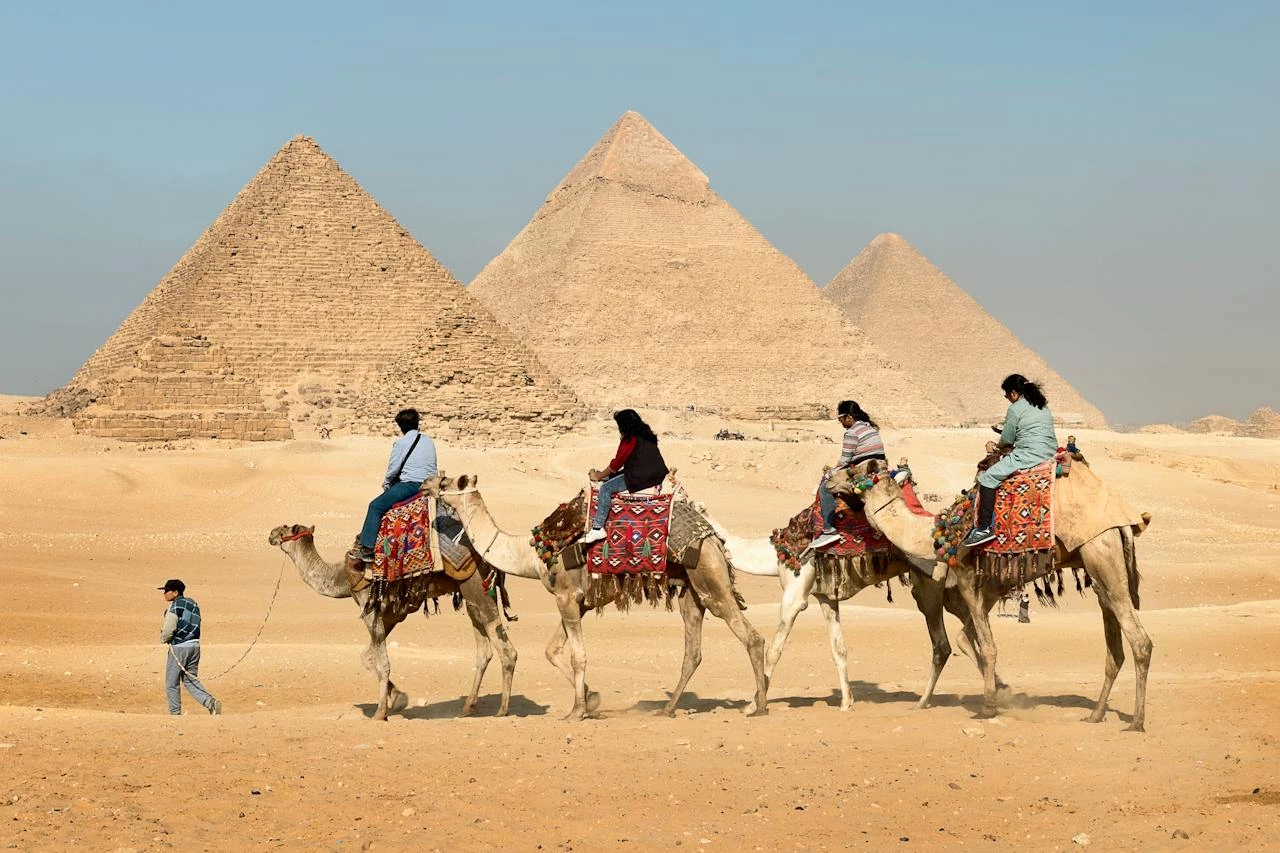
Luxor records 30.1°C in November and 0.6 mm of rain — statistically, it does not rain there. More to the point, the heat is finally manageable: in July the city regularly passes 40°C, which makes visiting the temples punishing before 9am and impossible in the afternoon.
In November, the Valley of the Kings, Karnak and Deir el-Bahari can be visited all day. Nights fall to 16°C, a real comfort after thirty-degree days, but pack a jacket for balloon sunrises and boat decks on the Nile.
It is also the start of the Egyptian high season: sites are noticeably busier than in September, and Nile cruise prices climb.
Jordan: Petra without the heat or the crowds
Petra peaks at 21°C in November, with 20 mm of rain spread over five days. That is the ideal temperature for a site covered entirely on foot: the classic circuit up to the Monastery means several hours of walking and 800 steps, an ordeal in summer when the sandstone throws the heat back at you in the Siq.
Two caveats. Nights drop to 13°C at Petra, and it is colder still in a tent in Wadi Rum — the desert is not warm at night in November. And the rain, rare but violent, can trigger flash floods in the canyons; the site then closes the Siq as a precaution.
Aqaba, on the Red Sea, works as the beach counterpart: 28.3°C and virtually no rain, two hours away by road. Our guide to Jordan covers the Petra, Wadi Rum and Dead Sea sequence. Still torn between Jordan and the Nile? Our Egypt or Jordan comparison for a first trip puts the two side by side.

Oman: 30°C and three millimetres of rain
Muscat in November means 30.2°C by day, 22.5°C at night and 3.4 mm of rain for the whole month. Statistically it is the most reliable destination on this list: it does not rain, the unbearable summer heat has gone, and the sea stays warm.
November marks the start of the Omani tourist season, when the wadis can be walked without risk of heatstroke and desert camps in the Wahiba Sands become pleasant again. Salalah, in the south, posts near-identical figures (30.7°C) but with different vegetation, a legacy of the Khareef monsoon that withdrew in September.
Oman is not a cheap destination: a 4x4 is close to mandatory once you leave Muscat, and accommodation stays expensive. On the other hand, French travellers are visa-exempt for stays of 14 days or less, which makes a short trip simple.
Namibia: the last window before the rains
Sossusvlei records 31.6°C in November for 3 mm of rain. The country is coming out of its long dry season: animals are still concentrated around the waterholes in Etosha, which makes this a strong viewing window, just before the first rains scatter them.
Two honest caveats. Daytime heat is serious — over 31°C in the desert, with nights falling back to 15°C, a sixteen-degree swing within one day. And November officially opens the rainy season: showers stay rare and brief, but they do arrive, generally late in the day and late in the month.
It is also the point where lodge rates are still below the December-January high season. Our Namibia road trip guide describes the Namib-to-Etosha route and the real state of the tracks.

Cambodia: the monsoon pulls back from Angkor
Siem Reap gives 30.4°C in November, with 129 mm of rain still spread across fourteen days. The monsoon is withdrawing without being quite done: humidity drops markedly compared with September, but late-afternoon showers remain frequent early in the month.
That is precisely what makes the timing interesting. The moats and pools of Angkor are still full after the rains, which produces reflections you no longer get in March once everything dries out. Tonlé Sap is at high water, so navigable in good conditions.
The practical advice: visit the temples in the morning and keep the afternoon flexible. Our guide to Cambodia covers the Angkor and southern islands sequence.

Northern Vietnam: Hanoi and Ha Long Bay in the dry
Hanoi posts 26.6°C in November for just 57 mm of rain over seven days: it is one of the best months of the year for northern Vietnam. The muggy summer heat has passed, the dry season is settling in, and visibility over Ha Long Bay is far better than in spring, which is often drowned in haze.
Watch for the trap, and it is a big one: the centre of the country is in full rainy season at the same time. Hoi An takes 399 mm in November, across nearly 24 rainy days — seven times Hanoi, 700 km away. It is also the tail of typhoon season on that coast. So a classic north-to-south itinerary in November necessarily crosses a very wet zone.
The fix is simple: concentrate the trip on the north (Hanoi, Ninh Binh, Ha Giang, Ha Long Bay) or the south (Ho Chi Minh City, the Mekong Delta, at 169 mm), and cut the central leg short. Our guide to Vietnam details the full route and its seasonal variants.
The two destinations to avoid in November (and when to go instead)
Two winter-travel classics are poor choices in November, and it is better to know before booking.
Sri Lanka is in its inter-monsoon: the south-west coast takes close to 390 mm of rain over 25 days, and the north-east monsoon starts at the same moment on the other side. Neither coast is genuinely dry. The country becomes excellent from January onwards on the south-west. If you are already planning that trip, the Sri Lankan ETA is now free for French citizens.
Caribbean Colombia is in the same position: Cartagena records 191 mm over 23 days in November, the end of its wet season. The dry season settles in during December and holds until March — shifting by one month changes everything.
Thailand sits on the boundary: Bangkok still takes 108 mm in November, but the monsoon retreats during the month, and the gulf islands (Koh Samui) stay wet into December, unlike Phuket which dries out earlier.

How to choose, depending on what you want
If you want certainty of good weather without a long-haul flight, go for Morocco, Tenerife or Cape Verde: under six hours in the air, and fewer than three rainy days a month for the first two.
If you are after the best ratio of the exotic to weather reliability, Oman and Egypt are statistically unbeatable in November — it barely rains, and the summer heat has dropped.
If budget decides, Sicily is the cheapest destination on this list, provided you accept a grey day every other day and forget about swimming.
And if you are heading to Asia, pick between north and south rather than trying to string it all together: November is when regional gaps are at their most violent, with a factor of seven between Hanoi and Hoi An.
Sources
The figures in this guide come from the sources below, checked on the publication date.
Leave a comment
Share your thoughts or travel experience. Your email will not be published.