

Morocco or Tunisia in winter? For warmth, Morocco comes out ahead: in January, Marrakech and Agadir reach 20 to 22 °C in the afternoon, against 16 to 17 °C in Tunis and Djerba. Tunisia holds its own on price, flight time and ancient sites that see far fewer visitors.
Both countries are two to four hours from Paris by air, and in winter both are places to explore rather than to lie on the beach. The difference comes down to geography. Morocco faces the Atlantic and stretches far south, all the way to the dunes of Merzouga. Tunisia is a smaller Mediterranean country whose main sights sit in the north and along the east coast. Here is the comparison, point by point, with temperatures worked out from ten years of data.
| Criterion | Morocco | Tunisia |
|---|---|---|
| January afternoon | 20 °C (68 °F) in Marrakech, 21 °C (70 °F) in Agadir | 16 °C (61 °F) in Tunis, 17 °C (63 °F) in Djerba |
| Desert nights in January | 2 °C in Ouarzazate, 4 °C in Merzouga | 6 °C in Tozeur |
| Direct flight from Paris | about 3 h 30 to Agadir | about 2 h 50 to Djerba |
| Entry for French citizens | passport valid for the whole stay, no visa up to 90 days | passport valid 3 months on entry, no visa up to 3 months |
| Currency (October 2026) | €1 ≈ 11.2 dirhams | €1 ≈ 3.4 dinars |
| Strengths | medinas, High Atlas, great desert | Roman sites, southern oases, Djerba |
Temperatures: 2016-2025 averages calculated from the Open-Meteo archive (ERA5).
Book the activities from this article
Our picks for Morocco and Tunisia, well rated and free to cancel.
-
Book this activity
Day hike in the High Atlas (Marrakech)
from €20 per person (GetYourGuide price 2026)
-
Book this activity
Sunset, camel ride and dinner in the Agafay desert (Marrakech)
from €15 per person (GetYourGuide price 2026)
-
Book this activity
The best of Djerba in half a day
from €19 per person (GetYourGuide price 2026)
Affiliate links: Travel Advice earns a commission if you book, at no extra cost to you. Learn more
Which country has the better winter weather?
Southern Morocco is the mildest and driest. From December to February, Marrakech sits around 20 to 22 °C in the afternoon and Agadir around 22 °C, with nights of 11 to 12 °C on the coast. In Tunisia, Tunis tops out at 16 to 18 °C and Djerba at 17 to 19 °C.
We calculated these averages over the winters of 2016 to 2025 from the Open-Meteo archive, which is based on the ERA5 reanalysis. They show the trend, not a promise: a wet week can happen anywhere.
- January, the coolest month: Agadir 21 °C, Marrakech 20 °C, Merzouga 18 °C, Fez 17 °C, Djerba 17 °C, Tozeur 17 °C, Tunis 16 °C.
- Desert nights: an average low of 2 °C in Ouarzazate in January, 4 °C in Merzouga and 6 °C in Tozeur. A desert camp calls for a proper sleeping bag.
- Rain: Tunis gets about 8 rainy days in December and 5 in January. Agadir, Djerba and Tozeur get one or two a month.
- November and March: the two countries even out. In March, Marrakech reaches 23 °C, Djerba 22 °C and Tunis 19 °C.
Neither country really works for swimming in midwinter. If warm water is the priority, our comparison of the Canary Islands or Madeira in winter is a better fit. The High Atlas, an hour from Marrakech, is covered in snow in winter, which makes for fine day hikes in the sun.
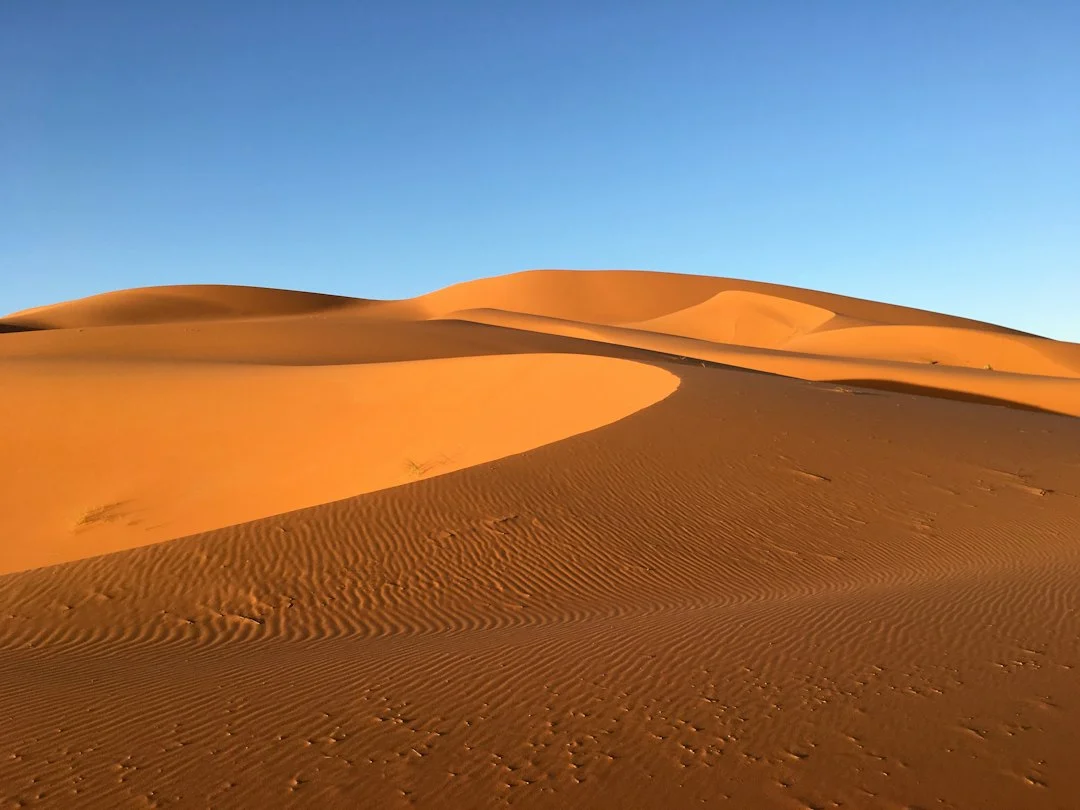
What to see: medinas and desert in Morocco, ancient sites in Tunisia
Morocco is about its imperial cities, the mountains and the great desert. Tunisia lines up Roman and Punic sites, the oases of the south and the island of Djerba, over shorter distances.
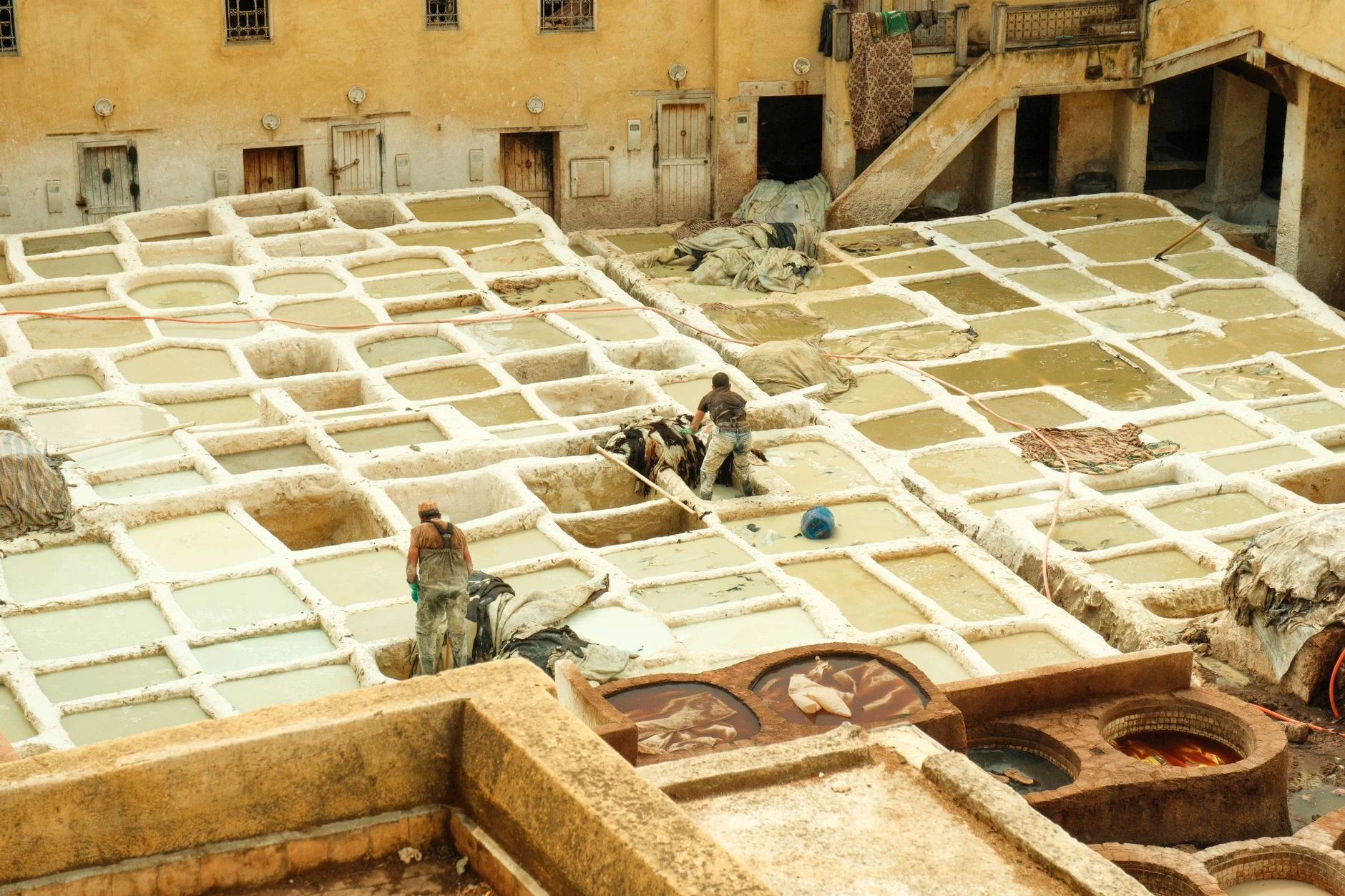
A first winter trip to Morocco often starts in Marrakech: the medina, Jemaa el-Fna square and the gardens, then a day in the High Atlas or in the Agafay desert. Our guide to things to do in Marrakech covers these visits. Fez, more traditional and cooler, needs two days for its medina and tanneries. To decide between the two cities, see our comparison Marrakech or Fez. The great desert, at Merzouga or Zagora, takes effort: allow two to three days of driving there and back from Marrakech.
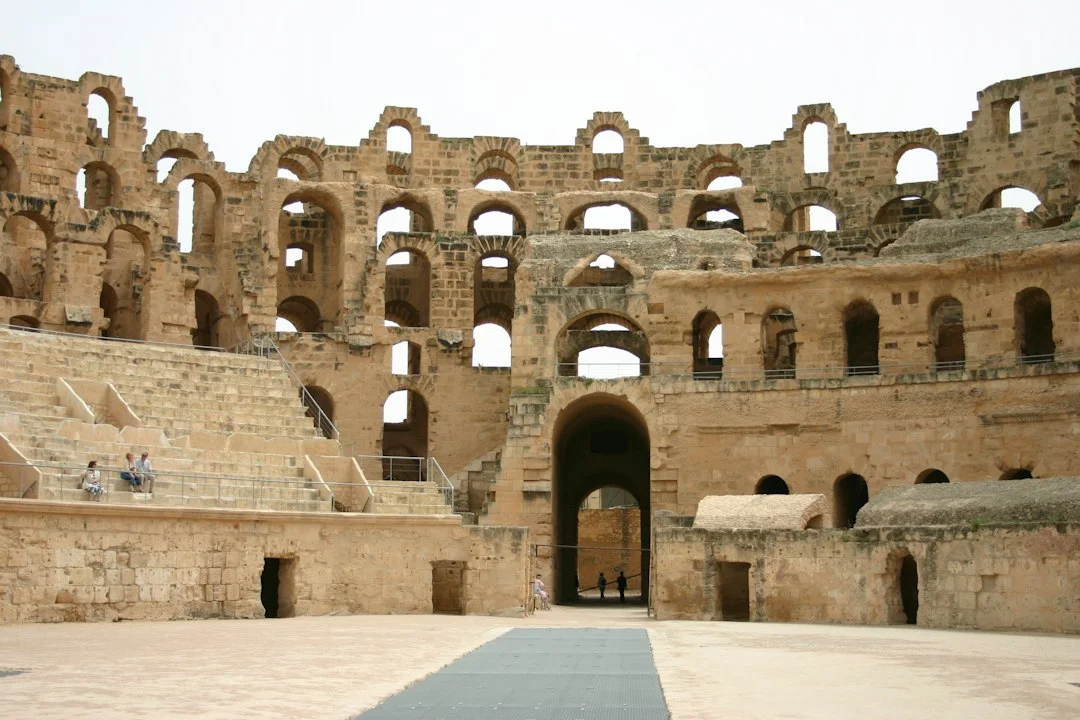
Tunisia reads like a history book. Around Tunis you have Carthage and the Bardo Museum, then Dougga, one of the best-preserved Roman towns in North Africa. In the centre stands the amphitheatre of El Jem. Our selection of 9 ancient sites in Tunisia sorts them by region. In the south, Tozeur and its palm groves, Douz on the edge of the Sahara and the cave homes of Matmata are pleasant to visit in winter. Djerba, finally, suits slow stays and thalassotherapy, a Tunisian specialty.
Flights from Europe: Tunisia is closer
Both countries have direct flights from Paris and the main French cities. Allow about 3 hours 30 minutes for Agadir, the furthest destination, against 2 hours 50 minutes for Djerba. Tunis is closer still.
In Morocco, Marrakech and Agadir are the two winter gateways. Transavia, Ryanair, easyJet and Royal Air Maroc fly there from France, with fares that climb over the Christmas and February school holidays. In Tunisia, Tunisair, Nouvelair and Transavia serve Tunis-Carthage and Djerba. For a tour of the south, Tozeur airport saves you the roughly 450 km drive from Tunis, as our guide to southern Tunisia explains.
The durations quoted are those of direct flights listed by comparison sites in 2026 (Paris-Agadir, Paris-Djerba). Check the schedule on the airline's website before you book.
Entry rules: a passport is required in both countries
Neither Morocco nor Tunisia requires a visa from French citizens for a tourist stay, up to 90 days in Morocco and 3 months in Tunisia. In both, a national ID card is no longer enough: you need a passport, even on a package tour.
In Morocco, your passport must be valid for the whole stay, and border police can ask for a return ticket. France's foreign ministry states that entry on an ID card alone is no longer possible, even for groups. On arrival, check that your passport has been stamped.
In Tunisia, the rule changed on 1 January 2025: all visitors must show a passport valid for at least three months on the date of entry. The old allowance of an ID card for package tours, still mentioned by some guidebooks, no longer applies. Visa rules differ by nationality: if you don't hold a French or EU passport, check with the embassy before you go.
In both countries, neither the dirham nor the Tunisian dinar can be bought before you leave. Both are exchanged on arrival, and you should keep your exchange receipts to convert what's left when you leave.
Budget: Tunisia is cheaper, Morocco offers more range
On the ground, Tunisia generally costs less, especially away from the beach resorts: a simple meal is around ten dinars, about €3 (US$3.50). Morocco has a wider range, from budget riads to palaces, but Marrakech is one of the most expensive cities in the country.
The Moroccan dirham is worth about €0.09: Bank Al-Maghrib set €1 at 11.16 dirhams on 7 October 2026. Only 2,000 dirhams in cash may be brought into or out of the country, according to the Office des changes. The Tunisian dinar is worth about €0.30: €1 for 3.36 dinars at the central bank rate of 8 October 2026. Taking it out of the country is forbidden.
In Djerba, our guide to the island found 30 to 90 dinars a night in a guesthouse and around 150 dinars in a 3-star hotel. Site entry fees have gone up: since 1 April 2026, a category A site costs 30 dinars for foreign visitors, and the combined Bardo and Carthage ticket 45 dinars. A further increase is planned for 1 January 2027.
Crowds also weigh on the budget. Morocco welcomed 19.8 million tourists in 2025. In Marrakech over the Christmas holidays, medina riads get booked early and their prices follow.
Safety in 2026: two popular countries, with areas to avoid
Both countries welcome millions of travellers, and the classic tourist circuit is straightforward. In Morocco, France's foreign ministry advises against travel only along the Mauritanian border. In Tunisia, under a state of emergency since 2015, the far Saharan south and the western mountains should be avoided.
For Morocco, the French travel advice updated on 15 September 2026 calls for heightened vigilance south of the Algerian border and in Western Sahara. The everyday risk is petty crime: bag and phone snatching, sometimes from scooters, is reported in Casablanca and Marrakech. Women travelling alone may face persistent harassment, and caution is advised on the back roads of the Rif.
For Tunisia, the advice of 15 September 2026 warns against all travel to the Saharan zone near the Libyan and Algerian borders, and to the Chambi, Selloum, Semema, Mghila and Orbata mountains. The desert south and east of the Bir Rjim Maatoug, Borj Bourguiba, Ben Guerdane line is advised against except for essential travel. The rest of the country, including Tunis, Djerba, Tozeur and Douz, is under heightened vigilance. For a trip into the dunes, go through a local agency that knows the permit rules.
Either way, reread your government's travel advice a few days before departure, and sign up for its alert service if it has one.
The verdict by type of traveller
For winter sun, desert and mountains, choose Morocco. For a short, cheaper trip focused on ancient history, choose Tunisia. Between the two, it comes down to your travel month and what you want to see.
- You want mild weather in January: Morocco, in Marrakech or Agadir, with 20 to 22 °C in the afternoon.
- Roman history fan: Tunisia, with Carthage, Dougga and El Jem a few hours' drive from each other.
- Desert lover: both work. Merzouga has the most dramatic dunes but takes long hours on the road. Douz and Tozeur are easier to reach by plane.
- Long weekend: Tunisia, with shorter flights and smaller distances on the ground.
- Tight budget: Tunisia, where accommodation and meals cost less.
- Hiking: Morocco, for the High Atlas an hour from Marrakech.
- Rest and thalassotherapy: Tunisia, in Djerba or Hammamet.
Frequently asked questions
Is it warmer in winter in Morocco or Tunisia?
Morocco. In January, Agadir reaches about 21 °C in the afternoon and Marrakech 20 °C, against 16 °C in Tunis and 17 °C in Djerba, based on our 2016-2025 averages. Southern Morocco is also drier than northern Tunisia.
Can you swim in Morocco or Tunisia in winter?
Rarely. Air temperatures barely pass 20 °C in midwinter and the sea stays cool on both sides. For a swim in January, the Canary Islands are a better bet.
Do you need a passport for Morocco and Tunisia?
Yes, in both countries. Morocco requires a passport valid for the whole stay. Since 1 January 2025, Tunisia requires a passport valid for at least three months on entry. A national ID card alone is no longer accepted, even on a package tour.
Can you visit the desert in winter?
Yes, it's actually the best season for daytime, at around 17 to 20 °C. Nights drop close to 0 °C in Ouarzazate or Merzouga. In Tunisia, stay north of the zone the French foreign ministry advises against: Douz, Tozeur and Matmata can be visited, under heightened vigilance.
Activities to book
Four outings, two per country, each with a GetYourGuide offer we chose and checked (affiliate links, free cancellation up to 24 hours before). Site entry fees are not included unless stated.

Day hike in the High Atlas (Marrakech)
You leave your hotel by minibus, stop in the Agafay desert for a camel ride, pause at Moulay Brahim, then reach Imlil for about 2.5 hours of guided walking between Berber villages. Lunch is served in a family home, with mint tea.
A way to see the mountains without sorting out transport: small group of 15 people at most, transport, guide and lunch included, tips extra. You need average fitness for paths that can be uneven; the walk can be shortened on request.
- 9 hrs
- from €20 per person (GetYourGuide price 2026)
Sunset, camel ride and dinner in the Agafay desert (Marrakech)
About forty minutes by bus from Marrakech, a stop at an argan oil cooperative, then 15 to 20 minutes on a camel and tea in a Berber camp. You watch the sunset from the camp before a dinner of salads and tagines, with music and a fire show.
An easy evening out when you don't have time to go all the way to Merzouga: hotel pick-up by air-conditioned bus, or at the meeting point if your riad is inside the medina. Bring a jacket: winter evenings are cool in the desert.
- 4 hrs
- from €15 per person (GetYourGuide price 2026)
The best of Djerba in half a day
A guided tour of the island by air-conditioned vehicle: the seaside Sidi Yati mosque, the potters' village of Guellala, the murals of Djerbahood, the El Ghriba synagogue, then the souk of Houmt Souk. Each stop lasts 15 to 45 minutes, with the guide explaining the island's culture.
A good way to get your bearings on the first day before slowing down: pick-up included, guides in French, English, German or Italian. Meals, drinks and purchases are not included.
- 4 hrs
- from €19 per person (GetYourGuide price 2026)
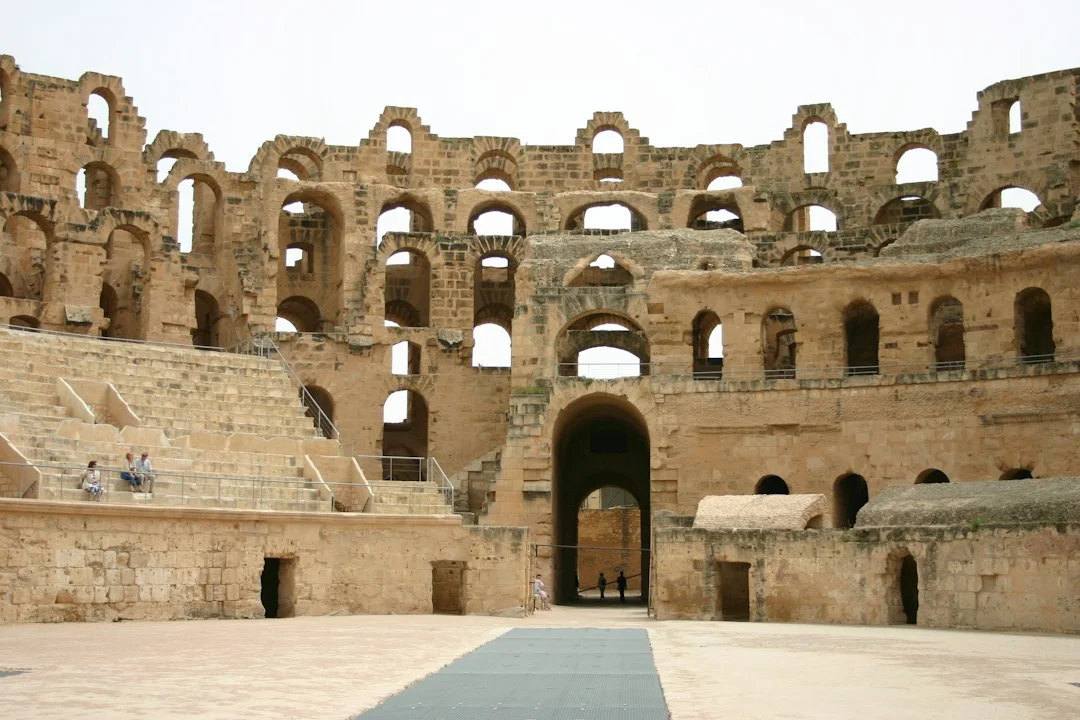
Half day at the El Jem amphitheatre (from Hammamet)
Pick-up at your hotel in Hammamet, a drive along the motorway, then a guided visit of the UNESCO-listed amphitheatre: the stands, the galleries and the underground passages where gladiators and wild animals waited. The ticket also gets you into the nearby archaeological museum and its Roman mosaics.
A way to see El Jem without a car: licensed driver and guide, air-conditioned transport, tolls and parking included; pick-up from another town on request. Entry fees, meals and tips are at your expense.
- 5 hrs
- from €29 per person, entry fees not included (GetYourGuide price 2026)
Before you go
A few bookings make arriving easier. An eSIM installed before your flight saves you hunting for a SIM card at the airport, as our article on travel eSIMs explains. In Marrakech, a transfer booked in advance takes you to the edge of the medina, where the riad often sends someone to walk you the rest of the way. A rental car makes sense for the Atlas, the desert or a loop around Djerba, much less in the medinas. Also check that your insurance covers medical costs: in hospitals and doctors' surgeries alike, care is paid for on the spot in both countries.
Sources
The figures in this guide come from the sources below, checked on the publication date.
Leave a comment
Share your thoughts or travel experience. Your email will not be published.