

Guadeloupe or Martinique? Choose Guadeloupe for nature and variety: an archipelago with La Soufrière volcano, the Carbet Falls, the Cousteau Reserve and islands with a character of their own, such as Les Saintes and Marie-Galante. Choose Martinique for a more compact island, where the southern beaches, Mount Pelée, Saint-Pierre and the AOC rum distilleries are all less than an hour from Fort-de-France.
Beyond that, the two islands are much the same. Both have a tropical climate with afternoons around 28 to 31 °C (82 to 88 °F), a dry season from December to April, and direct flights of about 8.5 to 9 hours from Paris. Both use the euro and the French mobile network (EU roaming applies). EU citizens only need their national ID card. What sets them apart is the kind of trip you want.
| Criterion | Guadeloupe | Martinique |
|---|---|---|
| Area | about 1,630 km², an archipelago | about 1,130 km², a single island |
| Highest point | La Soufrière, 1,467 m | Mount Pelée, 1,397 m |
| Airport | Pointe-à-Pitre (PTP) | Fort-de-France (FDF) |
| Beaches | pale sand on Grande-Terre, golden sand at Deshaies | long beaches in the south, black sand in the north |
| Hiking | national park, La Soufrière, waterfalls | Mount Pelée (UNESCO), Caravelle peninsula |
| Islands to visit | Les Saintes, Marie-Galante, La Désirade | the islets off Le François, by boat |
| Rum | distilleries on Basse-Terre and Marie-Galante | AOC rhum agricole since 1996 |
| Best for | hikers, divers, longer trips | short stays, beaches, history, rum |
Book the activities from this article
Our picks for Guadeloupe and Martinique, well rated and free to cancel.
-
Book this activity
Guadeloupe: the Grand Cul-de-Sac Marin lagoon by boat
About €70 per person (GetYourGuide price 2026)
-
Book this activity
Guadeloupe: a day sailing to Les Saintes
About €150 per person (GetYourGuide price 2026)
-
Book this activity
Martinique: dolphins, turtles and coves of the Caribbean coast
From €85 per person (GetYourGuide price 2026)
Affiliate links: Travel Advice earns a commission if you book, at no extra cost to you. Learn more
Beaches: more variety in Guadeloupe, easier in Martinique
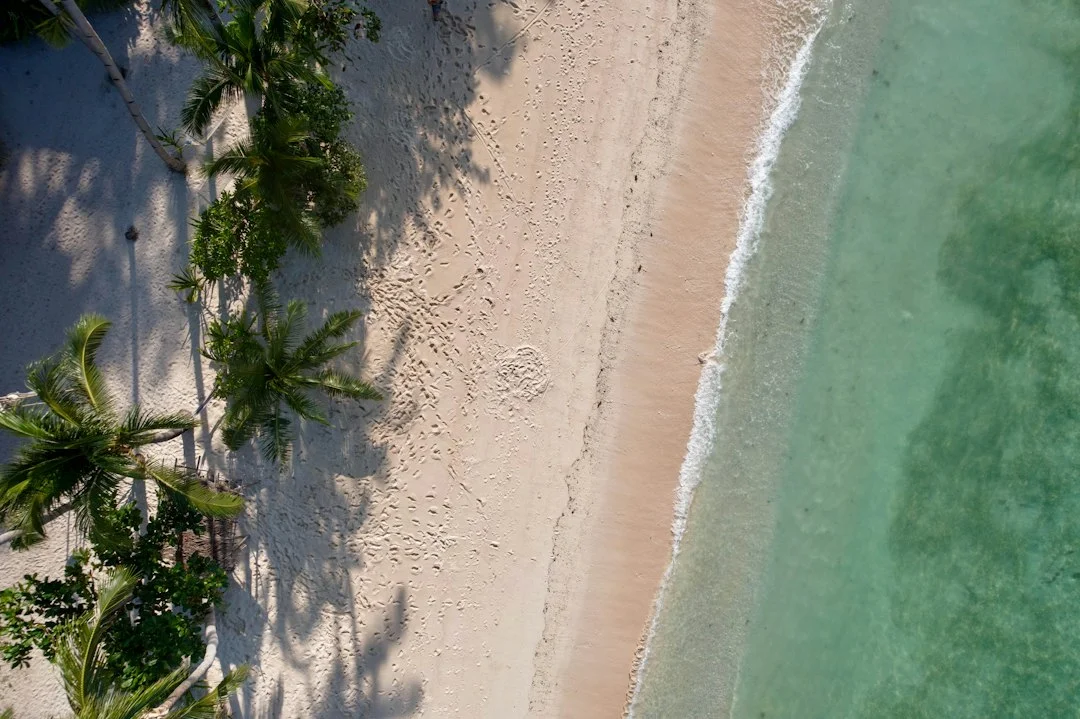
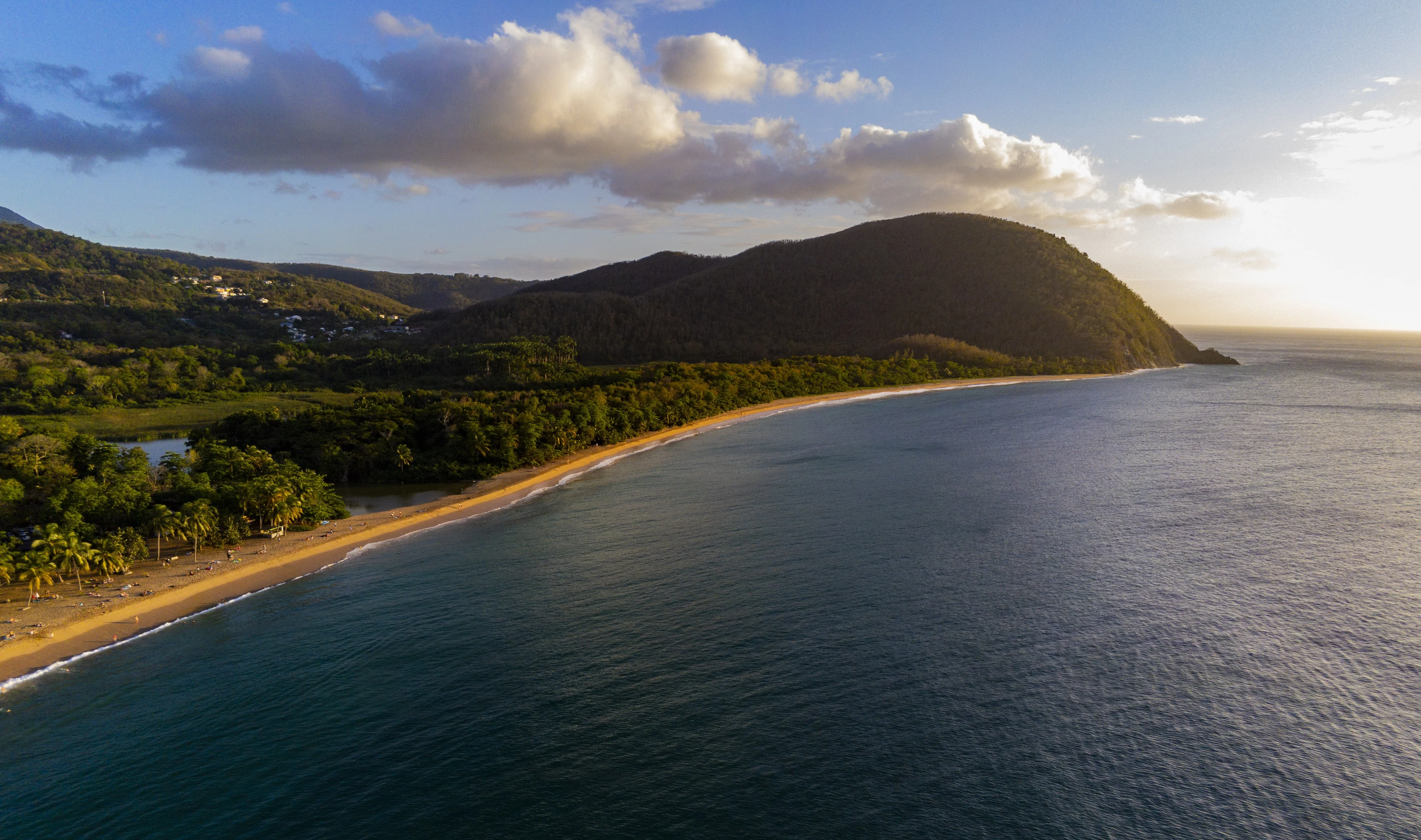
Guadeloupe has the widest range. The beaches of Grande-Terre, at Sainte-Anne, Saint-François or Le Gosier, are calm lagoons with pale sand, good for family swimming. In the north-west of Basse-Terre, Grande Anse at Deshaies is a long stretch of golden sand below the hills. Les Saintes and Marie-Galante add beaches that are almost empty on weekdays.
Martinique's best beaches are in the south, less than an hour from Fort-de-France: Grande Anse des Salines at Sainte-Anne, the beach at Anse Mitan, the Anses d'Arlet, where you often swim above turtles, and Le Diamant beach, facing Diamond Rock. The volcanic north has black-sand beaches, wilder and less suited to swimming.
On both islands, the Atlantic coast to the east gets strong currents and sargassum, a brown seaweed that smells of rotten eggs as it rots on the shore. Large strandings were reported in 2026, including on La Désirade in August. Check Météo-France's sargassum bulletins before you choose where to stay, and favour the more sheltered Caribbean coast, to the west.
Hiking and nature: Guadeloupe wins
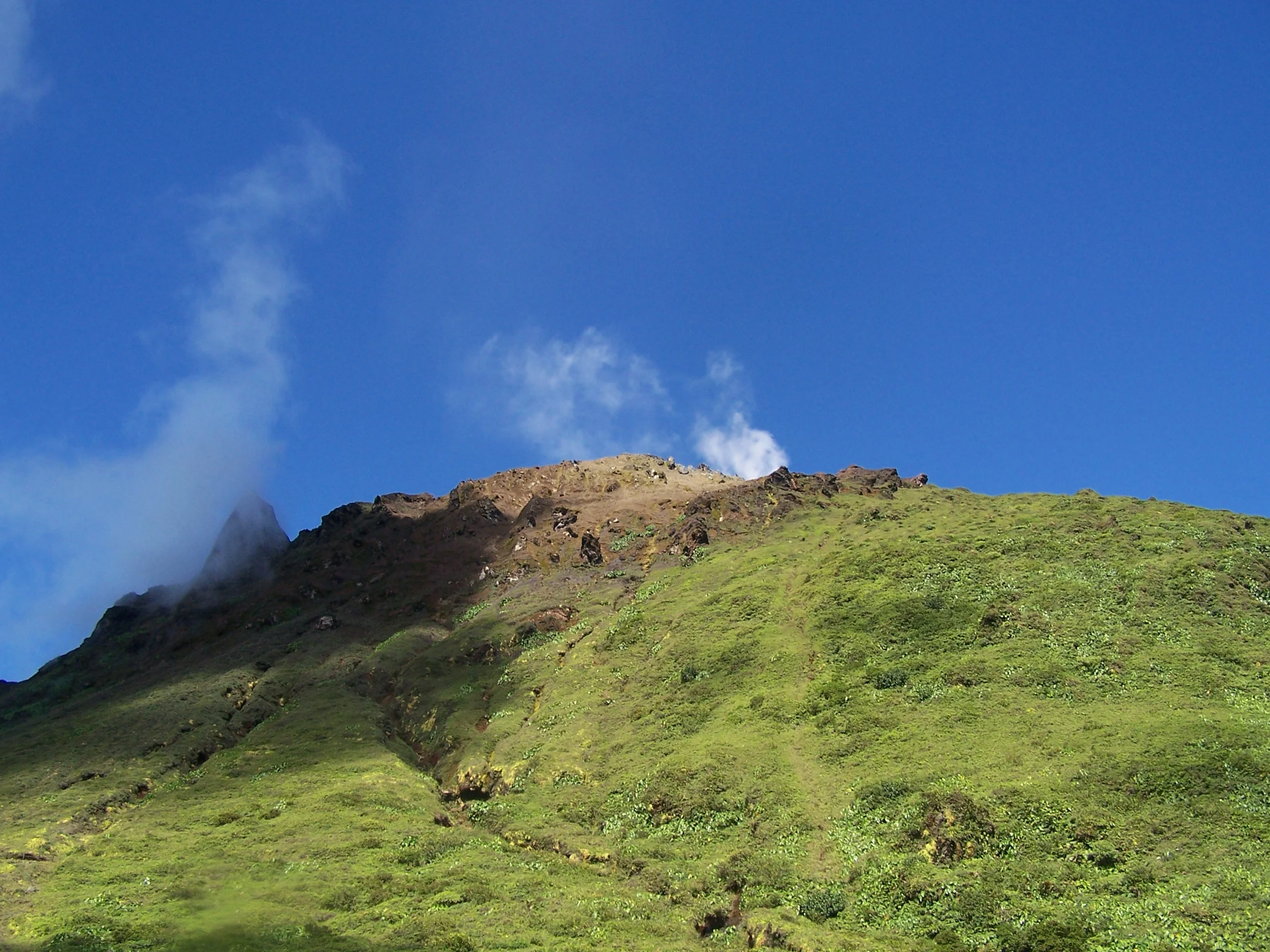
If you want to walk, go to Guadeloupe. Guadeloupe National Park, created in 1989, covers much of Basse-Terre: rainforest, waterfalls and a volcano. The climb up La Soufrière, at 1,467 m, is the archipelago's signature hike, with steaming fumaroles at the top. Access depends on volcanic activity, so check the current rules before you go. The Carbet Falls, the Cascade aux Écrevisses and the Route de la Traversée across the island round out the outings.
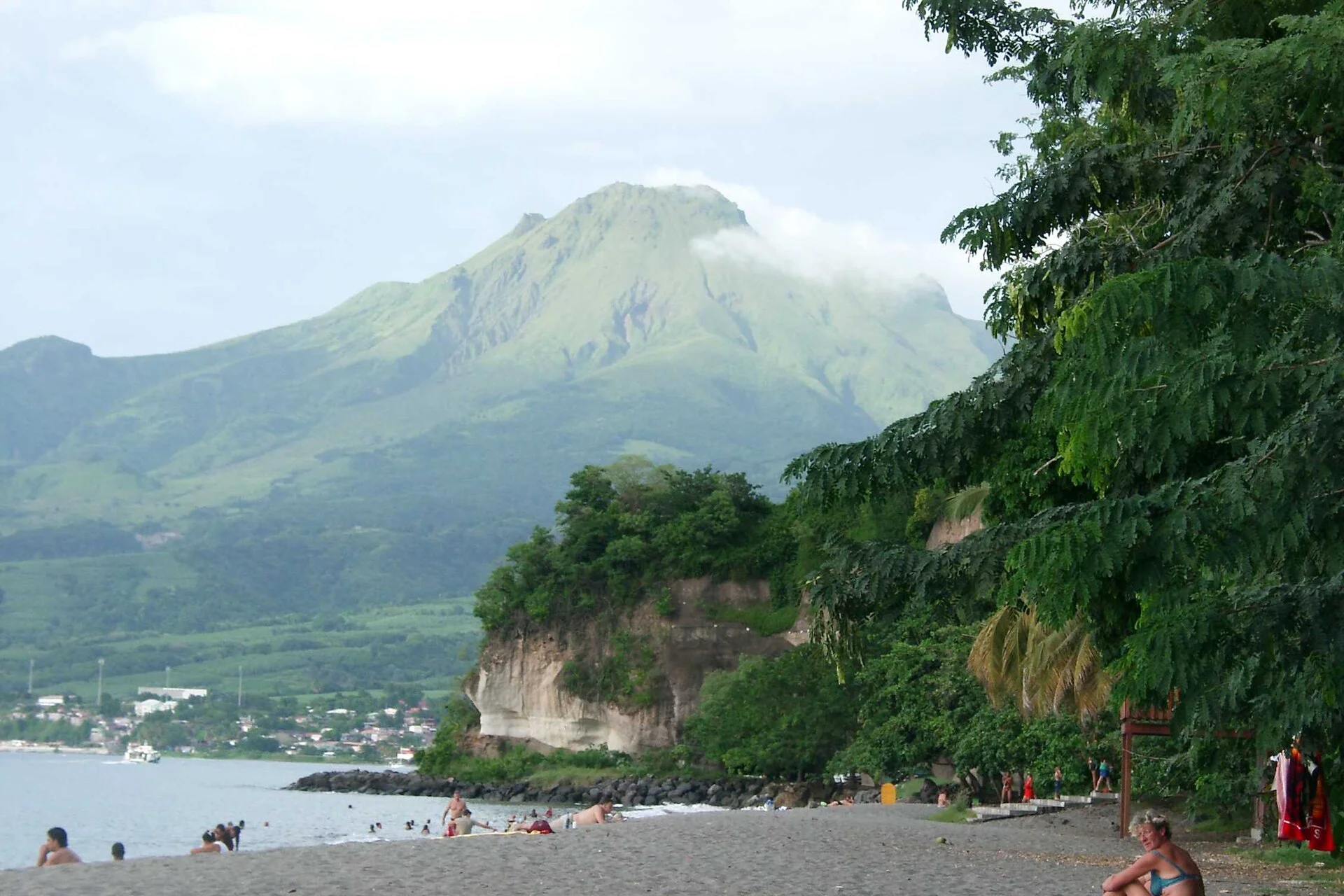
Martinique still has plenty to offer. The "Volcanoes and Forests of Mount Pelée and the Pitons of Northern Martinique" have been a UNESCO World Heritage Site since 2023. Climbing Mount Pelée, via the Aileron trail from Morne-Rouge, takes a good half-day and needs a clear sky, which is rare at the summit. The Caravelle peninsula, a nature reserve, can be walked in a few hours, and the Balata garden is a stop on the way north along the Route de la Trace.
One warning applies to both islands: chlordecone, a pesticide used on banana plantations until 1993, still contaminates soil and rivers. Fishing is banned in many rivers, so don't eat any fish or crayfish you catch yourself.
Islands and the sea: the Guadeloupe archipelago makes the difference
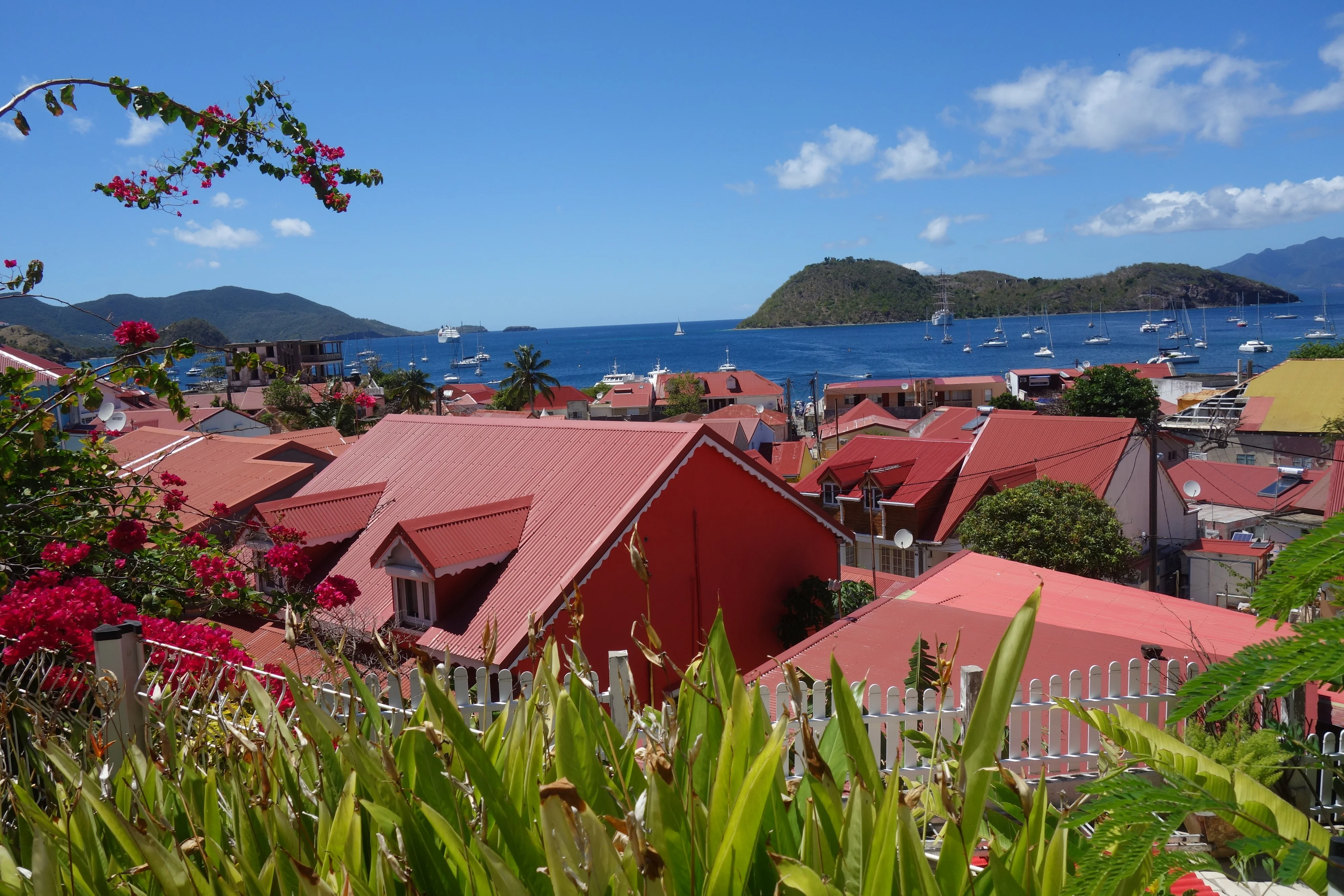
This is Guadeloupe's strongest card: you can hop between islands. Les Saintes, 20 to 25 minutes by boat from Trois-Rivières, have the bay of Terre-de-Haut, its Creole houses and the Pain de Sucre headland. Marie-Galante, an hour from Pointe-à-Pitre, is an island of cane fields, windmills and distilleries. La Désirade, smaller, makes a day trip from Saint-François.
Underwater, the Cousteau Reserve around the Pigeon Islets is one of the best-known diving and snorkelling sites in the French Caribbean, and you can kayak there from Malendure beach. In the north, the Grand Cul-de-Sac Marin, a lagoon closed off by a coral reef, is explored by boat, between mangroves and sandy islets.
Martinique is more about time on the water than island-hopping: catamaran trips along the Caribbean coast, swimming with turtles at the Anses d'Arlet, dolphin watching offshore, and the islets off Le François on the Atlantic coast, with white sandy shallows where you can stand in the middle of the sea. Diamond Rock is something you admire from the shore or on a dive.
Culture, history and rum: Martinique packs in more
Martinique's heritage sites are closer together. Saint-Pierre, once the island's commercial capital, was destroyed by the eruption of Mount Pelée on 8 May 1902; its ruins, its museum and the wrecks in its bay tell the story of the disaster. Fort-de-France with La Savane park and the Schœlcher Library, the old sugar estates and the rum route fit into a few days.
Martinique's rhum agricole, distilled from fresh sugarcane juice, has had a protected designation of origin (AOC) since 1996, the only rum AOC in France. Many distilleries open their ageing cellars to visitors, with tastings.
In Guadeloupe, the Mémorial ACTe in Pointe-à-Pitre is the main centre devoted to the history of slavery and the slave trade. You can also visit the distilleries of Basse-Terre and those of Marie-Galante, known for very strong white rums. And carnival, from January to Ash Wednesday, fills the streets of both islands every Sunday.
When to go: same climate, same seasons
The best time for both islands is December to April, the dry season locally called carême. Temperatures barely differ between the two: 28 to 29 °C in the afternoon in winter, 30 to 31 °C in summer. Rain is what changes. Pointe-à-Pitre is a little drier in January and February, Fort-de-France in March and April, and the wet season (hivernage), from June to November, is much rainier in Guadeloupe: 173 mm in September against 98 mm in Fort-de-France.
| Month | Pointe-à-Pitre (°C / mm) | Fort-de-France (°C / mm) |
|---|---|---|
| January | 28.4 / 40 | 28.5 / 63 |
| February | 28.6 / 54 | 28.6 / 63 |
| March | 29.3 / 59 | 29.7 / 51 |
| April | 29.7 / 66 | 30.5 / 51 |
| May | 30.6 / 82 | 31.0 / 65 |
| June | 31.2 / 97 | 30.7 / 123 |
| July | 31.1 / 128 | 30.2 / 134 |
| August | 31.3 / 153 | 30.9 / 120 |
| September | 31.2 / 173 | 31.6 / 98 |
| October | 30.6 / 163 | 30.9 / 113 |
| November | 29.7 / 122 | 29.9 / 100 |
| December | 29.0 / 58 | 29.1 / 59 |
We calculated these 2021-2025 averages from the ERA5 reanalysis published by Open-Meteo (maximum temperature and total monthly rainfall). They smooth out tropical showers, which are short but frequent, and don't replace Météo-France's official climate normals. The hurricane season runs from 1 June to 30 November on both islands, with the highest risk from August to October.
In February, both islands are in the middle of the dry season and of carnival. Our guide to where to go in February compares them with other winter-sun destinations, and where to go in January covers the month before.
Flights, car and budget
Air France, Air Caraïbes and Corsair fly direct from Paris to both islands, in about 8.5 to 9 hours. For winter 2026-2027, Air Caraïbes plans up to 21 flights a week to Pointe-à-Pitre and 18 to Fort-de-France. Guadeloupe gets slightly more visitors: of every 100 tourists who flew to France's overseas territories in 2025, 25 stayed in Guadeloupe and 23 in Martinique, according to Atout France.
You need a car on both islands, and rush-hour traffic jams are real: around Pointe-à-Pitre, Jarry and Baie-Mahault in Guadeloupe, and between Fort-de-France and Le Lamentin in Martinique. Martinique is quicker to get around: you can drive from the south to the north in under two hours, whereas in Guadeloupe a round trip from Grande-Terre to Basse-Terre easily takes a whole day.
Prices are similar on both islands, at mainland French levels or higher for food and accommodation in high season. Our Guadeloupe guide budgets about €100 to €140 per person per day for mid-range comfort, flights excluded, and Martinique is in the same range. In Guadeloupe, several towns have scheduled water cuts, so ask your accommodation whether it has a water tank. Our Guadeloupe guide for a first trip covers budgets, ferries and an itinerary from Grande-Terre to Les Saintes.
Our verdict: which island for which traveller?
Go to Guadeloupe if you have at least ten days, if you like hiking and diving, and if spending two nights in Les Saintes or on Marie-Galante appeals to you. It is the more varied of the two, at the cost of more time on the road.
Go to Martinique for a one-week stay based around the southern beaches, with days out to Saint-Pierre, Mount Pelée and the distilleries. Everything is closer, and you only need to change base once.
With two weeks, nothing stops you from combining both islands. There are inter-island connections, but their schedules and prices vary with the season, so check with the operators before you build your itinerary. Either way, book early for Christmas and February, when rental cars and accommodation sell out. For a base, Sainte-Anne works well on each island, and in Martinique, Les Trois-Îlets, across the bay from Fort-de-France, is another good option.
Activities to book
Three boat trips chosen and checked on GetYourGuide, all with free cancellation: two in Guadeloupe, one in Martinique. These are affiliate links.
Guadeloupe: the Grand Cul-de-Sac Marin lagoon by boat
A guided trip from Sainte-Rose into the Grand Cul-de-Sac Marin, the large lagoon closed off by a coral reef in the north of Guadeloupe. You see the mangrove and its aerial roots, the white-sand islets, and stop to swim and snorkel over the seagrass beds.
A good family outing with no physical effort. Bring a swimsuit, a hat and sunscreen; morning departures get the clearest water.
- About half a day
- About €70 per person (GetYourGuide price 2026)
Guadeloupe: a day sailing to Les Saintes
You set off in the morning and sail to the Les Saintes archipelago, stopping to swim and snorkel in sheltered coves. The highlight is sailing into the bay of Terre-de-Haut among the moored yachts, with the Pain de Sucre behind.
Suitable for everyone, families included; bring seasickness tablets if you need them. Book a few days ahead in high season.
- Full day
- About €150 per person (GetYourGuide price 2026)
Martinique: dolphins, turtles and coves of the Caribbean coast
A morning on a boat along the Caribbean coast, leaving from Fort-de-France, Anse Mitan or Case-Pilote. You look for dolphins to the north, pass a bat cave, then snorkel with turtles at Grande Anse and stop at Anse Noire and Anse Dufour. Accras (fritters), fresh fruit and homemade planter's punch are served on board.
A four-hour trip open to everyone, guided in French, English and Spanish. Dolphin sightings vary from day to day, and the captain adjusts the route.
- 4 hrs
- From €85 per person (GetYourGuide price 2026)
Sources
The figures in this guide come from the sources below, checked on the publication date.
Leave a comment
Share your thoughts or travel experience. Your email will not be published.