

Contents 30
Overview
Martinique is a French island in the Lesser Antilles, about 8.5 to 9 hours by direct flight from Paris. Its 1,128 km² split into a volcanic north, with UNESCO-listed Mount Pelée and the ruins of Saint-Pierre, and a south of beaches from Les Anses-d'Arlet to Les Salines. Everything is under two hours away by car.
For a first trip to Martinique, think of the island in two halves. The north is mountainous, wet and covered in forest: Mount Pelée rises to almost 1,400 m, and its "volcanoes and forests", together with the northern peaks, have been a UNESCO World Heritage Site since September 2023. At its foot, Saint-Pierre still holds the ruins of the town wiped out by the eruption of 8 May 1902. The drier south is a string of beaches: Anse Mitan in Les Trois-Îlets, Les Anses-d'Arlet, Le Diamant and its rock, then the Grande Anse des Salines in Sainte-Anne.
In between, Fort-de-France, the capital, takes half a day to explore, and the Route de la Trace climbs north through the forest past Balata Garden. Everywhere you go, sugar cane is a reminder that the island makes an agricultural rum with its own protected designation of origin, AOC Martinique, since 1996.
Martinique has about 360,000 inhabitants. It is a French territorial collectivity: you pay in euros, people speak French and Creole, and it is part of the European Union. Still torn between the two big islands of the French Caribbean? Our comparison Guadeloupe or Martinique helps you choose, and our Guadeloupe travel guide covers the neighbouring island.
12 places to take with you
In the guide's order, ready for Google Maps or your GPS.
Book the activities from this guide
Our picks for Martinique, well rated and free to cancel.
-
Book this activity
Dolphins and turtles on the Caribbean coast
About €85 per person, snack on board (GetYourGuide price, November 2026)
-
Book this activity
Kayaking in Le Robert: Îlet Chancel and the fonds blancs
About €22 per person for kayak hire (GetYourGuide price, November 2026)
-
Book this activity
Try-dive at Les Anses-d'Arlet
About €85 per person (GetYourGuide price, November 2026)
Affiliate links: Travel Advice earns a commission if you book, at no extra cost to you. Learn more

Anse Couleuvre and the northern Caribbean coast
At the end of the road, past Le Prêcheur, a black sand beach opens between two forest-covered cliffs, with a rocky islet sitting just offshore.
Anse Couleuvre is one of the last beaches you can reach by road on the northern Caribbean coast, at the foot of Mount Pelée. Beyond it, only a coastal trail continues to Grand'Rivière, the village at the end of the island.
You walk down from the car park in a few minutes, through the forest, for a quiet swim and a nap in the shade; hikers carry on to the neighbouring coves.
It is the best way to see Martinique as it was before beach tourism: no road beyond, a forest that runs down to the sand, and Mount Pelée right above.
Only swim when the sea is calm: the beach is exposed to the winter swell and there are no lifeguards.

Mount Pelée
Above L'Aileron, clouds race along the ridges, and the low, dripping vegetation no longer hides anything of the slope.
An active volcano in the north of the island, Mount Pelée (Montagne Pelée) rises to almost 1,400 m. Its eruption of 8 May 1902 destroyed Saint-Pierre; since September 2023, its volcanoes and forests, together with the northern peaks, have been a UNESCO World Heritage Site.
The most popular climb starts from the L'Aileron car park, above Le Morne-Rouge, on a steep trail up to the rim of the caldera. Allow a good half-day there and back, and more to reach the summit in clear weather.
On a fine day, the view takes in the whole northern half of Martinique, from the Caribbean coast to the Atlantic.
The volcano is on yellow alert: read the latest OVSM-IPGP report the day before and respect any access restrictions.

Saint-Pierre: the 1902 ruins
Stone staircases that lead nowhere, blackened walls overgrown with ferns, and Mount Pelée towering over it all: in Saint-Pierre, the disaster is still written into the town.
Martinique's economic capital in the 19th century, Saint-Pierre had about 26,000 inhabitants when the pyroclastic flow from Mount Pelée wiped it out on 8 May 1902. Among the few survivors, Ludger Sylbaris, known as Cyparis, locked in a prison cell, became famous. The town has held the French "Ville d'art et d'histoire" (Town of Art and History) label since 1990.
You explore the ruins of the theatre and the prison, with Cyparis's cell, the Église du Fort and the seafront on foot, then the Memorial of the 1902 Disaster, the town's museum. Allow half a day.
The wrecks of the ships sunk in the bay in 1902 also make Saint-Pierre a diving site.
Combine the visit with the Route de la Trace on the way there and the Caribbean coast on the way back, via Le Carbet.

Grande Anse des Salines
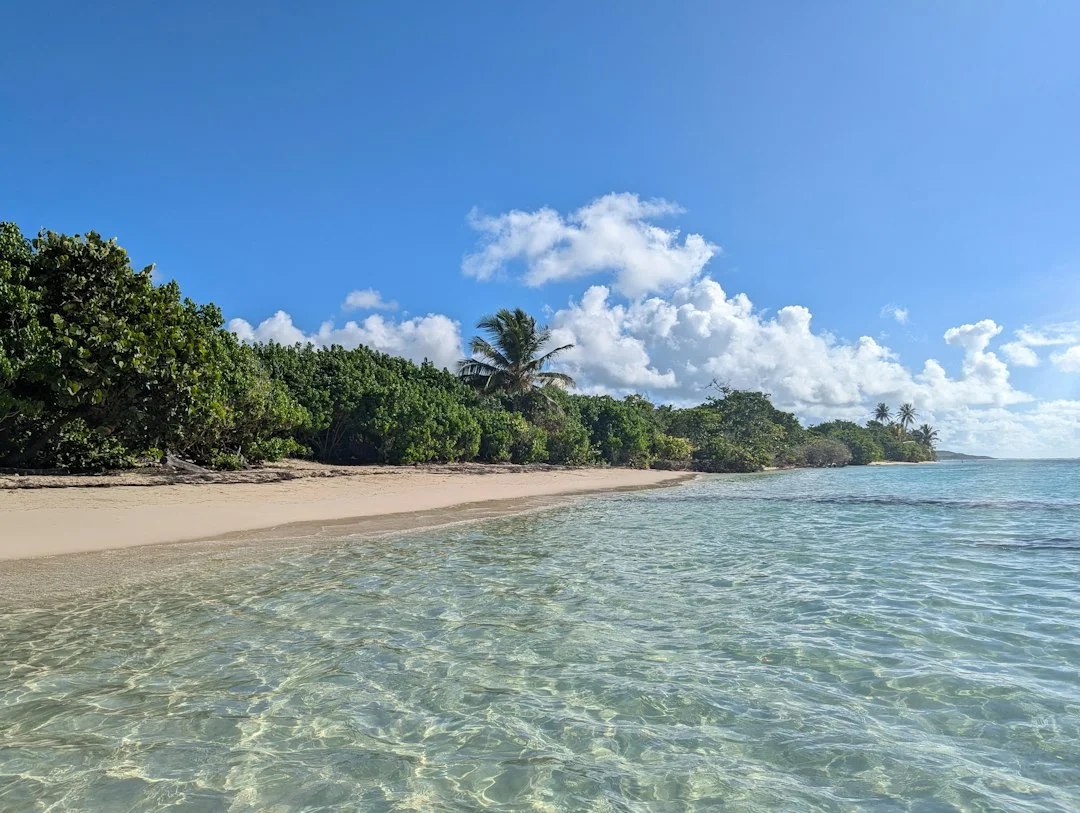
A long curve of pale sand, coconut palms leaning over water that shifts from pale green to blue, and, in the distance, the outline of Diamond Rock.
At the island's southern tip, in the town of Sainte-Anne, the Grande Anse des Salines stretches for several kilometres in front of the Étang des Salines, the salt pond that gave it its name. It is Martinique's best-known beach, very busy at weekends with Martinican families.
You spend the day swimming in a usually calm sea, napping in the shade of the sea grape trees and having lunch at the snack bars set up behind the beach. Further south, the Petite Anse des Salines is quieter.
The coastal path also links Les Salines to the wilder coves of the southern tip, for a walk along the water's edge.
Do not shelter under the manchineel trees, marked with a red band, and check the sargassum bulletin before you come.

Les Anses-d'Arlet and the turtles
A wooden jetty running towards a white church at the water's edge, colourful fishing boats, and below the surface, turtles grazing on the seagrass.
On the south-west Caribbean coast, the town of Les Anses-d'Arlet groups several beaches: the village beach, Grande Anse d'Arlet, Anse Dufour and Anse Noire, one of golden sand, the other of dark sand, side by side.
People come for snorkelling straight from the beach: with a mask and snorkel, you often see green turtles above the seagrass beds, especially in the morning. Allow half a day, or a full day if you work your way along the coves.
Do not touch or chase the turtles; swim above the seagrass without standing on it, and choose a mineral sunscreen.

Diamond Rock and the Cap 110 Memorial
Standing alone in the sea, the rock changes colour with the time of day: grey in the morning, golden at sunset, always circled by birds.
About 175 m high, Diamond Rock (Rocher du Diamant) rises about 2 km off the south coast. In 1804, the Royal Navy occupied it and armed it with cannons, naming it HMS Diamond Rock, before the French took it back on 2 June 1805.
You admire it from the long beach at Le Diamant or from Anse Cafard, home to the Cap 110 Memorial: fifteen white stone statues, unveiled in 1998 in memory of the captives on a slave ship wrecked near the coast in 1830. The site is free to visit.
Underwater, the rock is also a renowned dive site, accessible with a dive club.
Le Diamant beach is exposed to the swell: only swim when the sea is calm, and never near the no-swimming signs.

Balata Garden and the Route de la Trace
Walkways strung between the trees, hummingbirds around the heliconias, and, between the leaves, glimpses of the Pitons du Carbet.
About ten kilometres north of Fort-de-France, on the Route de la Trace, Balata Garden opened in 1986 on 2 hectares of former family land, planted with tropical species from all over the world.
The visit takes about an hour and a half on foot, among ponds, palms, anthuriums and suspension bridges. The Route de la Trace then continues through the rainforest, at the foot of the peaks, to Le Morne-Rouge and Mount Pelée.
It is the natural stop between Fort-de-France and the north, with no detour.
Drive the Route de la Trace in the morning: in the afternoon, rain and fog are common.

Fort-de-France
Under the colourful metal dome of the Schœlcher Library, the noise of the city fades, while the nearby Savane park buzzes with domino players and juice sellers.
Martinique's capital, Fort-de-France grew up around Fort Saint-Louis, which guards the entrance to the bay. The Schœlcher Library, built for the 1889 World's Fair in Paris and then reassembled here, is its most photographed landmark.
Half a day on foot is enough: La Savane and its palm trees, the library, Saint-Louis Cathedral and its metal frame, then the Grand Marché for spices, fruit and fresh juices.
From Les Trois-Îlets, you get there in about twenty minutes by shuttle boat, across the bay.
The city empties in the late afternoon and on Sundays: do your sightseeing and market shopping before noon.

Habitation Clément
The avenue of royal palms leads to the manor house, and the smell of aged rum still hangs around the old cellars.
In Le François, on the Atlantic coast, Habitation Clément is one of the great historic estates of Martinican agricultural rum, now run by a foundation devoted to heritage and contemporary art.
You visit the manor house, the old distillery and its cellars, a botanical park and a sculpture garden, before a tasting. Allow about two hours.
Combine it with the Caravelle Peninsula, about thirty minutes away, and pick a driver who will skip the tasting.

Caravelle Peninsula and Château Dubuc
The Atlantic wind flattens the dry grass, the mangrove spreads out below, and the lighthouse keeps watch at the end of the peninsula.
Jutting into the ocean from the town of La Trinité, the Caravelle Peninsula (presqu'île de la Caravelle) is a nature reserve mixing dry forest, mangrove and cliffs. At its tip stand the ruins of Château Dubuc, a former sugar plantation.
Two waymarked trails start from the château car park: a short loop of about an hour, and a longer half-day circuit via the mangrove and the lighthouse.
Do not swim on the Atlantic side: the currents there are dangerous.

Les Trois-Îlets and Anse Mitan
Facing Fort-de-France across the bay, sailboats bob in front of Anse Mitan, and shuttle boats come and go all day.
The town of Les Trois-Îlets includes the Pointe du Bout marina, the beaches of Anse Mitan and Anse à l'Âne, and a quiet village. It is also the birthplace of Joséphine, the future empress, born in 1763 on the La Pagerie estate, now a museum.
Many visitors stay here for its central location: calm beaches, restaurants, departures for boat trips and shuttles to the capital.
The Village de la Poterie, with its craft workshops, is also in the town.
Check the La Pagerie museum's opening hours before going: they are not always up to date online.

Fonds blancs and the islets of Le François
In the middle of the sea, the boat cuts its engine, you jump in… and your feet touch the bottom, in turquoise water up to your waist.
Off Le François, on the Atlantic coast, the fonds blancs ("white bottoms") are sandy shallows between the islets of Thierry, Oscar, Métrente and Long, where the water is often no deeper than 2 m. The most famous is "Joséphine's bathtub" (baignoire de Joséphine), between Îlet Oscar and Îlet Thierry.
You can only get there by boat, from the port of Le François: trips usually last half a day, with swimming, a tour of the islets and sometimes a ti-punch served as you stand in the water.
It is one of the few outings on the Atlantic coast where swimming is calm and safe.
Protect yourself from the sun (there is no shade in the middle of the sea) and check the sargassum bulletin: the Atlantic coast is the most exposed.
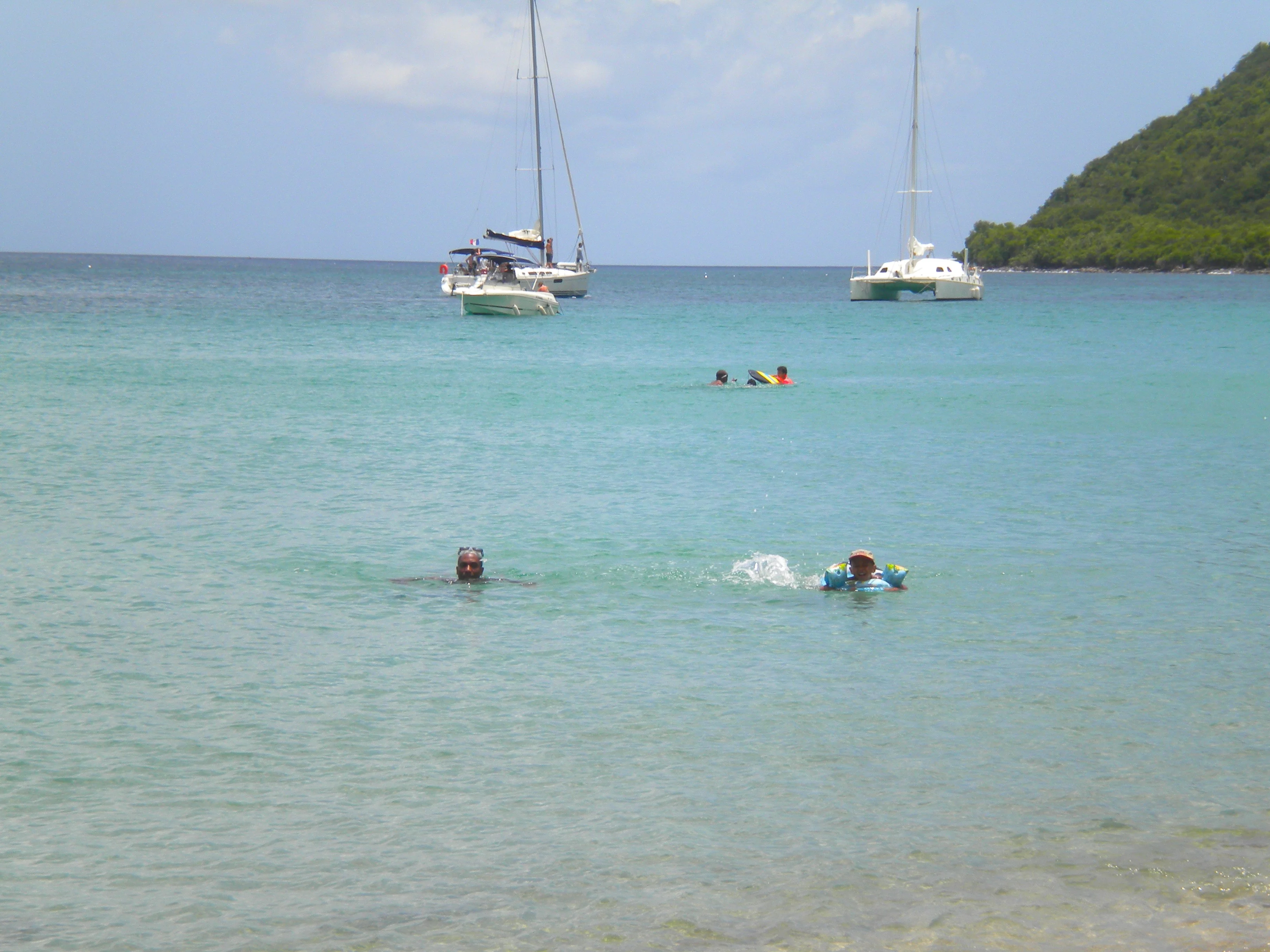
Dolphins and turtles on the Caribbean coast
A morning on a boat along the Caribbean coast: looking for dolphins offshore, then a snorkelling stop at Les Anses-d'Arlet to swim above the turtles, with stops in the nearby coves. The highlight: turtles coming up to breathe a few metres from the swimmers.
Open to anyone who can swim, children included. Dolphin sightings depend on the day; book a few days ahead in high season.
- 4 hours at sea
- About €85 per person, snack on board (GetYourGuide price, November 2026)
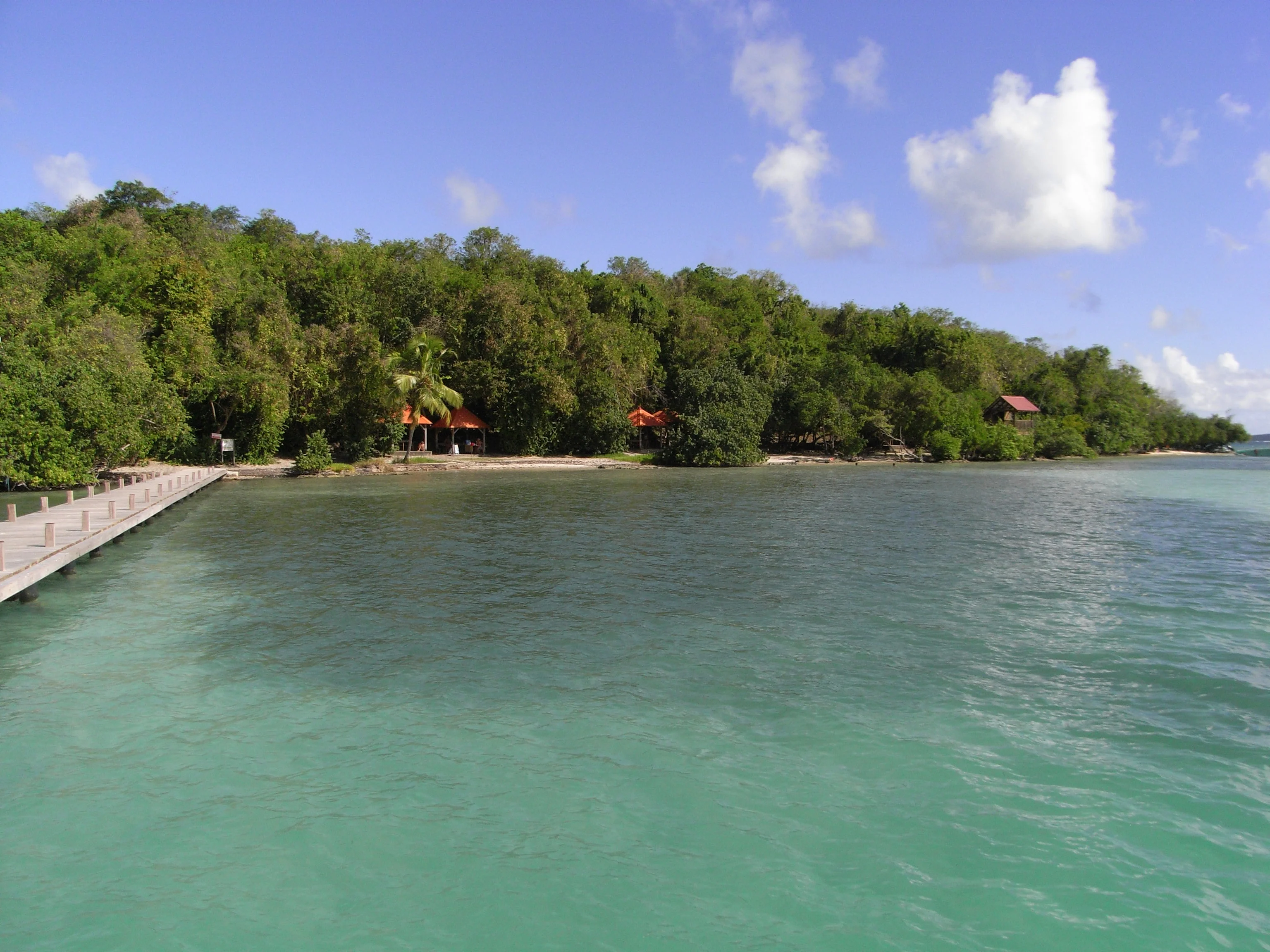
Kayaking in Le Robert: Îlet Chancel and the fonds blancs
You pick up your kayak in Le Robert, on the Atlantic coast, then paddle across the sheltered bay to Îlet Chancel, known for its iguanas, with swimming stops on the fonds blancs. The highlight: stopping in the middle of the bay, standing in shallow, crystal-clear water.
A self-guided outing for swimmers comfortable in a kayak; go in the morning, when the wind is lighter, with water, a hat and sunscreen.
- About 3 hours, self-guided
- About €22 per person for kayak hire (GetYourGuide price, November 2026)
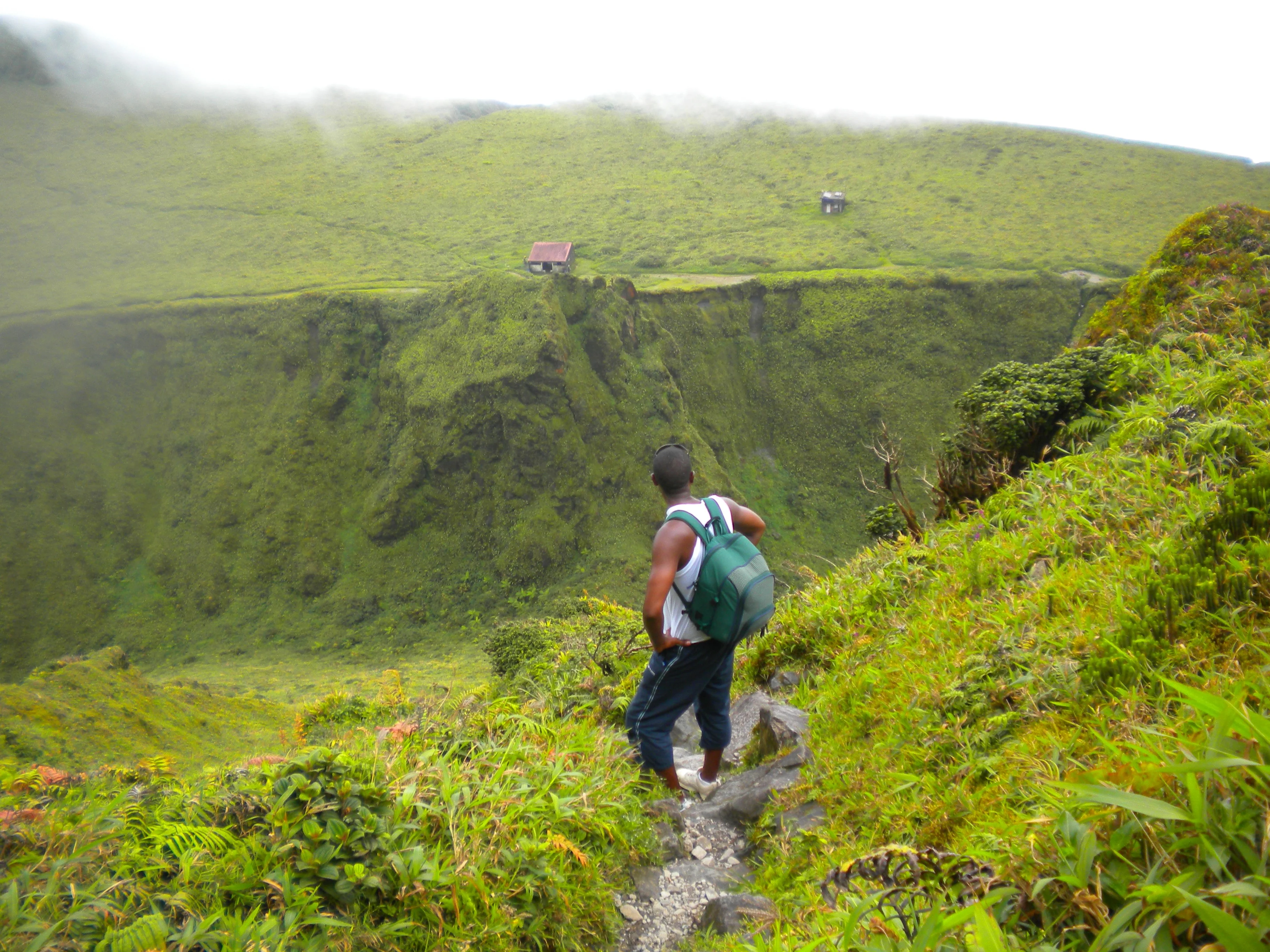
Climbing Mount Pelée
Start from the L'Aileron car park, above Le Morne-Rouge, at sunrise. The trail climbs steeply through low vegetation to the rim of the caldera, where the view takes in the north of the island and, on a clear day, Dominica.
A good level of fitness is needed: high steps, mud and wind at the top. Hiking boots, a windbreaker, water and snacks are essential; read the latest OVSM-IPGP report the day before.
- Half a day there and back from L'Aileron
- Free (waymarked trail, open access)
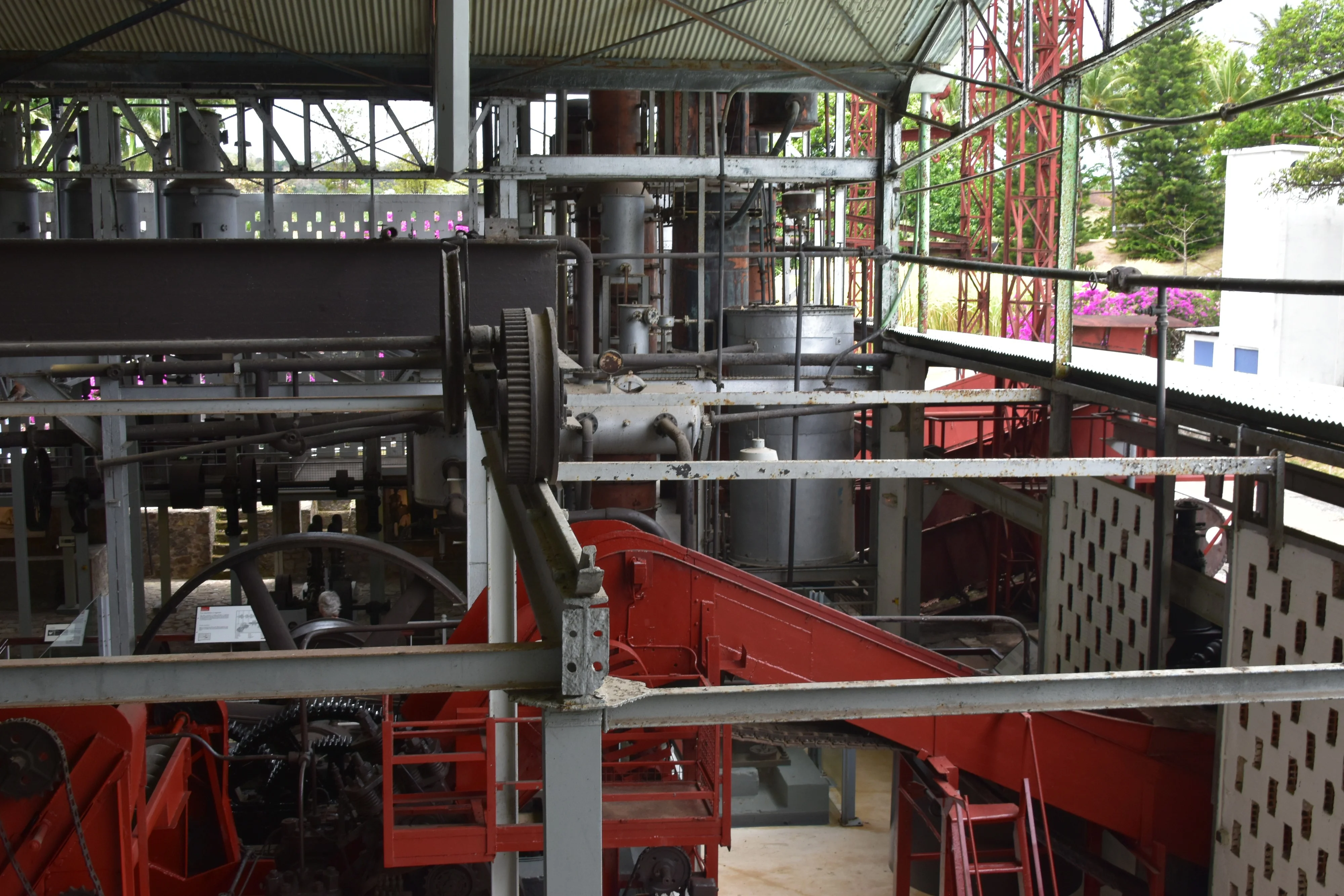
The AOC agricultural rum route
You follow the cane from field to bottle: crushing, fermenting the juice, the distillation column, ageing cellars, then a tasting of white and aged rums. Habitation Clément, in Le François, combines with other distilleries on the island depending on your route, in the north as well as the south.
For adults, with a driver who does not drink. Distillation mainly runs during the cane harvest, in the carême season; check each estate's visiting hours.
- 1 to 2 hours per distillery
- Varies by estate: free or paid visits, tasting often included
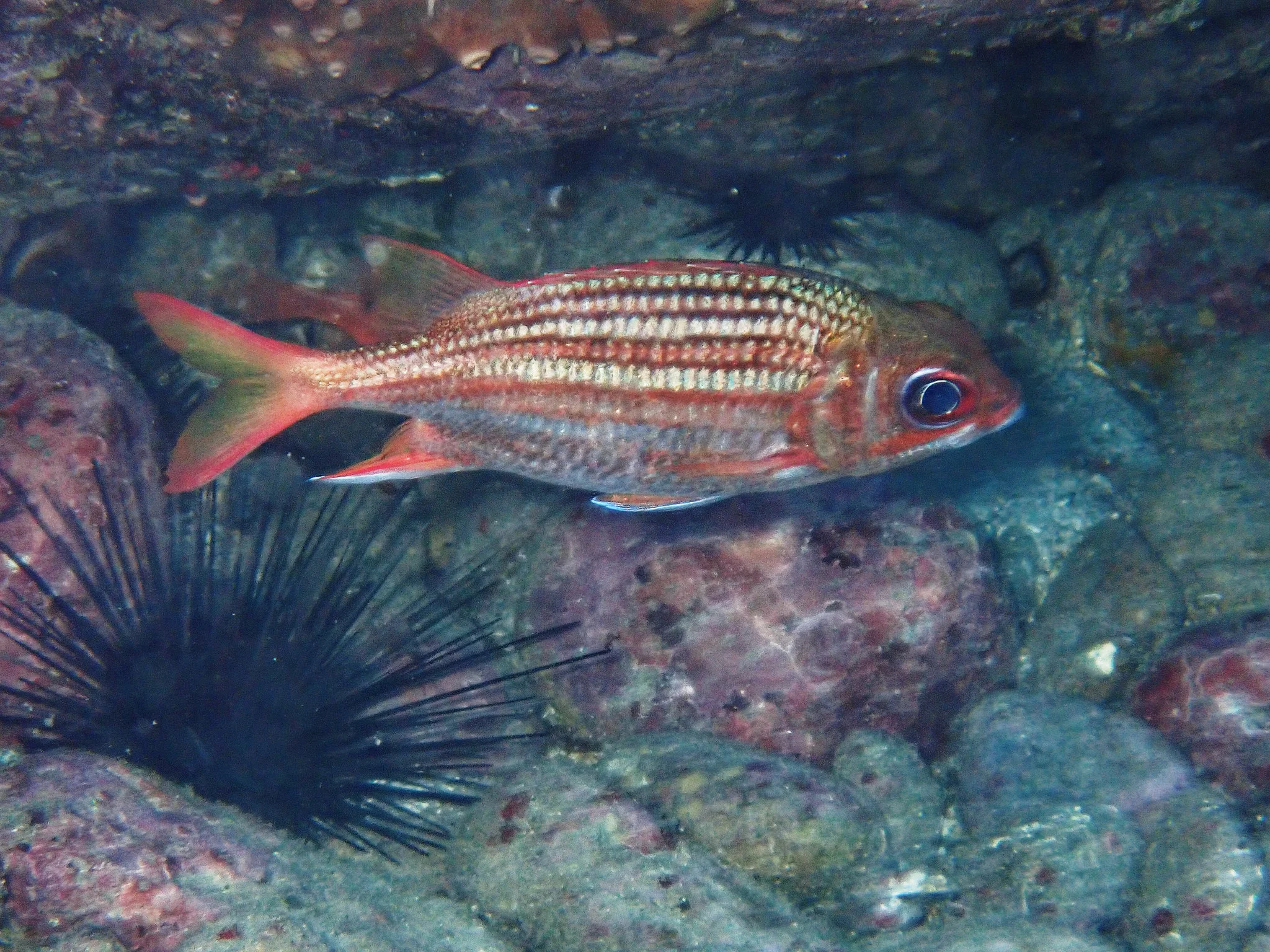
Try-dive at Les Anses-d'Arlet
A briefing on the beach, full equipment, then your first dive with an instructor in the sheltered waters of Les Anses-d'Arlet. The highlight: going down a few metres below the surface among reef fish, sometimes with a passing turtle.
No experience needed, from a minimum age set by the dive club; mention any health problem (ears, asthma) before booking. Do not fly within 24 hours of your dive.
- Half a day
- About €85 per person (GetYourGuide price, November 2026)
Getting there
You arrive in Martinique at Martinique Aimé Césaire airport (FDF), in Le Lamentin, about 12 km from Fort-de-France. Air France from Roissy, Air Caraïbes and Corsair from Orly fly direct in about 8.5 to 9 hours. Expect about €400 to €950 return depending on the season.
All international flights land at Martinique Aimé Césaire airport (code FDF), in the town of Le Lamentin, about twelve kilometres from Fort-de-France. Three airlines fly direct from Paris:
- Air France from Roissy-Charles-de-Gaulle;
- Air Caraïbes and Corsair from Orly.
The flight takes about 8.5 to 9 hours. Most English-speaking travellers connect via Paris or another Caribbean hub. According to the comparison sites we checked in November 2026, return fares from Paris start at about €400 (roughly $430 / £340) in low season, often sit around €600 to €700 outside holidays, and regularly exceed €900 (roughly $970 / £770) in August and during French school holidays. For Christmas and February, book several months ahead: flights, cars and accommodation go fast.
Martinique is five hours behind Paris in winter and six in summer. If you land late in the day, sleep in Les Trois-Îlets or in the south rather than heading north at night on winding, poorly lit roads. If your flight is delayed or cancelled, our article on flight delay compensation explains your rights.
Getting around
In Martinique, a hire car is almost essential to reach the north, the distilleries and the beaches. Expect about €30 to €45 a day in low season and €60 to €70 from December to March. Between Fort-de-France and Les Trois-Îlets, ferry shuttles avoid the Le Lamentin traffic jams.
Most visitors pick up a hire car at the airport: buses do not serve the beaches, trails or distilleries in any practical way. You drive on the right; EU licences are valid, and other drivers should check whether they need an international driving permit. According to the aggregators we checked in November 2026, expect about €30 to €45 a day for a small car in low season and €60 to €70 in high season, when prices can double. Book four to eight weeks ahead for Christmas and February, and plan for a deposit of several hundred euros on your credit card.
- Traffic jams: the Fort-de-France to Le Lamentin road clogs up at rush hour, towards the capital in the morning and the other way in the evening. Schedule your drives around the middle of the day.
- Northern roads: the Route de la Trace and the coast road to Saint-Pierre and Le Prêcheur are narrow, steep and winding. Avoid driving them at night.
- Distances: the island is compact, but average speeds are low. Allow a good hour from the airport to Sainte-Anne, and much longer at rush hour.
Ferry shuttles: from the Pointe Simon pier in Fort-de-France, Blue Lines shuttles cross the bay to Les Trois-Îlets: about 15 minutes to Pointe du Bout, 20 minutes to the village and 25 minutes to Anse à l'Âne. It is the most pleasant way to visit the capital from Les Trois-Îlets without a car. Crossings can be cancelled because of swell or a strike: check the timetable the day before.
What to do
In Martinique, you climb Mount Pelée, visit the ruins of Saint-Pierre, cross the forest on the Route de la Trace past Balata Garden, taste AOC rum at a distillery, then swim with turtles at Les Anses-d'Arlet and relax on the Grande Anse des Salines.
A well-balanced first trip mixes three things:
- The north, volcano and history: the climb up Mount Pelée from L'Aileron, the ruins of Saint-Pierre, the Route de la Trace and Balata Garden, then Anse Couleuvre at the end of the northern Caribbean road.
- The centre, city and rum: Fort-de-France (Schœlcher Library, Saint-Louis Cathedral, La Savane park), Habitation Clément in Le François and the Caravelle Peninsula, a nature reserve on the Atlantic coast.
- The south, sea and beaches: snorkelling with turtles at Les Anses-d'Arlet, Diamond Rock and the Cap 110 Memorial, the Grande Anse des Salines, and a boat trip to the fonds blancs (white sandbanks) off Le François.
Boat trips (dolphins and turtles, fonds blancs, diving) should be booked a few days ahead in high season. Beaches, waymarked trails and the outdoor parts of historic sites are free to access.
Food
Martinican food is Creole cooking with African, Indian and European influences: salt cod accras, fish blaff with lime, chicken or goat colombo, chatrou (small octopus) fricassee, conch and smoked chicken. It comes with sauce chien and AOC agricultural rum, drunk as ti-punch.
Dishes to try at least once:
- Accras de morue: salt cod fritters served with drinks, with sauce chien (onion, chilli, lime, herbs).
- Blaff: fish poached in a broth flavoured with lime, garlic, parsley and chilli, the great classic of seaside restaurants.
- Colombo: the island's dish of Indian origin, usually made with chicken, sometimes pork, goat or fish, spiced with a powder of turmeric, coriander, cumin and fenugreek.
- Chatrou: small octopus cooked as a fricassee, often with rice and red beans.
- Lambi: the meat of the large Caribbean conch, as a fricassee or on skewers.
- Poulet boucané: chicken slowly smoked over wood, sold by the roadside and on beaches at weekends.
To drink, AOC Martinique agricultural rum, distilled from pure cane juice, is served as ti-punch (white rum, cane sugar, lime) or as a planteur (rum punch). For spices, fruit and juices, the Grand Marché in Fort-de-France is the place to go in the morning.
For simple, local food, look for small restaurants and beach snack bars. Avoid freshwater crayfish and any fish you catch yourself in rivers: because of pollution from chlordecone, a pesticide used on banana plantations until 1993, fishing is banned in many rivers.
Itineraries
For a first 7-day Martinique itinerary, stay in Les Trois-Îlets: one day for the north (Mount Pelée or Saint-Pierre), one for the Trace and Fort-de-France, one for the Atlantic coast and rum, the rest for the southern beaches. With 10 days, add two nights in the north and a boat day on the fonds blancs.
Martinique in 7 days
- Day 1: arrive at Le Lamentin airport and settle in Les Trois-Îlets.
- Day 2: shuttle boat to Fort-de-France in the morning (Schœlcher Library, cathedral, Grand Marché), then Anse Mitan in the afternoon.
- Day 3: Route de la Trace and Balata Garden, then Saint-Pierre and its ruins, returning along the Caribbean coast.
- Day 4: boat trip with dolphins and turtles, then snorkelling at Les Anses-d'Arlet.
- Day 5: Le Diamant and the Cap 110 Memorial, then the Grande Anse des Salines until sunset.
- Day 6: Atlantic coast: Habitation Clément in Le François, then the trail on the Caravelle Peninsula.
- Day 7: a morning on the beach and departure.
Martinique in 10 days
Follow the same outline, adding two nights in Le Carbet or Saint-Pierre to climb Mount Pelée at dawn and reach Anse Couleuvre, then a boat day on the fonds blancs off Le François and a free day on the beaches of Sainte-Anne. With two weeks, you can also combine Martinique with Guadeloupe: our comparison Guadeloupe or Martinique helps you split your days.
Climate & seasons
When to go to France?
Monthly averages over the past 5 years (Open-Meteo).
Best months
- March
- April
| Jan | Feb | Mar | Apr | May | Jun | Jul | Aug | Sep | Oct | Nov | Dec | |
|---|---|---|---|---|---|---|---|---|---|---|---|---|
| Our take | ||||||||||||
| Weather | ||||||||||||
| High | 27° | 27° | 27° | 28° | 29° | 29° | 29° | 29° | 30° | 29° | 28° | 27° |
| Rain (mm) | 100 | 102 | 82 | 85 | 103 | 170 | 196 | 176 | 153 | 174 | 142 | 100 |
| Beach | Beach January | Beach March | Beach April | Beach December |
When to go
The best time to visit Martinique is the carême, the dry season from December to April: about 28 to 30 °C in the afternoon and 50 to 65 mm of rain a month in Fort-de-France. The hivernage, from June to November, is wetter, and hurricane season runs from 1 June to 30 November.
The island has two seasons. The carême, from December to April, is the dry season, cooled by the trade winds: this is high season, covering Christmas, Carnival and the February holidays. The hivernage, from June to November, brings humid heat and showers, often short but heavy, as well as the hurricane season, from 1 June to 30 November.
| Month | Max. temperature (°C) | Rain (mm) |
|---|---|---|
| January | 28.5 | 63 |
| February | 28.6 | 63 |
| March | 29.7 | 51 |
| April | 30.5 | 51 |
| May | 31.0 | 65 |
| June | 30.7 | 123 |
| July | 30.2 | 134 |
| August | 30.9 | 120 |
| September | 31.6 | 98 |
| October | 30.9 | 113 |
| November | 29.9 | 100 |
| December | 29.1 | 59 |
These 2021-2025 averages for Fort-de-France come from Open-Meteo's ERA5 reanalysis: they smooth out tropical downpours and do not replace Météo-France's official normals. The north, around Mount Pelée, gets much more rain than the south.
- The best compromise: March and April, the driest months, after the February crowds. Carnival fills the streets from January until Ash Wednesday.
- Sargassum: this brown seaweed washes up with no fixed calendar. In June 2026, Météo-France forecast very heavy strandings on the Atlantic coast and at Le Diamant: check the day's bulletin before picking your beach.
- Hurricanes: if you travel between June and November, take out cancellation insurance and follow the alerts from Météo-France Martinique.
In February, Martinique is in the middle of its dry season: our selection of where to go in February compares it with other winter-sun destinations.
Budget
Expect about €50 to €70 (roughly $55 to $75 / £43 to £60) per person per day on a budget, €100 to €140 mid-range and €200 to €280 for comfort, excluding flights. Add €400 to €950 for a return flight from Paris and about €30 to €70 a day for a car depending on the season.
Martinique has mainland French prices, often a little higher for food and accommodation in high season. Rough figures per person per day, excluding flights, based on a couple travelling together:
- Budget: €50 to €70, roughly $55 to $75 / £43 to £60 (simple shared gîte, supermarket shopping, snack bars and markets, free beaches and hikes).
- Mid-range: €100 to €140, roughly $110 to $150 / £85 to £120 (hotel or residence with a pool, dinner at a restaurant, one boat trip during the week).
- Comfort: €200 to €280, roughly $215 to $300 / £170 to £240 (boutique seaside hotel, private excursions, dives).
Big extra costs to budget for:
- Flights: about €400 to €950 return from Paris depending on the season (roughly $430 to $1,030 / £340 to £810).
- Car: about €30 to €45 a day in low season, €60 to €70 in high season.
- Visits and trips: €16 adult entry to Balata Garden (€11 for ages 3 to 12), about €85 for a half-day boat trip with dolphins and turtles, about €85 for a try-dive (prices listed in November 2026).
Money savers: the beaches, the Caravelle and Mount Pelée trails, the Cap 110 Memorial and the ruins of Saint-Pierre are free, and lunch at a snack bar costs far less than at a beach restaurant.
Work out your budget
Backpacker
350 – €490
50 – €70 per person per day
Mid-range
700 – €980
100 – €140 per person per day
Upscale
1,400 – €1,960
200 – €280 per person per day
On top of that
- International flights (return) 400 – €950
- Car rental (small car) €315
- Balata Garden entry (adult) €16
- Dolphin and turtle boat trip €85
Extras total €416
On-the-ground estimate, international flights excluded unless stated. Prices vary by season and how early you book. Figures updated on 18/11/2026.
Where to stay
For a first stay in Martinique, base yourself in the south, in Les Trois-Îlets or Sainte-Anne, for the beaches, and add two nights in the north, in Le Carbet or Saint-Pierre, to climb Mount Pelée early. With one week, a single base in Les Trois-Îlets is enough.
Outside rush hour, you can cross the island from south to north in under two hours, so one base works for a week. With ten days, two bases spare you long days on the road. The most convenient towns:
- Les Trois-Îlets (Pointe du Bout, Anse Mitan, Anse à l'Âne): the most central base, facing Fort-de-France by shuttle boat, with beaches, restaurants, a marina and departures for boat trips.
- Sainte-Anne: a lively fishing village at the southern tip, a few minutes from the Grande Anse des Salines; ideal for a beach holiday.
- Le Diamant and Les Anses-d'Arlet: quieter, with views of Diamond Rock or snorkelling straight from the beach. Le Diamant had heavy sargassum strandings in 2026: check before you book.
- Le Carbet and Saint-Pierre: the northern Caribbean coast, with black sand beaches and sunsets; the ideal base for setting off at dawn to Mount Pelée.
- Le François: on the Atlantic coast, where boats leave for the fonds blancs, but with few beaches.
You can choose between beach hotels, holiday residences and plenty of gîtes (self-catering cottages) or villas: compare prices early for high season. On the Atlantic side, ask whether the property is exposed to sargassum, whose smell can spoil a stay.
Safety
Martinique is a safe destination for families and couples. The real risks are natural: Mount Pelée, on yellow alert according to the volcano observatory on 13 November 2026, hurricanes from June to November, Atlantic currents and sargassum. In an emergency, call 15, 17, 18, 112, or 196 at sea.
The French Foreign Office publishes no travel advice for Martinique, since it is part of France itself. The precautions that matter are mostly natural ones:
- Volcano: the Martinique Volcanological and Seismological Observatory (OVSM-IPGP) kept Mount Pelée on yellow alert in its report of 13 November 2026, with sustained volcanic seismic activity but a low probability of an eruption in the short term. Check the latest report on the IPGP website and the prefecture's instructions before climbing to the summit.
- Hurricanes and earthquakes: the hurricane season runs from 1 June to 30 November, and the island is also in a high seismic risk zone. Follow the alerts from Météo-France Martinique.
- Swimming: the Atlantic coast, to the east, has dangerous currents. Swim on the Caribbean coast and in sheltered coves, and respect the beach flags.
- Sargassum: as this seaweed rots, it gives off hydrogen sulphide, which smells of rotten eggs. Avoid beaches where it piles up, especially with children or if you have breathing problems.
- Manchineel trees: these beach trees have toxic sap and fruit. Do not shelter under them when it rains; their trunks are often marked with a red band.
- Hiking: stay on waymarked trails and wear closed shoes. The fer-de-lance (trigonocéphale), a venomous snake, lives in the island's vegetation; it keeps out of sight, but do not put your hands into tall grass or under stones.
- Theft: leave nothing visible in the car at beach and trailhead car parks.
Emergency numbers: 15 (SAMU ambulance), 17 (police or gendarmerie), 18 (fire brigade), 112 (European emergency number), 196 (sea rescue, CROSS Antilles-Guyane).
Formalities
French and EU citizens enter Martinique with a valid ID card or passport, with no other formalities. Martinique is not part of the Schengen Area, so other nationalities, including UK, US and Canadian travellers, should check their entry requirements before booking.
- French citizens: valid national ID card or passport. No visa, no form. The French Carte Vitale works just as it does in mainland France.
- EU and Swiss citizens: valid ID card or passport.
- Other nationalities (including UK, US and Canadian travellers): Martinique is an EU territory located outside the Schengen Area, and visa rules for French overseas territories depend on your nationality. Check your situation on the official website france-visas.gouv.fr before booking.
Phone: according to Arcep, the French telecoms regulator, EU mobile plans work in the overseas departments just as they do at home (check your provider's data cap). Travellers from Switzerland, Quebec, the UK or any non-EU country are better off installing an eSIM before leaving: our article on travel eSIMs explains how they work and what they cost.
Health: no vaccinations are required for travellers arriving from mainland France; other travellers should check the rules for their country of departure. The Santé publique France bulletin of 30 October 2026 described a stable dengue situation in Martinique, with isolated outbreaks: protect yourself from mosquitoes (repellent, long sleeves in the evening). Travel insurance with medical cover is strongly recommended for non-EU visitors.
Tips
Key tips for Martinique: book your car early, climb Mount Pelée at dawn, avoid the Fort-de-France to Le Lamentin road at rush hour, swim on the Caribbean side, check the sargassum bulletin and pick a non-drinking driver for distilleries.
- Get up early: the sun sets around 6 pm all year, the summit of Mount Pelée often clouds over by late morning, and the southern beaches are quieter before 10 am.
- Take the shuttle boat: from Les Trois-Îlets, visit Fort-de-France by boat rather than by car; you avoid both the traffic and the parking.
- Sundays: many shops close, but the beaches fill up with Martinican families. Get to Les Salines early.
- Paying: cards are accepted almost everywhere, but markets, beach snack bars and roadside sellers prefer cash.
- Tipping: it is not expected; people round up the bill when the service was good.
- A few words of Creole: "Bonjou" (hello), "Mèsi" (thank you), "Sa ou fè?" (how are you?). Saying hello when you walk into a shop is expected.
- Rum: tastings are generous and the roads are winding. Choose a driver who stays sober.
- Turtles: at Les Anses-d'Arlet, watch them without touching or chasing them, and keep a few metres away.
FAQ
French and EU citizens only need an ID card to visit Martinique; the best time is December to April, and 7 to 10 days lets you see the volcanic north, Fort-de-France and the southern beaches.
Do I need a passport to go to Martinique?
Not if you are a French or EU citizen: a valid national ID card is enough. Other travellers, including UK, US and Canadian citizens, should check their entry requirements on france-visas.gouv.fr, as Martinique is outside the Schengen Area.
When is the best time to visit Martinique?
The carême, from December to April, is the dry season; March and April are the least rainy months in Fort-de-France. The hurricane season runs from 1 June to 30 November.
How many days do you need to visit Martinique?
One week is enough to see Saint-Pierre, the Route de la Trace, Fort-de-France and the southern beaches from a single base. Allow ten days to add the climb up Mount Pelée and a day on the fonds blancs.
How much does a week in Martinique cost?
Excluding flights and car hire, expect about €700 to €1,000 (roughly $760 to $1,080 / £600 to £850) per person for a mid-range week (accommodation, meals and one boat trip). Add €400 to €950 for a return flight from Paris and about €200 to €450 for a week's car hire.
Do you need to rent a car in Martinique?
Yes, for the north, the distilleries and the beaches. Only a stay focused on Les Trois-Îlets and Fort-de-France works without a car, thanks to the shuttle boats.
Can you climb Mount Pelée?
The classic climb starts from the L'Aileron car park and takes a good half-day. The volcano is on yellow alert (report of 13 November 2026): check the observatory's latest report and access rules before you set off.
What is the most beautiful beach in Martinique?
The Grande Anse des Salines, in Sainte-Anne, is the most famous, with its pale sand and coconut palms. To swim with turtles, head to Les Anses-d'Arlet instead.
Sources
The figures in this guide come from the sources below, checked on the publication date.
- fr.wikipedia.org
- fr.wikipedia.org
- fr.wikipedia.org
- www.ipgp.fr
- fr.wikipedia.org
- fr.wikipedia.org
- www.jardindebalata.fr
- fondation-clement.org
- www.santepubliquefrance.fr
- rci.fm
- www.aeroports-voyages.fr
- en.martinique-tour.com
- www.inao.gouv.fr
- www.martinique.org
- www.martinique.developpement-durable.gouv.fr
- www.france.fr
- open-meteo.com
Leave a comment
Share your thoughts or travel experience. Your email will not be published.