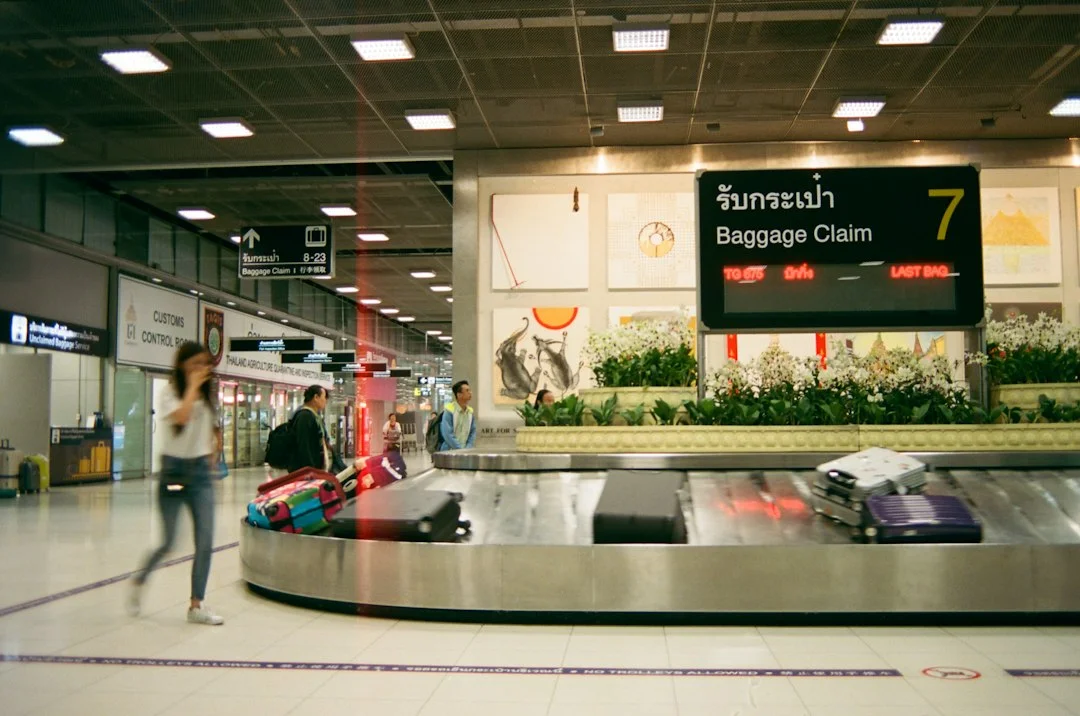


If your flight lands more than three hours late, or is cancelled less than two weeks before departure, the airline owes you €250, €400 or €600 per passenger depending on the distance. The one exception is an extraordinary circumstance the airline has to prove, such as a storm or an airspace closure. The right comes from EU Regulation 261/2004, known as EU261, and in France you have five years to claim it.
Two recent changes affect how you claim. Since 6 February 2026, anyone taking an airline to court in France must first go through the French travel ombudsman, the Médiation Tourisme et Voyage. And the reform of the regulation was published in the EU's Official Journal on 2 October 2026: it keeps the three-hour threshold and the amounts, but it only applies from 23 October 2027. Below are the compensation table, the flights covered, the traps and the claim process, checked against the legal texts on 11 October 2026.
How much compensation can you get for a delayed or cancelled flight?
The amount depends on the distance of the journey, measured as the crow flies between the departure airport and your final destination, not on what you paid. A €30 Ryanair ticket earns the same sum as a €300 Air France ticket over the same distance.
| Journey distance | Compensation per passenger | Examples from Paris |
|---|---|---|
| 1,500 km or less | €250 | Nice, Barcelona, London, Rome |
| Over 1,500 km within the European Union | €400 | Athens, Helsinki, Canary Islands |
| 1,500 to 3,500 km outside the EU | €400 | Marrakech, Istanbul |
| Over 3,500 km between the EU and a non-EU country | €600 | New York, Bangkok, Montreal |
On a long-haul flight, the airline may cut the payment in half, to €300, if you arrive between three and four hours late. The Court of Justice of the European Union (CJEU) allowed this in the 2009 Sturgeon ruling, the same judgment that put three-hour delays on a par with cancellations.
The delay is counted at arrival, not departure. A plane that takes off four hours late but makes up an hour in the air gives you nothing. The time that counts is when a door of the aircraft opens, not touchdown, as the CJEU ruled in the 2014 Germanwings case. Twenty minutes of taxiing can turn a 2 h 50 delay into 3 h 10, so note the door-opening time on your phone.
With a connection booked on a single ticket, only the delay at your final destination matters. If a first flight runs one hour late, you miss the second and you arrive five hours late, you are owed compensation based on the total distance.
Which flights does EU261 cover?
Every flight departing from an airport in the European Union is covered, whatever the airline, budget carriers included. A flight arriving in the EU from a non-EU country is covered only if the airline is European. According to the French government's service-public.fr, the same rules apply to Norway, Iceland and Switzerland, and to flights to France's overseas departments.
- Paris → New York on Delta: covered, because the flight leaves the EU.
- New York → Paris on Air France: covered, because the airline is European.
- New York → Paris on Delta: not covered by EU law.
- Bangkok → Paris on Thai Airways: not covered, since it is a non-EU airline leaving a non-EU country.
Since Brexit, the United Kingdom has applied its own copy of the regulation, known as UK261, with amounts in pounds. A London → Paris flight on a British airline falls under that text rather than EU law.
Cancellation: when does the airline owe you money?
It depends on when you are told. A cancellation announced at least two weeks before departure only entitles you to a refund or another flight. Inside that window, compensation is due unless the airline offers a replacement flight at similar times:
| Cancellation announced | No compensation if the replacement flight… |
|---|---|
| 2 weeks or more before departure | No compensation in any case |
| Between 7 days and 2 weeks before | leaves no more than 2 h earlier and arrives less than 4 h after the scheduled time |
| Less than 7 days before | leaves no more than 1 h earlier and arrives less than 2 h after the scheduled time |
In every case you choose between a refund of the ticket, paid within seven days according to service-public.fr, and rerouting to your destination. A voucher cannot be forced on you: the airline needs your written agreement.
Extraordinary circumstances: the airlines' favourite excuse
The airline escapes compensation if the delay comes from an event it does not control and could not have avoided with reasonable measures. The airline has to prove this, not you. In practice it is the most common reason for a refusal, and it can often be challenged.
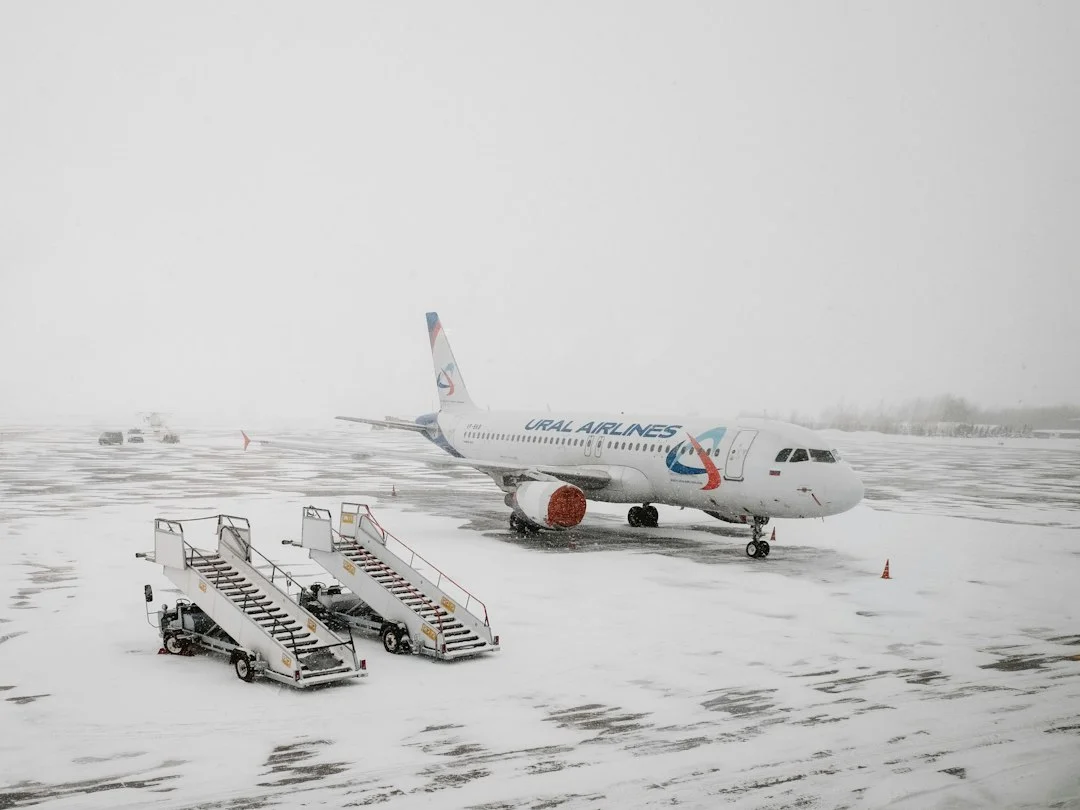
Usually accepted as extraordinary: weather that makes the flight unsafe (storm, snow, fog), air traffic control restrictions, an airport or airspace closure, a strike by air traffic controllers or airport staff, a security risk, a sick or violent passenger forcing a diversion, a bird strike.
Not extraordinary: an ordinary technical fault, even a genuine one (Wallentin-Hermann ruling, 2008), a missing or out-of-hours crew, delays built up over earlier rotations (unless they were themselves caused by an extraordinary circumstance), and a strike by the airline's own staff. The CJEU ruled on this for a wildcat strike at TUIfly in 2018, then for a union-called pilots' strike at SAS in 2021.
An easy way to remember it: an air traffic controllers' strike earns you nothing, while a strike by your airline's pilots or cabin crew earns you compensation. When the airline cites "operational reasons" without further detail, ask in writing for the exact cause of the delay.
Meals, hotel, phone calls: care is owed even without compensation
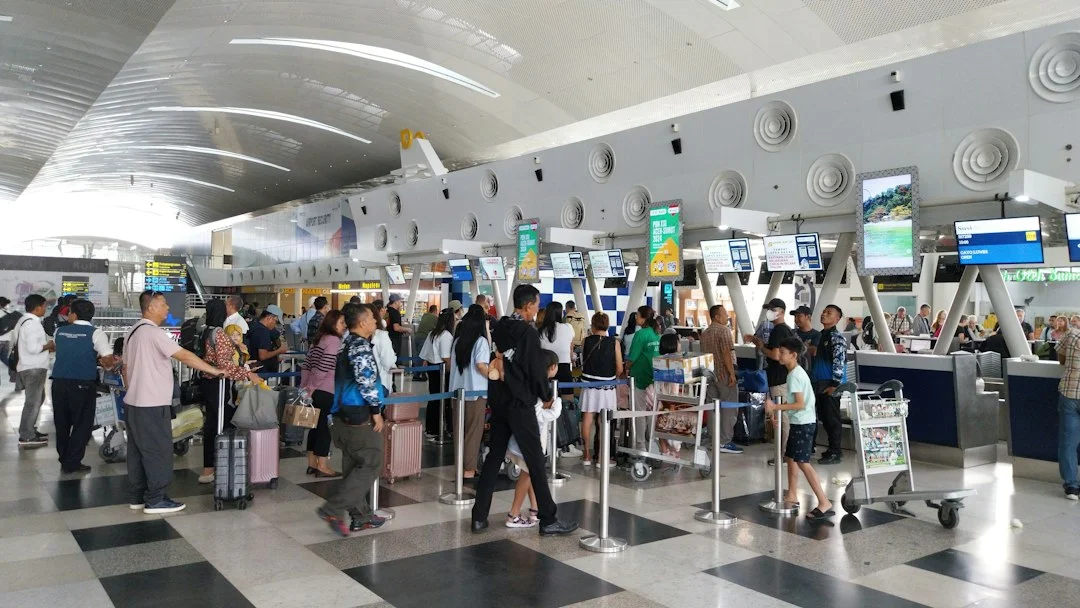
Care, or assistance, is separate from compensation, and it is owed even in a storm or an air traffic control strike. The airline must provide it free of charge once the departure delay reaches two hours for a flight of 1,500 km or less, three hours for a longer flight within the EU or a flight of 1,500 to 3,500 km, and four hours beyond that.
- Refreshments and meals in proportion to the wait, often as vouchers to spend in the airport.
- Two communications: phone calls, texts or emails.
- A hotel night and transport between the hotel and the airport if departure is pushed to the next day.
If nobody offers you anything, pay for what you strictly need and keep every receipt: the airline has to reimburse reasonable expenses, not a gourmet dinner. Other costs caused by the delay, such as a lost hotel night at your destination or a missed train, can be claimed on top of the fixed compensation, with receipts, under the Montreal Convention, which also governs lost, delayed or damaged luggage.
How to claim your compensation, step by step
The process has four stages, and the first two are enough for most simple cases. Stages 3 and 4 describe the route in France.
- Claim in writing from the airline. Use the form on its website rather than the phone line. Attach your boarding pass, your booking confirmation and any proof of the delay (app screenshot, photo of the arrivals board, door-opening time). State the amount you are claiming and give your bank details: compensation is owed in money, not vouchers.
- Wait two months. If there is no answer or the airline refuses, move to the next step.
- Go to the travel ombudsman, the Médiation Tourisme et Voyage. Since 6 February 2026, this mediation has been mandatory before any court action in France over a delay, cancellation or denied boarding. Without it, the court will declare the claim inadmissible. The obligation does not cover the oldest cases (a claim made before 6 February 2026, or a flight more than four years old on that date). Filing online is free. You need a written claim to the airline that went unanswered for 60 days or was refused, and the airline must be a member of the scheme.
- Take the case to court (the tribunal judiciaire) if mediation fails. One summons can cover a whole family.
You can also report the refusal to France's civil aviation authority, the DGAC, through the form on service-public.fr. The report helps the authorities monitor airlines, but it will not get you paid and does not replace mediation.
There is no rush: in France, the limitation period is five years, as the Court of Cassation confirmed in two rulings of 10 October 2019 (summary by consumer group UFC-Que Choisir). A flight delayed in summer 2022 can still be claimed today.
Should you use AirHelp or a similar claims company?
These companies build the case for you and only charge if they win, but they take a large cut. According to its international price list, AirHelp keeps 35% including VAT, plus 15% if legal action is needed: out of €600, you keep €390, or even €300. For a straightforward delay with an airline that pays, claim yourself. A claims company mostly makes sense when the airline refuses without a valid reason and you don't have time to pursue it.
What the EU reform changes, and when
Regulation (EU) 2026/2202, which revises EU261, was published in the Official Journal on 2 October 2026. It only applies from 23 October 2027. Until then, everything above remains the law.
During the negotiations, member states wanted to raise the threshold to four hours, or even six for long-haul flights. None of that survived in the final text: three hours late at arrival, and still €250, €400 or €600. The changes are elsewhere:
- Long-haul: the €600 can be halved if you arrive less than four hours late. Airlines can already do this today; the rule simply moves into the text.
- Claim deadline: you will have to send your claim to the airline within nine months of the flight. That is far shorter than the five years you have in France today, so don't let a claim drag on.
- Information and reply: the airline will have to tell you about your rights within 96 hours of the journey, acknowledge your claim, then pay or justify a refusal within 30 days.
- List of extraordinary circumstances: an annex sets out the accepted cases (weather, air traffic control, strikes by airport service providers…). A strike by the airline's own staff only appears there if the demands can be met solely by public authorities.
- Hotel: in extraordinary circumstances, the airline will be able to cap accommodation at three nights.
The same text also covers cabin bags. We explain that part, and what it really guarantees, in our article on the real cabin baggage rules in 2026.
Frequently asked questions
I arrived 2 h 55 late: am I entitled to anything?
Not to compensation, which starts beyond three hours. You are, however, entitled to care (meals, drinks) if the wait at departure passed the threshold for your distance. Check the door-opening time: that is what counts, and it often comes a few minutes after landing.
Do budget airlines have to pay too?
Yes. Ryanair, easyJet, Transavia and Wizz Air follow the same compensation table as full-service airlines on every flight departing from the EU. The ticket price plays no part.
My flight was cancelled because of a strike: will I be compensated?
It depends on who is striking. A strike by air traffic controllers or airport staff is an extraordinary circumstance: no compensation, but care and a refund are still owed. A strike by your airline's pilots or cabin crew entitles you to compensation.
The airline is offering me a voucher: should I accept it?
No. Compensation is owed by bank transfer, cheque or cash. A voucher only applies if you accept it in writing. It can be worth it if it is worth clearly more than the sum owed and you plan to fly with that airline again.
Does my credit card or travel insurance cover a delay?
Some premium cards and some insurance policies reimburse costs linked to a delay (meals, hotel, essential purchases), with caps and thresholds specific to each policy. That cover comes on top of your EU rights and does not replace them. We break down the cover of the main cards in our article on what your credit card's travel insurance covers.
What if I'm denied boarding?
Being denied boarding because of overbooking entitles you to the same €250 to €600, with no delay condition. Other refusals are legal, such as a missing travel document: we list them in our article on the rules that catch travellers out at boarding in 2026.
Sources
The figures in this guide come from the sources below, checked on the publication date.
Leave a comment
Share your thoughts or travel experience. Your email will not be published.