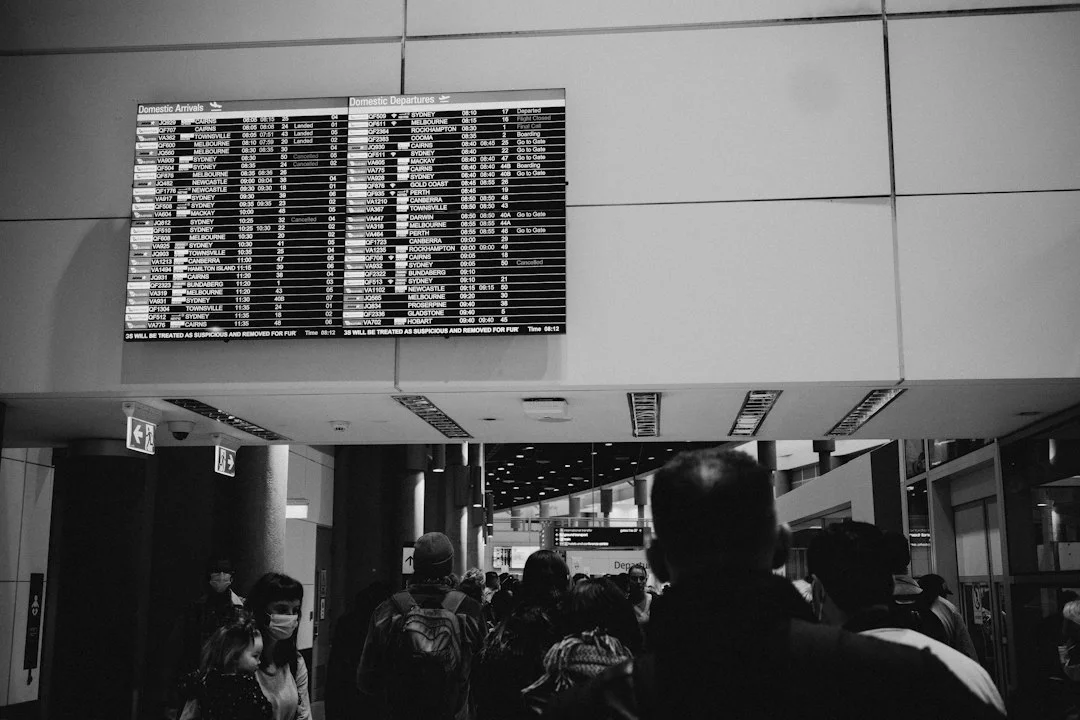


If your bag arrives damaged, you have seven days to report it to the airline in writing. If it arrives late, you have 21 days from delivery to claim your expenses. If it still hasn't turned up 21 days after the flight, it counts as lost. In all three cases the airline must compensate you up to 1,519 Special Drawing Rights (SDR), about €1,800 per passenger in autumn 2026. These rules come from the Montreal Convention, which covers almost all international flights and, for European airlines, domestic flights too.
The deadline is the main trap: a claim for a broken suitcase sent on day eight can be refused, however bad the damage. Here is what to do at the carousel, what the airline has to pay, what it refuses in practice, and what the EU reform will change in October 2027. Deadlines and amounts were checked against the legal texts on 11 October 2026.
How many bags really get lost?
Few, and fewer every year. In 2025, 24 million bags were mishandled worldwide out of 5 billion passengers, according to the annual report by SITA, the airport IT provider. The rate fell 23% in a year, from 6.3 bags per 1,000 passengers in 2024.
Most of these suitcases aren't lost but delayed: they come in on a later flight and are delivered to your address within a day or two. Connections remain the top cause, behind 39% of cases in 2025. A short layover, especially with a terminal change, clearly raises the risk that your bag stays on the tarmac while you board.
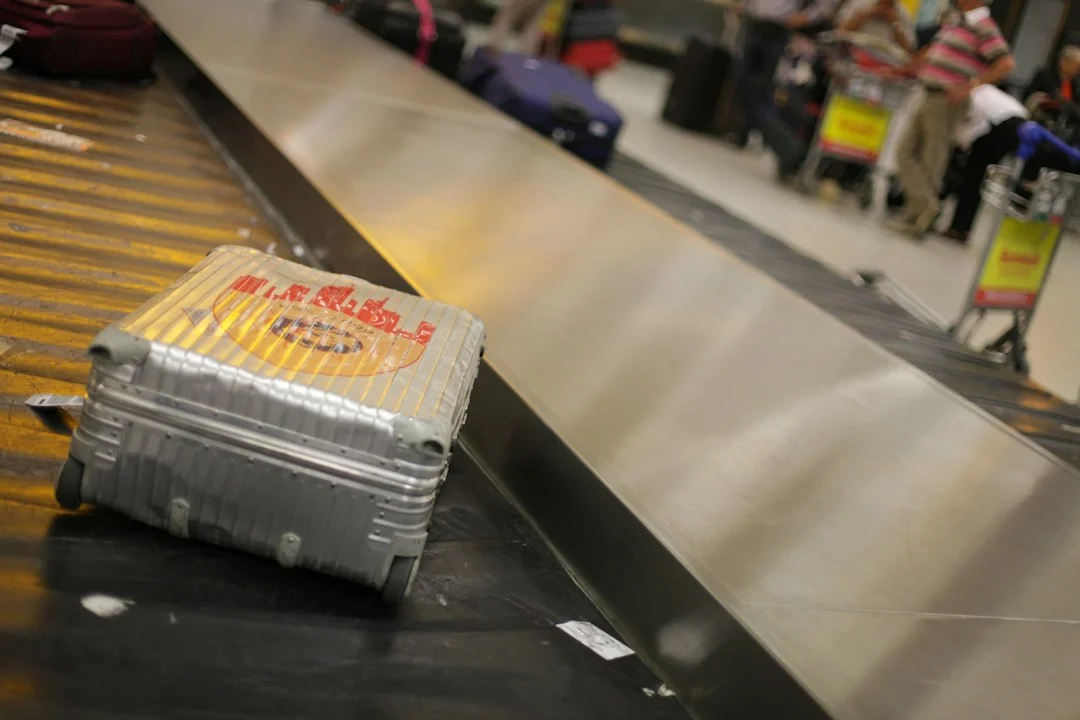
Missing or damaged bag: what to do before leaving the airport
Go to the baggage desk of the airline that operated your last flight before you leave the baggage hall. Ask for an irregularity report, usually called a PIR (Property Irregularity Report). It carries a file reference that you then use to track the search for your bag and to support your claim.
- For a delayed or missing bag: hand over the baggage tag stuck to your boarding pass, a precise description of the suitcase (colour, brand, distinguishing marks) and a delivery address valid for the next few days.
- For a damaged bag: show the damage on the spot and photograph it from several angles with the flight tag visible. A wheel ripped off and recorded at the desk is far easier to get accepted than damage reported a week later.
- In every case: keep your boarding pass, the baggage tag and a copy of the report.
This report does not replace a written claim. The Montreal Convention requires a written complaint within the deadlines, otherwise any action against the carrier is barred. Send it yourself through the airline's online form, or by recorded delivery, even if the desk tells you the file is open.
The deadlines to meet, case by case
| Situation | Deadline for a written claim | What you can get |
|---|---|---|
| Damaged bag | 7 days from receiving it | Repair, or replacement value if it can't be repaired |
| Delayed bag | 21 days from delivery | Essential purchases made while waiting |
| Lost bag | Considered lost 21 days after the scheduled arrival date | Value of the suitcase and its contents |
| Court action | 2 years from arrival at destination | After the claim and, if needed, mediation have failed |
For a lost bag, don't wait the full 21 days to write: send a first claim as soon as possible, then a detailed list of the contents with their value. Airlines usually ask for an inventory and proof (receipts, card statements, photos).
How much does the airline have to pay?
The airline's liability has been capped at 1,519 SDR per passenger since 28 December 2024, when the ICAO revision of the limits took effect. The SDR is an IMF unit of account whose value changes daily: 1,519 SDR is about €1,800, or roughly $2,050, in autumn 2026. The French government's service-public.fr page still shows the old cap of 1,288 SDR, which is out of date.
The cap is a maximum, not a flat payment. Unlike compensation for a delayed flight, nothing is automatic: you only get the loss you can prove. For a delayed bag, that covers reasonable purchases made while you wait (toothbrush, change of clothes, charger), with receipts. For a lost or destroyed bag, the airline may apply depreciation based on the age of the items. So keep receipts for major purchases, or at least a photo of what's in the suitcase before you leave.
What airlines often refuse to pay
Most airlines' conditions of carriage tell you not to put cash, jewellery, laptops, cameras or medication in checked baggage, and they refuse or limit compensation for these items. Keep them in the bag that stays with you. Our article on real cabin baggage dimensions in 2026 sets out what each airline allows on board.
Refusals also cover normal wear and tear (scratches, dirt, small dents), defects inherent to the bag and damage to cabin baggage. For a bag you keep with you, the airline is only liable if the damage comes from its own fault or that of its staff.
Carrying something valuable that you have to check in, such as an instrument or professional equipment? Ask for a "special declaration of interest" at check-in. For a possible extra fee, it raises the cap to the declared value.
If the airline refuses or doesn't answer
If you get no answer within two months, or a refusal, you can turn to your national consumer body or airline ombudsman. In France that is the free Médiation Tourisme et Voyage, provided the airline is a member. As a last resort, you can go to court, within the two years set by the Montreal Convention.
Your credit card or travel insurance may also cover part of the gap, for example emergency purchases beyond what the airline pays, within the limits of your policy. Our articles on what your credit card's travel insurance covers and on whether travel insurance is worth it explain this cover.
How to cut the risk before you fly
- Slip a tracker into your suitcase. According to SITA, integrating Apple's Find My app into WorldTracer, the baggage tracing system airlines use, cut permanently lost bags by 90% in its first year.
- Photograph the suitcase and its contents the day before you leave: that's your proof for the inventory.
- Put your name, a phone number and an email address inside the suitcase, not just on the outside tag, which can be torn off.
- Allow a long enough layover, especially with a terminal change, and pick a direct flight when you can.
- Keep in the cabin medication, documents, electronics and a change of clothes.
What the EU reform changes in 2027
Regulation (EU) 2026/2202, published on 2 October 2026, will apply from 23 October 2027. It changes neither the 7- and 21-day deadlines nor the cap, which stay those of the Montreal Convention. It mainly makes claiming easier:
- Every airline will have to offer a claim form for damaged, delayed or lost baggage in its app and on its website.
- EU airports will have to provide a common form in the baggage reclaim area. The date you submit the form will count as the date of your claim under the Montreal Convention, even if the airline asks for more details later.
- Disabled passengers and people with reduced mobility will be able to make a free special declaration of interest for their wheelchair or mobility equipment, and will get a temporary replacement if it is lost or damaged.
Frequently asked questions
How long before a bag is considered lost?
21 days. If the suitcase hasn't arrived 21 days after the date it should have, or if the airline admits losing it earlier, you can claim its value and that of its contents, up to 1,519 SDR.
How much can I spend while my suitcase is delayed?
There is no fixed amount. The airline reimburses reasonable, necessary purchases with receipts, up to the 1,519 SDR cap. Some airlines pay an advance or announce a daily amount: ask at the desk and keep a written record of the answer.
Does the airline have to deliver the bag once it's found?
In practice, yes: airlines deliver a found bag to the address given in the report, free of charge. Give an address where someone can receive it, such as your hotel.
My suitcase arrived damaged but I only noticed at the hotel: is it too late?
No, as long as you are within seven days. Photograph the damage straight away, keep the flight tag and send a written claim through the airline's form. The longer you wait, the harder it is to prove the damage happened in transit.
My flight was delayed too: can I claim both?
Yes. The bag falls under the Montreal Convention and the flight delay under EU Regulation 261/2004 (€250 to €600 beyond a three-hour delay): they are two separate rights, claimed separately from the airline.
Sources
The figures in this guide come from the sources below, checked on the publication date.
Leave a comment
Share your thoughts or travel experience. Your email will not be published.