


A refused boarding is almost always decided before you leave home, not at the desk. In most cases the traveller holds a valid passport and a paid ticket. What is missing is an entry condition they did not know about, or thought they knew from an article that has since gone stale.
Six rules explain the bulk of refusals in 2026. Two changed this year, two have been misunderstood for years, and one is being actively mis-sold by middleman websites. Every figure below comes from an official page, checked on 5 August 2026.
What this piece covers, and what it does not
This is about the mechanics of refusal: who checks what, at which moment, and why. If you are after the state of play for a French passport specifically in 2026, tourist taxes and short-term rentals included, read what actually changed for travellers in 2026.
1. The stamps are gone, and your dates are now on record
The European Entry/Exit System, or EES, has been fully operational since 10 April 2026. Manual passport stamping has ended. In its place, the border records your face, four fingerprints, and every entry and exit date.
What that means in practice:
- It applies in 29 countries, including Iceland, Norway, Switzerland and Liechtenstein.
- Two EU member states are outside it and still stamp by hand: Ireland and Cyprus.
- Children under 12 give a facial image, but no fingerprints.
- Crossing under EES is free. No website has any reason to charge you for it.
Records of a compliant stay are kept for three years. Where the authorised stay was exceeded, they are kept for five years — retention periods set by Regulation (EU) 2017/2226. The 10 April 2026 switchover is announced on the European Commission's page; the country scope, the under-12 exemption and the absence of a fee are set out on the EU's official travel portal.

2. The 90 days have not changed, but a machine now counts them
The 90-days-in-180 rule is exactly what it always was. What changed is that it is now applied automatically at every crossing, where patchy stamping used to let an overstay slip through unnoticed.
The precise calculation, as set out in Article 6 of Regulation (EU) 2016/399: for each day you are present, count back 180 days and add up the days you spent inside the area. That total must never exceed 90.
Three miscalculations come up again and again:
- Assuming the counter resets. The window slides forward daily. It does not restart on 1 January, nor with each new trip.
- Not counting travel days. Your day of entry and your day of exit each count as a full day.
- Thinking country by country. The 90 days are pooled across the whole area, not 90 days per country.
The Commission provides a short-stay calculator. Treat it as a guidance tool: the border authority has the final say.
3. ETIAS is not in force, and nobody should be paying for it
As of 5 August 2026, ETIAS does not yet exist operationally. No traveller needs it to enter Europe today. This is the single most misreported rule on the list.
As of September 2026, the European Commission no longer shows any launch date. The last-quarter-2026 target has been dropped, and a start is not expected before 2027. The official date is meant to be announced at least six months in advance. Any firm launch date you read is a guess, not information.
Something else almost nobody spells out: ETIAS will only concern visa-exempt non-EU nationals. A French traveller will never need one to move around Europe. It will matter to you, though, if you travel with a non-EU partner or relative.
What is settled about the future scheme:
- It will cost EUR 20, not the EUR 7 announced for years.
- It will be valid three years, or until the passport expires if that comes first.
- Under-18s and over-70s will be exempt from the fee, but not from the authorisation itself.
The immediate practical consequence: any site charging you for an ETIAS today is selling a product that does not exist. The official portal will be the only legitimate route the day the system starts. See the EES / ETIAS comparison and the fee announcement.
4. Your passport can be valid and still be refused
For Europe, a passport has to satisfy two conditions at once, and they are tested separately. That separation is the trap.
- It must be valid for at least three months beyond your intended date of departure from the area.
- It must have been issued within the previous ten years.
The catch concerns British passports renewed before 10 September 2018. Until that date, HM Passport Office carried up to nine unused months from the old document onto the new one. The printed expiry date can therefore look perfectly fine while the issue date is more than ten years old. The UK government now says so in writing: a passport renewed before 1 October 2018 may carry an issue date more than ten years back, which makes it invalid for entry.
The habit to build: look at the issue date, not just the expiry date.
One last point, often stated backwards: for Europe the margin required is three months, not the six months demanded by many destinations in Asia. References: Article 6(1)(a) of the Schengen Borders Code and the entry requirements published by the UK government.
5. Two authorisations really are mandatory already
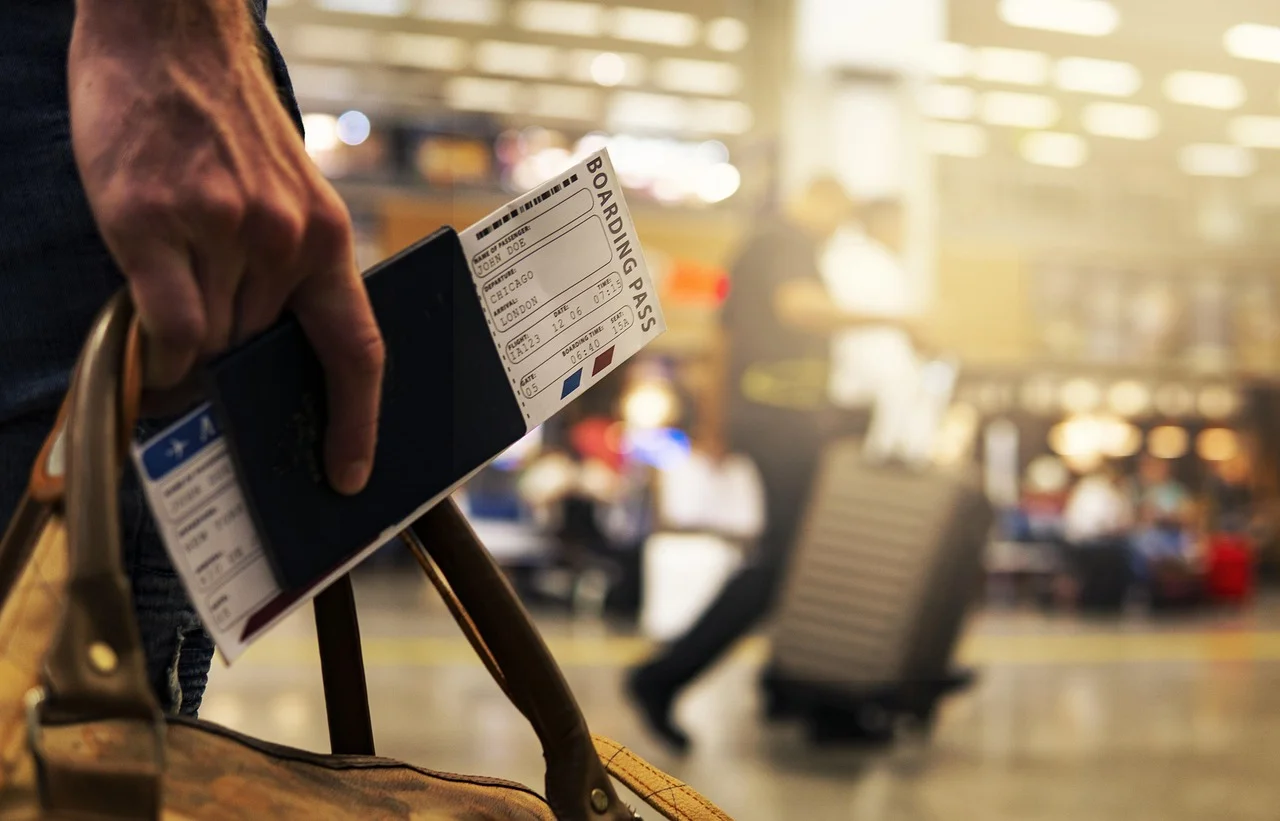
Unlike ETIAS, two electronic authorisations apply right now, and missing either one stops you at boarding.
United Kingdom: the ETA
The UK Electronic Travel Authorisation is mandatory, including for citizens of European Union countries. It has cost GBP 20 since 2026, after going from GBP 10 to GBP 16, and lasts two years or until the passport expires. The Home Office is explicit: without an ETA, the traveller cannot board. Apply at gov.uk.
United States: the ESTA
The ESTA fee went from USD 21 to USD 40, then to USD 40.27 since 1 January 2026. Validity remains two years. Worth knowing: around USD 10 is charged even if the application is refused — a cost-recovery component, adjusted annually for inflation. The detail is in the notice published in the Federal Register.
Both are cheap. Both end a trip on the spot if you forget them.

6. Why the airline stops you, not the border police
The refusal almost always comes from an agent at the counter, well before any border guard. The reason is financial, and it is written into European law.
Directive 2001/51/EC imposes two things on carriers. Article 3 obliges an airline that boarded a passenger subsequently refused entry to pay for their return, and to cover their living costs if immediate return is not possible. Article 4 requires penalties that are "dissuasive, effective and proportionate" and leaves member states three options: a maximum of at least EUR 5,000 per person carried, a minimum of at least EUR 3,000 per person, or a lump sum of at least EUR 500,000 per infringement.
One important caveat: those amounts were set in 2001 and have never been revalued. Since each state picks one of the three options, what airlines actually pay varies widely from country to country. Full text: Directive 2001/51/EC.
Which brings us to the return ticket. Article 6(1)(c) of the Borders Code requires you to justify the purpose of your stay, sufficient means of subsistence, and the means to fund your return. Border guards may ask for a return or onward ticket as proof — that document is listed in Annex I of the Code, not in Article 6 itself.
Put plainly: the agent at the counter is not being difficult. They are the one who pays the fine.
The six, in the order they catch people out
Check before you book, then once more before you leave:
- Stamps are gone in 29 countries: your dates are recorded, not estimated.
- 90 days across a 180-day window that slides daily, pooled over the whole area.
- ETIAS is not in force: nobody should be paying for it today.
- Your passport's issue date matters as much as its expiry date.
- The UK ETA and the US ESTA are mandatory, and cheap.
- The airline checks first, because the airline is the one penalised.
Not one of these six is decided at the border. Every one of them is settled from home, before departure.
Rules change: always confirm the requirements for your own nationality on the destination country's official portal before booking.
Do you need an ETIAS to enter Europe in 2026?
No. As of September 2026, ETIAS is not in force, no traveller needs one and no launch date is set; a start is not expected before 2027. When it starts it will cost EUR 20 for three years, and it will only concern visa-exempt non-EU nationals.
Why can a valid passport still be refused?
Because two conditions are checked separately: the passport must be valid at least three months beyond your intended departure, and it must have been issued within the previous ten years. A British passport renewed before 10 September 2018 could carry up to nine extra months, so its expiry date looks fine while its issue date is more than ten years old.
How much do the UK ETA and the US ESTA cost in 2026?
The UK ETA costs GBP 20 and lasts two years. The US ESTA costs USD 40.27 since 1 January 2026 and also lasts two years, with around USD 10 charged even if the application is refused. Both are mandatory, unlike ETIAS.
How is the 90-days-in-180 rule calculated?
For each day you are present, count back 180 days and add up the days spent inside the area: the total must never exceed 90. The window slides forward daily, it does not reset on 1 January or with a new trip, and the 90 days are pooled across all 29 countries rather than counted per country.
Why does the airline refuse boarding before the border police?
Because Directive 2001/51/EC makes the carrier pay for the refused passenger's return and living costs, and exposes it to national penalties whose scale starts at a minimum of EUR 5,000 per passenger depending on the option the member state chose. The agent at the counter checks first because the agent's employer is the one penalised.
Sources
The figures in this guide come from the sources below, checked on the publication date.
Leave a comment
Share your thoughts or travel experience. Your email will not be published.