


Of the four big travel formalities everyone has been talking about for two years, only one actually applies to an EU citizen: the UK ETA, at £20 (about $27). The EES does not register you, ETIAS still does not exist, and Venice stopped charging its access fee on 27 July 2026. What has really changed for your budget is tourist taxes and the disappearance of short-term rentals from several city centres.
This piece separates what is in force from what was announced and never arrived. Every figure links to its official source, with the date it was checked — on this subject, the numbers move every quarter. The UK ETA went from £10 to £16 to £20 in eighteen months.
What applies to you, and what does not
The most common confusion is worth clearing up straight away. The EES and ETIAS are European systems aimed at third-country nationals — non-EU travellers entering the Schengen area. If you hold an EU passport, you are on the inside of that border: neither system asks anything of you, and neither costs you a cent.
- EES — does not apply to you. No fingerprints, no registration.
- ETIAS — does not apply to you, and the system is not running anyway.
- UK ETA — applies to you. Mandatory, paid, and required before you travel.
- Tourist taxes — apply to you, and this is where the bill went up.
The one case where the EES touches you indirectly is if you travel with a non-EU family member. We come back to that below, because the rule hinges on one specific document.
EES: the passport stamp is gone, but not for you
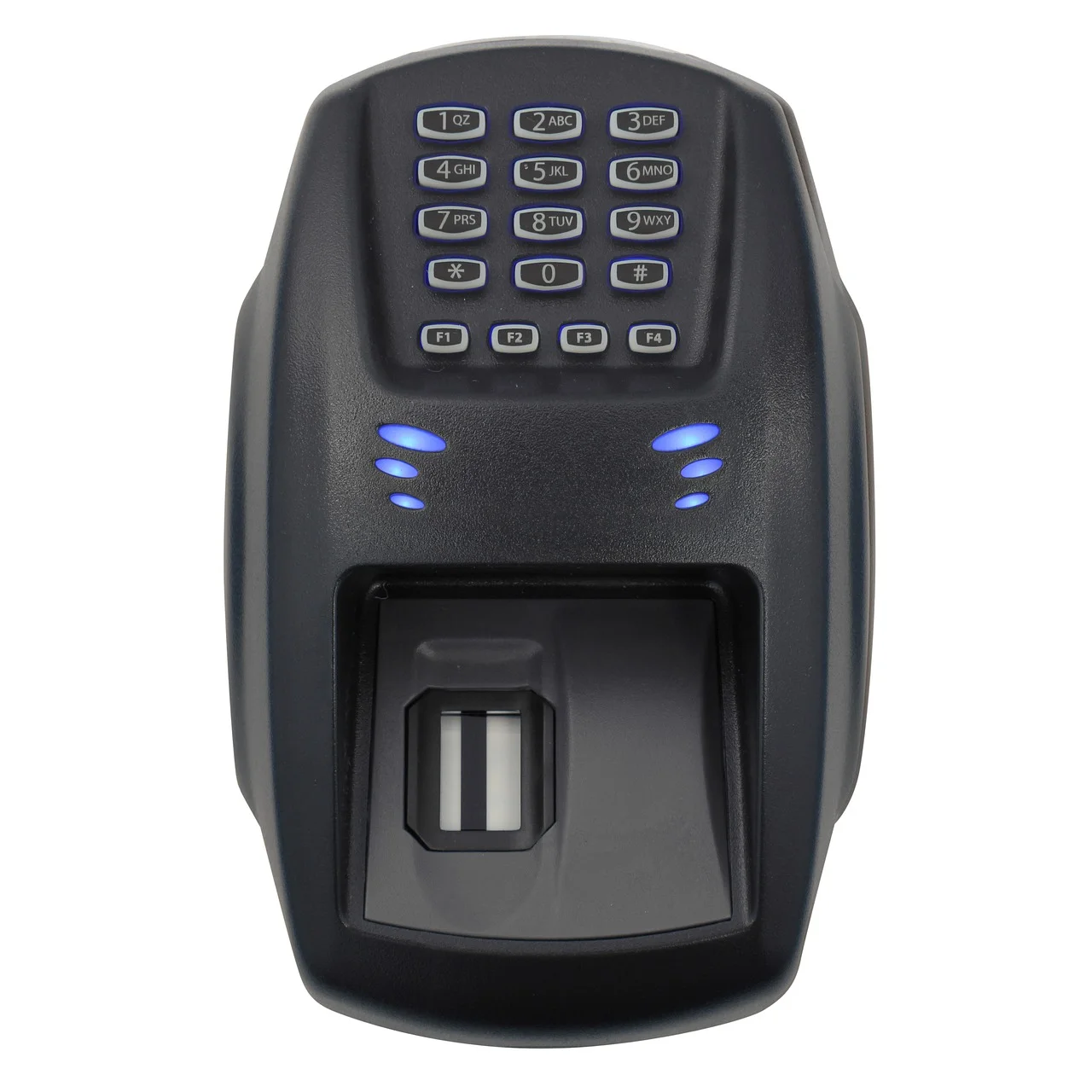
The Entry/Exit System (EES) has been fully operational since 10 April 2026 at every external Schengen border crossing point. The 180-day phased rollout that began on 12 October 2025 is finished — which is the main thing most articles still describe as "under way". The system records travel document data, a facial image, fingerprints, and entry and exit dates. It replaces the manual stamping of passports.
The European Commission is explicit about the scope: "Nationals of EU countries and of Iceland, Liechtenstein, Norway or Switzerland are not registered in the EES." In practice, an EU passport does not go through the EES biometric kiosk. No fingerprints, nothing to prepare, nothing to pay.
Travelling with a non-EU family member?
This is the case that deserves attention, and it comes down to a single document: the residence permit. A non-EU family member of an EU citizen — spouse, child, dependent parent — is exempt from EES registration if they hold a residence card or residence permit, whether they travel with you or alone. Without one, they are registered like any other third-country national.
The Commission's own examples make the line clear: a Moroccan spouse married to a French citizen and holding a French residence card is not registered in the EES. A Canadian married to a Lithuanian citizen but without a Lithuanian residence card is. If you are travelling as a binational couple or a blended family, check that document before you book — it changes what happens at the border.
Also exempt from the EES: nationals of Andorra, Monaco and San Marino, holders of a Vatican passport, and anyone holding a long-stay visa or a residence permit.
The consequence nobody mentions
The passport stamp used to be your paper proof of how long you stayed. It no longer exists. For a non-EU traveller who has to demonstrate compliance with the 90-days-in-180 rule, the record is now purely digital and held by the authorities. Keep your boarding passes and booking confirmations: that is the evidence you still control.
ETIAS: why there is nothing for you to do, now or later
ETIAS is not running, and no official launch date exists today. The European Commission's page is unambiguous as of 30 July 2026: "ETIAS is currently not in operation and no applications for travel authorisations are collected at this point". The "final quarter of 2026" target that many articles still repeat was removed from the official pages in July 2026.
A 2027 launch is now the most likely scenario — press reports citing the Financial Times say eu-LISA has acknowledged that going live in late 2026 is no longer feasible, and that its management board is due to settle a revised timetable in September 2026. None of that is officially published, so treat those dates as forecasts.
When ETIAS does start, the authorisation will cost €20 (about $23) rather than the €7 originally planned, with an exemption for under-18s and over-70s. More to the point: it will apply to visa-exempt non-EU travellers. An EU citizen will never need ETIAS to travel within Europe. If a website offers to "prepare your ETIAS" for a fee, it is at best useless.
Watch out for middleman sites
Every new scheme attracts platforms that resell an official process with a markup. The rule is simple and holds everywhere: a travel authorisation is applied for on the government website, never through a commercial intermediary. We saw exactly this with the Sri Lankan ETA once it became free, which third-party sites carried on charging for.
The UK ETA: the one formality that really concerns you
Since 2 April 2025, EU citizens have needed an Electronic Travel Authorisation (ETA) to enter the United Kingdom, and it now costs £20 (about $27). It is the most frequently forgotten requirement, because London still feels like next door and no visa was ever needed. The GOV.UK page leaves no room for doubt: "An ETA costs £20."
The price has doubled in eighteen months: £10 at launch in October 2023, £16 on 9 April 2025, then £20 in April 2026. If you still see "£16" quoted somewhere, that page is out of date.
What it covers, and how to apply
- Validity — two years, or until your passport expires if that comes first. Multiple trips allowed, stays of up to six months each time.
- Territories covered — the UK, plus Jersey, Guernsey and the Isle of Man.
- Where — the "UK ETA" app or the GOV.UK website. Passport, a digital photo, a few security questions.
- Timing — decisions are often automatic within minutes, but the Home Office advises applying at least three working days before you travel.
- Exempt — British and Irish citizens.
An ETA is neither a visa nor a tax, and it does not guarantee entry: the final decision rests with the border officer. The scheme is running at scale — 24.8 million ETAs were issued between launch and the end of 2025.
The practical trap: if you are heading to London for a weekend with friends, everyone needs their own, children included. Budget £20 per person and sort it when you book rather than discovering it the night before.
« The trial period for the access fee in 2026 has ended. Therefore, starting from July 27, the access fee is no longer in effect. »
Tourist taxes: the line on your budget that actually moved
This is where 2026 costs more, and rarely where you would expect. Venice, the most discussed measure in Europe, has charged nothing since 27 July 2026 — the city's official portal says so plainly. During the trial, access cost €5 if you booked at least four days ahead and €10 for a late booking, on selected days from April to July. The city could reinstate it in 2027, so check again before a spring trip.
Barcelona: the real rate, not the headline cap
The press likes "up to €15 a night". That is a legal ceiling, not what you pay. The official rates from the Agència Tributària de Catalunya, in force since 1 April 2026, combine the regional tax and the €5 city surcharge, per person per night:
- 5-star hotel — €7.00 + €5.00 = €12.00 (about $13.80)
- 4-star hotel — €3.40 + €5.00 = €8.40
- Tourist apartment — €4.50 + €5.00 = €9.50
- Youth hostel — €1.00 + €5.00 = €6.00
- Other accommodation — €2.00 + €5.00 = €7.00
Outside Barcelona, elsewhere in Catalonia, the bill is far lighter: €4.50 in a 5-star hotel, €1.80 in a 4-star, €1.75 in a tourist apartment, €0.80 in a youth hostel and €0.90 for other accommodation. For a week for two on the Costa Brava rather than in the city, the gap runs into tens of euros.
Edinburgh: 5%, and retroactive on bookings already made
Scotland has had its first city visitor levy since 24 July 2026. Edinburgh charges 5% of the accommodation price, capped at five consecutive nights, all year round. Two catches: it is a percentage, so it stays invisible on a quote but lands on the final bill; and it applies to stays from 24 July 2026 even if you booked back in October 2025.
Greece: a tax paid on arrival, absent from your booking
The "climate resilience fee" is settled at the property, per room per night — so it never shows up on Booking.com. In high season (April to October): €2 for a 1-2 star hotel, €5 for 3-star, €10 for 4-star, €15 for 5-star, and €8 for a short-term rental. Off season the amounts drop to between €0.50 and €4. On top of that, a cruise passenger levy has applied since 21 July 2025: €20 per person disembarking at Santorini or Mykonos in high season, €5 at other Greek ports.
Announced is not the same as in force
Media noise tends to blur the two. Actually being collected right now: Barcelona, Edinburgh, Greece, and Japan's departure tax, which tripled from ¥1,000 to ¥3,000 (about $20) on 1 July 2026 — included in your ticket price, so nothing to pay at the airport. Announced but not collected: Thailand's 300-baht entry fee, approved in 2023, postponed repeatedly and now pencilled in for 2026 with no firm date, and the Icelandic increase still at proposal stage. In France, tourist tax ceilings are simply reindexed to inflation each 1 January; no structural reform was adopted for 2026.
Amsterdam, finally, is the exception that runs against the trend: its rate stays at 12.5% of the room price, the highest in Europe, but it is not going up this year.


Short-term rentals: the risk is cancellation
The issue is no longer price, it is availability — and the chance that a listing vanishes after you have booked it. The 2026 rules are written for hosts, but travellers pay the consequences. EU Regulation 2024/1028 on short-term rental data, applicable from 20 May 2026, requires a unique registration number displayed on every listing and data sharing between platforms and authorities. A listing without a valid number can be pulled — including after you have paid.
In France, the loi Le Meur sets up a national registration service in the fourth quarter of 2026, which will make registration mandatory in every commune rather than only in high-pressure zones. Worth knowing too: the law lets communes cut the annual cap on renting out a main residence from 120 to 90 days. If your host hits that quota, the property goes off the market mid-year.
Where supply has already collapsed
- New York — Local Law 18 has all but eliminated rentals under 30 days. Active listings went from more than 38,000 in early 2023 to roughly 3,000 registrations. Budget for a hotel.
- Central Athens — new short-term rental registrations are frozen in the 1st, 2nd and 3rd municipal districts (Plaka, Monastiraki, Kolonaki, Exarcheia, Koukaki and others), extended through 2026. Less supply, higher prices, book earlier.
- Lisbon — any neighbourhood reaching 10% of housing in tourist rentals moves into "absolute containment": no new licences at all.
- Barcelona — the city has announced it will scrap all of its tourist licences by November 2028 and convert those homes back to residential use.
Three checks before you pay
- Is the registration number displayed on the listing? In a city that requires one, its absence is the first sign of a fragile booking.
- Does payment go through the platform? A direct bank transfer outside it leaves you with no recourse if the listing is removed.
- Do you have a plan B? In cities under pressure, a free-cancellation hotel booking held in parallel costs nothing and saves the trip.
What to sort before you book, by destination
A short checklist, in the order things cost you money or time.
- United Kingdom — apply for the ETA on GOV.UK or the official app, £20 per person, at least three working days ahead. The only mandatory step on this list.
- Spain, Greece, Scotland — add the tourist tax to your real budget. It is often paid on arrival and absent from the advertised price.
- Travelling with a non-EU family member — check they hold their residence card or permit: that document determines how they cross the border.
- Short-term rental in a high-pressure city — verify the registration number, stay on the platform, keep a cancellable plan B.
- ETIAS — nothing to do. Not now, and not as an EU citizen.
One last habit, and it applies to everything here: check the date on the page you are reading. Between the ETA going from £16 to £20, ETIAS losing its launch date and Venice suspending its fee mid-season, information six months old is already wrong. Every link in this article points to the official source: that is what settles it.
Information verified on 30 July 2026 against the official sources cited.
Sources
The figures in this guide come from the sources below, checked on the publication date.
- home-affairs.ec.europa.eu
- home-affairs.ec.europa.eu
- home-affairs.ec.europa.eu
- www.eulisa.europa.eu
- home-affairs.ec.europa.eu
- www.gov.uk
- homeofficemedia.blog.gov.uk
- home-affairs.ec.europa.eu
- cda.ve.it
- live.comune.venezia.it
- atc.gencat.cat
- atc.gencat.cat
- www.edinburgh.gov.uk
- news.gtp.gr
- www.france24.com
- www.japantimes.co.jp
- www.service-public.gouv.fr
- www.legifrance.gouv.fr
- eur-lex.europa.eu
- news.gtp.gr
- informacao.lisboa.pt
- criminaljustice.cityofnewyork.us
- www.nationthailand.com
- www.amsterdam.nl
Leave a comment
Share your thoughts or travel experience. Your email will not be published.