

Contents 30
Overview
Milos is a volcanic Cycladic island with over 70 beaches, colourful fishing villages and the site where the Venus de Milo was found in 1820.
Milos is the volcanic Cycladic island on the rise, and for good reason: more than 70 beaches, white sea-carved cliffs at Sarakiniko, fishing villages with painted doors, and an ancient past that gave the Louvre its Venus de Milo, unearthed here in 1820. You arrive via the port of Adamas or the small airport (MLO), a 40-45 minute flight from Athens.
The island stays quieter and more affordable than Santorini. Its hilltop capital, Plaka, overlooks a huge natural gulf, while Klima and Mandrakia line up their syrmata (the colourful boat garages typical of Milos) right at the water's edge. The volcanic bedrock explains the whole scenery: white rock, red and ochre cliffs, hot springs under the sand.
- Archipelago: Cyclades, Aegean Sea
- Island capital: Plaka; main port: Adamas
- Currency: euro (EUR)
- Top draw: more than 70 beaches, among the finest in Greece
- Getting there: ferry from Piraeus or domestic flight from Athens
This guide brings together the 12 best things to do in Milos, from the moonscapes of Sarakiniko to the sea caves of Kleftiko, with budgets, pitfalls to avoid and two ready-made itineraries.
Torn between the two? Our Santorini guide lets you weigh up both islands before deciding.
12 places to take with you
In the guide's order, ready for Google Maps or your GPS.
Book the activities from this guide
Our picks for Milos, well rated and free to cancel.
-
Book this activity
Full-day cruise to Kleftiko and the west coast
100-180 EUR/personne (demi-journée : 50-90 EUR), tarifs 2025-2026
-
Book this activity
Sea kayaking along the volcanic cliffs
60-90 EUR/personne, matériel et encadrement inclus
Affiliate links: Travel Advice earns a commission if you book, at no extra cost to you. Learn more

Mandrakia
Red, blue and green doors at the edge of turquoise water, a few fishing boats, the smell of octopus drying in the sun: Mandrakia is Milos in miniature. This tiny fishing harbour on the north coast lines up its syrmata, boat garages dug at the water's edge and closed with brightly painted doors.
Far less visited than Klima, the village has kept a real local life, built around its taverna famed for sun-dried, grilled octopus. Come to stroll for half an hour among the boat garages, photograph the reflections on the water, then sit down facing the harbour.
This is the fishing village to pick if you want authenticity without the crowds: the scenery matches Klima's, with a better end-of-day atmosphere thrown in.

Sarakiniko
It feels like walking on the Moon: at Sarakiniko, white volcanic rock, polished by wind and sea, forms mineral waves that plunge into milky water. An arch carved by erosion and narrow inlets complete the scene.
It's the most photographed spot on the island and one of the most famous images in the Cyclades after Santorini's caldera. The formation sits on the north coast, about 5 km from Plaka, with easy access by car or by bus from Adamas.
Once there, allow one to two hours: walking along the white ridges, swimming in the inlets, cliff jumps for the daring when the sea is calm. The rock is slippery in places and the cliffs are unsecured: keep an eye on children.
If you only see one landscape on Milos, make it this one: nothing else in the Cyclades looks like it.

Kleftiko
Cathedrals of white rock rise from translucent water, pierced with arches and sea caves: Kleftiko earns its nickname of "Meteora of the sea". At the south-western tip of Milos, this former pirate hideout strings together three bays riddled with cavities where the light plays in the water.
The site can only be reached by boat, which is what protects it: cruises leave from Adamas, as half-day trips (€50-90) or full days (€100-180, lunch and snorkelling included, 2025-2026 prices).
On the menu: anchoring in the bays, swimming in perfectly clear water, snorkelling in the caves and, for the smaller boats, slipping under the arches. The full-day trip also runs along the whole wild west coast, often with a stop at the Sykia cave.
Between Sarakiniko and Kleftiko, no need to choose: the first you visit on foot, the second you earn by sea, and together they sum up Milos.

Klima
A row of colourful houses right on the water, facing the gulf of Milos: Klima is the most famous of the island's fishing villages. Its two-storey syrmata line up their red, blue and green doors along a single lane at the edge of the waves.
The logic of the place is simple: the ground floor housed the boats, the upper floor the family. Some of these boat garages are now rented out as one-of-a-kind lodgings, a handful of much-sought-after houses.
Come mostly at the end of the day: a stroll along the lane, photos of the facades reflected in the water, a drink or dinner facing the sun as it drops into the gulf. Allow a short hour, more if you stay for sunset.
Against Mandrakia, Klima wins on spectacle: this is where the island's most photogenic sunset happens.

Plaka and the Kastro
White lanes, cascading bougainvillea and terraces hanging above the gulf: Plaka, the hilltop capital of Milos, is explored on foot, there's no other way. The village is pedestrian, and that's exactly its charm.
At the very top, the Kastro, a 13th-century Venetian fortress, crowns the hill. The climb follows a stepped path between the houses, and the reward is a 360° panorama over the gulf of Milos and the neighbouring islands.
Allow two hours: wandering the lanes, shops and chapels, the climb to the Kastro, then a drink on a terrace. The archaeological museum in Plaka displays a copy of the Venus de Milo, whose original is in the Louvre.
This is the village where you take the island's pulse: Adamas has the port, Plaka has the soul, and the finest panoramic sunset on Milos.

Catacombs of Milos
Under the olive trees of Trypiti, a stairway sinks into the hillside towards one of the most moving places in the Cyclades: hand-dug burial galleries where the first Christian communities laid their dead to rest.
Dug between the 1st and 5th centuries, these catacombs rank among the three most important Christian sites of their kind in the world, alongside Rome and the Holy Land. About 185 metres of explored galleries and close to 300 arcosolia, the vaulted burial niches, spread beneath the hill.
The visit is guided and short, around 15 minutes, with an entry fee of about €4 to 10 depending on the season. The underground cool is a relief at the height of summer.
Few Greek islands offer an early Christian site of this importance: between two beaches, it's the trip's historical pause, a stone's throw from the ancient theatre.

Ancient Theatre and the Venus de Milo Site
White marble tiers facing the sea, silence, and the gulf of Milos as a backdrop: the ancient theatre of Trypiti is one of those places where you sit down without thinking. The Roman-era building clings to the hillside below the village.
A few hundred metres away, a plaque marks the spot where a farmer unearthed the Venus de Milo in 1820, the statue now on display at the Louvre. The archaeological museum in Plaka shows a copy.
Access is free, along the path that starts at the catacombs. Allow a good hour for the theatre, the Venus marker and the viewpoints over the gulf, before continuing the walk down to Klima.
It's the only place in the world where you can stand on the exact spot where one of the Louvre's masterpieces was found, with the Aegean Sea as a bonus.

Tsigrado
A narrow crack in the cliff, a wooden ladder, a rope, and at the bottom a golden-sand cove squeezed between two volcanic walls: welcome to Tsigrado, the beach you have to earn.
Its sporty descent has made it Greece's most famous adventure beach. Access is through a crevice fitted with wooden ladders and a rope, on the south coast, right next to Firiplaka.
Down below, the effort pays off: golden sand, crystal-clear water, walls closing the cove like an amphitheatre. Plan to travel light, backpack on and hands free for the ladder, and allow the morning there.
Choose Tsigrado for the thrill and the photo from the viewpoint; if you just want a lovely quiet swim, neighbouring Firiplaka does it better, without the ladder.

Firiplaka
Pale sand, turquoise water and, at your back, volcanic cliffs streaked with pink, ochre and white: Firiplaka is the postcard of Milos's south coast.
Right next door to Tsigrado, this long sandy beach owes its colours to the island's volcanic geology. Part of it is organised in summer, with sunbeds and service, while the rest stays wild for those who prefer their own towel.
It easily fills half a day: swimming in water that deepens gently, snorkelling along the rocks, a nap in the shade of the cliffs late in the day. Mask and snorkel rental costs about €10-15 a day on the island.
This is the beach to keep for a proper swimming day: more accessible than Tsigrado, more spectacular than most organised beaches.

Papafragas
Seen from above, it looks like a secret swimming pool: a tongue of turquoise water slides between two walls of white tuff, pierced with sea caves. Papafragas is one of the most surprising landscapes in north-east Milos.
This narrow fjord carved into the tuff sits right next to the prehistoric site of Filakopi, one of the oldest on the island. You take it all in from the upper rim, a few steps from the car park.
The visit is short: 20 to 30 minutes covers the viewpoints and the photos. The official path down is closed for safety reasons, so you admire it from above, or swim in from the neighbouring cove when the sea is calm.
It's the perfect stop on the road to Pollonia: little effort, plenty of effect, and scenery no other beach on the island can offer.

Paliochori
Colourful pebbles, deep-blue water and red and yellow cliffs that almost seem to steam: at Paliochori, you are quite literally swimming on a volcano.
It's the largest organised beach on the south coast, and its colours give away the geothermal activity underground. In places the sand gets so hot that one taverna, the Sirocco, cooks its dishes buried in the volcanic ground.
The typical day: a sunbed in the morning, a swim in deep, clear water, then a lunch of "volcanic cooking", those dishes slow-cooked under the naturally heated sand. Everything is set up, making it the most comfortable beach in the south.
With children, or for a day with zero logistics, it's the best pick on the south coast: Tsigrado's thrills left out, comfort and a good table thrown in.

Pollonia
Tamarisk trees shading a village beach, moored fishing boats, tables set a few centimetres from the water: Pollonia cultivates a gentle pace that's rare in the Cyclades.
This little harbour in the north-east is Milos's second tourist hub, with one clear speciality: fish tavernas right on the water. It's also the departure point for the shuttles to Kimolos, a 20-minute crossing away.
It makes for an ideal end of day: a swim at the village beach, a stroll along the harbour, then a fish dinner facing the boats. Families find calm, shallow water here, perfect with young children.
If Adamas feels too busy and Plaka too perched for your taste, Pollonia is the third way: quiet, good food, and a bonus island a shuttle ride away.
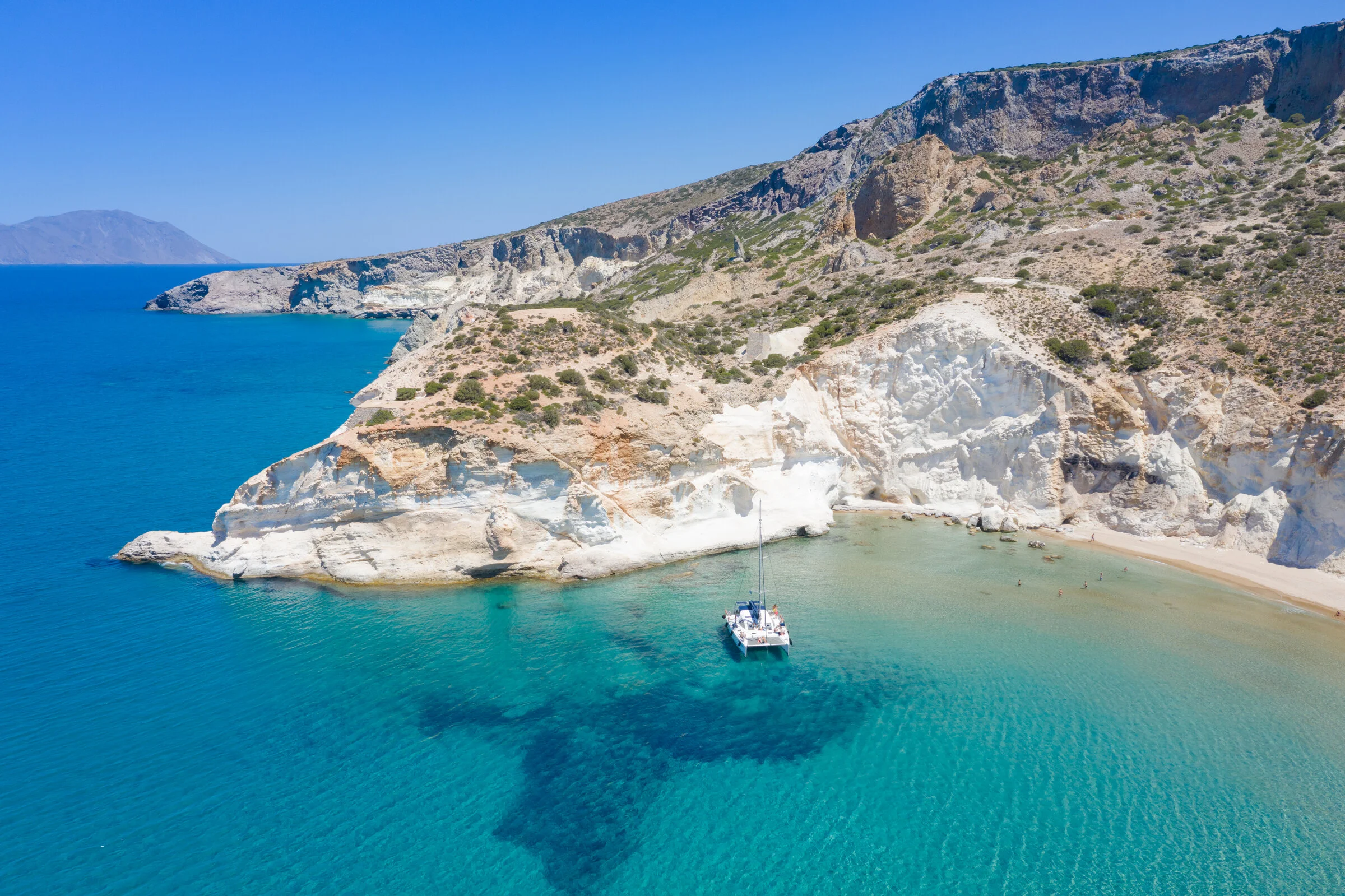
Full-day cruise to Kleftiko and the west coast
Set off from the port of Adamas by caique, sailboat or catamaran to run the whole wild west coast of Milos, unreachable by road. The day strings together swimming and snorkelling stops, with a Greek lunch usually included on board. The highlight comes at Kleftiko: the boat slips between the white cliffs and anchors at the foot of the arches, mask and snorkel in the sea caves, often with a pass through the Sykia cave.
It's the essential activity of the trip, open to everyone and requiring no physical effort. Book 2-3 days ahead in summer and go for the small boats, the only ones that get inside the caves; the half day (€50-90) remains a good option on a tight budget.
- Journée complète (7-9 h)
- 100-180 EUR/personne (demi-journée : 50-90 EUR), tarifs 2025-2026
Sea kayaking along the volcanic cliffs
A guided outing from the south coast or Triades to paddle beneath the multicoloured cliffs of Milos. Along the way you enter sea caves unreachable on foot, before a picnic on a deserted cove. The highlight: pausing deep inside a cavern, paddles resting, in total silence.
The activity suits anyone comfortable in the water, no kayaking experience needed: gear and a guide are included in the €60-90 per person. Book by the day before at the latest in summer, as the groups are kept deliberately small.
- Demi-journée (4-5 h)
- 60-90 EUR/personne, matériel et encadrement inclus
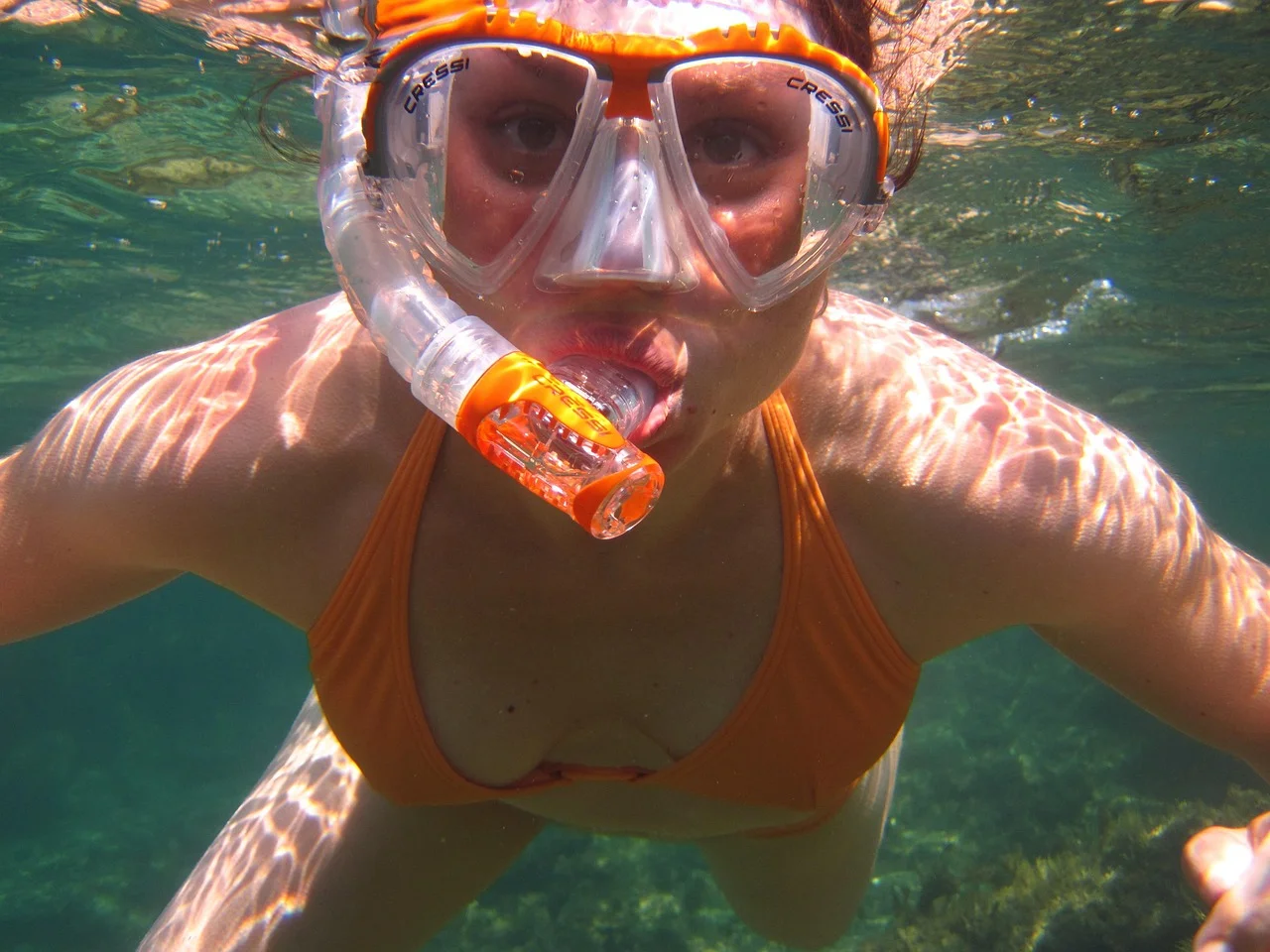
Snorkelling in the crystal-clear waters of the south
A mask, a snorkel, and the rocky seabeds of Milos open up to you: the waters of the south are among the clearest in the Cyclades. The best spots go by the names of Tsigrado, Firiplaka and, on a cruise, the caves of Kleftiko. The highlight: gliding along the submerged volcanic walls, where the light cuts unreal shades of blue.
It's the most accessible activity on the island: free with your own gear, about €10-15 a day to rent. Allow 1 to 2 hours per spot, at your own pace, ideally in the morning when the sea is at its calmest.
- 1-2 h par spot, en autonomie
- Gratuit avec son matériel ; location env. 10-15 EUR/jour
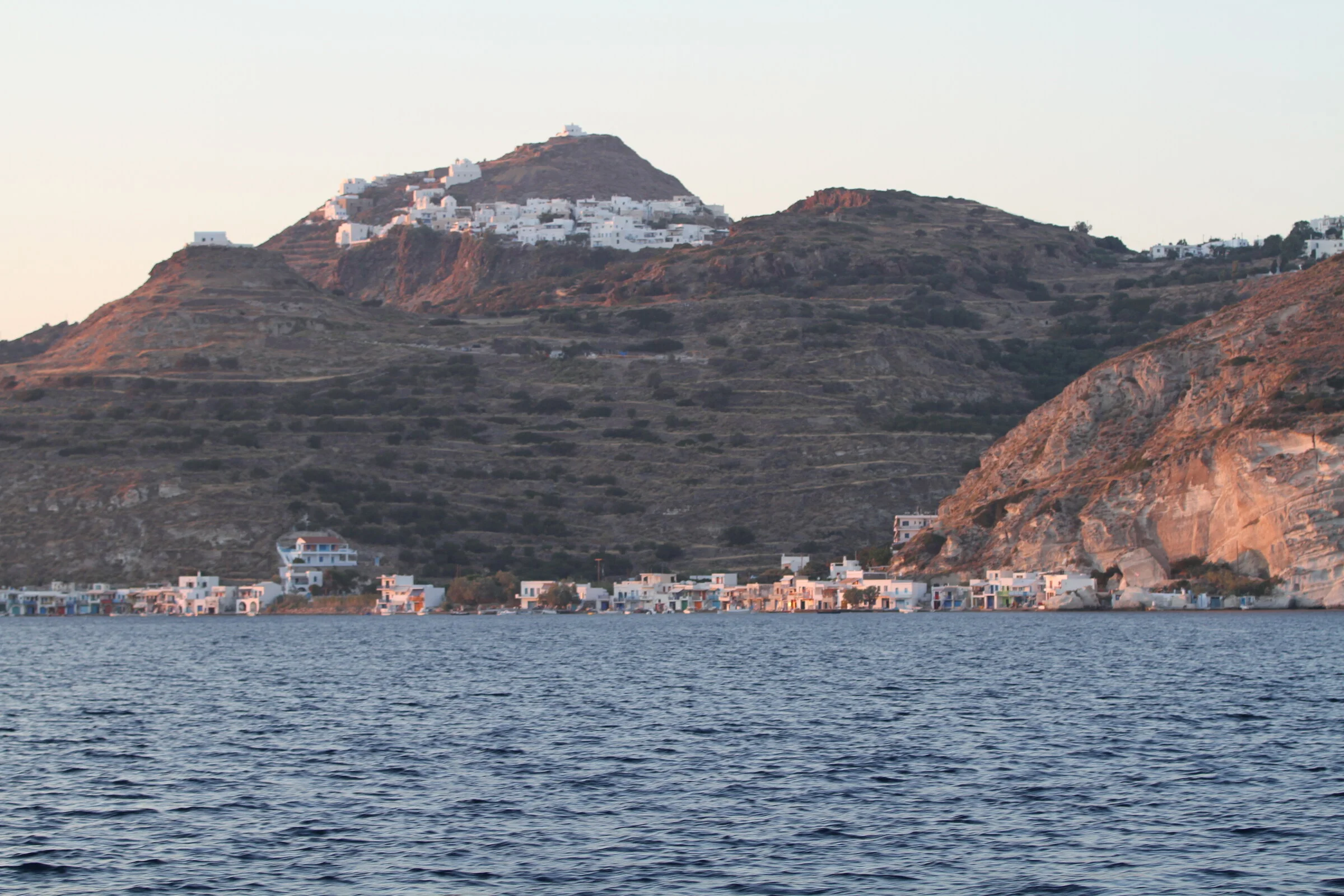
Trypiti archaeology walk: catacombs, theatre and the Venus
A 2-3 hour walking loop links the three historical treasures of Milos: the early Christian catacombs, the white-marble Roman theatre facing the sea, then the marker where the Venus de Milo was discovered in 1820. The highlight: sitting on the theatre tiers, alone before the gulf, where the Louvre's original slept for twenty centuries.
The walk suits everyone, in closed shoes and with water, as shade is scarce. Only the catacombs charge entry, about €4-10; finish with the walk down to Klima to roll straight into sunset.
- 2-3 h
- Entrée des catacombes env. 4-10 EUR ; théâtre et sentiers gratuits
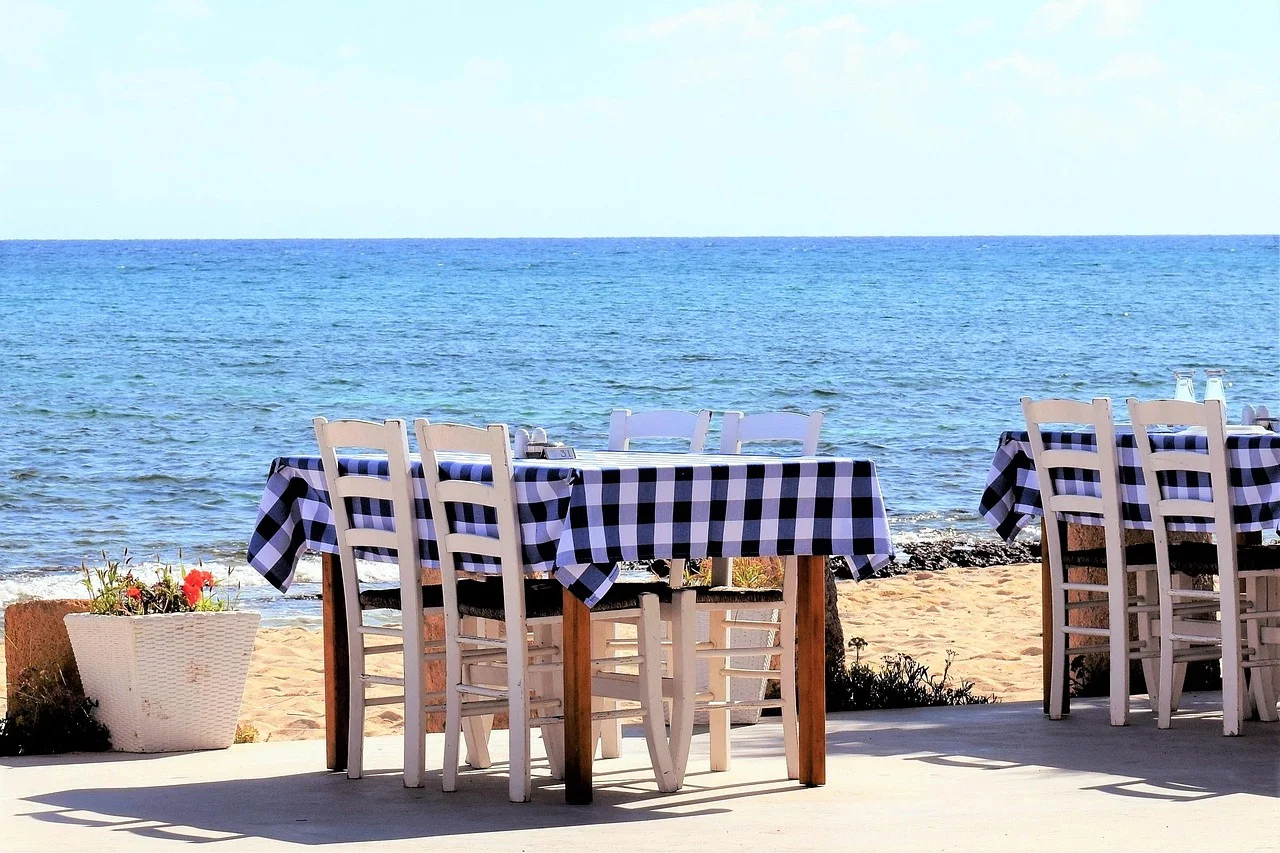
A fishermen's taverna dinner by the water
The evening ritual on Milos: a table almost in the water, in Mandrakia, Pollonia or Klima, and the island's specialities coming one after another. Sun-dried then grilled octopus, crispy pitarakia, the day's fish sold by weight, all washed down with local wine. The highlight: grilled octopus at sunset, facing the colourful syrmata.
Expect €20-40 per person with wine, for a 2-hour evening that's as good as any sight. Book in summer, especially at the Medusa in Mandrakia, and bring cash, as not every taverna takes cards.
- Soirée (2 h)
- 20-40 EUR/personne avec vin local
Getting there
Fly to Athens, then take a 40-45 minute domestic flight to Milos or a ferry from Piraeus taking 2 h 35 to 7 h.
Two options from Athens. The fastest: a 40-45 minute domestic flight to Milos airport (MLO), operated daily by Olympic Air and Sky Express. The most common: the ferry from Piraeus, which docks at the port of Adamas.
By sea, high-speed boats such as SeaJets link Piraeus to Milos in 2 h 35 to 4 h, for around €55-80 one way. Conventional ferries take 4 h 30 to 7 h, but tickets start around €33-48 (Ferryhopper). Schedules and fares change with the season: check them when you book.
- By air: fly to Athens (ATH), then ATH → Milos (MLO) in 40-45 min
- High-speed ferry: 2 h 35 to 4 h, ~€55-80
- Conventional ferry: 4 h 30 to 7 h, from ~€33
Our tip? In high season, the morning high-speed ferry is the best compromise: you're on the beach that same afternoon. Flying is worth it if you find a decent fare, since it frees up almost a full day on a short trip.
Getting around
Renting a vehicle is close to essential on Milos: around €25 a day for a scooter, €35-50 for a car, with buses covering only the main routes.
To make the most of the island, rent a vehicle: expect around €25 a day for a scooter and €35-50 a day for a car in summer. The best beaches in the south are reached by unpaved tracks, where a scooter takes some experience. Many travellers go for a quad, a good middle ground.
The KTEL bus network (Greece's regional buses) runs from Adamas to Plaka, Pollonia, Sarakiniko, Paliochori and Firiplaka. Frequencies are decent in summer, very limited off season. It works for a trip focused on the main sights, but you'll stay tied to the timetable.
One point people often miss: the whole west coast and Kleftiko can only be reached by boat. Excursions leave from Adamas, as half-day trips (€50-90) or full days (€100-180, lunch included). Factor this into your transport budget from the start.
- Scooter: ~€25/day, for riders comfortable on dirt tracks
- Car: €35-50/day in season, book early for August
- KTEL bus: cheap, limited frequencies
- Boat: the only way to reach Kleftiko and the west coast
What to do
The 12 must-dos in Milos include Sarakiniko, a boat trip to Kleftiko, the villages of Klima, Mandrakia, Plaka and Pollonia, the catacombs and four standout beaches.
Milos boils down to three experiences: one-of-a-kind volcanic landscapes, genuine fishing villages and first-rate ancient heritage. The top trio? Sarakiniko, the most photographed spot on the island, a boat trip to Kleftiko, nicknamed the "Meteora of the sea", and sunset over the colourful syrmata of Klima.
On the culture side, the catacombs of Trypiti rank among the three most important Christian sites of their kind in the world, alongside Rome and the Holy Land. Close by, the white-marble ancient theatre overlooks the gulf, not far from where the Venus de Milo was discovered in 1820.
As for beaches, there's one for everyone: Tsigrado for adventure and its wooden ladder, Firiplaka for its multicoloured cliffs, Paliochori for the comfort of an organised beach, Papafragas for its turquoise fjord admired from above.
Keep some time to wander too: Plaka and its Venetian Kastro at sunset, an evening of grilled octopus in Mandrakia, a side trip to Kimolos from Pollonia. The full rundown of the 12 spots, with practical tips, follows below.
Food
A full taverna meal on Milos costs €20-40 per person with local wine, built around grilled sun-dried octopus, pitarakia and the catch of the day.
Expect €20-40 per person, local wine included, for a proper taverna meal on Milos. The local star: octopus dried in the sun then grilled, easy to spot hanging outside harbour kitchens. Add pitarakia (small fried pastries typical of the island) and the day's fish sold by weight.
The best tables sit right on the water. In Mandrakia, the Medusa taverna is the institution for octopus: it's stormed every summer evening, so book. Pollonia lines up its fish tavernas facing the harbour, ideal with kids, and Klima serves the most romantic dinner on the island at sunset.
One curiosity you'll only find here: the "volcanic cooking" at the Sirocco taverna in Paliochori. The sand there is heated naturally by geothermal activity, and some dishes slow-cook buried in the ground. It's spectacular, it's good, and nowhere else in the Cyclades does it.
One last useful habit: keep cash on you. Small village tavernas don't all take cards, especially away from the touristy areas of Adamas and Pollonia.
Itineraries
Three days on Milos cover Sarakiniko, the Kleftiko cruise, Plaka, Klima and a southern beach; five days add Pollonia, Kimolos, Papafragas and the western coves.
Three full days are enough for the essentials of Milos; five let you explore without rushing. Here are two tried-and-tested plans, to adjust with the weather: the meltemi can shift your boat day.
Milos in 3 days
Day 1: the north and the classics. Sarakiniko before 9 am, then Plaka and its lanes, the catacombs of Trypiti and the ancient theatre. Walk down to Klima for sunset over the syrmata.
Day 2: the day at sea. Full-day cruise from Adamas to Kleftiko and the west coast (€100-180, lunch included): swimming, snorkelling in the caves, stops in coves you can't reach by road.
Day 3: the southern beaches. Firiplaka in the morning, Tsigrado for the adventurous if the ladder is open, then a break at Paliochori. In the evening, grilled octopus in Mandrakia facing the colourful boat garages.
Milos in 5 days
Days 1 to 3: same plan as above, with more time at each stop.
Day 4: the north-east. Papafragas and its turquoise fjord seen from above, then lunch right on the water in Pollonia. In the afternoon, the 20-minute shuttle to Kimolos, the neighbouring island.
Day 5: sea and downtime. Sea kayaking along the volcanic cliffs (half day, €60-90) or a morning of snorkelling at Firiplaka, then an easy loop back through Plaka for one last sunset at the Kastro.
Climate & seasons
When to go to Greece?
Monthly averages over the past 5 years (Open-Meteo).
Best months
- January
- February
- March
- April
- May
- June
- July
- August
- September
- October
- November
| Jan | Feb | Mar | Apr | May | Jun | Jul | Aug | Sep | Oct | Nov | Dec | |
|---|---|---|---|---|---|---|---|---|---|---|---|---|
| Our take | ||||||||||||
| Weather | ||||||||||||
| High | 14° | 14° | 16° | 19° | 23° | 27° | 30° | 29° | 27° | 22° | 19° | 16° |
| Rain (mm) | 47 | 33 | 31 | 20 | 13 | 3 | 1 | 4 | 9 | 21 | 34 | 61 |
| Beach | Beach June | Beach July | Beach August | Beach September | ||||||||
| Hiking & nature | Hiking & nature January | Hiking & nature February | Hiking & nature March | Hiking & nature April | Hiking & nature May | Hiking & nature October | Hiking & nature November | Hiking & nature December |
What to do by season (autumn)
-
Beach
Warm air and water, little rain.
-
Hiking & nature
Mild temperatures, stable conditions.
When to go
The best months to visit Milos are May, June, September and early October, with a warm sea, fair prices and manageable crowds.
Aim for May, June, September or early October: the sea is pleasant, tavernas and boat trips are running, and you skip the peak crowds. June and September strike the best balance between heat and quiet.
July and August bring the biggest crowds, the highest prices and the meltemi, the strong, gusty summer wind of the Cyclades. It can make some northern beaches uncomfortable and get boat trips to Kleftiko cancelled. If those are your only possible dates, book accommodation and boats well ahead.
From November to March the island slows right down: many tavernas close, buses become rare and swimming is no longer really in season. Skip this period for a first trip, unless all you want is hiking and total quiet.
One last point of reference: boat excursions, the only way to reach Kleftiko, depend on the weather. Build a spare day into your plans, especially early and late in the season.
Budget
Plan on about €65 a day per person on a budget in Milos, €130 for mid-range comfort and €260 at the high end, excluding flights.
Three daily budget levels on Milos, excluding flights: €65 (about $70) on a budget, €130 (about $140) for comfort and €260 (about $285) at the high end. The island is still gentler on the wallet than Santorini, but high season pushes up accommodation and rentals.
On a budget (€65/day): a simple room shared between two, a scooter at ~€25/day, simple taverna meals, free beaches and free-entry sites like the ancient theatre. The half-day Kleftiko boat trip (€50-90) is still doable if you plan it as a one-off splurge.
Mid-range (€130/day): a mid-range hotel, a rental car at €35-50/day, a taverna dinner every evening (€20-40 per person with wine) and the full-day Kleftiko cruise at €100-180, lunch included, spread across the trip.
- Scooter: ~€25/day; car: €35-50/day
- Taverna meal: €20-40 per person with wine
- Kleftiko cruise: €50-90 half day, €100-180 full day
- Catacombs: entry around €4-10 depending on the season
- Ferry from Piraeus: from ~€33 on a conventional boat
At the high end (€260/day), you add a lovely place with a view, a semi-private catamaran to Kleftiko and the best fish tavernas without checking the bill.
Where to stay
Adamas is the most practical base on Milos, Plaka the most charming, Pollonia the calmest for families, and Klima's syrmata the most unusual place to sleep.
Four bases stand out on Milos, for four styles of trip. Adamas, the port, is the practical choice: ferries, cruise departures, buses and vehicle rentals are all on the spot. As a 2025-2026 benchmark, expect €40-70 a night for a simple room, €90-150 mid-range and €200 and up for the top addresses, in line with a daily budget of €65 to €260.
Plaka, the hilltop capital, plays the charm card: white lanes, bougainvillea and sunsets from the Kastro. You sleep in small Cycladic houses, often with no car access to the door. Perfect for couples, less so for heavy luggage.
Pollonia, in the north-east, wins over families: a peaceful harbour lined with tamarisk trees, fish tavernas right on the water, a gentle vibe in the evening. It's also the departure point for Kimolos, a 20-minute shuttle away.
After something different? Some of Klima's syrmata, the old two-storey boat garages, are rented out as lodgings right on the water. Little space, no organised beach, but a wake-up view of the sea you won't find anywhere else on the island. Book very early: there are only a handful of these houses.
Safety
Milos is very safe with almost no crime; the real risks are natural: slippery rocks, the Tsigrado ladder, dirt tracks, sun and the meltemi wind.
Milos is a very safe island: crime is close to non-existent and you can wander without a second thought, day or night. The European emergency number, 112, works everywhere.
The real things to watch are natural. At Sarakiniko and Papafragas, the white rock is slippery and the cliffs are unsecured; the official path down into Papafragas is in fact closed for safety reasons. At Tsigrado, the wooden access ladder is rickety and sometimes closed by the municipality.
On the road, be careful on unpaved tracks by scooter: gravel, dust and slopes catch out occasional riders. Ride slowly, helmet on, and go for a car or quad if you have any doubts.
That leaves the sun and the wind. Shade is scarce at most sites, notably the ancient theatre and the wild beaches: water, a hat and sunscreen are non-negotiable. As for the meltemi, the summer wind, it can get Kleftiko boat trips cancelled: keep a buffer day in your plans.
Formalities
EU citizens can enter Greece with a national ID card, while UK, US, Canadian and Australian travellers get 90 visa-free days in the Schengen area.
Formalities are minimal: Greece is part of the European Union and the Schengen area. EU citizens can travel with just a national ID card, while visitors from the UK, US, Canada, Australia and many other countries can stay visa-free for up to 90 days in any 180-day period in the Schengen area. Check your passport's validity before you book.
Health-wise, no vaccinations are required. Just make sure your routine vaccines (tetanus, hepatitis B) are up to date before you leave. EU travellers should pack their European Health Insurance Card; everyone else should check that their travel insurance covers Greece.
The currency is the euro, which keeps things simple: no exotic bank fees for European visitors, and cards widely accepted. Still, carry some cash. Small village tavernas and beach sunbed operators don't always take cards, especially away from Adamas.
- Visa: none for EU citizens; 90 visa-free days for UK, US, Canadian and Australian passport holders (Schengen area)
- Document: national ID card (EU) or a passport valid for your whole stay
- Vaccinations: none required, routine ones recommended up to date
- Currency: euro, with cash for small businesses
Tips
Check the meltemi before booking a boat, fuel up and withdraw cash in Adamas, and visit the iconic sites early in the morning or late in the day.
Three habits are worth gold on Milos: check the meltemi forecast before locking in your boat day, fill the tank and withdraw cash in Adamas before heading out, and hit the iconic sites early in the morning or late in the day.
- Light: the Kastro in Plaka 45 minutes before sunset; Mandrakia and Klima late in the day for golden light on the syrmata.
- Boat: pick the small boats for Kleftiko, as they get inside the caves, unlike the big catamarans.
- Fuel and cash: petrol stations and ATMs cluster around Adamas; the south of the island has none.
- Gear: proper shoes for the volcanic rock, plus a mask and snorkel; rental costs €10-15 a day.
- Bus times: check the day's KTEL Milos timetables at the Adamas stop or online, frequencies change with the season.
The classic mistake? Trying to do everything by bus. KTEL frequencies are decent in summer but limited, and the best southern beaches are earned via dirt tracks. A rental, even a €25-a-day scooter, transforms the trip.
One last good deal: from Pollonia, the shuttle to Kimolos takes just 20 minutes. One more island for your trip, without changing accommodation.
FAQ
Three full days cover the essentials of Milos, but 4 to 5 days let you explore without rushing and add Kimolos or the western coves.
How many days do you need on Milos?
Three full days cover the essentials; five let you explore without rushing. Over three days the plan holds together well: the first for the north and the classics — Sarakiniko before 9am, Plaka and its lanes, the Trypiti catacombs, the ancient theatre, then the walk down to Klima for sunset; the second for the day at sea towards Kleftiko and the west coast (100-180 EUR including lunch); the third for the southern beaches. With four or five days you can add Kimolos, the neighbouring island, and the western coves. Build in some slack: the meltemi, the summer wind of the Cyclades, can push the boat trip back by a day.
Milos or Santorini?
Santorini wins for the caldera and the nightlife, Milos for the beaches, the authenticity and the budget. Milos has more than 70 beaches, among the finest in Greece, and stays noticeably cheaper: reckon on 65 EUR a day on a tight budget, 130 EUR in comfort and 260 EUR at the top end, flights excluded. Its hilltop capital, Plaka, looks out over an immense natural gulf, while Klima and Mandrakia line up their syrmata, the colourful boat garages at the water's edge. If you are after the iconic postcard and the buzz, go to Santorini. If you prefer nature, quiet and cheaper tavernas, choose Milos — and note the two islands are linked by ferry if you want both.
How do you get to Milos?
Fly to Athens, then take a 40-45 minute domestic flight to Milos (MLO, Olympic Air or Sky Express), or a ferry from Piraeus: 2 h 35 to 4 h by high-speed boat (around €55-80) or 4 h 30 to 7 h by conventional ferry (from around €33).
Do you need to rent a car on Milos?
Strongly recommended. The KTEL bus network runs from Adamas to Plaka, Pollonia, Sarakiniko, Paliochori and Firiplaka, with decent frequencies in summer but very sparse ones out of season: workable for a trip built around the main sights, as long as you accept being tied to the timetable. The best southern beaches, though, are reached on unsurfaced tracks where a scooter takes some experience — many travellers go for a quad bike as the middle ground. Expect around 25 EUR a day for a scooter and 35-50 EUR for a car in high season. One point often missed: the whole west coast and Kleftiko are reachable only by boat, whatever you drive.
What is the most beautiful beach on Milos?
Sarakiniko is the most spectacular with its lunar landscape, but for swimming many prefer Firiplaka and its multicoloured cliffs, Tsigrado for adventure, or Kleftiko, reachable only by boat.
When is the best time to visit Milos?
May to early October for swimming; June and September offer the best balance of heat and crowds, while July-August bring the biggest crowds, peak prices and the meltemi, the summer wind of the Cyclades.
Is Milos good for families with children?
Yes, with organised, shallow beaches like Paliochori, Pollonia or Firopotamos; avoid Tsigrado (the ladder) and watch children on the slippery rocks of Sarakiniko and Papafragas.
Can you visit Kleftiko without a boat?
Not for swimming: the caves can only be reached from the sea, on cruises from Adamas; a demanding, shadeless trail only lets you admire the site from the clifftop.
Sources
The figures in this guide come from the sources below, checked on the publication date.
Leave a comment
Share your thoughts or travel experience. Your email will not be published.