

Contents 31
The Mediterranean's second-largest island after Sicily, Sardinia is an autonomous Italian region of 24,000 km² and 1.6 million people, 12 km from Corsica across the Strait of Bonifacio. People come first for the sea: La Pelosa near Stintino, Tuerredda in the south, the Costa Smeralda and the La Maddalena archipelago in the north-east, the coves of the Gulf of Orosei (Cala Mariolu, Cala Goloritzé) reached only by boat or on foot. Several of these beaches now have visitor caps and compulsory summer booking.
The interior tells another story: more than 7,000 Bronze Age nuraghi, including UNESCO-listed Su Nuraxi at Barumini, the Gorropu canyon in the Supramonte, the Giara plateau and its small horses, the villages of the Barbagia. Cagliari (the capital, with the main airport), Alghero (Catalan heritage, Neptune's Grotto), Bosa and Castelsardo round off a route best driven over one to two weeks.
Overview
The Mediterranean's second-largest island, Sardinia combines some of Europe's finest beaches (La Pelosa, Cala Mariolu, La Maddalena), 7,000 nuraghi including UNESCO-listed Su Nuraxi and an interior of canyons and villages; you explore it by car over one to two weeks.
The second-largest island in the Mediterranean, Sardinia is an autonomous Italian region with a character all its own, its own language (Sardinian) and pastoral traditions. Visitors come for its turquoise water and some of Europe's finest beaches (La Pelosa, Cala Mariolu, Tuerredda, the La Maddalena archipelago), but also for its wild interior: the Gennargentu massif, the Gorropu canyon and the basalt plateaus of the Giara.
The island holds an archaeological heritage without equal: more than 7,000 nuraghi, Bronze Age stone towers, dot the land. The most famous, Su Nuraxi di Barumini, is a UNESCO World Heritage site. The glamorous Costa Smeralda, the Catalan town of Alghero, colourful villages like Bosa and Castelsardo: Sardinia is best explored by car over one to two weeks.
Torn between Italy's two big islands? Our complete Sicily guide helps you decide: more ancient sites and two volcanoes on one side, wilder beaches and shorter drives on the other.
13 places to take with you
In the guide's order, ready for Google Maps or your GPS.
Book the activities from this guide
Our picks for Sardinia, well rated and free to cancel.
-
Book this activity
RIB trip around the La Maddalena archipelago
€48 per person (GetYourGuide price 2026)
-
Book this activity
Skippered dinghy trip to Cala Mariolu and Cala Goloritzé
€70 per person (GetYourGuide price 2026) + €5.50 environmental fee per person, cash before departure; lunch and Bue Marino cave not included
-
Book this activity
Guided walking tour of Cagliari's old town
€22 per person (GetYourGuide price 2026)
Affiliate links: Travel Advice earns a commission if you book, at no extra cost to you. Learn more

La Pelosa (Stintino)
At the island's north-western tip, facing Isola Piana and Asinara, La Pelosa is a tongue of white sand sloping into shallow turquoise water, guarded by an Aragonese tower of 1578. The water stays shallow for tens of metres, which makes it a family beach and one of the most photographed spots in Sardinia.
Its fragility led the town of Stintino to regulate access: from 15 May to 15 October, a maximum of 1,500 people a day, on paid booking (€3.50 per person, free under 12) through the official site spiaggialapelosa.it, with QR-code checks from 8am to 6pm. A beach mat under your towel is compulsory so as not to carry sand away, and dogs are not allowed.

Cagliari
Sardinia's capital and main gateway (Elmas airport, ferries from Civitavecchia, Naples and Palermo), Cagliari climbs a set of hills above its port. The fortified Castello quarter, with the cathedral of Santa Maria, the Pisan towers of the Elephant and San Pancrazio and the Bastione Saint-Remy terrace, overlooks the Marina, Stampace and Villanova districts, where the restaurants and markets are.
The National Archaeological Museum, in the Cittadella dei Musei, displays the Nuragic bronzetti and the giants of Mont'e Prama; the Roman amphitheatre carved into the rock recalls ancient Karalis. East of the city, Poetto beach stretches eight kilometres of sand below the Sella del Diavolo headland, and the Molentargius salt pans host flamingos all year round.

Cala Mariolu
Cala Mariolu is one of the coves of the Gulf of Orosei, on the east coast between Cala Gonone and Santa Maria Navarrese. Rounded white marble pebbles, water shading from turquoise to deep blue and limestone cliffs dropping into the sea: the cove is regularly ranked among Italy's most beautiful. Its name is said to come from the monk seals, the fishermen's fish 'thieves'.
No road reaches it. You arrive by boat from Cala Gonone, Arbatax or Santa Maria Navarrese, or by a long, exposed trail from the Golgo plateau, for experienced walkers only. In summer the municipality of Baunei limits the number of people on the beach; the shared boats organise the landings.

Su Nuraxi di Barumini
60 km north of Cagliari, Su Nuraxi is the most complete and best-studied nuraghe on the island, and Sardinia's only UNESCO World Heritage site (1997). A central tower from the 16th century BC, still 18 m high, is enclosed by a four-tower bastion; around it, the circular foundations of a village of over 200 huts, inhabited until the 6th century BC, form a stone labyrinth you overlook from the top.
The visit is only with a Fondazione Barumini guide, in timed slots; the single ticket includes the Casa Zapata museum complex in the village (an Aragonese palace built over another nuraghe, visible under a glass floor) and the Giovanni Lilliu centre. The Giara plateau is ten minutes away.

La Maddalena archipelago
Facing Palau at Sardinia's north-eastern tip, the La Maddalena archipelago lines up seven main islands and some sixty pink-granite islets, protected as a national park since 1994. La Maddalena, the only town, is 20 minutes by ferry from Palau; a bridge links it to Caprera, where Garibaldi lived and died (his house is a museum) and where Relitto beach and Cala Coticcio are, the latter with limited access, on booking with a guide (Heart of Sardinia app).
The other islands are visited by boat on day trips: Spargi and its Cala Corsara, Budelli and its pink beach (landing forbidden, seen from the sea), Santa Maria and Razzoli. The very clear waters over white sand are among the finest in the Mediterranean; landing and anchoring are regulated by the park.

Alghero
On the north-west coast, Alghero is Sardinia's Catalan town: settled by the Crown of Aragon in the 14th century, it has kept its language, Algherese, its sea walls and its cobbled lanes around the cathedral of Santa Maria and the church of San Francesco. The bastions make a sunset walk facing the bay, and the harbour is the departure point for Capo Caccia.
25 km away, Neptune's Grotto opens at the foot of the Capo Caccia cliff: chambers of formations and an inner lake, paid guided visit. You walk down by the Escala del Cabirol, 654 steps cut into the rock face, or arrive by boat from Alghero harbour (seasonal service, cave ticket not included). Porto Conte bay and Lazzaretto beach round off the outing.

The Costa Smeralda
The Costa Smeralda is a twenty-kilometre stretch of coast north of Olbia, developed from 1962 by a consortium led by Prince Karim Aga Khan. Porto Cervo, its purpose-built showcase village, concentrates the luxury marina, boutiques and hotels; the beaches of Capriccioli, Liscia Ruja and Spiaggia del Principe, between pink granite rocks and emerald water, explain the name.
It is the most expensive corner of Sardinia and one of the busiest in August. The beaches remain public and free: you reach them by small roads and paid car parks, often full by late morning in high season. Outside July-August the coast regains its calm and prices come down.

Gorropu gorge
In the Supramonte, between Urzulei and Orgosolo, the Gorropu canyon was cut by the Rio Flumineddu into the limestone: around 500 m deep, vertical walls of over 450 m and a floor that narrows in places to a few metres. It is one of Europe's deepest canyons, home to golden eagles and mouflon.
The shortest access starts from the Genna Silana pass on the SS 125 between Dorgali and Baunei: a 650 m descent on a steep path to the canyon mouth, where you scramble between boulders for the first kilometres (green and yellow marked sections). A second, longer but flat approach follows the river from the Sa Barva bridge. Beyond the markers, crossing the gorge requires a guide and climbing gear.

Tuerredda beach
Between Teulada and Capo Spartivento in the south-west, Tuerredda is a half-moon bay of pale sand closed by two headlands, with an islet a few strokes from shore that you reach by swimming or pedalo. The shallow, clear water shades from emerald to blue; it is one of the most sought-after beaches on the south coast along with those of Chia.
The municipality of Teulada caps summer visitor numbers to protect the site; the car park and a beach kiosk are the only services. The scenic road linking it to Chia and Porto Pino runs past coves and dunes.

Bosa
Halfway between Alghero and Oristano, Bosa is one of the few Sardinian towns built on a river: its ochre, pink and blue houses climb the bank of the Temo below the Malaspina castle (12th century), whose chapel keeps 14th-century frescoes. The Sa Costa quarter, all lanes and stairways, and the old tanneries (Sas Conzas) along the river make up the walk around the centre.
The town produces Malvasia di Bosa, an amber dessert wine, and its beach, Bosa Marina, is 3 km away at the river mouth. The Bosa-Alghero coast road (SP 105, 45 km), village-free and clinging to the cliffs above the sea, is considered one of the island's finest.

Castelsardo
On the north coast between Porto Torres and the Costa Smeralda, Castelsardo is a medieval town clinging to a headland above the Gulf of Asinara. Founded in the 12th century by the Doria of Genoa, it keeps its castle, which now houses the museum of Mediterranean basketry, the cathedral of Sant'Antonio Abate with its lantern bell tower over the sea, and a maze of stepped lanes.
5 km east, on the road to Santa Teresa, the Roccia dell'Elefante is a trachyte block eroded into the shape of an elephant and hollowed with prehistoric tombs (domus de janas). The town lives from fishing and basket-weaving, still seen on doorsteps.

Giara di Gesturi plateau
In the heart of the Marmilla, an hour north of Cagliari, the Giara di Gesturi is a 45 km² basalt plateau rising 550 m above hills of wheat and vines. Cork oaks, maquis and seasonal pools (the paulis), carpeted with buttercups in spring: it is the only habitat of the cavallini della Giara, small semi-wild horses, several hundred of them roaming free.
The plateau is explored on foot or by mountain bike on marked tracks from the Gesturi, Tuili or Setzu entrances; it also holds nuraghi and traces of prehistoric settlement. Su Nuraxi at Barumini is ten minutes south, so the two combine easily in a day.

Sette Fratelli forest
40 km east of Cagliari on the road to Villasimius, the Sette Fratelli massif ('seven brothers', after its seven granite peaks) is covered with holm oak, cork oak and strawberry-tree forest, one of the largest in Sardinia. It is one of the last refuges of the Sardinian deer, reintroduced and monitored by the regional forestry agency.
Trails start from the Campu Omu forestry house on the SS 125, where a small museum presents the massif's wildlife; the marked routes climb to Punta Sa Ceraxa (1,016 m) or follow the Rio Cannas. It is the nature outing of Cagliari's residents, best done outside summer for the cooler air.
RIB trip around the La Maddalena archipelago
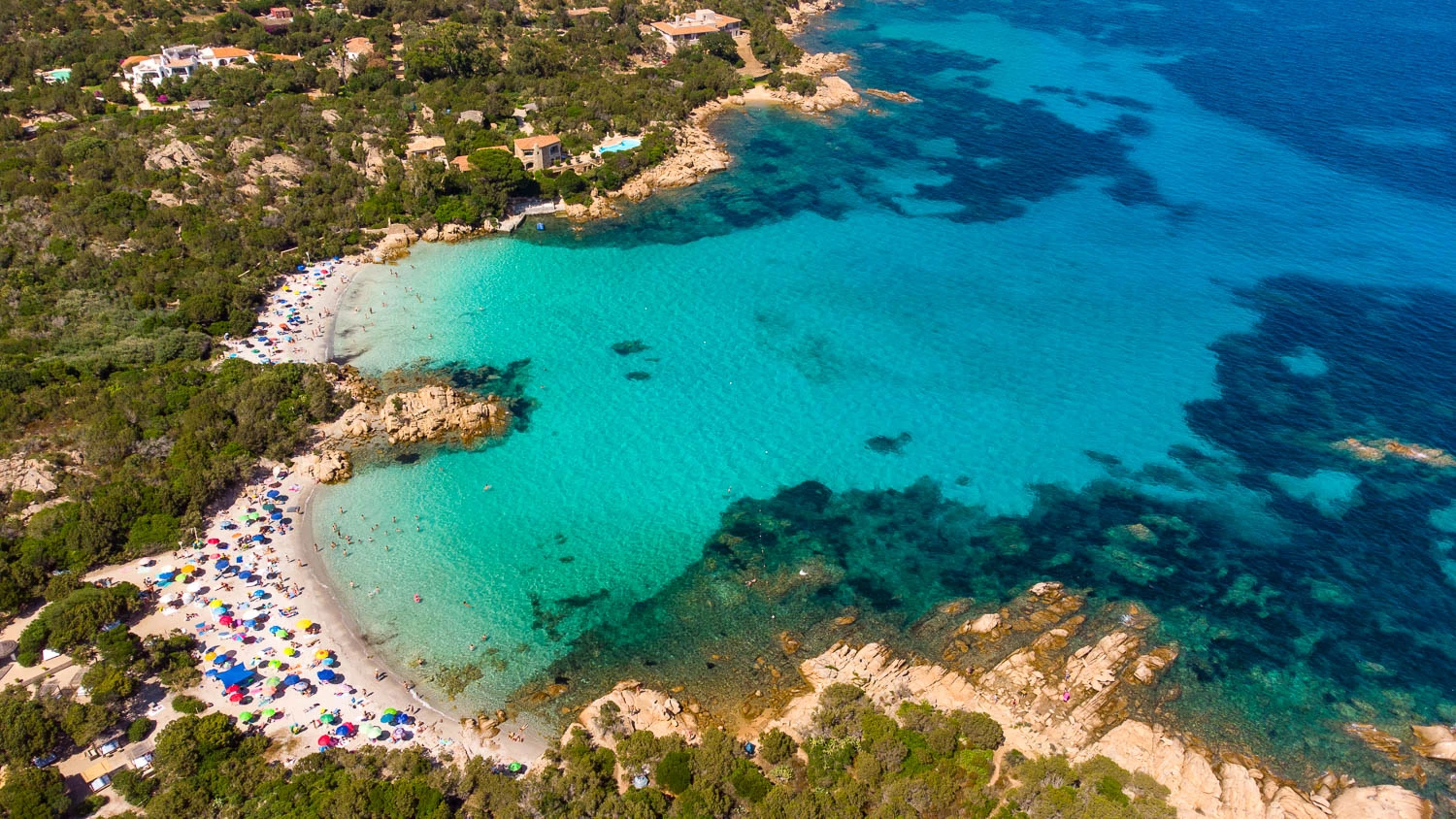
From Palau or La Maddalena, the RIB speeds between the granite islands of the national park: Spargi and Cala Corsara, the channels of Budelli and Santa Maria, with swimming and snorkelling stops in clear water over white sand. The highlight: approaching Budelli's pink beach, where landing is forbidden, seen from the boat before a swim in the 'natural pool' between Budelli and Santa Maria.
For good sailors and swimmers (fast boat, a few bumps in a swell); children accepted under the listing's conditions. The GetYourGuide listing (€48 per person, free cancellation) shows 4.82/5 from 871 reviews. Book the day before in summer and take the morning departure for a calmer sea.
- 4 hrs
- €48 per person (GetYourGuide price 2026)
Skippered dinghy trip to Cala Mariolu and Cala Goloritzé
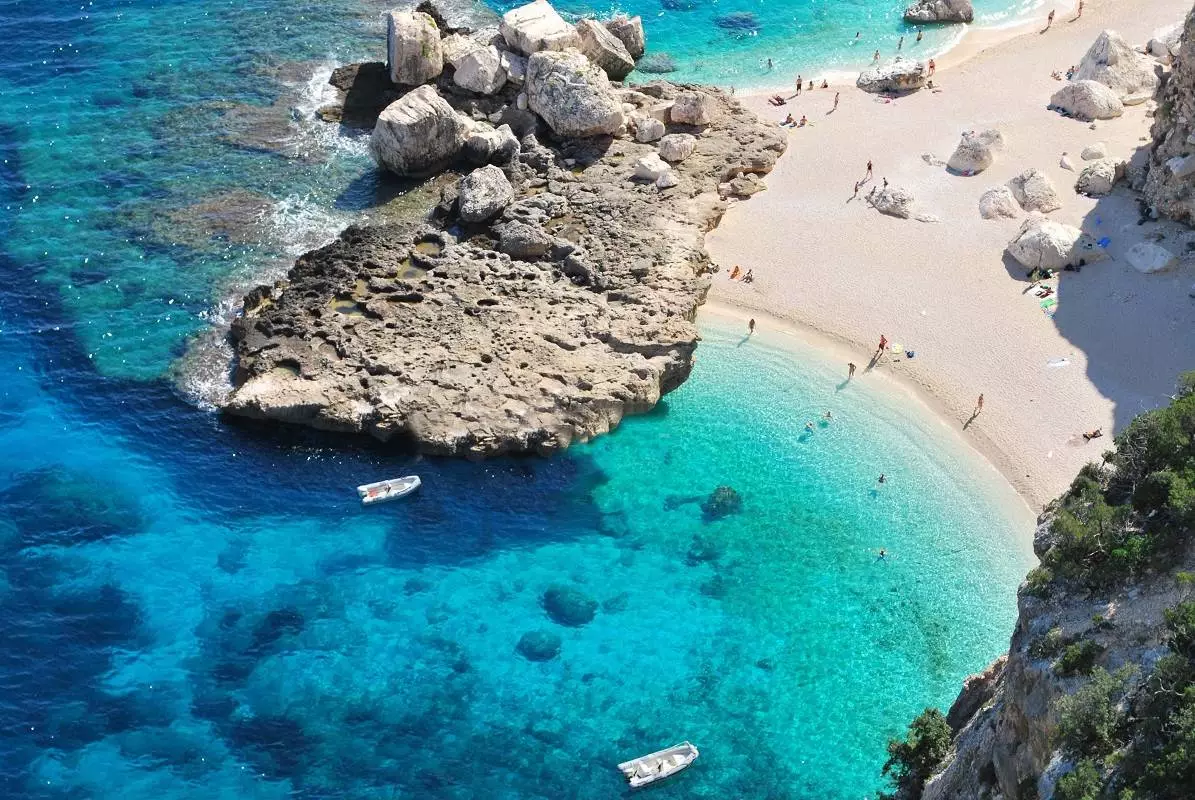
From Cala Gonone harbour, the inflatable follows the cliffs of the Gulf of Orosei southwards: Cala Luna, the Bue Marino cave seen from the sea, Cala Sisine, Cala Biriola, then a landing and swim at Cala Mariolu and a swim off Cala Goloritzé below its 143 m limestone pinnacle. The highlight: Goloritzé's transparent water seen from the boat, where the big boats do not stop.
For anyone old enough to swim, in a small group with a skipper; bring a picnic, water, sunscreen and water shoes for the pebbles. The GetYourGuide listing (€70 per person, free cancellation) shows 4.73/5 from 2,523 reviews. Not included: the €5.50 environmental fee per person, cash before departure, lunch and the Bue Marino cave ticket (the Cala Sisine and Cala Mariolu stops are marked 'additional fees' on the listing). Trips are cancelled in rough seas: keep a spare day.
- Full day (about 7 hrs)
- €70 per person (GetYourGuide price 2026) + €5.50 environmental fee per person, cash before departure; lunch and Bue Marino cave not included
Guided walking tour of Cagliari's old town
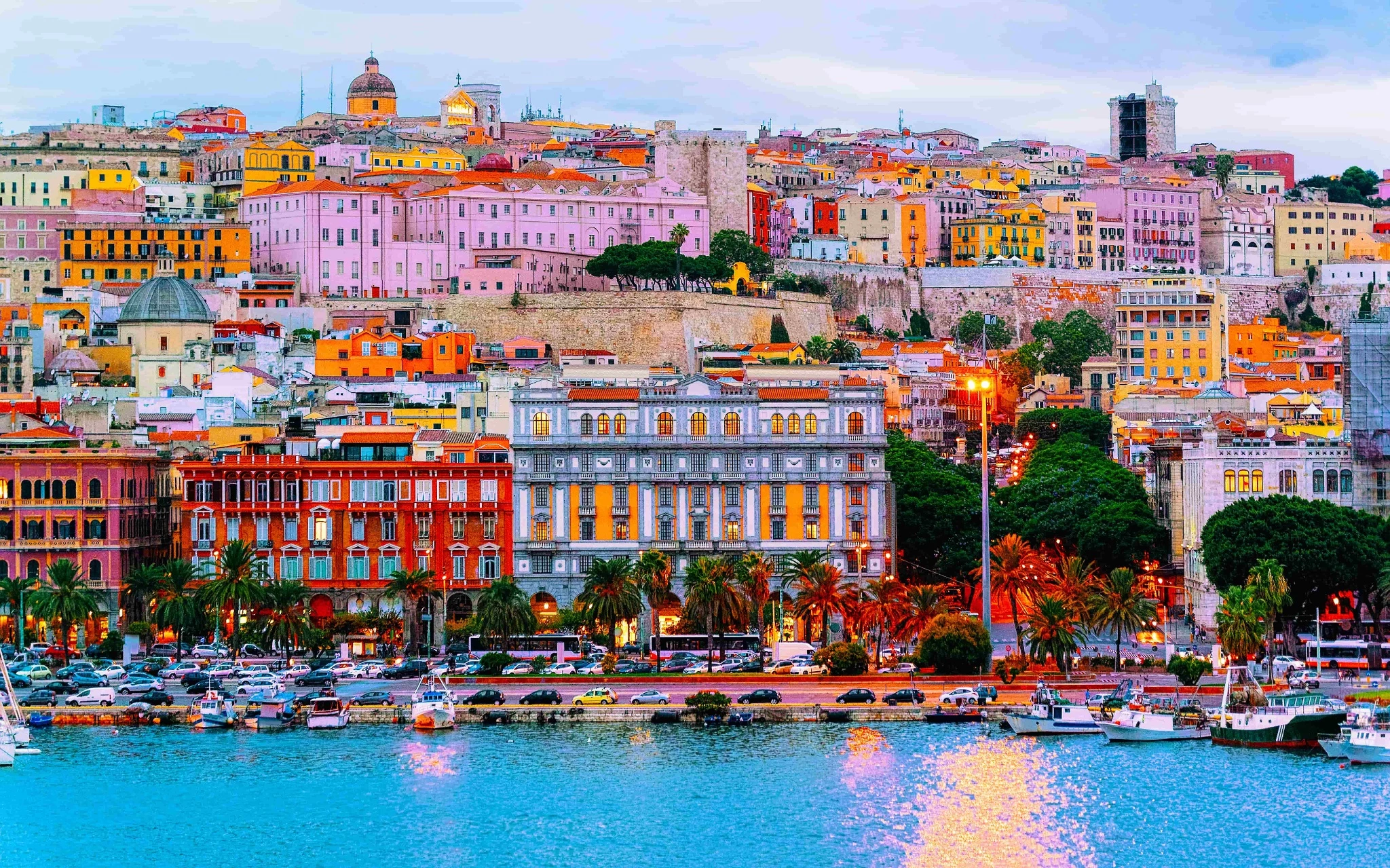
With a local guide, you climb from the Marina district to the Castello via the Bastione Saint-Remy, then take in the Elephant Tower, the cathedral of Santa Maria and the lanes of the citadel while learning how Pisans, Aragonese and Piedmontese shaped the city. The highlight: the bastion terrace at sunset, with the Gulf of Angels and the salt pans below.
For everyone, on foot, with some climbs; departure in the centre. The GetYourGuide listing (€22 per person, free cancellation) shows 4.76/5 from 719 reviews. Pick the late-afternoon slot in summer to avoid the heat.
- About 2 hrs
- €22 per person (GetYourGuide price 2026)
Guided trip to Su Nuraxi di Barumini from Cagliari
From Cagliari, an hour's drive brings you to the Marmilla and the Su Nuraxi nuraghe, Sardinia's only UNESCO site: up into the central tower, through the bastion's corridors, then reading the village of huts from the ramparts, with a guide who sets the nuraghi in the island's three millennia of history; the listing also includes a stop at the domus de janas of S'Acqua Salida, prehistoric rock-cut tombs. The highlight: the view straight down onto the stone labyrinth from the top of the bastion.
For anyone curious about archaeology, in a small group with transport from Cagliari; narrow stairs in the tower. The GetYourGuide listing (€70 per person, free cancellation) shows 4.87/5 from 198 reviews. The Su Nuraxi and Casa Zapata entrance tickets (€9 per person) are not included and are paid on site.
- Half day (about 5 hrs)
- €70 per person (GetYourGuide price 2026) + €9 Su Nuraxi/Casa Zapata ticket per person, paid on site
Boat tour and snorkelling at Capo Caccia and Porto Conte
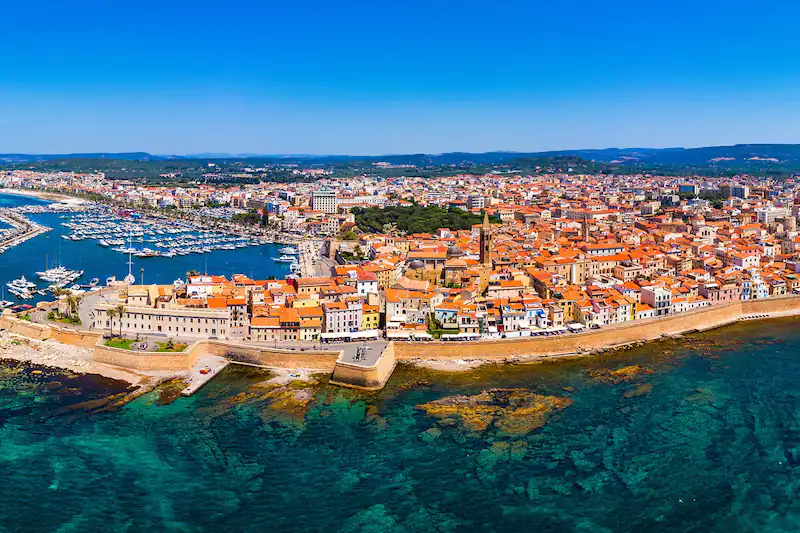
From Porto Conte bay near Alghero, the boat follows the Capo Caccia cliffs to the entrance of Neptune's Grotto seen from the sea, then anchors in the coves of the marine protected area for snorkelling sessions over seagrass meadows and rocks. The highlight: the 168 m Capo Caccia cliff seen from below, with the Escala del Cabirol zigzagging down to the cave.
For confident swimmers, snorkelling gear supplied as per the listing; the cave visit itself is not part of the programme and is done separately (ticket on grottadinettuno.it). The GetYourGuide listing (€84 per person, free cancellation) shows 4.91/5 from 294 reviews. Cancelled in a strong mistral: plan a fallback date.
- Half day
- €84 per person (GetYourGuide price 2026)
Getting there
By air via Cagliari (CAG), Olbia (OLB) or Alghero (AHO), or by car ferry from Civitavecchia, Genoa, Livorno and Naples, or from Toulon and Marseille in season.
Sardinia is reached by air or by sea.
- By air: three international airports serve the island, Cagliari-Elmas (CAG) in the south, Olbia-Costa Smeralda (OLB) in the north-east and Alghero-Fertilia (AHO) in the north-west, with direct flights from many European cities, mostly April to October. Pick the airport for your base: Olbia for the Costa Smeralda and La Maddalena, Alghero for the north-west, Cagliari for the south and Barumini.
- By ferry: routes link the Sardinian ports (Olbia, Golfo Aranci, Porto Torres, Cagliari, Arbatax) to Civitavecchia (Rome), Genoa, Livorno and Naples, and in season Porto Torres to Toulon and Marseille. Operators: Tirrenia, Moby Lines, Grandi Navi Veloci, Grimaldi Lines, Corsica Ferries. Mostly overnight crossings; the ferry is the way to bring your own car or campervan.
- From Corsica: Bonifacio to Santa Teresa Gallura in about 50 minutes, several sailings a day in summer.
Getting around
A hire car is almost essential: the island is 270 km from north to south, trains serve only a few lines and ARST buses are rare to beaches and the interior.
Sardinia is big (270 km north to south) and its roads, apart from the SS 131 dual carriageway Cagliari-Sassari-Porto Torres, are winding: think in hours rather than kilometres.
- Car: the most practical option, to book early for July-August (airport agencies sell out and prices double). Historic centres (Cagliari, Alghero, Bosa) have camera-enforced limited-traffic zones: park outside. Paid parking at almost every well-known beach.
- Train: Trenitalia links Cagliari with Oristano, Sassari, Olbia and Porto Torres; the Trenino Verde, a narrow-gauge tourist train, runs in season on mountain sections (Mandas-Laconi, Arbatax-Gairo).
- Bus: the regional ARST network covers the towns and a few beaches in summer (Cagliari-Villasimius, Olbia-Palau), but with few departures; summer shuttles to La Pelosa from Stintino.
- Boat: Palau-La Maddalena and Porto Torres-Asinara ferries, shared excursions from Cala Gonone, Arbatax and Santa Maria Navarrese to the coves of the Gulf of Orosei.
What to do
Beaches and coves (La Pelosa, Tuerredda, the Gulf of Orosei by boat, La Maddalena), Cagliari and Alghero, Neptune's Grotto, the Su Nuraxi nuraghe (UNESCO), the Gorropu canyon, the Giara and its horses, Bosa and Castelsardo.
The sea first: the day by boat around the La Maddalena archipelago from Palau, the dinghy trip from Cala Gonone to Cala Mariolu and Cala Goloritzé (also reachable on foot from the Golgo plateau, with a visitor cap and booking in summer), La Pelosa at Stintino and Tuerredda in the south, both capped in high season. From Alghero, Neptune's Grotto is visited on foot down its 654 steps or after a boat trip to Capo Caccia.
On land, Cagliari deserves a day (Castello, archaeological museum, Poetto), Alghero an evening on the ramparts, Bosa and Castelsardo a stop on the road. Su Nuraxi at Barumini, the island's only UNESCO site, combines with the Giara plateau and its horses; walkers descend into the Gorropu canyon from Genna Silana or explore the Sette Fratelli forest near Cagliari. To carry on through Italy, see our guides to Sicily, Rome and Puglia.
Food
Porceddu (roast suckling pig), malloreddus and culurgiones, pane carasau, pecorino sardo, fregola with clams on the coast, seadas with honey for dessert, with a red Cannonau or a white Vermentino.
Sardinian cooking, simple and generous, blends the pastoral traditions of the interior with seafood on the coast. The best place to taste it is an agriturismo, with a set menu and wine included.
- Porceddu: spit-roast suckling pig scented with myrtle, the dish of feast days and agriturismi (often to be ordered the day before).
- Pasta: malloreddus (Sardinian gnocchetti) with sausage and saffron, culurgiones (potato, mint and pecorino ravioli) from the Ogliastra, fregola (small semolina beads) with clams on the coast.
- Pane carasau: the shepherds' thin crisp flatbread, also served as pane frattau (with tomato sauce and a poached egg).
- Cheeses: pecorino sardo and fiore sardo PDO; casu marzu with its live larvae is a curiosity, not a restaurant order.
- Desserts and drinks: seadas (fritters with fresh cheese and honey), amaretti, myrtle liqueur; red Cannonau, white Vermentino di Gallura DOCG, Malvasia di Bosa.
Itineraries
One week: the north (Alghero, La Pelosa, Bosa, Castelsardo, La Maddalena) or the south (Cagliari, Tuerredda, Barumini, Gulf of Orosei). Two weeks: the full loop of the island from Olbia or Cagliari.
One week in the north (arriving Alghero or Olbia)
Days 1-2: Alghero, the ramparts, Neptune's Grotto and Capo Caccia. Day 3: Stintino and La Pelosa (booked), back via Porto Torres. Day 4: coast road to Bosa, night in Bosa. Day 5: Castelsardo and the Roccia dell'Elefante, night in Palau. Day 6: boat day in the La Maddalena archipelago. Day 7: Costa Smeralda beaches before the flight from Olbia.
One week in the south and east (arriving Cagliari)
Days 1-2: Cagliari, Castello, archaeological museum, Poetto. Day 3: Chia and Tuerredda. Day 4: Su Nuraxi at Barumini and the Giara di Gesturi, night in an agriturismo in the Marmilla. Day 5: drive to Cala Gonone via Nuoro and Orgosolo. Day 6: boat to Cala Mariolu and Cala Goloritzé. Day 7: Gorropu canyon from Genna Silana, back to Cagliari.
Two weeks: around the island
Link the two loops anticlockwise from Olbia: Costa Smeralda and La Maddalena, Castelsardo, Alghero and La Pelosa, Bosa, Oristano and the Sinis peninsula (Tharros, Is Arutas beach), Barumini, Cagliari and the south, then back up through the Ogliastra and the Gulf of Orosei to Olbia. Allow about 1,300 km and two to three nights per base.
Climate & seasons
When to go to Italy?
Monthly averages over the past 5 years (Open-Meteo).
Best months
- June
- July
- August
- September
- October
| Jan | Feb | Mar | Apr | May | Jun | Jul | Aug | Sep | Oct | Nov | Dec | |
|---|---|---|---|---|---|---|---|---|---|---|---|---|
| Our take | ||||||||||||
| Weather | ||||||||||||
| High | 9° | 12° | 13° | 16° | 21° | 28° | 32° | 30° | 25° | 21° | 14° | 11° |
| Rain (mm) | 140 | 82 | 80 | 91 | 100 | 28 | 4 | 18 | 46 | 75 | 126 | 91 |
| Beach | Beach June | Beach July | Beach August | Beach September |
What to do by season (autumn)
-
Beach
Warm air and water, little rain.
When to go
May-June and September-October are the best compromise: mild weather, warm sea and fewer crowds. July-August are hot (often above 30 °C), very busy, and several beaches have visitor caps.
Sardinia has a Mediterranean climate: hot dry summers, mild wet winters, with a frequent wind, the mistral (maestrale), especially on the west coast and in the north.
- May-June and September-October: the best time. Pleasant temperatures, sea still or already warm (22-25 °C in September), thinner crowds, ideal for combining beach, hiking and historic sites.
- July-August: peak season. Guaranteed sun and a warm sea, but heat often above 30 °C, packed beaches and the highest prices; La Pelosa, Tuerredda and Cala Goloritzé run on visitor caps and booking. Ferries and accommodation book up months ahead.
- November-March: mild, quiet winter, perfect for the interior, the nuraghi and the towns, but many beach facilities and excursion boats are closed. Carnival (Oristano's Sartiglia, Mamoiada's mamuthones) falls in February.
Budget
Allow €80-110 per day per person in May-June or September (double room €80-120, meals €15-30, shared car), €150 and more in August on the coasts; beaches are free, a few charge a ticket of a few euros.
Sardinia sits around the Italian average off season and among Italy's expensive destinations in July-August, when the Costa Smeralda and the coasts sell out.
- Accommodation: €80-120 for a double room in a B&B or simple hotel in May-June and September, €150-250 in August on the coast; agriturismo with dinner around €100-140 for two; camping and hostels much cheaper.
- Meals: pizza or pasta dish €10-15, full trattoria meal €25-35, agriturismo set menu €35-45 with wine.
- Car: from €30 a day off season to €80-100 in August for a small car, fuel extra; beach car parks €1-2 an hour.
- Sights: beaches are free, apart from access fees on capped beaches (La Pelosa €3.50 per person); Su Nuraxi, Neptune's Grotto and the Gorropu canyon charge admission (Su Nuraxi + Casa Zapata €9 according to the 2026 GYG listing; official price list on their sites). A boat day in the Gulf of Orosei or around La Maddalena costs €50-90 per person.
Indicative budget: €80-110 per day per person for a couple in shoulder season, €150 and more in August on the coasts.
Where to stay
Two bases are enough: Cagliari or Chia for the south, Alghero or Olbia/Palau for the north; Cala Gonone for the Gulf of Orosei. Inland agriturismi are the best value.
The choice depends on your route; most travellers combine two bases to cut down on driving.
- Cagliari and the south: lively capital, Poetto beach, access to the south-western beaches (Tuerredda, Chia) and Barumini. City-centre hotels and B&Bs in the Marina and Villanova districts.
- Alghero and the north-west: Catalan old town, Neptune's Grotto, Stintino and La Pelosa 50 minutes away, coast road to Bosa.
- Olbia, Palau and the Costa Smeralda: ferries and airport, north-eastern coves, ferry to La Maddalena. Porto Cervo is prohibitively expensive in August; Palau, Cannigione or San Teodoro are more affordable.
- Cala Gonone and the Ogliastra: base camp for the Gulf of Orosei coves and the Gorropu gorge.
- The interior (Barbagia, Marmilla): authentic villages, hiking, and above all the agriturismi, farm-inns where dinner (porceddu, cheeses, house wine) is often included. Book early for July-August, the island sells out.
Safety
A safe destination; the real risks are the roads (bends, animals), summer wildfires, sun and sea in strong wind, plus theft from cars at beach car parks.
Sardinia is one of Italy's safest regions: petty crime is limited to thefts from cars at beach car parks and pickpockets in the ports in summer. Leave nothing visible in the vehicle.
- Roads: narrow, winding secondary roads, sheep, goats and wild boar on the tarmac at night; distances are measured in hours. Drink-drive limit 0.5 g/l.
- Wildfires: frequent from June to September, especially with the mistral; fires banned, no cigarette ends, respect trail and forest closures (Sette Fratelli, Gennargentu).
- Sea and sun: currents on the exposed west-coast beaches in strong wind, respect the flags; heat above 35 °C in August inland, hike in the morning with plenty of water. Gorropu and the Cala Goloritzé trail are not for the hot hours.
- Emergencies: 112; duty pharmacies posted on every pharmacy door; hospitals in Cagliari, Sassari, Nuoro, Olbia and Alghero.
Formalities
Italy is in the EU and Schengen: a valid ID card or passport for Europeans, the euro, ETIAS not yet in service (no date set as of September 2026), EES in force since 10 April 2026 for non-EU travellers.
Sardinia is a region of Italy, part of the European Union and the Schengen Area: EU nationals only need a valid identity card or passport. The currency is the euro (€). Non-EU travellers should check Schengen rules (90 days within 180) and the upcoming ETIAS travel authorisation, not yet in service, with no launch date set (September 2026) depending on nationality — always check official EU sources before travelling. Since 10 April 2026, the EU Entry/Exit System (EES) registers non-EU short-stay travellers at the border, with a facial image and fingerprints, instead of a passport stamp.
The European emergency number is 112. EU nationals can use their European Health Insurance Card; travel insurance is advisable for others. Cards are widely accepted, but keep cash for beach car parks, agriturismi and small inland shops. An EU driving licence is enough to drive; the limited-traffic zones of historic centres are camera-enforced.
Tips
Book capped beaches, boats, car and ferries before you leave for summer; bring a beach mat, cash and water shoes; never take sand, the fine runs to several thousand euros.
- Book ahead: La Pelosa (spiaggialapelosa.it), Cala Goloritzé (Heart of Sardinia app, municipality of Baunei), the Gulf of Orosei boats, the car and the ferry are all booked before departure for July-August.
- Sand and shells: taking them is an offence in Sardinia, with fines from several hundred to several thousand euros and airport checks. The beach mat is compulsory on several beaches for the same reason.
- Kit: water shoes for the pebble coves (Cala Mariolu), mask and snorkel, parasol (little rental outside resorts), water bottle. A cool box helps, kiosks are rare.
- Opening hours: shops and many sites close between 1pm and 4pm outside resorts; dinner rarely before 8pm.
- Language and money: Italian everywhere, English in the resorts; cash is useful inland and for pay-and-display car parks.
- Respect the sites: stay on marked paths (Giara, Gorropu), do not approach the horses, do not anchor on posidonia meadows in marine protected areas.
FAQ
May-June and September are the best months, a car is essential, La Pelosa and Cala Goloritzé must be booked in summer, a week covers half the island, and an ID card is enough for Europeans.
When is the best time to visit Sardinia?
May-June and September-October: mild weather, a pleasant sea and fewer people than in midsummer. July-August are hot, expensive and very busy.
Do I need to hire a car?
Yes, unless you stay in a single town. Public transport is limited and many beaches and sites (Tuerredda, Gorropu, Barumini) are remote.
Which beaches need booking?
La Pelosa (Stintino) from 15 May to 15 October, on spiaggialapelosa.it, €3.50 per person; access on foot to Cala Goloritzé (Baunei) is capped and booked through the Heart of Sardinia app; Tuerredda and several coves limit bather numbers without booking, closing access once the cap is reached.
How do I get to Cala Mariolu and Cala Goloritzé?
By shared boat or dinghy from Cala Gonone, Arbatax or Santa Maria Navarrese (boats do not land at Goloritzé, you swim from offshore), or on foot from the Golgo plateau for Goloritzé.
Do I need a visa for Sardinia?
Not if you are European: Italy is in the Schengen Area and an ID card is enough. Visa-exempt non-EU travellers enter with a passport for 90 days; ETIAS is not yet in service and no launch date has been set (September 2026).
How long should I stay?
A week for the north or the south, two weeks to go round the island without too much driving.
Can I take sand home from Sardinia?
No: taking sand, pebbles or shells is forbidden and punished with fines of up to several thousand euros, with checks at the airports.
Sources
The figures in this guide come from the sources below, checked on the publication date.
Leave a comment
Share your thoughts or travel experience. Your email will not be published.