

Contents 30
Puglia, the heel of Italy's boot, lines up whitewashed towns, trulli, flamboyant baroque, Adriatic cliffs and endless olive groves. This guide gathers the region's 12 must-sees — from Alberobello to Lecce, Polignano a Mare to the Gargano, with a side-trip to Matera just across the border in Basilicata — and the practical tips to string them together on a road trip.
Overview
The heel of Italy: white towns, trulli, Lecce baroque, cliffs and olive groves, best explored on a week-long road trip.
Puglia occupies the heel of Italy's boot, between the Adriatic and the Ionian seas. The region strings together perched white towns, the trulli of Alberobello, the flamboyant baroque of Lecce, the cliffs of Polignano a Mare and plains of centuries-old olive trees, with a coast dotted with coves.
It's a road-trip destination: a week lets you link the Valle d'Itria (Alberobello, Ostuni, Locorotondo), the Adriatic coast, the Salento around Lecce and the Gargano to the north, with a possible side-trip to Matera just across the border in Basilicata. The food — orecchiette, burrata, focaccia, pasticciotto — is part of the journey.
12 places to take with you
In the guide's order, ready for Google Maps or your GPS.
Book the activities from this guide
Our picks for Puglia, well rated and free to cancel.
-
Book this activity
Guided walk among the trulli of Alberobello
€38 per person (GetYourGuide price 2026)
-
Book this activity
Boat trip to the sea caves of Polignano
€40 per person (GetYourGuide price 2026)
-
Book this activity
Baroque and underground Lecce with a guide
€25 per person (GetYourGuide price 2026)
Affiliate links: Travel Advice earns a commission if you book, at no extra cost to you. Learn more

Polignano a Mare
Perched on limestone cliffs above the Adriatic, Polignano a Mare is one of Puglia's postcard images. Below the old town, the small Lama Monachile cove (Cala Porto), framed by high walls, is reached on foot via a bridge. The white alleys of the old quarter, dotted with terraces and overhanging balconies, look out over the sea; it's also the birthplace of the singer Domenico Modugno.

Alberobello
Alberobello is famous for its trulli, the dry-stone houses with conical roofs listed as a UNESCO World Heritage site. The town has over a thousand, concentrated in two districts: the Rione Monti, the most visited and lined with shops, and the Aia Piccola, still residential and quieter. Wandering from one alley to the next, among the whitewashed gables and the symbols painted on the roofs, immerses you in a rural architecture unique in Italy.

Lecce
Nicknamed "the Florence of the South", Lecce is the baroque capital of Puglia, carved into the soft golden local stone. The Santa Croce Basilica, completed in 1695, unfurls a façade crowded with figures, animals and plant motifs. At the centre, Piazza Sant'Oronzo holds a half-buried 2nd-century Roman amphitheatre. Between churches, palazzi and cartapesta (papier-mâché) workshops, the city is explored on foot through its alleys.

Bari
The lively capital of Puglia, Bari is best discovered in its old town, Bari Vecchia, a maze of white alleys where the San Nicola Basilica has held the relics of Saint Nicholas since 1087. In the morning, on Arco Basso street — nicknamed "orecchiette street" — locals hand-shape fresh pasta in their doorways. Between the harbour, the seafront and the terraces, the city makes a lively gateway to a trip around the region.

Castel del Monte
Standing alone on an inland hill, Castel del Monte is an octagonal castle built in the 13th century by Emperor Frederick II, listed as a UNESCO World Heritage site. Everything follows the number eight: eight sides, eight corner towers, eight rooms on each floor. Its rigorous geometry and its still-enigmatic purpose — residence, hunting lodge or symbolic object? — make it one of Italy's most singular medieval monuments.

Ostuni, the white town
Nicknamed "the white town", Ostuni rises over an inland hill, its whitewashed houses tumbling down to the ramparts. In the fortified old town, the sloping alleys wind between stairways, vaulted passages and terraces, up to the Gothic cathedral at the top. From the ramparts, the view stretches over the plain of centuries-old olive trees running down to the Adriatic.

Matera
Just across the border, in Basilicata (not in Puglia), Matera is well worth a day trip from the region. Its Sassi — districts of cave dwellings carved into the limestone rock, inhabited since prehistory — and its rock churches are a UNESCO World Heritage site. At dusk, the amphitheatre of stone houses lighting up above the ravine offers one of the most striking panoramas in southern Italy.

Monopoli
Neighbouring Polignano, Monopoli lines up a white old town around an old harbour where colourful fishing boats (gozzi) are moored. Between the baroque cathedral, the Charles V castle and the alleys lined with palazzi, the town keeps a more authentic, less crowded feel than its neighbours. All around, the coast is dotted with small coves for a summer swim.

Caves of Castellana
The Castellana Caves form the largest publicly accessible cave network in Italy, carved into the limestone over several kilometres. The guided visit crosses galleries, stalactites and vast underground halls, all the way to the Grotta Bianca, a dazzlingly white alabaster cavern often considered the most beautiful cave in the country. The route descends tens of metres underground, in a cool, mineral atmosphere.

Gargano National Park
The spur of Italy's boot, the Gargano National Park combines white cliffs, turquoise coves and the ancient Foresta Umbra, a vast beech and oak forest. On the coast, Vieste and Peschici look out over the sea from their headlands, and the Baia delle Zagare lines up its famous sea stacks. It's also the departure point for the Tremiti islands. A land of nature, away from the region's main tourist routes.

Brindisi
A port city facing east, Brindisi marked the end of the Via Appia, the great Roman road from Rome. At the top of the staircase running down to the harbour stands a Roman column; its twin collapsed and its capital is kept in Lecce. Now a lively stopover and the departure point for ferries to Greece, the city makes a good pause between two legs of the trip.

The Tremiti Islands
Off the Gargano, the Tremiti islands form a small archipelago designated a marine protected area, with clear waters popular with divers. San Domino, the largest, is covered in pines and fringed with coves; San Nicola keeps its fortified abbey. It's a nature escape, mainly in summer, away from the bustle of the mainland — a detour for those with time.
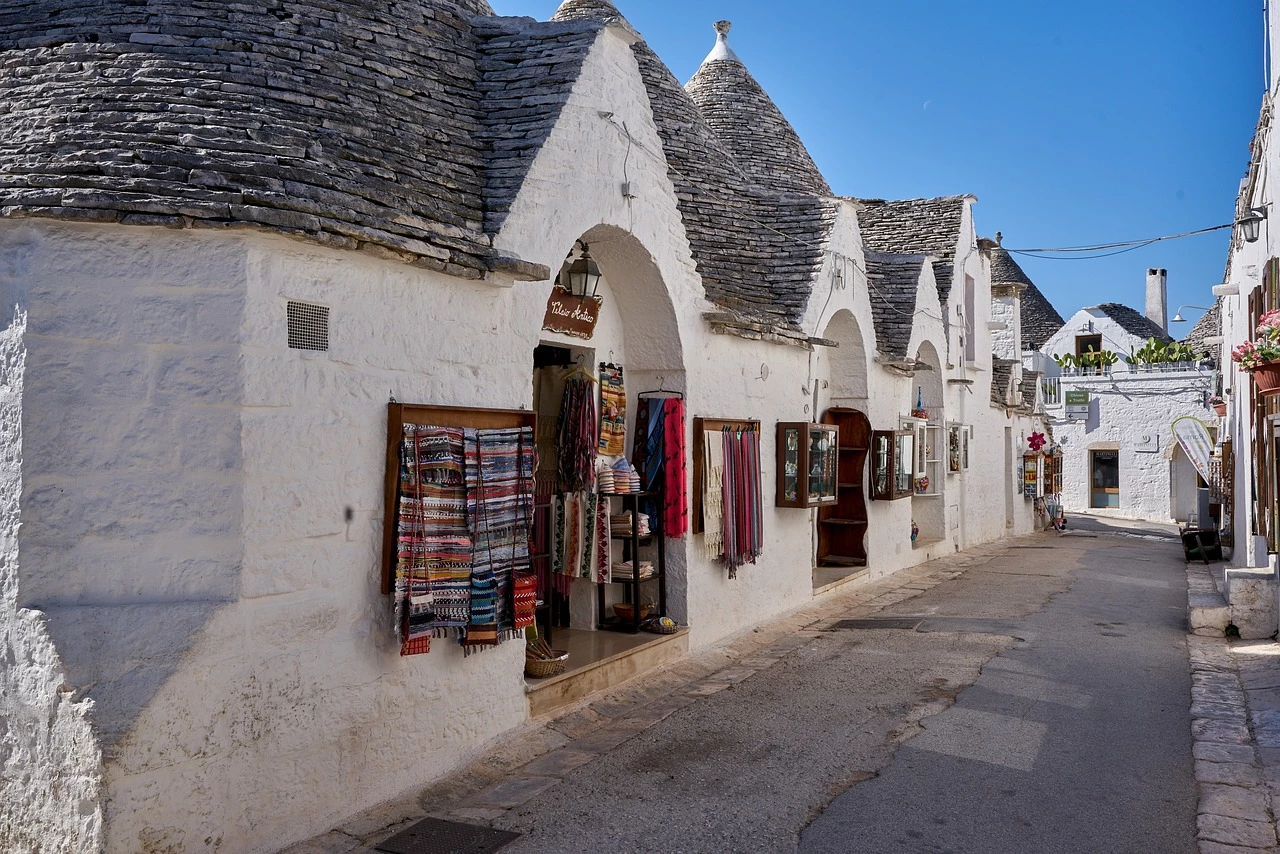
Guided walk among the trulli of Alberobello
With a local guide, you cross the Rione Monti, the densest trulli quarter, then the Aia Piccola, still inhabited and shop-free, learning to read the symbols painted on the conical roofs and the dry-stone technique that let owners dismantle the house when the tax collector approached. The highlight: stepping inside a lived-in trullo to see how people still live there.
For everyone, on foot, no difficulty; departure in the centre of Alberobello. The GetYourGuide listing (€38 per person, free cancellation) shows 4.82/5 from 397 reviews. Pick the first morning slot to avoid the groups.
- 1.5 hrs
- €38 per person (GetYourGuide price 2026)
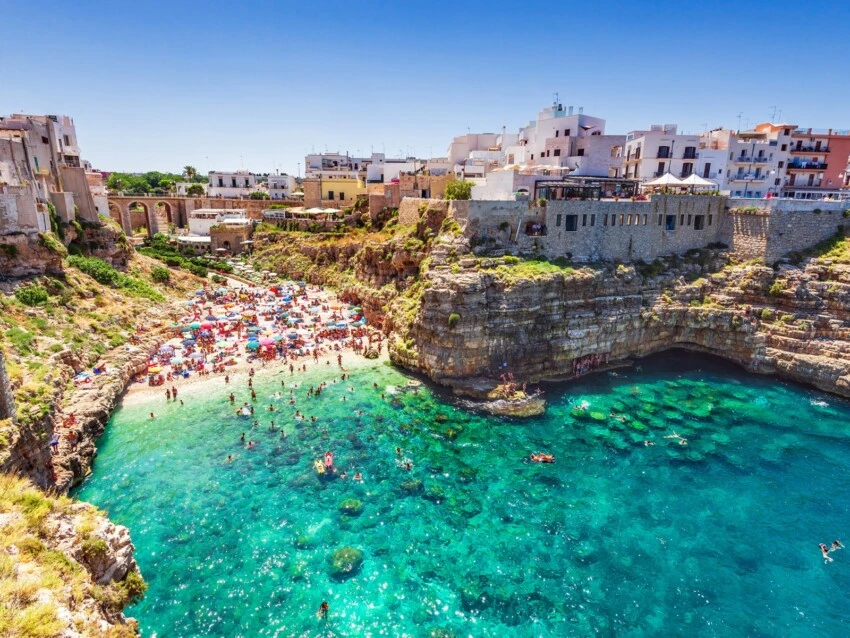
Boat trip to the sea caves of Polignano
Departure from the harbour of Polignano a Mare by speedboat to follow the cliffs and slip, engine off, into the sea caves carved beneath the historic centre: Grotta Palazzese, Grotta delle Rondinelle, arches and vaults where the light bounces off turquoise water. A swim offshore and an aperitif on board. The highlight: the view of Lama Monachile from the sea, framed between its two rock walls.
For everyone, children included, when the sea is calm (the trip is cancelled in a swell); bring a swimsuit and towel. The GetYourGuide listing (€40 per person, free cancellation) shows 4.79/5 from 4,786 reviews. Late-afternoon slots give the best light in the caves.
- 1.5-2 hrs
- €40 per person (GetYourGuide price 2026)
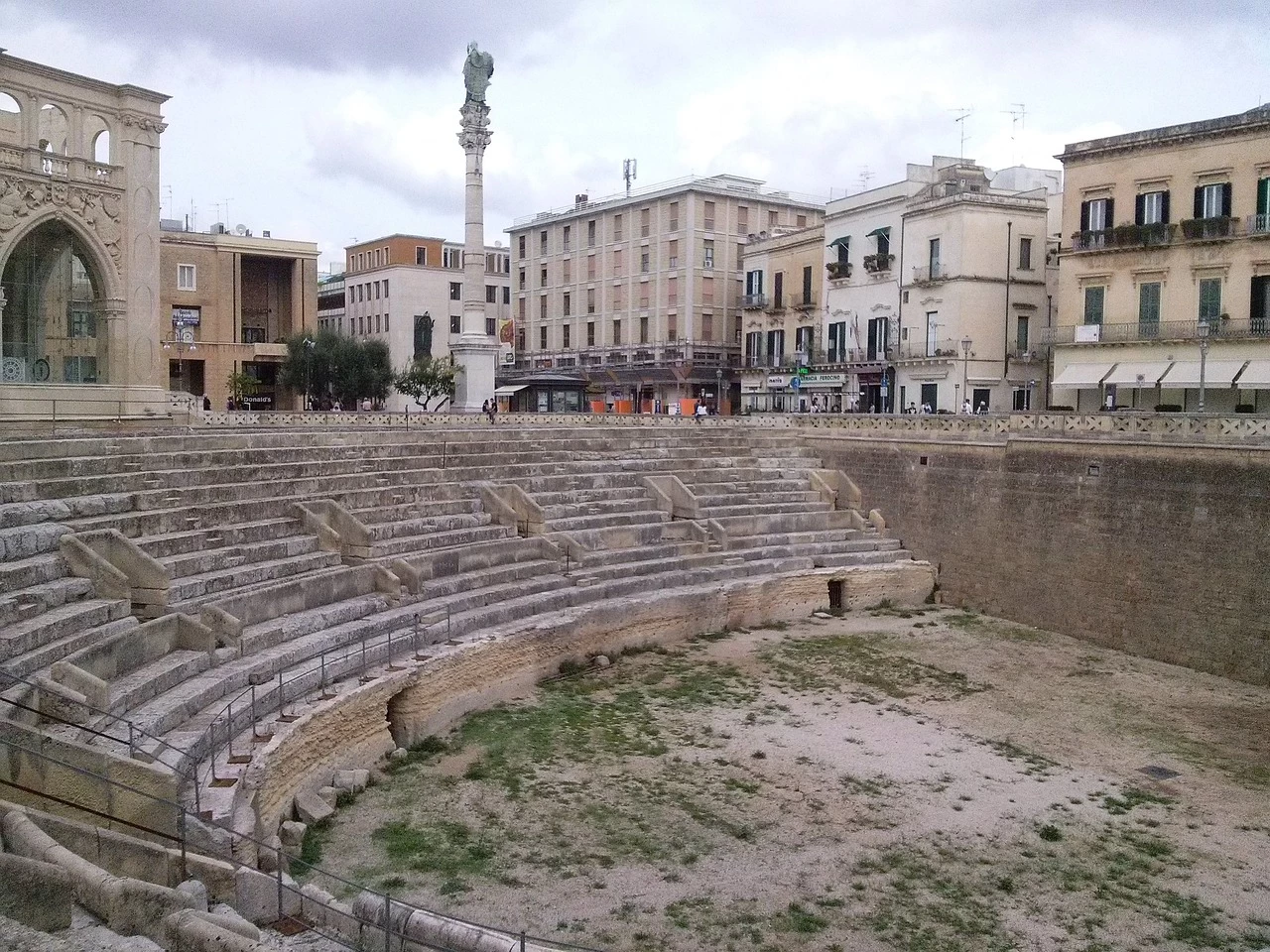
Baroque and underground Lecce with a guide
Two hours on foot in the centre of Lecce: Piazza del Duomo, the basilica of Santa Croce and its teeming façade, Piazza Sant'Oronzo and the Roman amphitheatre, with the guide's explanations on Lecce stone, soft to carve and golden in the sun. The visit then goes beneath the city, into Roman and medieval remains preserved under a palazzo. The highlight: the contrast between the exuberant baroque above and the ancient cellars below.
For anyone curious about architecture, no difficulty; departure in the pedestrian centre. The GetYourGuide listing (€25 per person, free cancellation) shows 4.61/5 from 1,682 reviews. Evening visits are the most pleasant in summer.
- 2 hrs
- €25 per person (GetYourGuide price 2026)
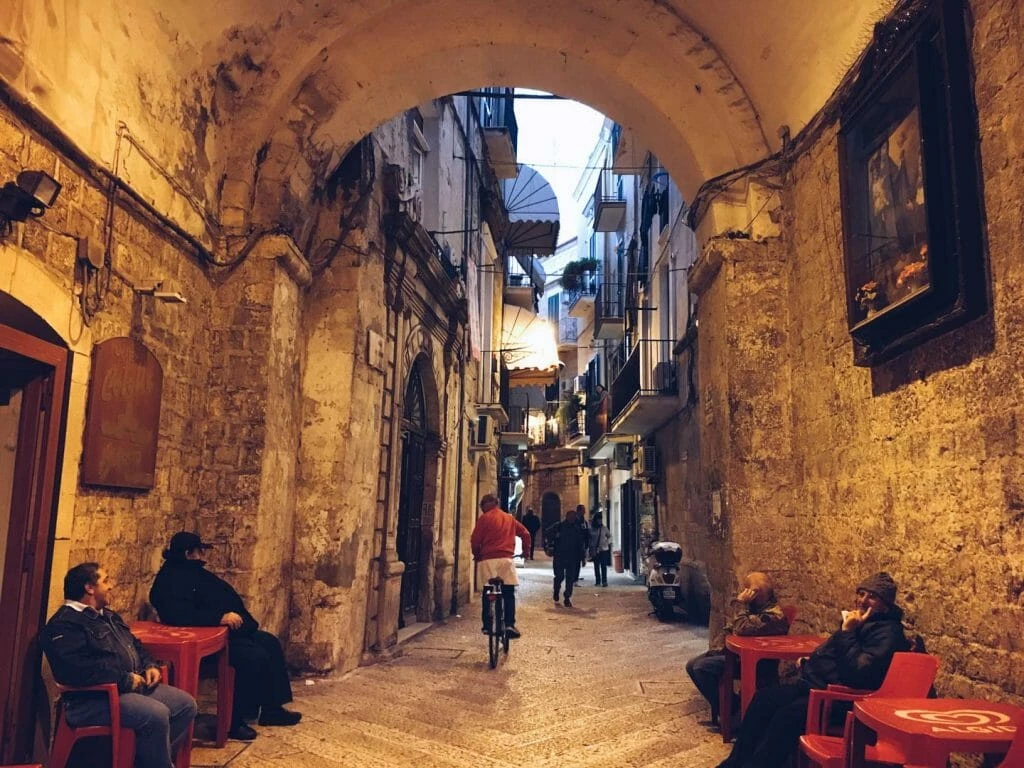
Street-food walk through Bari Vecchia
Three hours in the lanes of Bari Vecchia with a local guide, from bakery to stall: warm focaccia barese, fried panzerotto, sgagliozze (polenta fritters), hand-shaped orecchiette on Arco Basso street, Puglian cheeses and wine, passing the basilica of San Nicola and the harbour. The highlight: the still-raw orecchiette on boards outside the doorways, made before your eyes.
For food lovers, on foot, children welcome; come hungry, the tastings amount to a meal. The GetYourGuide listing (€49 per person, tastings included, free cancellation) shows 4.93/5 from 793 reviews. The morning slot is the best for seeing the pasta being made.
- 3 hrs
- €49 per person, tastings included (GetYourGuide price 2026)
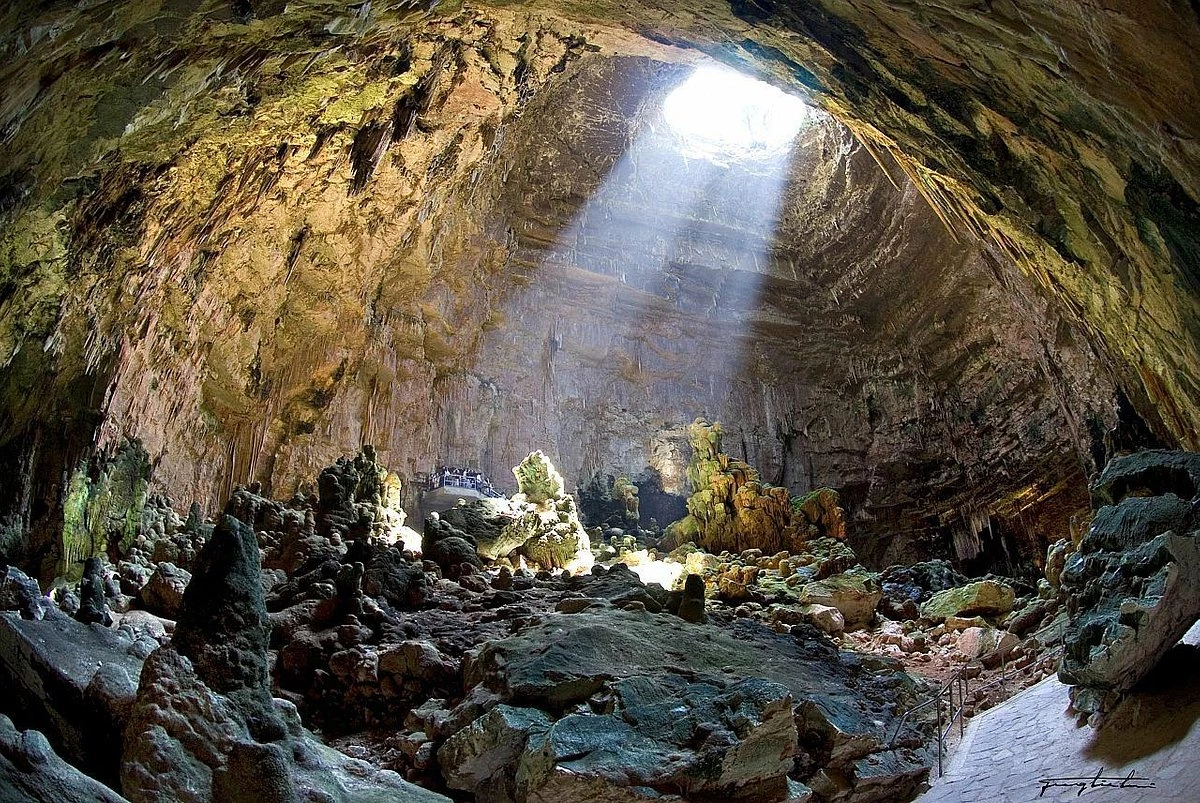
Guided visit of the Castellana caves
The descent starts with the Grave, a 60 m deep sinkhole open to the sky, then strings together galleries and chambers of formations over 1 km (short route, about 50 minutes) or 3 km (full route, about 100 minutes) to the Grotta Bianca, an alabaster chamber of almost unreal whiteness. Guided visit compulsory, in Italian or English depending on the slot. The highlight: reaching the Grotta Bianca, reserved for the full route.
For everyone old enough to walk without tiring (stairs, damp floor); it is around 16-18 °C underground, bring a jacket. 2026 prices on grottedicastellana.it: €25 adult / €22 child 6-14 for the full route, €22 / €19 for the short one, free under 6; buy online in summer to skip the queue.
- 50 min or 1 hr 40
- €22 (short route) or €25 (full route) per adult, official 2026 price
Getting there
Fly to Bari (BRI) or Brindisi (BDS), or take the train to Bari and Lecce; then rent a car for the road trip.
By air
Two airports serve the region: Bari Karol Wojtyła (BRI) in the north and Brindisi Salento (BDS) in the south (some forty kilometres from Lecce). Both connect to many European cities, including low-cost routes. From Bari airport, the Ferrotramviaria train reaches Bari Centrale in about twenty minutes.
By train
High-speed trains link Bari and Lecce to the rest of Italy (Rome, Bologna, Milan). Within the region, the rail network serves the main cities but skips many of the sites.
By car
For a real road trip, a rental car is almost essential: Alberobello, Castel del Monte and especially the Gargano are poorly served by public transport. Rent at the airport and plan your stops around the Valle d'Itria and the coast.
Getting around
Mostly by car; watch out for ZTLs (limited-traffic zones) in the historic centres — park outside the walls.
A car is the most practical way to link the towns and the coast, but a few precautions apply.
ZTL and parking
Most historic centres (Bari, Lecce, Ostuni, Alberobello, Polignano, Monopoli) are limited-traffic zones (ZTL), often extended in summer and camera-enforced. Don't drive in: park in a lot outside the walls and continue on foot.
Train and bus
The train links the main cities (Bari, Lecce, Brindisi); regional lines and buses fill in the network, but isolated sites (Castel del Monte, the Gargano, the Tremiti) remain hard to reach without a car.
Ferry
The Tremiti islands are reached by ferry from Termoli (year-round) or, in season, from Vieste and Peschici.
What to do
The trulli of Alberobello, the cliffs and sea caves of Polignano a Mare, the baroque of Lecce, Castel del Monte, the Castellana caves, Ostuni the white town, the Gargano; Matera as a day trip from Bari, even though it lies in Basilicata.
The heart of the trip is the Valle d'Itria: the trulli of Alberobello (UNESCO), Locorotondo and Ostuni the white town, with the Castellana caves half an hour away. On the Adriatic coast, Polignano a Mare is explored on foot then by boat, to enter the sea caves beneath the cliffs; neighbouring Monopoli is quieter. To the north, Castel del Monte, Frederick II's octagonal castle, is reached by shuttle from its car park, and Bari deserves a morning for Bari Vecchia and the orecchiette street.
To the south, Lecce and its golden-stone baroque are the gateway to the Salento (Otranto, Gallipoli, Santa Maria di Leuca). To the north, the Gargano and the Tremiti Islands each need a full day. Matera, its Sassi and rock churches make a day trip from Bari or Alberobello, bearing in mind that it lies in Basilicata, not Puglia. To carry on through the rest of Italy, see our guides to Rome, Venice and Sicily.
Food
Orecchiette, burrata from Andria, focaccia barese, Lecce's pasticciotto and friselle: a cuisine of simple, generous produce.
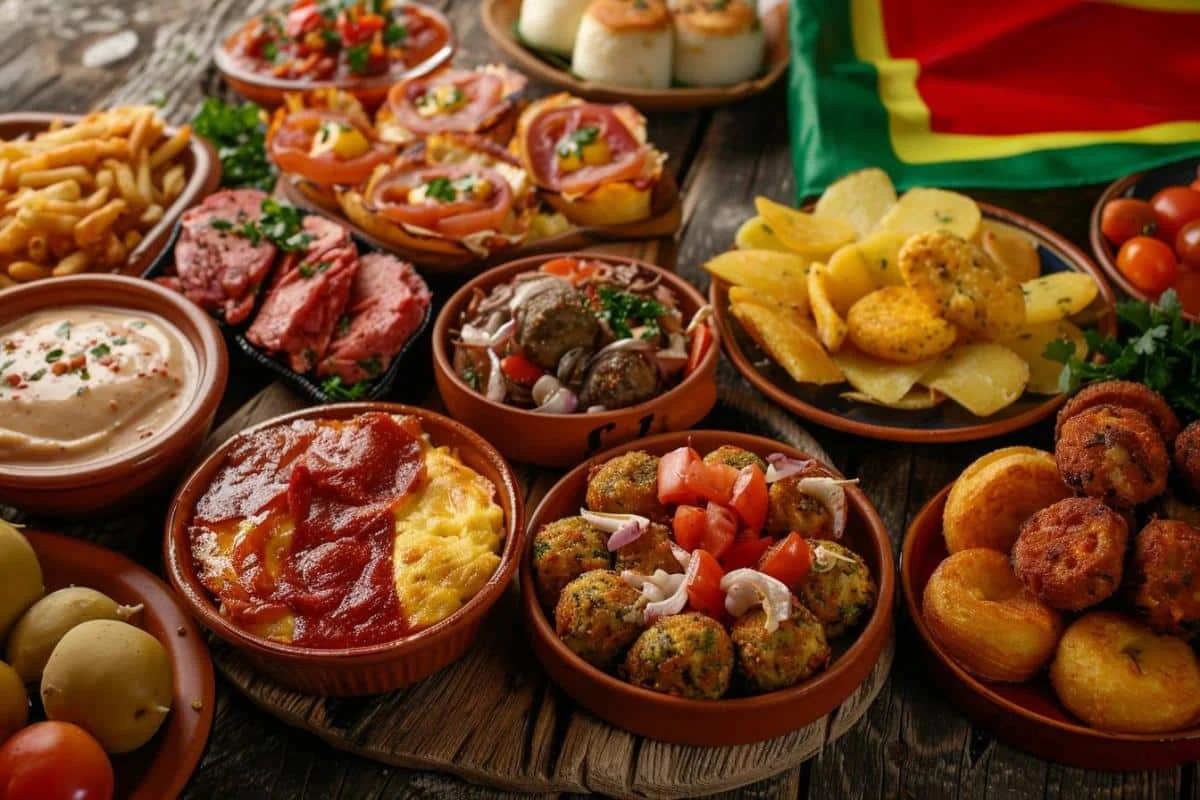
Puglia's cuisine is a southern one, built on wheat, olive oil, vegetables and seafood.
- Orecchiette: the "little ears" pasta, the emblem of Bari, often served with cime di rapa (turnip tops).
- Burrata from Andria: mozzarella with a creamy heart, with PGI status.
- Focaccia barese: soft, topped with tomatoes and olives.
- Friselle: hard breads rehydrated in water, topped with tomato and olive oil.
- Pasticciotto: the cream-filled pastry, a Lecce speciality, eaten at breakfast.
Pair it all with a Primitivo or a Negroamaro, the region's red grapes.
Itineraries
Three days: Bari, Polignano, Alberobello. One week: add Castel del Monte, the Castellana caves, Ostuni, Lecce and a day in Matera. Ten days: the Salento down to Leuca and the Gargano.
Three days (Valle d'Itria base). Day 1: Bari Vecchia in the morning, then Polignano a Mare and Monopoli in the afternoon, a boat trip to the caves at the end of the day. Day 2: Alberobello at opening time, the Castellana caves at midday, Locorotondo and Cisternino in the evening. Day 3: Ostuni in the morning, a beach on the Torre Canne coast or a trip to Matera.
One week. Add Castel del Monte and Trani (cathedral on the harbour) heading north, two nights in Lecce for the baroque and the Salento beaches (Otranto, Torre dell'Orso), and a full day in Matera, its Sassi and rock churches.
Ten days. Go down to Santa Maria di Leuca and Gallipoli, then back up to the Gargano: Vieste, the Foresta Umbra and, if the sea is calm, the Tremiti Islands by boat from Vieste or Peschici. Return the car in Bari.
Climate & seasons
When to go to Italy?
Monthly averages over the past 5 years (Open-Meteo).
Best months
- February
- April
- May
- June
- July
- August
- September
- October
| Jan | Feb | Mar | Apr | May | Jun | Jul | Aug | Sep | Oct | Nov | Dec | |
|---|---|---|---|---|---|---|---|---|---|---|---|---|
| Our take | ||||||||||||
| Weather | ||||||||||||
| High | 11° | 12° | 13° | 17° | 22° | 29° | 32° | 31° | 26° | 21° | 16° | 12° |
| Rain (mm) | 73 | 48 | 90 | 60 | 59 | 35 | 24 | 37 | 41 | 55 | 87 | 75 |
| City sightseeing | City sightseeing January | City sightseeing February | City sightseeing March | City sightseeing April | City sightseeing May | City sightseeing June | City sightseeing September | City sightseeing October | City sightseeing November | City sightseeing December |
What to do by season (autumn)
-
City sightseeing
Pedestrian-friendly most of the year.
When to go
May-June and September-October are ideal: mild weather, still-warm sea and fewer crowds than peak summer.
Puglia can be visited year-round, but spring and early autumn offer the best balance.
Spring (April-June)
Mild temperatures, green countryside and still-quiet towns: the best time for the road trip and sightseeing. The sea warms up from June.
Summer (July-August)
Hot and very busy, especially on the coast (Polignano, Vieste, Salento). The sea is beautiful, but book everything ahead and visit the towns early in the morning.
Autumn (September-October)
Still-warm sea (around 25°C in September), thinning crowds and gentler prices: an ideal window, often the connoisseurs' favourite.
Winter (November-March)
Quieter and cooler, more about the towns and the food than the beach.
Budget
An affordable region outside July-August: as a guide, €70-110 per day per person in a B&B or simple masseria, meals and a shared rental car included; Castellana caves €25 (full route, 2026), villages, free beaches and a modest ticket for Castel del Monte.
Puglia remains one of Italy's cheaper regions, except in July-August on the coast and in the Valle d'Itria, where renovated trulli and masserie charge high-season rates. As a guide, allow €70-110 per day per person in a B&B double room, with two meals (local food is cheap: focaccia, orecchiette, panzerotti) and a shared rental car, fuel and tolls included — the A14 motorway is tolled, regional roads are free.
Fixed costs are few. The Castellana caves cost €25 per adult for the full route and €22 for the short one (2026 prices read on the official site), Castel del Monte and Alberobello's Trullo Sovrano cost a few euros, and the villages, Ostuni's ramparts and the free beaches cost nothing. Budget for paid parking outside the ZTL in every historic centre and, for activities booked online, the GetYourGuide 2026 prices given below.
Where to stay
The Valle d'Itria (Alberobello, Ostuni, Locorotondo) as a central base; Lecce for the Salento, Vieste for the Gargano.
The base you choose depends on your itinerary.
Valle d'Itria
The heart of the region, around Alberobello, Ostuni and Locorotondo: ideal for reaching the coast and the towns. Here you'll happily sleep in a restored trullo or a masseria (fortified farmhouse) turned guesthouse.
Adriatic coast
Polignano a Mare and Monopoli for the sea and the buzz, pricier and crowded in summer.
Salento
Lecce as a cultural base for exploring the south (Otranto, Gallipoli).
Gargano
Vieste or Peschici for the north and the Tremiti.
In high season (July-August), book well ahead, especially the masserie and trulli.
Safety
A safe region; the real risks are the road (brisk local driving, fine-enforced ZTLs), theft from cars parked near beaches, the August heat and rough seas at the Polignano caves.
Puglia poses no particular safety problem for travellers. The usual precautions are enough: leave nothing visible in a parked car, especially in beach car parks and in Bari, and watch your belongings in the crowds of Bari Vecchia or Alberobello's Rione Monti. The emergency number is 112.
The main risk is the road: brisk local driving, narrow country roads lined with dry-stone walls, and ZTLs in almost every historic centre, where entering by mistake means a fine received months later. Park outside the walls. In summer the heat often exceeds 35 °C: visit the villages morning and evening, and bring water to Castel del Monte, which has no shade. At sea, boat trips to the Polignano caves are cancelled when the swell rises; the rocky coves (Lama Monachile, the Monopoli coast) call for water shoes. It is around 16-18 °C in the Castellana caves all year round.
Formalities
Italy is in the EU and Schengen: a valid ID card or passport for Europeans, the euro, ETIAS not yet in service (no date set as of September 2026), EES in force since 10 April 2026 for non-EU travellers.
Italy is part of the European Union and the Schengen Area: EU nationals only need a valid identity card or passport. The currency is the euro (€). Non-EU travellers should check Schengen rules (90 days within 180) and the upcoming ETIAS travel authorisation, not yet in service, with no launch date set (September 2026) depending on nationality — always check official EU sources before travelling. Since 10 April 2026, the EU Entry/Exit System (EES) registers non-EU short-stay travellers at the border, with a facial image and fingerprints, instead of a passport stamp.
The European emergency number is 112. EU nationals can use their European Health Insurance Card; travel insurance is advisable for others. Cards are widely accepted, but keep some cash for small shops and parking.
Tips
Rent the car at the airport, choose one base in the Valle d'Itria and one in the Salento, visit Alberobello and Polignano early in the morning, eat in bakeries and masserie, book the Castellana caves and the Polignano boats online.
Rent the car right at Bari or Brindisi airport and take a reduced excess: dry-stone walls and tight car parks scratch bodywork fast. Two bases are enough for a week, one in the Valle d'Itria (Alberobello, Locorotondo, Cisternino) for the coast and the white villages, the other around Lecce for the Salento. Alberobello and Polignano are best before 9 am or after 6 pm; in between, tour buses and heat spoil the scenery.
For food, eat focaccia standing up in a Bari Vecchia bakery, orecchiette with cime di rapa in a trattoria, and book a farm dinner at a masseria. The riposo from 1 pm to 5 pm closes shops and churches: keep those hours for the beach or the road. Book the Castellana caves and the Polignano boat trips online in summer, and check the one-way streets before entering a village: the ZTL is rarely visible from the car.
FAQ
A rental car is almost essential for a Puglia road trip; a week covers the essentials, May-June and September-October are the best times, Matera lies in Basilicata and the historic centres are ZTLs.
Do you need a car to visit Puglia?
For a real road trip, yes: Alberobello, Castel del Monte and the Gargano are poorly served by public transport. The train links Bari, Lecce and Brindisi, but a car remains the most practical way to string together towns and coast.
How long do you need?
A week covers the essentials: the Valle d'Itria (Alberobello, Ostuni), the Adriatic coast (Polignano, Monopoli), the Salento around Lecce, and a day in Matera or the Gargano.
When is the best time?
May-June and September-October, for mild weather, a still-warm sea and fewer crowds than peak summer.
Is Matera in Puglia?
No: Matera is in Basilicata, the neighbouring region. But about an hour from Bari, it's easily visited on a day trip and features in most itineraries.
What is a ZTL?
A limited-traffic zone: most historic centres have one, camera-enforced. Don't drive in — park outside the walls and walk.
Sources
The figures in this guide come from the sources below, checked on the publication date.
Leave a comment
Share your thoughts or travel experience. Your email will not be published.