

Contents 29
The Cook Islands are a South Pacific archipelago and a self-governing state in free association with New Zealand: this guide therefore sits in our New Zealand section, but the archipelago has its own government, its own entry rules and a Polynesian culture of its own.
Here are the activities not to miss between Rarotonga, Aitutaki's lagoon and the makatea islands, followed by the practical sections: formalities, season, budget and itineraries.
Overview
An archipelago of 15 islands in free association with New Zealand, the Cook Islands charm with Aitutaki's turquoise lagoon, the main island of Rarotonga and unspoilt makatea islands like Atiu — an intimate, laid-back Polynesia.
The Cook Islands are an archipelago of 15 Polynesian islands scattered across the South Pacific, in free association with New Zealand. Rarotonga, the largest island, is home to the capital Avarua, the international airport and most accommodation.
The archipelago's star is Aitutaki's turquoise lagoon, with its white-sand motu and One Foot Island. The unspoilt makatea islands of the southern group (Atiu, Mitiaro, Mauke) offer a more authentic experience: caves, coffee, tumunu and a warm welcome.
Laid-back, uncrowded and easy to reach from New Zealand, the Cook Islands suit beach lazing as much as hiking and snorkelling. See the practical sections below for formalities, health, safety and the best time to go.
11 places to take with you
In the guide's order, ready for Google Maps or your GPS.
Book the activities from this guide
Our picks for Rarotonga, well rated and free to cancel.
-
Book this activity
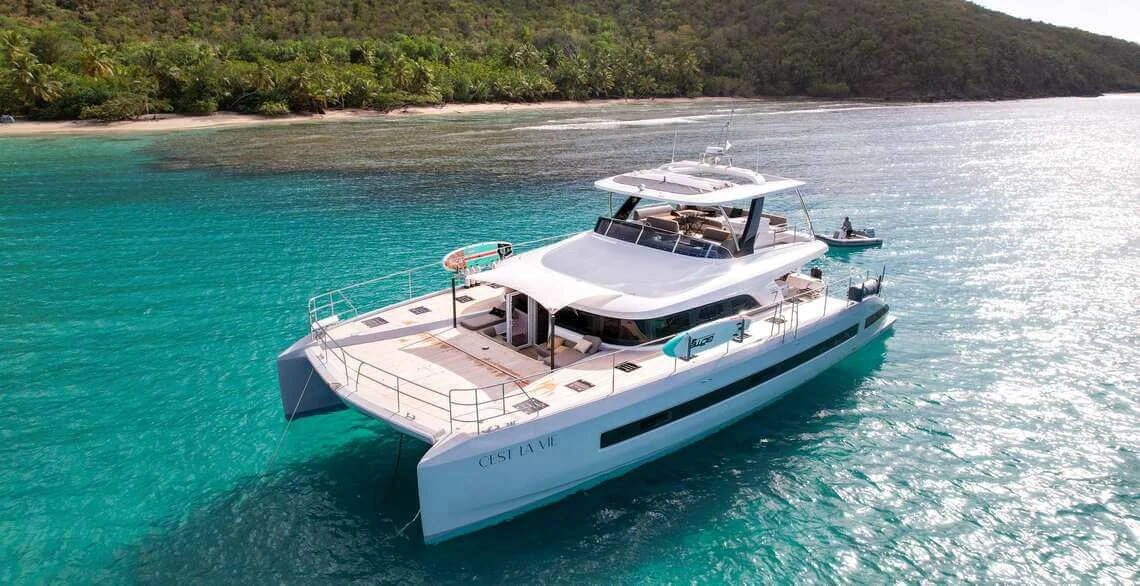
Rarotonga lagoon cruise with snorkelling and barbecue
€57 per person (GetYourGuide price 2026)
Affiliate links: Travel Advice earns a commission if you book, at no extra cost to you. Learn more

Rarotonga
Rarotonga is the archipelago's largest island (67 km²) and its heart: the capital Avarua, the international airport and most accommodation are here. A 32 km coastal road, the Ara Tapu, circles the island, doubled in places by the Ara Metua, the old inland road paved by the Polynesians.
The interior is a jungle-covered volcanic mountain dominated by Te Rua Manga ('The Needle', 413 m), reached via the Cross-Island Track. On the coast, Muri lagoon in the south-east is the favourite for swimming, kayaking and snorkelling, while the west coast (Aroa, Black Rock) offers sunsets and, from July to October, passing humpback whales.
In Avarua, the Saturday-morning Punanga Nui market, the Cook Islands Library and Museum Society and the coral churches of the villages show a Polynesian island that has kept a human scale.

Aitutaki
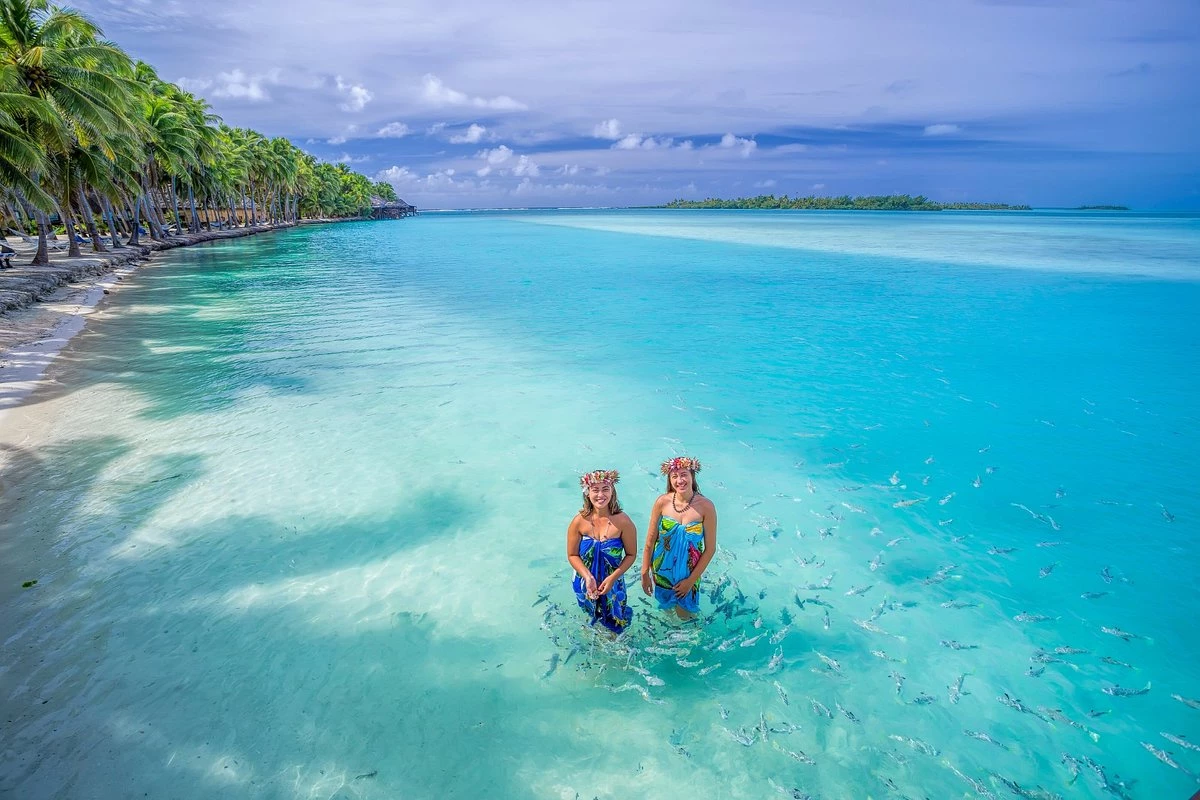
Aitutaki, a 45-minute flight north of Rarotonga, is the picture-postcard Cook Islands: an atoll whose shallow, triangular lagoon of unreal turquoise is scattered with some fifteen white-sand motu. The volcanic main island rises to Maunga Pu (124 m), with a view over the whole lagoon.
The star activity is the full-day lagoon cruise: snorkelling in the coral gardens, stops on several motu and a barbecue lunch on board or on the beach, with a visit to One Foot Island (Tapuaetai), whose post office stamps passports with a footprint. Kayaks, paddleboards and bicycles let you explore at your own pace.
You either come on a day trip from Rarotonga (return flight and cruise combined) or stay several nights in one of the lagoon-front lodgings: it is the archipelago's most expensive island, so book early.

Hike to the top of Mount Te Rua Manga (The Needle)
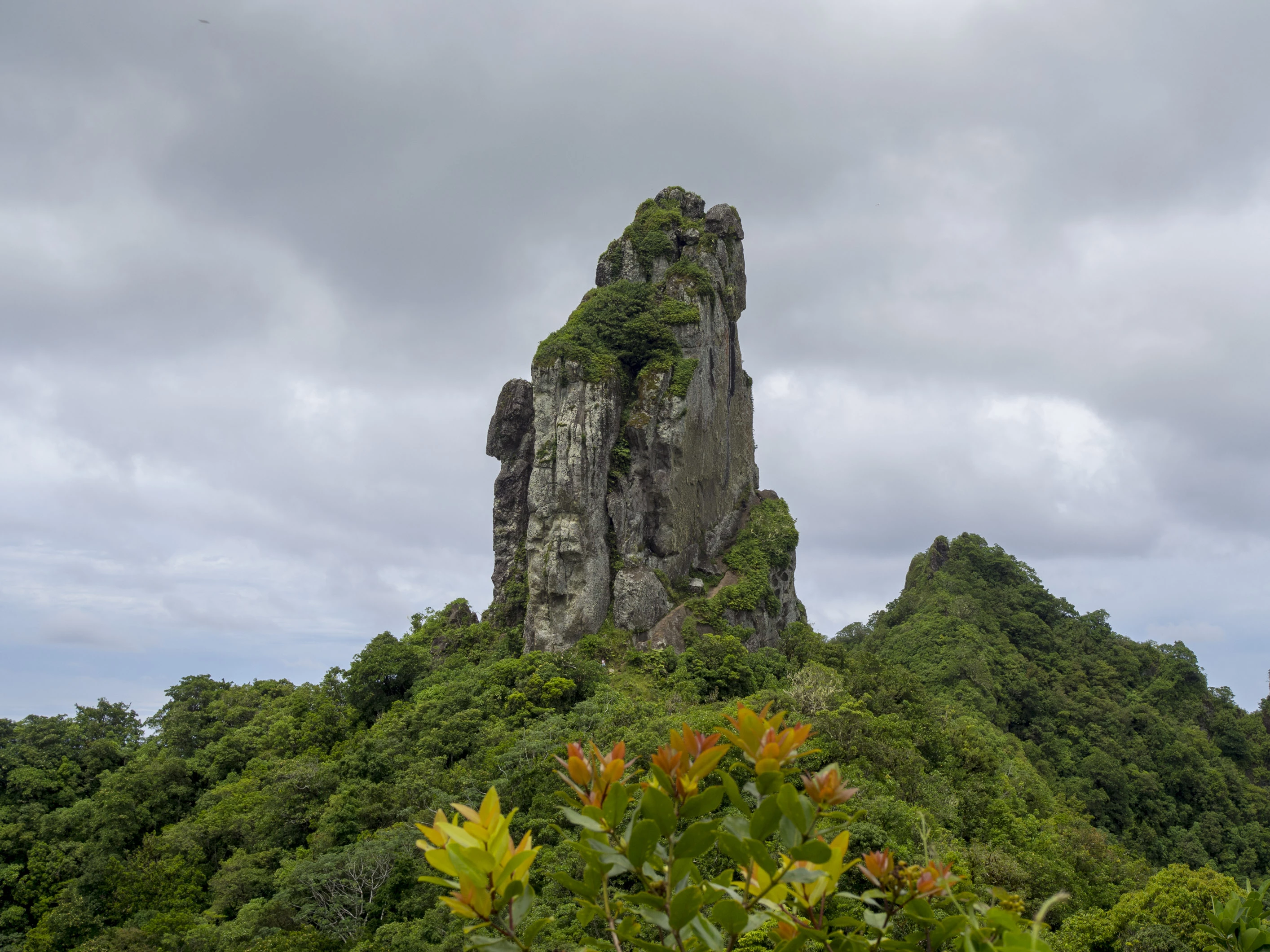
Te Rua Manga, nicknamed 'The Needle', is Rarotonga's iconic rock spire: a volcanic-breccia pinnacle rising to 413 m above the lagoon.
It is reached via the Cross-Island Track, the trail that crosses the island from the Avatiu valley to the south coast and the Wigmore (Papua) Falls. Allow about 1h20 to climb to the foot of the Needle through dense tropical jungle, for a panoramic view over the mountainous interior and the reef. It is the island's most popular hike.

One Foot Island (Tapuaetai)
One Foot Island, Tapuaetai in Māori, is the most famous motu of Aitutaki's lagoon, sitting on the south-eastern reef. Its white-sand beach runs out as a spit into turquoise water less than a metre deep, so you can walk to the neighbouring sandbank at low tide.
The motu holds the smallest post office in the Cook Islands, where passports get a footprint stamp. It is reached only by boat: almost every Aitutaki lagoon cruise stops here, often for the barbecue lunch.

Atiu
Atiu is a makatea island: a volcanic island ringed by some thirty metres of fossilised-coral cliffs, with dense vegetation. It is one of the most authentic Cook Islands, away from mass tourism.
Here you explore the Anatakitaki Cave, home of the kopeka (an endemic swiftlet that navigates by echolocation), taste locally grown Atiu coffee, and share a tumunu, the traditional 'bush-beer' circle. Access is by Air Rarotonga flight, and most cave visits are done with a local guide.

Black Rock (Tuoro) and Rarotonga's west coast
Black Rock (Tuoro), a pile of black volcanic rocks jutting into the lagoon near Nikao in north-west Rarotonga, is in Māori tradition the place from which the souls of the dead leave the island for Avaiki. It is also one of the best swimming and snorkelling spots on the west coast, with deep water right from the shore.
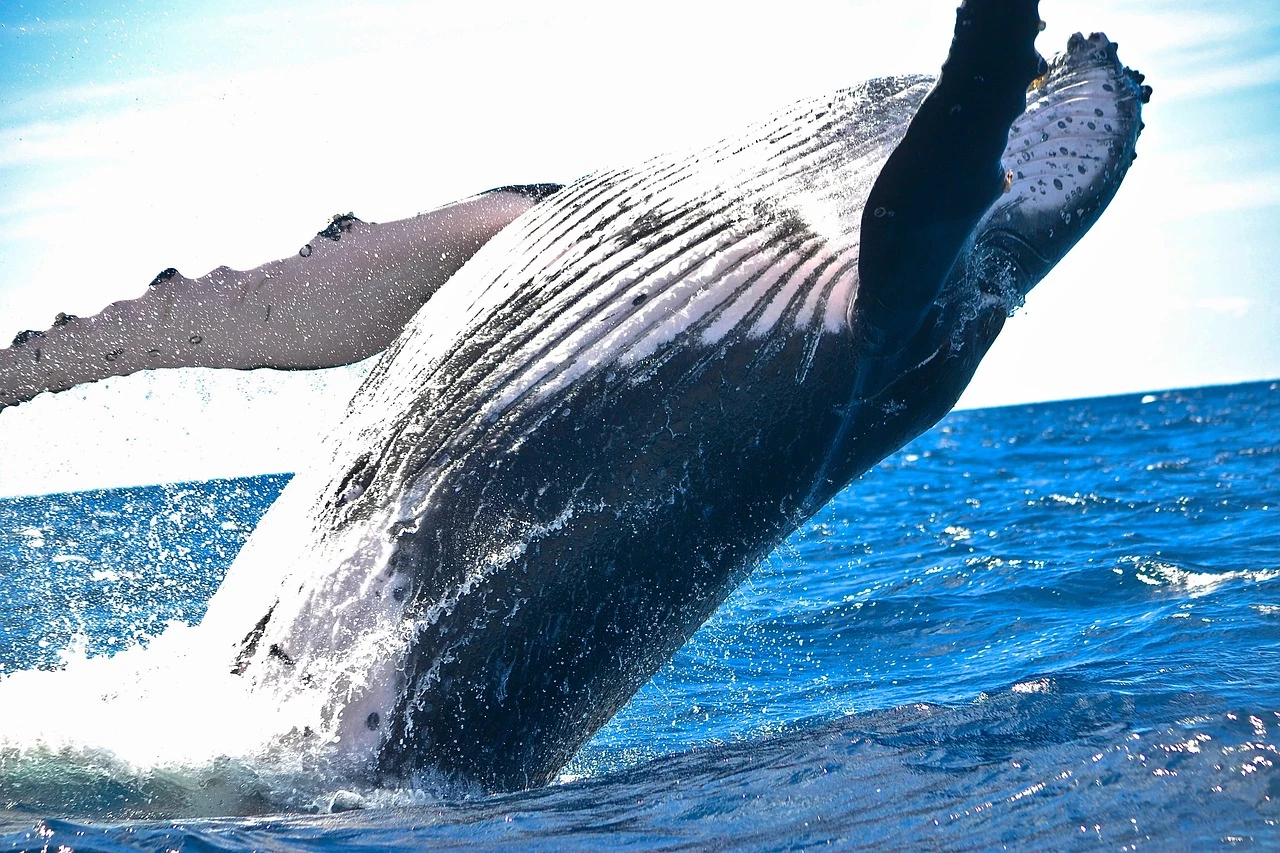
From July to October, humpback whales pass off Rarotonga to calve in the warm water: the reef drops away quickly here, and blows and breaches can be seen from the beach without a boat. In the evening, the west coast from Black Rock to Aroa has the island's sunsets.

Punanga Nui Market (Avarua)
Punanga Nui market, on the Avarua waterfront, is Rarotonga's Saturday-morning meeting place: the island's growers sell taro, pawpaw, bananas, coconuts and fish alongside stalls of cooked food and crafts (pareu, pandanus hats, shell necklaces).
It is the easiest place to taste Cook Islands food: ika mata (raw fish marinated in lime and coconut milk), rukau (taro leaves cooked in coconut milk), chicken or pork from the umu (earth oven) and banana fritters. Dance and ukulele groups play through the morning.
On weekdays a few stalls stay open, but the atmosphere and choice belong to Saturday; on Sunday everything is closed.

Cook Islands Library and Museum Society (Avarua)
The Cook Islands Library and Museum Society in Avarua is a volunteer-run library and museum a few minutes' walk from the centre of the capital. Two modest buildings gather objects of Polynesian life: tools, engraved weapons, musical instruments (ukulele, pate drum, vivo nose flute, conch), shells and a large tivaivai, the hand-sewn quilt typical of the Cook Islands.
The library lends books to passing visitors for a temporary membership fee and sells titles on the archipelago's history and culture. The visit is short, but it is the only place on Rarotonga that puts context on what you then see in the villages and on the marae.

Moturakau
Moturakau is part of the Aitutaki atoll, whose lagoon holds some fifteen motu. Situated in the southeastern region of Aitutaki Lagoon, it lies between the larger islands of Rapota and Tekopua, approximately six kilometers southeast of the main Aitutaki island.
With dimensions of 460 meters in length and 120 meters in width, Moturakau served as a leper colony from the 1930s until 1967. In more recent times, it gained recognition as the location for the 'Sharks' during four seasons of the UK reality TV program Shipwrecked: Battle of the Islands and also hosted the 13th season of the Survivor franchise.

Mitiaro
Mitiaro is one of the makatea islands of the southern group, about 250 km north-east of Rarotonga. A ring of fossilised coral encloses a swampy interior with two freshwater lakes, Rotonui and Rotoiti, known for the eels (itiki) that islanders still fish.
Fewer than 200 people live here, in four adjoining villages on the west coast. Visitors come for the caves and freshwater pools cut into the makatea (Vai Nauri, Vai Tamaroa), the marae and the welcome of the families, in a setting where tourism is almost non-existent.

Mauke
Mauke, the 'garden island', is the easternmost of the makatea islands of the southern group, an hour's flight from Rarotonga. Small (about 18 km²) and flat, it is ringed by fossilised-coral cliffs pierced by caves and freshwater pools where you can swim, such as Vai Tango.
The main village, Kimiangatau, is known for its 'divided church': two rival parishes built it together in the 19th century, then each decorated their own half to their taste. Taro plantations, tiare maori and slow village life make up the stay, in one of the island's family guesthouses.
Rarotonga lagoon cruise with snorkelling and barbecue
Board at Muri for a cruise through the prettiest part of Rarotonga's lagoon, between the motu of Taakoka, Koromiri and Oneroa. The crew anchors over the coral gardens for a snorkelling session among parrotfish and giant clams, then cooks a fresh-fish barbecue, with a coconut-husking demonstration and music on board.
For everyone, including families and non-swimmers (vests and gear provided). Book on GetYourGuide with free cancellation; morning departure, bring swimwear, a towel and sun protection.
- Half day
- €57 per person (GetYourGuide price 2026)
Aitutaki day trip from Rarotonga (flight and lagoon cruise)
Air Rarotonga's Aitutaki Day Tour chains a pick-up from your lodging, a 45-minute morning flight, a guided island tour, then the lagoon cruise on the vaka Teariki Moana: snorkelling, motu stops, barbecue on board and a call at One Foot Island for the passport stamp, before the late-afternoon flight back.
It is the way to see Aitutaki's lagoon without sleeping there: a full day, early-morning departure, late-afternoon return; days and times on airraro.com. No GetYourGuide listing: book directly with Air Rarotonga, early in high season as seats are limited.
- Full day (early-morning departure, late-afternoon return)
- Paid flight + cruise package, booked on airraro.com
Cross-Island Track: across Rarotonga via The Needle
The Cross-Island Track leaves the Avatiu valley in the north, climbs for about 1 h 20 through forest to the foot of Te Rua Manga, the 413 m needle that dominates the island, then drops to the south coast along a stream bed to Wigmore's (Papua) Falls. The view from the foot of the needle takes in the mountainous interior and the reef.
For walkers used to steep, slippery trails; start early, closed shoes, water and a hat. The trail can be walked independently; local guides offer a commented crossing for those who prefer company. No GetYourGuide listing.
- 3 to 4 hours
- Free self-guided; local guide for a fee
Swim with turtles in the Avaavaroa passage (Rarotonga)
On Rarotonga's south coast, the Avaavaroa passage is the meeting point of green and hawksbill turtles that come to graze and rest on the reef. Led by a guide who reads the current, you swim from the beach to the passage to watch them, often joined by stingrays.
For confident swimmers, as the passage is subject to current: trips run only in calm seas, with fins, mask and vest provided. Several operators sell the trip on GetYourGuide; we link none, as no listing exceeds 100 reviews in 2026.
- 2 hours
- around €40-50 per person with local operators

Cultural night at Te Vara Nui Village (Muri)
In Muri, the Te Vara Nui cultural village stages the history and legends of the Cook Islands: a tour of the reconstructed village (tattoo, weaving, traditional medicine, umu), then a buffet dinner of local dishes and a dance and drum show on floating stages, lit by torches, over the garden pools.
The most complete outing for understanding Cook Islands Māori culture, and family-friendly. The show does not run every night: check the calendar and book on Te Vara Nui's website or through your lodging (shuttles available). No GetYourGuide listing.
- Evening (about 3 hours)
- Paid ticket, booked on the village's website
Getting there
Rarotonga International Airport (RAR) is the only gateway, with a daily direct flight from Auckland (~4 h). The outer islands (Aitutaki, Atiu...) are reached by Air Rarotonga.
Rarotonga International Airport (IATA code: RAR) is the archipelago's only international gateway. The main link is Auckland (AKL) on Air New Zealand (direct ~4 h, daily); add Sydney/Brisbane, Papeete-Tahiti (~2h40) and seasonal routes.
Domestic flights to the outer islands (Aitutaki AIT ~45-50 min, Atiu, Mitiaro, Mauke) are operated by Air Rarotonga. On Rarotonga, two bus routes circle the island; renting a scooter or car is also common.
Getting around
On Rarotonga, two bus routes ('Clockwise' and 'Anti-clockwise') circle the island; scooters, cars and bikes are rented everywhere. Between islands, Air Rarotonga is the only carrier.
On Rarotonga, everything sits on the 32 km coastal road. Two bus routes, 'Clockwise' and 'Anti-clockwise', circle it in each direction and stop on request: the simplest way to reach Muri, Avarua or the west coast without driving, with a reduced service in the evening and on Sunday. Scooter, car and bicycle hire is offered by many rental firms and lodgings; ask the renter about current licence requirements. Taxis exist but are few.
Between islands, Air Rarotonga is the only airline: daily flights to Aitutaki (about 45 minutes) and less frequent links to Atiu, Mitiaro and Mauke, on small aircraft to book early. There is no regular passenger ferry. On Aitutaki and the makatea islands you get around by scooter or bicycle hired locally, or with the families hosting you.
What to do
Aitutaki lagoon cruise with a stop at One Foot Island, the Cross-Island Track to The Needle, snorkelling at Muri, Punanga Nui market on Saturday, a cultural night at Te Vara Nui and, from July to October, humpback whales from the west coast.
For most travellers the archipelago comes down to two islands. On Rarotonga: the Cross-Island Track to the foot of The Needle, Muri lagoon by kayak, paddleboard or on a snorkelling cruise, swimming at Black Rock or Aroa, the Saturday-morning Punanga Nui market in Avarua, the library-museum and a cultural night (dance, drums, umu buffet) at Te Vara Nui village in Muri. From July to October, humpback whales can be watched from the west coast.
On Aitutaki, the lagoon cruise with a stop at One Foot Island is the must of any trip, as a day trip from Rarotonga or over several nights. With more time, Atiu adds Anatakitaki cave and its kopeka, local coffee and the tumunu; Mitiaro and Mauke, their freshwater caves and timeless village life. The activities below explain how to book.
Food
Ika mata (raw fish in coconut milk), rukau (taro leaves), umu-cooked pork and chicken, tropical fruit: try them at Punanga Nui market on Saturday, at the Muri night market and at an 'island night'.
Cook Islands food is Polynesian, drawn from the sea and the garden: ika mata (raw fish marinated in lime and coconut milk), rukau (taro leaves simmered in coconut milk), poke (banana or pawpaw pudding with arrowroot), grilled fish (tuna, mahi-mahi, wahoo) and, on feast days, pork and chicken cooked in the umu, the earth oven. Taro, breadfruit, cassava and coconut go with everything.
To taste it all without overspending: Punanga Nui market in Avarua on Saturday morning, the Muri night market several evenings a week (takeaway plates) and the 'island nights' at resorts and Te Vara Nui, which pair an umu buffet with a dance show. On Atiu, the tumunu tradition, a circle sharing 'bush beer' fermented from oranges, is shared with locals. Imported goods are expensive; local fruit, on the other hand, costs little at the market.
Itineraries
One week: four days on Rarotonga (Cross-Island Track, Muri, Avarua, west coast) then three nights on Aitutaki. Ten days: add Atiu and its caves. With less time, Aitutaki works as a day trip from Rarotonga.
7 days: Rarotonga and Aitutaki
Days 1-4, Rarotonga. Round-island loop by bus or scooter, Punanga Nui market if you land on a Saturday, library-museum in Avarua; Cross-Island Track to The Needle on a cool morning; Muri lagoon by kayak and snorkel; sunset and, in season, whales from Black Rock or Aroa; cultural night at Te Vara Nui. Days 5-7, Aitutaki. Air Rarotonga flight, lagoon cruise with One Foot Island, Maunga Pu at sunrise, island loop by bike, back to Rarotonga the day before the international flight.
10 days: add Atiu
Three nights on Atiu between Rarotonga and Aitutaki (connections go through Rarotonga): Anatakitaki cave with a local guide, coffee plantation, tumunu with locals, empty makatea beaches. Those after even quieter islands swap Atiu for Mauke or Mitiaro, checking flight days first.
Short stop (3-4 days)
Rarotonga only, with the Aitutaki day trip (return flight, island tour and lagoon cruise) in the middle of the stay.
Climate & seasons
When to go to New Zealand?
Monthly averages over the past 5 years (Open-Meteo).
Best months
- October
- November
Avoid
- January
- February
| Jan | Feb | Mar | Apr | May | Jun | Jul | Aug | Sep | Oct | Nov | Dec | |
|---|---|---|---|---|---|---|---|---|---|---|---|---|
| Our take | ||||||||||||
| Weather | ||||||||||||
| High | 27° | 27° | 27° | 27° | 26° | 25° | 24° | 24° | 24° | 24° | 24° | 26° |
| Rain (mm) | 219 | 260 | 194 | 133 | 181 | 110 | 88 | 95 | 102 | 71 | 52 | 175 |
| Beach | Beach July | Beach November |
What to do by season (autumn)
-
Beach
Warm air and water, little rain.
When to go
The best time is the dry season, roughly April/May to October/November. The wet/cyclone season runs November to April. For humpback whales, aim for July to October.
The dry season, roughly April/May to October/November, is the best time: cooler, drier weather and a calm sea, ideal for water activities and hiking.
The wet/cyclone season runs November to April: heat, humidity and cyclone risk — monitor the weather. For humpback whales, aim for July to October (peak often in September), occasionally from May to November.
Budget
An expensive destination priced in New Zealand dollars: the flight from Europe via Auckland, lagoon-front lodging and flights to Aitutaki weigh the most. Buses, hiking, beaches and the market keep daily spending down.
The Cook Islands are priced in New Zealand dollars (NZD) and everything not fished or grown locally is imported, hence expensive. The three big items are the international flight (Europe – Auckland then Auckland – Rarotonga, or via Papeete), accommodation (from family guesthouses to the resorts of Muri and Aitutaki, the latter much pricier) and Air Rarotonga's domestic flights to Aitutaki and the southern islands.
To keep daily costs down: self-catering lodging and shopping at Punanga Nui market, the island bus rather than a rental, free activities (Cross-Island Track, swimming at Muri, Black Rock and Aroa, whales from the shore). Paid activities carry remote-island prices: as a benchmark, the Rarotonga lagoon cruise with snorkelling and barbecue books at around €57 per person on GetYourGuide (2026 price), and the Aitutaki day trip (return flight and cruise) costs several hundred New Zealand dollars. Withdraw cash in Rarotonga before heading to the outer islands, where ATMs are scarce.
Where to stay
Most accommodation is on Rarotonga, especially around Muri Beach (calm lagoon, snorkelling). Aitutaki offers more upscale resorts; the makatea islands have small family guesthouses.
Most options are on Rarotonga, especially around Muri Beach (a calm lagoon ideal for swimming and snorkelling) and the west coast for sunsets. You'll find resorts, boutique hotels and guesthouses.
Aitutaki offers more upscale lagoon-front accommodation. On the makatea islands (Atiu, Mitiaro, Mauke), lodging is limited to small family guesthouses: book before arrival. The currency is the New Zealand dollar (NZD).
Safety
A calm destination rated 'normal vigilance' by France Diplomatie. No malaria; dengue risk (mosquito repellent advised). Cyclone season November to April; take care at sea (no decompression chamber).
The Cook Islands are a calm, low-risk destination, rated 'normal vigilance' by France Diplomatie. The main precautions concern the cyclone season (November to late April) — monitor the weather — and swimming/diving: France Diplomatie notes there is no lifeguard service on the beaches or at sea, that the water is dangerous outside the lagoon (do not swim or kayak through the reef passages) and that the country has no decompression chamber, the nearest being in Tahiti and New Zealand.
Health: there is no malaria and no yellow fever vaccination is required (except if arriving from an endemic country). A mosquito-borne disease risk (dengue, Zika) exists: protect against bites. Keep routine vaccines up to date (especially measles); Hepatitis A/B and typhoid are sometimes recommended. The competent French embassy is in Wellington.
Formalities
French nationals are visa-free for up to 31 days: passport valid 6 months beyond the stay, onward/return ticket and proof of accommodation shown on arrival (France Diplomatie, 2026).
According to France Diplomatie (page read 29 September 2026), French nationals are visa-free for a stay of up to 31 days, provided they hold an onward or return ticket and a passport valid for 6 months beyond the end of the stay. On arrival you must also be able to show proof of accommodation for the whole stay.
Beyond 31 days, a tourist-visa extension is requested locally from the Ministry of Foreign Affairs and Immigration in Rarotonga. The Cook Islands run their own immigration, so a New Zealand visa or NZeTA only matters if you transit or stay in New Zealand, which most flights via Auckland involve: check both regimes before leaving. The currency is the New Zealand dollar (NZD), supplemented by local coins and a banknote.
Tips
Carry NZD cash, book inter-island flights and lagoon cruises in advance, and adapt to the local pace: shops and some services close on Sundays.
- Money: the currency is the New Zealand dollar (NZD); keep cash, especially on the outer islands where ATMs are scarce.
- Inter-island flights: Air Rarotonga is the only operator — book early for Aitutaki and the southern islands, as the planes are small.
- Sunday: a strongly observed day; many shops and services close, so plan accordingly.
- On the water: reef shoes are useful, and respect the lagoon (fragile coral, no sea rescue).
- Lagoon cruises: on Aitutaki, choose a tour with lunch and a stop at One Foot Island.
FAQ
Visa, best time, access and inter-island flights, currency, health and length of stay: answers to the most common questions for planning a Cook Islands trip.
Do I need a visa for the Cook Islands?
No. French and EU nationals are visa-free for a tourist stay of up to 31 days. You need a passport valid for 6 months, an onward/return ticket and proof of accommodation.
When is the best time to go?
The dry season, April/May to October/November, with a calm sea. The cyclone season runs November to April. For humpback whales, aim for July to October.
How do I get to the Cook Islands and between the islands?
Rarotonga International Airport (RAR) is the only gateway, with a daily direct flight from Auckland (~4 h). Air Rarotonga operates domestic flights to Aitutaki, Atiu and the other islands.
What currency is used?
The New Zealand dollar (NZD), supplemented by local Cook Islands dollar coins and a banknote. Carry cash, especially on the outer islands.
Is there a malaria risk?
No, there is no malaria in the Cook Islands. A dengue/Zika risk exists: protect against mosquitoes. No yellow fever vaccination is required, except when arriving from an endemic country.
How many days should I plan?
At least a week to combine Rarotonga and Aitutaki; add a few days to explore a makatea island (Atiu) at a more authentic pace.
Sources
The figures in this guide come from the sources below, checked on the publication date.
Leave a comment
Share your thoughts or travel experience. Your email will not be published.