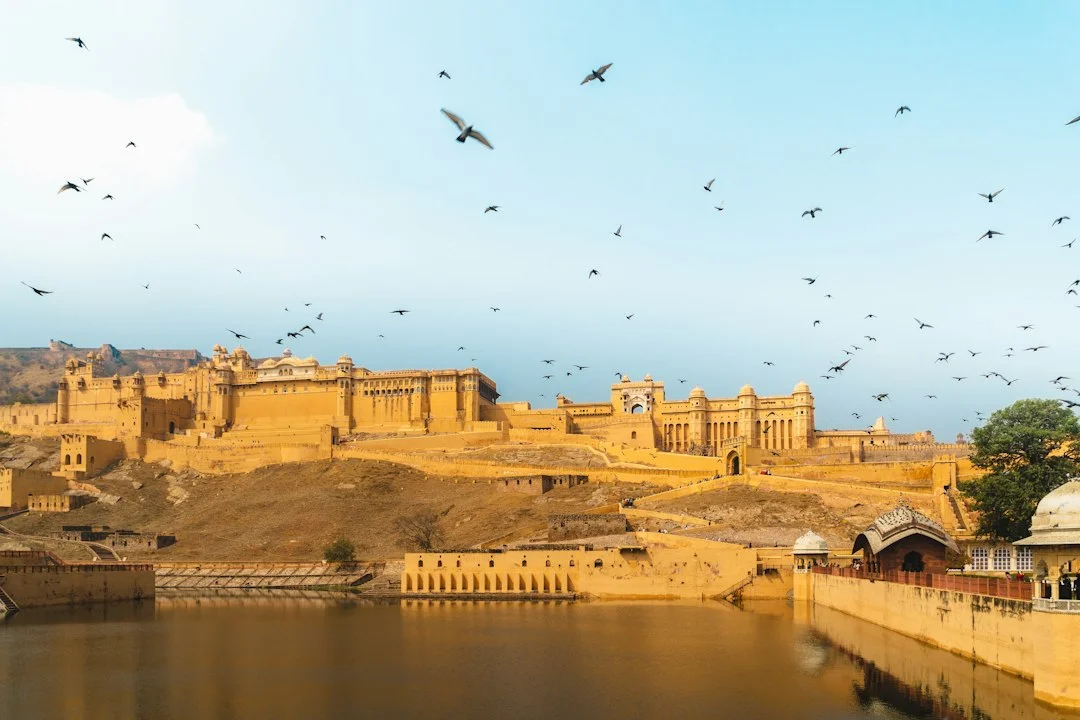


Contents 29
Sydney is built around its harbour, between the Opera House, the Harbour Bridge and the Circular Quay ferries, with the surf beaches of Bondi and Manly less than an hour from the centre. This guide covers its 15 highlights, from the historic districts to the Blue Mountains, followed by the practical side: eVisitor, transport, budget and safety.
Overview
Australia's largest city, Sydney combines surf beaches, a great natural harbour and two world-famous landmarks: the Opera House and the Harbour Bridge.
Australia's largest city and the capital of New South Wales, Sydney is built around one of the world's finest natural harbours. Two landmarks dominate its skyline: the Sydney Opera House, on the UNESCO World Heritage List since 2007, and the Harbour Bridge, completed in 1932.
The city is enjoyed as much by the water as downtown: surf beaches like Bondi and Manly, historic quarters like The Rocks, harbourside botanic gardens, and a lively cultural and food scene. About two hours away by train, the Blue Mountains make for an easy day trip into nature.
15 places to take with you
In the guide's order, ready for Google Maps or your GPS.
Book the activities from this guide
Our picks for Sydney, well rated and free to cancel.
-
Book this activity
Guided tour of the Sydney Opera House
€31 per person (GetYourGuide price 2026)
-
Book this activity
Harbour Bridge summit climb with BridgeClimb
€231 per person (GetYourGuide price 2026)
-
Book this activity
Taronga Zoo with return ferry
€52 per person (GetYourGuide price 2026)
Affiliate links: Travel Advice earns a commission if you book, at no extra cost to you. Learn more

Sydney Opera House
Designed by the Danish architect Jørn Utzon and completed in 1973, the Sydney Opera House raises its white shells on Bennelong Point, at the water's edge. A UNESCO World Heritage Site since 2007, it is also one of the world's busiest performing arts centres, with more than 2,000 performances a year: opera, ballet, theatre and concerts.
You can see it by going to a show or on the one-hour guided tour, run daily and also in French.

Sydney Harbour Bridge
Completed in 1932, the Harbour Bridge is the great steel arch bridge linking the Central Business District (CBD) with the harbour's north shore. Together with the Opera House, it makes up Sydney's most famous view.
You can walk across it for free, climb to the top of the arch with BridgeClimb or go up the Pylon Lookout.

Bondi Beach
About 7 km east of the centre, Bondi is Sydney's most famous beach: a crescent of sand facing the Pacific, popular with surfers, lined with a promenade, cafés and the Bondi Icebergs ocean pool at its southern end.
It is also the start of the coastal walk to Tamarama, Bronte and Coogee, past cliffs and coves.

The Blue Mountains
About a hundred kilometres west of Sydney, the Blue Mountains are a sandstone plateau cut by eucalyptus-covered valleys, whose bluish haze gave the range its name. The region is on the UNESCO World Heritage List as the Greater Blue Mountains Area.
From Echo Point in Katoomba you see the Three Sisters, three rock pillars above the Jamison Valley; trails lead from there to waterfalls and the villages of Leura and Wentworth Falls.

Taronga Zoo
Opened in 1916 on the north shore of the harbour, in Mosman, Taronga Zoo shows Australian wildlife, koalas, kangaroos and platypus, as well as animals from around the world, on a hillside facing the Sydney skyline.
You get there by ferry from Circular Quay: the crossing is part of the visit, with the Opera House and Harbour Bridge as a backdrop.

Manly Beach
On the north shore, at the end of the ferry crossing from Circular Quay, Manly has a long surf beach on the ocean side and a small calm beach on the harbour side. A promenade follows the coast to Shelly Beach, a sheltered cove popular for snorkelling.
The suburb, with its pedestrian Corso, cafés and shops, makes an easy day out of the centre.

The Rocks
At the foot of the Harbour Bridge, near Circular Quay, The Rocks is the site of Australia's first European settlement, founded in 1788. Cobbled lanes, sandstone warehouses and old pubs now house markets, galleries and restaurants.
It is home to Cadman's Cottage, the oldest surviving house in Sydney, and the Museum of Contemporary Art Australia, on the harbour front.

Royal Botanic Garden Sydney
Founded in 1816, the Royal Botanic Garden Sydney is Australia's oldest scientific institution. Its lawns and plant collections run down to the harbour, between the Opera House and Mrs Macquarie's Chair, the point where the Opera House and Harbour Bridge line up.
It is an easy walk through to the neighbouring Art Gallery of New South Wales.

Darling Harbour
A former industrial port west of the centre, Darling Harbour is now a pedestrian waterfront leisure district. It has the Sea Life aquarium, Wild Life Sydney Zoo, Madame Tussauds and the Australian National Maritime Museum, plus waterside restaurants.
It is the handiest area for families, linked to the centre on foot and by ferry.

Sydney Tower Eye
Standing 309 metres tall and completed in 1981, Sydney Tower is the city's tallest structure. Its glass-walled observation deck, the Sydney Tower Eye, gives a 360-degree view over the harbour, the Opera House, the Harbour Bridge and, on clear days, as far as the Blue Mountains.
It rises in the heart of the CBD, above the Westfield shopping centre, a few minutes' walk from Hyde Park.

Art Gallery of New South Wales
Founded in 1871, the Art Gallery of New South Wales is one of Australia's major art museums, in the Domain parkland next to the Botanic Garden. It brings together Australian art, including a major collection of Aboriginal art, as well as European, Asian and contemporary work.
Since 2022 a second building, Naala Badu, linked to the first by a walkway, has housed contemporary art.

Vivid Sydney
Vivid Sydney is an annual festival of light, music and ideas, held in the southern winter, between late May and June. Every evening, projections light up the Opera House sails, the Harbour Bridge and the façades of Circular Quay, while concerts, talks and workshops take place across the city.
The heart of the festival is explored on foot, around the harbour.

Queen Victoria Building
Completed in 1898 to plans by George McRae and named after Queen Victoria, the Queen Victoria Building fills a whole block of George Street. Built as a market hall and restored in the 1980s, it now houses shops and cafés under a large central dome, with stained glass, mosaic floors and animated clocks.
It connects to Town Hall station, a short walk from Sydney Tower.

Sea Life Sydney Aquarium
On the Darling Harbour waterfront, Sea Life Sydney Aquarium shows Australian marine life, from sharks and rays to reef fish, with a large section on the Great Barrier Reef and a penguin enclosure.
Its underwater tunnels make it a good rainy-day option, especially with children.

Luna Park
Opened in 1935 at Milsons Point, at the northern foot of the Harbour Bridge, Luna Park is Sydney's historic amusement park, known for its entrance shaped like a giant smiling face. Rides, a Ferris wheel and fairground stalls look across the harbour to the Opera House.
You can reach it by ferry or on foot across the bridge.
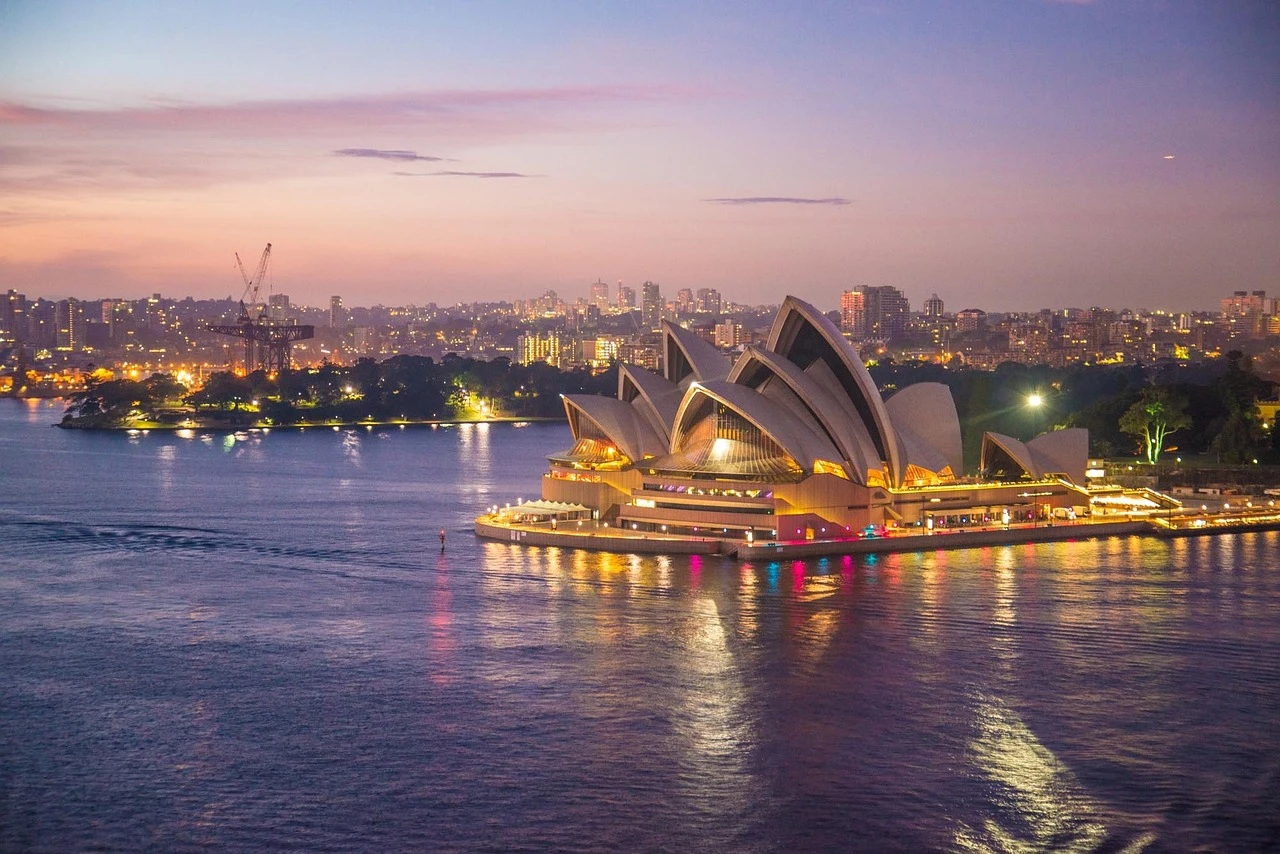
Guided tour of the Sydney Opera House
An hour on foot with a guide through the Opera House foyers and halls, depending on the day's rehearsals: the turbulent story of its construction, Jørn Utzon's design choices and life in a venue that stages over 2,000 shows a year. The highlight: stepping into one of the main halls, under the sails.
From €31 per person on GetYourGuide, entry included and free cancellation. Expect around 300 steps, with no lift.
- 1 hr
- €31 per person (GetYourGuide price 2026)
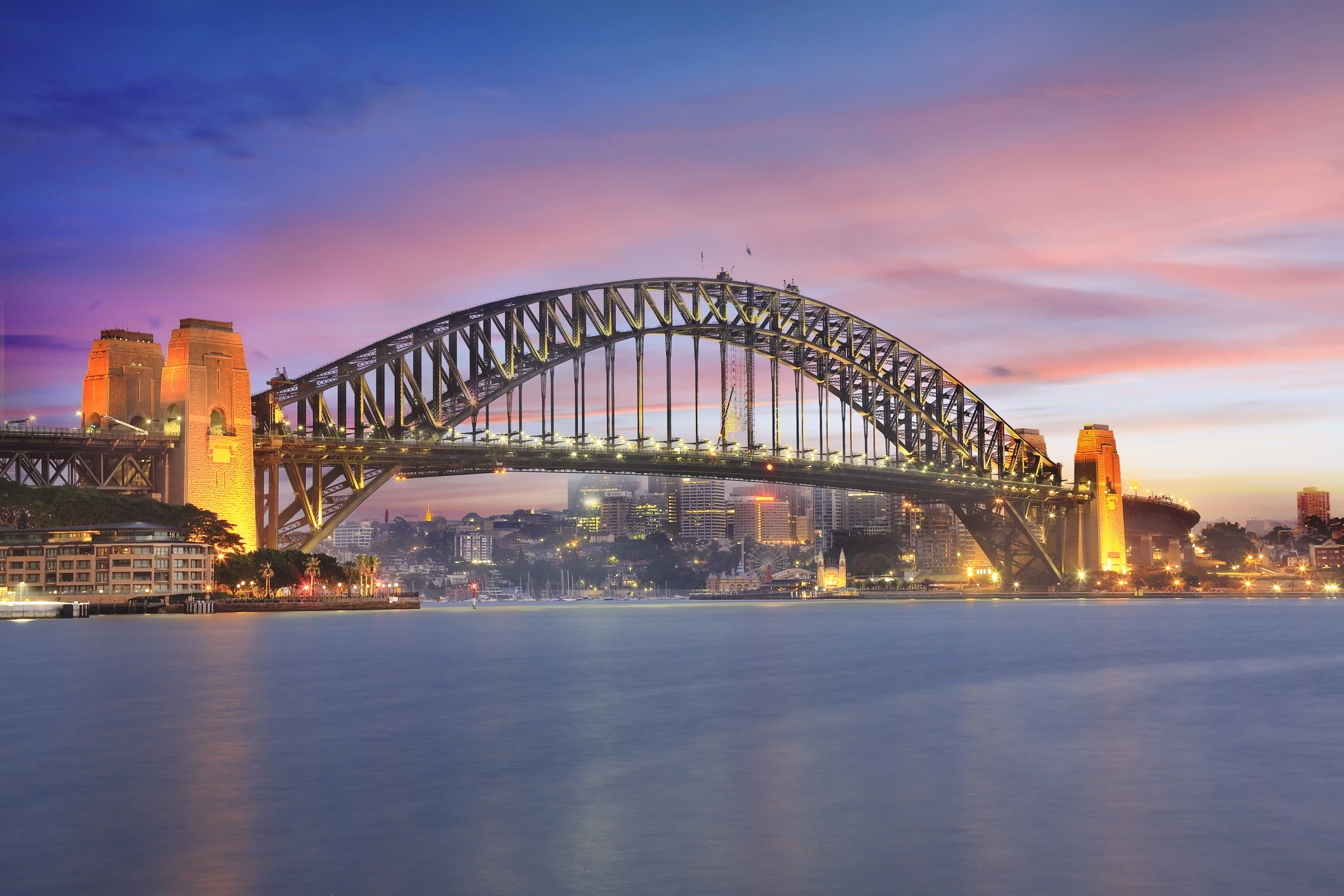
Harbour Bridge summit climb with BridgeClimb
Three hours in all, two of them on the bridge, climbing the upper arch to the summit of the Harbour Bridge, harnessed in a small group of up to 14, with a guide telling the story of the bridge and the harbour. The highlight: the 360-degree view over the Opera House, Darling Harbour and the skyline from the top.
From €231 per person on GetYourGuide, with free cancellation. Phones and cameras stay in the locker: the team takes the photos.
- 3 hrs
- €231 per person (GetYourGuide price 2026)
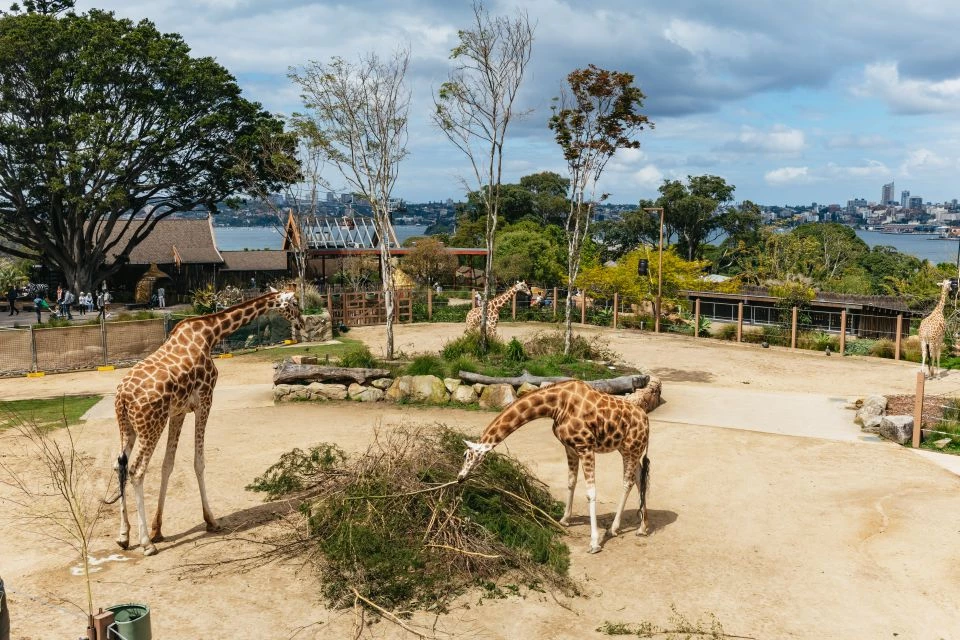
Taronga Zoo with return ferry
A ticket combining the return ferry from Circular Quay with entry to Taronga Zoo: the crossing passes the Opera House and the Harbour Bridge, then the day is spent across the zoo's themed areas, keeper talks and animal shows. The highlight: koalas and kangaroos with the skyline behind them.
From €52 per person on GetYourGuide, with free cancellation; arrive at the 9.30 am opening.
- 1 day
- €52 per person (GetYourGuide price 2026)
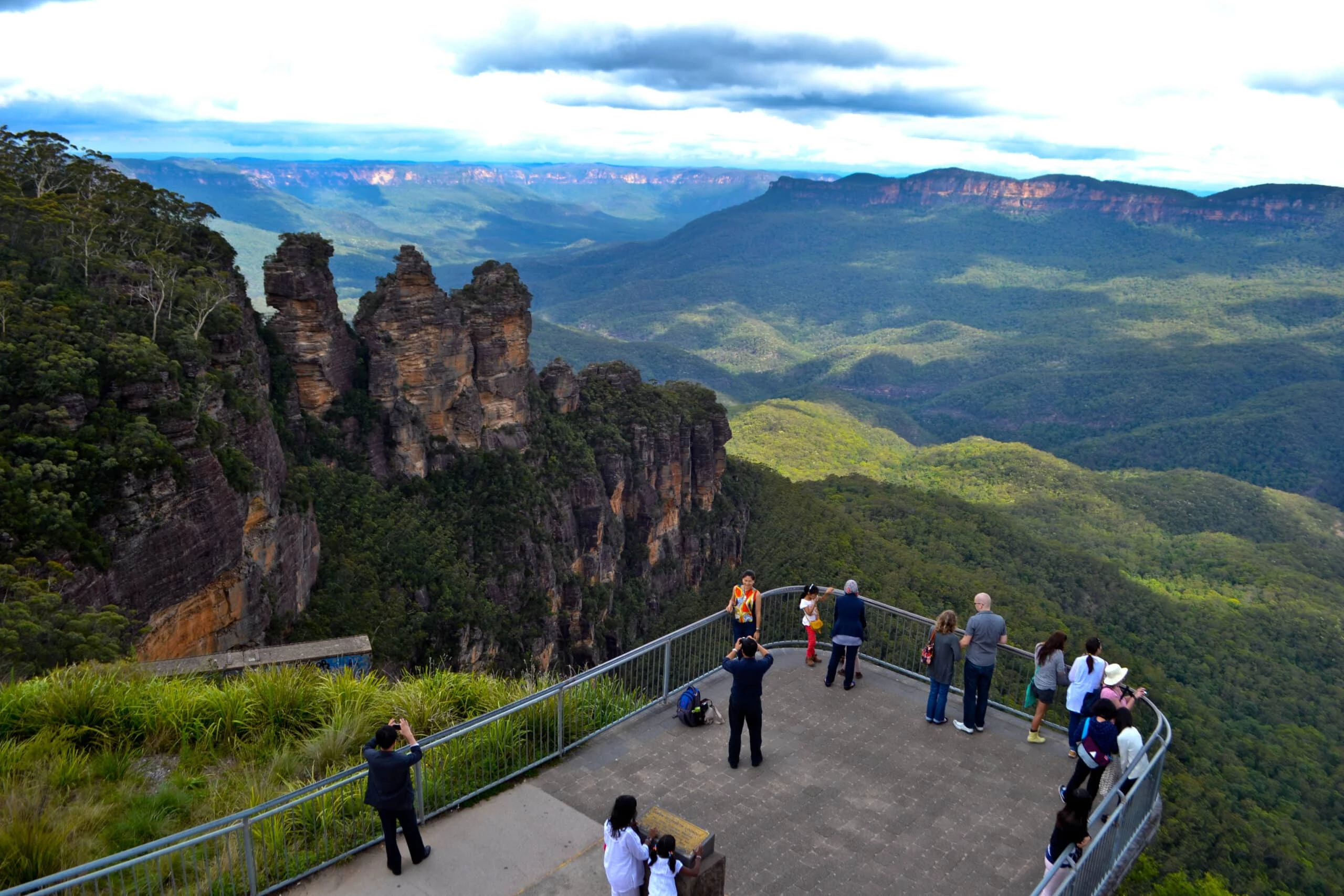
Blue Mountains hiking day trip from Sydney
A small-group minibus day from Sydney: the Three Sisters lookout at Katoomba, then a guided walk of about 90 minutes past waterfalls and lookouts to the foot of Wentworth Falls, with a locally made picnic lunch. The highlight: the view over the Jamison Valley from the cliffs.
From €74 per person on GetYourGuide, with free cancellation; wear good shoes, as the walk goes down and back up stone steps.
- 10.5 hrs
- €74 per person (GetYourGuide price 2026)
Getting there
Sydney Airport (SYD) connects to the centre via the Airport Link train in ~13 min; from Europe, expect ~22-24 h with one stopover.
Sydney Kingsford Smith Airport (SYD) is the main gateway. There is no nonstop flight from France: expect roughly 22-24 h with one stopover (Dubai, Doha, Singapore, etc.).
To reach the centre, the Airport Link train reaches Central station in ~13 min. The fare includes a station access fee(fare on transportnsw.info), paid by Opal card or contactless.
Getting around
An Opal card or a contactless bank card covers trains, metro, buses, ferries and light rail, with daily and weekly spending caps.
Sydney's network is run by Transport for NSW. A single Opal card, or simply a contactless bank card or phone, works on trains, metro, buses, ferries and light rail.
Ferries from Circular Quay are as much a sight as a way to get around (Manly, Taronga, Watsons Bay). Daily and weekly caps limit what you spend (amounts on transportnsw.info, reviewed each 1 July). The airport stations add an access fee that is not included in these caps.
What to do
The Opera House and Harbour Bridge around Circular Quay, ferries to Manly and Taronga, the Bondi to Coogee coastal walk, free museums and a day in the Blue Mountains.
A first day is spent around the harbour: the Opera House tour, The Rocks, the Harbour Bridge on foot or climbed with BridgeClimb, then the Botanic Garden and the free Art Gallery of New South Wales. Ferries from Circular Quay go to Taronga Zoo and Manly.
On the ocean side, the coastal walk links Bondi and Coogee. Keep a day for the Blue Mountains, by train to Katoomba or on a guided tour, and, in May-June, an evening for Vivid Sydney.
Climate & seasons
When to go to Australia?
Monthly averages over the past 5 years (Open-Meteo).
Best months
- June
- September
- October
- December
| Jan | Feb | Mar | Apr | May | Jun | Jul | Aug | Sep | Oct | Nov | Dec | |
|---|---|---|---|---|---|---|---|---|---|---|---|---|
| Our take | ||||||||||||
| Weather | ||||||||||||
| High | 26° | 26° | 25° | 22° | 19° | 17° | 17° | 19° | 21° | 23° | 24° | 26° |
| Rain (mm) | 133 | 108 | 182 | 106 | 119 | 53 | 97 | 91 | 57 | 74 | 95 | 72 |
| Beach | Beach December | |||||||||||
| City sightseeing | City sightseeing January | City sightseeing February | City sightseeing April | City sightseeing May | City sightseeing June | City sightseeing July | City sightseeing August | City sightseeing September | City sightseeing October | City sightseeing November | City sightseeing December |
What to do by season (autumn)
-
City sightseeing
Pedestrian-friendly most of the year.
When to go
Seasons are reversed: for mild weather and fewer crowds, aim for spring (Sept-Nov) or autumn (Mar-May).
Because Sydney is in the Southern Hemisphere, the seasons are the reverse of Europe's.
- Summer (Dec-Feb): warm, ~18-26 °C, beach season and the busiest time.
- Autumn (Mar-May): the mildest, ~15-22 °C, fewer crowds.
- Winter (Jun-Aug): cool but never freezing, ~9-17 °C; Vivid Sydney season.
- Spring (Sept-Nov): ~11-24 °C, pleasant.
Best times: spring (Sept-Nov) and autumn (Mar-May), for comfortable temperatures and fewer crowds.
Budget
Sydney is an expensive city: a mid-range traveller spends roughly AU$200 to AU$350 per day.
The currency is the Australian dollar (AUD). Sydney is a high-cost destination.
- Backpacker: ~AU$70-120/day.
- Mid-range: ~AU$200-350/day (accommodation, meals, transport, a few attractions).
- Comfort: AU$350+/day.
For reference: a casual meal ~AU$25-35, a coffee ~AU$4-6, an Opal trip ~AU$3-5, a pint ~AU$10-14. Many highlights are free: the beaches, the Bondi-to-Coogee walk, the botanic gardens, walking across the Harbour Bridge, and the Echo Point lookout.
Where to stay
The CBD and The Rocks are the most central and best-connected; Bondi for the beach, Darling Harbour for families, the Inner West for a more local feel.
- CBD: most central, walk to the Opera House, Circular Quay and Darling Harbour, with the best transport links.
- The Rocks: historic harbourside quarter by the bridge, atmospheric and walkable.
- Bondi: the iconic beach, surf and the start of the coastal walk.
- Darling Harbour: pedestrianised waterfront, the most family-friendly.
- Inner West (Newtown): bohemian, cheap eats, bars and a local vibe.
Book ahead in peak season (summer and major events).
Safety
Sydney is very safe; the main risk is the water — always swim between the red-and-yellow flags. Emergency number: 000.
Sydney is a very safe city; the main risk is opportunistic petty theft in crowded places. The real danger is in the surf: always swim between the red-and-yellow flags in patrolled zones. If caught in a rip current, stay calm, float, signal for help and swim parallel to the shore.
The UV index is extreme from mid-morning: follow "Slip, Slop, Slap" (shirt, SPF 50+ sunscreen, hat). The single emergency number is 000 (Triple Zero).
Formalities
French citizens apply for the eVisitor (subclass 651): free, online from outside Australia, unlimited visits over 12 months, stays of up to 3 months.
For a tourist stay, French citizens, like those of other EU countries, use the eVisitor (subclass 651). It is free, applied for online and must be requested from outside Australia. It lets you visit Australia as often as you wish over 12 months, staying up to 3 months each time.
Apply a few days before departure: a confirmation email should arrive within 12 hours, and you can track the application in ImmiAccount. You need an eligible passport valid for your whole stay.
FAQ
Visa, best time to go, how long to stay, Opera House tour prices, airport transfer, budget: the essentials for planning Sydney.
Do French citizens need a visa for Australia?
Not a standard visa: they apply for the eVisitor (subclass 651), free and online from outside Australia, valid for unlimited visits over 12 months and stays of up to 3 months each time.
When is the best time to visit Sydney?
The seasons are reversed. Summer (Dec-Feb) is hot and ideal for the beaches; for mild weather and fewer crowds, choose spring (Sept-Nov) or autumn (Mar-May).
How many days do you need in Sydney?
Allow 3 to 5 days, keeping one for a trip to the Blue Mountains (about 2 hours by train).
How much is the Opera House tour?
The one-hour guided tour costs AUD 50 per adult booked in advance, AUD 55 on the day; prices rise to AUD 52 and 57 from 1 April 2027.
How do I get from the airport to the city?
The Airport Link train runs from the airport to Central station in about 13 minutes, with a station access fee on top of the fare, by Opal or contactless.
Is Sydney expensive?
Yes. A mid-range traveller spends around AUD 200 to 350 a day, but many highlights (beaches, coastal walks, the Botanic Garden, walking across the bridge) are free.
Bondi or Manly?
Bondi is the icon and the start of the Bondi to Coogee walk; Manly is reached by a ferry crossing from Circular Quay that passes the Opera House.
Is tap water safe to drink?
Yes, Sydney's tap water is safe to drink.
Sources
The figures in this guide come from the sources below, checked on the publication date.
Leave a comment
Share your thoughts or travel experience. Your email will not be published.