

Contents 30
Overview
The Philippines is an archipelago of more than 7,000 islands in Southeast Asia. For a first trip of two to three weeks, the easiest route links Palawan, the Visayas (Bohol and Cebu) and Siargao during the dry season, from December to May.
The Philippines is an archipelago of more than 7,000 islands between the South China Sea and the Pacific. On the scale of a holiday, the country is huge: you have to give up on seeing everything and pick two or three regions linked by domestic flights and ferries. This guide follows the route that packs in the best-known landscapes for a first visit.
- Palawan, in the west: Bacuit Bay at El Nido, the lakes of Coron, the UNESCO-listed Puerto Princesa Underground River, and the village of Port Barton.
- The Visayas, in the centre: the Chocolate Hills and tarsiers of Bohol, the Moalboal sardine run and Kawasan Falls on the island of Cebu.
- Siargao, in the east: the Cloud 9 wave, the Magpupungko rock pools and Sugba Lagoon.
Here, Manila is only a transit stop: half a day is enough for Intramuros, the walled city from the Spanish era. Boracay, the rice terraces of Banaue and diving at Tubbataha deserve a second trip. English is an official language alongside Filipino, which makes organising things on the spot much easier.
If you are weighing up another island destination in Asia, our guides to Bali and Phuket cover two options that are easier to reach from Europe, but also busier.
12 places to take with you
In the guide's order, ready for Google Maps or your GPS.
Book the activities from this guide
Our picks for Philippines, well rated and free to cancel.
-
Book this activity
Island hopping in El Nido (Tour A)
Environ 20 à 25 € / personne en groupe, + 200 pesos de frais environnementaux
-
Book this activity
Coron lakes and lagoons tour
Environ 35 à 40 € / personne, déjeuner et transferts inclus
-
Book this activity
Puerto Princesa Underground River day trip
Environ 40 € / personne, permis, transport et déjeuner inclus
Affiliate links: Travel Advice earns a commission if you book, at no extra cost to you. Learn more

Port Barton (Palawan)
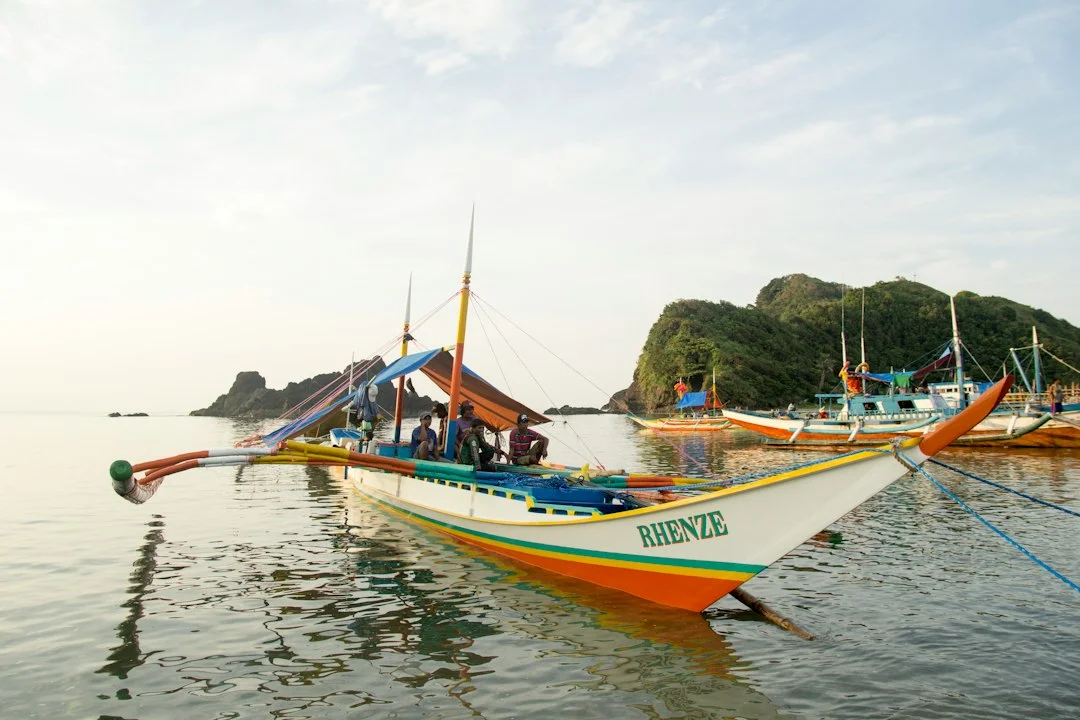
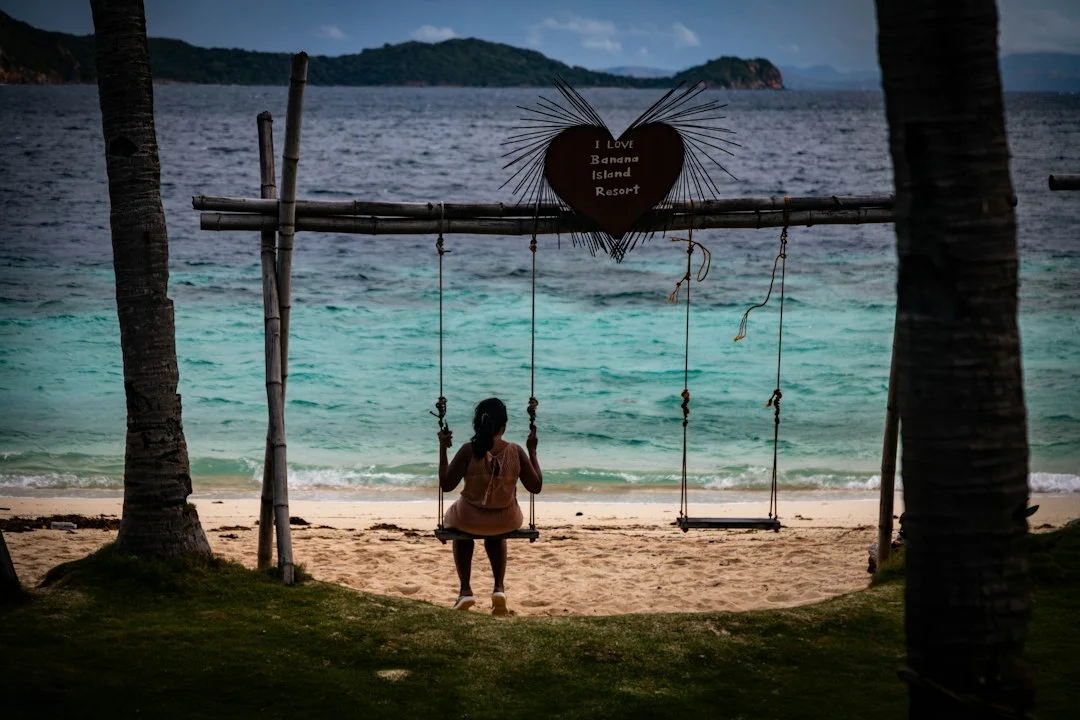
No main road, no horns: in Port Barton, the bangkas pulled up on the sand and the bungalows under the coconut palms set the pace of a fishing village.
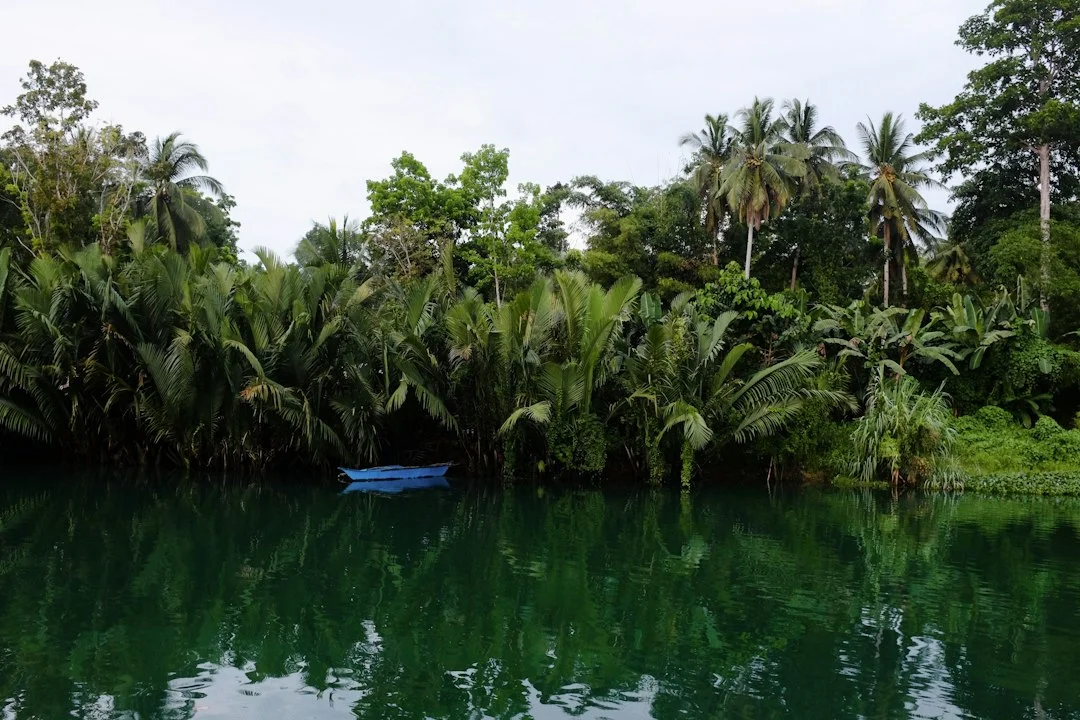
This village in the municipality of San Vicente, on the west coast of Palawan, lies between Puerto Princesa and El Nido. It has stayed away from mass tourism and has a bay dotted with islets and reefs.
You take day trips by boat to the islets, empty beaches and reefs where you often meet turtles, then end the day in a hammock facing the sunset. Two nights are enough.
If you find El Nido too busy, this is the stop where you find the Palawan of twenty years ago.

Puerto Princesa Underground River
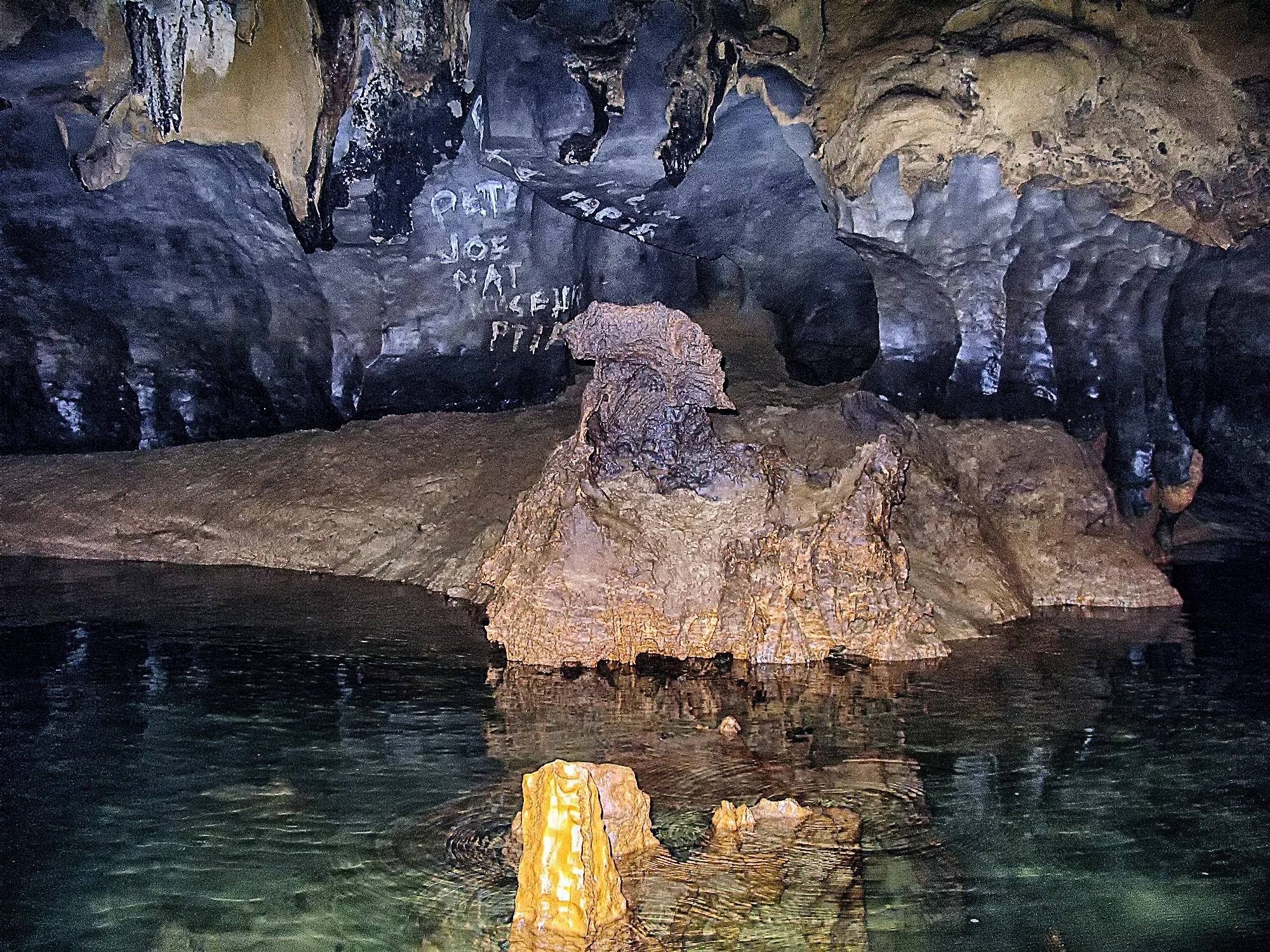
The boat glides over emerald-green water, then the cliff opens up and the light suddenly disappears: all that is left is the beam of the lamp on the stalactites and the cries of the bats.
Listed as a UNESCO World Heritage Site in 1999, the national park covers 22,202 hectares on the north-west coast of Palawan. It protects an underground stretch of the Cabayugan River, 8.2 km long, that flows straight into the sea.
You board at Sabang for a short crossing to the cave entrance, then a boatman paddles you up part of the river, audio guide in hand, past rock formations nicknamed "the cathedral" or "the fruits". With the drive from Puerto Princesa, it takes a full day.
It is the only cave on the itinerary, and the only stop where you sail underground all the way to the mouth of a river on the sea.
The permit price, around 500 pesos, changes often: have it confirmed when you book.

Bacuit Bay (El Nido)
Black limestone pinnacles rise out of turquoise water, so close together that you feel you are sailing through a film set: this is the view that made El Nido the postcard image of the Philippines.
The municipality of El Nido has 45 islands and islets and sits within a protected area of about 903 km² at the northern tip of Palawan. Bacuit Bay holds the lagoons, beaches and reefs that the boats visit every day.
You explore it by bangka on the numbered tours: Tour A for the Big Lagoon, the Small Lagoon and the Secret Lagoon, which you enter by swimming or by kayak; Tour C for the hidden beaches and snorkelling spots of Matinloc island. Each trip lasts the whole day, with a grilled lunch on a beach included.
This is where you see the most lagoons of the whole itinerary in a single day on a boat.
Access to the lagoons is limited; an agency that leaves before 8 am or reverses the order of the stops saves you the boat traffic jams.

Chocolate Hills (Bohol)
From the top of the viewing deck, hundreds of almost perfectly conical hills line up to the horizon, as if someone had placed them by hand on the forest.
Bohol has between 1,260 and more than 1,700 of them depending on the survey, most 30 to 50 m high, with the tallest reaching 120 m. Declared a National Geological Monument in 1988, they take their name from the grass that turns brown at the end of the dry season.
The main viewpoint is at the Carmen complex, about 55 km from Tagbilaran: a staircase leads to the viewing deck in about ten minutes. You can combine the visit in one day with the Corella tarsiers and the Loboc River.
No other stop on the route has landforms like these: it is the most unexpected landscape of the trip.
To see the hills truly "chocolate" brown, aim for March to May; in January, they are still green.

Kayangan Lake (Coron)
After a steep climb under the trees, a gap opens onto the cove and its limestone pinnacles: this is the most famous photo of Coron, taken halfway to the lake.
Kayangan Lake, with very clear fresh and brackish water, is hidden in the heart of Coron island, the ancestral land of the Tagbanua indigenous community, which manages access and collects the entrance fees.
From the landing, a staircase of about ten minutes goes past the viewpoint and then down to the lake, where you swim and snorkel among submerged rocks. You visit it on day trips from Coron Town, often together with Barracuda Lake and Twin Lagoon.
Compared with El Nido's sea lagoons, Coron offers freshwater lakes surrounded by cliffs, a different experience, 3 h 30 by ferry from El Nido.

Cloud 9 (Siargao)
At the end of the wooden boardwalk, the wave rises over the reef and curls a few dozen metres from the spectators, with a roar that drowns out conversations.
This reef break, discovered in the late 1980s and made famous by Surfer magazine in 1993, turned Siargao into the surf capital of the Philippines. It regularly hosts the international Siargao Cup competition; the island itself covers about 437 km² off north-eastern Mindanao.
You walk onto the boardwalk and the viewing tower to watch the surfers, ideally at sunrise, then swim at high tide in the lagoon next door. General Luna, a few minutes away, has the surf schools for beginners.
This is the place that sets the mood on Siargao, more laid-back and sporty than on Palawan.

Kawasan Falls (Cebu)
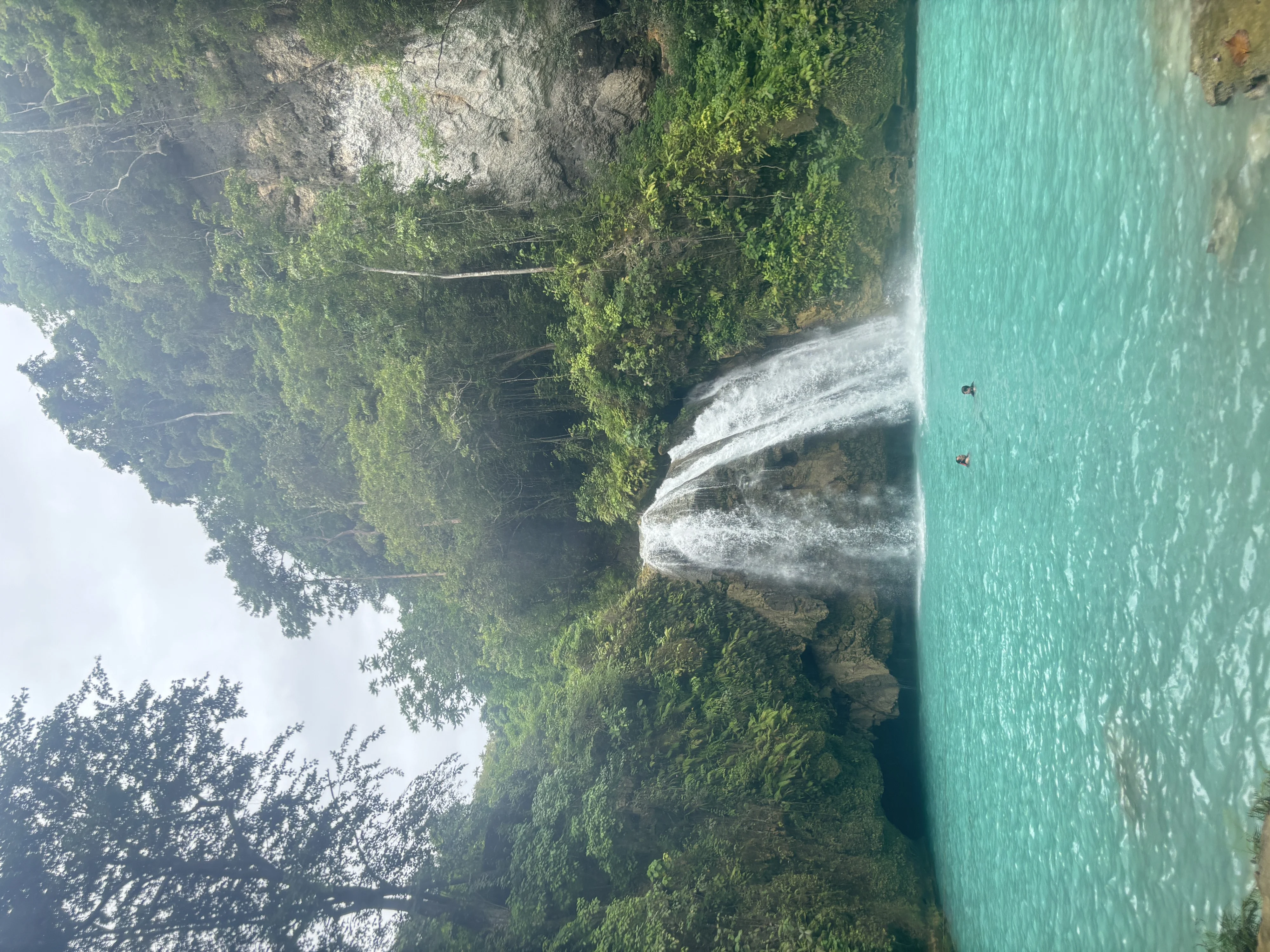
The colour of the water is a surprise: a milky, almost unreal turquoise that stands out against the dark green of the jungle and the bamboo rafts lined up at the foot of the falls.
Kawasan Falls are in Badian, in the south-west of Cebu island, on the Matutinao River. They have become the finishing point of the country's main canyoneering route.
You can simply walk about twenty minutes from the road to swim in the pools, or go down the canyon from upstream, jumping into the pools and sliding down natural chutes, with helmet and life jacket provided. Allow half a day for canyoneering.
It is the most playful activity on the route, easy to combine with Moalboal, 30 minutes away by road.
Compare what is included (guide, transport, lunch, local fees): prices vary a lot from one operator to another.

Moalboal Sardine Run
A few metres from the shore, the blue suddenly darkens: it is a cloud of sardines spinning on itself, tightening and opening around the swimmers.
Moalboal, on the west coast of Cebu, owes its reputation to this shoal, which lives all year round along the drop-off right in front of Panagsama Beach. Pescador Island, offshore, adds turtles and coral reefs.
You simply go in with a mask and snorkel from the beach, with no boat or booking needed, or dive if you are certified. One hour in the water is enough to see the shoal and often a turtle.
On this route, it is the only major underwater encounter you can reach for free from the shore.

Magpupungko Rock Pools (Siargao)
At low tide, the sea pulls back and leaves pools of clear water in the coral rock, deep enough to jump into from the rocks.
The Magpupungko pools are in Pilar, on the east coast of Siargao, about an hour by scooter from General Luna. They only fully appear for a few hours a day, when the tide goes out.
You swim, jump from the rocks and watch the small fish trapped by the tide; the shady beach next door is a good place to wait. A small entrance fee is charged at the gate.
It is the easiest land trip on the island, to combine with the coastal road along the east.
Sugba Lagoon (Siargao)
After a ride through the mangroves, the boat comes out onto a stretch of emerald water framed by wooded hills, where all you can hear are the birds.
Sugba Lagoon is in the municipality of Del Carmen, in the west of Siargao, surrounded by thick mangrove forest. You reach it by boat from the port of Del Carmen.
Once there, you rent a kayak or a paddleboard, jump from a platform into deep water and explore the mangrove channels. Allow half a day, including the scooter ride from General Luna.
After the buzz of the surf spots, it is the most peaceful corner of Siargao.

Corella Tarsier Sanctuary (Bohol)
It takes a moment to spot one: a ball of fur no bigger than a fist, clinging to a branch, with two huge eyes that never blink.
The Philippine tarsier is a tiny nocturnal primate found in the archipelago. In Corella, in the interior of Bohol, the Philippine Tarsier Foundation runs a sanctuary where the animals live freely in the forest, without cages.
A guide takes visitors along a short trail and points out the tarsiers spotted that morning; the visit lasts about twenty minutes. As tarsiers are nocturnal, you usually see them asleep.
This sanctuary is a far better choice than the enclosures along the tourist roads, where the animals are handled and stressed.

Intramuros and Fort Santiago (Manila)
Once you pass the walls, the noise of Manila fades: cobbled streets, horse-drawn carriages and colonial facades with wooden balconies replace the traffic jams.
Intramuros is the walled city founded by the Spanish in the late 16th century on the banks of the Pasig River. Fort Santiago, at its northern tip, is where national hero José Rizal was imprisoned before his execution in 1896.
You spend two to three hours here: the carved gate and gardens of Fort Santiago, San Agustín Church and its vaults, then a walk along the walls. A guided tour on foot or by bamboo bike tells the story of the district.
It is the best way to fill a stopover in Manila without going far from the bay.
Island hopping in El Nido (Tour A)
You leave El Nido beach around 9 am by bangka, with about ten other travellers. Tour A takes in the Big Lagoon, the Small Lagoon, which you enter by swimming or by kayak, the Secret Lagoon and white sand beaches, with snorkelling at every stop and a grilled lunch on the beach. The highlight: the narrow passage that opens onto the still water of the Small Lagoon.
Suitable for anyone who can swim a little; life jackets provided. Bring reef-safe sunscreen, water shoes and a dry bag, and keep the receipt for the environmental fees.
- Journée (environ 7 h, déjeuner sur la plage compris)
- Environ 20 à 25 € / personne en groupe, + 200 pesos de frais environnementaux
Coron lakes and lagoons tour
Pick-up from your hotel in Coron Town, then a day by boat around Coron island: Kayangan Lake and its viewpoint, Barracuda Lake, Twin Lagoon, a beach and a reef for snorkelling, and lunch on board or on a beach. The highlight: swimming in the lake's fresh water, between limestone walls.
For all levels; the Kayangan stairs require reasonable fitness. Bring cash in case some entrance fees are not included, and water shoes.
- Journée (environ 8 h, transferts compris)
- Environ 35 à 40 € / personne, déjeuner et transferts inclus
Puerto Princesa Underground River day trip
An early-morning van leaves Puerto Princesa for Sabang, then a boat crosses to the cave, and you go up the underground river in a rowing boat, with an audio guide and a helmet on your head. The highlight: when the lamp is switched off in the great chamber and all you hear is the water and the bats.
Easy and family-friendly. Book several days ahead in high season, as permits are limited; take a light jacket against the humidity and insect repellent.
- Journée (environ 9 h depuis Puerto Princesa)
- Environ 40 € / personne, permis, transport et déjeuner inclus
Bohol tour: Chocolate Hills, tarsiers and Loboc River
Pick-up in Panglao around 8 am, then a drive into the interior of Bohol: the tarsier sanctuary, a buffet lunch on a raft floating down the Loboc River to live music, the mahogany forest and the Chocolate Hills viewpoint at the end of the day. The highlight: the Carmen viewing deck and its hills as far as the eye can see.
Ideal for families and if you do not drive. Bring a hat and water, as the viewing deck is in full sun; if you prefer your own pace, hire a scooter or a driver for the day.
- Journée (environ 8 h depuis Panglao)
- Environ 40 à 45 € / personne, entrées et déjeuner-croisière inclus
Canyoneering to Kawasan Falls
Pick-up in Moalboal, helmet and life jacket on at the top of the canyon, then three to four hours down the Matutinao River: wading, natural slides and jumps into turquoise pools, all the way to Kawasan Falls. The highlight: the big optional jump over a deep pool.
You need to be able to swim and be reasonably fit; every jump can be skipped. Wear closed shoes that stay on your feet, and leave your phone and valuables at the hotel or in a dry bag handed to the guide.
- Demi-journée à journée (environ 6 h depuis Moalboal)
- Environ 35 à 40 € / personne, équipement, guide et déjeuner inclus
Getting there
There are no direct flights from France to the Philippines: expect one stop in the Middle East, Istanbul or Asia, and at least 17 hours of travel to Manila (MNL) or Cebu (CEB). A return ticket from Paris costs about €550 to €1,200 depending on the season.
The two useful international gateways are Manila (Ninoy Aquino airport, code MNL) and Cebu (Mactan-Cebu, code CEB). From Paris or London, flights stop in the Gulf, Istanbul, Hong Kong or another Asian capital, for a total journey of about 17 to 29 hours depending on the connection.
Fares seen in 2026 from Paris range from about €550 to €670 return on special offers to more than €1,100 during the Christmas holidays. Flying into Manila and out of Cebu (or the other way round) saves you backtracking and gains you a day on a Palawan - Visayas route.
Before you leave, fill in the free eTravel form (see the entry requirements section): airlines can refuse boarding without its QR code. When you land in Manila, plan a night near the airport if your domestic flight leaves the next day: traffic between the terminals and the city centre is very slow.
Still deciding where to find the sun this winter? Our where to go in January selection compares the current options.
Getting around
Between islands, you travel by domestic flight (Cebu Pacific, Philippine Airlines, AirSWIFT) and fast ferry; on each island, by tricycle, van or scooter. Allow half a day of travel every time you change island, and never book an international flight on a ferry day.
The domestic flight network is dense and cheap if you book early. The key links on this route:
- Manila - Puerto Princesa (PPS): several flights a day with Cebu Pacific, Philippine Airlines and AirAsia, from about 1,900 pesos on special offers.
- Manila - El Nido (ENI): direct flights of about 1 h 30 with AirSWIFT, more expensive, which save you the long road trip from Puerto Princesa.
- Coron (Busuanga airport, USU): flights to Manila and Cebu.
- Bohol (Bohol-Panglao, TAG): flights to Manila, or the OceanJet fast ferry from Cebu in about 2 hours, for 790 to 1,410 pesos depending on the class.
- Siargao (Sayak, IAO): no more direct flight from Manila according to the schedules checked in autumn 2026 (check again); go via Cebu or Clark, then allow about 45 minutes by van to General Luna.
Between El Nido and Coron, fast ferries (Montenegro Lines in particular) make the crossing in about 3 h 30, for roughly 1,760 pesos in standard class; delays are common and the crossing is cancelled in rough seas. The Puerto Princesa - Port Barton - El Nido leg is done by shared van.
On the ground, a tricycle (motorbike with a sidecar) costs about 50 to 150 pesos for a ride around El Nido town. Scooters can be hired on every tourist island and are the most practical way to get around Siargao and Bohol; an international driving permit is required and you drive on the right. A hire car is mostly useful for touring Bohol or Cebu as a group.
What to do
In the Philippines, the highlights happen by boat: island hopping in Bacuit Bay at El Nido, the lakes of Coron and the Puerto Princesa Underground River. Add the Chocolate Hills and tarsiers on Bohol, the Moalboal sardine run, canyoneering at Kawasan and surfing on Siargao.
Trips by bangka, the local outrigger boat, are the heart of the journey. In El Nido, tours are standardised as Tours A, B, C and D, sold everywhere at the same price; in Coron, packages combine Kayangan and Barracuda lakes, lagoons and wrecks. Entrance fees and environmental fees are often added on top: always ask what is included.
On land, the Visayas offer more variety: the Chocolate Hills, the tarsiers and the Loboc River fit into one day on Bohol, and the south-west coast of Cebu combines the Moalboal sardine run with the descent to Kawasan Falls. Siargao, finally, draws people for surfing, but also for its natural rock pools, lagoons and islets.
A word on ethics: at Oslob, in the south of Cebu, whale sharks are fed to guarantee they show up, a practice criticised by scientists and by WWF because it changes their behaviour. This guide does not recommend it; Donsol, further north, offers sightings without feeding, but with no guarantee of an encounter.
Food
Filipino food mixes Malay, Chinese and Spanish influences: adobo (meat stewed in vinegar and soy sauce), sinigang (sour tamarind soup), lechon (roast suckling pig, the pride of Cebu) and kinilaw (marinated raw fish). The cheapest meals are in carinderias, canteens with dishes on display.
Filipino food is less spicy than Thai or Indonesian cooking and plays on the sourness of vinegar, calamansi (a small local citrus) and tamarind. Dishes to try:
- Adobo: chicken or pork stewed in vinegar, soy sauce, garlic and bay leaf, the unofficial national dish.
- Sinigang: sour tamarind soup with pork, prawns or fish and vegetables.
- Lechon: roast suckling pig with crispy skin, and Cebu claims the best version.
- Kinilaw: raw fish marinated in vinegar and calamansi, close to ceviche, perfect by the sea.
- Halo-halo: a dessert of shaved ice, condensed milk, fruit, sweet beans and ube (purple yam).
To eat cheaply, look for carinderias, canteens where you pick from dishes on display, served with rice. In El Nido, Coron and General Luna, there are plenty of international restaurants, but they cost a lot more. Only drink bottled or treated water, as France Diplomatie recommends, and be wary of ice of unknown origin.
Itineraries
In two weeks, combine Palawan (Puerto Princesa, Port Barton, El Nido, Coron) with Bohol. In three weeks, add Moalboal and Kawasan on Cebu, then Siargao, flying into Manila and out of Cebu.
Two weeks: Palawan and Bohol
- Day 1: arrive in Manila, night near the airport, visit Intramuros if time allows.
- Days 2-3: fly to Puerto Princesa, trip to the Underground River.
- Days 4-5: van to Port Barton, one day by boat around the islets.
- Days 6-9: El Nido, with Tours A and C in Bacuit Bay and a free day for kayaking or the beach.
- Days 10-11: fast ferry to Coron, a day on Coron island (Kayangan Lake, lagoons).
- Days 12-14: fly to Bohol via Cebu or Manila, Chocolate Hills and tarsiers, Panglao beach, then fly home.
Three weeks: Palawan, the Visayas and Siargao
Follow the first week and a half above as far as Coron, then:
- Days 12-14: fly to Cebu, drive to Moalboal, snorkel with the sardines and go canyoneering at Kawasan.
- Days 15-17: fast ferry from Cebu to Bohol, Chocolate Hills, tarsiers, Loboc River and Panglao.
- Days 18-20: fly to Siargao via Cebu, Cloud 9, Magpupungko and a boat trip to Sugba or the three islands.
- Day 21: back to Cebu for your international flight.
If you want to see more of Southeast Asia, our Vietnam guide from north to south combines well with a regional flight from Manila.
Climate & seasons
When to go to Philippines?
Monthly averages over the past 5 years (Open-Meteo).
Best months
- January
- February
- March
- April
- December
Avoid
- May
- June
- July
- August
- September
- October
- November
| Jan | Feb | Mar | Apr | May | Jun | Jul | Aug | Sep | Oct | Nov | Dec | |
|---|---|---|---|---|---|---|---|---|---|---|---|---|
| Our take | ||||||||||||
| Weather | ||||||||||||
| High | 29° | 30° | 31° | 31° | 31° | 29° | 29° | 29° | 29° | 29° | 30° | 29° |
| Rain (mm) | 154 | 88 | 143 | 165 | 263 | 356 | 509 | 359 | 502 | 442 | 216 | 158 |
| Beach | Beach February |
When to go
The best time for a first trip to the Philippines is the dry season, from December to May, with the most reliable weather from February to April. Typhoon season runs from June to November, the period to avoid if you plan to chain boats and domestic flights.
The climate is tropical all year round, with 22 to 33 °C in El Nido depending on the month. What changes is the rain and the typhoon risk. The dry season runs from December to May: the sea is calm, boat trips leave every day and domestic flights are rarely disrupted.
- December - January: dry and slightly cooler weather, but Christmas holidays and the highest prices. Book flights and rooms in El Nido and Coron several weeks ahead.
- February - April: the best window to combine Palawan, Bohol and Siargao. The Chocolate Hills turn brown at the end of the dry season.
- May: peak heat and the first showers, with prices going down.
- June to November: typhoon season, which France Diplomatie and the UK Foreign Office place from June to November. Cancelled ferries and delayed flights are common.
Siargao follows a slightly different calendar: the surf swell arrives from August to December, while the calmest weather for non-surfers is rather from March to May. For a first visit focused on lagoons and snorkelling, aim for February to April.
Budget
Expect about €25 to €45 (roughly $27 to $49) per person per day on a backpacker budget, €55 to €110 ($60 to $120) mid-range and €120 to €220 ($130 to $240) in boutique hotels, excluding flights. Add €550 to €1,200 for a return flight from Paris and a separate budget for domestic flights.
The Philippines is still affordable, but less so than Vietnam or Cambodia: tourist islands such as El Nido, Coron and Siargao have prices close to those of Bali. Typical 2026 figures, per person per day, excluding international flights:
- Backpacker: €25 to €45, about $27 to $49 (dorm or basic room, carinderias, tricycles, group tours).
- Mid-range: €55 to €110, about $60 to $120 (air-conditioned double room, restaurants, scooter, one tour a day).
- Comfort: €120 to €220, about $130 to $240 (beach hotel, private boat trips, private transfers).
What pushes the bill up is travel between islands: each domestic flight costs from a few tens of euros to more than €100 depending on when you book, and the El Nido - Coron ferry about 1,760 pesos. A day of island hopping in El Nido costs about 1,200 to 1,600 pesos, plus 200 pesos in environmental fees.
The currency is the Philippine peso (PHP), at around 70 pesos to €1 in autumn 2026: check the rate before you leave. Withdraw cash in the big towns and in El Nido, and carry cash for Port Barton and the small islands, where ATMs are rare. Customs limit the cash you bring in to 50,000 pesos.
Work out your budget
Backpacker
175 – €315
25 – €45 per person per day
Mid-range
385 – €770
55 – €110 per person per day
Upscale
840 – €1,540
120 – €220 per person per day
On top of that
- International flights (return) 550 – €1,200
- Island-hopping tour in El Nido (Tour A or C) €25
- El Nido to Coron fast ferry €25
- Cebu to Bohol fast ferry (OceanJet, Tourist class) €11
Extras total €61
On-the-ground estimate, international flights excluded unless stated. Prices vary by season and how early you book. Figures updated on 03/11/2026.
Where to stay
The best bases are El Nido and Coron on Palawan, Panglao on Bohol, Moalboal on Cebu and General Luna on Siargao. Expect about 500 to 1,200 pesos for a dorm bed in El Nido, more in high season.
On a two to three-week route, you change base every three or four days. Here is where to sleep at each stop:
- El Nido: the town itself is noisy but handy for boat departures; the beaches of Corong-Corong and Las Cabañas, a few minutes away by tricycle, are quieter and face the sunset. A dorm bed costs about 500 to 1,200 pesos a night.
- Coron: you stay in Coron Town, on Busuanga island, where all the boats leave for Coron island and its lakes.
- Port Barton: guesthouses and beach bungalows, few hotels; electricity and phone signal are more limited than in El Nido.
- Bohol: Panglao, linked to Bohol by a bridge, has most of the hotels around Alona Beach; it is the base for the Chocolate Hills and the tarsiers.
- Cebu: Moalboal (Panagsama Beach) for snorkelling and Kawasan Falls; avoid staying in Cebu City, except the night before a flight.
- Siargao: General Luna, near Cloud 9, has most of the accommodation, restaurants and scooter rentals.
From December to April, and above all at Christmas, good-quality places in El Nido, Coron and General Luna fill up fast: book your first nights before you leave and keep some flexibility for the rest.
Safety
Palawan, Bohol, Cebu and Siargao are outside the areas France Diplomatie advises against, which cover western Mindanao, Basilan, the Sulu and Tawi-Tawi archipelagos and the sea area off southern Palawan. The main risks on a first trip are typhoons, dengue and petty scams.
France Diplomatie advises against all travel to Basilan island, the Sulu and Tawi-Tawi archipelagos, a large part of western and central Mindanao, and the sea area off the southern half of Palawan down to Sulu. Several provinces in eastern Mindanao are advised against except for essential travel. On Palawan, only the southern sea area is listed: Puerto Princesa, Port Barton, El Nido and Coron, in the centre and north of the island, are not included. Siargao is explicitly excluded from the area advised against by the UK Foreign Office.
For Bohol and Cebu, France Diplomatie only mentions occasional incursions by armed groups on their southern coasts. Read the country advice before you leave: it is updated as events unfold, as with the El Niño alert published in early November 2026.
- Typhoons: from June to November, follow local instructions, stay in solid accommodation and check the status of your flights and ferries.
- Volcanoes: permanent danger zones surround Mayon (6 km) and Kanlaon (4 km).
- Health: protect yourself from mosquitoes all day long against dengue, and see a doctor quickly after an animal bite or scratch, as rabies is present everywhere.
- Scams: fake paid eTravel websites, touts waiting at ferry arrivals; book tours with agencies that have a real shopfront.
At sea, check that there are life jackets on board and skip a crossing in rough weather. As phone signal is weak on parts of Palawan, leave your itinerary with someone close to you. The national emergency number is 911.
Formalities
French, UK, US, Canadian and Australian citizens can enter the Philippines visa-free for a tourist stay of up to 30 days, with a return or onward ticket. The free eTravel form is mandatory and must be filled in within 72 hours before arrival on etravel.gov.ph.
According to France Diplomatie, French citizens can travel to the Philippines without a visa for a tourist stay. The stamp you get on arrival allows a stay of up to 30 days, as long as you show a return or onward ticket to a third country. Holders of UK, US, Canadian and Australian passports also get 30 days visa-free with proof of onward travel (confirmed for the UK by gov.uk). A 29-day extension (59 days in total) can be requested on the spot from the Bureau of Immigration, for about 3,030 pesos.
- Passport: the UK Foreign Office requires at least 6 months' validity after arrival; plan for the same margin whatever your nationality.
- eTravel: a mandatory digital form, to fill in within the 72 hours before arrival on the official website etravel.gov.ph or the eGovPH app. It is free: scam websites charge up to several thousand pesos for it.
- Health: no vaccine is required when arriving from France; France Diplomatie points out that rabies is present across the whole archipelago, that dengue has no cure and that malaria is present below 600 m altitude, which includes Palawan. See a travel health clinic before you go.
- Insurance: private healthcare and medical evacuation are very expensive; insurance that covers repatriation is essential.
Belgian and Swiss citizens also enter visa-free, and travellers of all other nationalities should check the rules with the Philippine embassy in their country. To stay connected from the moment you land without changing SIM card, you can install an eSIM before you leave: our travel eSIM article explains how it works and what it costs.
Tips
Keep at least one spare day between your last ferry and your international flight, head out on tours early in the morning to beat the crowds, pack light for small planes and carry cash for islands without ATMs.
- One spare day: ferries and small planes are cancelled in bad weather, even in the dry season. Never plan a crossing on the day of your flight home.
- Leave early: in El Nido and Coron, almost all boats leave at the same time. Operators that reverse the order of the stops, or a private trip at dawn, let you see the lagoons without the crowds.
- Luggage: AirSWIFT flights to El Nido and some flights to Siargao have reduced baggage allowances. A 15 kg bag avoids extra fees.
- Cash: carry pesos for lake and lagoon entrance fees, environmental fees, port terminal fees and tricycles.
- Sun protection: choose a reef-safe sunscreen and a UV-protective T-shirt for snorkelling; the sun is fierce on a boat.
- Respect for wildlife: do not touch corals or turtles, keep your distance from the Moalboal sardine shoal, and give Oslob a miss.
- Connectivity: signal is fine in towns but weak in Port Barton and on the small islands; download maps and tickets for offline use.
FAQ
French, UK, US, Canadian and Australian citizens do not need a visa for a tourist stay of up to 30 days in the Philippines, but must fill in the free eTravel form within 72 hours before arrival and show an onward ticket.
Do I need a visa for the Philippines?
Not for a tourist stay of up to 30 days if you hold a French, UK, US, Canadian or Australian passport, as long as you have a return or onward ticket. You can extend your stay on the spot by 29 days at the Bureau of Immigration. Other nationalities should check with the Philippine embassy.
Is the Philippines eTravel form free?
Yes. The eTravel form is free on etravel.gov.ph or the eGovPH app, and you fill it in within the 72 hours before arrival. Websites that charge for it are scams.
What is the best time to visit the Philippines?
The dry season, from December to May, and more precisely February to April to combine Palawan, Bohol and Siargao. Avoid June to November, which is typhoon season.
How many days do you need to visit the Philippines?
Two weeks let you see Palawan and Bohol; three weeks add Cebu and Siargao. Beyond three regions, the time you spend travelling takes over.
How much does a trip to the Philippines cost?
About €25 to €45 (roughly $27 to $49) a day on a backpacker budget and €55 to €110 ($60 to $120) mid-range, excluding flights. Add €550 to €1,200 for a return flight from Paris, plus domestic flights.
El Nido or Coron: which one should you choose?
El Nido for lagoons, beaches and atmosphere; Coron for freshwater lakes, Second World War wrecks and a slower pace. The two are linked by a 3 h 30 fast ferry, so you can do both.
Is it dangerous to travel to the Philippines?
The regions in this guide are not advised against by France Diplomatie, which targets western Mindanao, Sulu, Tawi-Tawi, Basilan and the sea area off southern Palawan. The main risks are typhoons, dengue and online scams.
What is the emergency number in the Philippines?
911 is the national emergency number. Also note the number of your embassy in Manila before you leave.
Sources
The figures in this guide come from the sources below, checked on the publication date.
Leave a comment
Share your thoughts or travel experience. Your email will not be published.