

Contents 29
Berlin covers almost 900 km² and is best explored district by district: Mitte for the Brandenburg Gate, the Reichstag and Museum Island; Bernauer Strasse and the East Side Gallery for the Wall; Kreuzberg, Friedrichshain and Neukölln for bars, Späti kiosks and clubs. This guide brings together the 11 places at the heart of a first visit, verified activities and the practical information (transport, entry rules, budget) for three or four days in the German capital.
Keen to see another side of Germany? See also our guides to Bavaria and Cologne.
Overview
For its 20th-century history on every corner (the Wall, the Reichstag, the memorials), five world-class museums on one island, huge parks and the most open nightlife in Europe, at prices below Paris or London.
Berlin is a sprawling, low-rise capital where the scars and triumphs of the 20th century sit out in the open. In a single day you can stand at the Brandenburg Gate, trace the line of the Wall, lose hours among the antiquities of Museum Island and end the night in a techno club that does not close until Monday.
Unlike polished, postcard-perfect capitals, Berlin wears its history and its grit proudly: bullet-pocked facades, sprawling parks, canal-side bars and a famously creative, tolerant, do-it-yourself spirit. It is also one of the more affordable major European capitals, which makes it ideal for unhurried, multi-day exploration.
11 places to take with you
In the guide's order, ready for Google Maps or your GPS.
Book the activities from this guide
Our picks for Berlin, well rated and free to cancel.
-
Book this activity
Guided tour of the Reichstag, the dome and the government quarter
€16 per person (GetYourGuide price 2026)
-
Book this activity
Third Reich and Cold War walking tour
€24 per person (GetYourGuide price 2026)
-
Book this activity
One-hour Spree cruise from the cathedral
€22 per person (GetYourGuide price 2026)
Affiliate links: Travel Advice earns a commission if you book, at no extra cost to you. Learn more

The Brandenburg Gate
The Brandenburg Gate closes the western end of Unter den Linden on Pariser Platz. Carl Gotthard Langhans built it between 1788 and 1791 on the model of the Propylaea of the Acropolis: twelve Doric columns forming five passages, the central one once reserved for the royal family, topped by the Quadriga of the goddess of victory that Napoleon carried off to Paris in 1806 and Prussia brought back in 1814.
For 28 years the gate stood in the no man's land of the Wall, out of reach of both East and West Berliners. Since the reunification celebrations of 1989-1990 it has become the country's symbol of unity, the backdrop for New Year's Eve and for every major public gathering. Pariser Platz, rebuilt around it, holds the Hotel Adlon, the French and US embassies and the Academy of Arts.

The Reichstag and its dome
The Reichstag building, completed in 1894 for the parliament of the German Empire, was gutted by the fire of 1933, shelled in 1945 and left half-abandoned beside the Wall for decades. After reunification Norman Foster rebuilt it for the Bundestag, keeping the Soviet soldiers' graffiti on the inner walls and crowning it with the glass dome that has become the symbol of the German parliament since 1999.
Visitors walk up the spiral ramp inside the dome while an audio guide, triggered automatically as you climb, points out the Tiergarten, the Chancellery, the Brandenburg Gate and Potsdamer Platz. Through the funnel of mirrors at the centre you look straight down into the plenary chamber. The roof terrace is open at the same time and the Käfer restaurant up there takes separate bookings.

Museum Island (Museumsinsel)
Museum Island occupies the northern tip of the Spree island in Mitte, and its five museums, built between 1830 and 1930, have been a UNESCO World Heritage site since 1999. The Altes Museum, Schinkel's colonnaded temple facing the Lustgarten, holds Greek and Roman antiquities. Behind it, the Neues Museum, rebuilt by David Chipperfield and reopened in 2009, shows the Egyptian collection and the bust of Nefertiti. The Alte Nationalgalerie covers 19th-century painting from Caspar David Friedrich to the Impressionists, and the Bode Museum at the northern point houses sculpture, Byzantine art and coins.
The fifth museum, the Pergamonmuseum, is closed for a complete renovation: its north wing with the Ishtar Gate and the Market Gate of Miletus is announced for 2027, the rest later. Until then, the Pergamon Altar frieze can be seen in the temporary "Das Panorama" building opposite the island, and the James Simon Gallery serves as the entrance and ticket hall for the whole site.

Berlin Wall Memorial (Bernauer Strasse)
The Berlin Wall Memorial stretches for 1.4 km along Bernauer Strasse, the street where the border ran right along the house fronts in 1961: residents jumped from windows into the West while the ground floors were bricked up. It is the only place in the city where a section of the border strip survives in full, with the two walls, the patrol road, a watchtower and the sand of the death strip.
The open-air exhibition explains the layout with photographs, sound stations and the marked outline of the demolished Church of Reconciliation, replaced by a small chapel. The Documentation Centre across the road has a viewing platform that looks down on the preserved strip, the clearest way to grasp how the Wall actually worked. The Window of Remembrance lists the people who died trying to cross here.

Memorial to the Murdered Jews of Europe
A block south of the Brandenburg Gate, the Memorial to the Murdered Jews of Europe covers 19,000 m² with 2,711 concrete stelae of varying heights, laid out on undulating ground by the architect Peter Eisenman and inaugurated in 2005. Walking into the grid, the slabs rise above head height, the noise of the city fades and the visitor is left alone with the disorientation the design intends.
Beneath the field, the Information Centre presents the history of the persecution and murder of Europe's Jews through family stories, letters and the Room of Names, where the names and short biographies of victims are read aloud one after another. Nearby, along the Tiergarten, stand the memorials to the murdered Sinti and Roma, to homosexuals persecuted under Nazism and to the victims of the "euthanasia" killings.

East Side Gallery
The East Side Gallery is a 1,316-metre stretch of the former Berlin Wall along Mühlenstrasse in Friedrichshain, turned into the longest open-air gallery in the world. In the spring of 1990, shortly after the Wall fell, 118 artists from 21 countries painted more than a hundred murals on its eastern face, making the once-deadly barrier a canvas for freedom.
Its most famous images are instantly recognisable: Dmitri Vrubel's "Fraternal Kiss" of Brezhnev and Honecker, and Birgit Kinder's Trabant car bursting through the concrete. The free, open-air stretch runs beside the Spree between the Oberbaum Bridge and Ostbahnhof.
As one of Berlin's most photographed sites, it can get crowded by midday. Walking the full length takes about 30-45 minutes and pairs naturally with the riverside bars and the Friedrichshain nightlife nearby.

Berlin Cathedral (Berliner Dom)
Berlin Cathedral rises over the Lustgarten at the edge of Museum Island, a neo-baroque mass of sandstone finished in 1905 for Kaiser Wilhelm II, who wanted a Protestant answer to St Peter's. Inside, the main nave under the 98 m dome is all marble, gilded mosaics and the great Sauer organ with more than 7,000 pipes; the building was badly damaged in 1944 and only fully restored in 1993.
Two things justify the ticket: the 270 steps up to the dome walkway, with a view over the Spree, the Fernsehturm and the museums, and the Hohenzollern crypt beneath the church, which reopened to the public on 1 March 2026 after a long restoration (berlinerdom.de). Its roughly one hundred coffins, from the 16th to the 20th century, are the largest dynastic burial place in Germany.

The Television Tower (Fernsehturm)
At 368 m the Fernsehturm on Alexanderplatz is the tallest structure in Germany, built by the GDR between 1965 and 1969 as a showcase of socialist modernity and visible from almost every district. The steel sphere near the top was designed to recall the Sputnik satellites; when the sun hits it, a cross of light appears on the surface, which West Berliners nicknamed "the Pope's revenge".
The lift climbs to the observation deck at 203 m in about 40 seconds. From there the whole layout of Berlin unfolds: the Spree, Museum Island and the cathedral at your feet, the Tiergarten and the Reichstag to the west, the plattenbau estates of the former East to the east. One floor up, the Sphere restaurant turns slowly on itself while you eat.

Checkpoint Charlie
Checkpoint Charlie was the Allied crossing point on Friedrichstrasse, reserved for diplomats, foreigners and military personnel between the American and Soviet sectors. In October 1961, a few weeks after the Wall went up, American and Soviet tanks faced each other here for sixteen hours, the closest the two blocs came to a direct clash in Berlin. The name simply comes from the NATO alphabet: Alpha and Bravo were the checkpoints on the motorway from West Germany.
The original hut is at the Allied Museum in Dahlem; what stands on the street is a replica with its sandbags and the famous "You are leaving the American sector" sign. Around it, the outdoor gallery of the BlackBox Cold War exhibition and the private Mauermuseum (Haus am Checkpoint Charlie), open since 1963, tell the story of escapes in cars, tunnels and hot-air balloons.

Potsdamer Platz
Before the war Potsdamer Platz was the busiest crossroads in Europe, with the first traffic light on the continent; after 1945 it was a wasteland cut in two by the Wall, so empty that a viewing platform let West Berliners peer over into the East. In the 1990s it became the largest building site in Europe, and the towers of Renzo Piano, Helmut Jahn and Hans Kollhoff went up in under a decade.
Today the square is a district of offices, cinemas and shopping arcades around the tented roof of the Sony Center. A few original Wall segments stand at the S-Bahn exit, and the Panoramapunkt lift in the Kollhoff Tower, said to be the fastest in Europe, reaches a viewing deck at 100 m. The square hosts the Berlinale film festival every February.

Tiergarten
The Tiergarten is Berlin's central park, 210 hectares of woods, lawns and lakes between the Brandenburg Gate and Zoo station. A royal hunting ground turned English-style park in the 19th century, it was almost entirely felled for firewood in the winters after 1945 and replanted from 1949; the mature trees you see today are barely seventy years old.
The Victory Column (Siegessäule) stands at its centre on the Grosser Stern roundabout, 285 steps up to a platform under the gilded statue. Around the park are Bellevue Palace, residence of the German president, the Soviet War Memorial on Strasse des 17. Juni, the Haus der Kulturen der Welt and, on the southern edge, the Zoo and the Philharmonie. In summer Berliners barbecue on the lawns and row on the Neuer See.
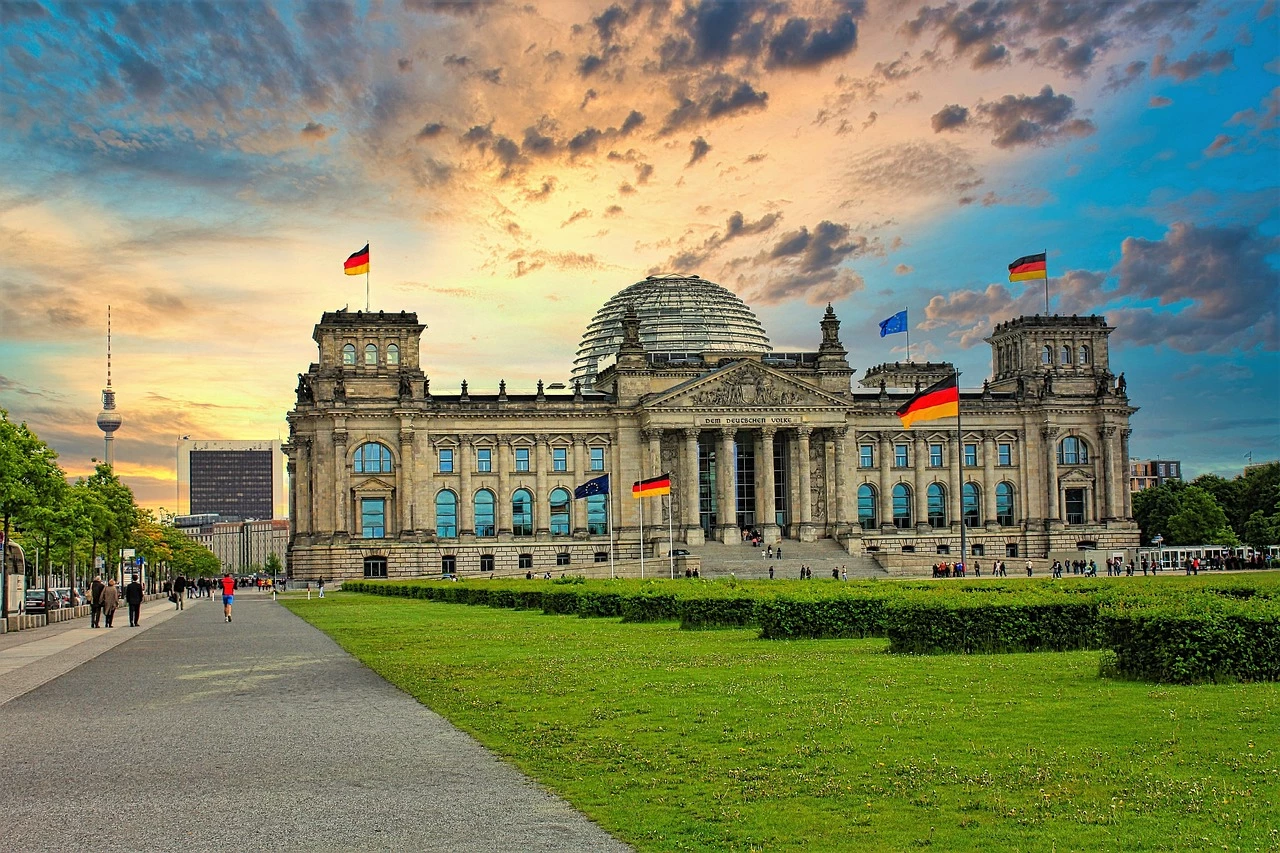
Guided tour of the Reichstag, the dome and the government quarter
A guide takes you through the government quarter, from the Chancellery and the Paul-Löbe-Haus along the Spree to the Reichstag, explaining how the Bundestag works and how the building went from the 1933 fire to Norman Foster's glass dome. The visit ends inside the dome, walking up the spiral ramp above the plenary chamber. The highlight: the view over the Tiergarten and the Brandenburg Gate from the roof terrace.
Good for a first day, especially if you could not get a free dome slot yourself: the operator handles the Bundestag registration, so bring an original ID. Around €16 per person on GetYourGuide, free cancellation.
- About 2 hrs
- €16 per person (GetYourGuide price 2026)
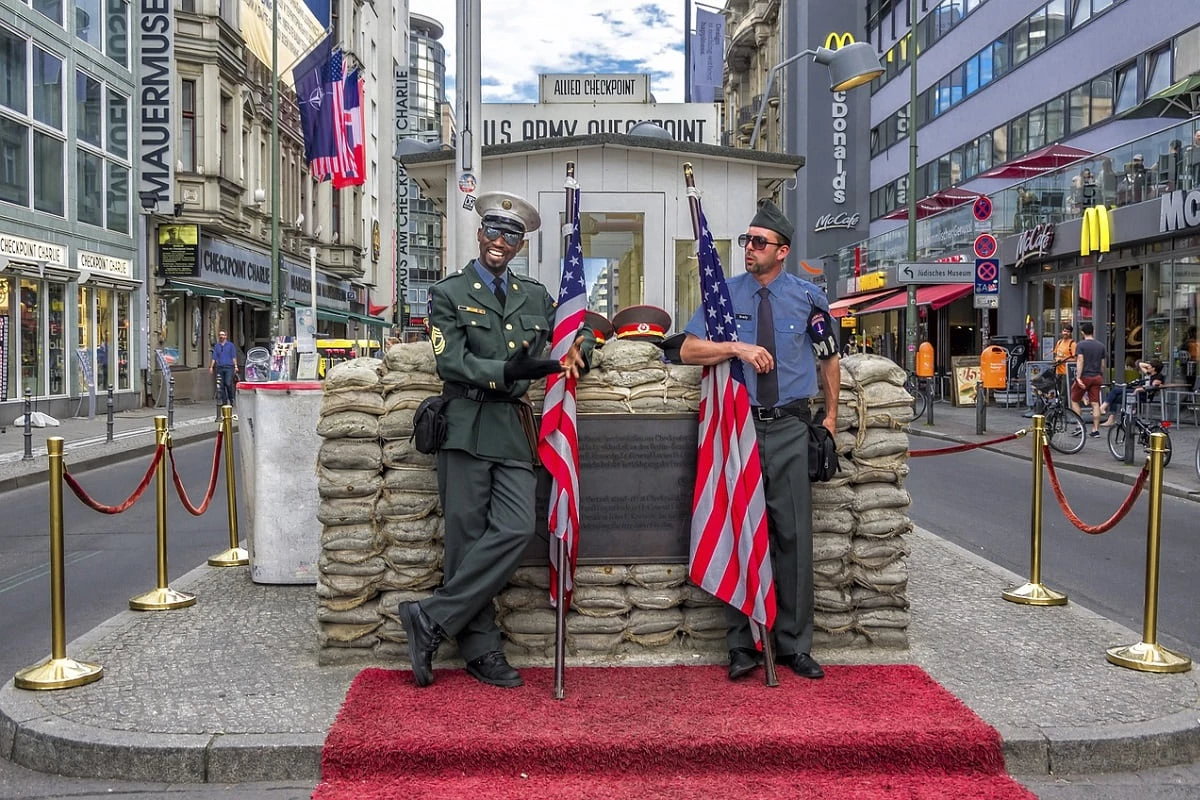
Third Reich and Cold War walking tour
Two hours on foot through the centre with a historian-guide: the Brandenburg Gate, the Holocaust Memorial, the site of Hitler's bunker under a car park, the former Air Ministry, the Wall remains on Niederkirchnerstrasse and Checkpoint Charlie. The highlight: standing on the exact line of the Wall while the guide explains how the death strip worked.
The best-rated introduction to Berlin's 20th century, with almost 10,000 reviews; suits first-time visitors and teenagers. About €24 per person on GetYourGuide, free cancellation; the Topography of Terror next to the route is free if you want to continue afterwards.
- 2 hrs
- €24 per person (GetYourGuide price 2026)
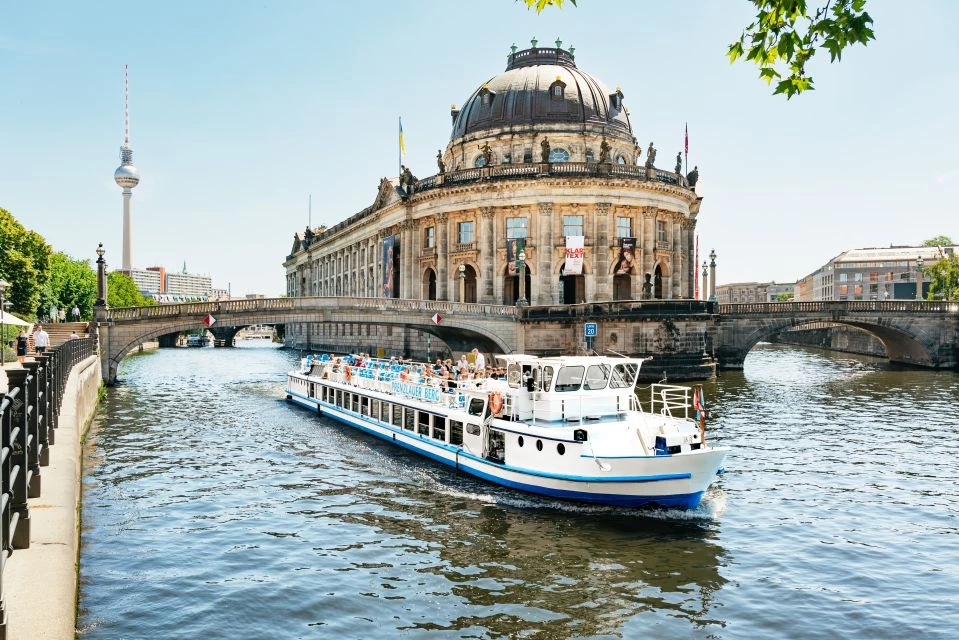
One-hour Spree cruise from the cathedral
The boat leaves from the landing stage opposite Berlin Cathedral and loops through the historic centre: Museum Island and the Bode Museum's prow, the Friedrichstrasse bridges, the government quarter with the Chancellery and the Reichstag, the Hauptbahnhof, then back past the Nikolaiviertel. Live commentary in German and English. The highlight: gliding under the arches of the Bode Museum at water level.
An easy hour to rest your legs between Museum Island and the Fernsehturm, fine with children. About €22 per person on GetYourGuide, free cancellation; sit on the open upper deck for photos and bring a layer, it is breezy on the water.
- 1 hr
- €22 per person (GetYourGuide price 2026)
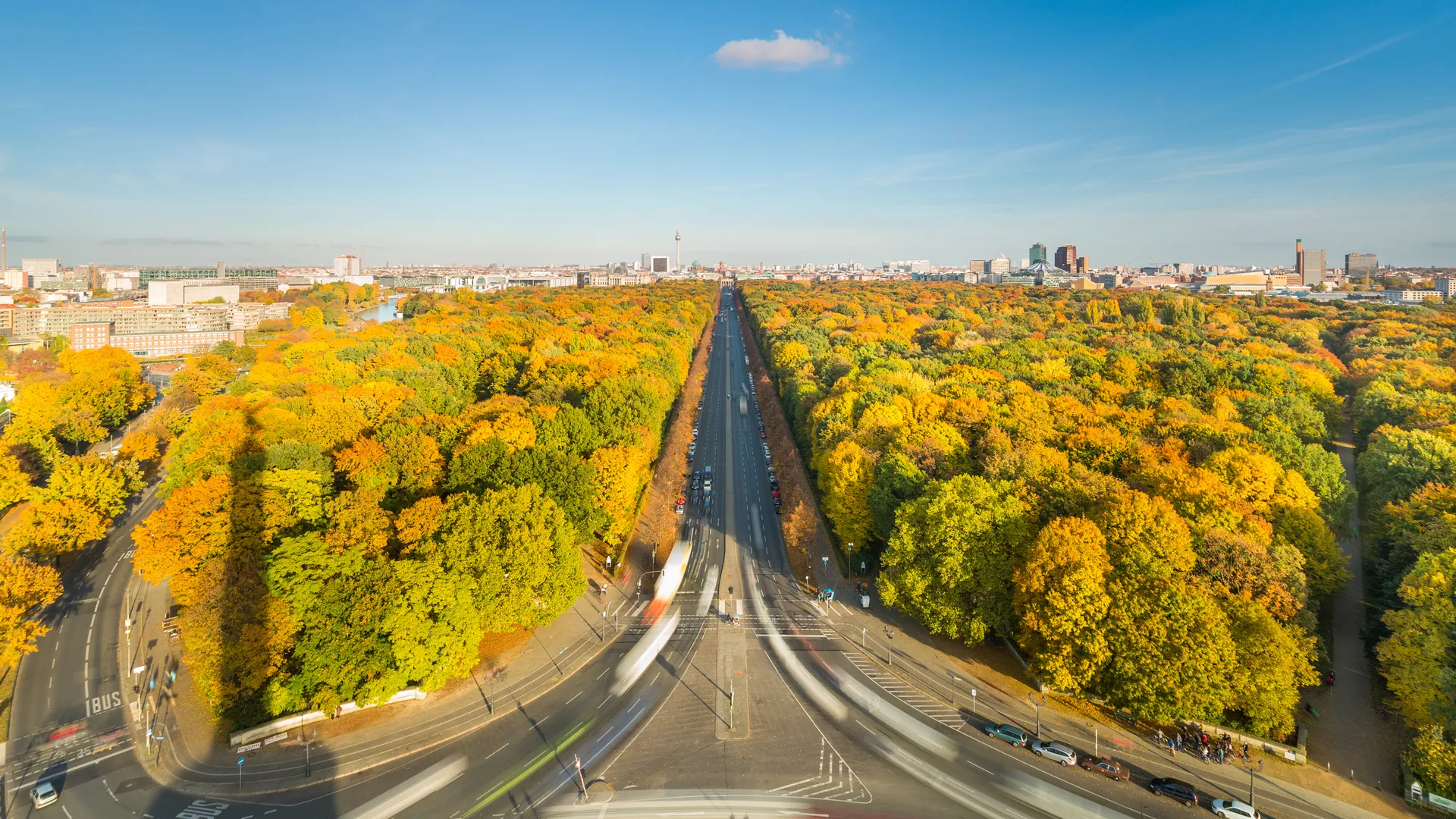
Berlin highlights by bike with a local guide
Berlin is flat and its sights are far apart, which makes the bike the right tool: the ride links Checkpoint Charlie, the Wall remains, Potsdamer Platz, the Holocaust Memorial, the Brandenburg Gate, the Reichstag and the Tiergarten at an easy pace, with stops for the guide's stories. The highlight: crossing the Tiergarten on the wide avenues to the Victory Column.
Suits anyone comfortable on a bike, with a small group and a break in a beer garden in season. About €28 per person on GetYourGuide, bike and helmet included, free cancellation; e-bike options exist for those who want them.
- About 3 hrs
- €28 per person, bike included (GetYourGuide price 2026)
Sachsenhausen concentration camp memorial from Berlin
Meeting point in central Berlin, then the S-Bahn and a walk to Oranienburg, 35 km north, where the SS built the Sachsenhausen camp in 1936 as the model for the whole system. The guide walks the triangular site: the gate with its "Arbeit macht frei" inscription, the roll-call ground, the barracks, the infirmary, the execution trench and the remains of Station Z. The highlight, if the word applies, is the silence on the roll-call ground where the guide reads accounts from survivors.
A sobering, well-run half day for adults and older teenagers; wear walking shoes and bring water, the site is exposed. About €25 per person on GetYourGuide, free cancellation, plus an ABC public-transport ticket for the train to Oranienburg. Entry to the memorial itself is free.
- Half day (about 6 hrs)
- €25 per person, public transport extra (GetYourGuide price 2026)
Getting there
By air to BER airport, then FEX or S-Bahn to the centre in about 30 minutes with an ABC ticket; by train (direct ICE from Paris-Est in about 8 hours) to the Hauptbahnhof; by coach to the ZOB.
Most visitors arrive at Berlin Brandenburg Airport (BER), which opened in 2020 about 18 km south-east of the centre. From the station beneath the terminal, the Airport Express (FEX) and regional trains reach Berlin Hauptbahnhof in roughly 30 minutes, and the S-Bahn (S9 and S45) also serves the city; the airport is in zone C, so you need an ABC ticket rather than the standard AB one.
By rail, ICE and international trains arrive at the central Hauptbahnhof; a direct ICE links Paris-Est to the Hauptbahnhof in about 8 hours (since December 2024), otherwise change in Frankfurt or Cologne, and there are direct trains from Amsterdam, Prague, Warsaw and Vienna. Long-distance coaches (FlixBus and others) use the ZOB near Messe Berlin, on the U2 line. Once in town, the U-Bahn, S-Bahn, trams and buses make a car unnecessary.
Getting around
U-Bahn, S-Bahn, trams and buses on one BVG ticket: €4 single or €11.20 for 24 hours in zone AB (2026); validate before boarding. Bikes and walking cover the centre.
Berlin's public transport runs as a single network under the BVG and VBB: ten U-Bahn lines, the S-Bahn ring and radial lines, trams mostly in the former East and a dense bus network. One ticket covers everything. In 2026 a single ticket (zone AB) costs €4 and a 24-hour ticket €11.20; the airport is in zone C. Paper tickets must be validated in the yellow or red stampers before boarding, or you risk a €60 fine; the BVG app sells tickets that are valid immediately. The U-Bahn and S-Bahn run roughly from 4.30 am to 1 am and all night on Fridays and Saturdays, when night buses take over on the other days.
For a stay of a week or more, the Deutschlandticket (€63 per month in 2026, monthly subscription cancellable online) covers all local and regional transport in Germany, Potsdam included. The Berlin WelcomeCard adds discounts at attractions to unlimited travel; prices depend on the duration and zones. Berlin is flat and full of bike lanes: rental bikes (Nextbike, Lime, Tier) and shops make cycling the fastest way from Mitte to Kreuzberg or along the Wall path. The historic centre, from the Reichstag to Alexanderplatz, is easily walked.
What to do
Climb the Reichstag dome, walk the Wall from Bernauer Strasse to the East Side Gallery, spend a morning on Museum Island, cruise the Spree, cycle across the Tiergarten and, if you dare, queue for a club.
A first day follows the axis of history: the Reichstag dome (registered in advance), the Brandenburg Gate, the Holocaust Memorial, Potsdamer Platz and Checkpoint Charlie, all on foot. A second day belongs to Museum Island in the morning, the cathedral and its dome, then the Fernsehturm or a one-hour Spree cruise from the landing stages by the cathedral. The third day goes to the Wall: the Bernauer Strasse memorial, then the East Side Gallery and the Oberbaum Bridge into Kreuzberg.
With more time, cycle the Tiergarten and the former airfield of Tempelhofer Feld, now a 300-hectare park where Berliners kite-surf on the runways; visit the Jewish Museum, the Topography of Terror or the Stasi Museum in Lichtenberg; or take the S-Bahn to Potsdam and the Sanssouci palaces (40 minutes, ABC ticket). The Sachsenhausen memorial, 35 km north, is a sobering half-day. At night, Kreuzberg and Neukölln bars open early, while the big clubs (Berghain, Sisyphos, About Blank) only fill after 1 am and run through the weekend.
Food
Currywurst and döner kebab from a stand, Königsberger Klopse or Eisbein in a Kneipe, then Vietnamese, Turkish and Syrian food in Kreuzberg and Neukölln; markets on Thursdays at Markthalle Neun and Sundays at Mauerpark.
Berlin's two street-food icons are the Currywurst, a sliced sausage under ketchup and curry powder invented here in 1949, and the döner kebab in its Berlin form, in a toasted bread with salad and sauces, developed by the city's Turkish community in the 1970s. Traditional Kneipen still serve Königsberger Klopse (meatballs in caper sauce), Eisbein (pork knuckle with sauerkraut) and Buletten with potato salad, washed down with a Berliner Weisse, a sour wheat beer coloured with raspberry or woodruff syrup.
The real strength of the city is its immigrant kitchens: Vietnamese pho and bún in Prenzlauer Berg and along Kantstrasse, Turkish breakfasts and Syrian mezze in Neukölln and Kreuzberg, Lebanese and Georgian tables everywhere. For markets, the Markthalle Neun in Kreuzberg holds a street-food evening on Thursdays, the Turkish market on Maybachufer runs Tuesdays and Fridays, and the Sunday flea market at Mauerpark comes with food stalls and open-air karaoke. Late-night Späti kiosks sell beer to drink on the kerb, a Berlin institution.
Itineraries
Two days for the historic axis and Museum Island, three to add the Wall from Bernauer Strasse to the East Side Gallery, four for Charlottenburg, Tempelhof or a day trip to Potsdam or Sachsenhausen.
Day 1, the historic axis. Reichstag dome at opening (registered in advance), Brandenburg Gate, Holocaust Memorial and its Information Centre, walk through the Tiergarten to Potsdamer Platz, then Checkpoint Charlie and the Topography of Terror. Evening in Kreuzberg around Bergmannstrasse.
Day 2, the island and the East. Museum Island from opening (Neues Museum with a time slot, then Altes Museum or Alte Nationalgalerie), the cathedral and its dome, lunch in the Nikolaiviertel, a one-hour Spree cruise from the cathedral landing stages, then the Fernsehturm at sunset and the Hackesche Höfe for dinner.
Day 3, the Wall. Bernauer Strasse memorial and its viewing platform in the morning, Mauerpark (flea market and karaoke on Sundays), tram to Prenzlauer Berg for lunch, S-Bahn to Warschauer Strasse, the East Side Gallery and the Oberbaum Bridge; evening bars in Friedrichshain or a club night.
Day 4, the West or a day trip. Charlottenburg Palace and the Kurfürstendamm, or cycle across Tempelhofer Feld and the Landwehr canal; alternatively the S-Bahn to Potsdam for Sanssouci (ABC ticket) or a guided half-day at the Sachsenhausen memorial.
Climate & seasons
When to go to Germany?
Monthly averages over the past 5 years (Open-Meteo).
Best months
- April
- May
- June
- August
- September
- October
Avoid
- January
- December
| Jan | Feb | Mar | Apr | May | Jun | Jul | Aug | Sep | Oct | Nov | Dec | |
|---|---|---|---|---|---|---|---|---|---|---|---|---|
| Our take | ||||||||||||
| Weather | ||||||||||||
| High | 5° | 7° | 11° | 14° | 19° | 25° | 25° | 25° | 21° | 15° | 8° | 5° |
| Rain (mm) | 60 | 54 | 35 | 36 | 52 | 57 | 92 | 60 | 37 | 54 | 55 | 57 |
| City sightseeing | City sightseeing March | City sightseeing April | City sightseeing May | City sightseeing June | City sightseeing July | City sightseeing August | City sightseeing September | City sightseeing October |
What to do by season (autumn)
-
City sightseeing
Pedestrian-friendly most of the year.
When to go
May to September for terraces, lakes and open-air life; December for the Christmas markets; January to March is cold, grey and cheapest.
Spring (April-May) brings the first terraces and the cherry blossom along the former Wall path at Bornholmer Strasse; museums are still quiet. Summer (June-August) is the season of open-air cinemas, swimming in the Wannsee and Müggelsee lakes, barbecues in the Tiergarten and clubs that spill outdoors; it is also the busiest and most expensive period, and heatwaves are now common.
Autumn (September-October) is the best compromise: mild days, golden parks, the Festival of Lights in October and lower hotel rates. Winter (November-March) is cold, often below zero and grey, but the Christmas markets on Gendarmenmarkt, at Charlottenburg Palace and in Spandau fill the Advent weeks, and the Berlinale film festival takes over Potsdamer Platz in February.
Budget
Roughly €70-90 a day in a hostel with street food and free sights, €150-200 in a mid-range hotel with a museum and a restaurant a day, more in summer and during trade fairs.
Berlin remains cheaper than Paris, London or Amsterdam, but the gap has narrowed. Count on a dorm bed or a simple double in a hostel for the lower budget, a three-star hotel double in Mitte or Prenzlauer Berg for a mid-range stay, and much higher rates during the Berlinale (February), the ITB tourism fair (March) and summer weekends. A Currywurst or döner costs a few euros, a main course in a Kneipe or a Vietnamese restaurant around €12-18, and a half-litre of beer in a bar well under what you would pay in Paris.
Many of the best things are free: the Brandenburg Gate, the Wall Memorial, the East Side Gallery, the Holocaust Memorial and its Information Centre, the Reichstag dome, the Topography of Terror and the parks. Budget for paid sights individually: the Fernsehturm from €27.50, the cathedral (paid, price on berlinerdom.de), the Museum Island museums by ticket or combined ticket (free under 18). For transport, a 24-hour ticket costs €11.20 in zone AB (2026), and the €63 Deutschlandticket beats any other pass from about a week's stay.
Where to stay
Mitte for the sights, Prenzlauer Berg for cafés and families, Kreuzberg and Friedrichshain for bars and clubs, Charlottenburg for a quieter, more classic West Berlin.
Mitte is the obvious base for a first visit: the Brandenburg Gate, Museum Island, the Hackesche Höfe and the Fernsehturm are all within walking distance, with the widest choice of hotels and the highest prices. Prenzlauer Berg, just north, keeps its cobbled streets, restored tenements, playgrounds and cafés; it is calm, family-friendly and well connected by tram and U2. Charlottenburg, in the old West around the Kurfürstendamm, has the classic hotels, the palace and a quieter, bourgeois pace.
Kreuzberg (around Bergmannstrasse or the Landwehr canal) and Friedrichshain (around Boxhagener Platz) are the neighbourhoods for bars, street food and clubs, with many hostels and apartments; expect noise at weekends. Neukölln, further south, is cheaper and younger but further from the sights. Whatever the district, choose a place within a few minutes of a U-Bahn or S-Bahn station: Berlin distances are long, and the ring railway makes any location near a station workable.
Safety
A safe city for its size; watch for pickpockets on the U-Bahn and at Alexanderplatz, avoid the drug scene around Kottbusser Tor and Görlitzer Park at night, and always validate your transport ticket.
Berlin is a safe capital for its size, and the main risks are petty: pickpockets on crowded S-Bahn and U-Bahn lines, around Alexanderplatz, the Hauptbahnhof and the East Side Gallery, and the shell-game hustlers near the Brandenburg Gate. Keep bags closed and phones out of back pockets. The areas around Kottbusser Tor, Görlitzer Park and parts of Neukölln have a visible drug scene at night; they are not no-go zones, but stay alert there after dark.
Cyclists share the streets with fast trams and cars: use the lanes and watch the tram tracks. Ticket inspectors work in plain clothes and fine on the spot (€60) for an unvalidated ticket. The emergency number is 112 for medical and fire, 110 for the police. Tap water is drinkable, summers can bring heatwaves and winter pavements are icy, so pack accordingly. Pharmacies (Apotheke) are easy to find; EU visitors should carry the European Health Insurance Card.
Formalities
EU citizens need only a valid ID card or passport; many non-EU visitors travel visa-free for up to 90 days in 180. EES has been running since 10 April 2026; ETIAS is not yet in service and has no launch date (September 2026).
Germany is part of the European Union and the Schengen Area, and its currency is the euro (EUR). EU, EEA and Swiss citizens travel with just a valid national ID card or passport; many non-EU nationals (UK, US, Canada, Australia and others) may enter visa-free for up to 90 days within any 180-day period for tourism.
EES: since 10 April 2026, the EU Entry/Exit System registers non-EU short-stay travellers at the external border (passport, photo, fingerprints); no advance step is needed. ETIAS: the travel authorisation is not yet in service and no launch date has been set (September 2026); check the official EU website before you travel. Cards are widely accepted, but keep some cash for clubs, markets and small kiosks; the European Health Insurance Card is recommended for EU visitors, and tap water is safe to drink throughout Berlin.
Tips
Register for the Reichstag dome before you fly, carry cash for clubs and kiosks, avoid Mondays for museums, validate tickets, and go to clubs late, dressed down, with a relaxed attitude at the door.
- Book the Reichstag dome first: online registration with the Bundestag is compulsory and slots go days ahead; bring an original ID.
- Cash still matters: many Kneipen, Spätis, market stalls and club doors take cash only, and card minimums are common.
- Mondays: most museums, the Wall Memorial documentation centre and the Holocaust Memorial information centre are closed; keep Monday for the parks, the East Side Gallery and Tempelhofer Feld.
- Validate paper tickets in the stampers before boarding, or use the BVG app.
- Sunday shopping: shops are closed, but flea markets (Mauerpark, Boxhagener Platz) and bakeries are open.
- Bottle deposit (Pfand): 8 to 25 cents on most bottles and cans; leaving empties beside a bin for collectors is the local custom.
- Clubs: arrive after 1 am, alone or in a small group, in dark casual clothes, phone away; photos are banned inside and a refusal at the door is not personal.
- Quiet hours: from 10 pm, and all day Sunday, noise rules apply in residential buildings, including holiday flats.
FAQ
Best time to go, getting in from BER, visas and EES/ETIAS, the Reichstag dome, costs, length of stay, the WelcomeCard and tap water: the short answers before you go.
When is the best time to visit Berlin?
May to September offers mild weather and lively outdoor life. December is also popular for its Christmas markets, though Berlin winters are cold and grey.
How do I get from BER airport to the city centre?
The Airport Express (FEX) and regional trains link BER to the central station in about 30 minutes, and the S-Bahn (S9/S45) also serves the centre; the airport is in zone C, so buy an ABC ticket.
Do I need a visa for Germany?
Germany is in the Schengen Area: EU/EEA citizens need only an ID card. Many non-Europeans (US, Canada, UK and others) can enter visa-free for up to 90 days. EES registration applies at the border since 10 April 2026; ETIAS is not yet in service and has no launch date (September 2026).
Is the Reichstag dome free?
Yes, but you must register online with the Bundestag beforehand and bring an original ID. Same-day places are sometimes released at the Service Center on Platz der Republik, at least two hours before the visit.
Is Berlin expensive?
Berlin is one of the more affordable major European capitals, cheaper than Paris or London for lodging and dining, though prices have risen in recent years. A single public-transport ticket (zone AB) costs €4 in 2026.
How many days do you need in Berlin?
Plan for three to four days to cover the major sights; an extra day lets you explore neighbourhoods like Kreuzberg or Friedrichshain, or take the train to Potsdam.
Is the Berlin WelcomeCard worth it?
Yes if you use public transport often and visit several museums: it combines unlimited travel (AB or ABC zones) with discounts at many attractions. For a stay of a week or more, the €63 monthly Deutschlandticket is cheaper for transport alone.
Is tap water drinkable in Berlin?
Yes, Berlin tap water is safe to drink, strictly controlled and of good quality; you can refill your bottle freely.
Sources
The figures in this guide come from the sources below, checked on the publication date.
Leave a comment
Share your thoughts or travel experience. Your email will not be published.