

Contents 28
Bavaria holds much of what people come to Germany for: Munich and its beer gardens, the ramparts of Rothenburg and Nuremberg, Ludwig II's palaces, listed as a UNESCO World Heritage Site in 2025, and the Alps, from the Zugspitze (2,962 m) to the Königssee.
Here are the 17 sights that shape a first trip, from north to south, followed by the practical information: when to go, how to get there, where to stay and which visits to book.
Overview
Germany's largest state, Bavaria combines Munich, the medieval towns of Franconia, Ludwig II's castles (UNESCO-listed in 2025) and the Alps, from the Zugspitze to the Königssee.
Bavaria is Germany's largest state, stretching from Franconia in the north across the Danube to the Alps in the south. This guide brings together its 17 major sights: Munich and its museums, the medieval towns of Nuremberg, Bamberg, Rothenburg and Regensburg, Ludwig II's palaces (Neuschwanstein, Linderhof, Herrenchiemsee), listed as a UNESCO World Heritage Site in July 2025, and the Bavarian Alps, from the Zugspitze to the Königssee.
Munich is the base for the south and Nuremberg for Franconia; trains serve the towns well, while a car is easier for the castles and Alpine lakes.
17 places to take with you
In the guide's order, ready for Google Maps or your GPS.
Book the activities from this guide
Our picks for Bavaria, well rated and free to cancel.
-
Book this activity
Neuschwanstein with guaranteed entry, from Hohenschwangau
€60 per person, ticket included (GetYourGuide price 2026)
-
Book this activity
Zugspitze day trip from Munich by minibus
€125 per person, lifts included (GetYourGuide price 2026)
-
Book this activity
Königssee and the Berchtesgaden salt mine from Munich
€79 per person (GetYourGuide price 2026)
Affiliate links: Travel Advice earns a commission if you book, at no extra cost to you. Learn more

Neuschwanstein Castle
Begun in 1869 for Ludwig II above the Pöllat gorge, Neuschwanstein is an opera set in stone: Neo-Romanesque architecture, a throne hall modelled on Byzantine basilicas, a Singers' Hall devoted to Wagner's legends. The king lived there only a few months, and the castle was still unfinished at his death in 1886.
Since 12 July 2025 it has been a UNESCO World Heritage Site together with Ludwig II's other palaces: Linderhof, Herrenchiemsee and the Schachen lodge. The most famous view is from Mary's Bridge, above the gorge.

Munich (München)
The Bavarian capital is best explored on foot from Marienplatz, where the New Town Hall glockenspiel comes to life every day at 11 am and noon. Just behind it, the Viktualienmarkt, set up in 1807, combines fresh-produce stalls and a beer garden.
Further out, Nymphenburg Palace was the Wittelsbachs' summer residence, the Pinakotheks hold European painting from the Middle Ages to today, and the English Garden, larger than Central Park, hides a permanent surf wave on the Eisbach. Munich is also the most practical base for King Ludwig II's castles and the Alps.

Zugspitze, Germany's highest peak (2,962 m)
On the Austrian border, the Zugspitze rises to 2,962 m; on a clear day the summit platform takes in hundreds of peaks across four countries. Three ways lead up without walking: the Eibsee cable car, which climbs in one go from the lake; the Bayerische Zugspitzbahn rack railway from Garmisch to the Zugspitzplatt glacier, then the Gletscherbahn to the summit; and, on the Austrian side, the Tiroler Zugspitzbahn from Ehrwald.
In winter the Zugspitzplatt is Germany's only glacier ski area; in summer the Reintal and Höllental trails are for experienced hikers.

Lake Königssee
Hemmed in by sheer walls in Berchtesgaden National Park, the Königssee stretches for almost 8 km. It can only be explored by silent electric boat from Schönau; halfway along, the boatman stops to play a few notes on a trumpet and let the echo come back off the cliff.
The boat stops at St Bartholomew's, a red-domed chapel on a spit of land below the Watzmann, then continues to Salet, where a short path leads to the Obersee, a smaller and even wilder lake.

Nuremberg (Nürnberg)
Nuremberg unfolds its old town inside almost complete ramparts, from the Imperial Castle (Kaiserburg) on its sandstone rock down to the Hauptmarkt and its Gothic fountain, the Schöner Brunnen. The Germanic National Museum holds the broadest panorama of German art and culture.
The city also faces its 20th-century history: the Documentation Centre, set in the Nazi party's unfinished Congress Hall, and Courtroom 600 in the Palace of Justice, where the 1945-1946 trials were held, are both open to visitors.

Rothenburg ob der Tauber
Perched above the Tauber valley, Rothenburg has kept its 14th-century walls, which you walk along the covered wall walk looking over tiled roofs. The Plönlein, a fork of two lanes below a tower, is the town's best-known image; the Marktplatz and its Gothic and Renaissance town hall are its centre.
A stop on the Romantic Road between Würzburg and Füssen, the town also houses the Medieval Crime Museum and, in December, the Reiterlesmarkt. Try the local Schneeballen, balls of fried sweet pastry.

Bamberg
Built on seven hills beside the Regnitz, Bamberg has been a UNESCO World Heritage Site since 1993 for its intact medieval centre. The fresco-covered old town hall (Altes Rathaus) stands on an island in the middle of the river, between two bridges.
On the cathedral hill, the late-Romanesque Dom houses the Bamberg Horseman, a 13th-century equestrian statue. Below, Little Venice lines up former fishermen's houses at the water's edge. The town is also the capital of smoked beer, Rauchbier.

Regensburg
A Roman camp on the Danube, Regensburg still has its Porta Praetoria, a 2nd-century gate built into later houses. Its old town, a UNESCO site since 2006 together with Stadtamhof, lines up medieval patrician towers around the Gothic St Peter's Cathedral.
The Stone Bridge, completed in the 12th century, links the two banks; at its foot, the Historische Wurstkuchl, whose origins go back to the bridge's building site, still grills sausages. Less crowded than Munich or Nuremberg, the town takes a day, between Passau and Nuremberg.

Würzburg Residence
Built from 1720 to 1744 for the prince-bishops to plans by Balthasar Neumann, the Würzburg Residence is one of Europe's great Baroque palaces and a UNESCO site since 1981. Its grand staircase, with no central pillar, carries a vault measuring 18 by 30 metres.
In 1752-1753 Tiepolo painted on it a fresco of about 677 m², one of the largest in the world: the four continents paying homage to the prince-bishop. The tour also takes in the Imperial Hall and the Mirror Cabinet, before the terraced Court Gardens.

Herrenchiemsee, Ludwig II's Versailles
On Herreninsel, the largest island in the Chiemsee, Ludwig II began his tribute to Louis XIV in 1878: a new palace modelled on Versailles, with its own Hall of Mirrors. The king's death in 1886 halted the work: only about twenty of the 70 planned rooms were finished, and a whole wing remains bare brick.
The palace is one of Ludwig II's castles listed by UNESCO in 2025. It can only be reached by boat, and the island is explored on foot, between formal gardens and the former canons' monastery.

Linderhof Palace
In a remote valley near Ettal, Linderhof is Ludwig II's smallest palace and the only one finished in his lifetime. An admirer of Louis XIV, the king turned it into a gilded Rococo villa, with a hall of mirrors and a table that rose from the kitchen so he could dine alone.
The park holds the surprises: the Venus Grotto, a lit artificial lake recreating a set from Wagner's Tannhäuser, and the Moorish Kiosk. Linderhof is one of Ludwig II's palaces listed by UNESCO in 2025.

Hohenschwangau Castle
Facing Neuschwanstein across the village, Hohenschwangau is the yellow castle where Ludwig II grew up. His father, Crown Prince Maximilian, had it rebuilt in the 1830s on the ruins of a medieval fortress, in the Romantic taste of the time.
Its rooms, painted with scenes of chivalry and Germanic legends, including the Swan Knight, show the world that fed the future king's projects. Smaller and quieter than its neighbour, it takes about half an hour, with views over the Alpsee.

Berchtesgaden National Park
Germany's only Alpine national park, created in 1978, Berchtesgaden protects about 210 km² of mountains, forests and lakes around the Königssee. The Watzmann, at 2,713 m the country's third-highest peak, is its skyline.
Trails range from easy walks to high-mountain routes; the quieter Klausbach valley and Lake Hintersee are the gentlest ways in. Above Berchtesgaden, the Kehlsteinhaus (the "Eagle's Nest") is reached by a special bus and a lift cut into the rock, from May to October.

Pilgrimage Church of Wies
In the middle of meadows near Steingaden, the Wieskirche hides behind a plain facade one of the most accomplished Rococo interiors in Europe. The brothers Johann Baptist and Dominikus Zimmermann built it from the late 1740s to 1754 around a statue of the Scourged Saviour, the focus of a pilgrimage since 1738.
The oval, light-filled church combines white and gilded stucco, coloured columns and a trompe-l'œil ceiling. It has been a UNESCO World Heritage Site since 1983.

Passau
On the Austrian border, Passau sits on a peninsula where three rivers meet: the Danube, the green Inn and the dark Ilz. The colours of the water can still be told apart at the tip, beyond the Baroque old town rebuilt by Italian architects after the fire of 1662.
St Stephen's Cathedral houses one of the largest church organs in the world: almost 18,000 pipes and 233 stops, spread over several organs playable from the main console. Across the Danube, the Veste Oberhaus fortress looks down on the confluence.

Garmisch-Partenkirchen
Two villages merged for the 1936 Winter Olympics form Garmisch-Partenkirchen, at the foot of the Zugspitze. The Olympic ski jump still towers over the resort; in Partenkirchen's streets, painted facades (Lüftlmalerei) show religious scenes and farming life.
Half an hour's walk from the stadium, the Partnach Gorge (Partnachklamm) cuts in for more than 700 m between 80 m walls, on a path carved into the rock and through tunnels, below waterfalls. It is the natural base for the Zugspitze, Linderhof and the Eibsee.

Ettal Benedictine Abbey
Founded in 1330 by Emperor Louis IV of Bavaria, Ettal Abbey is still home to Benedictine monks. Its basilica, rebuilt in Baroque style in the 18th century, is laid out under a great painted dome, visible from far down the valley.
The monks run a school and make beer and herbal liqueur (Ettaler Klosterlikör), sold in the shop. On the road to Linderhof and Oberammergau, the abbey is a natural stop on a day devoted to Ludwig II's palaces.
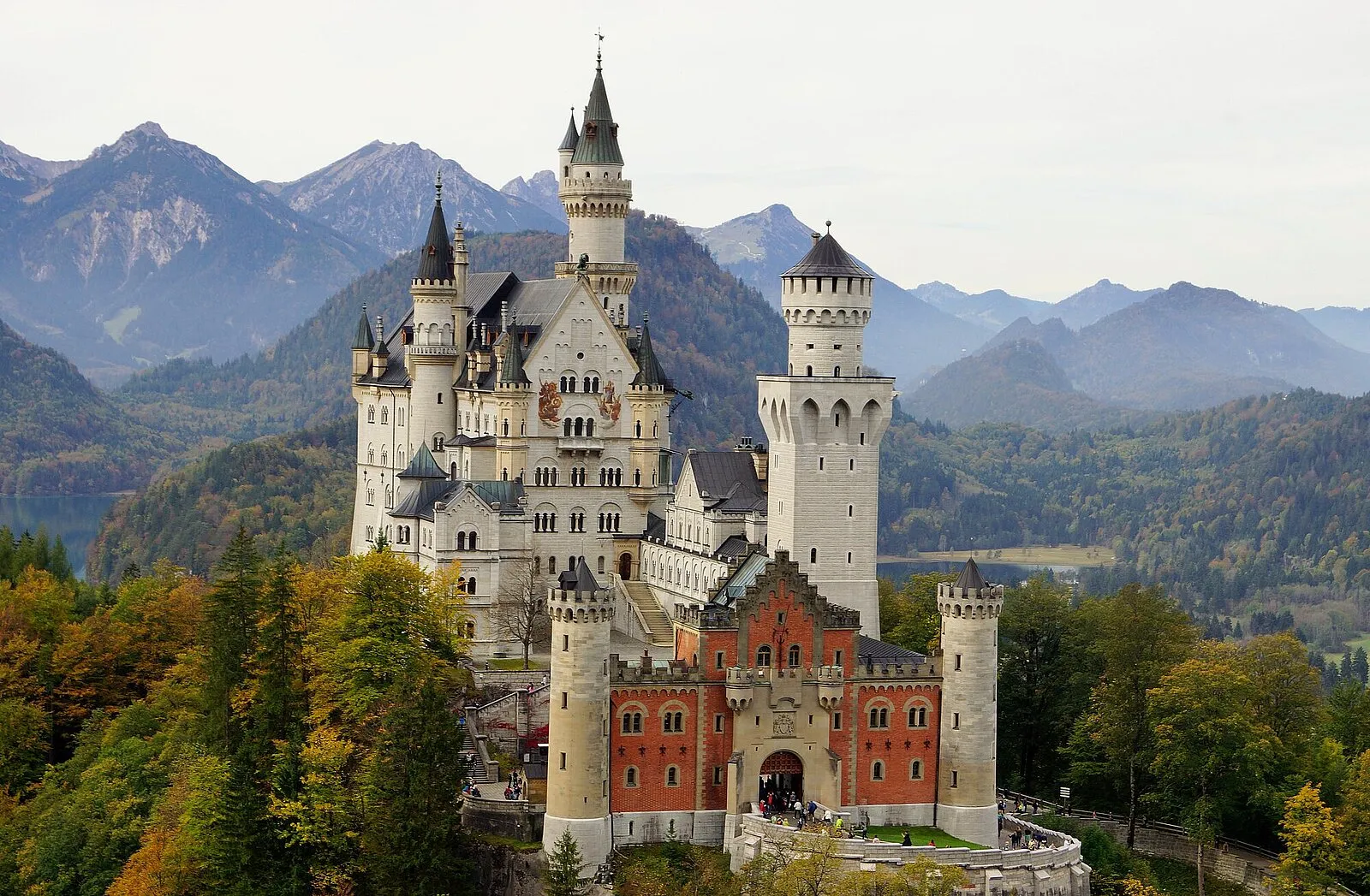
Neuschwanstein with guaranteed entry, from Hohenschwangau
You meet an English-speaking guide at car park P3 in Hohenschwangau, who handles the entry ticket: this is mainly useful on days when the Ticket Center is sold out. The shuttle goes up towards Mary's Bridge when it is open, then the guided tour takes in the throne hall and the Singers' Hall; you come down by horse carriage when the service runs. The highlight: the view of the castle from Mary's Bridge, above the Pöllat gorge.
Allow €60 per person on GetYourGuide, with free cancellation: more than a plain ticket (about €21), but useful in summer when official slots are gone.
- 3 hrs
- €60 per person, ticket included (GetYourGuide price 2026)
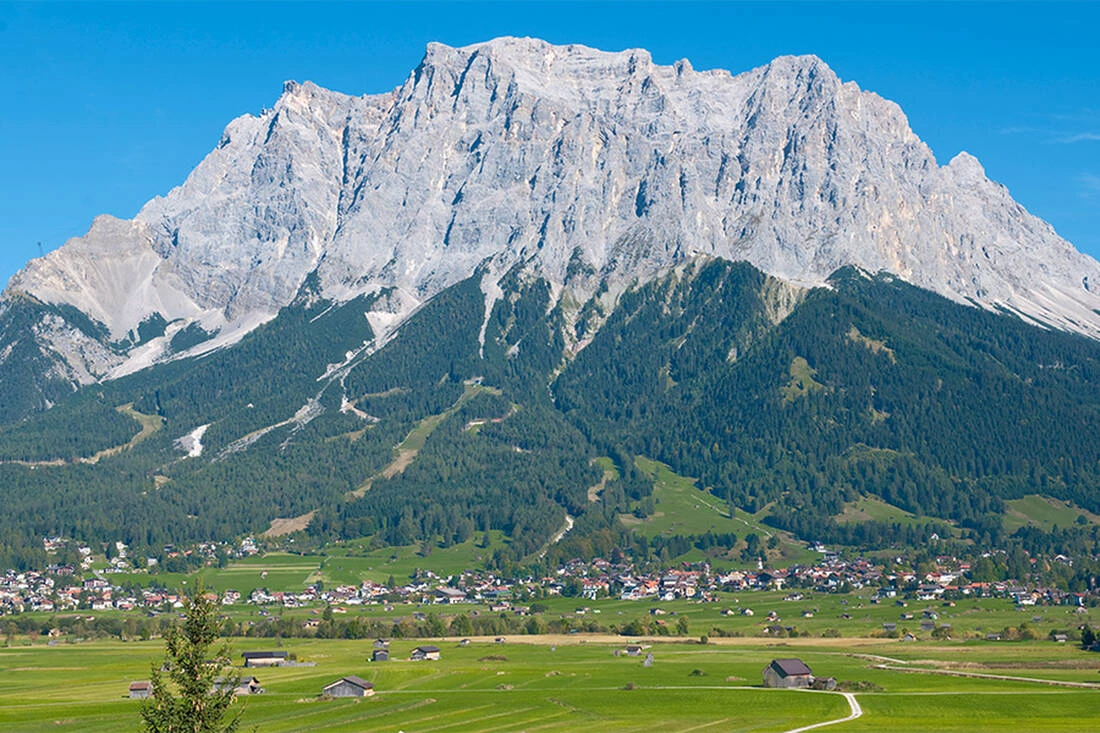
Zugspitze day trip from Munich by minibus
A minibus takes you from Munich to Garmisch-Partenkirchen; you ride the cable car up to 2,962 m and come down on the rack railway, with free time on the summit platform and at Germany's highest beer garden. The way back goes through central Garmisch. The highlight: the summit panorama over the Alps of four countries.
The day saves you driving and piecing together tickets; allow €125 per person on GetYourGuide, lifts included, with free cancellation. Pick a day with a good forecast: the view is what you pay for.
- 9 hrs
- €125 per person, lifts included (GetYourGuide price 2026)
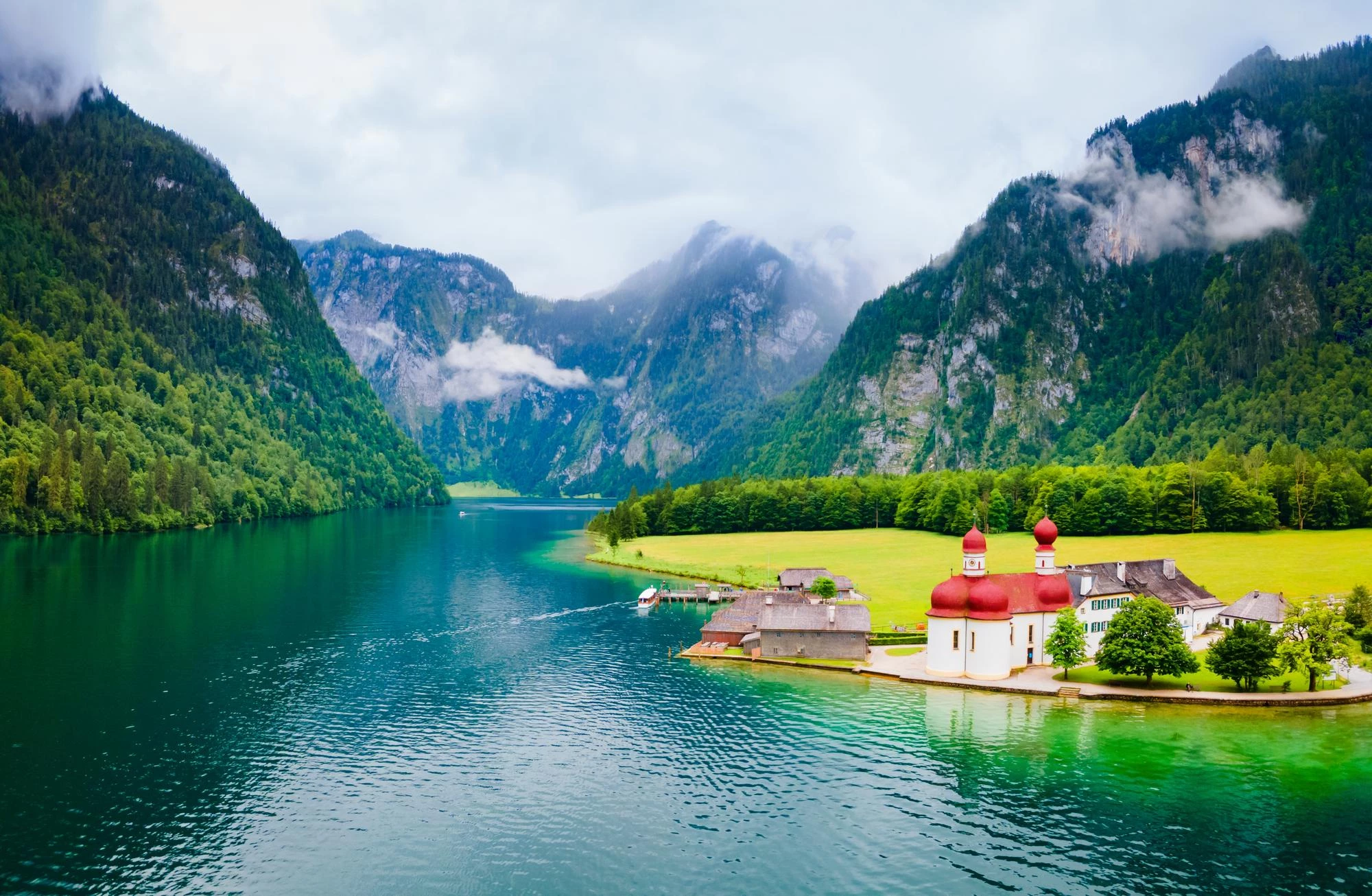
Königssee and the Berchtesgaden salt mine from Munich
About 2.5 hours by coach from Munich to Berchtesgaden: you put on miners' overalls for the salt mine, ride the wooden slides and cross an underground lake on a raft, then board a silent electric boat on the Königssee, with the trumpet and its echo off the cliff. The highlight: arriving at St Bartholomew's, below the Watzmann.
A long day, designed for travellers without a car; allow €79 per person on GetYourGuide, with free cancellation. Bring a jacket: the mine stays around 12 °C all year.
- 10 hrs
- €79 per person (GetYourGuide price 2026)
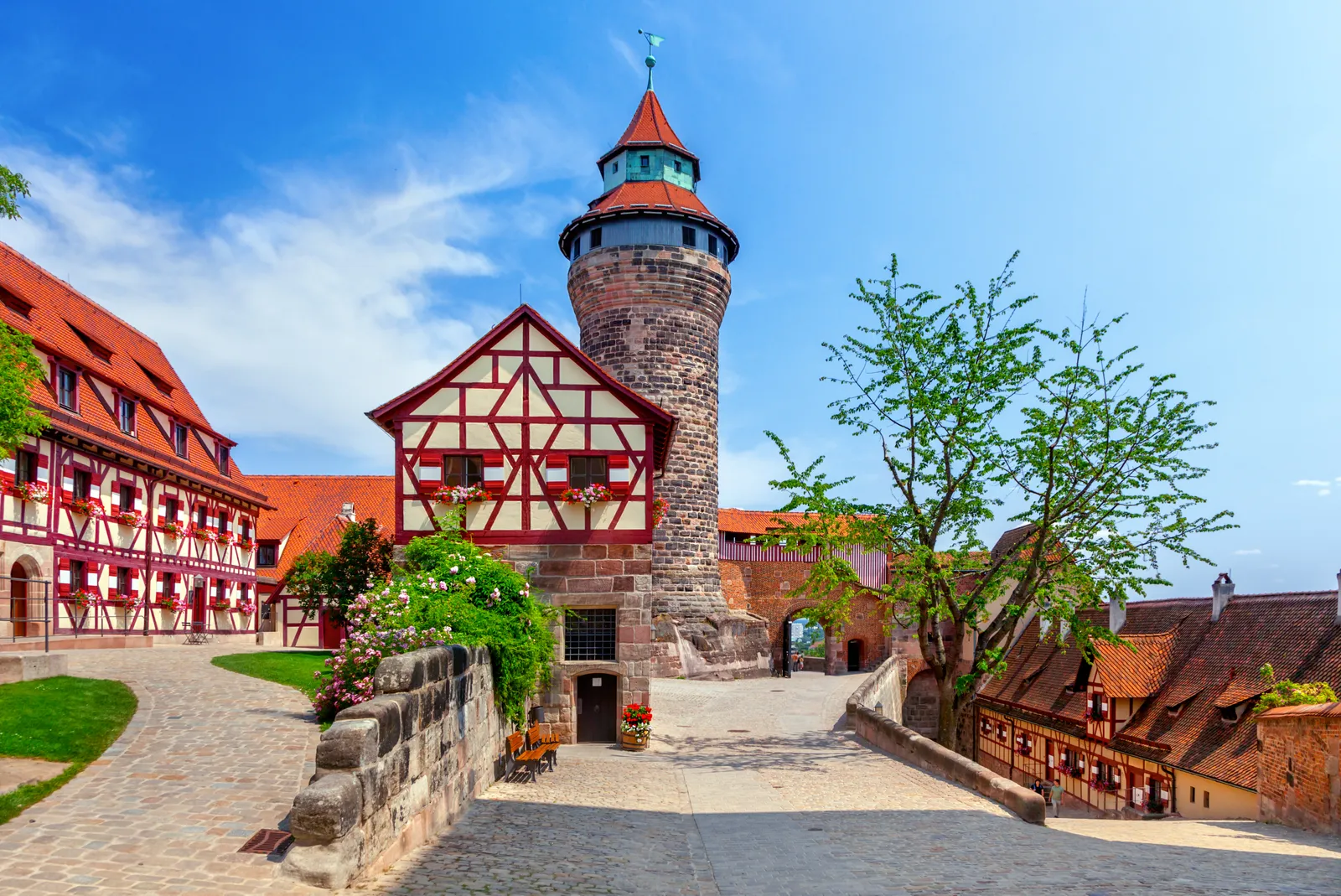
Secret passages of Nuremberg's city walls
An hour with a local guide in the casemates and passages dug beneath the Imperial Castle and its sandstone walls, the routes the town's defenders used. The guide explains how the moats and bastions kept Nuremberg safe from sieges. The highlight: the underground galleries below the Kaiserburg, closed to independent visitors.
A good warm-up before the castle itself; allow €12 per person on GetYourGuide, with free cancellation. Bring a jacket, it is cool underground.
- 1 hr
- €12 per person (GetYourGuide price 2026)
Getting there
Reach Bavaria via Munich (MUC) and Nuremberg (NUE) airports, or by train through the München Hauptbahnhof hub. On the ground, the Deutschland-Ticket (€63/month) covers all regional transport.
By air: the two gateways are Munich Airport (MUC), one of Germany's largest, and Nuremberg Airport (NUE) for the north of the region. Closer to the Alps, Memmingen (FMM) serves the Allgäu and Neuschwanstein, and Salzburg (SZG), in Austria, is half an hour from Berchtesgaden.
By train: München Hauptbahnhof is the main rail hub, linked to the rest of Germany and Europe (ICE). Munich and Nuremberg are about 1 hour apart by ICE.
Getting around: the Deutschland-Ticket (€63/month in 2026) covers all regional and urban transport in Germany (bus, tram, U-Bahn, S-Bahn, RB/RE trains, 2nd class) — but not long-distance ICE/IC/EC trains. Great for exploring Bavaria car-free; a car still helps for the Alpine castles and the Berchtesgaden area.
The same rail network links Bavaria to the rest of Germany: our guides to Berlin and Cologne round off the trip.
What to do
Visit Ludwig II's palaces, wander Franconia's medieval towns, ride up the Zugspitze, sail the Königssee, and catch Oktoberfest or the Christmas markets depending on the season.
A first ten-day trip can link Munich, Ludwig II's castles around Füssen, the Alps of Garmisch and Berchtesgaden, then Franconia (Nuremberg, Bamberg, Rothenburg, Würzburg). From Munich, Augsburg and its Fuggerei, the world's oldest social housing estate, or the Dachau concentration camp memorial take half a day. Beer gardens open with the first fine days, high-altitude hikes run from June to September, and Christmas markets from late November to 24 December.
Several visits need booking: the royal palaces (guided tours at set times), the Zugspitze on a clear day and, during Oktoberfest, tables in the big tents.
Climate & seasons
When to go to Germany?
Monthly averages over the past 5 years (Open-Meteo).
Best months
- April
- June
- July
- October
Avoid
- January
- December
| Jan | Feb | Mar | Apr | May | Jun | Jul | Aug | Sep | Oct | Nov | Dec | |
|---|---|---|---|---|---|---|---|---|---|---|---|---|
| Our take | ||||||||||||
| Weather | ||||||||||||
| High | 4° | 7° | 11° | 14° | 18° | 24° | 25° | 25° | 20° | 15° | 7° | 5° |
| Rain (mm) | 61 | 49 | 38 | 51 | 88 | 59 | 70 | 97 | 81 | 52 | 72 | 63 |
| Hiking & nature | Hiking & nature April | Hiking & nature May | Hiking & nature June | Hiking & nature July | Hiking & nature August | Hiking & nature September | Hiking & nature October |
What to do by season (autumn)
-
Hiking & nature
Mild temperatures, stable conditions.
When to go
Castles and medieval towns are best April to October; the high mountains (Zugspitze) June to September; Oktoberfest late September–early October; Christmas markets late November to 24 December; skiing in winter.
Each season has its highlights in Bavaria:
- April-October: Ludwig II's castles, medieval towns (Rothenburg, Bamberg, Regensburg) and lakes at their best.
- June-September: hiking and cable cars in the high mountains, clear Zugspitze views.
- Late September-early October: Oktoberfest in Munich (Theresienwiese) — the 2026 edition runs 19 September to 4 October.
- Late November-24 December: Christmas markets, including Nuremberg's famous Christkindlesmarkt.
- Winter: skiing and resorts around Garmisch-Partenkirchen.
Where to stay
Munich for museums and trips south, Füssen for a quiet Neuschwanstein visit, Garmisch for the Zugspitze, Berchtesgaden for the Königssee, Nuremberg or Bamberg for Franconia.
- Munich: the most practical base for a first trip. The old town (Altstadt) and Maxvorstadt, near the Pinakotheks, let you do everything on foot; the area around the central station has the best train links to the Alps.
- Füssen: 4 km from Neuschwanstein, to reach the Ticket Center before the tours from Munich.
- Garmisch-Partenkirchen: for the Zugspitze, the Partnachklamm and Linderhof.
- Berchtesgaden: for the Königssee, the national park and the Kehlsteinhaus.
- Nuremberg or Bamberg: for Franconia, Rothenburg and Würzburg.
During Oktoberfest (19 September-4 October 2026) and the Christmas markets, prices in Munich and Nuremberg soar: book months ahead or stay outside the city on an S-Bahn line.
Formalities
Bavaria is in Germany, within the Schengen Area: no visa for French nationals, who enter with an ID card or valid passport. The currency is the euro.
Bavaria is part of Germany and the Schengen Area. French (and EU) nationals need no visa and can enter with a simple national ID card or a valid passport.
The currency is the euro (EUR). Cards are accepted in most shops, but keep some cash: some cafés, markets and small museums still prefer cash.
FAQ
Visa, booking Neuschwanstein, Oktoberfest dates, the Deutschland-Ticket, the best season and UNESCO sites: the essentials before your Bavaria trip.
Do French citizens need a visa to visit Bavaria?
No. Bavaria is part of Germany and the Schengen Area: French and other EU nationals enter without a visa, using a national ID card or a valid passport. The currency is the euro, with no exchange needed from the eurozone. Cards are accepted in most shops, but keep some cash: a number of Bavarian cafés, markets and small museums still prefer cash payment, which often catches visitors from other European countries off guard.
How do I book a visit to Neuschwanstein Castle?
The interior can only be seen on a guided tour, booked in advance online at shop.ticket-center-hohenschwangau.de. There is no free access inside; a small allocation of same-day tickets goes on sale from 8 am at the Ticket Center, a risky bet in high season. The adult ticket costs about €21, plus booking fee. Arrive early and allow for the walk up from the village. The castle is one of Ludwig II's great palaces, best visited between April and October, like the region's lakes and medieval towns.
When is Munich’s Oktoberfest?
Oktoberfest takes place on the Theresienwiese in Munich, usually from late September to the first weekend of October. In 2026, the 191st edition runs from 19 September to 4 October. It is the tightest period of the year for accommodation in Munich: book months ahead if you are targeting those dates, or shift your trip by a few weeks. Bavaria's other big seasonal draw comes at the end of the year, with Christmas markets from late November to 24 December, including Nuremberg's famous Christkindlesmarkt.
How do I get around Bavaria without a car?
The rail network is dense around Munich and Nuremberg, about an hour apart by ICE. The Deutschland-Ticket, €63 a month in 2026, covers all regional and urban transport in Germany, buses, trams, U-Bahn, S-Bahn and RB or RE trains in second class, but not long-distance ICE, IC and EC services. It lets you reach most cities and many sites without a car. A car still helps for the Alpine castles and the Berchtesgaden area, which the railway serves poorly. München Hauptbahnhof is the main rail hub.
What is the best time to visit Bavaria?
Each season has its highlights. April to October for the Ludwig II castles, the medieval towns of Rothenburg, Bamberg and Regensburg, and the lakes. June to September for hiking, high-mountain cable cars and a clear Zugspitze. Late September into early October for Oktoberfest, running 19 September to 4 October in 2026. Late November to 24 December for the Christmas markets, including Nuremberg's Christkindlesmarkt. Winter belongs to skiing, around Garmisch-Partenkirchen.
Which Bavarian sites are UNESCO World Heritage?
The best known are the Würzburg Residence (1981), the Pilgrimage Church of Wies (1983), Bamberg's historic centre (1993), Regensburg's old town with Stadtamhof (2006), the Margravial Opera House in Bayreuth (2012), Augsburg's water management system (2019) and, since 12 July 2025, Ludwig II's palaces: Neuschwanstein, Linderhof, Herrenchiemsee and the Schachen lodge. Bavaria also shares cross-border sites such as the prehistoric pile dwellings around the Alps and the Roman limes. The best season to visit them is April to October.
Sources
The figures in this guide come from the sources below, checked on the publication date.
- whc.unesco.org
- whc.unesco.org
- whc.unesco.org
- www.neuschwanstein.de
- www.hohenschwangau.de
- en.wikipedia.org
- en.wikipedia.org
- en.wikipedia.org
- www.oktoberfest.de
- int.bahn.de
- en.wikipedia.org
- bavaria.travel
- whc.unesco.org
- www.hohenschwangau.de
- www.partnachklamm.de
- www.residenz-wuerzburg.de
- en.wikipedia.org
- en.wikipedia.org
- en.wikipedia.org
- en.wikipedia.org
- commons.wikimedia.org
- commons.wikimedia.org
Leave a comment
Share your thoughts or travel experience. Your email will not be published.