

Contents 27
Stockholm spreads over 14 islands between Lake Mälaren and the Baltic Sea. This guide gathers its 14 must-sees, from the old town of Gamla Stan to the museums of Djurgården (Vasa, Skansen, ABBA), from City Hall to the royal palace of Drottningholm, with 2026 prices taken from official websites.
The practical information follows: when to go, how to get in from Arlanda, getting around on SL transport, where to stay, what budget to plan and entry formalities.
Overview
Sweden's capital, Stockholm spreads across 14 islands linked by 57 bridges, between the Baltic Sea and Lake Mälaren.
Sweden's capital, Stockholm spreads across 14 islands linked by 57 bridges, where the Baltic Sea meets Lake Mälaren. This maritime geography earns the city its "Venice of the North" nickname and explains the ever-present water, quays and ferries in daily life.
The historic heart, Gamla Stan, keeps its medieval cobbled lanes, the Royal Palace and the cathedral. Around it sit districts with strong character: Norrmalm the modern centre, Södermalm the bohemian one, Östermalm the elegant one, and the park-island of Djurgården that gathers the major museums (Vasa, Skansen, ABBA).
Famous for its design, food scene and easy relationship with nature, Stockholm blends heritage and innovation. Sweden uses the Swedish krona (SEK), not the euro; card and contactless payment are nearly universal.
14 places to take with you
In the guide's order, ready for Google Maps or your GPS.
Book the activities from this guide
Our picks for Stockholm, well rated and free to cancel.
-
Book this activity
Archipelago cruise on a classic wooden boat
€33 per person (GetYourGuide price 2026)
-
Book this activity
Guided walking tour of Gamla Stan
€27 per person (GetYourGuide price 2026)
-
Book this activity
Stockholm metro art tour
€33 per person, metro ticket extra (GetYourGuide price 2026)
Affiliate links: Travel Advice earns a commission if you book, at no extra cost to you. Learn more

Vasa Museum
The Vasa, a 64-gun warship, sank on 10 August 1628 in Stockholm harbour, minutes after setting off on its maiden voyage. Raised in 1961 after 333 years underwater, it is today the only almost fully preserved 17th-century ship in the world.
The museum on Djurgården was built around the hull: you walk round it on six levels, from the keel to the carvings on the stern. Neighbouring rooms explain why the ship was unstable, how the crew lived and what was found of the people on board.

Gamla Stan (Old Town)
Gamla Stan, on the island of Stadsholmen, is the medieval core of Stockholm, mentioned as early as the 13th century. Its cobbled lanes lead to Stortorget, the oldest square in the city, lined with ochre and red merchants' houses; it was here that the "Stockholm Bloodbath" took place in 1520.
On the square, the old Stock Exchange houses the Nobel Prize Museum. Two streets away, Storkyrkan cathedral holds a statue of Saint George slaying the dragon, carved in the late 15th century. The Royal Palace closes the district to the north, and Mårten Trotzigs gränd, the narrowest lane in town, hides to the south.

Stockholm Royal Palace (Kungliga Slottet)
The Royal Palace (Kungliga Slottet) fills the north of Gamla Stan, on the site of the Three Crowns castle destroyed by fire in 1697. The current building, designed by the architect Nicodemus Tessin the Younger in a Roman-inspired baroque style, was only completed in the mid-18th century.
It is still the official office of the King of Sweden. The ticket covers the state apartments, the Treasury with the regalia (crowns, sceptre, orb), and the Tre Kronor museum on the remains of the old castle; the Royal Armoury next door is a free state museum. The changing of the guard fills the outer courtyard every day around midday.

Stadshuset
City Hall (Stadshuset), designed by Ragnar Östberg and inaugurated in 1923, stands at the tip of the island of Kungsholmen on Lake Mälaren. Its 106 m tower is topped by the three crowns, the symbol of Sweden, and its red-brick façade is reflected in the water.
Inside, the Blue Hall hosts the Nobel Prize banquet every 10 December; upstairs, the Golden Hall is lined with gold-ground mosaics depicting the Queen of Lake Mälaren. The building is still home to the city council.

Drottningholm Palace
On the island of Lovön in Lake Mälaren, Drottningholm Palace is the private residence of the Swedish royal family. The estate, built from the 1660s and inspired by Versailles, has been a UNESCO World Heritage Site since 1991.
The visit covers the palace's state rooms, the baroque gardens and the English-style park. The estate also includes an 18th-century court theatre that has kept its original stage machinery, and the Chinese Pavilion, a rococo folly at the far end of the park.

Skansen
Skansen, founded in 1891 by Artur Hazelius on the heights of Djurgården, is the oldest open-air museum in the world. It gathers farms, windmills, workshops and houses moved from all over Sweden, from Skåne to Lapland, where guides in costume demonstrate old crafts.
The park also has a zoo devoted to Nordic wildlife: moose, reindeer, brown bears, lynx and wolves. Skansen hosts the big Swedish celebrations, such as Midsummer in June and the Christmas market, making it the best place to see the traditions as they are lived.

Djurgården
Djurgården is a park island east of the centre, a former royal hunting ground that is still largely wooded. It holds the city's main museums: the Vasa, Skansen, ABBA The Museum and the Nordic Museum, as well as the Gröna Lund amusement park, open since 1883.
Beyond the museums, the island is best explored on foot or by bike along the water, as far as the Rosendal gardens, where a café serves its own vegetables and pastries among the greenhouses. It is where locals go walking at weekends.

ABBA Museum
ABBA The Museum, opened in 2013 on Djurgården, traces the story of the Swedish quartet, from its 1974 Eurovision win with "Waterloo" to its break-up. On show are stage costumes, gold records and a reconstruction of the recording studio.
The museum is interactive: you can sing along to the original tracks, dance with avatars of the band or record your voice, and take the videos home via the ticket code. Fans easily spend two hours here; other visitors go round in one.

Fotografiska
Fotografiska is a contemporary photography museum housed since 2010 in a former brick customs building on the Stadsgården quay in Södermalm. It has no permanent collection: several temporary exhibitions rotate each year, devoted to big names as well as young photographers.
The top floor holds a restaurant and a café whose picture windows look over the water, Djurgården and the old town. The museum stays open late in the evening, which makes it a good visit after a day outdoors.

Monteliusvägen
Monteliusvägen is a path of about 500 m along the northern edge of Södermalm, above Riddarfjärden bay. From its benches, the view takes in Lake Mälaren, City Hall, the island of Riddarholmen with its cast-iron spire, and the rooftops of Gamla Stan.
The path runs past old wooden houses of the Mariaberget quarter, so it is also a walk through the Södermalm that existed before the apartment blocks. It is one of the most photographed free viewpoints in the city.

Östermalms Saluhall
Östermalms Saluhall, a brick market hall opened in 1888 on Östermalmstorg square, is the best place to taste Swedish produce under one roof. Fishmongers, cheesemongers and butchers' stalls sit alongside counters where you sit down for lunch.
This is the place to try the classics: pickled herring (sill), gravlax salmon, open prawn sandwiches (räksmörgås), meatballs with lingonberries. For fika, the Swedish coffee break, order a kanelbulle, a rolled cinnamon bun, at one of the hall's cafés.

Haga Park (Hagaparken)
Hagaparken, in Solna north of the centre, is an English-style landscape park created by King Gustav III in the late 18th century along Lake Brunnsviken. Its lawns and woods hide several follies of the period, including Gustav III's Pavilion and the Copper Tents (Koppartälten), a former barracks disguised as a camp.
Haga Palace, in the park, is the residence of Crown Princess Victoria and is not open to visitors. The park is part of the urban national park that links Haga to Djurgården, making it a long green walk.

Kungsträdgården
Kungsträdgården, the former royal kitchen garden turned public park, sits at the heart of Norrmalm, between Gustav Adolfs torg and the Strömkajen quay. Lined with cafés and tree-lined walks, it is the city's open-air living room, where concerts and festivals are held in summer.
In spring, its Japanese cherry trees blossom within a few days and draw half of Stockholm. In winter, the centre of the park becomes a free open-air ice rink, with skate hire on site.

Stockholm Public Library (Stadsbiblioteket)
Stockholm City Library (Stadsbiblioteket), designed by Gunnar Asplund and opened in 1928, is one of the key buildings of the shift from Nordic classicism to modernism. A cube topped by a large cylinder houses a circular reading room where the shelves run all the way round the walls.
The main building has been closed for renovation since 2024, with reopening planned for 2028: for now you can only see the outside, below Observatorielunden, a small hilltop park.
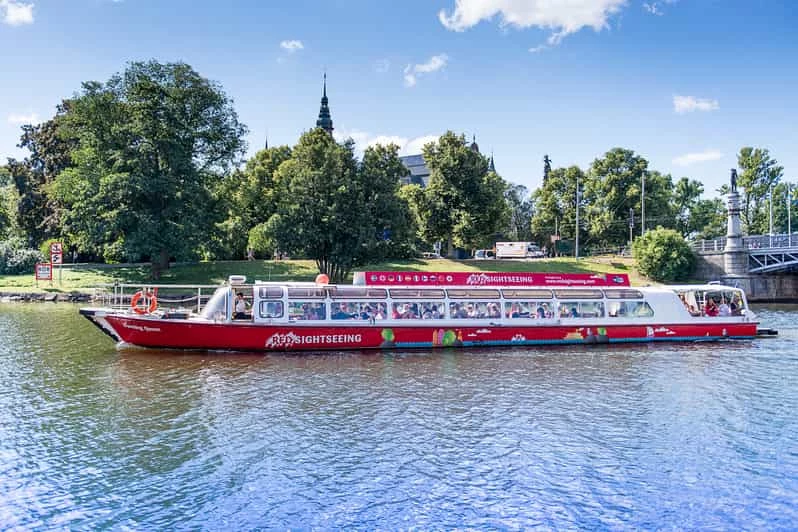
Archipelago cruise on a classic wooden boat
An hour and forty-five minutes on a classic wooden boat, with a bar and a guide's commentary: leaving from the centre, past Gamla Stan, the Royal Palace, the Opera and the National Museum, then along Strandvägen and through the Djurgården canal, before reaching the island of Fjäderholmen and returning past the cliffs of Södermalm. The highlight: leaving the Djurgården canal towards the first islands of the archipelago.
Allow €33 per person on GetYourGuide, with free cancellation. Bring a jacket: the wind stays cool on the water, even in summer.
- 1 hr 45
- €33 per person (GetYourGuide price 2026)
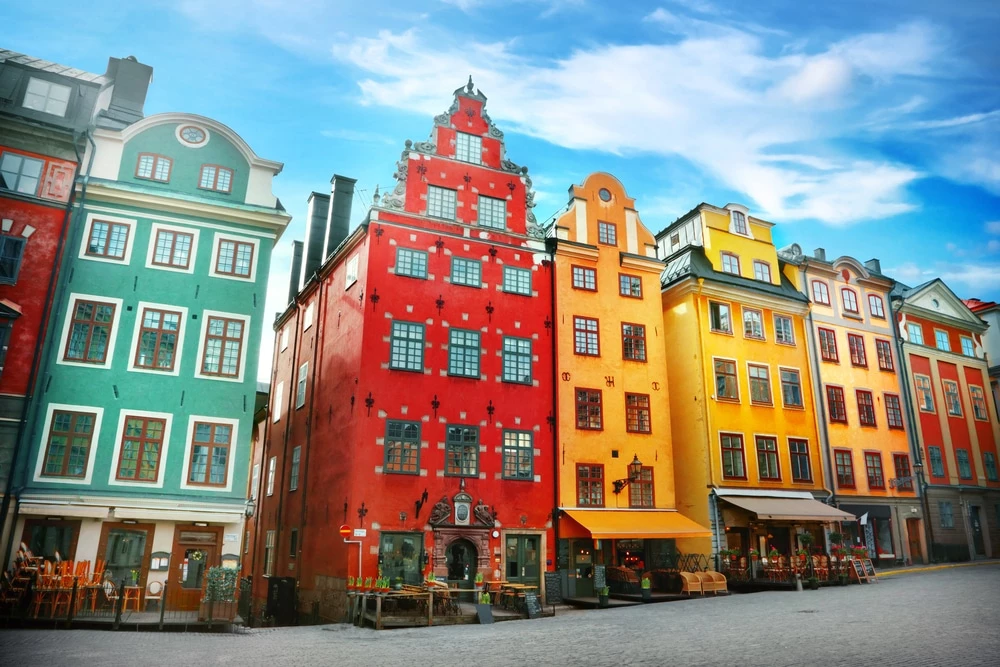
Guided walking tour of Gamla Stan
Two hours in the cobbled lanes and squares of the old town with a local guide: Stortorget and its merchants' houses, the narrow passages, the Riddarholmen waterfront, and a finish in front of the Royal Palace. The guide tells the story of the medieval city, the 1520 Bloodbath and the Swedish monarchy. The highlight: the view over Lake Mälaren from the Riddarholmen quay.
Allow €27 per person on GetYourGuide, with free cancellation. Pick a late-morning start to follow on with the changing of the guard at the palace.
- 2-2.5 hrs
- €27 per person (GetYourGuide price 2026)
Stockholm metro art tour
Two hours from station to station on the metro, where more than 90 of the 100 stations have been decorated by artists since the 1950s: painted caves, mosaics, sculptures and light installations. The guide explains the works and gives tips for photographing them. The highlight: the painted bare-rock vaults of the blue line, such as T-Centralen or Kungsträdgården.
Allow €33 per person on GetYourGuide, with free cancellation; you need an SL ticket for the rides. In summer, SL also runs free guided tours with a regular ticket.
- 2 hrs
- €33 per person, metro ticket extra (GetYourGuide price 2026)
Stockholm by kayak with a guide
From a jetty near the central station, you paddle a two-person sea kayak along the quays and between the central islands, in a small group of no more than 10 with an English-speaking guide. The waters are sheltered and the outing suits beginners. The highlight: gliding at water level past the façades of Gamla Stan and City Hall.
Allow €66 per person on GetYourGuide, with free cancellation; the evening option adds a Swedish meal. Two participants minimum: book as a pair or check that another pair has signed up.
- 2-4 hrs
- €66 per person (GetYourGuide price 2026)
Getting there
Arlanda Airport connects to the centre via the Arlanda Express (18 min, 340 SEK).
Most international flights land at Arlanda Airport (ARN), about 40 km to the north. The fastest way into the centre is the Arlanda Express (non-stop train, about 18 minutes, adult ticket 340 SEK, departures every 12-15 min). SL commuter trains (pendeltåg) and airport coaches also serve the centre, cheaper but slower.
Stockholm is also reachable by train from the rest of Sweden and Scandinavia, and by ferry from Finland and the Baltic states.
Getting around
The SL network (metro, bus, tram, ferries) covers the city; a single ticket costs 43 SEK and stays valid 75 min.
Public transport is run by SL and covers the metro (Tunnelbana), buses, trams and ferries on a single ticket. A single ticket costs 43 SEK and stays valid for 75 minutes (transfers included). Buy tickets via the SL app or by contactless card: buses do not accept cash.
The metro, famous for stations decorated like art galleries, is the fastest option. Ferries link the islands, notably Djurgården, with fine views. The historic centre is easily walkable, and the city is good for cycling in summer.
What to do
Gamla Stan and the Royal Palace in the morning, the Djurgården museums (Vasa, Skansen) in the afternoon, an archipelago cruise and Drottningholm as outings, the metro-gallery and Fotografiska in the evening.
A typical first day starts in Gamla Stan at opening time, with the Royal Palace and the changing of the guard around midday, then spends the afternoon on Djurgården at the Vasa Museum and Skansen. A second day can combine City Hall in the morning, the Monteliusvägen viewpoint and Södermalm, then Fotografiska, open until 11pm.
On the water, cruises leave from Strömkajen for the archipelago, and summer boats reach Drottningholm Palace from the City Hall quay. The metro is worth a visit too: more than 90 stations are decorated by artists, and SL runs free guided tours in summer with a regular ticket.
Climate & seasons
When to go to Sweden?
Monthly averages over the past 5 years (Open-Meteo).
Best months
- May
- June
- September
Avoid
- January
- February
- December
| Jan | Feb | Mar | Apr | May | Jun | Jul | Aug | Sep | Oct | Nov | Dec | |
|---|---|---|---|---|---|---|---|---|---|---|---|---|
| Our take | ||||||||||||
| Weather | ||||||||||||
| High | 1° | 2° | 6° | 10° | 16° | 22° | 22° | 21° | 17° | 11° | 5° | 1° |
| Rain (mm) | 61 | 34 | 27 | 32 | 56 | 66 | 87 | 90 | 49 | 63 | 42 | 41 |
| City sightseeing | City sightseeing May | City sightseeing June | City sightseeing July | City sightseeing August | City sightseeing September | City sightseeing October |
What to do by season (autumn)
-
City sightseeing
Pedestrian-friendly most of the year.
When to go
Summer (June-August) is high season with long bright nights; winter brings festive markets and atmosphere.
Summer (June to August) is the high season: mild temperatures (often 20-25°C), outdoor terraces, archipelago cruises and very long bright nights (Stockholm lies south of the Arctic Circle, so there is no true midnight sun, but the evenings stay light until late).
Spring (April-June) and autumn (September-November) are quieter and cheaper, with parks in bloom or autumn colours. Winter (December-February) is cold and dark but magical, with ice rinks and festive atmosphere; days are very short then.
For a balance of pleasant weather and moderate crowds, aim for late spring or early autumn.
Budget
Stockholm is expensive: the currency is the krona (SEK), a transit ticket is 43 SEK and major museums cost 195-240 SEK.
Stockholm is among the most expensive European capitals. The currency is the Swedish krona (SEK): Sweden is not in the eurozone and payment is almost always by card or contactless (many places no longer accept cash).
Some benchmarks: single transit ticket 43 SEK; major museum entry 195-240 SEK (Vasa, Royal Palace); archipelago cruise from 375 SEK; Arlanda Express 340 SEK. To save money, enjoy the many free sights (Monteliusvägen, Haga Park, the Kungsträdgården rink, strolling Gamla Stan) and consider a tourist pass if you visit several museums.
Neighbouring Norway is even more expensive: our Norway guide sets out 2026 prices and ways to save, including legal wild camping.
Where to stay
Gamla Stan for history, Norrmalm for central, Södermalm for trendy, Östermalm for luxury.
Gamla Stan (Old Town): in the heart of medieval Stockholm, near the Royal Palace and Nobel Museum; charming, often boutique-style accommodation.
Norrmalm: the modern centre around the central station, ideal for easy access to shops, restaurants and transport; hotels in all categories.
Södermalm: a creative, bohemian district with vintage shops, cafés and design hotels, perfect for a relaxed stay.
Östermalm: elegant avenues, designer boutiques and upscale hotels, close to Djurgården park.
Djurgården: a green, peaceful setting a few minutes by ferry from the centre, ideal for families.
Formalities
Sweden is in the Schengen Area; non-EU visitors may stay 90 days within any 180-day period.
Sweden is part of the European Union and the Schengen Area. EU/EEA and Swiss citizens move freely with a valid identity card or passport.
Nationals of many non-EU countries can enter visa-free for a short stay, up to 90 days within any 180-day period, with a valid passport. Beyond that, or for other nationalities, a Schengen visa may be required: check the rules for your nationality with the Swedish Migration Agency (Migrationsverket) before travelling.
FAQ
Answers to common questions about currency, transport, length of stay and the best time to visit.
What currency is used in Stockholm?
The Swedish krona (SEK). Sweden is not in the eurozone and card or contactless payment is nearly universal; many businesses no longer accept cash.
How do I get to the centre from Arlanda Airport?
The Arlanda Express links the airport to the centre in about 18 minutes for 340 SEK (adult). Cheaper but slower commuter trains and airport coaches are also available.
How much is a transit ticket?
A single SL ticket costs 43 SEK and stays valid for 75 minutes on metro, bus, tram and ferries. Buy it via the SL app or contactless: buses do not accept cash.
How many days should I plan?
Three to four days let you see Gamla Stan, the major Djurgården museums (Vasa, Skansen), the City Hall and take an archipelago cruise.
When is the best time to visit?
Summer (June-August) for long bright evenings and the archipelago; late spring and early autumn for fewer crowds; winter for the festive atmosphere.
Do I need a visa to enter Sweden?
No for EU/EEA and Swiss citizens. Travellers from many non-EU countries may stay up to 90 days within 180 days visa-free; check for your nationality with Migrationsverket.
Sources
The figures in this guide come from the sources below, checked on the publication date.
- visitsweden.com
- visitsweden.com
- www.visitstockholm.com
- www.migrationsverket.se
- whc.unesco.org
- www.kungligaslotten.se
- www.kungligaslotten.se
- www.vasamuseet.se
- abbathemuseum.com
- stadshuset.stockholm
- www.arlandaexpress.com
- en.wikipedia.org
- www.visitstockholm.com
- stockholm.fotografiska.com
- www.getyourguide.com
Leave a comment
Share your thoughts or travel experience. Your email will not be published.