

Contents 22
Budva brings together, around a single bay, an old town ringed by Venetian walls, the citadel, the beaches of Mogren, Slovenska and Jaz, and Sveti Nikola island opposite the harbour. This guide covers its 11 must-sees, out to Sveti Stefan, Kotor and Lovćen National Park, then the practical side: access, getting around, where to stay, when to go and entry rules.
Overview
Budva is Montenegro's main seaside resort: a Venetian old town on a peninsula, 1.6 km of beach in the town centre, and Kotor, Lovćen and Sveti Stefan within day-trip range.
Budva is a town on Montenegro's Adriatic coast, 20 km from Tivat airport. Some 2,500 years of history, an old town ringed by Venetian walls and rebuilt after the 1979 earthquake, and a bay of sand and pebble beaches from Mogren to Slovenska plaža make it the country's busiest seaside resort.
In summer the town also lives at night, between beach bars and clubs. Away from the sand, trips are short: Sveti Nikola island opposite, Sveti Stefan to the south-east, Kotor and Lovćen National Park inland.
11 places to take with you
In the guide's order, ready for Google Maps or your GPS.
Book the activities from this guide
Our picks for Budva, well rated and free to cancel.
-
Book this activity
Kayak or paddleboard to Budva's sea caves
€45 per person (GetYourGuide price 2026)
-
Book this activity
Bay of Kotor by speedboat: Our Lady of the Rocks and the Blue Cave
€55 per person (speedboat from Kotor, GetYourGuide price 2026)
-
Book this activity
Lovćen, Njeguši and Cetinje day trip
€96 per person (GetYourGuide price 2026)
Affiliate links: Travel Advice earns a commission if you book, at no extra cost to you. Learn more

Old Town (Stari Grad)
Budva is one of the oldest towns on the Adriatic coast: the first records date back to the 5th century BC, some 2,500 years of history. The walled old town owes most of its look to the Venetians, who held it from 1420 to 1797. The earthquake of 15 April 1979 devastated much of it; almost every building was rebuilt as it was.
Wander without a map between paved lanes, small squares and churches, then climb onto the seaward walls. The historic core fits on a peninsula a few hundred metres across: an hour is enough to loop it, longer if you stop at a café terrace.

Sveti Stefan
A few kilometres south-east of Budva, Sveti Stefan is an islet joined to the coast by a narrow sandy isthmus. The former fortified fishing village, with 15th-century stone houses, was turned into a hotel in the 20th century; it is now the Aman Sveti Stefan resort, which reopened on 1 July 2026 after a five-year closure caused by a dispute over beach access.
The islet itself remains for guests only. The 2026 agreement does, however, give local residents free access to Sveti Stefan beach and King's Beach, while Queen's Beach stays for guests only. The postcard view is from the coast road and the viewpoints above.

Budva Citadel
The citadel stands at the southern tip of the old town, facing the sea. Originally known as the Castle of St Mary, the fortification was rebuilt and enlarged throughout the Middle Ages before reaching its final form under Austro-Hungarian rule.
People come mainly for its terraces: the view takes in the old town roofs, the bay and Sveti Nikola island opposite. Entry is paid, in cash; allow 30 to 45 minutes and combine it with a walk on the walls.

Kotor
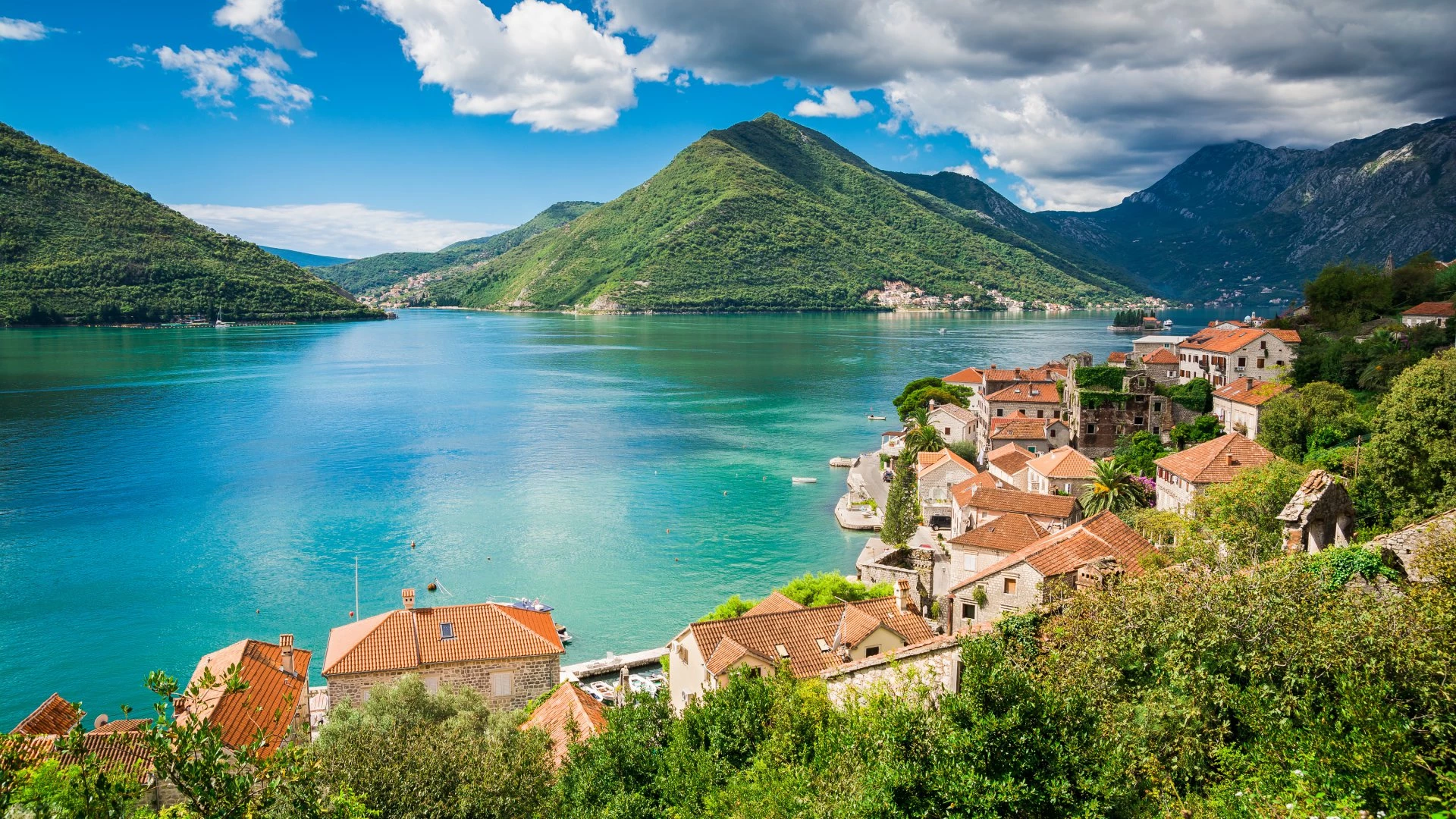
Kotor is about twenty kilometres from Budva along the coast road. Its fortified old town, at the head of the Bay of Kotor, is part of the "Natural and Culturo-Historical Region of Kotor", listed as UNESCO World Heritage in 1979.
Come for the lanes and churches of the old town, then climb the walls to St John's fortress for a view straight down onto the bay. Regular buses from Budva bus station, a car or an organised tour: the round trip fits easily into a day.

Lovćen National Park
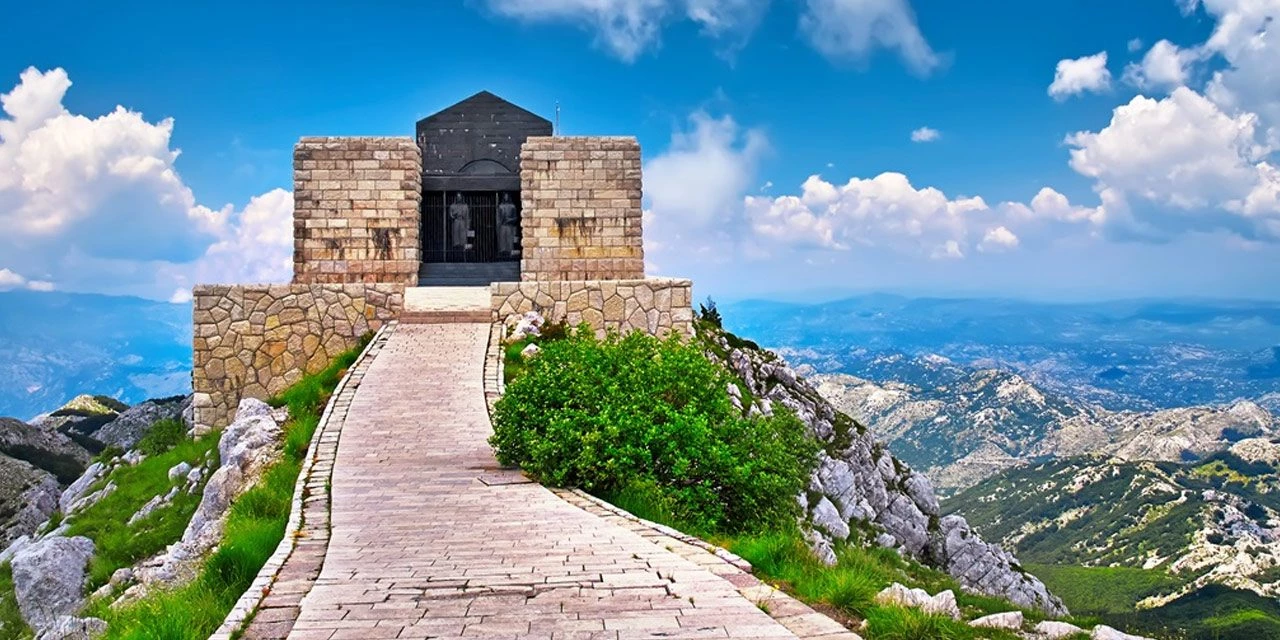
The Lovćen massif towers over the coast between Kotor and Cetinje. On the summit of Jezerski vrh, at 1,657 metres, the mausoleum of Petar II Petrović-Njegoš, Montenegro's prince-bishop and poet, is reached by a flight of 461 steps. From the viewpoint you look over the Bay of Kotor and the Adriatic.
From Budva, drive up via Cetinje, the old royal capital, or by the hairpin road above Kotor through the village of Njeguši. Forests, high meadows and waymarked trails make the national park a cool day out in summer.

Mogren Beach
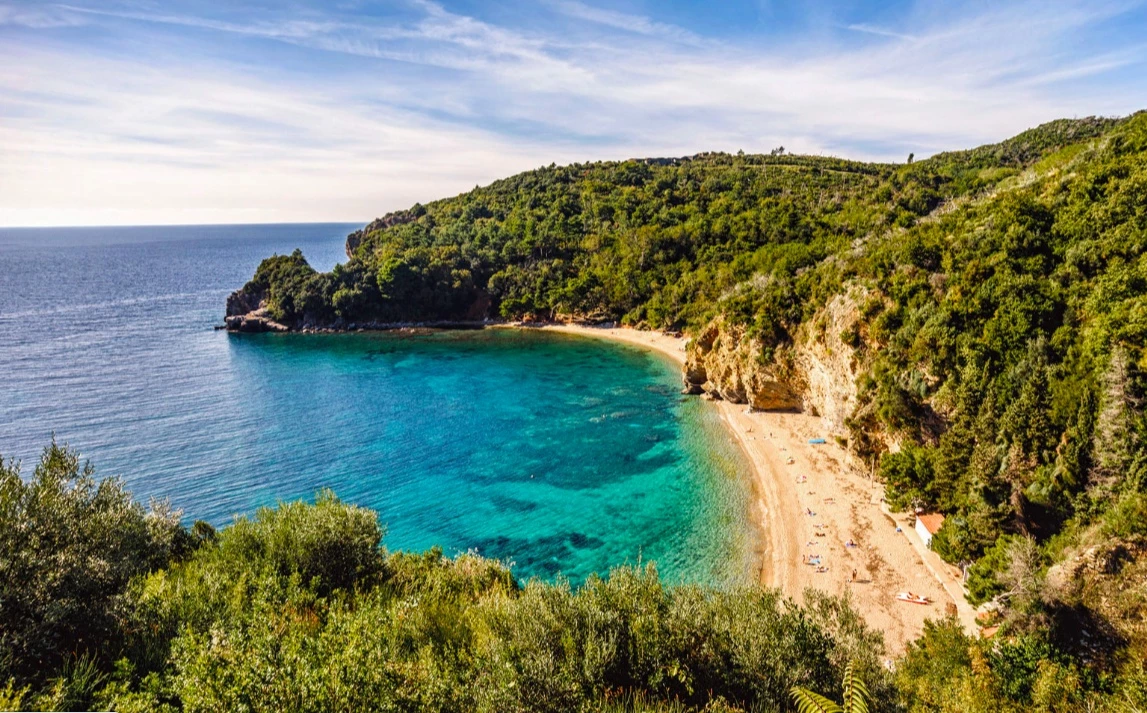
A few minutes' walk from the old town, Mogren beach stretches for about 350 metres below pine-covered cliffs. It is made of two coves linked by a passage through the rock, which gives it a wilder feel than the town beaches.
You reach it along the cliff path that passes the Dancer statue. The water is clear; in summer, paid sunbeds and umbrellas take up much of the sand, and space runs short by late morning.

Sveti Nikola Island
Opposite Budva, about a kilometre across the bay, the wooded island of Sveti Nikola is nicknamed "Hawaii" by locals. Uninhabited, it has pebble coves and very clear water, with views back to the old town and the mountains.
In season, taxi-boats cross in a few minutes from the waterfront and Slovenska beach. Plan half a day: swimming, snorkelling and lunch at one of the beach bars on the side facing the town.

Slovenska Beach
Slovenska plaža is Budva's main beach: 1.6 km of sand and pebbles running along the town, eastwards from the old town. A promenade follows it all the way, lined with cafés, restaurants and sunbed hire.
It is the most convenient and liveliest beach: water sports in summer, beach bars at night, boats to Sveti Nikola island. For more calm, head away from the centre towards either end.

Jaz Beach
A few minutes' drive west of Budva, Jaz is a long pebble beach open onto a bay, with far more space than the town beaches. The water is clear and the seabed shelves gently.
It also hosts big music events: the Sea Dance festival was held here for the first time in 2014. Outside concert nights the mood is family-friendly, with beach bars and a car park.

Statue of the Dancer of Budva
The Dancer statue, or Ballerina of Budva, stands on a wave-lashed rock between the old town and Mogren beach. This bronze sculpture of a young woman in mid-movement has become one of the most photographed sights in town.
It sits on the cliff path to Mogren, so you pass it on the way without a detour. A local legend tells of a dancer waiting for a sailor to return; most visitors simply come for the photo, with the sea and the walls behind.

Walks and hikes
Budva is also a place to explore on foot. The easiest walk leaves the old town along the cliff path to Mogren, past the Dancer statue; in the other direction, the Slovenska beach promenade runs the length of the bay.
For walking at altitude, Lovćen National Park, above Kotor and Cetinje, has waymarked trails through forests and meadows, with the bonus of cooler air in high summer. On the coast, walk in the cooler hours: shade is scarce.
Kayak or paddleboard to Budva's sea caves
Three hours by kayak or paddleboard from Budva, with an instructor who first teaches the paddling basics. You pass the old town and the Dancer statue, then stop to swim and snorkel in a clear-water cove and paddle past Pigeon Cave. The highlight: paddling below the cliffs, where the coast can only be reached from the sea.
It is a small-group trip, fine for beginners who can swim; allow €45 per person on GetYourGuide, with free cancellation up to 24 hours before. Pick a morning start, when the sea is calmest.
- 3 hrs
- €45 per person (GetYourGuide price 2026)
Bay of Kotor by speedboat: Our Lady of the Rocks and the Blue Cave
The speedboat leaves Kotor, about twenty kilometres from Budva, passes Perast and stops for twenty minutes on the islet of Our Lady of the Rocks. It then heads for the mouth of the bay: an old Yugoslav-era submarine tunnel, Mamula fortress and finally the Blue Cave. The highlight: half an hour swimming in the cave's vivid blue water.
Three hours in all for €55 per person on GetYourGuide, with free cancellation. Bring clothes that cover your shoulders to enter the church on the islet, and reach Kotor by bus or car from Budva.
- 3 hrs
- €55 per person (speedboat from Kotor, GetYourGuide price 2026)
Lovćen, Njeguši and Cetinje day trip
A day in the hinterland from Kotor: up above the Kotor serpentine road with the bay below you, then a stop in Njeguši, home village of the Petrović-Njegoš dynasty that ruled Montenegro from 1696 to 1918. The highlight: the 461 steps up to Njegoš's mausoleum on top of Lovćen.
The day ends in Cetinje, the old royal capital. Allow €96 per person on GetYourGuide, with free cancellation; check the departure point from Budva when booking and bring a jacket for the summit.
- 12 hrs (full day)
- €96 per person (GetYourGuide price 2026)
Getting there
The nearest airport is Tivat (TIV), ~20 km away; Podgorica (TGD) is ~65 km. On the ground, buses from Budva bus station, taxi-boats to Sveti Nikola and car rental for Kotor and Lovćen.
By air: the nearest airport is Tivat (TIV), about 20 km from Budva (~25-30 min); Podgorica (TGD) is about 65 km (~1 h). Tivat is highly seasonal (most traffic May to September).
Getting around:
- Bus: Budva bus station serves Kotor, Podgorica and the Adriatic coast.
- Taxi-boat: from the waterfront to Sveti Nikola island and coastal trips (in season).
- Car: best for Lovćen, Kotor and the hinterland via the Adriatic coastal road (Jadranska magistrala), winding and busy in high season.
Twelve miles away, Tivat is more than an airport: if you arrive the night before or leave late in the day, see what to do in Tivat — Porto Montenegro, the Luštica beaches and the Gornja Lastva forest park.
Getting around
On foot in the centre and old town, by bus from the bus station to Kotor and Podgorica, by taxi-boat to Sveti Nikola, by car for Lovćen and the hinterland.
- On foot: the old town, Mogren and the Slovenska promenade are all reachable without a vehicle.
- Bus: the bus station links Kotor, Tivat, Herceg Novi, Podgorica and the rest of the coast; cheap and frequent in season.
- Taxi: agree the fare or ask for the meter before setting off.
- Taxi-boat: from the waterfront to Sveti Nikola island and the coves, in season.
- Car: the most freedom for Lovćen, Cetinje or Lake Skadar, but the coast road is busy and parking scarce in summer.
What to do
Old town and citadel in the morning, the beach at Mogren or Slovenska, kayaking to the sea caves, a boat to Sveti Nikola; on day trips, Kotor and its bay, Lovćen and Sveti Stefan.
A typical day starts with the old town and citadel before the heat, moves on to Mogren or Slovenska beach and ends at sunset on the walls. On the water, the coastal caves can be explored by kayak or paddleboard, and taxi-boats run to Sveti Nikola island.
On day trips, Kotor's old town and bay, Njegoš's mausoleum on top of Lovćen and the view of Sveti Stefan each take half a day or a day.
Climate & seasons
When to go to Montenegro?
Monthly averages over the past 5 years (Open-Meteo).
Best months
- July
Avoid
- January
- March
- October
- November
- December
| Jan | Feb | Mar | Apr | May | Jun | Jul | Aug | Sep | Oct | Nov | Dec | |
|---|---|---|---|---|---|---|---|---|---|---|---|---|
| Our take | ||||||||||||
| Weather | ||||||||||||
| High | 12° | 13° | 15° | 18° | 22° | 28° | 31° | 31° | 26° | 21° | 17° | 14° |
| Rain (mm) | 318 | 178 | 241 | 160 | 172 | 71 | 51 | 125 | 199 | 214 | 405 | 273 |
| Beach | Beach June | Beach July | ||||||||||
| City sightseeing | City sightseeing June |
When to go
The beach season runs June to early October, with the sea at 24-26°C in July-August—but that is also peak season (crowds, high prices, nightlife). May, June and September offer the best weather/crowd balance.
Budva is mostly about its coast:
- July-August: full beach season (sea ~24-26°C) and peak nightlife (clubs, beach bars)—but maximum crowds and prices.
- May, June and September: the best shoulder seasons—fine weather, fewer people, better rates.
- After the first week of September, the season fades quickly; winter is quiet and cool.
For Lovćen and Kotor, favour the morning and spring/autumn for cooler air and better light.
Where to stay
The old town and centre to do everything on foot, the Slovenska promenade for the beach and nightlife, Bečići and Pržno for calm; book early for July-August.
- Old town (Stari Grad): rooms in stone houses, everything on foot, but lively at night.
- Centre and Slovenska promenade: the most convenient for the beach, the bus station and going out.
- Bečići: to the east, a long sandy beach and large hotels, quieter, popular with families.
- Pržno and Sveti Stefan: small coastal villages to the south-east, peaceful, a few kilometres from the centre.
In July-August prices peak and the best places go months ahead.
Formalities
Montenegro is outside the EU and Schengen. For French citizens: no visa for stays under 90 days. The currency is the euro, adopted unilaterally—no currency exchange needed from the eurozone.
Montenegro is neither an EU nor a Schengen member. French nationals need no visa for a tourist stay of under 90 days: a valid national ID card is enough for under 30 days, a passport beyond. France Diplomatie advises carrying a valid passport.
Currency: Montenegro uses the euro (EUR) as its sole legal tender, unilaterally since 2002, even though it is not in the eurozone. The practical upshot for eurozone travellers: no currency exchange needed. Still carry some cash for small shops and taxi-boats.
FAQ
Visa, currency (euro), best season, getting to Kotor, visiting Sveti Stefan and the airport: the essentials before your Budva trip.
Do French citizens need a visa for Montenegro?
No. Montenegro belongs to neither the European Union nor the Schengen Area, but French citizens need no visa for a tourist stay of under 90 days. A valid national ID card covers stays under 30 days, a passport beyond that, and French authorities advise carrying a valid passport in any case. The currency is the euro, adopted unilaterally back in 2002: no exchange is needed from the eurozone, but keep cash for small shops and taxi-boats.
What currency is used in Budva?
The euro, as the sole legal currency. Montenegro adopted it unilaterally back in 2002, even though it is not part of the eurozone and not an EU member. The practical upshot for travellers from the eurozone: no exchange to arrange and no conversion fees. Still, keep cash for small shops, markets and the taxi-boats that run to Sveti Nikola island from the seafront, as many do not take cards in season.
When is the best time to visit Budva?
May, June and September are the best shoulder months: good weather, fewer people and better rates. July and August mark the peak beach season, with the sea at 24-26 °C and nightlife at its height, clubs and beach bars, but also maximum crowds and prices. After the first week of September the season contracts quickly, and winter is quiet and cool. For Lovćen and Kotor, favour the morning and spring or autumn, for cooler air and better light.
How do I get to Kotor from Budva?
Kotor lies about 23 km from Budva along the Adriatic coastal road, the Jadranska magistrala, which is winding and busy in high season. Get there by bus from Budva bus station, which also serves Podgorica and the rest of the coast, by car or on an organised tour. The Bay of Kotor has been UNESCO world heritage since 1979. Visit in the morning if you can, as with the Lovćen massif, for cooler air and better light, and to avoid peak traffic on the coast road.
Can I visit the island of Sveti Stefan?
Not freely. The islet is occupied by the Aman Sveti Stefan resort, which reopened on 1 July 2026 after a five-year closure, and access is for guests only. The agreement reached in 2026 does, however, give local residents free access to Sveti Stefan beach and King's Beach; Queen's Beach stays for guests only. The postcard view is from the coast road and the viewpoints above, ideally late in the day. From Budva it is a few kilometres south-east, by car or bus.
Which airport for Budva?
The nearest is Tivat Airport (TIV), about 20 km from Budva, a 25 to 30 minute drive. Podgorica Airport (TGD) sits roughly 65 km away, about an hour. Note that Tivat is highly seasonal: most traffic runs from May to September, which limits options off season. At 20 km, Tivat is more than an airport too: if you arrive the day before or leave late in the day, the town is worth a stop, between Porto Montenegro and the beaches of Luštica.
Sources
The figures in this guide come from the sources below, checked on the publication date.
Leave a comment
Share your thoughts or travel experience. Your email will not be published.