

Contents 32
Vienna, the capital of Austria, was the residence of the Habsburgs for more than six centuries. This guide gathers its 19 must-sees, from Schönbrunn to the Hofburg, from the Belvedere to the coffee houses, followed by the practical information: getting there, getting around, where to stay, formalities, safety and frequently asked questions.
Overview
Austria's capital, Vienna combines the legacy of the Habsburgs (Schönbrunn, the Hofburg), a first-rate music scene (State Opera, Musikverein) and coffee house culture. Its historic centre is a UNESCO World Heritage Site.
Vienna, the capital of Austria, was the heart of the Habsburg empire, and it shows everywhere: the imperial palaces of Schönbrunn and the Hofburg, major art museums and a musical tradition carried by Mozart, Beethoven and the Strauss family.
The historic centre of Vienna and Schönbrunn Palace are UNESCO World Heritage Sites. The city also cultivates a way of life: its coffee houses, on Austria's inventory of intangible cultural heritage, and its pastries (Sachertorte, apple strudel).
Compact and well served, Vienna is explored on foot and by metro. Three days cover the essentials; allow four or five to add the Prater, the Danube or a trip to the Wachau Valley.
19 places to take with you
In the guide's order, ready for Google Maps or your GPS.
Book the activities from this guide
Our picks for Vienna, well rated and free to cancel.
-
Book this activity
Skip-the-line guided tour of Schönbrunn and its gardens
€61 per person, entry included (GetYourGuide price 2026)
-
Book this activity
Guided tour of the Spanish Riding School
€24 per person (GetYourGuide price 2026)
-
Book this activity
Mozart concert in the Musikverein's Golden Hall
€69 per person (GetYourGuide price 2026)
Affiliate links: Travel Advice earns a commission if you book, at no extra cost to you. Learn more

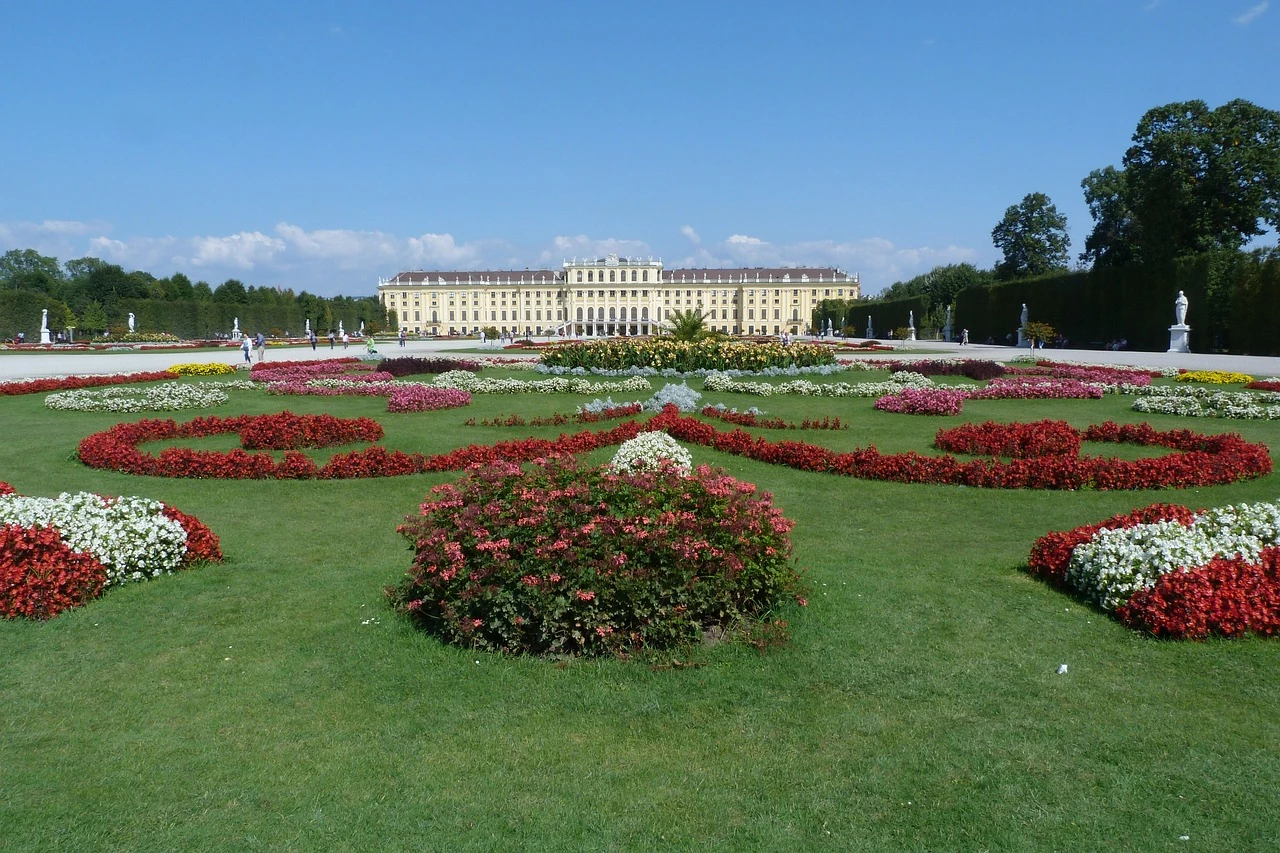
Schönbrunn Palace
The Habsburgs' summer residence, Schönbrunn took its baroque shape from 1696, then Maria Theresa had it enlarged and redecorated in the 18th century. Franz Joseph was born and died here, and Elisabeth (Sisi) had her apartments here. The palace and its gardens have been a UNESCO World Heritage Site since 1996.
The Grand Tour covers the whole piano nobile in about 75 minutes with an audio guide: the private apartments of Franz Joseph and Elisabeth, state rooms such as the Great Gallery, and Maria Theresa's chambers. Outside, the park runs down to the Neptune Fountain, then climbs to the Gloriette, with a view over the palace and the city.

St. Stephen's Cathedral
In the heart of the old town, the Stephansdom combines a Romanesque west front, with the Giant's Door and the Heathen Towers, and a Gothic nave. Its south tower, completed in the 15th century, rises to 136 m, and the glazed-tile roof forms the double-headed eagle and the coat of arms of Vienna.
Beneath the nave, the catacombs hold the urns containing the organs of members of the Habsburg family. The south tower is climbed on foot up to the watchman's room; the north tower, which has a lift, houses the Pummerin, Austria's largest bell.

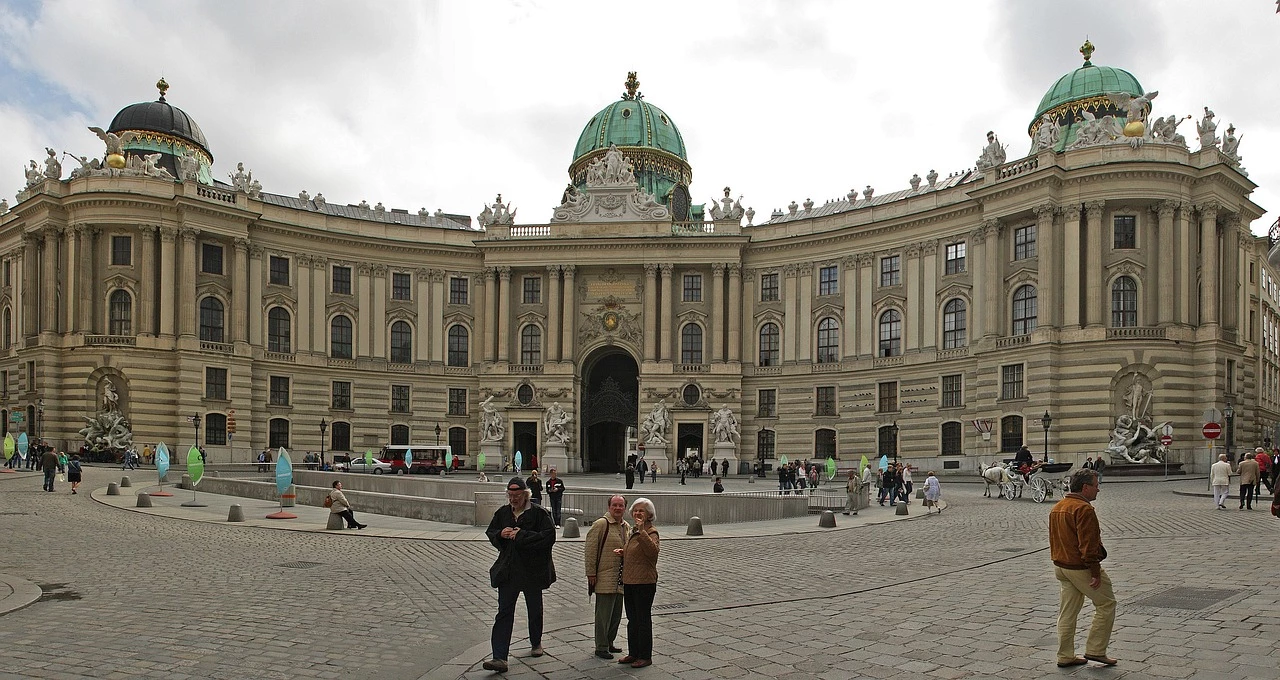
Hofburg Palace
The Hofburg was the seat of Habsburg power from the 13th century until 1918. Each era added its own wing, from the Gothic chapel to the early 20th-century Neue Burg, so the palace now forms a whole district between the Ring and Michaelerplatz. It still houses the offices of the Federal President.
The most popular visit combines the Imperial Apartments of Franz Joseph and Elisabeth, the Sisi Museum and the Imperial Silver Collection. The same complex holds the Imperial Treasury, the State Hall of the National Library and the Spanish Riding School.

Vienna State Opera
The first major building on the Ring, the State Opera opened on 25 May 1869 with Mozart's Don Giovanni. Hit by bombing in March 1945, it was rebuilt and reopened in 1955; the neo-Renaissance facade and the grand staircase survived.
The house company performs a repertoire of operas and ballets that changes almost every night from September to June. To see the auditorium without attending a performance, guided tours run during the day, depending on the rehearsal schedule.

Belvedere
Prince Eugene of Savoy had the Belvedere built in the early 18th century by the architect Johann Lukas von Hildebrandt: the Lower Belvedere, his residence, then the Upper Belvedere, used for receptions. A terraced French-style garden links the two palaces.
The Upper Belvedere holds the largest collection of paintings by Gustav Klimt, including The Kiss, alongside works by Egon Schiele, Oskar Kokoschka and French painters such as Monet and Van Gogh. From the top of the garden, the view runs towards St. Stephen's Cathedral.

Kunsthistorisches Museum and Natural History Museum
The two museums face each other across Maria-Theresien-Platz, in twin palaces opened in 1889 and 1891 to display the Habsburg collections. The Kunsthistorisches Museum holds the largest collection of paintings by Pieter Bruegel the Elder, including The Tower of Babel and The Hunters in the Snow, as well as works by Titian, Velázquez, Rembrandt and Vermeer, an Egyptian collection and the Kunstkammer, the emperors' cabinet of art.
Opposite, the Naturhistorisches Museum displays meteorites, minerals and dinosaur skeletons, and above all the Venus of Willendorf, a figurine about 30,000 years old.

Albertina
Behind the Opera, the Albertina occupies the former palace of Archduke Albert of Saxe-Teschen, who assembled here in the late 18th century one of the world's most important collections of drawings and prints, from Dürer, with his Young Hare, to Michelangelo, Raphael and Rubens.
These fragile works are shown in rotation in temporary exhibitions. The permanent collection covers modern art from Monet to Picasso, and the same ticket opens the Habsburgs' neoclassical State Rooms. The bastion terrace looks out over the Opera.

Vienna Prater
A former imperial hunting ground, the Prater was opened to the public by Joseph II in 1766. It combines two worlds: the Wurstelprater, an amusement park with free entry, and the Grüner Prater, a riverside forest crossed by the Hauptallee, a chestnut-lined avenue more than 4 km long.
The Giant Ferris Wheel (Riesenrad), built in 1897, has become a symbol of the city; its wooden cabins rise to about 65 m, and The Third Man shot one of its best-known scenes here.

Imperial Treasury
Housed in the oldest wing of the Hofburg, the Imperial Treasury keeps the insignia of two empires. For the Holy Roman Empire: the Imperial Crown, made around the second half of the 10th century, the Holy Lance and the coronation sword. For Austria: the crown of Rudolf II, which became the crown of the Austrian Empire in 1804, with the sceptre and orb.
It also holds the Burgundian treasure and the Order of the Golden Fleece, the cradle of the King of Rome, Napoleon's son, and, in the ecclesiastical section, reliquaries and liturgical vestments.

Café Central and the Viennese coffee houses
Viennese coffee house culture has been on Austria's UNESCO inventory of intangible cultural heritage since 2011. Café Central, opened in 1876 in Palais Ferstel under neo-Gothic vaults, is the best-known address: the writer Peter Altenberg, whose statue sits at a table near the entrance, used it as his office.
The ritual is the same in the city's grand cafés, from the Sperl to the Hawelka: you order a Melange (coffee with frothed milk) or an Einspänner (black coffee under whipped cream), served with a glass of water, and you can stay a long time with the newspapers provided.

Austrian National Library (State Hall)
The State Hall (Prunksaal) of the National Library is one of the largest baroque libraries in Europe. Commissioned by Emperor Charles VI, it was built from 1723 to 1726 to plans by Johann Bernhard Fischer von Erlach, completed by his son Joseph Emanuel.
Beneath a dome painted by Daniel Gran, nearly 200,000 old volumes fill the shelves, including the personal library of Prince Eugene of Savoy. The institution descends from the Habsburg book collections and has borne its current name since 1920.

Naschmarkt
The Naschmarkt, Vienna's largest market, stretches for about 1.5 km above the Wien river, which is vaulted over here, from Karlsplatz to Kettenbrückengasse. Stalls of fruit, spices, cheese and Austrian wine alternate with Turkish, Greek and Asian food stands; on Saturdays a flea market sets up at its far end.
It is also a good way into Viennese cooking, served in the surrounding restaurants and in the Beisl, the neighbourhood bistros: Wiener Schnitzel, Tafelspitz (boiled beef with horseradish and apple sauce), Kaiserschmarrn and apple strudel.

Musikverein
Opened in 1870, the Musikverein is the home of the Vienna Philharmonic and one of the world's most renowned halls for its acoustics. Its Golden Hall (Goldener Saal), with its caryatids and gilded ceiling, hosts the New Year's Concert every 1 January, broadcast around the world.
Beyond the Philharmonic's concerts, which sell out fast, the hall programmes visiting orchestras, recitals and Mozart-Strauss concerts aimed at visitors. Other major classical venues: the Konzerthaus, the State Opera and, for sacred music, churches in the centre such as the Peterskirche.

Imperial Crypt
Beneath the Capuchin Church on Neuer Markt, the Imperial Crypt (Kaisergruft) has been the Habsburg burial place since 1633. Founded at the initiative of Empress Anna, wife of Emperor Matthias, it holds 145 members of the dynasty, including 12 emperors.
The route follows the chronological order, from the plain 17th-century coffins to the double rococo sarcophagus of Maria Theresa and her husband Francis I, and on to the vault where Franz Joseph, Elisabeth and their son Rudolf lie.

Mozarthaus
Mozart lived from 1784 to 1787 in this flat on Domgasse, behind the cathedral: it is the only one of his Vienna homes that survives. He composed The Marriage of Figaro here, among other works.
The museum spans three floors: the flat itself, then rooms on late 18th-century Vienna, the composer's patrons, Freemasonry and his music. The audio guide is included in the ticket.

Hundertwasser House
Built from 1983 to 1985 with the architect Joseph Krawina, the Hundertwasser House is a City of Vienna social housing block on the corner of Kegelgasse and Löwengasse. Multicoloured facades, windows that are all different, uneven floors and trees planted on the terraces express Friedensreich Hundertwasser's idea that a building should live with nature.
The flats are lived in and cannot be visited; you admire the building from the street. Opposite, Hundertwasser Village, a former workshop converted in the same spirit, gathers shops and a café.

Danube Canal and Danube Island
The Danube flows north-east of the centre; it is a regulated branch, the Donaukanal, that runs along the old town at Schwedenplatz. Its banks have become a place to go out: authorised street-art murals, beach bars in summer and cycle paths along the water.
The river itself is reached by the U1 metro line. Danube Island (Donauinsel), about 21 km long, was built between the 1970s and the 1980s to protect the city from floods; it is now a leisure area with beaches, cycle paths and, in June, the free Donauinselfest festival.

Stadtpark
Opened in 1862 on the former glacis of the city walls, the Stadtpark was the first public park created by the City of Vienna. It covers about 65,000 m² on both sides of the Wien river, with lawns, a pond and shady paths.
People come for the gilded statue of Johann Strauss II playing the violin, unveiled in 1921, and for the monuments to Schubert, Bruckner and Lehár. On the edge of the park, the neo-Renaissance Kursalon hosts waltz concerts.

Fiaker carriage ride
Fiakers, two-horse carriages driven by a coachman in a bowler hat, have been running in the old town since the late 17th century. They wait on Stephansplatz, on Michaelerplatz in front of the Hofburg, on Heldenplatz and on Albertinaplatz.
The short route loops around the old town; the long one also takes in the Ring, the Opera and Parliament. The coachman comments on the sights along the way, in German or English.
Skip-the-line guided tour of Schönbrunn and its gardens
Two hours with a licensed guide: skip-the-line entry to the palace, a route through 22 rooms including the Great Gallery and the Ceremonial Hall, with the story of Maria Theresa and the court, then a walk in the gardens to the Roman Ruin. The highlight: stepping into the Great Gallery, where the court balls were held.
Allow €61 per person on GetYourGuide, entry ticket included, with free cancellation up to 24 hours before. Tours in English or German; meeting point near U4 Schönbrunn station. Not wheelchair accessible.
- 2 hrs
- €61 per person, entry included (GetYourGuide price 2026)
Guided tour of the Spanish Riding School
A 55-minute behind-the-scenes tour of the Spanish Riding School in the Hofburg: the baroque Winter Riding School, where performances are held, the Summer Riding School and the stables of the Stallburg, a Renaissance building with an arcaded courtyard where the Lipizzaner stallions live. The highlight: walking past the Lipizzaners' stalls.
Allow €24 per person on GetYourGuide, with free cancellation. Meeting point at the main entrance, Michaelerplatz 1; photos and videos are not allowed during the tour. To watch the horses at work, the morning exercise is sold separately.
- 55 mins
- €24 per person (GetYourGuide price 2026)
Mozart concert in the Musikverein's Golden Hall
A two-hour evening with the Vienna Mozart Orchestra, some thirty musicians in period costume and wigs, joined by opera singers: Mozart overtures, arias and duets, then The Blue Danube and the Radetzky March. The highlight: hearing these pieces in the Golden Hall, home of the New Year's Concert.
Allow €69 per person on GetYourGuide, programme and cloakroom included, with free cancellation up to 12 hours before. The voucher is exchanged for a ticket at the Musikverein from one hour before the concert. A concert aimed at visitors, not a Philharmonic evening.
- 2 hrs
- €69 per person (GetYourGuide price 2026)
Wachau Valley, Melk Abbey and Danube cruise
A day trip from Vienna into the Wachau Valley, a UNESCO World Heritage Site: a drive through vineyards and villages, a stop in Dürnstein or Krems depending on the season, a Danube cruise in summer, then a visit to the Benedictine abbey of Melk with the all-inclusive option. The highlight: sailing down the river between the vine-covered slopes.
Allow €119 per person on GetYourGuide, transport and guide included, with free cancellation up to 24 hours before. The cruise only runs in summer; check that your option includes abbey entry. Departure from Operngasse 8, near the Opera.
- 8.5 hrs
- €119 per person (GetYourGuide price 2026)
Getting there
Vienna Airport (VIE) is linked to the centre by the City Airport Train (CAT, €14.90, 16 minutes to Wien Mitte) or, more cheaply, by the S7 or an ÖBB Railjet (about €5.40). From France there are direct flights from Paris; by train you have to change in Stuttgart, Zurich or Frankfurt.
By air: Vienna-Schwechat Airport (VIE) is about 18 km from the centre. Two main options:
- City Airport Train (CAT): €14.90 one way, 16 minutes non-stop to Wien Mitte, every 30 minutes.
- S-Bahn S7 or ÖBB Railjet: about €5.40 one way (S7 in about 23 minutes to Wien Mitte; Railjet in about 15 minutes to Wien Hauptbahnhof).
By train: the direct Paris-Vienna night train has not run since December 2025. You now change in Stuttgart (at least 10 hours), Frankfurt (10 to 11 hours) or Zurich (11 to 12 hours).
Getting around: the Wiener Linien network (metro, tram, bus) and the S-Bahn cover the whole city; the historic centre is best seen on foot.
Getting around
The Wiener Linien metro (U-Bahn), trams and buses cover the whole city; the metro runs all night on Fridays, Saturdays and before public holidays. The Vienna City Card, from €19 for 24 hours, covers public transport.
- Metro (U-Bahn): five lines (U1, U2, U3, U4, U6) serve the main sights, from early morning until after midnight, and all night from Friday to Saturday, Saturday to Sunday and before public holidays.
- Tram: the network is very dense; lines 1 and 2 circle the Ring, past the Opera, Parliament and the City Hall.
- Bus: buses complete the network, including in the old town, and take over at night on weekdays.
- Bike: Vienna has plenty of cycle lanes; the bike-sharing scheme is called WienMobil Rad.
- On foot: most sights in the Innere Stadt are less than 15 minutes' walk from each other.
The Vienna City Card (from €19 for 24 hours, up to 7 days) gives unlimited public transport and discounts at more than 200 sights.
What to do
Vienna comes in three parts: the Habsburg palaces (Schönbrunn, the Hofburg, the Belvedere), the museums and music (Kunsthistorisches, Albertina, Opera, Musikverein), then everyday city life among coffee houses, the Naschmarkt, the Prater and the Danube.
The imperial legacy first: Schönbrunn Palace and its gardens, the Hofburg with the Imperial Apartments, the Treasury and the Spanish Riding School, the Imperial Crypt and the Belvedere, home of Klimt's The Kiss.
Art and music next: the Kunsthistorisches Museum and its Bruegels, the Albertina, the National Library, the Mozarthaus, then an evening at the State Opera (standing tickets from €15) or the Musikverein.
Everyday city life last: a Viennese coffee house, the Naschmarkt, the Prater's Giant Ferris Wheel, the Danube Canal banks and the Hundertwasser House. With an extra day, the Wachau Valley and Melk Abbey make an easy day trip.
Climate & seasons
When to go to Austria?
Monthly averages over the past 5 years (Open-Meteo).
Best months
- March
- May
- June
- July
- August
- October
| Jan | Feb | Mar | Apr | May | Jun | Jul | Aug | Sep | Oct | Nov | Dec | |
|---|---|---|---|---|---|---|---|---|---|---|---|---|
| Our take | ||||||||||||
| Weather | ||||||||||||
| High | 5° | 8° | 12° | 15° | 20° | 26° | 28° | 27° | 22° | 16° | 9° | 5° |
| Rain (mm) | 41 | 29 | 35 | 62 | 67 | 70 | 70 | 75 | 102 | 42 | 50 | 49 |
| City sightseeing | City sightseeing March | City sightseeing April | City sightseeing May | City sightseeing June | City sightseeing July | City sightseeing August | City sightseeing September | City sightseeing October |
What to do by season (autumn)
-
City sightseeing
Pedestrian-friendly most of the year.
When to go
Spring (April-May) and autumn (September-October) bring mild weather and fewer crowds. December draws visitors for the Christmas markets. July-August is hot and the State Opera is closed (1 July-2 September).
Spring (April-May) and autumn (September-October): the best seasons, with mild weather and reasonable crowds.
Summer (July-August): hot and busy. The State Opera closes from 1 July to 2 September, but the terraces, the Prater and the Danube Canal bars are in full swing.
Winter: the Rathausplatz Christkindlmarkt runs from 13 November to 26 December 2026, daily from 10 am to 10 pm (6.30 pm on 24 December), with an ice rink until 6 January 2027. January and February are cold but quiet, the season of balls and concerts.
Where to stay
For a first visit, the Innere Stadt (1st district) puts everything within walking distance, but costs more. Neubau (7th), Mariahilf (6th), Leopoldstadt (2nd) and Landstraße (3rd) are cheaper and a few metro stops from the centre.
Vienna is divided into 23 numbered districts (Bezirke). The most convenient for a sightseeing stay:
- Innere Stadt (1st): the old town, with the cathedral, the Hofburg and the Opera on foot. Hotels here are the most expensive.
- Leopoldstadt (2nd): between the Danube Canal and the Danube, near the Prater; U1 and U2 metro lines, from hostels to chain hotels.
- Landstraße (3rd): quieter, near the Belvedere, the Stadtpark and the Hundertwasser House; Wien Mitte station for the airport train.
- Mariahilf (6th) and Neubau (7th): around Mariahilfer Straße, a shopping street, and the MuseumsQuartier; cafés, designer shops and lower prices than the centre.
The tourist tax (5% of the room rate since 1 July 2026) is usually included in the displayed price. In December and during big conventions, book early.
Safety
Vienna is a safe city. The main risk is pickpocketing in crowded places. Emergency numbers: 133 for the police, 144 for ambulance, 122 for the fire brigade, and 112 for European emergencies.
Vienna is a safe capital, including at night. The main risk is pickpocketing in crowds: Stephansplatz, Kärntner Straße, the Christmas markets, the metro at rush hour and the Prater at weekends. Keep bags and phones closed and in front of you.
Emergency numbers in Austria:
- 133: police
- 144: ambulance (Rettung)
- 122: fire brigade
- 112: European emergency number, reachable from any phone
Tap water is safe to drink. EU citizens are treated with the European Health Insurance Card.
Formalities
Austria is in the EU and the Schengen area: French and other EU citizens need neither a visa nor ETIAS, a valid ID card or passport is enough. The currency is the euro. Vienna's tourist tax has been 5% of the room rate since 1 July 2026.
Austria is a member of the European Union and the Schengen area. French and other EU citizens need neither a visa nor ETIAS: a valid national ID card or passport is enough. ETIAS, not yet in service and with no launch date set (September 2026), will only apply to visa-exempt travellers from non-EU countries.
Currency: the euro (EUR). Contactless payment is widespread, but keep some cash for certain cafés, markets and fiaker stands.
Tourist tax: Vienna's Ortstaxe has been 5% of the room rate (excluding VAT and breakfast) since 1 July 2026; it is due to rise to 8% on 1 July 2027. It is usually included in the displayed accommodation price.
FAQ
Visa, length of stay, best time to go, booking Schönbrunn, standing tickets at the Opera, airport access and transport: the essentials before leaving for Vienna.
Do French citizens need a visa to visit Vienna?
No. Austria is in the EU and the Schengen area: French citizens need neither a visa nor ETIAS. A valid ID card or passport is enough. ETIAS, not yet in service and with no launch date set (September 2026), will only apply to visa-exempt non-EU travellers.
How many days do you need to visit Vienna?
Three days cover the essentials: Schönbrunn, the historic centre (Stephansdom, Hofburg, Albertina), the Belvedere and a coffee house or a concert. Allow 4 to 5 days to add the Prater, the Danube, more museums or a day in the Wachau Valley.
When is the best time to go?
April-May and September-October for mild weather and fewer crowds; mid-November to Christmas for the Christmas markets (Rathausplatz from 13 November to 26 December 2026). July-August is hot and the State Opera is closed (1 July-2 September).
How do I book Schönbrunn and skip the queue?
Buy your ticket on imperialtickets.com, the official ticket shop: entry is by time slot. The Grand Tour costs €42. The park is open without a ticket; the maze, the Privy Garden and the Gloriette require the Exclusive Gardens ticket (€16).
How can I see the State Opera on a budget?
Standing tickets (Stehplätze) cost €15 to €18. They go on sale online and at the box office from 10 am on the day of the performance, plus an allocation at the standing-room box office 80 minutes before the start. The season is closed in summer.
How do I get from Vienna Airport (VIE) to the centre?
The City Airport Train (CAT): €14.90, 16 minutes non-stop to Wien Mitte. Cheaper: the S7 (about €5.40, 23 minutes) or an ÖBB Railjet (about €5.40, 15 minutes to Wien Hauptbahnhof).
Can I take a night train from Paris to Vienna?
Not directly any more: the Paris-Vienna night train has not run since December 2025. You change in Stuttgart, Frankfurt or Zurich, for a 10 to 12-hour journey.
How do I get around Vienna?
The Wiener Linien network (metro, tram, bus) and the S-Bahn cover the whole city. The Vienna City Card (from €19 for 24 hours) gives unlimited public transport and discounts at more than 200 sights. The historic centre is best seen on foot.
Sources
The figures in this guide come from the sources below, checked on the publication date.
- www.schoenbrunn.at
- www.stephanskirche.at
- www.wiener-staatsoper.at
- www.khm.at
- www.belvedere.at
- www.albertina.at
- www.sisimuseum-hofburg.at
- www.kaiserliche-schatzkammer.at
- www.onb.ac.at
- www.kaisergruft.at
- www.wien.info
- www.cityairporttrain.com
- travel-europe.europa.eu
- whc.unesco.org
- whc.unesco.org
- www.wien.gv.at
- www.christkindlmarkt.at
- www.austria.info
Leave a comment
Share your thoughts or travel experience. Your email will not be published.