

In 2026, Iran is not a destination like any other: the country is caught in an active armed conflict, and all four major travel advisories (France, the UK, the US, Canada) formally advise against any travel there. Yet the real picture is more nuanced than a simple "dangerous country" label. Here are all the facts, sourced, so you can decide for yourself.
What is the real situation in Iran in 2026?
Since February 2026, Iran has been in open armed conflict, with strikes still ongoing in summer 2026. On 28 February 2026, air strikes hit Iran; the death of Supreme Leader Ali Khamenei was confirmed by several outlets, including Reuters and Iranian state television.
A ceasefire, negotiated under Pakistani mediation, took effect on 8 April 2026. It held for a few months. But by July 2026, the conflict had resumed: on 22 July, Al Jazeera reported repeated US strikes and Iranian fire on Gulf bases, with disruptions in the Strait of Hormuz.
In practical terms, this changes things for a traveller: Iranian airspace is rated "Risk Level One, Do Not Fly" by safeairspace.net, and the European Union Aviation Safety Agency (EASA) recommends avoiding Iranian airspace until at least 31 August 2026. Airlines such as Emirates, Qatar Airways, Turkish Airlines and FlyDubai have repeatedly cancelled flights since January 2026. Even if you're comfortable with the security situation, simply getting to Iran physically is already a real logistical problem.
What do travel advisories actually say about Iran?
The four major travel advisories reviewed here, France, the UK, the US and Canada, all rank Iran at the maximum risk level and advise against all travel, regardless of purpose. This isn't one nuance among others: it's a strong, unanimous signal, and it should be treated as such.
France Diplomatie states plainly, in an update dated 1 July 2026 (translated from the French): "The entire Iranian territory is marked red on the travel advisory map." And further on: "French nationals, including dual nationals, are formally advised against travelling to Iran for any reason."
The UK FCDO (updated 22 July 2026) "advises against all travel to Iran" and warns that British dual nationals are "at significant risk of arrest, questioning or detention." The British embassy is in fact operating remotely. The US State Department ranks Iran at Level 4, "Do Not Travel," the highest level on its scale. Canada (Global Affairs Canada, updated 8 July 2026) recommends that travellers "avoid all travel."
The risk that gets underestimated: arbitrary detention
The real risk isn't street crime, but arbitrary detention by the authorities, particularly for dual nationals. It's the point most "practical" articles about Iran gloss over, even though diplomatic services put it front and centre.
France Diplomatie is explicit (translated from the French): "Any French visitor, including dual nationals, faces a high risk of arrest, arbitrary detention and an unfair trial." Worse still, for French-Iranians: "Consular visits are not permitted for French-Iranian nationals, as Iran does not recognise dual nationality." In other words, if something goes wrong, France simply cannot help you on the ground if you also hold Iranian nationality.
The United States has designated Iran a "State Sponsor of Wrongful Detention" under a 2025 law, a first-ever use of that designation. Canada likewise warns that Canadian-Iranian dual nationals risk being denied consular access, since Canada has no embassy in the country. This risk hits dual nationals hardest, but it weighs, to a lesser degree, on every visitor: it's the single most important fact in this article, well ahead of questions about flights or your wallet.
Is Iran really a dangerous country day-to-day?
According to a broad consensus among travellers and country specialists, street crime against tourists remains very low, and Iranian hospitality is widely considered exceptional. No official statistics, from Interpol or the UN for instance, precisely measure tourist victimisation in Iran, so this point is presented as a qualitative consensus, not a verified figure.
In practice, accounts converge: violent theft is extremely rare, occasional petty "fake police officer" scams do occur, and the welcome often surprises Western travellers. The classic route, Tehran, Isfahan, Shiraz, Yazd, Kashan, stays well away from the border regions that have historically been most tense, such as Sistan-Baluchestan or the borders with Iraq, Afghanistan and Pakistan.
Note the exact wording here: these cities aren't in a specific exclusion zone, which is different from being "declared safe" by a government. Since February 2026, the entire country has been marked red by Western diplomatic services, which effectively erases the old distinction between a calmer interior and riskier border areas. The nuance still exists, but the wartime context overrides it entirely in 2026.
What are the practical constraints on the ground?
Beyond the security context, Iran imposes very real logistical constraints that are rarely detailed elsewhere: cash-only payments, censored internet, mandatory headscarves, and a required guide depending on your nationality. These are practical points that shape the entire trip, independent of the risk question.
Foreign bank cards do not work in Iran, a direct consequence of international sanctions and the country's banking isolation since 2012. You need to travel with cash, changing euros (EUR) or dollars (USD) on the spot, or use a local prepaid tourist card. We cover this in detail in our dedicated article on paying in Iran.
On the connectivity side, many sites and apps are blocked (Instagram, Telegram, WhatsApp, BBC...), and VPNs themselves have become increasingly restricted since the January 2026 protests. Wearing a headscarf and loose clothing is mandatory for all women, tourists included. Enforcement of this rule tends to be more relaxed outside Tehran, but a documented crackdown in 2025 targeted businesses deemed non-compliant, according to several NGOs. Finally, according to specialist agencies, US, UK and Canadian nationals must travel with a licensed guide and a pre-approved itinerary, a constraint specific to those nationalities.
So, should you travel to Iran in 2026?
The honest answer: for some travellers, Iran is clearly off the table right now; for others, the decision remains open, provided you know all the risks. We won't decide for you, but here's how we see it.
If you're a French-Iranian, Canadian-Iranian or British-Iranian dual national, the risk of arbitrary detention, combined with the lack of consular access, fundamentally changes the equation. If the very idea of travelling to a country in active armed conflict, with airspace that closes intermittently, makes you uneasy, that's a signal worth listening to. And practically speaking, as long as airlines keep cancelling flights and safeairspace.net keeps its alert level at maximum, organising a trip is already a logistical challenge in itself.
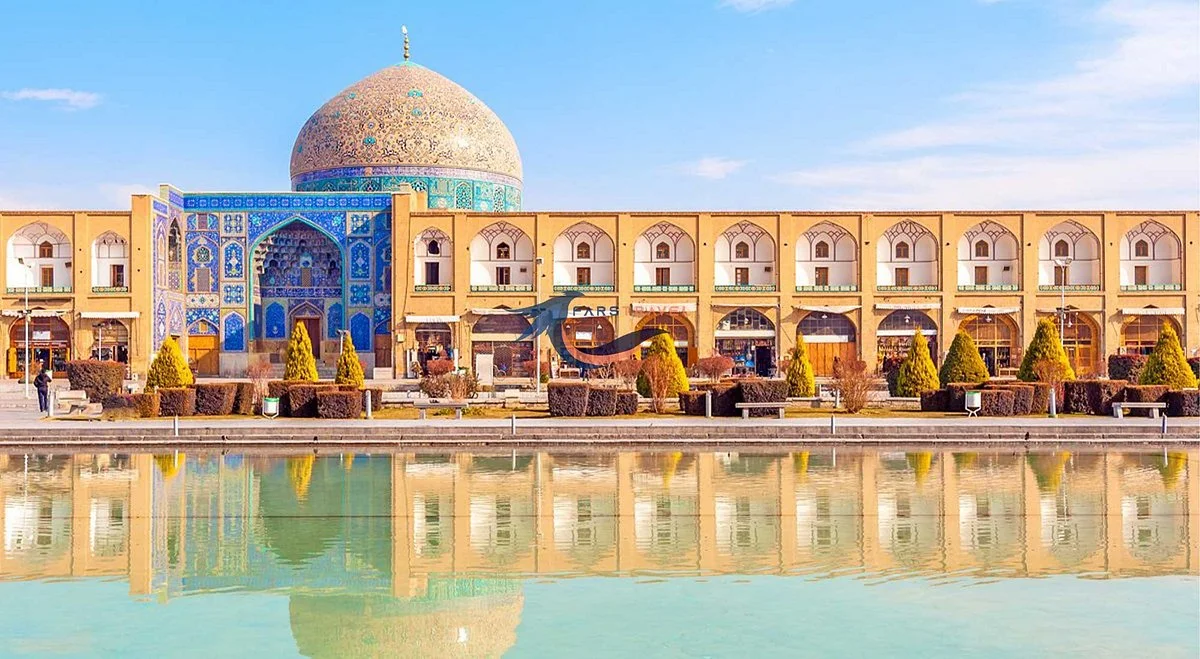
That said, Iran still holds an extraordinary architectural and human heritage: the mosaics of Isfahan, the gardens of Shiraz, the wind towers of Yazd. Once the situation allows it, this will be one of the richest cultural circuits in the Middle East. To prepare for that “afterwards,” you can already check out our guide to Isfahan and our article on the essential things to do in Shiraz. As for the rest, only you can weigh these factors and decide what's right for you.
FAQ: travelling to Iran in 2026
Can you still fly to Iran in 2026?
It's complicated. Iranian airspace is rated "Risk Level One, Do Not Fly" by safeairspace.net, and several airlines (Emirates, Qatar Airways, Turkish Airlines, FlyDubai) have repeatedly cancelled flights since January 2026, depending on flare-ups in the conflict.
Does a foreign tourist really risk being arrested in Iran?
France Diplomatie states it explicitly: any French visitor, including dual nationals, faces a high risk of arrest and arbitrary detention. This risk is even more pronounced for French-Iranians, who are denied consular access on the ground. The UK, US and Canadian advisories carry similar warnings for their own nationals and dual nationals.
Is street crime a real danger for tourists?
According to the consensus among travellers and country specialists, no: violent crime against tourists remains very low. That qualitative observation, however, changes nothing about the unanimous “red” rating from travel advisories in 2026.
Do you need a mandatory guide to visit Iran?
According to specialist agencies, yes for US, UK and Canadian nationals: a licensed guide and a pre-approved itinerary are required. Other nationalities are generally not subject to this rule.
Can you pay by bank card in Iran?
No. Foreign cards have been unusable since the country's banking isolation began in 2012. You need to travel with cash (euros or dollars to exchange locally) or use a local prepaid tourist card, as detailed in our article on paying in Iran.
Last updated: July 2026.
Leave a comment
Share your thoughts or travel experience. Your email will not be published.