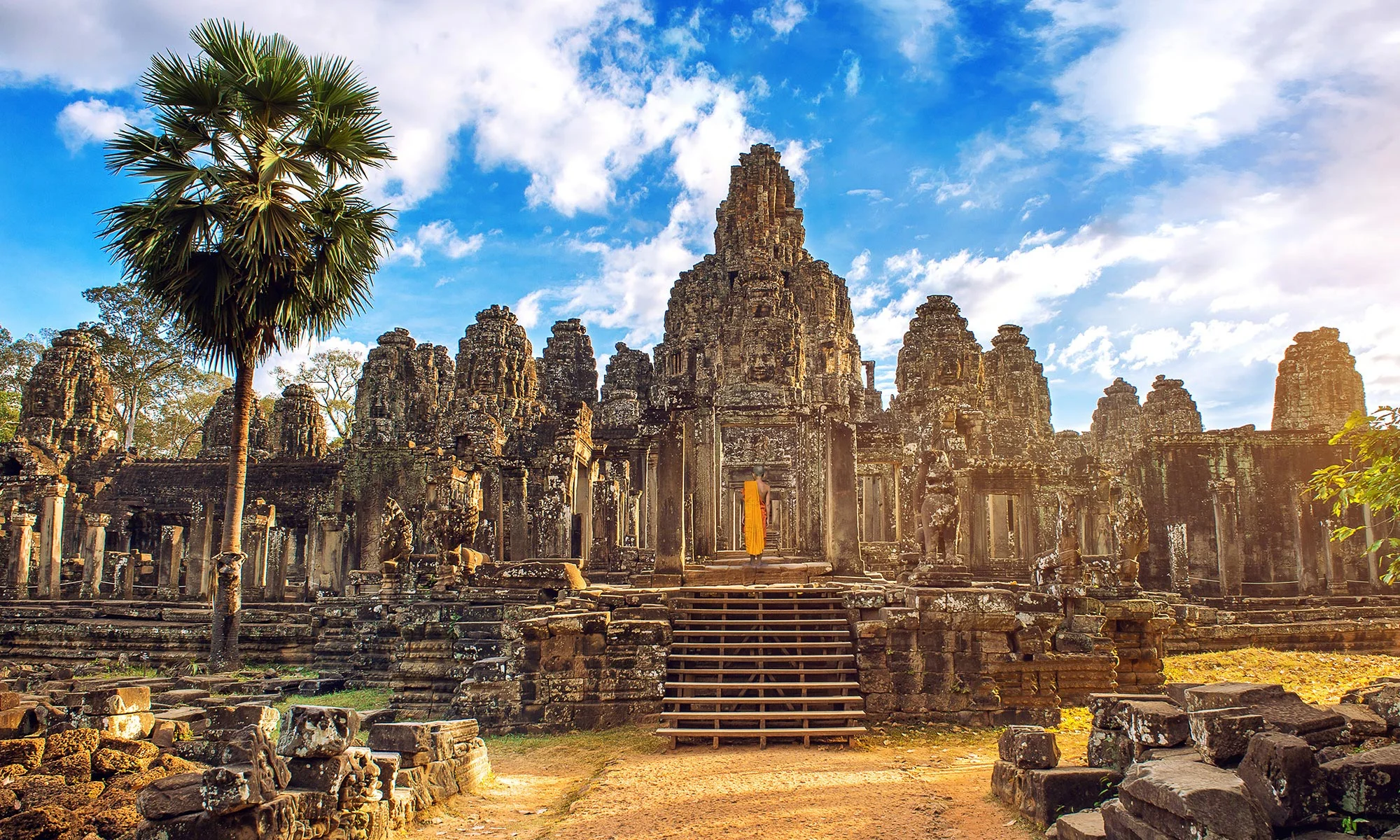


Contents 32
Overview
Northern Thailand takes 5 to 10 days from Chiang Mai, between the temples of the old Lanna kingdom, the mountains of Doi Inthanon (2,565 m) and the roads to Pai and Chiang Rai, ideally from November to February, when the air is dry and the nights cool.
Chiang Mai, 744 km north of Bangkok, is the natural base for a first trip to Northern Thailand. King Mangrai founded it in 1296 as the capital of the Lanna kingdom, and its square old city, ringed by a moat and brick gates, still has more temples than tall buildings: Wat Chiang Man, the first of them, dates from 1297.
Around Chiang Mai, three trips shape your stay: the temple of Doi Suthep, perched at 1,073 m above the city; Doi Inthanon, the country's highest point at 2,565 m; and, further out, Chiang Rai and its White Temple, about 3 h 30 away by bus. To the west, Route 1095 climbs towards Pai and then Mae Hong Son, the mountain loop people drive or ride by minivan.
- Currency: Thai baht (THB), about 38 THB to €1 on 02/10/2026 (roughly 32 THB to $1)
- Time difference: +5 h in summer, +6 h in winter vs Paris; +6 h/+7 h vs London
- Visa: 30-day visa exemption for French citizens since 15/09/2026; other nationalities should check their own rules
- Best time: November to February
Still torn between two countries? Our comparison Thailand or Vietnam weighs up the budgets, visas and routes of both destinations.
14 places to take with you
In the guide's order, ready for Google Maps or your GPS.
Book the activities from this guide
Our picks for Chiang Mai, well rated and free to cancel.
-
Book this activity
Chiang Rai day trip: White Temple, Blue Temple and Golden Triangle
À partir d'environ 63 € par personne, transport et guide inclus
-
Book this activity
Chiang Mai's old city by bike
À partir d'environ 35 € par personne, vélo, casque et guide inclus
-
Book this activity
Doi Inthanon day trip and Kew Mae Pan hike
À partir d'environ 44 € par personne, transport et guide inclus ; entrée du parc parfois en sus
Affiliate links: Travel Advice earns a commission if you book, at no extra cost to you. Learn more

Wat Umong, the temple of tunnels
Under the forest, you walk into cool, vaulted brick tunnels where lit niches hold Buddhas covered in offerings.
The monastery was founded by King Mangrai at the foot of Doi Suthep. Under King Kue Na (1355-1385), meditation tunnels were dug in all four directions. Abandoned during the Burmese occupation, it became a meditation centre in 1949, on 6 hectares of forest.
Allow an hour: the tunnels, the large old chedi above them, the pond where you can feed the fish, and the "talking trees" hung with Buddhist sayings in Thai and English.
A kilometre south of the university, far from the noise of the old city, the site stays almost empty on weekdays.
Dress modestly and keep your voice down: Wat Umong is still a place of meditation where monks live.

Wat Phra That Doi Suthep
After the 309 naga-lined steps, the golden chedi appears all at once, ringed by parasols and worshippers circling it barefoot, with Chiang Mai spread out 700 m below.
Founded according to tradition in 1383, the temple stands at 1,073 m, about fifteen kilometres from the city. Legend has it that a white elephant carrying a relic of the Buddha stopped here, marking the spot for the sanctuary.
Allow 1 h 30: the climb by stairs or funicular, a walk around the central chedi, the chapels and the panoramic terrace over the Ping valley.
It's one of the most revered temples in the north, and the only one of Chiang Mai's big sites with a view over the whole city.
The temple and Wat Pha Lat, by the road, are exempt from the national park fee (100 THB since October 2025, which applies to the park's waterfalls and trails).

Wat Rong Khun, the White Temple
Under the midday sun, the white plaster and mirror shards are almost blinding: you cross a bridge over a pit from which hundreds of sculpted hands reach up.
The White Temple is the work of Thai artist Chalermchai Kositpipat, who opened it to the public in 1997 and is still building it. It is as much an artwork as a temple: white stands for the purity of the Buddha, and the murals in the main hall mix film and comic-book characters with Buddhist imagery.
The visit takes about an hour: the bridge of the cycle of rebirth, the main hall (no photos inside), the golden toilet building and the gallery devoted to the artist.
No other temple in the country looks like it: on its own, it justifies the trip to Chiang Rai.
The temple is about 13 km south of Chiang Rai: combine it with the Blue Temple and the Black House, north of town, on the same day.

Doi Inthanon, the roof of Thailand
At dawn, above 2,000 m, mist clings to the moss and rhododendrons, and you need a fleece even though it will be 30 °C in Chiang Mai that evening.
Doi Inthanon rises to 2,565 m, the country's highest point, at the heart of a 482 km² national park whose forests have been protected since 1954. Near the summit, two royal chedis dedicated to the King and Queen, Naphamethinidon (1987) and Naphaphonphumisiri (1992), overlook flower gardens.
It's a full day: the summit and its short cloud-forest walk, the chedis, Wachirathan waterfall on the way down, and the Kew Mae Pan trail, which must be walked with a local guide.
Summit, waterfalls, high forest and Karen villages in a single day: no other trip from Chiang Mai packs in so many landscapes, and birdwatchers record hundreds of species here.
Leave early: the mountain road from Chiang Mai takes about 2 hours, and clouds often cover the summit after noon.

Wat Chedi Luang
In the middle of the old city, a gutted mass of red brick towers over the rooftops: even cut down, the chedi dwarfs everything around it.
Begun in the 14th century and finished in the mid-15th under King Tilokaraj, it stood 82 m tall. An earthquake in 1545 brought down its upper part. The Emerald Buddha, now in Bangkok, was enshrined here in 1468 before leaving for Luang Prabang in 1551.
Walk around the chedi and its stone elephants, then visit the viharn and the city pillar (Sao Inthakin); allow 45 minutes, more if you stay for a chat with the monks.
Its half-collapsed ruin has no equal in the city, and it's a walk from any hotel in the old city.
"Monk chats", conversations in English with novice monks, take place on some afternoons under the temple's trees: they're free, and a chance to ask anything about monastic life.

Wat Phra Singh and the old city temples
At the royal temple, the tiered teak roofs sweep almost to the ground, and the gold of the façades shines under the trees while novices sweep the courtyard.
Built in 1345 by King Phayu to hold his father's ashes, Wat Phra Singh takes its name from the Phra Buddha Sihing, the statue brought here around 1400. It was given the rank of first-class royal temple in 1935. A few streets away, Wat Chiang Man, built in 1297 by King Mangrai, is the oldest temple in the city, with its chedi carried by fifteen brick elephants.
Allow 2 to 3 hours, on foot or by bike, to link Wat Phra Singh, Wat Chedi Luang and Wat Chiang Man through the little lanes inside the moat.
In a single morning, these three temples sum up seven centuries of Lanna architecture, in wood and brick.
Rent a bike for the day: distances are short, but the afternoon heat makes walking hard work.

Elephant Nature Park
In the Mae Taeng valley, the elephants move in small groups between the river and the fields, and visitors watch from platforms, without riding them.
The sanctuary was founded in the late 1990s by Sangduen "Lek" Chailert, about 60 km north of Chiang Mai, to take in elephants from the logging industry (banned in 1989) and from tourism. It also cares for rescued dogs and buffalo.
A half-day or full-day visit includes preparing food, watching the elephant families and a vegetarian lunch; the park focuses on observation, with no riding or shows.
Plenty of places call themselves "sanctuaries" while offering elephant rides: not this one. Check on the official website that the programme you choose doesn't include bathing with the animals.
Watch out for copycats with similar names sold by touts in the old city: check the exact name and that there's no riding or bathing before you pay.

Wat Rong Suea Ten, the Blue Temple
Inside, everything is cobalt blue: walls, pillars, ceiling, and at the centre a large white Buddha that seems lit from within.
Work began on 27 October 2005 on the ruins of an abandoned temple, and the main building was completed on 22 January 2016. It was designed by Phuttha Kabkaew, known as Sala Nok, a student of Chalermchai Kositpipat, the creator of the White Temple. Its name means "house of the dancing tiger".
The visit takes 30 to 45 minutes: the main hall, the blue nagas on the stairway and the statues in the garden.
Less famous than the White Temple, it's often preferred by travellers for its calmer atmosphere and its colours.
The temple is about 8 km from Baan Dam (15-20 minutes by Grab): do both in the same half day, by songthaew or Grab from central Chiang Rai.

The Mae Hong Son Loop
At the end of the road, the fretwork roofs of two Burmese-style temples are reflected in Mae Hong Son's small lake, often wrapped in morning mist.
The loop links Chiang Mai, Pai, Mae Hong Son and Mae Sariang over about 600 km of mountain roads; local legend credits it with 1,864 bends, a number printed on T-shirts more than measured. Mae Hong Son, capital of a province bordering Myanmar, keeps a strong Shan culture, visible in its temples Wat Jong Klang and Wat Jong Kham.
It takes 4 to 5 days by car, with stops at waterfalls, caves, hill villages and viewpoints, sleeping in Pai, Mae Hong Son and Mae Sariang.
Few coaches, villages that still live to the rhythm of their markets: the loop shows a far more rural Thailand than Chiang Mai.
Drive the loop in the direction Pai, then Mae Hong Son, then Mae Sariang, saving Doi Inthanon for the last day before returning to Chiang Mai.

Pai, the backpackers' valley
In the evening, the main street closes to cars and fills with skewer stalls, fruit-juice stands and live music spilling out of wooden bars.
A small town in Pai district, Mae Hong Son province, it sits on the Pai River, about 146 km north-west of Chiang Mai on the road to Mae Hong Son. A former market village, it has become the most popular stop for travellers in the mountains in twenty years.
Stay two nights for the hot springs, waterfalls, the valley's rice fields, the World War II bridge and Pai Canyon at sunset.
If you make only one stop in the mountains outside Chiang Mai, make it this one: everything is within 15 km of the centre.
In December and January, riverside bungalows get cold at night: ask for an extra blanket, and book ahead over the Thai New Year holidays.

The Sunday market (Sunday Walking Street)
At nightfall, Ratchadamnoen Road turns into a river of lamps and coloured awnings, where you shuffle between stalls of silk, soap and skewers.
Every Sunday, the street runs from Tha Phae Gate right across the old city to Wat Phra Singh, closed to traffic. The courtyards of the temples along the way, Wat Chedi Luang among them, fill with food stalls.
Allow 2 to 3 hours to walk it, eating your way through the temple courtyards: khao soi, sai oua, mango with sticky rice, fresh-pressed juices.
It stretches across the whole width of the old city, with regional crafts, marked prices and the feel of a neighbourhood party.
In Chiang Mai on a Saturday? The Wualai Road market, south of the moat, is smaller, more local and known for its silverwork.

Pai Canyon (Kong Lan)
The ochre earth ridges are sometimes no wider than a footpath, with gullies on either side and the Pai valley glowing red at sunset.
The canyon, called Kong Lan in Thai, is a set of ravines and ridges carved by erosion, beside Route 1095, a few kilometres south of Pai as you come from Chiang Mai.
Walk the ridges for 30 minutes to an hour, then sit on a promontory to wait for the sun to set over the mountains.
Ten minutes by scooter or songthaew from central Pai, no other viewpoint in the valley is easier to reach.
Head down before full dark, with a head torch in your pocket: the path is poorly marked at night.

The Golden Triangle at Sop Ruak
From the bank at Sop Ruak, you watch the wide brown Mekong swallow the Ruak, with Myanmar to the left and Laos opposite.
The Golden Triangle is the mountainous region shared by Thailand, Myanmar and Laos, centred on this confluence. From the 1950s it was one of the world's largest opium-producing areas.
Allow 2 hours: the viewpoints over the three countries, the opium museum, and perhaps a short Mekong cruise; the historic town of Chiang Saen, a few kilometres away, has temple ruins.
The site works better combined with Chiang Saen than as a trip on its own: together, they tell the story of the Chiang Rai region.
From Chiang Rai, allow about an hour's drive: leave in the morning and return via Chiang Saen for lunch by the river.

Baan Dam, the Black House
After the brightness of the White Temple, the black teak pavilions, hides, horns and skulls laid out on tables feel distinctly unsettling.
Baan Dam is a private art museum designed by artist Thawan Duchanee, who added to it for nearly forty years, from 1975 until his death in 2014. It gathers more than 40 buildings over about 16 hectares, including a large central pavilion 44 m long built between 1999 and 2009.
Wander for an hour between the Lanna-style pavilions and the stranger buildings, shaped like shells or white domes.
The dark counterpart to the White Temple, Baan Dam tells the story of Northern Thailand's contemporary art alongside it.
The museum is about 10 km north of central Chiang Rai and about 8 km from the Blue Temple (15-20 minutes by Grab).
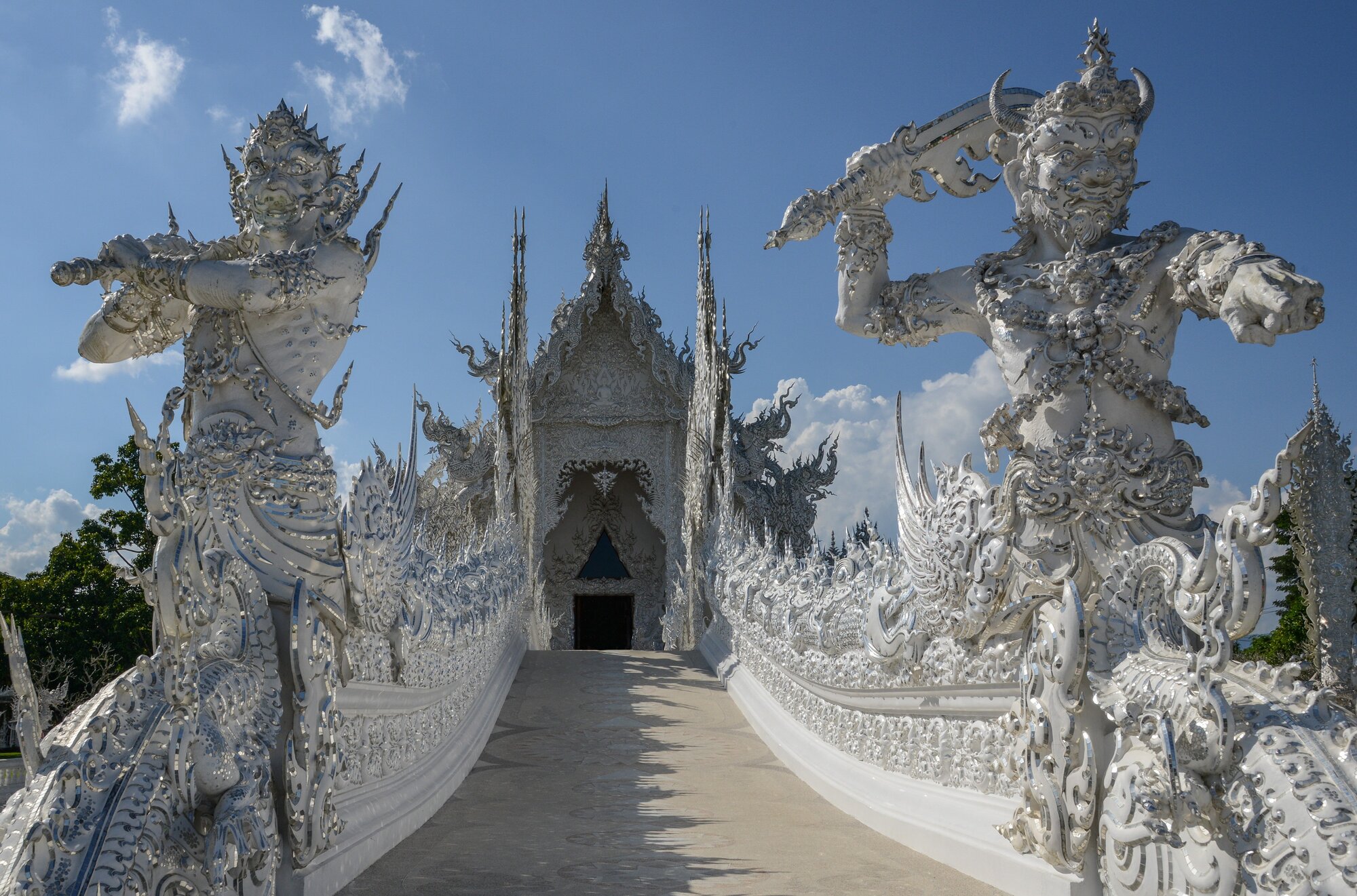
Chiang Rai day trip: White Temple, Blue Temple and Golden Triangle
The minivan picks you up at your hotel early in the morning, stops at hot springs on the way, then reaches the White Temple late in the morning. The afternoon takes in the Blue Temple, the Golden Triangle at Sop Ruak and a short boat ride on the Mekong, before returning to Chiang Mai in the evening.
It's a long day (about 12 hours, 6 of them on the road) but the easiest way to see Chiang Rai without staying overnight. The White Temple entry (200 THB) may be extra: check what's included, and bring clothes that cover shoulders and knees.
- Environ 12 h, départ vers 7 h 30 de Chiang Mai
- À partir d'environ 63 € par personne, transport et guide inclus
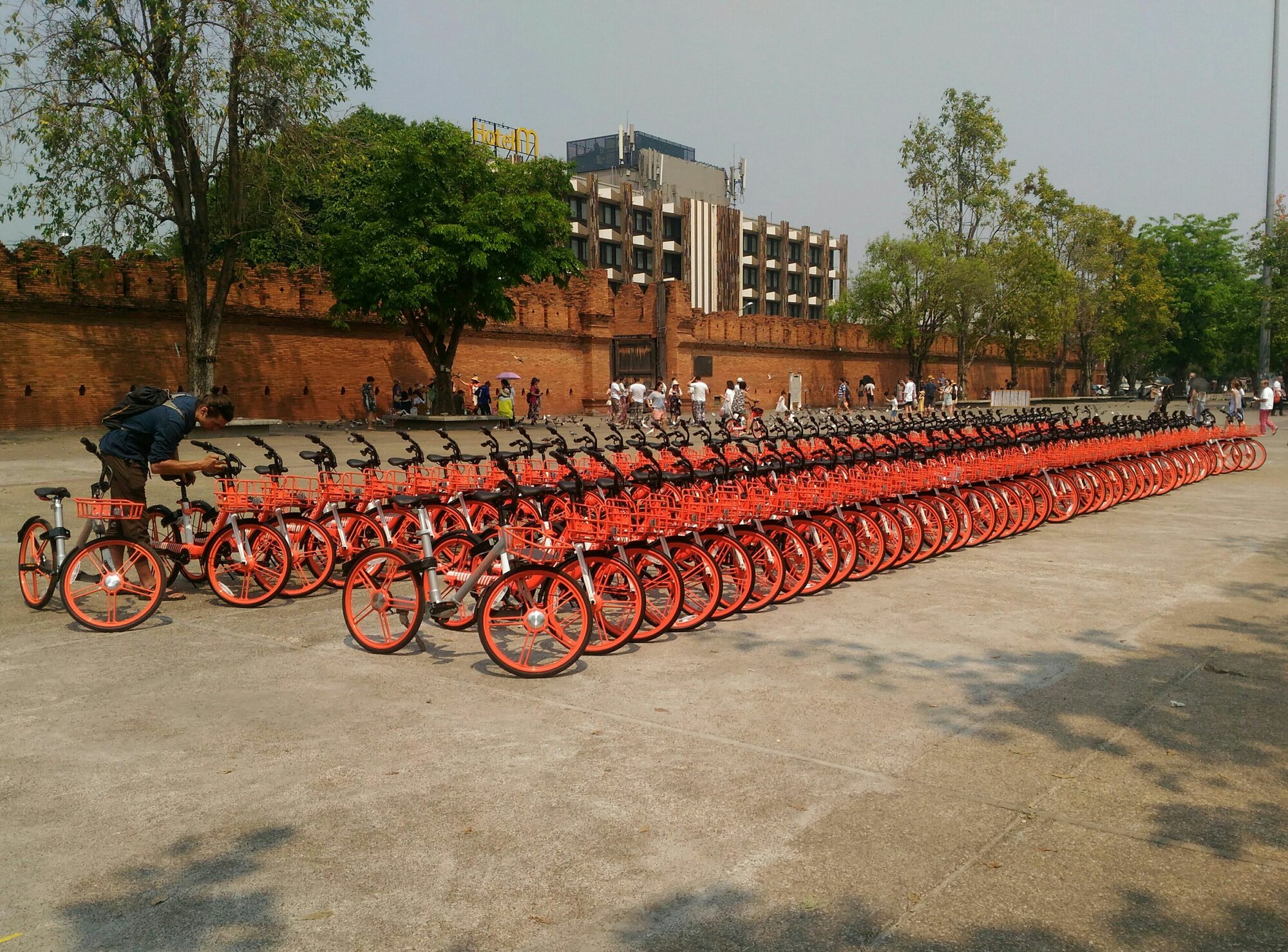
Chiang Mai's old city by bike
The guide leads a small group through the lanes inside the moat, while traffic is still light or as the heat eases. You stop at several temples, including Wat Chedi Luang and Wat Phra Singh, at the remains of the walls and at a neighbourhood market; the highlight is riding through the sois where cars don't go.
It's easy going, the city is flat and distances short, but you need to be comfortable cycling among scooters. Bring clothes that cover shoulders and knees for the temples.
- Environ 3 à 4 h, le matin ou en fin d'après-midi
- À partir d'environ 35 € par personne, vélo, casque et guide inclus
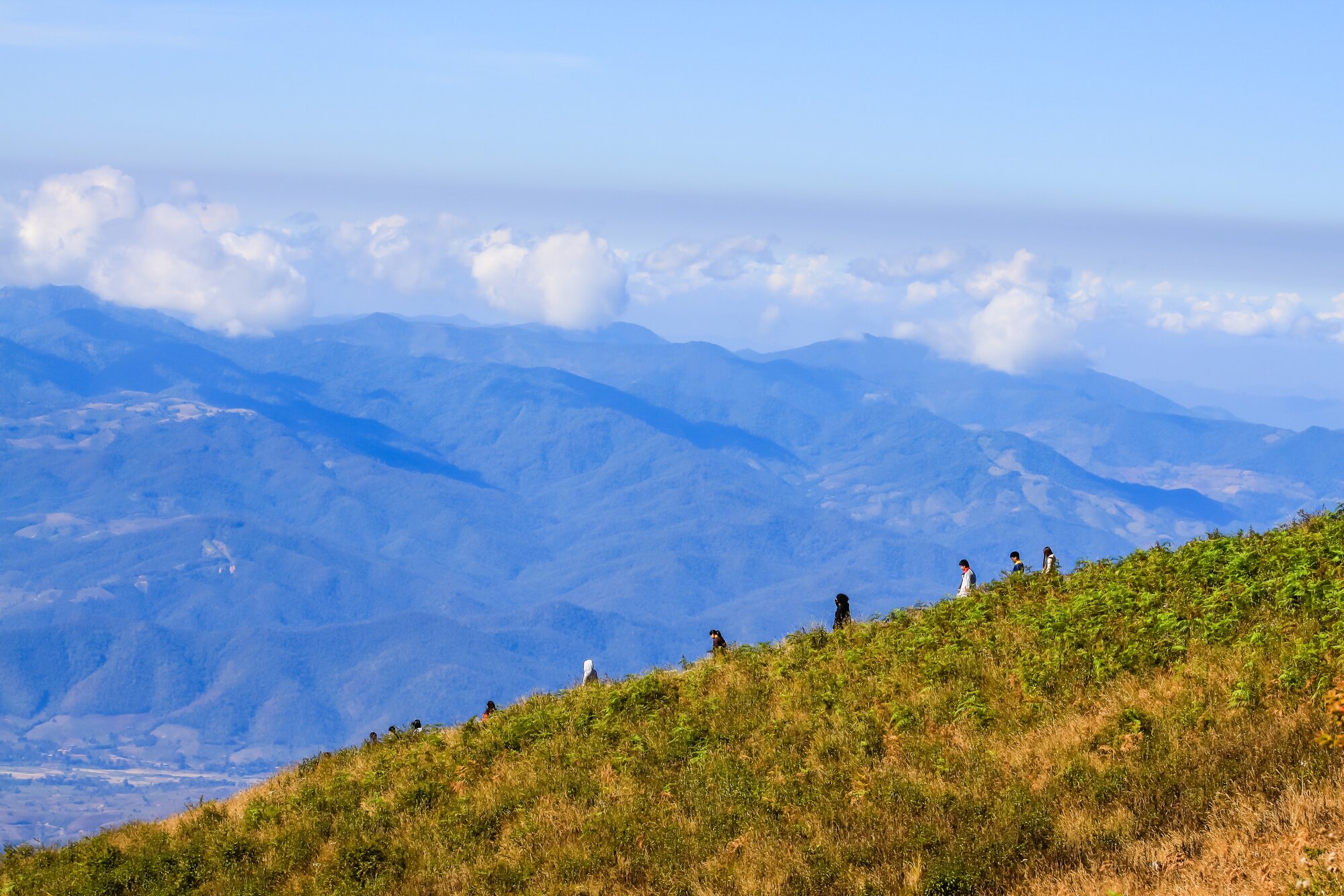
Doi Inthanon day trip and Kew Mae Pan hike
Leave Chiang Mai in the morning, drive up to the 2,565 m summit of Doi Inthanon, stop at the two royal chedis and their gardens, then walk the Kew Mae Pan trail through cloud forest to an open ridge. Wachirathan waterfall rounds off the day.
The trail is easy but high: good shoes and a fleece are a must from November to February. The trail may close in the rainy season: check before booking.
- Journée complète (environ 10 h)
- À partir d'environ 44 € par personne, transport et guide inclus ; entrée du parc parfois en sus
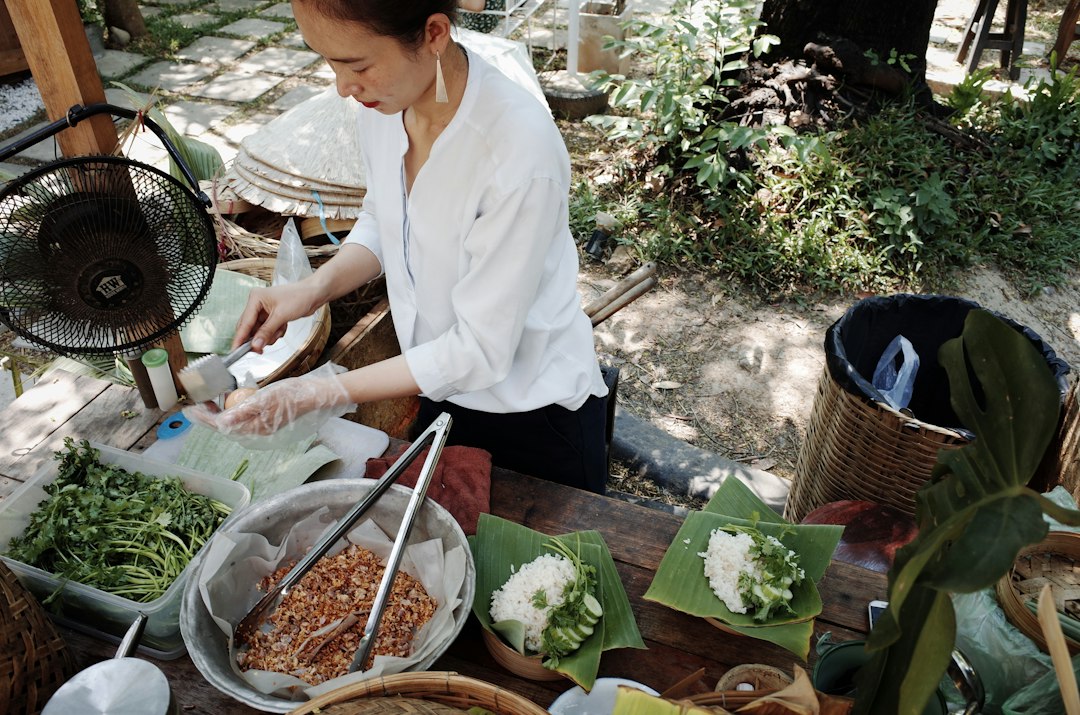
Thai cooking class with a market visit
The class starts at the market, where the chef introduces herbs, chillies and curry pastes, then moves on to a herb garden. Everyone then cooks four or five dishes at their own station, from curry to pad thai, and has lunch on what they've made.
No experience needed, and vegetarian dishes are possible on request. Mornings are more pleasant than afternoons in the hot season; you leave with the recipes.
- Environ 5 à 6 h, dont la visite du marché
- À partir d'environ 29 € par personne, ingrédients et recettes inclus
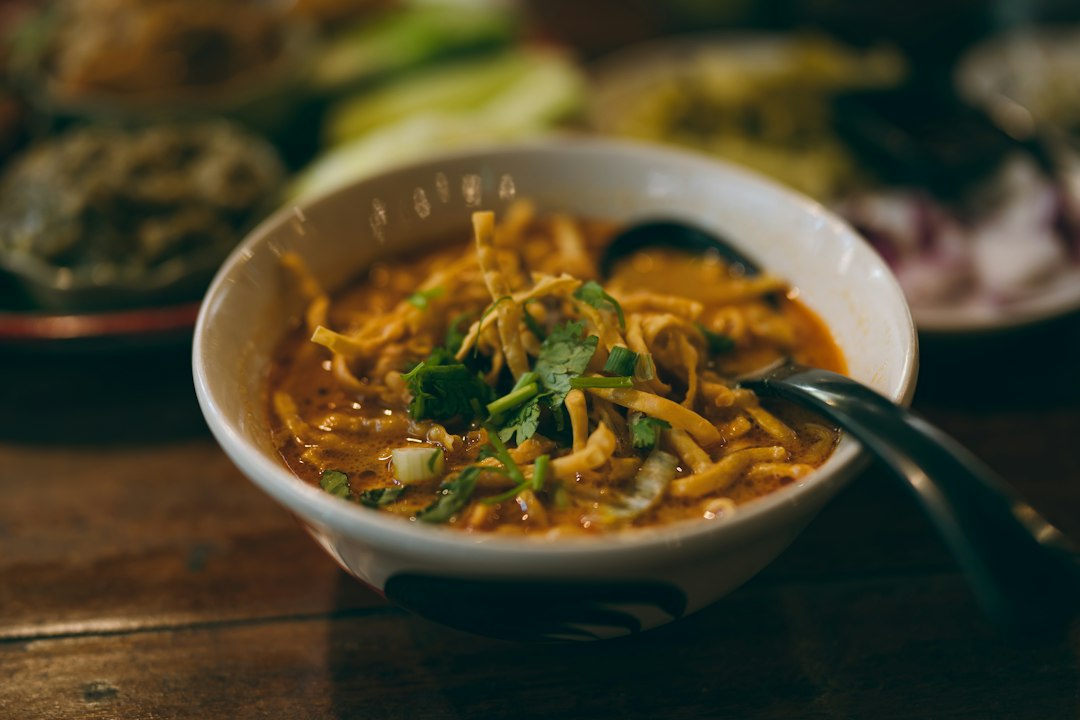
Evening street-food tour in Chiang Mai
A local guide takes you at nightfall to a market where locals shop, from stall to stall: khao soi, grilled sai oua, sticky rice, coconut-milk desserts. The highlight is tasting northern dishes you'd never dare order alone, with each ingredient explained.
Come hungry and mention any allergies when you book. It's a great first evening in Chiang Mai, before you explore the night markets on your own.
- Environ 3 à 4 h en soirée
- À partir d'environ 36 € par personne, dégustations incluses
Getting there
Reach Chiang Mai from Bangkok by domestic flight (about 1 h 15) or overnight train (12 h 30 to 14 h, about 800 THB for a 2nd-class air-conditioned berth), after a long-haul flight to Bangkok.
There are no regular direct flights from Europe to Chiang Mai: you connect through Bangkok (Suvarnabhumi or Don Mueang) or a Gulf or Asian hub. From Bangkok, domestic flights to Chiang Mai airport (CNX) are frequent and take about 1 h 15. The airport is only a few kilometres from the old city, 15-20 minutes by Grab.
The overnight train is the nicest option if you have time: 744 km, 12 h 30 to 14 h. Train no. 9, with newer carriages, leaves Krung Thep Aphiwat station around 18:40 and reaches Chiang Mai around 07:15. Expect about 770 to 840 THB (€20-22) for a 2nd-class air-conditioned berth; the lower berth is wider and costs more. Tickets are sold on the SRT D-Ticket website up to 180 days ahead: book early for December and January.
If you start in the capital, our guide to the 15 must-see things to do in Bangkok helps you plan two or three days there before heading north.
Direct flights also link Bangkok with Chiang Rai airport (CEI): handy for a one-way route (arrive in Chiang Mai, leave from Chiang Rai) without backtracking.
Getting around
In Northern Thailand you get around by Greenbus between Chiang Mai and Chiang Rai (about 3 h 35, 129-258 THB), by minivan to Pai (3-4 h, 762 bends) and, in town, by red songthaew or Grab.
In Chiang Mai, the old city is walkable: it's about 1.5 km on each side. For everything else, red songthaews (shared pick-ups with bench seats) take several passengers and the fare is agreed before you get in, while Grab and Bolt show the price upfront, which avoids haggling.
For Chiang Rai, Greenbus leaves from Chiang Mai's Arcade Bus Terminal 3, with a dozen departures a day between 07:00 and 18:00. The ride takes about 3 h 35, for 129 to 258 THB depending on class: the more comfortable V class is worth the small extra.
For Pai, minivans leave the Arcade Bus Station roughly every hour from 06:30 to 17:30, for 3 to 4 hours on Route 1095 and its 762 bends. Expect 150 to 250 THB at the counter, a bit more online. Take a motion-sickness tablet and grab a seat at the front.
Renting a scooter costs about 150 THB a day, but the north is where two-wheeler accidents hit the most travellers. Helmets are compulsory, police often check licences, and your travel insurance may refuse to cover an accident if you don't hold the right motorbike licence. For a first trip, a car with driver or the minivan is safer on the Mae Hong Son Loop.
What to do
The must-sees of Northern Thailand are Doi Suthep temple, the temples of Chiang Mai's old city, Chiang Rai's White and Blue temples, Doi Inthanon, Pai and the Mae Hong Son Loop, and an elephant sanctuary with no riding or bathing.
A first trip combines three kinds of visits. First, the Lanna temples: Wat Phra That Doi Suthep above Chiang Mai, then Wat Chedi Luang, Wat Phra Singh and Wat Chiang Man in the old city. Next, the contemporary temples of Chiang Rai: the White Temple (Wat Rong Khun), the Blue Temple (Wat Rong Suea Ten) and the Black House (Baan Dam), three artists' works you can see in one day.
Then come the mountains: Doi Inthanon, the country's highest peak, the Pai valley and Pai Canyon at sunset, then the Mae Hong Son Loop if you have an extra week. Meeting elephants often rounds off the stay: choose a place that bans riding and shows, such as Elephant Nature Park, and avoid programmes that include bathing with the animals.
In the evening, night markets double as restaurants. The Sunday market on Ratchadamnoen, in the old city, is the biggest; the Saturday one on Wualai Road is smaller and more local.
Food
The dish to try in Chiang Mai is khao soi, a coconut curry noodle soup topped with crispy noodles, for 30 to 80 THB a bowl on the street.
Northern food is different from Bangkok's: less sweet, more herbal, with sticky rice instead of jasmine rice. Khao soi is its emblem: egg noodles in a yellow coconut curry broth, topped with crispy noodles, shallots and lime. A bowl costs 30 to 80 THB at a street stall (€1-2).
Look out too for sai oua, a grilled sausage with lemongrass and chilli, nam prik ong, a tomato and pork dip served with raw vegetables, and khan tok, a meal served on a low tray, often paired with a dance show.
Night markets are the easiest way to try it all: the Sunday market in the old city, the Chiang Mai Gate market south of the moat every evening, and Chiang Rai's night market. A half-day cooking class, with a market visit, is one of the best-rated activities in town.
Itineraries
In 5 days, stay in Chiang Mai with Doi Suthep, Doi Inthanon and a day in Chiang Rai; in 7 days, add two nights in Pai; in 10 days, drive the full Mae Hong Son Loop, about 600 km of mountains.
5 days: Chiang Mai and its day trips
- Day 1: Chiang Mai's old city on foot, Wat Chedi Luang, Wat Phra Singh, Wat Chiang Man; night market.
- Day 2: Doi Suthep at sunrise, Wat Umong late morning, cooking class in the afternoon.
- Day 3: a day on Doi Inthanon, the royal chedis and the Kew Mae Pan trail.
- Day 4: half a day at Elephant Nature Park (book on the park's website), the Sunday market in the evening if the day fits.
- Day 5: day trip to Chiang Rai: White Temple, Blue Temple, Black House.
7 days: Chiang Mai and Pai
- Days 1 to 4: Chiang Mai, as above, with Doi Inthanon and the elephant sanctuary.
- Day 5: morning minivan to Pai (3-4 h), Walking Street in the evening.
- Day 6: Pai by scooter or songthaew, hot springs, Pai Canyon at sunset.
- Day 7: minivan back to Chiang Mai, then a flight or the overnight train to Bangkok.
10 days: the Mae Hong Son Loop and Chiang Rai
- Days 1 to 3: Chiang Mai, Doi Suthep and the elephant sanctuary.
- Days 4 to 7: the Mae Hong Son Loop with a driver or rental car, about 600 km: Pai (2 nights), Mae Hong Son and its Burmese-style temples (1 night), back via Mae Sariang and Doi Inthanon (1 night).
- Days 8 and 9: bus to Chiang Rai, White Temple, Blue Temple and Baan Dam; the next day, the Golden Triangle at Sop Ruak.
- Day 10: flight from Chiang Rai to Bangkok and your connection home, or a few beach days: our Phuket travel guide covers the end of the trip in the south.
Climate & seasons
When to go to Thailand?
Monthly averages over the past 5 years (Open-Meteo).
Best months
- January
- February
- March
- April
- November
- December
Avoid
- May
- June
- July
- August
- September
- October
| Jan | Feb | Mar | Apr | May | Jun | Jul | Aug | Sep | Oct | Nov | Dec | |
|---|---|---|---|---|---|---|---|---|---|---|---|---|
| Our take | ||||||||||||
| Weather | ||||||||||||
| High | 22° | 24° | 28° | 29° | 27° | 25° | 25° | 25° | 24° | 24° | 23° | 22° |
| Rain (mm) | 30 | 37 | 23 | 69 | 247 | 294 | 447 | 406 | 358 | 224 | 108 | 28 |
| Hiking & nature | Hiking & nature January | Hiking & nature February | Hiking & nature November | Hiking & nature December | ||||||||
| City sightseeing | City sightseeing January | City sightseeing February | City sightseeing March | City sightseeing April | City sightseeing November | City sightseeing December |
What to do by season (autumn)
-
Hiking & nature
Mild temperatures, stable conditions.
-
City sightseeing
Pedestrian-friendly most of the year.
When to go
Go from November to February: it's the cool dry season in Chiang Mai, with 16-20 °C at night, 29-33 °C in the afternoon and barely 10 mm of rain in January or February.
Northern Thailand has three clear seasons. From November to February, the air is dry and clear: in Chiang Mai, highs hover around 29 to 33 °C and lows drop from 19.9 °C in November to 15.7 °C in January. Nights at altitude are much colder, on the summit of Doi Inthanon as in the Pai valley at dawn: a fleece is essential.
From March to May, the heat rises (an average high of 36.7 °C in April). In March and April, sometimes as early as February, the crop-burning season fills the region with smoke. Air quality can then stay poor for weeks, with the view from Doi Suthep blocked out: this is the period to avoid, especially with children or breathing problems.
From June to October, the monsoon turns everything green; August (223 mm) and September (207 mm) are the wettest months. Showers often fall late in the day, but the mountain roads to Pai and Mae Hong Son get slippery.
Two highlights fall in high season: Yi Peng, Chiang Mai's lantern festival, and Loy Krathong, on the full moon of the 12th lunar month, expected on 24 and 25 November 2026. Check the dates with the Tourism Authority of Thailand before booking: old-city hotels fill up months ahead.
Budget
Expect €18-30 a day per person as a backpacker, €45-90 mid-range and €110-220 for comfort in Northern Thailand, excluding the international flight, with about 38 THB to €1.
Northern Thailand remains cheaper than Bangkok and the islands. As a backpacker, €18-30 a day (about $20-35) is enough: a dorm bed in Chiang Mai's old city at 200-400 THB, street khao soi at 30-80 THB, temple entries of a few dozen baht and a scooter at about 150 THB a day.
For mid-range, plan on €45-90 (about $50-100): a double room in a guesthouse or boutique hotel, restaurant meals, an organised day trip now and then. For comfort, €110-220 a day (about $120-240) covers an upscale hotel, a private driver for the day to Chiang Rai or Doi Inthanon, and massages. These two tiers are our own estimates, to adjust for the season: hotel prices climb sharply during Yi Peng.
A few costs sit outside the daily budget: about €21 for an overnight-train berth from Bangkok, 300 THB (about €8) for Doi Inthanon National Park, 200 THB (about €5) for the White Temple since 01/01/2026, and about €29 for a half-day cooking class. A visit to Elephant Nature Park costs considerably more: several thousand baht per adult.
Always carry cash: temple entries, songthaews and national parks are paid in notes. A 300 THB tourist entry fee for air arrivals has been announced since 2023; no start date had been confirmed as of 02/10/2026, so check before you go.
Work out your budget
Backpacker
126 – €210
18 – €30 per person per day
Mid-range
315 – €630
45 – €90 per person per day
Upscale
770 – €1,540
110 – €220 per person per day
On top of that
- Bangkok-Chiang Mai sleeper train, 2nd class A/C berth €21
- Doi Inthanon National Park entry (300 THB) €8
- White Temple entry in Chiang Rai (200 THB) €5
- Half-day Thai cooking class €29
Extras total €63
On-the-ground estimate, international flights excluded unless stated. Prices vary by season and how early you book.
Where to stay
In Chiang Mai, stay in the old city to visit on foot, near Tha Phae Gate for the markets, or in Nimmanhaemin for cafés; in Pai and Chiang Rai, one or two nights in the centre are enough.
Chiang Mai's old city, inside the moat, is the best choice for a first stay: Wat Chedi Luang, Wat Phra Singh and the Sunday market are all within walking distance. Dorm beds start at 200-400 THB a night and family-run guesthouses are everywhere. The south-west side is quieter than the streets around Tha Phae Gate at night.
Around Tha Phae Gate and the Night Bazaar, east of the moat, mid-range hotels are more common, with easy access to songthaews and Warorot market. Nimmanhaemin, to the west near the university, draws people for its cafés and restaurants, but you'll need a Grab to reach the old city.
In Pai, stay within walking distance of the Walking Street, or in the bungalows along the Pai River if you want quiet. In Chiang Rai, the centre near the Clock Tower is handy for buses and the night market.
During Yi Peng and Loy Krathong, in late November, prices soar in Chiang Mai: book several months ahead, with free cancellation.
Safety
Northern Thailand is a safe region for travellers; the real risks are scooter accidents on mountain roads and air pollution from March to April. Useful numbers: 191 (police), 1669 (ambulance), 1155 (tourist police).
The main risk is on the road. The UK government reports a high number of motorbike accidents in Thailand, often among travellers riding a two-wheeler for the first time. The roads to Pai, Mae Hong Son and Doi Inthanon string together tight bends and steep slopes: if you're not used to it, take a minivan or a driver.
The second is air quality during the burning season, in March and April and sometimes as early as February: smoke can hang over Chiang Mai for weeks. Check an air-quality index before you go and pack FFP2/N95 masks if you travel then.
Otherwise, the usual precautions are enough: keep an eye on your things in crowded markets, turn down offers of jewellery or "bargains" from strangers, and agree the price before getting into a tuk-tuk. In late September 2026 the French Foreign Ministry reported floods in several provinces and areas to avoid in the far south and near the Cambodian border, far from the north. Mae Hong Son and the Golden Triangle, on the other hand, run along the Myanmar border: check the latest advice before going, as the situation in Myanmar changes fast. As of 28/09/2026, the ministry's page listed no restriction for the north.
Emergency numbers: 191 for police, 1669 for an ambulance, 199 for the fire brigade, and 1155 for the tourist police, who answer in English. Travel insurance covering medical costs and repatriation is strongly recommended: Chiang Mai's private hospitals are good but expensive.
Formalities
French citizens can visit Thailand visa-free for 30 days of tourism since 15/09/2026 (down from 60 days), provided they fill in the TDAC digital arrival card within 3 days before arrival; other nationalities should check their own rules.
Since 15 September 2026, the visa exemption for holders of an ordinary French passport has dropped from 60 to 30 days for tourism, according to the French Foreign Ministry's travel advice (updated 28/09/2026). Visa-free land entries are limited to two per calendar year. You can apply for an extension at an immigration office in Thailand; overstaying exposes you to a fine, or even deportation. British travellers have the same 30-day rule; other nationalities should check with the Thai embassy.
All foreign visitors must fill in the Thailand Digital Arrival Card (TDAC) online within 3 days before arrival, on the official Thai immigration website (tdac.immigration.go.th). It's free: beware of sites that charge for it. The UK government also notes that officers may ask for proof of funds (10,000 THB per person) and an onward ticket.
Plan on a passport valid for at least 6 months after your arrival date: the UK government requires it of British nationals; for a French passport, check with the Thai embassy in France.
To ride a scooter, you need an International Driving Permit on top of your national licence, with the motorbike category: without it, travel insurance may refuse to cover an accident. No vaccination is required on entry for travellers coming from France. Protect yourself from mosquitoes (dengue circulates mainly in the rainy season), don't touch the dogs and monkeys at temples (rabies), and ask a travel clinic whether you need malaria prevention for the areas along the Myanmar border, around Mae Hong Son.
Tips
In Northern Thailand's temples, cover shoulders and knees, take your shoes off before entering the halls, visit the big sites at opening time and keep small notes for entries and songthaews.
- Temple dress: shoulders and knees covered everywhere, the White Temple included. A sarong or light trousers in your bag saves renting one at the entrance.
- Timing: the big temples generally open between 06:00 and 08:00, and organised tours arrive around 10:00. An early visit often saves you two hours of crowds.
- Monks: women must not touch a monk or hand him an object directly.
- Elephants: turn down any place offering riding, bathing with the animals or shows. A true sanctuary limits contact and has you watch the elephants from a distance.
- Cash: withdraw baht from ATMs (each withdrawal is charged by the local bank, so make a few large ones) and keep 20 and 100 THB notes.
- Data: an eSIM bought before you leave saves hunting for a shop on arrival; our article on travel eSIMs breaks down the prices.
- Fleece: even in the heart of the dry season, December and January mornings are cold in Pai and on top of Doi Inthanon.
FAQ
No, a French citizen doesn't need a visa for a tourist stay of up to 30 days in Thailand since 15/09/2026; they only need to fill in the TDAC card online within 3 days before arrival.
Do I need a visa to visit Chiang Mai?
French and British citizens don't, for a tourist stay of up to 30 days: the exemption dropped from 60 to 30 days on 15/09/2026. You do need to fill in the free TDAC digital arrival card within 3 days before arrival. Other nationalities should check with the Thai embassy.
How many days do you need for Northern Thailand?
Five days cover Chiang Mai, Doi Suthep, Doi Inthanon and a day in Chiang Rai. Allow a week with Pai, and ten days for the Mae Hong Son Loop.
When is the best time to visit Chiang Mai?
From November to February: dry weather, clear skies, 16-20 °C at night. Avoid March and April, when smoke from crop burning spoils the air, and bear in mind that hotels are packed during Yi Peng, in late November.
How do you get from Bangkok to Chiang Mai?
By domestic flight in about 1 h 15, or by overnight train in 12 h 30 to 14 h for about 770 to 840 THB in a 2nd-class air-conditioned berth. Buses run too, but they're less comfortable than the train on this route.
Can you do Chiang Rai as a day trip from Chiang Mai?
Yes, on an organised tour or with a driver: leave around 07:30, see the White Temple, Blue Temple and Black House, and get back in the evening. It's a long day (about 12 hours); a night there makes it more comfortable.
How do you choose an ethical elephant sanctuary?
Check that there's no riding, no bathing with the elephants and no shows, and that groups watch the animals from a distance. Elephant Nature Park, in the Mae Taeng valley, rules out riding and shows; check on its website that the programme you pick doesn't include bathing.
Is the minivan ride to Pai really that hard?
It's winding: 762 bends on Route 1095, for a 3-4 hour trip. Take motion-sickness medicine and a morning departure.
What daily budget do you need for Northern Thailand?
From €18-30 a day as a backpacker, €45-90 mid-range and €110-220 for comfort, excluding flights. Park and temple entries are paid in cash.
Sources
The figures in this guide come from the sources below, checked on the publication date.
- www.diplomatie.gouv.fr
- www.gov.uk
- www.gov.uk
- en.wikipedia.org
- en.wikipedia.org
- en.wikipedia.org
- en.wikipedia.org
- en.wikipedia.org
- en.wikipedia.org
- en.wikipedia.org
- en.wikipedia.org
- en.wikipedia.org
- en.wikipedia.org
- en.wikipedia.org
- en.wikipedia.org
- en.wikipedia.org
- www.chiangmaicitylife.com
- chiangmaicitylife.com
- www.byklo.rent
- www.thethailandlife.com
- www.train36.com
- www.train36.com
- www.visitthailandtoday.com
Leave a comment
Share your thoughts or travel experience. Your email will not be published.