

Contents 30
Overview
Norway comes down to one contrast: UNESCO fjords in the south-west, the Lofoten archipelago up north, and a northern lights season that runs from late September to early April above the Arctic Circle.
Norway comes down to one contrast. In the south-west, two fjords listed by UNESCO since 2005, the Geirangerfjord and the Nærøyfjord, with walls rising up to 1,400 m above the water. In the north, the Lofoten archipelago and Tromsø, 79,421 inhabitants, the largest city north of the Arctic Circle.
The country is not in the European Union, but it belongs to the Schengen Area and the EEA. In practice: no visa for French travellers, the European Health Insurance Card is valid, but customs allowances on alcohol and tobacco are strict.
The currency is the Norwegian krone. Reckon on roughly 11 NOK to 1 euro (11.01 recorded by Visit Norway in April 2026). The country runs almost cash-free: cards work everywhere, and many businesses refuse notes altogether.
What shapes a trip here is the season. Between June and September the mountain roads are open, the midnight sun lights up the nights above the Arctic Circle and the whole country can be driven. Between November and March half the passes close, but the northern lights take over in the north.
Distances leave no room for improvisation: Bergen and Lofoten are 1,700 km apart by road, ferries included. A trip that works picks one region rather than chaining them all.
12 places to take with you
In the guide's order, ready for Google Maps or your GPS.
Book the activities from this guide
Our picks for Norway, well rated and free to cancel.
-
Book this activity
Hike to Preikestolen
Hike free of charge; parking 300 NOK/day (~27 EUR) or shuttle from Stavanger ~500 NOK return (~45 EUR)
-
Book this activity
Nærøyfjord cruise and return on the Flåmsbana
1,100 to 1,400 NOK per person (100-130 EUR): cruise ~550-595 NOK one way + Flamsbana 430-510 NOK one way, meals not included
-
Book this activity
Minibus northern lights hunt from Tromsø
1,500 to 2,200 NOK per person (135-200 EUR) depending on group size, thermal suit, tripod and hot drink included
Affiliate links: Travel Advice earns a commission if you book, at no extra cost to you. Learn more

Geirangerfjord
The water is black, almost still, and the Seven Sisters waterfall splits into thin threads before disappearing into the fjord. Snow patches still hold on the ridge in July.
This 15 km fjord arm has been UNESCO-listed since 2005. Its crystalline rock walls rise to 1,400 m above the water and plunge 500 m below. It is the most photographed fjord in Norway.
You climb to the Dalsnibba viewpoint, drive the Eagle Road and its hairpins, and take the ferry between Geiranger and Hellesylt to see the walls from the water. Allow a full day to fit all three in.
Why this one rather than another? Because the verticality is at its maximum over a short distance: the road, the viewpoint and the boat show the same fjord from three angles within a few hours.

Reine and Hamnøy, Lofoten
Red wooden cabins on stilts, cod drying racks lined up along the quay, and behind them a granite peak dropping straight into the water. The smell of dried fish hangs in the air for much of the year.
Reine is a fishing port of 296 inhabitants as of 1 January 2025, in the municipality of Moskenes, Nordland. The rorbuer, the old fishermen's cabins, are now rented by the night.
The Reinebringen walk, fitted with a stone staircase built by sherpa craftsmen, gives the view down over the village and its maze of islets in about 2 hours return. The rest can be seen on foot in half a day.
Why here and not elsewhere in Lofoten? Because Reine and Hamnøy pack into 3 km what the archipelago spreads over 100: cabins, drying racks, bridges and rock walls.

Bryggen, Bergen
The wooden facades lean slightly, ochre, red and yellow, packed tight along the old quay. Behind them, plank alleyways creak underfoot and smell of tar.
Bryggen lines up 62 wooden houses and has been on the UNESCO World Heritage list since 1979, under criterion iii. The Hanseatic trading post was already active by 1350: German merchants handled dried fish from Lofoten here.
The visit fits into half a day: the Hanseatic Museum, the Bryggens Museum for the medieval excavations, then the back alleys where the apprentices lodged. The Fløibanen funicular adds an hour and the overall view of the city and the fjord.
Why Bryggen? It is the direct link between the northern fishing villages and European trade, on the same quay for seven centuries.

Preikestolen
The final rise opens onto a flat slab, and the Lysefjord appears all at once, 604 m below, between two grey walls. The rock in the foreground is polished by millions of boot soles.
Preikestolen receives around 200,000 visitors a year. Reaching it takes 3.8 km and 350 m of ascent from the car park, roughly 2 hours of climbing on a marked but rocky trail.
Up there you walk to the edge, come back down the same way, and the whole thing fits into 4 hours return. The lower section stays wet even in good weather: above-the-ankle boots recommended.
Why this viewpoint rather than Trolltunga? Because the effort-to-view ratio is unbeatable: 4 hours against 10 to 12, for a comparable vertical drop.

Tromsø and the northern lights
A green veil crosses the sky, folds back, stretches out again above an entirely white Arctic landscape. The cold bites the moment you pull off your gloves to adjust the camera.
Tromsø sits at 69°39' north and has 79,421 inhabitants as of 2025: it is the largest city north of the Arctic Circle, and the northernmost in the world to pass 50,000 inhabitants.
The aurora season runs from late September to early April, peaking between November and February. The midnight sun takes over from 18 May to 26 July, and the polar night lasts from 26 November to 15 January. An observation outing fills 6 to 8 hours of night.
Why start from here? Because the city is served by air, with traffic up 13 % in 2025, and because local guides can drive a long way to find a gap in the clouds.

Nærøyfjord
The walls close in until they hide the sky at the edges, and the electric boat moves without a sound. You hear the water slapping the hull and the waterfalls on the shore.
The Nærøyfjord forms the second half of the UNESCO site alongside the Geirangerfjord. This arm of the Sognefjord narrows to 250 m wide, making it one of the narrowest fjord arms in Europe, beneath walls rising over 1,400 m.
The Flåm-Gudvangen crossing takes 2 hours on an electric boat, running year-round. Reckon on roughly 550 to 595 NOK one way for an adult, around 960 NOK return in high season.
Why this cruise rather than another? Because the width-to-height ratio is extreme, and because electric propulsion removes the engine noise that spoils most fjord trips.

Flåmsbana
Through the window the valley opens up below and a grey-blue glacial river follows the track. The train dives into a tunnel, comes out, and the landscape has already changed scale.
The Flåmsbana covers 20 km between Myrdal, at 867 m, and Flåm, at 2 m above sea level, in 1 hour and 20 tunnels. It is one of the steepest railway gradients in the world on adhesion alone, with no rack rail.
The train makes a photo stop at the Kjosfossen waterfall, where passengers step out onto a platform for a few minutes. Tickets cost 430 NOK one way in low season and 510 NOK in high season, 620 to 730 NOK return.
Why this train? Because it physically links the mountain plateau to fjord level, which no scenic road does within an hour.

Trolltunga
A tongue of granite runs out horizontally into empty air, with no railing, above a mountain lake hemmed in by rock. The wind never fully stops up there.
Trolltunga sits at about 1,100 m of altitude, with nearly 700 m of empty air above the Ringedalsvatnet. The walk takes 10 to 12 hours return from the car park at 443 m, 17 km from Odda and 190 km east of Bergen.
Numbers went from 500 hikers in 2009 to 40,000 in 2014. High season runs mid-June to mid-September, the only period when the hike can be done without a guide or winter gear. Out of season, a guide and winter equipment are compulsory.
Why Trolltunga? Because it is a full day of commitment, not a roadside viewpoint. If you want the view without the 10 hours, Preikestolen does the job.

Henningsvær
The harbour smells of fish and diesel. Red trawlers are moored against the quays, the wooden houses press up to the water's edge and snowy peaks close off the horizon.
Henningsvær has 517 inhabitants as of 1 January 2025, in the municipality of Vågan, spread over 0.31 km² across a string of islets linked by bridges. It is one of the archipelago's historic fishing ports.
You can see working cod drying racks, the football pitch set among the rocks that has become a visual icon, cafés, galleries and a contemporary art museum. Half a day on foot is enough.
Why this village rather than another? Because fishing here is still a real activity, not a set: the quays are working at the same time as the galleries open.

The Atlantic Road
Seen side-on, the Storseisundet bridge draws a curve that seems to break off into thin air. The illusion comes from the angle: the road carries on, but the eye no longer sees it.
The Atlanterhavsvegen measures 8,274 m and opened on 7 July 1989. It strings together 8 bridges, including the Storseisundet, 260 m long and topping out 23 m above the water.
It was voted "Norwegian construction of the century" on 27 September 2005 and remains the country's second most visited road after Trollstigen. Driving it takes 20 minutes; doing it with photo stops takes 2 hours.
Why this road? Because it does not cross a landscape, it is part of one: the bridges hop from islet to islet just above the open Atlantic.

North Cape (Nordkapp)
The plateau is bare, the mist swallows the cliff and the trail railing disappears twenty metres away. The wind blows without pause, even in July.
The North Cape raises a 307 m cliff at 71°10' north, 2,102.3 km from the North Pole. The Nordkapphallen offers a panoramic film, a museum and the metal globe everyone photographs.
On site you walk to the cliff edge, visit the hall, and the whole thing fits into 2 to 3 hours. Admission to the Nordkapphallen runs 310 to 350 NOK per adult depending on the season, but the outdoor plateau has been recognised as public land: walking out to the edge costs nothing.
One honest caveat: the neighbouring headland of Knivskjellodden reaches 1,450 m further north. Nordkapp and Knivskjellodden both sit on the island of Magerøya, so the northernmost point of the European mainland is in fact Kinnarodden, at Cape Nordkinn, even though it lies 5.7 km further south. The North Cape remains the most accessible of the three.

Oslo Opera House
A white marble ramp rises gently from the quay to the roof, with no steps and no railing. You walk on the building as you would on a sloping beach, the Oslofjord straight ahead.
Designed by Snøhetta, the Opera House was inaugurated on 12 April 2008. It spans 77,100 m² of white granite and Italian marble, and its silhouette suggests an iceberg rising out of the fjord.
The outdoor ramp can be walked free of charge, at any hour, and gives the view over Bjørvika and the fjord. Allow 30 minutes for the roof, and half a day if you add the Munch Museum and the Fram Museum, both nearby.
Why this stop in Oslo? Because it is that rare major landmark whose most interesting access, the roof, costs nothing.
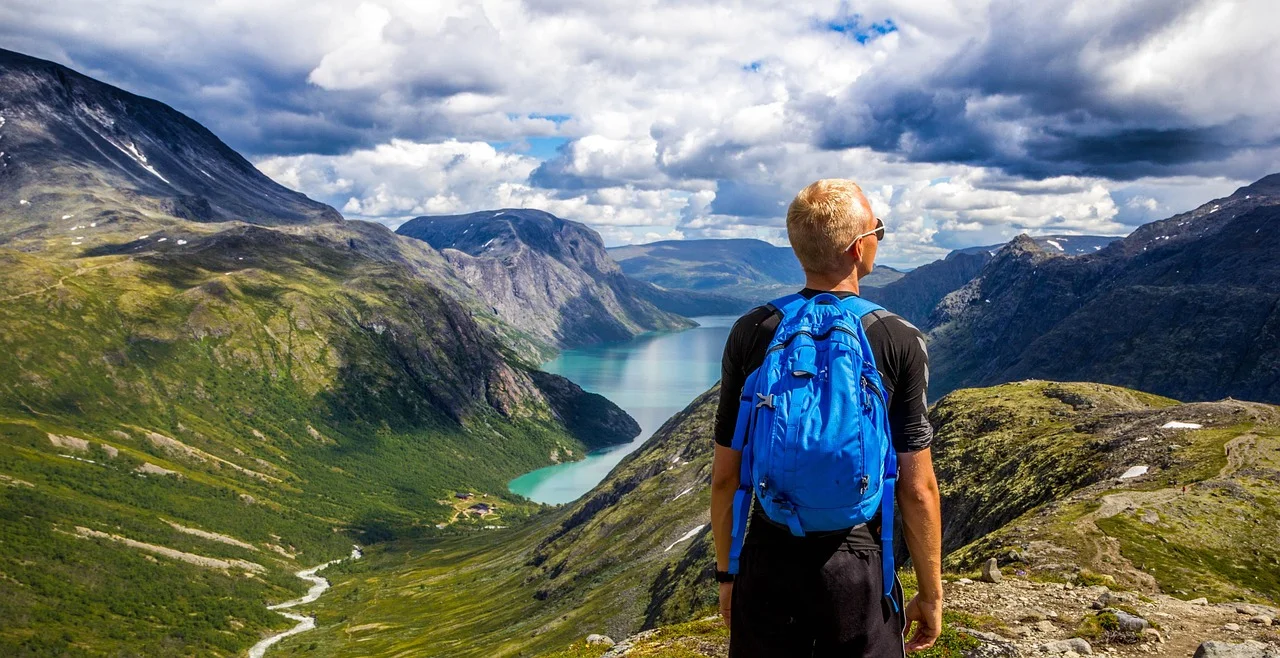
Hike to Preikestolen
You climb 3.8 km and 350 m of ascent from the Preikestolen fjellstue car park to a flat slab suspended 604 m above the Lysefjord. The high point is the final rise: the fjord only appears on the very last step, all at once.
The trail is marked and very busy, so it is within reach of a regular walker with no technical experience. The lower section stays rocky and wet even in good weather, and there is no railing at all at the top. No booking needed, but set off before 8 am in July and August.
- 4 h round trip from the car park, photo stops included
- Hike free of charge; parking 300 NOK/day (~27 EUR) or shuttle from Stavanger ~500 NOK return (~45 EUR)
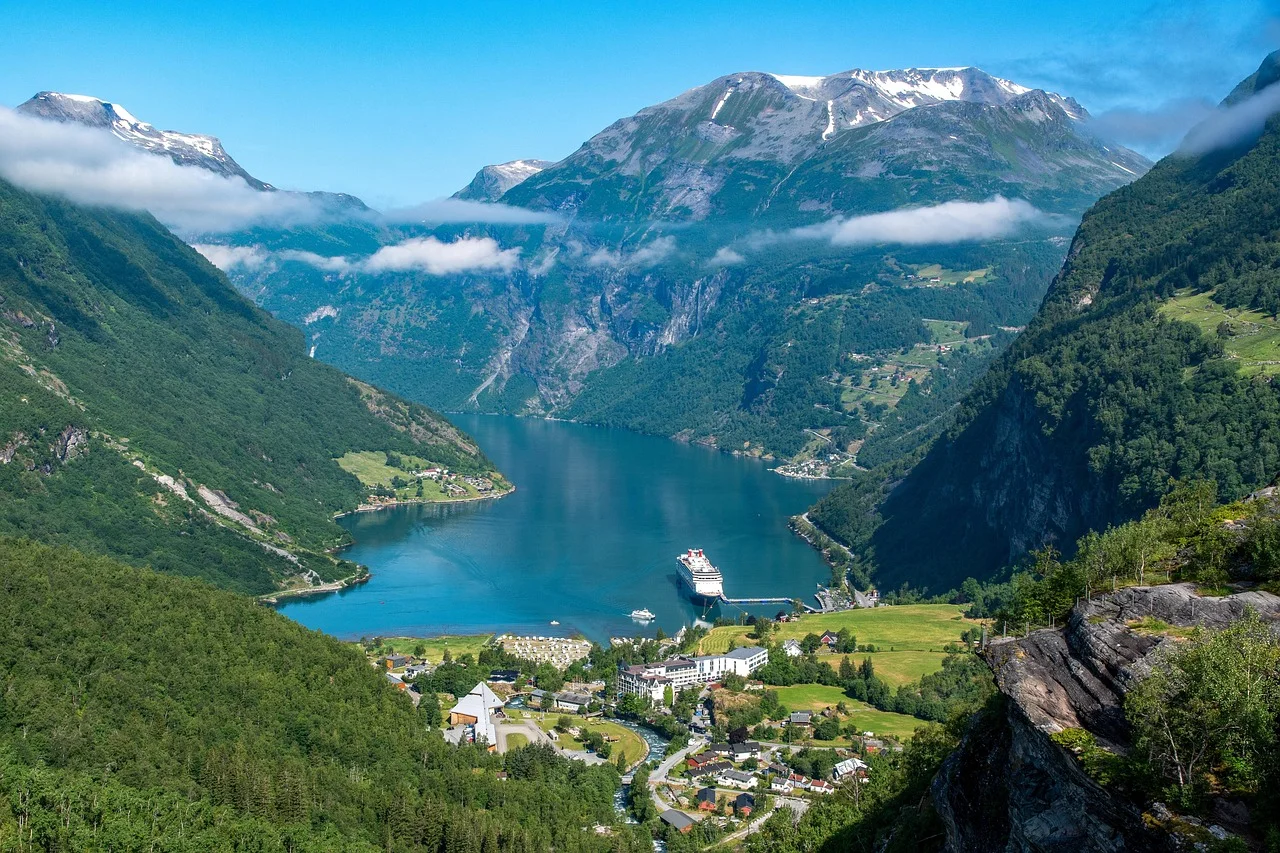
Nærøyfjord cruise and return on the Flåmsbana
You cross 2 hours of UNESCO fjord by electric boat between Flåm and Gudvangen, in a corridor that narrows to 250 m wide beneath 1,400 m walls. The high point comes at the narrowest passage, where the silence of electric propulsion lets you hear the waterfalls on both shores.
The return is on the Flåmsbana, which climbs from 2 m to 867 m in 1 hour and 20 tunnels. The day suits everyone, children included, and can be done from Bergen or Voss. Book online for July and August: the midday departures sell out.
- 6 to 8 h in total with the boat, train and bus connections
- 1,100 to 1,400 NOK per person (100-130 EUR): cruise ~550-595 NOK one way + Flamsbana 430-510 NOK one way, meals not included
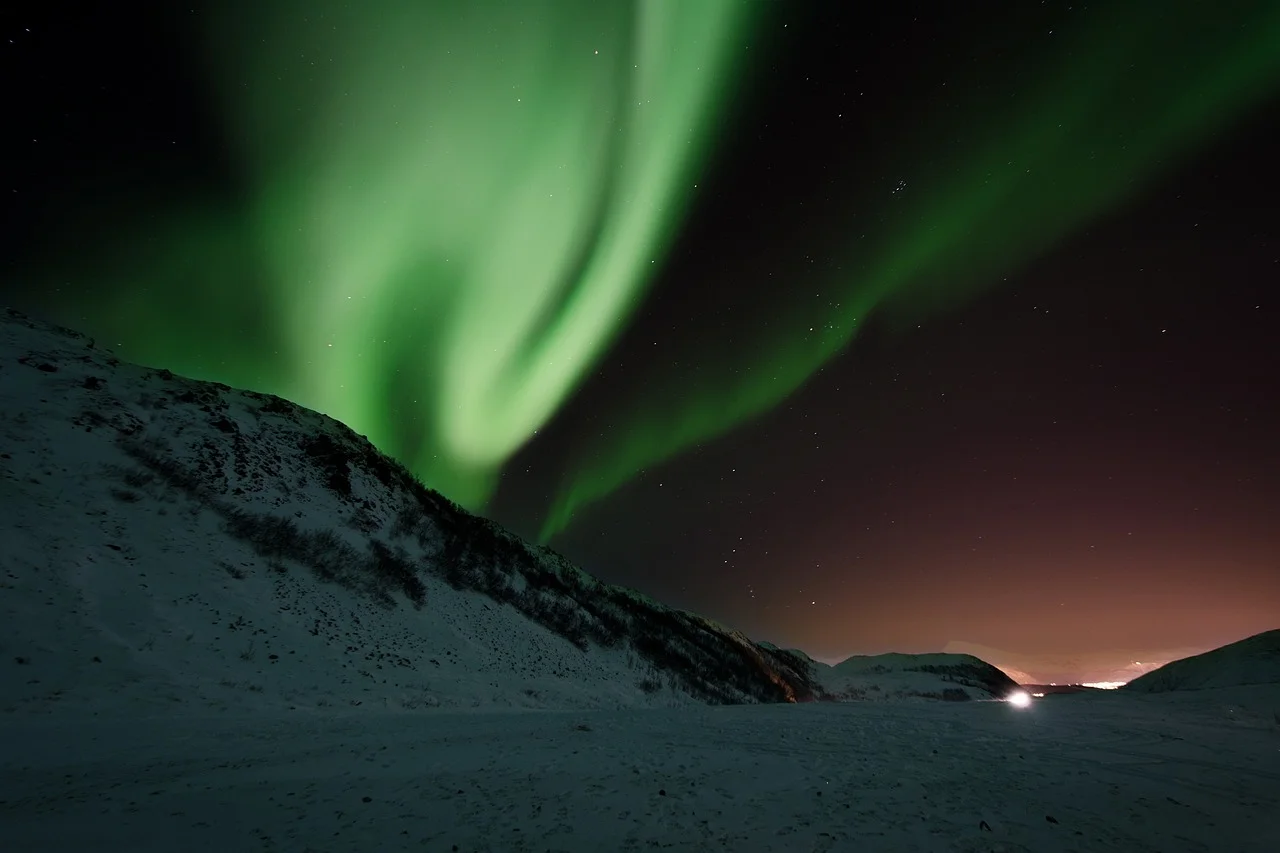
Minibus northern lights hunt from Tromsø
You head out by minibus for a 6 to 8 hour night trip, during which the guide tracks the cloud cover and sometimes drives as far as the Finnish border to find a gap. The high point is the stop: the engine cuts out, the sky opens and the green veil starts moving above the snow.
A thermal suit, tripod and hot drink are provided, so no gear preparation is needed. The trip runs from late September to early April, peaking between November and February, with the best windows between 6 pm and 1 am. Allow two nights: a single attempt can land on a closed sky.
- 6 to 8 h at night, leaving around 6 pm and back between midnight and 1 am
- 1,500 to 2,200 NOK per person (135-200 EUR) depending on group size, thermal suit, tripod and hot drink included
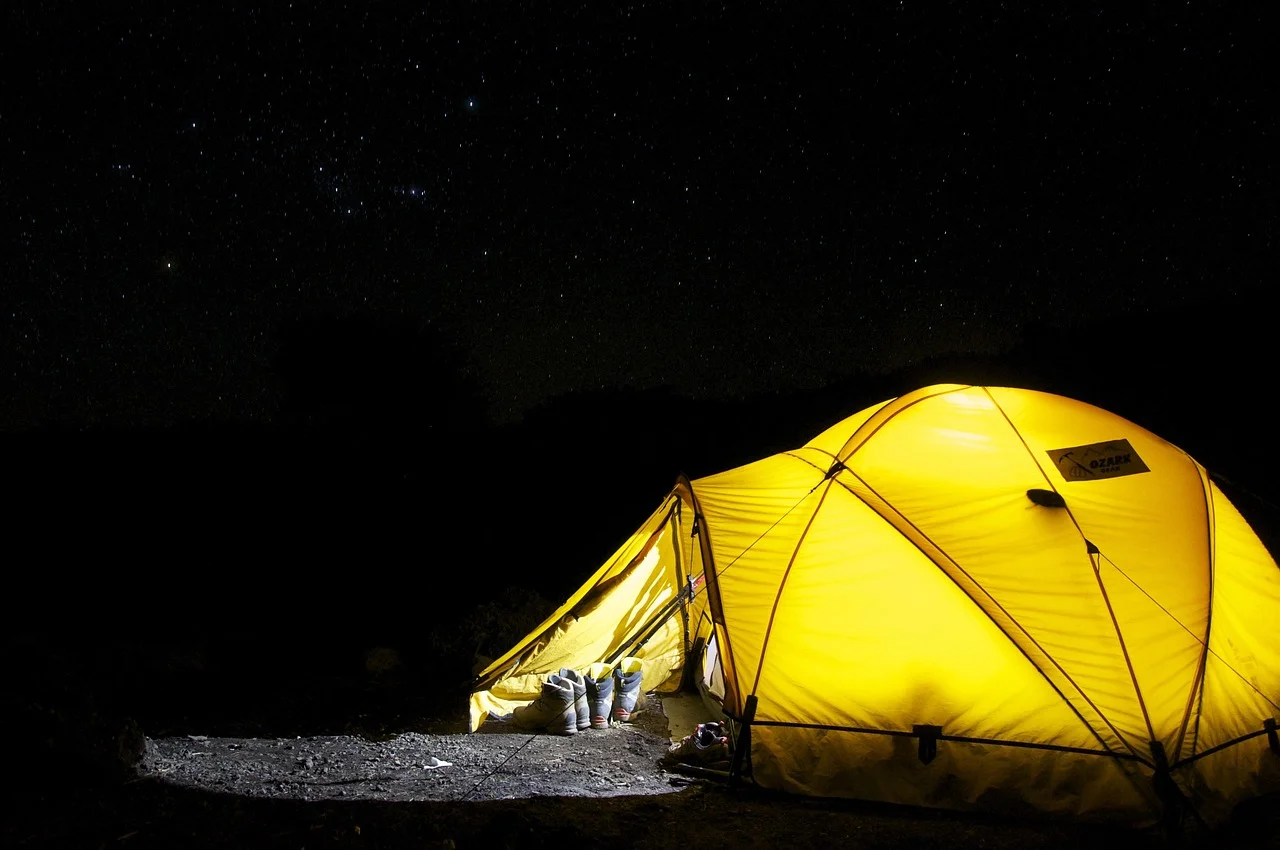
Wild camping under allemannsretten in Lofoten
You pitch the tent on utmark, uncultivated land, at least 150 m from any dwelling, and sleep facing the sea for free. The high point is the summer night when the sun does not set: between 28 May and 14 July in Lofoten, the light circles the tent without ever disappearing.
The beaches of Kvalvika, Bunes and Horseid all require a walk in, which means carrying your own gear: self-sufficient hiker level. Two nights maximum in the same spot without the owner's consent, fires banned from 15 April to 15 September, and you carry absolutely everything out.
- 1 to 2 nights per site, 1 to 2 h approach walk depending on the beach
- 0 NOK for the night; camping gear rental ~400-700 NOK/day (36-64 EUR) if you do not have your own
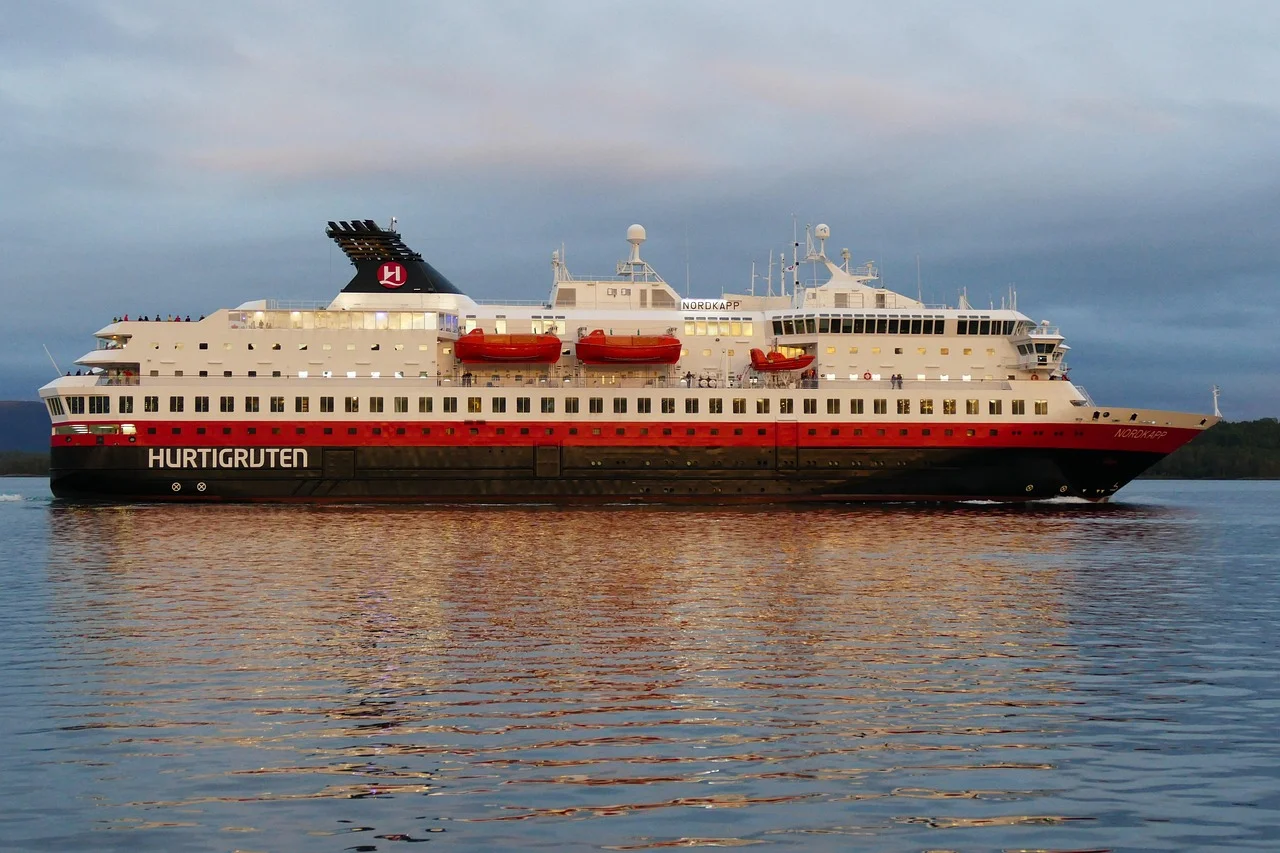
Bergen to Lofoten by car and coastal express
You combine the E39 and the E6, the car ferries and one or two legs of the Hurtigruten coastal express, Bodø-Svolvær for instance, to break up the fatigue and see the coast from the water. The high point is the Bodø-Moskenes ferry crossing: 3 h 15 during which the Lofoten peaks rise out of the horizon.
The route suits anyone willing to drive: about 1,700 km in total. Book the car months ahead, check the AutoPASS toll recharging clause in the contract, and turn up very early for the ferries in summer, or book.
- 10 to 14 days for the full Bergen-Lofoten route, about 1,700 km
- Bodo-Moskenes ferry 605 NOK per car (~55 EUR), or 302.50 NOK with a prepaid AutoPASS contract; Hurtigruten port-to-port leg from ~700 NOK/person without a cabin, excluding car rental and fuel
Getting there
Oslo-Gardermoen handled 26.4 million passengers in 2025, but for the fjords aim for Bergen-Flesland (6.5 M) and for Lofoten either Evenes or Bodø, both closer than the Oslo route.
Oslo-Gardermoen (OSL) remains the main gateway with 26.4 million passengers in 2025. But landing in Oslo to see the fjords adds a full day of driving. Bergen-Flesland (BGO), 6.5 million passengers, is the real front door to Fjord Norway.
Pick the airport according to the region you want:
- Bergen (BGO): Nærøyfjord, Flåmsbana, Hardanger, Trolltunga
- Stavanger-Sola (SVG): Preikestolen and the Lysefjord
- Ålesund-Vigra (AES): Geiranger, Trollstigen, the Atlantic Road
- Trondheim-Værnes (TRD): 4.0 million passengers, start of the train north to Bodø
- Tromsø-Langnes (TOS): base for aurora hunting, traffic up 13 % in 2025
- Bodø (BOO): car ferry across to Lofoten
- Evenes / Harstad-Narvik (EVE): direct road entry into Lofoten, no ferry
Without domestic flights, two trains do the job. The Bergensbanen links Oslo to Bergen in 7 hours with at least 3 direct services a day, crossing the Hardangervidda plateau. Minipris tickets start at 299 NOK (about 27 EUR) if you book ahead; the walk-up fare can be three times that. The Nordlandsbanen links Trondheim to Bodø in 10 hours and crosses the Arctic Circle, which makes it a genuine car-free route towards Lofoten.
From Bodø, the ferry reaches Moskenes in 3 h 15. Foot passengers get there faster on the Bodø-Svolvær hurtigbåt. Book domestic flights to Tromsø, Bodø and Evenes early: these are short routes with limited capacity that fill up in summer.
More timetable detail on the Vy website.
Getting around
A car is still the best tool (60 to 110 EUR/day in summer for a compact), but the real hidden cost is ferries and tolls: Bodø-Moskenes costs 605 NOK for a car, about 55 EUR.
A car is still the most efficient tool, especially in the fjords and Lofoten. Reckon on 60 to 110 EUR a day in summer for a compact, more in Lofoten and Tromsø where the fleet is small. Book several months ahead. Automatic gearboxes are rare and carry a surcharge.
Car ferries are part of the road network: you often board without booking. The key crossing to Lofoten, Bodø-Moskenes in 3 h 15, costs 605 NOK for a car under 6 m at the standard rate (about 55 EUR), 302.50 NOK with a prepaid AutoPASS ferry contract, and 424 NOK for an electric vehicle. Passengers travel free. In summer, book or turn up very early.
AutoPASS tolls work by plate recognition, with no barriers. With a rental car, the company recharges each passage and adds administrative fees: read the contract before signing. With your own foreign vehicle, open an AutoPASS Visitors' Payment account or go through Epass24.
Petrol costs 21 to 25 NOK a litre, that is 1.90 to 2.25 EUR: a 50-litre fill-up comes to 1,050-1,250 NOK, between 95 and 115 EUR. Over a two-week road trip, that line item weighs as much as accommodation.
Without a car, the network holds up. Nor-way Bussekspress covers the main corridors, and Boreal serves Å-Reine-Leknes-Svolvær-Fiskebøl in Lofoten. Fast passenger ferries link Bodø to Svolvær or Bergen to the Sognefjord. Legs of the Hurtigruten coastal express, sold port to port from around 700 NOK per person without a cabin, work as real local transport.
Motorhomes are very common, but note: they are not covered by the right to roam.
What to do
Three experiences sum Norway up: the 2-hour cruise on the Nærøyfjord, only 250 m wide beneath 1,400 m walls, the Preikestolen hike 604 m above the Lysefjord, and an aurora hunt out of Tromsø.
Three experiences sum the country up. The Nærøyfjord cruise, where the channel narrows to 250 m wide, one of the narrowest fjord arms in Europe, beneath walls rising over 1,400 m. The Preikestolen hike, a flat slab 604 m above the Lysefjord, around 200,000 visitors a year. And an aurora hunt out of Tromsø, between late September and early April.
The Flåmsbana train completes the picture: 20 km, 20 tunnels, a descent from Myrdal (867 m) to Flåm (2 m) in one hour, with a photo stop at the Kjosfossen waterfall. It is one of the steepest adhesion-only railway gradients in the world.
For strong walkers, Trolltunga takes 10 to 12 hours return from a car park at 443 m, for a tongue of granite jutting out at 1,100 m of altitude with 700 m of empty air below your feet. Numbers went from 500 hikers in 2009 to 40,000 in 2014. High season runs mid-June to mid-September, the only period when it can be done without a guide or winter gear.
The classic trap is treating sites as boxes to tick. Geiranger has 215 inhabitants for several hundred thousand summer visitors and it is the country's third-busiest cruise port. Arrive before 9 am or after 5 pm, once the liners have left, and the same fjord becomes a quiet place.
Up north, the North Cape and its 307 m cliff often close the loop, 2,102.3 km from the North Pole.
Food
A meal at a budget restaurant costs 190 to 350 NOK and a draught beer 100 to 140 NOK, while a week of supermarket shopping fits into 600 to 1,000 NOK: cooking cuts the bill by three.
The maths is quick. A meal at a budget restaurant costs 190 to 350 NOK (17 to 32 EUR), a mid-range main starts at 250 NOK. A draught beer in a bar runs 100 to 140 NOK, against 35 to 50 NOK for a 50 cl beer at the supermarket. A cappuccino costs 35 to 65 NOK.
The real lever is the supermarket. A week of groceries costs 600 to 1,000 NOK against more than 3,000 NOK for seven restaurant dinners. A litre of milk is 20-25 NOK. Travelling with a stove or choosing accommodation with a kitchen completely changes the budget of a two-week trip.
On the food itself, fish carries Norwegian cooking. Salmon and cod are everywhere, and in Lofoten the skrei, the migrating cod caught in winter, gets a whole season of its own. The cod drying racks at Reine and Henningsvær are not decorative: they produce the stockfish exported since the Middle Ages.
Brunost, the lightly caramelised brown cheeses, cinnamon kanelboller and late-summer wild berries round out the repertoire. Picking berries and mushrooms on uncultivated land is part of the right to roam.
A word on alcohol. Norway sits outside the European Union: customs allowances on alcohol and tobacco are strict and genuinely checked on entry. Wine and spirits are sold only at the Vinmonopolet, with short opening hours and closed on Sundays.
Itineraries
Allow 14 days for the full Bergen-Lofoten route, about 1,700 km of road and ferries, split into 3 days of fjords, 2 on the Atlantic Road, 2 in transit and 5 to 6 days in Lofoten.
The full Bergen-Lofoten route takes 14 days for about 1,700 km of road and ferries. A split that works: 3 days in the fjords around Bergen, 2 days between Geiranger and the Atlantic Road, 2 days moving north, then 5 to 6 days in Lofoten.
7 days in the fjords, with no domestic flights. Arrive in Bergen, two days between Bryggen and the Fløibanen, then Flåm: a 2-hour cruise on the Nærøyfjord and back up on the Flåmsbana. One day for Preikestolen from Stavanger, one day driving to Geiranger arriving before 9 am or after 5 pm, one day on the Atlantic Road and Trollstigen if the season allows.
7 days in Lofoten. Fly to Evenes, which avoids the ferry, then Svolvær, Henningsvær, Reine and Hamnøy, with one night wild camping at Kvalvika or Bunes. Reinebringen and its sherpa-built stone staircase gives the postcard view in 2 hours return.
5 days in winter, out of Tromsø. Two minibus aurora hunts to multiply your chances of clear sky, one day dog sledding or whale watching depending on the season, one day on the coastal road.
With only 7 days, pick ONE block. Chaining the fjords and Lofoten in a week means spending 4 days in the car. The logic is the same as on an Icelandic Ring Road road trip: fewer kilometres, more stops.
Climate & seasons
When to go to Norway?
Monthly averages over the past 5 years (Open-Meteo).
Avoid
- January
- February
- March
- April
- October
- November
- December
| Jan | Feb | Mar | Apr | May | Jun | Jul | Aug | Sep | Oct | Nov | Dec | |
|---|---|---|---|---|---|---|---|---|---|---|---|---|
| Our take | ||||||||||||
| Weather | ||||||||||||
| High | -7° | -6° | -3° | 1° | 7° | 14° | 16° | 13° | 9° | 2° | -4° | -6° |
| Rain (mm) | 101 | 44 | 64 | 42 | 59 | 87 | 121 | 149 | 124 | 125 | 55 | 89 |
| Hiking & nature | Hiking & nature June | |||||||||||
| City sightseeing | City sightseeing June | City sightseeing July | City sightseeing August | |||||||||
| Winter sports | Winter sports January | Winter sports February | Winter sports March | Winter sports April | Winter sports May | Winter sports October | Winter sports November | Winter sports December |
What to do by season (autumn)
-
Winter sports
Cold enough for snow and festive atmosphere.
When to go
June, July, August and September for a full road trip with the mountain roads open, February and March for the northern lights and winter landscapes; avoid November, April and May.
Two windows really work. June, July, August and September for a full road trip: the mountain roads are open, the ferries run at full capacity and the midnight sun lights up the nights up north. February and March for the northern lights and frozen landscapes.
Avoid November, April and May. The mountain roads are either still closed or barely reopened, and the light suits neither the aurora nor hiking. Trollstigen opened on 27 April in 2026, exceptionally early: usually it is May. It closes again between October and November.
The midnight sun follows latitude:
- Lofoten: 28 May to 14 July
- Bodø: 4 June to 8 July
- Tromsø: 20 May to 22 July
- North Cape: 14 May to 29 July
The aurora works the other way round: late September to early April north of the Arctic Circle, peaking between November and February. The useful window runs from 6 pm to 1 am, with maximum activity around 10 pm-11 pm. Between May and August nothing is visible, the sky never gets dark. In Tromsø the polar night lasts from 26 November to 15 January.
On temperatures, the coast gets mild wet winters, the interior cold snowy ones. In summer, expect around 20 °C inland in the east and up to 25 °C on the south coast. In the fjords the weather can flip three times in the same day: always carry a waterproof layer.
Our favourite compromise? Late August and September. Fewer people, prices coming down, and the first aurora possible by the end of the month.
Budget
Reckon on about 70 EUR per person per day in hostel, supermarket and wild-camping mode, 160 EUR with a camping cabin and one meal out, and 320 EUR or more with a comfortable hotel, restaurants and guided excursions.
Three tiers shape a Norwegian budget, per person per day (official Visit Norway 2026 prices). Around 70 EUR in hostel, supermarket and wild-camping mode. Around 160 EUR with a camping cabin or a modest hotel plus one meal out. 320 EUR or more with a comfortable hotel, lunch and dinner out, and guided excursions.
Unit figures let you fine-tune:
- Average hotel double, breakfast included: 1,725 NOK (~157 EUR)
- Basic campsite cabin: from 700 NOK (~64 EUR)
- Campsite pitch with electricity: 250-450 NOK
- Dorm bed: 350-500 NOK
- Meal at a budget restaurant: 190-350 NOK
- Draught beer in a bar: 100-140 NOK, against 35-50 NOK at the supermarket
- Petrol: 21-25 NOK/litre, that is 1.90 to 2.25 EUR
- Cinema ticket: 160-235 NOK
The number one saving is still cooking. A week of groceries costs 600 to 1,000 NOK against more than 3,000 NOK for seven restaurant dinners. The number two saving is tent camping, free and legal on uncultivated land.
Two line items catch visitors out. Car ferries first: 605 NOK for a car on Bodø-Moskenes, down to 302.50 NOK with a prepaid AutoPASS contract. Then tolls, recharged by the rental company with administrative fees on top.
On a fjord road trip, fuel and ferries often account for nearly a third of the daily budget when driving a rental car: it is the line item trip planners forget most often.
Where to stay
An average hotel double costs 1,725 NOK a night (about 157 EUR) with breakfast included, against 700 NOK (64 EUR) for a camping cabin and 350 to 500 NOK for a dorm bed.
The price gaps are huge. An average hotel double goes for 1,725 NOK a night, about 157 EUR, breakfast included (official Visit Norway 2026 prices). A basic campsite cabin starts at 700 NOK, or 64 EUR. A dorm bed sits between 350 and 500 NOK.
In between, a campsite pitch with electricity costs 250 to 450 NOK a night. It is the best comfort-to-price ratio for a road trip by car, because it gives access to shared kitchens, and cooking remains the single biggest saving in this country.
Camping cabins, called hytter, deserve a mention of their own. Many sit right on a fjord or a lake, with waterside access city-centre hotels cannot match. They book out very early in July and August, especially in Lofoten where supply is thin against demand.
In Lofoten, the rorbuer, the red fishermen's cabins on stilts, are rented by the night. Reine and Hamnøy hold a good share of them, but with only 296 inhabitants in Reine as of 1 January 2025, the village fills up fast.
The habit that changes everything: book the Lofoten and Geiranger nights first, then build the itinerary around them. Doing it the other way round leads to 2,000 NOK rooms or 150 km catch-up drives.
Tent camping stays free and legal on uncultivated land, under precise rules set out further down this guide.
Safety
Norway is among the safest countries in the world and street crime is marginal: the real risk comes from nature, with accidents on Preikestolen and Trolltunga caused by unsuitable gear and changing weather.
Norway is among the safest countries in the world and street crime is marginal. The real risk is nature. Accidents on Preikestolen and Trolltunga almost always come from the same causes: unsuitable gear, weather that turns within an hour, photos taken too close to the drop. Neither site has any barrier.
A few simple rules cut out most of the risk:
- Above-the-ankle hiking boots, a waterproof layer, water and a head torch, even for a 4-hour walk
- Trolltunga out of season, from mid-September to mid-June, requires a guide and winter gear
- Check avalanche bulletins on varsom.no in winter and the DNT trail grading
- On wet rock, step back from the edge: polished granite is slippery
On the road, wildlife is the first danger. Reindeer and moose cross without warning, especially at dawn and dusk in the north. Tunnels are long and often unlit. In the cold season, studded winter tyres or Nordic all-season tyres are compulsory.
Mountain roads, including Trollstigen and the Hardangervidda passes, close from November to April or May. Check network conditions on the Vegvesen trafikk app or on +47 22 175 175 before committing.
Emergency numbers: 112 police, 113 ambulance, 110 fire. The EHIC covers emergency care, but a helicopter evacuation from a fjord justifies insurance with repatriation cover. France Diplomatie also maintains a heightened terrorism alert for French citizens abroad, published on 7 April 2026.
Formalities
No visa is required for French citizens and a French national ID card is enough, but the Norwegian authorities do not recognise the automatic 5-year extension of ID cards issued to adults between 2004 and 2013.
No visa is needed for French nationals. Norway is part of the Schengen Area while remaining outside the European Union. It is an EEA member, so the European Health Insurance Card (EHIC) is still valid for emergency care.
A passport or a French national ID card valid for the whole length of the stay is enough. Watch out for the trap flagged by France Diplomatie: the Norwegian authorities do not recognise the automatic 5-year extension of French ID cards issued to adults between 1 January 2004 and 31 December 2013. If the date printed on the back of your card has passed, you need a passport, even though the card is legally valid in France.
So check the date on the back several weeks before departure. Passport renewals take time in high season.
No vaccinations are required. Just keep the French vaccination schedule up to date, particularly MMR: France Diplomatie issued a measles alert for Europe on 13 March 2026. For extended hiking in the south-east of the country, discuss the tick-borne encephalitis vaccine with your doctor.
Because Norway sits outside the EU, customs allowances on alcohol and tobacco are limited and genuinely enforced on arrival. Check before packing bottles.
Official detail on the France Diplomatie website.
Tips
The right to roam, allemannsretten, allows a tent on any uncultivated land at least 150 m from a dwelling and for a maximum of 2 nights in the same spot, but it does not cover motorhomes.
Allemannsretten, Norway's right to roam written into the Outdoor Recreation Act, allows you to pitch a tent on any uncultivated land, known as utmark, without asking permission. Two conditions: at least 150 m from the nearest inhabited house or cabin, and 2 nights maximum in the same spot without the owner's consent, except in the mountains and in very remote areas.
The right stops at innmark, cultivated land: ground adjoining dwellings, ploughed fields, meadows, pasture, gardens, young plantations, building plots, industrial areas and fenced parks. The most misunderstood point: allemannsretten covers tents, not motorhomes or converted vans. To sleep in a vehicle you need a campsite or an authorised area.
Open fires in the wild are banned from 15 April to 15 September, except on a prepared site or in a risk-free zone, typically the shoreline. Local restrictions exist too, notably at several busy Lofoten sites: read the signs on the spot.
Three beaches suit it well in Lofoten: Kvalvika, Bunes and Horseid. All require a walk in, which naturally thins the crowd. You carry everything out, litter and paper included.
Two other useful habits. Take a bank card with no foreign exchange fees, because everything is paid by card and the commission on each small purchase adds up fast. And keep 200 to 300 NOK in cash for a market or a roadside honesty box.
FAQ
The most common questions are about budget (70 to 320 EUR per person per day), the northern lights season (late September to early April) and the rules for wild camping.
The most common questions are about budget, the northern lights season and the wild-camping rules. Here are the answers with figures, drawn from official Visit Norway 2026 prices and France Diplomatie information.
What budget should I plan for a trip to Norway?
Reckon on around 70 EUR per person per day in hostel, supermarket and wild-camping mode, 160 EUR with a camping cabin and one meal out, 320 EUR or more in a comfortable hotel with restaurants and excursions. Reference points: dorm 350-500 NOK, budget meal 190-350 NOK, petrol 21-25 NOK/litre. The main lever is still cooking.
When can you see the northern lights in Norway?
From late September to early April north of the Arctic Circle, peaking between November and February. The useful window runs from 6 pm to 1 am, with maximum activity around 10 pm-11 pm. Between May and August nothing is visible. September and March offer the best compromise between dark nights and drivable roads.
Can you camp anywhere in Norway?
Almost. Allemannsretten allows a tent on uncultivated land, at least 150 m from a dwelling and for a maximum of 2 nights in the same spot. Innmark, that is cultivated land (fields, meadows, gardens, pasture), is excluded. Fires are banned from 15 April to 15 September outside prepared sites. Tents yes, motorhomes no.
Do French travellers need a passport for Norway?
No, a French national ID card is enough. But be careful: the Norwegian authorities do not recognise the automatic 5-year extension of ID cards issued to adults between 1 January 2004 and 31 December 2013. If the date on the back has passed, a passport becomes compulsory (source: France Diplomatie).
What is the best time to visit the fjords and Lofoten?
June to early September, when the mountain roads are open. Trollstigen opened on 27 April in 2026, exceptionally early. The midnight sun shines over Lofoten from 28 May to 14 July. Late August and September offer the best ratio of weather, crowds and price. February and March for the aurora.
How many days do you need for a Bergen-Lofoten road trip?
14 days for the full route, about 1,700 km. Suggested split: 3 days of fjords, 2 days for Geiranger and the Atlantic Road, 2 days in transit, 5 to 6 days in Lofoten. With 7 days, pick a single block rather than driving every day.
Is the Oslo-Bergen train worth it?
Yes. The Bergensbanen links the two cities in 7 hours, with at least 3 direct services a day, crossing the Hardangervidda plateau. Minipris tickets start at 299 NOK if you book ahead; the walk-up fare can be three times that. At Myrdal, the connection gives access to the Flåmsbana.
How do you pay in Norway, and do you need cash?
Cards work everywhere and many businesses refuse notes. The rate sits around 11 NOK to 1 euro (11.01 recorded by Visit Norway in April 2026). Take a card with no foreign exchange fees, otherwise commissions pile up on small purchases. Keep 200 to 300 NOK for a market or an honesty box.
Sources
The figures in this guide come from the sources below, checked on the publication date.
- whc.unesco.org
- whc.unesco.org
- www.visitnorway.com
- www.visitnorway.com
- www.diplomatie.gouv.fr
- www.visitnorway.com
- www.visitnorway.com
- www.vy.no
- www.fergeruter.info
- www.norwaysbest.com
- fr.wikipedia.org
- fr.wikipedia.org
- fr.wikipedia.org
- en.wikipedia.org
- en.wikipedia.org
- fr.wikipedia.org
- www.fjordnorway.com
- www.norges-bank.no
Leave a comment
Share your thoughts or travel experience. Your email will not be published.