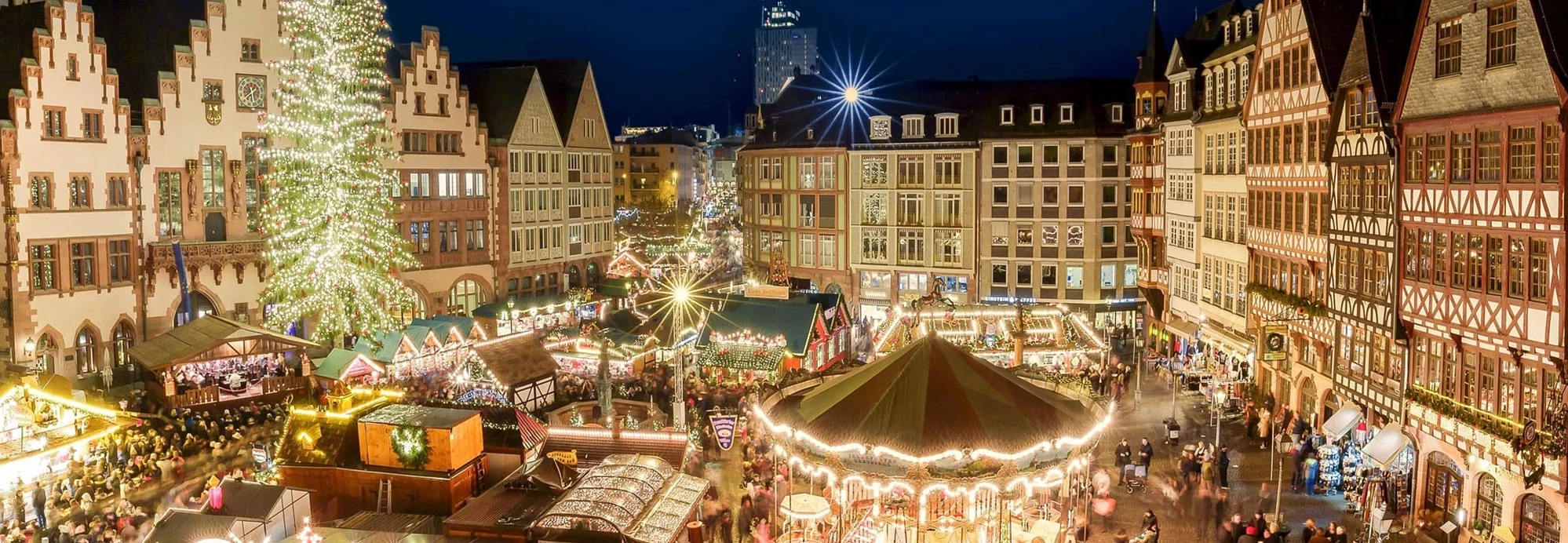


If you want the best odds of seeing the northern lights on any given night, Northern Norway wins: Tromsø sits under the auroral oval, while Reykjavik is only at its edge. Norway is also cheaper. Iceland keeps a clear lead on what you can do during the day, but its Atlantic weather and its prices count against it. The figures below were checked on 6 September 2026, and every number links to its source.
The choice is less clear-cut than most articles suggest, though. In midwinter the two cities record the same number of wet days. The latitude gap is worth one or two notches of geomagnetic activity, not a chasm. And the solar cycle has passed its peak, which doesn't write off either of the next two winters. Here's how to decide based on what you're after, with a source for each data point.
Book the activities from this article
Our picks for Iceland and Norway, well rated and free to cancel.
-
Book this activity
Small-group northern lights hunt from Reykjavik
from €101 per person (GetYourGuide rate, 2026)
-
Book this activity
Vatnajökull ice cave tour from Jökulsárlón
from €157 per person (GetYourGuide rate, 2026)
-
Book this activity
Northern lights minibus chase from Tromsø
from €175 per person (GetYourGuide rate, 2026)
Affiliate links: Travel Advice earns a commission if you book, at no extra cost to you. Learn more
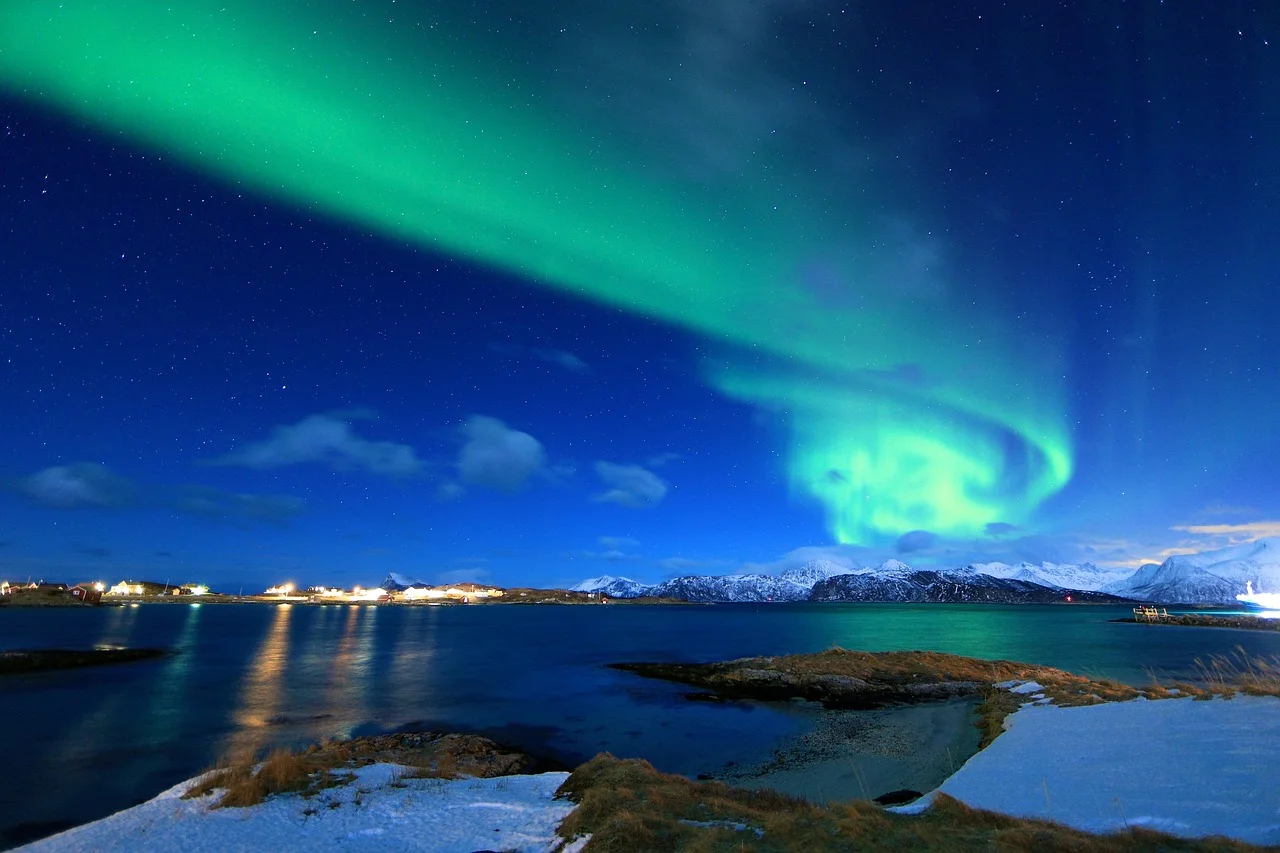
Where are you most likely to see an aurora?
Tromsø. The northern lights form in a ring around the magnetic pole, the auroral oval. According to NOAA, the southern edge of that oval sits at about 66° geomagnetic latitude when activity is nil (Kp index 0), and it moves roughly 2° further south with each extra notch of Kp.
The latitude that matters here isn't the one on the map but the geomagnetic one. Tromsø is at 69.6° North on the map and at about 66.7° geomagnetic: the town is under the oval as soon as Kp reaches 0 or 1. Leirvogur observatory, twelve kilometres from Reykjavik, is at 64.2° North geographic but only 64.1° geomagnetic according to the ISGI. So you need a Kp close to 2 for the oval to cover the Icelandic capital properly.
That gap is real, but it stays modest. A Kp of 2 or 3 comes round several nights a month in an active period. The Icelandic Met Office also points out that the oval, which lies just north of the island during the day, moves over Iceland in the evening. The south of the island isn't out of the game; it just needs a bit more activity and a bit more patience.
Does the solar cycle still help in 2026-2027?
Yes, still a great deal. NASA and NOAA announced on 15 October 2024 that the Sun had entered its maximum. The UK Met Office confirmed on 29 January 2026 that the peak had happened in 2024 and 2025 and that Cycle 25 was entering its declining phase.
That phase is nothing like a switch-off. NASA notes that the strongest geomagnetic storms often arrive after the maximum rather than during it. The winters of 2026-2027 and 2027-2028 therefore remain good years, even if no operator can guarantee a specific night. The cycle sets the average level; the night you're actually outside depends on the weather and a bit of luck.
« Even grade 2 (low activity) can be beautiful and grade 3 (moderate) can be dazzling. »
Clouds, the real deciding factor
An intense aurora behind a layer of stratus stays invisible. This is where the comparison holds a surprise: in the depths of winter, Tromsø is no drier than Reykjavik. The 1991-2020 normals from the two national weather services give around 15 wet days a month from November to January in both cities. Northern Norway's reputation for clear skies comes from somewhere else, inland Lapland. The famous "blue hole" is at Abisko, in Sweden, not on the Norwegian coast.
Monthly sunshine hours tell the same story. They measure the sun rather than the night, but they give away the average cloud cover.
| Month | Reykjavik (hours of sun) | Tromsø (hours of sun) |
|---|---|---|
| September | 118 | 96 |
| October | 92 | 55 |
| November | 40 | 8 |
| December | 13 | 0 |
| January | 23 | 3 |
| February | 62 | 36 |
| March | 110 | 111 |
1991-2020 normals based on Icelandic Met Office and Met Norway data (Wikipedia compilation, links at the end of the article). Tromsø's zero in December is down to the polar night, not to cloud. The practical lesson applies to both countries: plan at least three or four nights on the ground, and be prepared to drive an hour to find a gap in the cloud. That's exactly what the guided tours do.
How many hours of darkness do you get?
Darkness clearly favours Tromsø. The polar night there runs from roughly 27 November to 15 January: the sun doesn't rise, and you can start watching from 3 pm. In Reykjavik the shortest day still lasts 4 hours 10 minutes according to the University of Iceland, with sunrise around 11:20 am and sunset around 3:30 pm.
That advantage fades in September-October and in March, when both destinations offer long but not total nights. Those months are nevertheless the best on paper: NOAA notes that activity is statistically stronger around the equinoxes. The most productive window is between 10 pm and 2 am, and a full moon reduces the contrast. The season runs from late August to early April in both countries.
What budget should you plan for Iceland and Norway?
Norway is cheaper, and the gap is wide. On Eurostat's 2025 index of price levels for consumer goods and services, Iceland stands at 173.5 against a European average of 100, Norway at 128.6. In other words, what costs €100 (about $116) at average EU prices comes to roughly €173 in Iceland and €129 in Norway. The conversions below use the ECB rates of 4 September 2026: €1 = 140.80 Icelandic krónur = 10.80 Norwegian kroner = $1.16.
The guided tour, the one item where Iceland wins
A northern lights coach tour from Reykjavik starts at 9,990 krónur, about €71 ($83), for three to four hours, with a free second attempt if the sky stays empty. In Tromsø the usual format is a minibus for 2 to 15 people: expect 1,890 to 2,200 kroner, or €175 to €204 ($203 to $237). Part of the price difference comes down to duration: the Norwegian minibuses drive for seven to nine hours and go looking for clear sky as far as the Finnish border.
Hotels and car hire
The latest detailed seasonal figure from Statistics Norway puts the average price at 1,362 kroner per hotel room in November 2024, about €126 ($146), with a 28% rise in Troms county attributed to the new direct flights into Tromsø. Demand hasn't eased since: 1.9 million guest nights in Norwegian hotels in November 2025, close to the previous year's record. So budget at least that rate for winter 2026-2027. Iceland publishes no equivalent statistic; the general price index is enough to say a night costs more there, especially in Reykjavik at the height of the winter season.
On the car side, Iceland introduced something new on 1 January 2026: a per-kilometre road charge of 6.95 krónur per kilometre, roughly 5 euro cents, on all vehicles whatever their fuel. A 1,500 km loop of the south therefore adds close to €74 ($86) to the rental, which hire companies often bill as a daily flat rate. In return, fuel excise duties had been scrapped, but pump prices climbed back by 20 to 31 krónur a litre on 1 September 2026. In Norway, the road tax on fuel, suspended from 1 April to 1 September 2026 by a decision of the Storting, came back on that date: petrol went back up to about 26.84 kroner a litre, or €2.48 ($2.88), according to DrivstoffAppen medians recorded on 1 September 2026.
| Item | Iceland | Northern Norway |
|---|---|---|
| Eurostat 2025 price level (EU = 100) | 173.5 | 128.6 |
| Guided northern lights tour | from €71 / $83 (coach, 3-4 h) | €175 to €204 / $203 to $237 (minibus, 7-9 h) |
| Hotel room | no official statistic, more expensive | €126 / $146 on average (latest SSB figure, Nov. 2024) |
| Car | 6.95 ISK/km road charge since 2026 | petrol about €2.48 / $2.88 per litre |
| Going car-free | hard outside Reykjavik | easy in Tromsø |
How do you get there from Paris and other European hubs?
Iceland remains the easier one to reach. Icelandair and easyJet run around twenty direct flights a week between Paris Charles de Gaulle and Keflavík in September 2026, about 3 hours 50 minutes in the air, and Transavia adds a weekly service from Paris Orly. Most large Western European hubs also have year-round direct flights to Keflavík. The low-cost carrier Play, long quoted as an option, ceased all operations on 29 September 2025. Don't count on it.
Tromsø can now be reached non-stop in winter: from Paris, Air France, Norwegian and easyJet each schedule one direct weekly flight from October or November, at just under four hours. The rest of the week you connect through Oslo, which adds half a day to the journey. From other European cities, check for seasonal winter directs; otherwise Oslo is the standard connection. For the Lofoten Islands there's no direct flight from Paris: you have to connect in Oslo to Evenes or Bodø.
Do you need to hire a car?
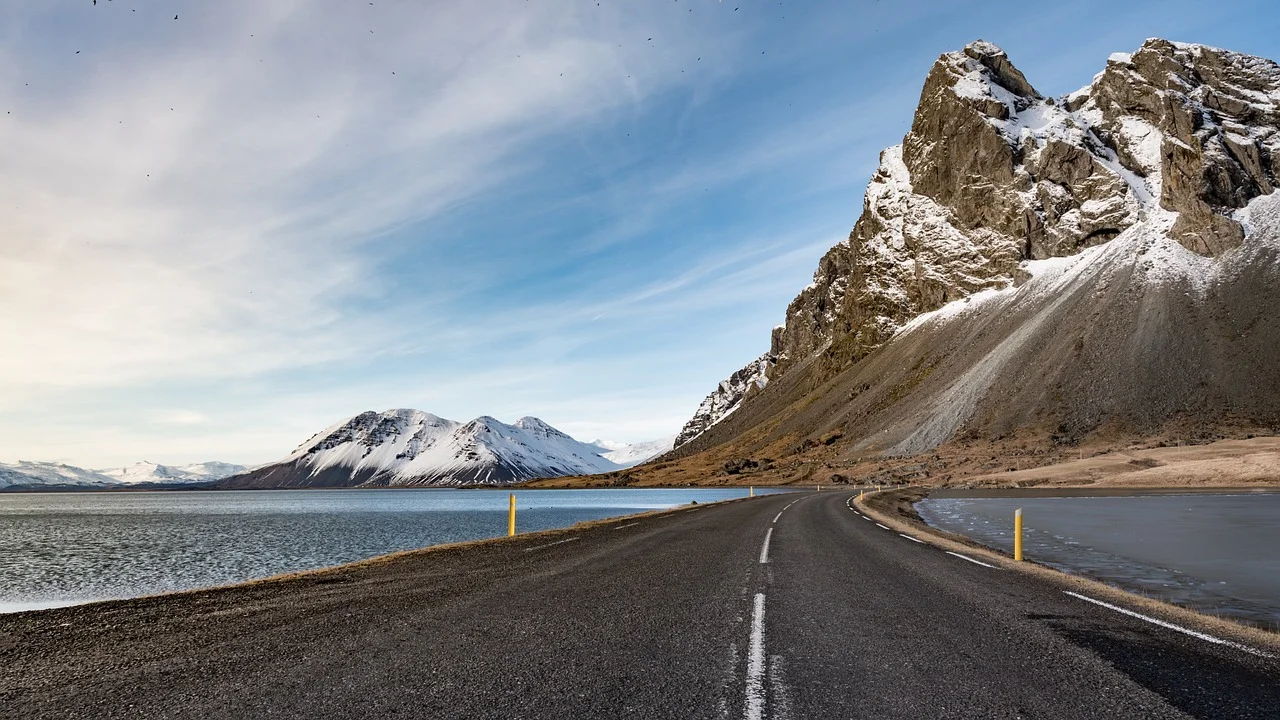
In Iceland, almost always. Reykjavik lets you join organised excursions, but the Golden Circle, the south coast and the ice caves all mean driving. Winter demands a daily routine: check umferdin.is, the road administration's site that replaced road.is, before every departure, accept storm closures, and forget the mountain tracks, which are closed until spring. Studded tyres are tolerated from 1 November to 15 April according to the City of Reykjavik, and a tread depth of 3 mm is required in winter on passenger cars.
In Tromsø the car is optional. The minibuses leave from the town centre, whale-watching and dog-sledding trips include transfers, and the centre is walkable. If you do hire one to head out to Senja or the Lyngen Alps, Norwegian regulations require tyres with at least 3 mm of tread in the northern counties from 16 October to 30 April, with studs allowed over the same period. The main roads there are cleared with a regularity Iceland doesn't match.
To plan the driving side of either option, our two guides cover the routes in detail: Iceland along the Ring Road and Norway from the fjords to the Lofoten Islands.
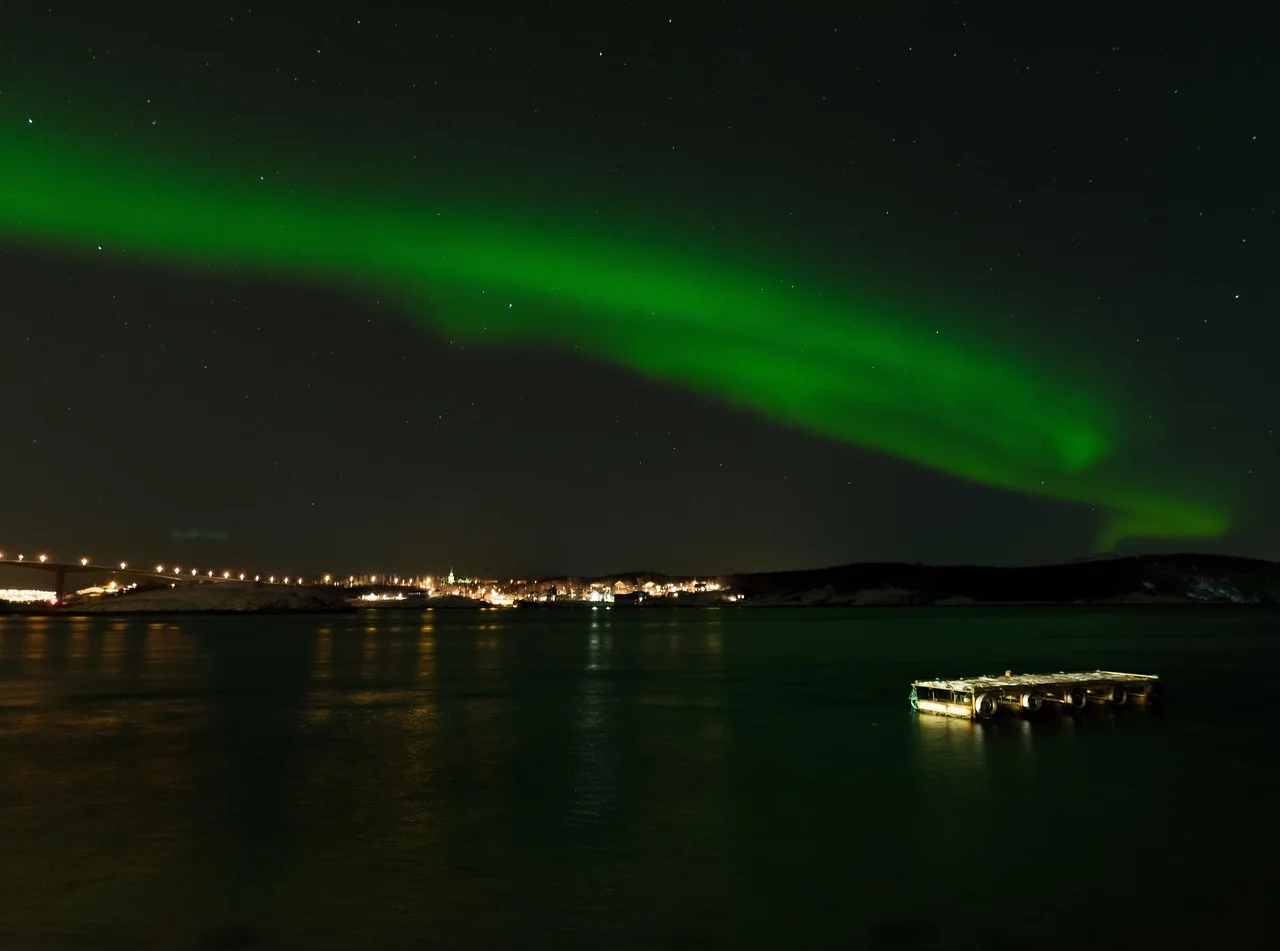
What is there to do by day while you wait for night?
This is Iceland's strong point. The Vatnajökull ice caves can be visited from roughly November to March, always with a glacier guide, never alone. Add the Jökulsárlón glacier lagoon, the waterfalls of the Golden Circle, the black-sand beaches and the geothermal baths, where booking ahead is wise in season. A week on the south coast fills itself without effort, aurora or no aurora.
Northern Norway answers with the sea and its wildlife. Orcas and humpback whales follow the herring around Skjervøy from November to January, dog-sledding runs all winter, and several Sámi reindeer farms welcome visitors around Tromsø. If you'd rather be at sea, Hurtigruten is keeping its Northern Lights Promise for departures from 20 September 2026 to 31 March 2027: on a voyage of at least eleven days, if no aurora is announced on board, you get a classic six- or seven-day cruise free the following winter, to be claimed within 28 days.
Volcanoes in Iceland: should you worry?
Not to the point of giving up, but enough to follow the news. As of 18 August 2026, the Icelandic Met Office reported no eruption under way on the Reykjanes peninsula. The last one had started on 16 July 2025. Since then, about 29 million cubic metres of magma have built up beneath Svartsengi, and the scenario judged most likely remains a new intrusion towards Sundhnúkur, with 20 minutes to four hours of warning. Grindavík is open, though precautionary closures of the area and the nearby baths remain possible at short notice. Flights at Keflavík have never been disrupted by this series of eruptions; only occasional gas alerts have affected the Reykjavik area.
Two destinations that never empty out
Crowds push up prices and put pressure on bookings. The Icelandic Tourist Board counted around 2.27 million foreign visitors in 2025 through Keflavík, 30% of them between November and March. Norway broke its record with 40.6 million guest nights in 2025, including 14.2 million foreign guest nights, up 14%; Statistics Norway attributes Troms county's winter growth mainly to foreign visitors, according to its February 2025 report. In both cases, book accommodation and tours before you leave for the Christmas and February school holidays.
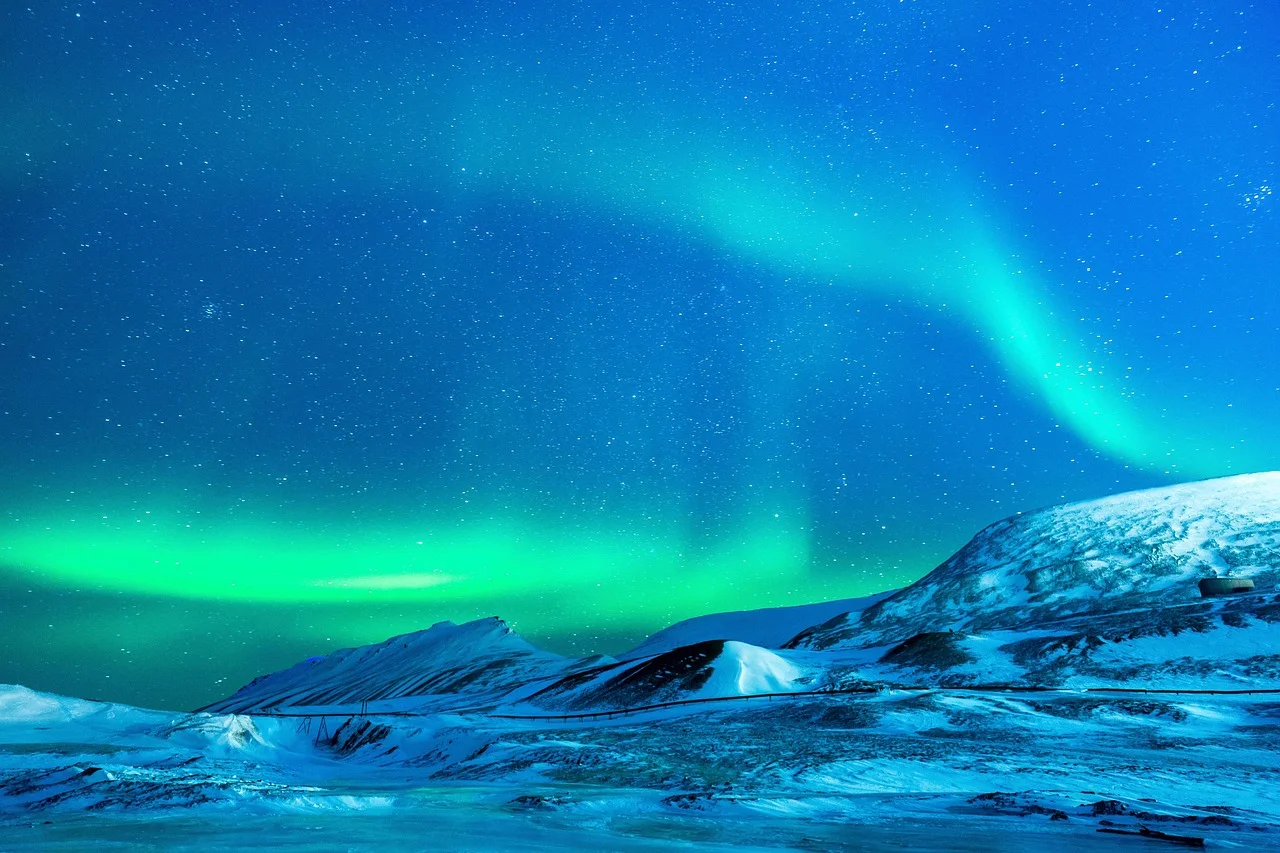
Which tools forecast the northern lights?
The official services are enough, and they're free. In Iceland, the Met Office forecast combines an activity score from 0 to 9 for midnight with a cloud-cover map: green areas are overcast, white areas clear. Look for the white before you look at the number.
In Norway, the University of Tromsø publishes NOSWE, a nowcast with one- and four-hour outlooks and an all-sky camera at Skibotn updated every two minutes. The national weather service offers a "Nordlys" page per locality on Yr, with Kp and cloud cover, and Visit Norway publishes the Norway Lights app, which gives a three-day forecast and an hourly breakdown. For solar activity itself, NOAA's three-day forecast is updated every twelve hours.
Verdict: Iceland or Norway, depending on your profile
- First attempt, tight budget, few nights: Tromsø. Better odds per night, no car to hire, direct winter flights from several European hubs.
- A week with full days: Iceland. Ice caves, waterfalls, hot baths, and the aurora as a bonus on active nights.
- Family with children: Northern Norway. Whales, sledding and reindeer farms fill the short days; the aurora tours can bring you back early if you prefer.
- Photographer: the Lofoten Islands in Norway for foregrounds, Iceland for the variety of landscapes. Either way, plan on a car and at least five nights.
- No car, no weather stress: a Hurtigruten voyage of at least eleven days, with the second chance included if the sky stays empty.
If your dates fall in October, our round-up of where to go in October puts these two destinations alongside other shoulder-season options.
Frequently asked questions
Which month is best for the northern lights in Iceland or Norway?
September-October and March offer the best compromise: stronger geomagnetic activity around the equinoxes according to NOAA, nights already long, roads still passable and bearable temperatures. December and January give the most hours of darkness, especially in Tromsø during the polar night, at the cost of very short days and harsher weather.
Do you need a high Kp to see the aurora in Tromsø?
No. Tromsø sits under the auroral oval from a Kp of 0 or 1. A clear sky matters more than the index. A high Kp, of 5 or above, actually pushes the oval south and can place the aurora over central Norway rather than directly overhead in Tromsø.
Can you see the northern lights in Reykjavik itself?
Yes, on nights of Kp 2 or 3 with a clear sky, provided you get away from the street lighting. Grótta lighthouse, west of the city, is the nearest viewing spot. A thirty-minute drive inland noticeably improves your chances.
Is winter 2026-2027 still a good year?
Yes. The maximum of Solar Cycle 25 happened in 2024 and 2025, but the declining phase that follows regularly produces the strongest storms of the cycle, as NASA and the Met Office point out. Average activity will fall gradually until the next minimum, expected towards the end of the decade.
Activities to book
Four outings we picked and checked on GetYourGuide, two per destination, for the aurora nights and winter days this comparison covers (partner links, free cancellation). Our Iceland and Norway guides cover the rest of the trip.
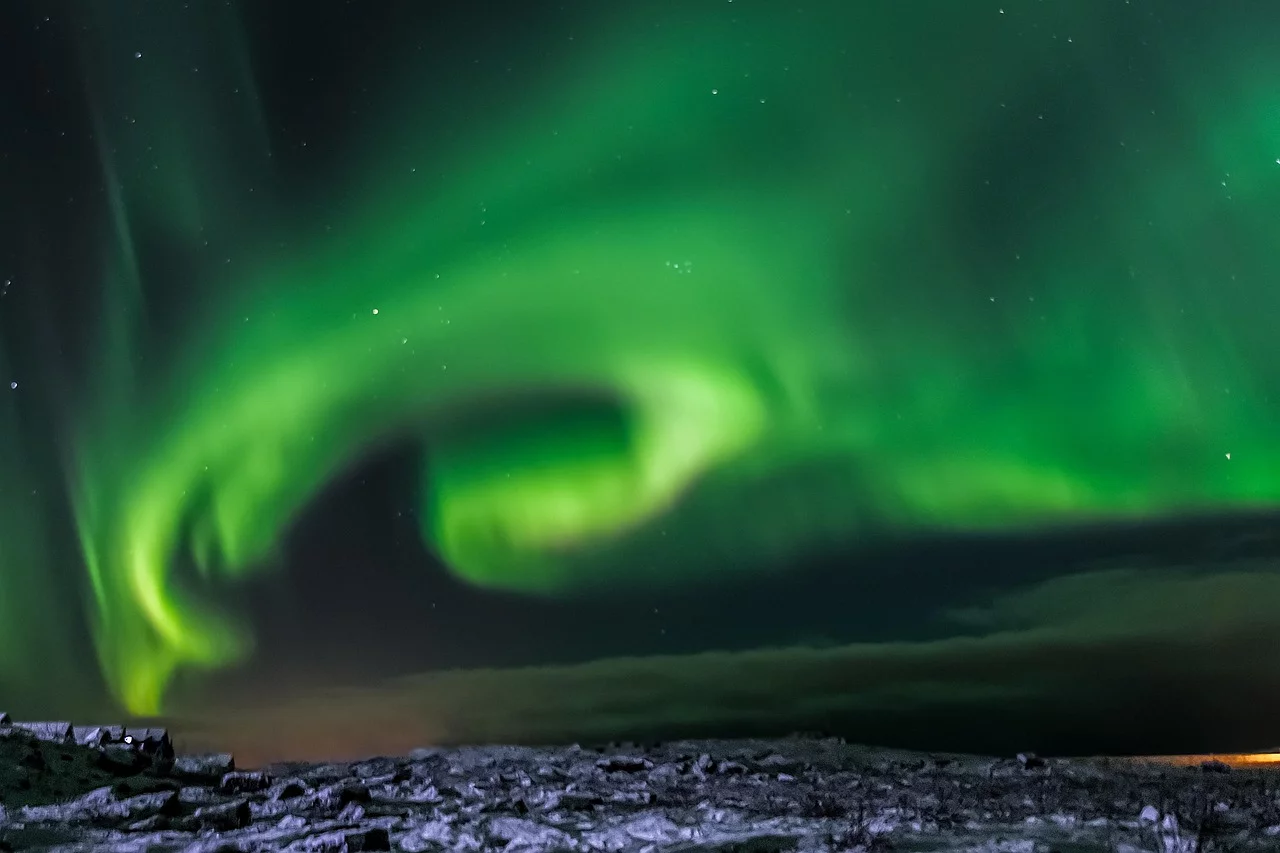
Small-group northern lights hunt from Reykjavik
A 4-hour night outing with a specialist guide: the vehicle leaves Reykjavik's lights for whichever area the forecasters expect to be clearest that night, stopping to watch and take photos. Hot chocolate and refreshments are included, and pickup is available from 23 points in the city.
From €101 per person on GetYourGuide, with commentary in English. If the lights stay hidden, an open ticket valid for 3 years lets you try again for free on the same operator's bus tour. It costs more than the entry-level coach tour mentioned above, but the group is smaller, and it is still far shorter than the Tromsø minibus runs.
- 4 hours
- from €101 per person (GetYourGuide rate, 2026)
Vatnajökull ice cave tour from Jökulsárlón
You meet at the main car park of the Jökulsárlón glacier lagoon in south-east Iceland. A modified 4x4 drives you to the Breiðamerkurjökull glacier, an outlet of Vatnajökull, and a guided walk of 1 to 5.5 km on the ice leads to an ice cave or a blue-ice formation, picked by the guide according to safety conditions. Helmet and crampons are provided.
From €157 per person, for about 3 hours with an English-speaking glacier guide. There is no hotel transfer and no food, so you need your own way to Jökulsárlón, which is one more reason to rent a car. The walk is easy to moderate, and children under 10 cannot take part.
- 3 hrs
- from €157 per person (GetYourGuide rate, 2026)
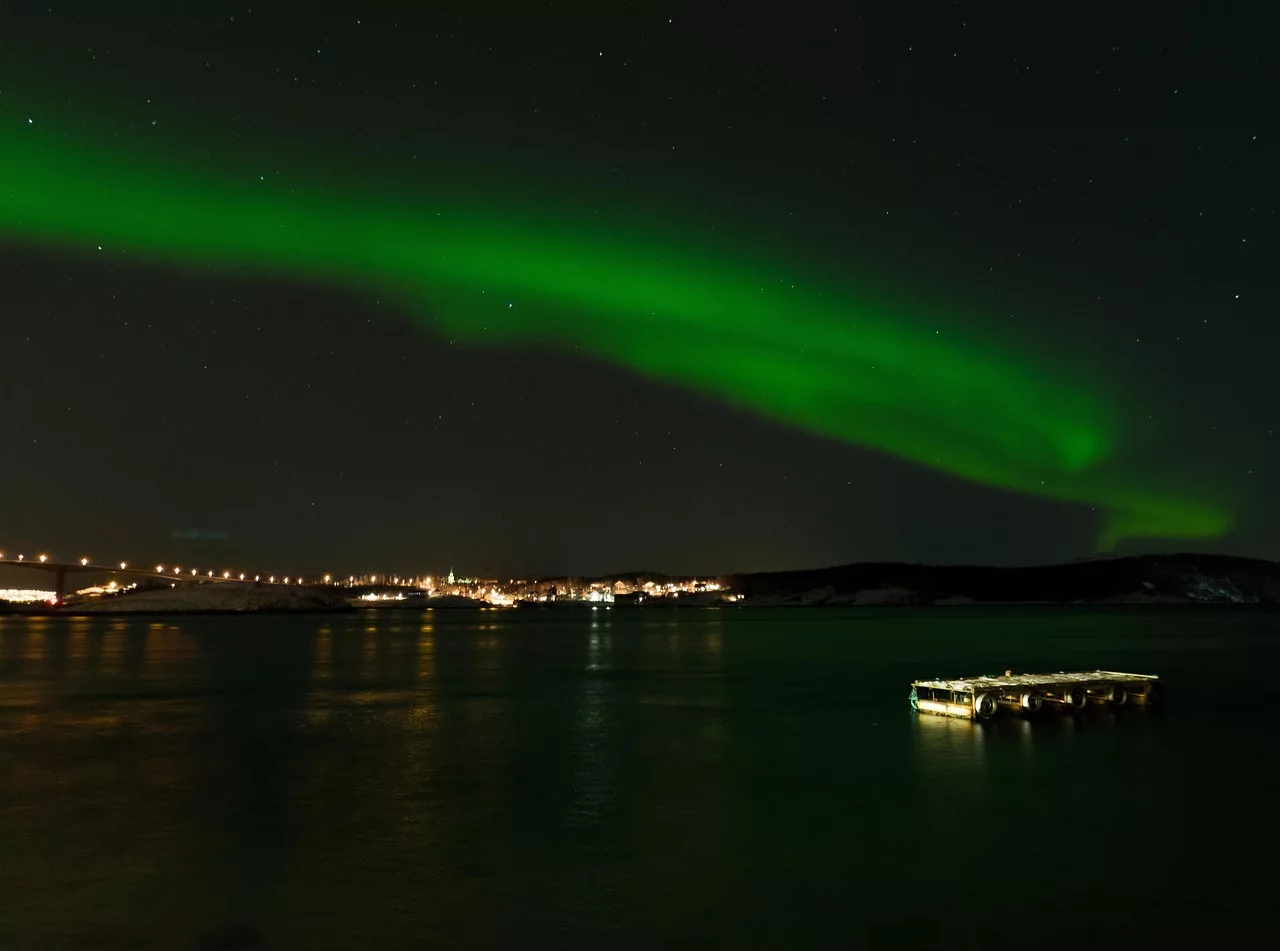
Northern lights minibus chase from Tromsø
You meet at the Scandic Ishavshotel in central Tromsø, then ride a minibus with 15 people at most towards the clearest sky of the night, as far as Finland if needed: the 6-to-8-hour option has no distance limit, and a shorter 5-hour option is also offered. At the spot there is a campfire, hot dogs, hot drinks, thermal suits and tripods for your camera.
From €175 per person, with portraits and photos sent within 10 hours. There is no pickup on the way out, but you are dropped at your accommodation on Tromsø island at the end. This is the long minibus format described in the budget section of this comparison.
- 5 to 8 hours
- from €175 per person (GetYourGuide rate, 2026)
Whale and orca safari by catamaran from Tromsø
From mid-October to late January, humpback whales and orcas follow the herring into the fjords near Tromsø. This fast catamaran leaves the harbour behind the Nerstranda shopping centre and heads for wherever the whales are, with views of the Lyngen Alps, a talk from the guides, and coffee, tea and water on board; snacks are sold at the kiosk.
From €192 per person for 8 hours. Departures at 8:30 am from 23 October 2026 to 31 January 2027 (English, German) and at 9 am from 1 December to 31 January (English, Italian). Sightings are not guaranteed, but you get a second trip for free if you see no whales. Seasickness tablets are not provided.
- 8 hours
- from €192 per person (GetYourGuide rate, 2026)
Leave a comment
Share your thoughts or travel experience. Your email will not be published.