

Contents 24
Capital of Alsace and seat of the European Parliament, Strasbourg grew up on the Ill, a few kilometres from the Rhine and Germany. Its centre, the Grande-Île, has been a UNESCO World Heritage site since 1988, joined in 2017 by the Neustadt, the district built during the German period.
The city is explored on foot and by tram in two days: Notre-Dame Cathedral and its astronomical clock, Petite France and its canals, the Covered Bridges and the Vauban Dam, then the European Quarter and the Orangerie park. In December, the Christkindelsmärik, dating from 1570, fills the squares of the centre.
Overview
Strasbourg, capital of Alsace and seat of the European Parliament, charms visitors with its UNESCO-listed historic centre, its Gothic cathedral and its famous Christmas market.
Strasbourg, capital of Alsace and of the Grand Est region, sits on the Ill river, a few kilometres from the Rhine and the German border. This crossroads location explains its unique identity, blending French and German influences in its architecture, language and cuisine.
Its historic centre, the Grande-Île, has been a UNESCO World Heritage site since 1988 (extended to the Neustadt in 2017). Here you'll find Notre-Dame Cathedral with its 142-metre spire, the romantic Petite France district with its half-timbered houses, and the European institutions to the north-east of the city.
A human-scale city, Strasbourg is best explored on foot and by tram. It suits both a cultural weekend break and the magic of its Christmas market, one of the oldest in Europe.
9 places to take with you
In the guide's order, ready for Google Maps or your GPS.
Book the activities from this guide
Our picks for Strasbourg, well rated and free to cancel.
-
Book this activity
Guided walking tour of the Grande-Île with a local guide
€35 per person (GetYourGuide price 2026)
-
Book this activity
Old-town food tour with tastings
€99 per person (GetYourGuide price 2026)
-
Book this activity
Alsace day trip from Strasbourg: Haut-Kœnigsbourg, Riquewihr, Kaysersberg and Colmar
€125 per person (GetYourGuide price 2026)
Affiliate links: Travel Advice earns a commission if you book, at no extra cost to you. Learn more

Strasbourg Cathedral (Notre-Dame)
Strasbourg Cathedral (Notre-Dame) is one of the great masterpieces of Gothic art. An earlier cathedral stood here around 1015; the present Gothic building was begun in 1176, and its 142-metre spire was completed in 1439 by Jean Hültz. That spire made it the tallest building in the world from 1647 to 1874, and it remains the second-tallest cathedral in France after Rouen.
The pink Vosges-sandstone façade is covered with hundreds of carvings and tympana depicting biblical scenes. Inside, the highlights are the Gothic vaults, the Pillar of Angels and, above all, the astronomical clock, whose procession of apostles comes to life every day at 12:30pm.
The cathedral sits at the heart of the Grande-Île, the historic centre inscribed as a UNESCO World Heritage site in 1988 (extended to the Neustadt in 2017). It is the symbol of Strasbourg and the natural starting point for any visit.

Petite France district
At the western tip of the Grande-Île, where the Ill splits into several channels, Petite France was the district of tanners, millers and fishermen. Its 16th- and 17th-century half-timbered houses, with open lofts where hides were once dried, line the canals and locks, like the Maison des Tanneurs on rue du Bain-aux-Plantes.
The district is part of the Grande-Île inscribed as a UNESCO World Heritage site in 1988. You explore it on foot, from the Covered Bridges and the Vauban Dam to place Benjamin-Zix, or by boat on the Ill, which passes through the district's lock.

The Strasbourg Christmas Market
Dating from 1570, the Christkindelsmärik, the "market of the Christ Child", is one of the oldest Christmas markets in Europe. Its historic site is place Broglie; today the chalets are spread over several squares of the Grande-Île, including place de la Cathédrale, and a huge Christmas tree stands on place Kléber.
The market runs from late November to 24 December. It sells Christmas decorations, wooden crafts and Alsatian specialities: mulled wine, bredele (Christmas biscuits), gingerbread and pretzels. The exact dates of each edition are published by the City in the autumn.

The European Parliament
The European Parliament, whose official seat is in Strasbourg, is one of the European Union's main institutions. Since the June 2024 election it has 720 directly elected Members, who gather in Strasbourg for twelve plenary sessions a year to debate and vote on EU legislation and the budget.
Strasbourg was chosen as the seat for its symbolic value: the city embodies Franco-German reconciliation after the Second World War. The Louise Weiss building, with its deliberately unfinished tower suggesting a work permanently under construction, is a striking example of contemporary architecture, next to the Council of Europe and the European Court of Human Rights in the European Quarter.

The Covered Bridges (Ponts Couverts)
The Ponts Couverts are an iconic group of three bridges and four watchtowers, remnants of Strasbourg's medieval fortifications. Built in the 13th century to defend the city, they span the branches of the Ill at the entrance to Petite France. The wooden roofing that gave them their name is long gone, but the square sandstone towers remain and give the ensemble its distinctive outline.
Today the site is one of the most photographed in Strasbourg, especially from the neighbouring Vauban Dam terrace, which offers the best overall view. It is a natural gateway to the lanes and canals of Petite France.

The Vauban Dam
The Vauban Dam is a fortified weir built from 1686 to 1690 to plans by Sébastien Le Prestre de Vauban, at the entrance to Petite France. Made of pink Vosges sandstone, 120 metres long and pierced by thirteen arches, in case of attack it could close its sluices to flood the land to the south and block an enemy advance.
A listed historic monument, it now houses a freely accessible panoramic terrace that offers one of the finest views in the city, over the Ponts Couverts and the rooftops of Petite France.

The Orangerie Park
The Parc de l'Orangerie, Strasbourg's oldest public park, was laid out from 1692 and redesigned in the 19th century. Over 26 hectares it combines a French formal garden and English-style landscaping, with a lake where you can hire a rowing boat, shaded paths and the Joséphine pavilion, which hosts exhibitions.
It is also the city's great family park, with its stork enclosure, the bird that symbolises Alsace, and its playgrounds. Next to the European Quarter, it is easily reached by tram from the centre.

Boat trip on the Ill (Batorama)
The boat trips on the Ill, run by Batorama, leave from the landing stage by the Palais Rohan, behind the cathedral. The commented route runs along the Grande-Île, goes through the Petite France lock and reaches the European Quarter, with an audioguide in several languages.
It is the most restful way to see the old town and the Neustadt in a single trip, handy with children or at the end of the day, when the light turns the façades golden.

The Alsatian Museum (closed for works)
The Alsatian Museum, at 23-25 quai Saint-Nicolas along the Ill, was founded in 1902 and opened in 1907. It occupies several half-timbered houses linked by wooden galleries and staircases, a setting that is itself a showcase of the region's traditional architecture.
Its collections tell the story of everyday life in Alsace from the 18th to the 20th century: costumes, painted furniture, toys, religious objects, tools, ceramics and reconstructed farmhouse interiors. The museum is closed for works until 2028.
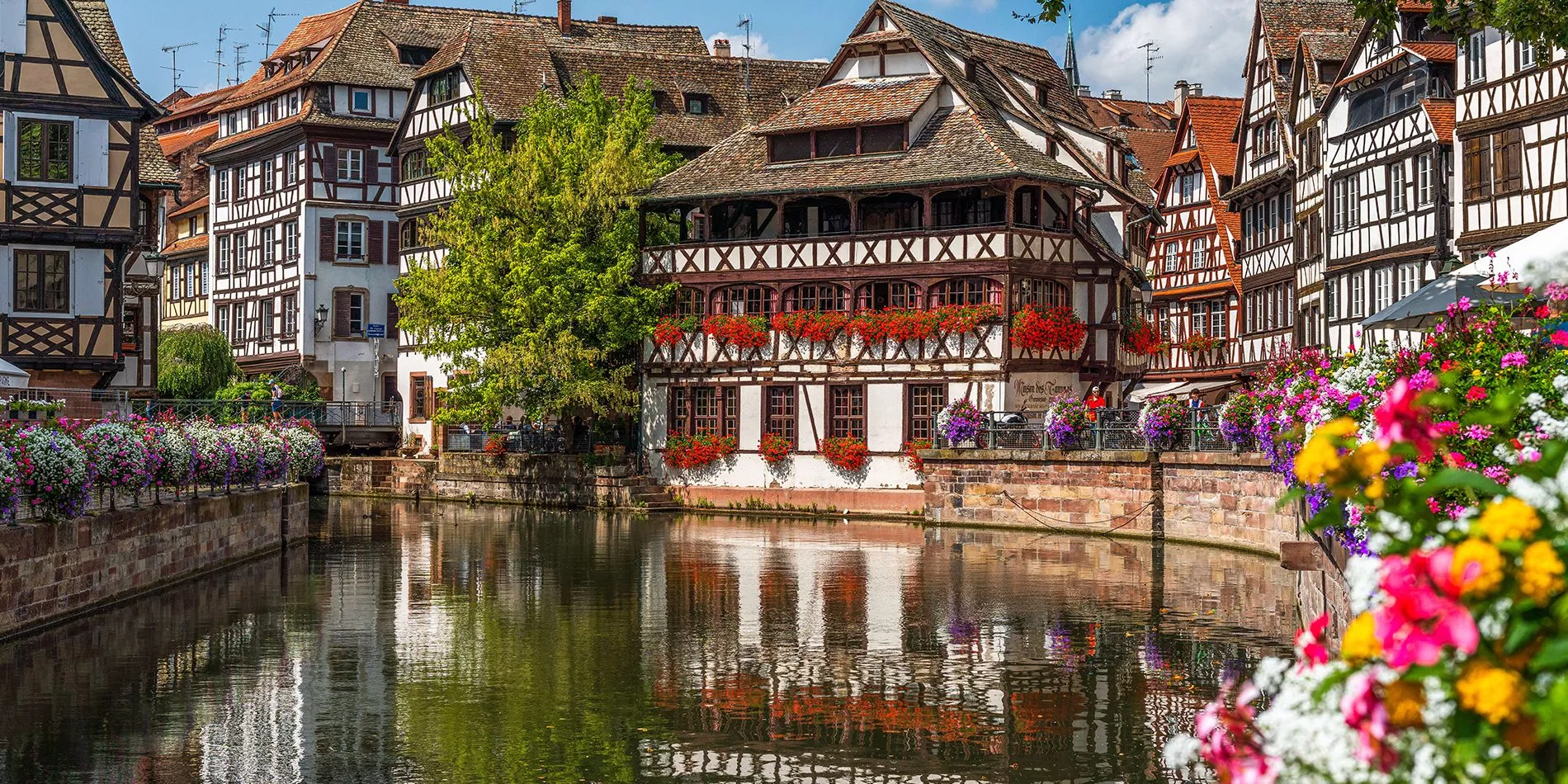
Guided walking tour of the Grande-Île with a local guide
Two hours on foot in a small group (6 people at most), starting from place d'Austerlitz: the Covered Bridges, Petite France, St Thomas' Church, the cathedral, place Saint-Étienne, then place de la République in the Neustadt. The guide tells the story of the city, between France and Germany, and shares tips on where to eat. The highlight: arriving in front of the cathedral façade.
Allow €35 per person on GetYourGuide, free cancellation up to 24 hours before; tour in French or English. Best done on the first morning to get your bearings before exploring alone.
- 2 hrs
- €35 per person (GetYourGuide price 2026)
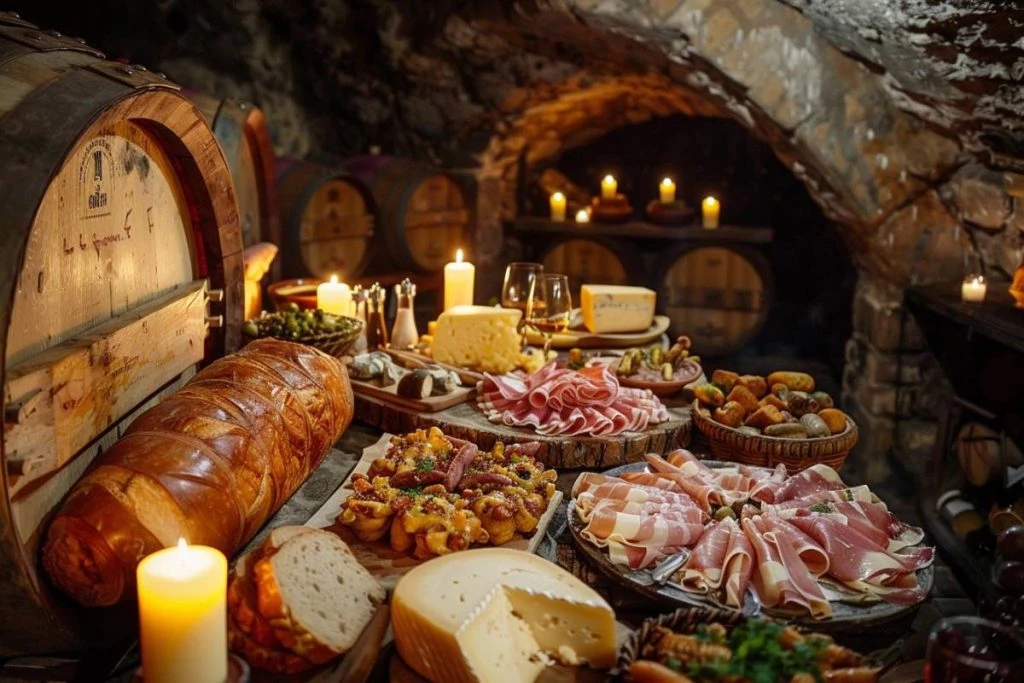
Old-town food tour with tastings
A 3.5-hour food walk in a small group, from place d'Austerlitz to Petite France, with more than four stops and drinks included: charcuterie, cheeses and pretzels in a cheese shop, choucroute garnie, gingerbread at Fortwenger near the cathedral, and tarte flambée depending on the route. The highlight: choucroute served in a traditional address.
Allow €99 per person on GetYourGuide, free cancellation up to 24 hours before; tour in French or English depending on the departure, vegetarian diets catered for on request. Skip lunch beforehand: the portions add up to a full meal.
- 3.5 hrs
- €99 per person (GetYourGuide price 2026)
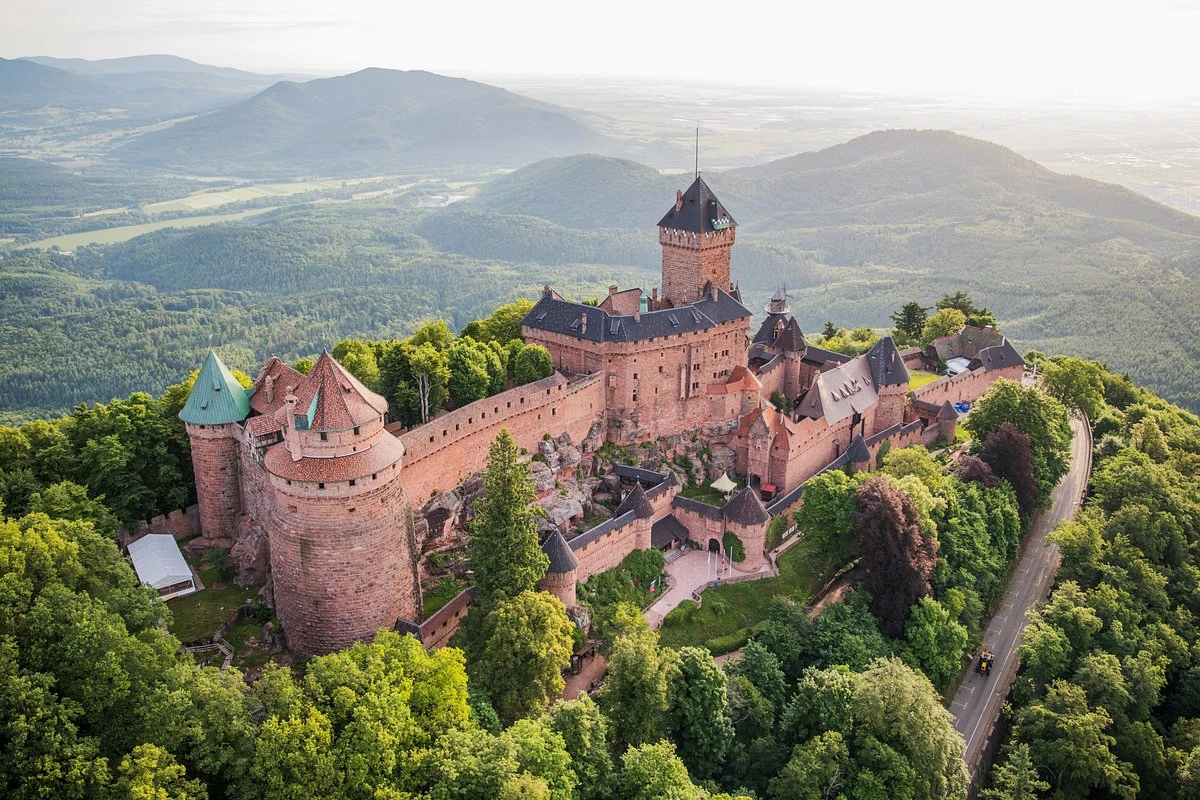
Alsace day trip from Strasbourg: Haut-Kœnigsbourg, Riquewihr, Kaysersberg and Colmar
A day by coach with an audioguide from the place de l'Étoile bus station: 1 hour 15 minutes at Haut-Kœnigsbourg castle, then the Wine Route via Bergheim and Hunawihr, free time in Riquewihr (1 hour 45 minutes) and Kaysersberg (1 hour), and two hours in Colmar before heading back. The highlight: the view over the Alsace plain from the ramparts of Haut-Kœnigsbourg.
Allow €125 per person on GetYourGuide, free cancellation up to 24 hours before; audioguide in twelve languages, including French and English, and a driver, with no guide on site. Our Colmar guide covers the town and the wine villages.
- 10.5 hrs
- €125 per person (GetYourGuide price 2026)
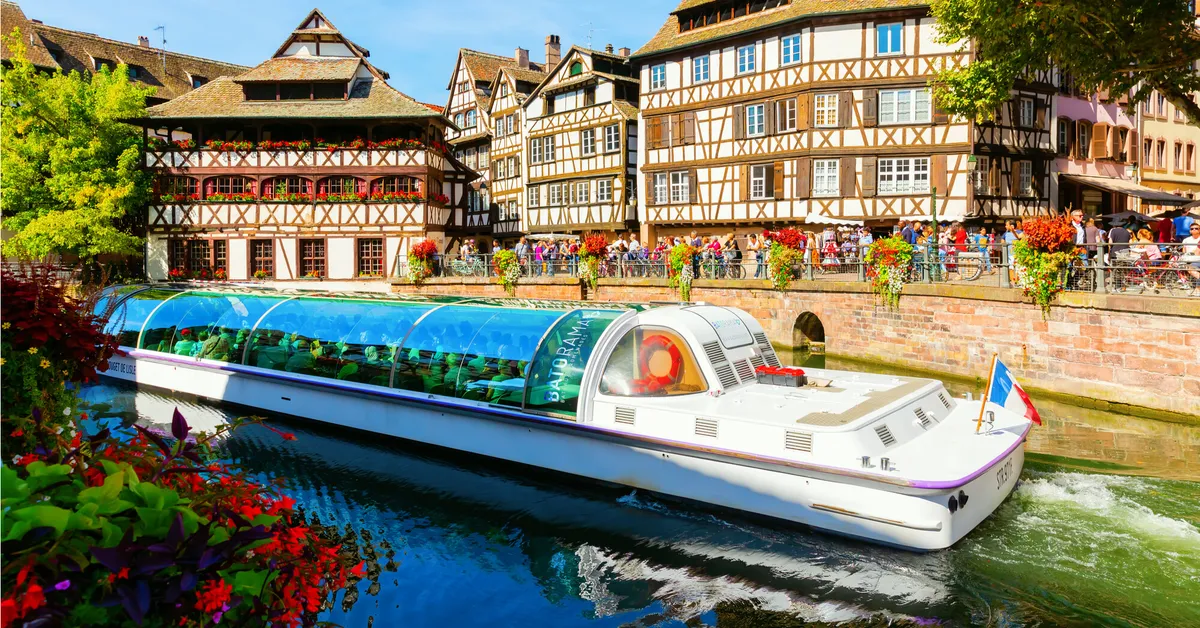
Commented cruise on the Ill with Batorama
The Batorama cruise leaves from the landing stage by the Palais Rohan, behind the cathedral, circles the Grande-Île through the Petite France lock, then heads up to the European Quarter, with an audioguide in several languages. The highlight: going through the lock at the foot of the half-timbered houses.
Tickets are booked directly on the Batorama website; take a late-afternoon departure in summer, and book early in December, during the Christmas market.
- about 1 hr 15
- Price on the Batorama website
Getting there
The TGV links Paris to Strasbourg in about 1h50; the city also has Strasbourg-Entzheim airport and the nearby EuroAirport Basel-Mulhouse.
By train: the simplest option. The TGV connects Paris (Gare de l'Est) to Strasbourg-Ville in about 1h50. Strasbourg station, with its distinctive glass canopy, is a ten-minute walk from the historic centre.
By air: Strasbourg-Entzheim airport is 15 km away, linked to the centre by a rail shuttle. The larger EuroAirport Basel-Mulhouse-Freiburg also serves the region.
By car: Strasbourg is reached via the A4 and A35 motorways. The centre is largely pedestrianised; use the park-and-ride (parking-relais tram) sites on the outskirts, combined with a tram ticket.
Getting around
The centre is walkable; beyond that, the CTS tram and bus network is efficient, complemented by Vélhop bike rentals.
On foot: the historic centre is compact and largely pedestrianised, ideal for strolling between the cathedral, Petite France and the riverbanks.
Tram and bus: the CTS network is dense and reliable; the tram links the station, the centre and the European Quarter in minutes. A single or day ticket is enough for most stays.
By bike: Strasbourg is one of France's most cycle-friendly cities; the Vélhop service rents out bikes. By boat: Batorama cruises offer another perspective on the city from the Ill.
What to do
The cathedral and its astronomical clock, Petite France, the Covered Bridges and the Vauban Dam on day one; the European Quarter, the Orangerie and an Ill cruise on day two; the Wine Route as a day trip.
One day is enough for the Grande-Île: the cathedral and the astronomical clock's apostle procession at 12:30pm, the climb to the platform, then Petite France, the Covered Bridges and the Vauban Dam terrace. The next day, the tram takes you to the European Quarter, the Parliament and the Orangerie park, and a cruise on the Ill links the old town to the Neustadt.
Beyond the city, the Wine Route and Haut-Kœnigsbourg make a day trip. Our Colmar guide covers the wine villages, and our guide to the most beautiful castles in France presents Haut-Kœnigsbourg.
Food
Alsatian cuisine blends French and German traditions: choucroute, tarte flambée, baeckeoffe, pretzels and kouglof, paired with Alsace white wines.
Alsatian gastronomy is one of the great pleasures of a stay in Strasbourg. Try choucroute garnie (sauerkraut with meats), tarte flambée (flammekueche) with cream, onions and bacon, and baeckeoffe, a slow-cooked casserole of meats and potatoes. For something sweet, the kouglof cake and Christmas bredeles are the classics.
These are best enjoyed in a winstub, the typical Alsatian tavern. Local white wines — riesling, gewurztraminer, pinot gris — pair beautifully with these dishes, as do the region's beers.
Itineraries
Day 1: cathedral, astronomical clock and Petite France; day 2: European Quarter, Orangerie and an Ill cruise; day 3: Wine Route and Haut-Kœnigsbourg.
Day 1: the Grande-Île
Start with the cathedral and the climb to the platform, buy your ticket for the 12:30pm apostle procession that same morning, then have lunch in a winstub. In the afternoon, head to Petite France, the Covered Bridges and the Vauban Dam terrace, worth a second visit at sunset.
Day 2: the Neustadt and the European Quarter
Take the tram to the European Parliament (visits by booking) and the Orangerie park, then walk back through the Neustadt, UNESCO-listed in 2017. In the late afternoon, a Batorama cruise from the Palais Rohan rounds off the day.
Day 3: wine-country Alsace
Head out on the Wine Route: Haut-Kœnigsbourg, Riquewihr, Kaysersberg and Colmar fit into one day, by car or on an organised trip.
Climate & seasons
When to go to France?
Monthly averages over the past 5 years (Open-Meteo).
Best months
- August
| Jan | Feb | Mar | Apr | May | Jun | Jul | Aug | Sep | Oct | Nov | Dec | |
|---|---|---|---|---|---|---|---|---|---|---|---|---|
| Our take | ||||||||||||
| Weather | ||||||||||||
| High | 6° | 9° | 13° | 15° | 20° | 26° | 26° | 26° | 22° | 17° | 9° | 6° |
| Rain (mm) | 87 | 57 | 65 | 77 | 86 | 88 | 107 | 76 | 91 | 102 | 97 | 94 |
| City sightseeing | City sightseeing March | City sightseeing April | City sightseeing May | City sightseeing June | City sightseeing July | City sightseeing August | City sightseeing September | City sightseeing October |
What to do by season (autumn)
-
City sightseeing
Pedestrian-friendly most of the year.
When to go
Spring and autumn offer the best conditions (mild weather, fewer crowds); December draws visitors for the Christmas market but very busy and cold.
Spring (March-June) and autumn (September-November) are the best seasons: pleasant temperatures, café terraces and canal-side walks, and fewer tourists than in summer.
Summer (June-August) is lively, with festivals and boat cruises on the Ill, but it is peak season. Winter (December) transforms the city for the Christmas market, from late November to 24 December: lit-up squares but large crowds and dry cold — book your accommodation several months ahead.
For events, the Strasbourg Mon Amour festival livens up the city in February and the Fête de la Musique, on 21 June, fills streets and squares with free concerts; dates change every year, so check the tourist office calendar.
Where to stay
For a first visit, stay on the Grande-Île or in Petite France to do everything on foot; Krutenau and the Neustadt are quieter and often cheaper alternatives.
Grande-Île / city centre: the UNESCO-listed historic heart, at the foot of the cathedral and Place Kléber. Ideal for doing everything on foot, it is also the most in-demand area.
Petite France: the most romantic district, with its half-timbered houses and canals; perfect for a leisure stay and quieter in the evening.
Krutenau and the Neustadt: lively, student-friendly areas full of bars and restaurants, a few minutes from the centre and often more affordable. European Quarter: quieter and greener, near the Orangerie park, of interest to those visiting the institutions.
In December, book several months ahead: prices rise sharply during the Christmas market.
Safety
Strasbourg is a safe city; watch out for pickpockets in the Christmas-market crowds. Emergencies: 15, 17, 18 or 112.
Strasbourg poses no particular risk to visitors. The main thing to watch is pickpocketing in the Christmas-market crowds, on the tram and around the cathedral: keep bags and phones closed and in front of you. During the Christmas market, expect bag checks at the entrances to the Grande-Île.
Emergency numbers in France: 15 (medical emergencies, SAMU), 17 (police), 18 (fire brigade) and 112 (European emergency number, from a mobile); 114 by text for deaf or hard-of-hearing people. No specific vaccines are required; EU nationals use the European Health Insurance Card.
Formalities
Strasbourg is in France, within the Schengen Area: ID card or passport for EU/EEA/Swiss citizens, Schengen rules for others. ETIAS is not yet in service and no launch date has been set (September 2026).
France is part of the Schengen Area. For EU, EEA and Swiss citizens, a valid national ID card or passport is enough; no visa is required. Other visitors follow Schengen rules: short stays of 90 days in 180, with or without a visa depending on nationality.
The European Entry/Exit System (EES), rolled out gradually since 12 October 2025 and fully operational since 10 April 2026, records the photo and fingerprints of non-European travellers at external borders. The ETIAS travel authorisation is not yet in service and no launch date has been set (September 2026): no application is possible today, so beware of websites claiming otherwise. Neither applies to EU citizens.
FAQ
How many days, how to come from Paris, when to see the Christmas market: the essential answers to plan your stay in Strasbourg.
How many days do you need to visit Strasbourg?
Two days cover the essentials: the cathedral, Petite France and a cruise on the Ill. A third day lets you visit the museums, the European Quarter or head out onto the Alsace wine route.
How do you get from Paris to Strasbourg?
The TGV links Paris (Gare de l'Est) to Strasbourg in about 1h50, making it the fastest and most convenient option.
When is the Strasbourg Christmas market?
The Christmas market (Christkindelsmärik) runs from late November to 24 December, mainly on Place Broglie and Place de la Cathédrale. It is one of the oldest in Europe, founded in 1570.
Is the cathedral free?
Entry to the nave is free. Climbing the platform (about 330 steps) and the astronomical clock procession (12:30pm, €4, tickets sold on the day) are paid.
Can you visit Strasbourg on foot?
Yes. The historic centre is compact and largely pedestrianised; the tram makes it easy to reach the station and the European Quarter.
Do you need a visa to visit Strasbourg?
No for EU/EEA/Swiss citizens. Other visitors follow Schengen rules (visa depending on nationality); the ETIAS authorisation is not yet in service and no launch date has been set (September 2026).
Sources
The figures in this guide come from the sources below, checked on the publication date.
Leave a comment
Share your thoughts or travel experience. Your email will not be published.