

Contents 26
From the royal palaces of Île-de-France to the fortresses of south-west France, this guide brings together twelve of the most visited French châteaux, each with its history, what you see there and the 2026 prices checked on the official websites.
Versailles, Malmaison, Fontainebleau, Vaux-le-Vicomte and Chantilly are visited from Paris; Chambord, Chenonceau and Saumur in the Loire Valley; the Cité of Carcassonne, Castelnau-Bretenoux and Bonaguil in the south-west; Haut-Kœnigsbourg in Alsace. As they are spread out, it is best to explore them region by region.
Overview
From Versailles to Chambord, from the fortress of Carcassonne to the Haut-Kœnigsbourg perched in Alsace, France has thousands of castles; this selection brings together twelve of the most spectacular, spread across several regions.
France is one of the richest countries in the world for castles: royal palaces, medieval fortresses, Renaissance houses and imperial residences bear witness to over a thousand years of history. Several are UNESCO World Heritage sites, either on their own (Versailles, Fontainebleau, Carcassonne) or within the Loire Valley.
This guide gathers twelve of the finest and most visited: the royal splendour of Versailles, Fontainebleau and Vaux-le-Vicomte in Île-de-France; the Renaissance châteaux of Chambord and Chenonceau in the Loire Valley; Saumur on the Loire; Chantilly and its Musée Condé; and the fortresses of Carcassonne, Castelnau-Bretenoux, Haut-Kœnigsbourg and Bonaguil.
As they are scattered across the country, it is best to discover them region by region — see the practical sections below.
12 places to take with you
In the guide's order, ready for Google Maps or your GPS.
Book the activities from this guide
Our picks for Loire Valley castles, well rated and free to cancel.
-
Book this activity
Loire Valley châteaux day trip from Paris: Chenonceau, Amboise and Chambord
€245 per person (GetYourGuide price 2026)
-
Book this activity
Skip-the-line guided tour of the Palace of Versailles
€70 per person (GetYourGuide price 2026)
-
Book this activity
Vaux-le-Vicomte and Fontainebleau day trip from Paris
€220 per person (GetYourGuide price 2026)
Affiliate links: Travel Advice earns a commission if you book, at no extra cost to you. Learn more

Palace of Versailles (Versailles, Île-de-France)
Originally a hunting lodge of Louis XIII, Versailles became Louis XIV's great building project from 1661, and the king moved the court and government there in 1682. The Hall of Mirrors and its 357 mirrors, where the Treaty of Versailles was signed in 1919, is still the palace's most famous room; the estate has been a UNESCO World Heritage site since 1979.
The visit takes in the King's and Queen's State Apartments, then André Le Nôtre's gardens with their pools and fountains, and the Estate of Trianon: the Grand Trianon, the Petit Trianon and the Queen's Hamlet. Allow a full day to see the palace, the gardens and Trianon.

Château de Chambord (Chambord, Centre-Val de Loire)
Begun in 1519 by François I, Chambord is the largest château in the Loire Valley. Its architect is unknown: Leonardo da Vinci, who died in Amboise in May 1519, may have inspired the plan, without proof, especially the great double-helix staircase, on which two people can climb without meeting.
At the top of the staircase, the terraces reveal the forest of chimneys, lanterns and dormers on the roofs. The château stands at the heart of a forest estate entirely enclosed by walls, home to red deer and wild boar, and its formal gardens were restored in 2017.

Château de Chenonceau (Chenonceaux, Centre-Val de Loire)
Built in the 16th century over the Cher, Chenonceau owes its nickname, the "Ladies' Château", to the women who shaped it: Katherine Briçonnet during its construction, Diane de Poitiers, who had the bridge built across the river, then Catherine de' Medici, who added the two-storey gallery.
The visit passes through the furnished bedrooms, the kitchens set in the bridge piers and the great gallery above the Cher, then the gardens of Diane de Poitiers and Catherine de' Medici, the maze and the kitchen garden. It stands on the Cher, just outside the UNESCO-listed Loire Valley area.

Cité of Carcassonne and Château Comtal (Carcassonne, Occitanie)
On a hill above the Aude, the Cité of Carcassonne lines up two walls, about 3 km of ramparts and some fifty towers around the Château Comtal, built in the 12th century by the Trencavel viscounts. Restored from 1853 by Eugène Viollet-le-Duc, it has been a UNESCO World Heritage site since 1997.
Entering the Cité, its lanes and the lists, the space between the two walls, is free. The Centre des monuments nationaux ticket opens the Château Comtal and part of the wall-walk, with views over the Aude valley and the lower town; the Basilica of Saint-Nazaire and its Gothic stained glass are visited separately.

Château de Chantilly (Chantilly, Hauts-de-France)
The Chantilly estate combines the Petit Château, built around 1560 for Constable Anne de Montmorency, and the Grand Château, rebuilt in the late 19th century for Henri d'Orléans, Duke of Aumale. He bequeathed the whole estate to the Institut de France, on condition that his collections stay displayed as he had arranged them.
The Musée Condé thus holds France's second collection of old master paintings after the Louvre, with works by Raphael, Poussin and Ingres, and a library rich in illuminated manuscripts. The park designed by André Le Nôtre, the 1774 Hamlet, which inspired Marie-Antoinette's at Versailles, and the Great Stables complete the visit.

Palace of Fontainebleau (Fontainebleau, Île-de-France)
Home to French sovereigns for more than seven centuries, from Louis VII to Napoleon III, Fontainebleau has been a UNESCO World Heritage site since 1981. François I brought Italian artists here, and their decoration, notably in the François I Gallery, gave rise to the School of Fontainebleau.
The visit crosses the State Apartments, the ballroom, the Trinity Chapel and the Napoleon I Museum. It was here that Napoleon signed his abdication in April 1814 before bidding farewell to his Guard in the White Horse Courtyard, known since as the Courtyard of Farewells. The park and gardens open onto the Forest of Fontainebleau.

Château du Haut-Kœnigsbourg (Alsace, Grand Est)
Perched at 757 m on a spur of the Vosges above the Alsace plain, Haut-Kœnigsbourg is recorded as early as the 12th century. Burnt during the Thirty Years' War, in 1633, it stayed in ruins until the town of Sélestat offered it in 1899 to Emperor Wilhelm II, who had it rebuilt from 1900 to 1908 by the architect Bodo Ebhardt.
The visit follows the layout of a fortified castle: lower court, furnished lord's lodgings, great bastion and medieval garden. On clear days, the view stretches across the Alsace plain, the Rhine and the Black Forest.

Château de Vaux-le-Vicomte (Maincy, Île-de-France)
Built from 1658 to 1661 for Nicolas Fouquet, Louis XIV's Superintendent of Finances, Vaux-le-Vicomte brought together the architect Louis Le Vau, the gardener André Le Nôtre and the painter Charles Le Brun. A few weeks after the party held in the king's honour in August 1661, Fouquet was arrested; Louis XIV took over the Vaux team to build Versailles.
A private estate, the château is visited through its salons, including the great oval salon under the dome, and its apartments, then through the formal gardens that stretch along the Grand Perspective. On some summer Saturday evenings, the candlelit evenings light the château and gardens with thousands of candles.

Château de Saumur (Saumur, Pays de la Loire)
Set on a spur above the Loire, the Château de Saumur replaced a 10th-century fortress. Its outline of towers and pointed roofs is the one painted in the 15th century in the Très Riches Heures du Duc de Berry, and it is part of the Loire Valley UNESCO World Heritage site.
Owned by the town, it houses a Decorative Arts museum (ceramics, tapestries, furniture) and a Horse Museum, echoing the equestrian tradition of Saumur, home of the Cadre Noir. From its surroundings, the view takes in the Loire and the town's rooftops.

Château de Malmaison (Rueil-Malmaison, Île-de-France)
Joséphine de Beauharnais bought Malmaison in 1799, and the estate became the Bonapartes' residence during the Consulate. After her divorce in 1809, Joséphine lived there until her death in 1814 and gathered her famous collection of roses and rare plants.
Now a national museum, the château shows the reception rooms, the library and the Empress's bedroom, furnished with furniture, paintings and objects linked to Napoleon and Joséphine. The park keeps a rose garden, a reminder of Joséphine's passion for botany.

Château de Bonaguil (Saint-Front-sur-Lémance, Nouvelle-Aquitaine)
In the Lot-et-Garonne, on the edge of Périgord and Quercy, Bonaguil is one of the last fortified castles built in France. In the late 15th century, Bérenger de Roquefeuil turned a 13th-century fortress into a stronghold designed for artillery, with gun ports, a barbican and a keep shaped like a ship's prow.
The visit goes through the moats, casemates and towers, up to the top of the keep overlooking the wooded Lémance valley.

Château de Castelnau-Bretenoux (Prudhomat, Occitanie)
Built of red stone above the Dordogne valley, in the Lot, the fortress of the barons of Castelnau was enlarged throughout the Middle Ages into a vast walled enclosure flanked by towers, one of the most powerful in Quercy.
Bought in 1896 by the tenor Jean Mouliérat, who restored and furnished it, it was bequeathed to the State: the rooms display his collection of furniture, altarpieces and works of art. Run by the Centre des monuments nationaux, it looks over the confluence of the Cère and the Dordogne.
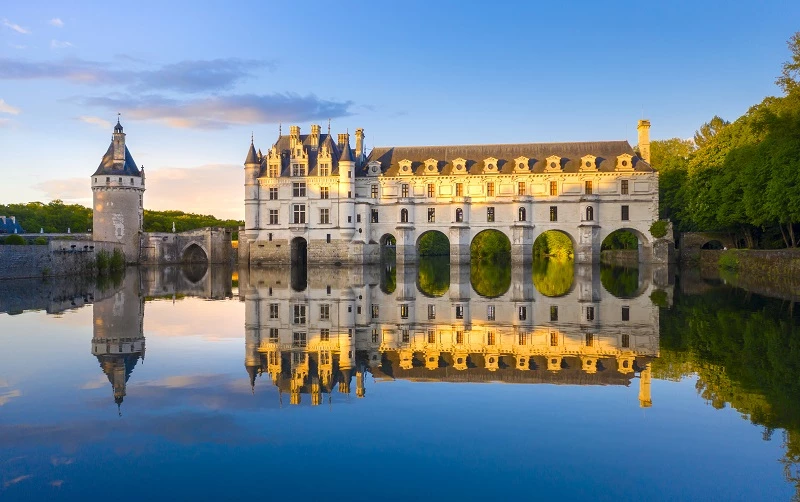
Loire Valley châteaux day trip from Paris: Chenonceau, Amboise and Chambord
A small-group minibus day from Paris (avenue de Wagram), with about 2.5 hours on the road each way: the Château de Chenonceau and its gallery over the Cher, the Château d'Amboise, a lunch break with a short wine tasting, then Chambord and its double-helix staircase. The highlight: crossing Chenonceau's gallery above the river.
Allow €245 per person on GetYourGuide, transport and entry to the three châteaux included, free cancellation up to 24 hours before; commentary in English, with the guide accompanying the group outside each château. To visit at your own pace, the train to Tours or Blois and a hire car remain cheaper.
- 12 hrs
- €245 per person (GetYourGuide price 2026)
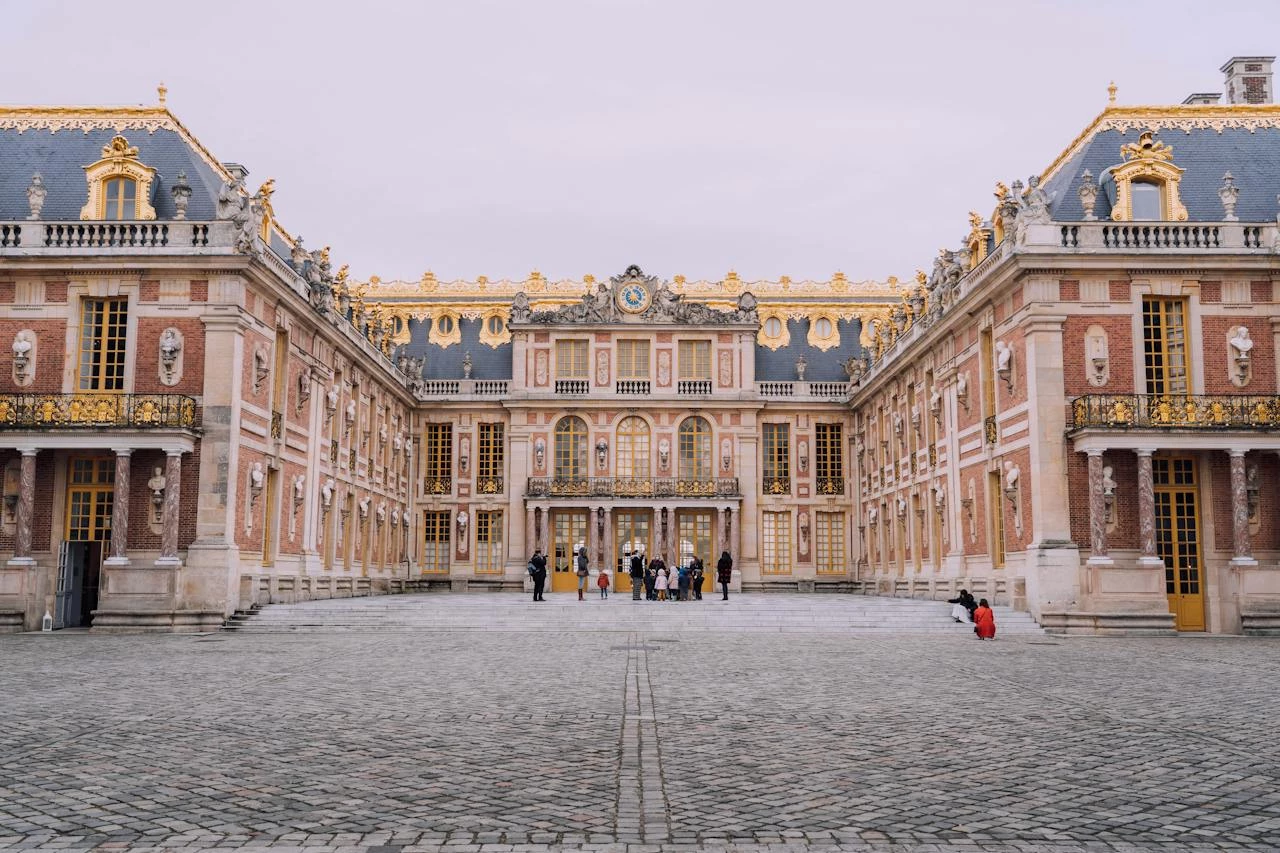
Skip-the-line guided tour of the Palace of Versailles
A guided tour of the palace with skip-the-line entry: the King's and Queen's State Apartments, then the Hall of Mirrors and its 357 mirrors, where the Treaty of Versailles was signed in 1919. The palace is 20 km south-west of Paris by RER C. The highlight: stepping into the Hall of Mirrors with the guide's explanations.
Allow €70 per person on GetYourGuide, with free cancellation; tours in French, English and several other languages. Keep the rest of the day for the gardens and Trianon; the palace is closed on Mondays.
- 1.5-2 hrs
- €70 per person (GetYourGuide price 2026)
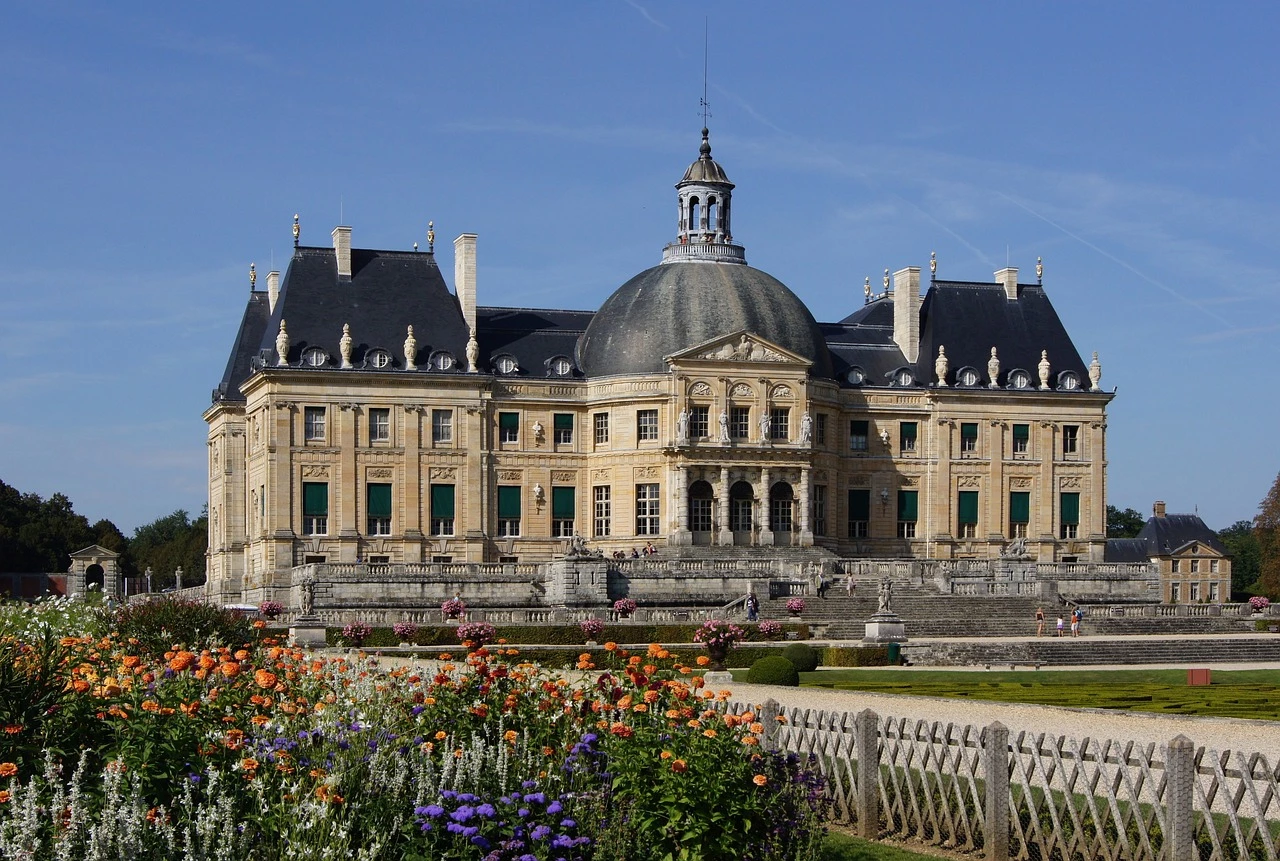
Vaux-le-Vicomte and Fontainebleau day trip from Paris
A small-group minibus day from Paris: about 2 hours 15 minutes at Vaux-le-Vicomte, château and Le Nôtre's formal gardens, a lunch break in Fontainebleau, then a 2-hour visit of the Palace of Fontainebleau, from Napoleon's throne room to the royal apartments. The highlight: the Grand Perspective of the Vaux gardens.
Allow €220 per person on GetYourGuide, transport and entry to both châteaux included, free cancellation up to 24 hours before; tour in English. As Vaux-le-Vicomte closes in winter, check the dates on offer.
- 10 hrs
- €220 per person (GetYourGuide price 2026)
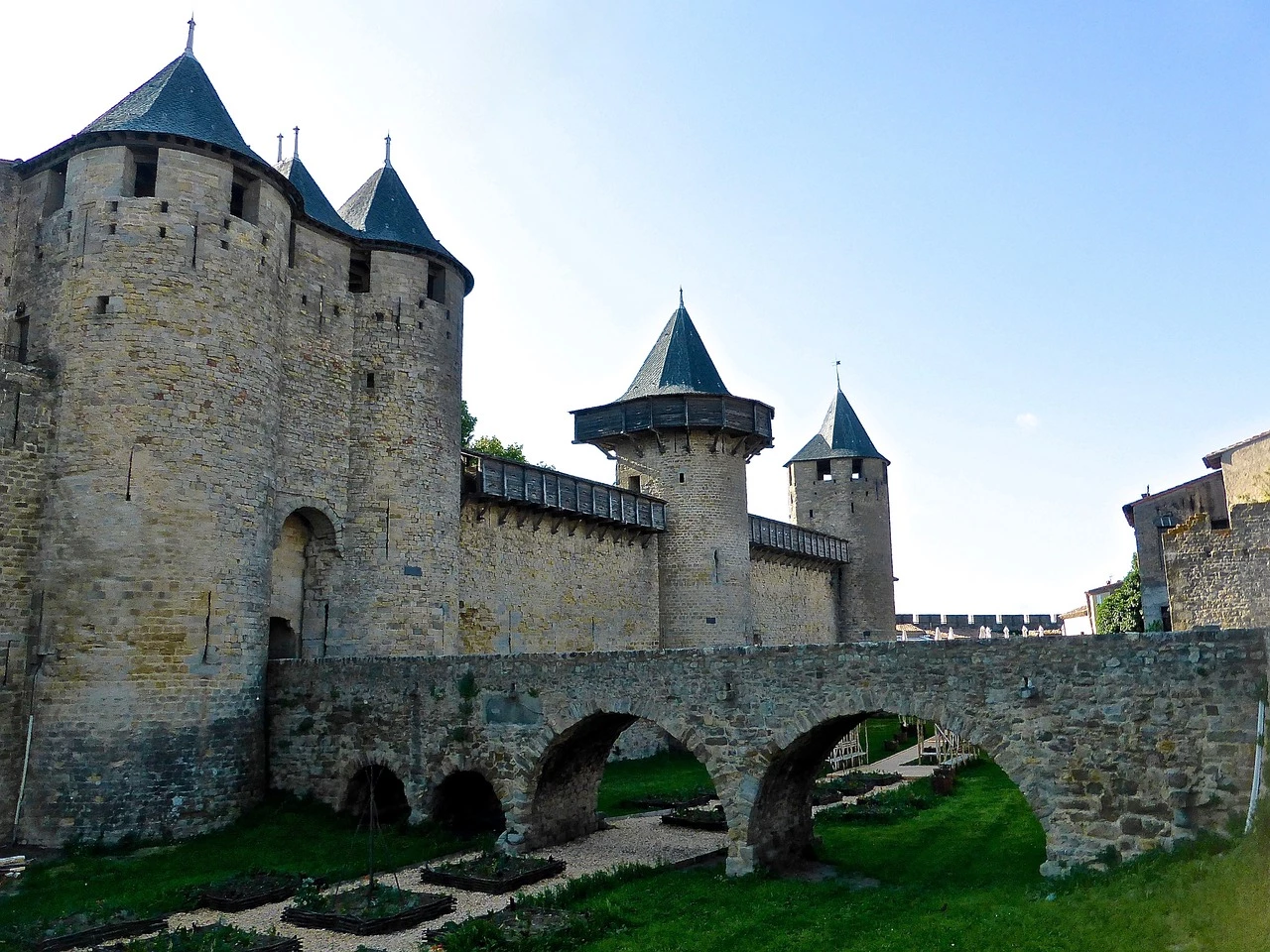
Early-morning guided tour of the Cité of Carcassonne
A 1.5-hour morning walk with a licensed guide: the drawbridge and the Porte Narbonnaise, the lists between the two walls with views over the Aude valley, the lanes, the Basilica of Saint-Nazaire, then the outside of the Château Comtal. The highlight: the ramparts in the morning light, before the crowds and the heat arrive.
Allow €15 per person on GetYourGuide, free cancellation up to 24 hours before; tour in English only. Entry to the Château Comtal and the wall-walk is not included (€19 on site).
- 1.5 hrs
- €15 per person (GetYourGuide price 2026)
Getting there
As the twelve châteaux are scattered, explore them region by region: Île-de-France by RER/train from Paris, the Loire Valley by car or bike, and the south (Carcassonne, Bonaguil) or Alsace (Haut-Kœnigsbourg) by car.
As the châteaux span several regions, it is best to explore them region by region rather than in one trip.
- Île-de-France (Versailles, Malmaison, Fontainebleau, Vaux-le-Vicomte): easily reached from Paris by RER/train — though Vaux-le-Vicomte needs a car or shuttle.
- Loire Valley (Chambord, Chenonceau) and Saumur: ideally by car or bike ("La Loire à Vélo").
- Chantilly: ~50 km north of Paris, by train (TER/RER D).
- Occitanie / Nouvelle-Aquitaine (Carcassonne, Castelnau-Bretenoux, Bonaguil) and Alsace (Haut-Kœnigsbourg): a car is essential, best built into a dedicated regional stay.
What to do
Versailles, Fontainebleau, Vaux-le-Vicomte and Chantilly are day trips from Paris; in the Loire Valley, two châteaux a day is a good pace; the south-west and Alsace fit into a regional stay.
From Paris, Versailles takes a full day by RER C, Fontainebleau and Vaux-le-Vicomte combine into one trip, and Chantilly is reached by train from Gare du Nord. In the Loire Valley, two châteaux a day is a good pace: Chenonceau and Chambord are about an hour's drive apart, and the Loire à Vélo cycle route links Saumur to the other stops along the river.
Further afield, the Cité of Carcassonne, Castelnau-Bretenoux and Bonaguil each fit into a stay in south-west France, and Haut-Kœnigsbourg into a Wine Route circuit from Colmar or Strasbourg. The guided tours below cover the Loire, Versailles, Fontainebleau and Vaux-le-Vicomte from Paris, and the Cité of Carcassonne.
Climate & seasons
When to go to France?
Monthly averages over the past 5 years (Open-Meteo).
Best months
- April
- May
- July
- August
| Jan | Feb | Mar | Apr | May | Jun | Jul | Aug | Sep | Oct | Nov | Dec | |
|---|---|---|---|---|---|---|---|---|---|---|---|---|
| Our take | ||||||||||||
| Weather | ||||||||||||
| High | 7° | 11° | 13° | 15° | 19° | 25° | 25° | 26° | 22° | 19° | 12° | 9° |
| Rain (mm) | 65 | 50 | 71 | 55 | 71 | 97 | 60 | 41 | 81 | 92 | 79 | 75 |
| City sightseeing | City sightseeing February | City sightseeing March | City sightseeing April | City sightseeing May | City sightseeing June | City sightseeing July | City sightseeing August | City sightseeing September | City sightseeing October | City sightseeing November |
What to do by season (autumn)
-
City sightseeing
Pedestrian-friendly most of the year.
When to go
Spring (April-June) and autumn (September-October) are ideal: moderate crowds and gardens in bloom. Summer is very busy; in winter, several private châteaux (including Vaux-le-Vicomte) close or reduce hours.
Spring (April-June) and autumn (September-October) offer the best compromise: pleasant weather, moderate crowds and gardens in full bloom (especially late spring). May and September are often the perfect months.
Summer (July-August) is high season: long days but packed sites and heat — book tickets and visit early morning or late afternoon. In winter, several châteaux cut their hours and some private estates close, notably Vaux-le-Vicomte, closed in winter. Chambord, Versailles and most major public sites stay open year-round.
Budget
In 2026, entry to a major château costs €12 to €35 per adult, with lower EEA rates at Versailles and Chambord and free entry for under-18s at most sites.
In 2026, entry to the major châteaux goes up to €35 per adult: Cité of Carcassonne (Château Comtal and ramparts) €19, Chambord €21 for EEA nationals and residents and €31 for others, Chenonceau €24 with audioguide, Versailles (Passport ticket) €25 from November to March and €35 from April to October, €3 less for the EEA.
Under-18s get in free at Versailles, Chambord, Carcassonne and Castelnau-Bretenoux. A guided day trip from Paris costs about €220 to €245 per person on GetYourGuide, transport and entry included; an on-site guided tour, as in Carcassonne, starts at around €15.
Where to stay
It depends on the region: Paris or Versailles for Île-de-France; Tours, Blois, Amboise or Saumur for the Loire Valley; Colmar or Sélestat for Alsace; Carcassonne and the Dordogne valley for the south.
Accommodation depends on the region you are exploring:
- Île-de-France: Paris is central for Versailles, Malmaison and Fontainebleau; staying in Versailles or Fontainebleau itself avoids early commutes.
- Loire Valley: Tours, Blois, Amboise or Saumur are well placed for Chambord, Chenonceau and Saumur.
- Alsace: Colmar, Sélestat or Strasbourg for Haut-Kœnigsbourg, on the Wine Route.
- South (Occitanie / Nouvelle-Aquitaine): Carcassonne for the Cité; the Dordogne valley for Castelnau-Bretenoux and Bonaguil.
Pick a base with convenient access to several châteaux in the same region.
For the Alsace leg, our guides cover both bases: Colmar and Strasbourg.
Safety
France is a safe, normal-vigilance destination; the main risk is pickpocketing in busy places. Emergencies: 15, 17, 18 or 112.
France is a safe tourist destination with normal vigilance. The Vigipirate plan stays at a heightened level nationwide, which means bag checks at the entrance to major sites.
The main concrete risk for visitors is pickpocketing in busy places: the Paris metro and stations, the queues at Versailles, the lanes of the Cité of Carcassonne in summer. For healthcare, EU nationals use the European Health Insurance Card (EHIC); no specific vaccines are required.
Emergency numbers: 15 (medical, SAMU), 17 (police), 18 (fire brigade) and 112 (European emergency number, from a mobile); 114 by text for deaf or hard-of-hearing people.
Formalities
France is in the Schengen area: no visa for EU/EEA and Swiss nationals, and 90 days in 180 visa-free for many other nationalities. The EES has registered non-European travellers since 2025-2026; ETIAS has no launch date yet.
France is part of the Schengen area. EU/EEA and Swiss nationals travel with a valid ID card or passport, with no visa. Many non-Europeans (US, Canada, UK, etc.) can stay visa-free for up to 90 days in any 180-day period; other nationalities need a short-stay Schengen visa.
The European Entry/Exit System (EES), rolled out gradually since 12 October 2025 and fully operational since 10 April 2026, records the photo and fingerprints of non-European travellers at external borders. The ETIAS travel authorisation is not yet in service and no launch date has been set (September 2026). Neither applies to EU citizens.
Tips
Book online with a timed slot for the major sites, check closing days (Versailles on Mondays, Vaux-le-Vicomte in winter) and carry proof: Versailles and Chambord have charged a lower EEA rate since January 2026.
- Tickets: book online with a timed slot for Versailles, Chambord and Chenonceau; it avoids long queues, especially in summer.
- EEA pricing: since January 2026, Chambord charges €21 to EEA nationals and residents against €31 for other visitors, and Versailles charges EEA visitors €3 less (Passport €32 instead of €35 in high season); carry proof.
- Closing days: Versailles is closed on Mondays, and several private estates such as Vaux-le-Vicomte close in winter; check before you go.
- Car: essential for the Loire Valley, Occitanie, Nouvelle-Aquitaine and Alsace; Île-de-France is mostly done by train.
- Free entry: under-18s get in free at Versailles, Chambord, Carcassonne and Castelnau-Bretenoux, and EEA or EU under-26s at Versailles, Chambord and Carcassonne.
FAQ
Visa and formalities, best time to go, organising by region, car-free access, entry prices and the da Vinci myth at Chambord: answers to the most common questions.
Do I need a visa to visit the châteaux of France?
France is in the Schengen area: no visa for EU/EEA and Swiss nationals. Many other nationalities can stay visa-free for up to 90 days in 180. The EES system has registered non-European travellers since 2025-2026; the ETIAS authorisation is not yet in service and no launch date has been set (September 2026).
When is the best time to visit the châteaux?
Spring (April-June) and autumn (September-October), for gardens in bloom and moderate crowds. May and September are ideal. Summer is packed; in winter, some private châteaux close (Vaux-le-Vicomte).
Can I visit all these châteaux in one trip?
Not easily: they are spread across several regions. It's better to discover them region by region — Île-de-France, Loire Valley, Alsace, the south (Occitanie/Nouvelle-Aquitaine) — over several trips.
Which châteaux are reachable without a car?
Those in Île-de-France (Versailles, Malmaison, Fontainebleau) and Chantilly are reachable by train/RER from Paris. The Loire Valley, Alsace and the south need a car (Vaux-le-Vicomte too).
Did Leonardo da Vinci design Chambord?
No: Chambord's architect is officially unknown. Leonardo da Vinci, who died in May 1519 just before construction began, may have inspired its plan, without proof; the famous double-helix staircase is sometimes attributed to him.
How much is entry to the major châteaux?
As a guide (2026): Versailles (Passport) €25 to €35 by season, €3 less for the EEA; Chambord €21 (EEA) or €31; Chenonceau €24 with audioguide; Carcassonne €19. Check current prices, including Chantilly, Fontainebleau and Haut-Kœnigsbourg, on the official sites.
Sources
The figures in this guide come from the sources below, checked on the publication date.
- whc.unesco.org
- whc.unesco.org
- whc.unesco.org
- whc.unesco.org
- en.chateauversailles.fr
- www.chambord.org
- vaux-le-vicomte.com
- chateaudechantilly.fr
- www.haut-koenigsbourg.fr
- www.diplomatie.gouv.fr
- www.chambord.org
- en.chateauversailles.fr
- www.chenonceau.com
- www.remparts-carcassonne.fr
- www.diplomatie.gouv.fr
- www.getyourguide.com
Leave a comment
Share your thoughts or travel experience. Your email will not be published.