

Contents 27
Normandy stretches from the bay of Mont-Saint-Michel to the cliffs of Étretat and the Seine valley. Visitors come for the abbey on the Mont, a UNESCO World Heritage site since 1979, the D-Day beaches of 6 June 1944, the harbour of Honfleur, Monet's gardens at Giverny and the cities of Rouen, Caen and Bayeux. This guide gathers its 12 must-sees, then access, budget, Normandy food and formalities.
Overview
Between Mont-Saint-Michel, the D-Day beaches, the Étretat cliffs, Monet's gardens at Giverny and art towns like Rouen and Honfleur, Normandy packs heritage, history and great coastal landscapes within easy reach of Paris.
Between the bay of Mont-Saint-Michel, a UNESCO site since 1979, and the Seine valley, Normandy lines up, less than three hours from Paris, the Étretat cliffs painted by Monet, the port of Honfleur and the gardens of Giverny.
It is also a land of memory: the D-Day beaches and their memorials tell the story of June 1944, while Bayeux, Caen, Falaise and Rouen recall the saga of the Dukes of Normandy and William the Conqueror. The sites are spread out: allow a few days by car to link them.
12 places to take with you
In the guide's order, ready for Google Maps or your GPS.
Book the activities from this guide
Our picks for Normandie, well rated and free to cancel.
-
Book this activity
Guided day at the American D-Day sites from Bayeux
€190 per person (GetYourGuide price 2026)
-
Book this activity
Guided walk across the bay of Mont-Saint-Michel
€25 per person (GetYourGuide price 2026)
-
Book this activity
Guided tour of Monet's house and gardens
€59 per person, entry included (GetYourGuide price 2026)
Affiliate links: Travel Advice earns a commission if you book, at no extra cost to you. Learn more

Mont-Saint-Michel and its abbey
Set on a rocky islet at the head of a bay with some of the strongest tides in Europe, Mont-Saint-Michel is crowned by a Benedictine abbey whose sanctuary dates back to 708. The narrow, steep Grande Rue leads to the ramparts and then the abbey: the abbey church, the cloister perched in the air and the rooms of the Merveille, a 13th-century Gothic ensemble. The Mont and its bay have been a UNESCO World Heritage site since 1979.
The abbey is open every day; the village itself is free to enter. At spring tides the sea surrounds the Mont.

The D-Day beaches
On 6 June 1944 the Allies landed on five beaches in Calvados and the Manche: Utah and Omaha for the Americans, Gold, Juno and Sword for the British and Canadians. Along some 80 km of coast you can link Sainte-Mère-Église and its drop zone, Utah Beach, the American Cemetery at Colleville-sur-Mer overlooking Omaha, Pointe du Hoc taken by the Rangers, and Arromanches, where the caissons of the artificial harbour still stand.
The American Cemetery is free; museums and memorials charge admission. A full day by car covers the American sector, a second day the British and Canadian sector.

The cliffs of Étretat
On the Alabaster Coast, the chalk cliffs of Étretat frame a pebble beach. To the west, the Falaise d'Aval carries the Porte d'Aval arch and the Needle, about 50 metres high, made famous by Maurice Leblanc in Arsène Lupin's 'The Hollow Needle'; further on opens the Manneporte. To the east, the Falaise d'Amont is topped by the chapel of Notre-Dame-de-la-Garde. Courbet and Monet painted here many times.
Two free, waymarked paths climb each cliff from the beach; the full loop takes two to three hours.

Monet's gardens at Giverny
At Giverny, in the Eure, Claude Monet lived from 1883 until his death in 1926. You visit his house with its green shutters, yellow dining room and collection of Japanese prints, then his two gardens: the Clos Normand, flower beds in front of the house, and the water garden across the road, with the water-lily pond and the Japanese bridge he painted for nearly thirty years.
The site is open from 1 April to 1 November; allow 1.5 to 2 hours.

Rouen and its old town
The historic capital of Normandy, Rouen keeps a centre of half-timbered houses around Notre-Dame cathedral, whose façade Monet painted more than thirty times and whose cast-iron spire rises to 151 metres. Rue du Gros-Horloge passes under the 14th-century astronomical clock, set in a Renaissance arch, and leads to Place du Vieux-Marché, where Joan of Arc was burned in 1431; the church of Sainte-Jeanne-d'Arc now stands there.
Also worth seeing: the Aître Saint-Maclou, a former charnel house decorated with macabre motifs, the abbey church of Saint-Ouen and the Fine Arts Museum.

Honfleur and the Vieux Bassin
At the mouth of the Seine, Honfleur is built around the Vieux Bassin, a 17th-century harbour lined with tall, narrow slate-hung houses. Two streets away, the church of Sainte-Catherine, built in wood by ship's carpenters after the Hundred Years' War, has its bell tower standing apart on the square. The painter Eugène Boudin, born here, drew Monet to these quays; the museum named after him shows the painters of the estuary.
Round off with the 17th-century salt stores and the Côte de Grâce hill, overlooking the estuary and the Pont de Normandie.

The Bayeux Tapestry
About 70 metres long, the Bayeux Tapestry is an 11th-century wool embroidery on linen that tells, scene by scene, the conquest of England by William, Duke of Normandy, up to the battle of Hastings in 1066. Listed on UNESCO's Memory of the World register, it is normally displayed at the Bayeux Tapestry Museum.
While that museum is being renovated, it is on loan to the British Museum in London, where it is on show from 10 September 2026 to 11 July 2027, before returning to Normandy by 1 September 2027 at the latest.

Bayeux
Liberated on 7 June 1944 without major fighting, Bayeux kept its medieval centre, its half-timbered houses and stone mansions. Notre-Dame cathedral, consecrated in 1077 in the presence of William the Conqueror, combines a Romanesque crypt and a Gothic nave. Along the Aure you pass the mill on Rue Saint-Jean; south of the centre, the British military cemetery faces the Memorial Museum of the Battle of Normandy.
About ten kilometres from Arromanches and twenty from Omaha Beach, Bayeux is the most practical base for the D-Day beaches.

The Ladies’ and Men’s Abbeys
William the Conqueror and his wife Matilda of Flanders founded two abbeys in Caen in the mid-11th century, in return for the lifting of the papal ban on their marriage. The Abbaye aux Hommes, dedicated to Saint Stephen, holds William's tomb; its 18th-century monastic buildings now house the town hall. The Abbaye aux Dames, dedicated to the Trinity, holds Matilda's tomb and the seat of the Normandy Region.
The two abbey churches, major examples of Norman Romanesque, are about a 20-minute walk apart.

Falaise Castle
Perched on a rock above the Ante valley, Falaise castle is the birthplace of William the Conqueror, around 1027-1028. The great square keep was raised in the 12th century by his son Henry I Beauclerc, and the small keep and the 35-metre Talbot tower were added later. Restored, the fortress is visited with a HistoPad, a tablet that recreates the rooms in augmented reality as they were in the days of the dukes of Normandy.
The town is about forty minutes south of Caen.

Caen Castle
William the Conqueror had Caen castle built around 1060, on a rocky spur in the heart of the city. Its walls, among the largest in Europe, enclose the church of Saint-Georges, the Exchequer hall and the remains of the keep. The rampart walk looks over the Abbaye aux Hommes and the roofs of the city rebuilt after 1944.
The enclosure also houses the Musée de Normandie, devoted to the region's history, and Caen's Fine Arts Museum.

Château de Fontaine-Henry
About twenty minutes north-west of Caen, the Château de Fontaine-Henry is a 16th-century Renaissance building on medieval foundations. It is known for its French-style roof, one of the tallest in France, higher than the walls beneath it. Still lived in by the same family, it is visited with a guide who shows the carved façades, the furnished rooms and the park.
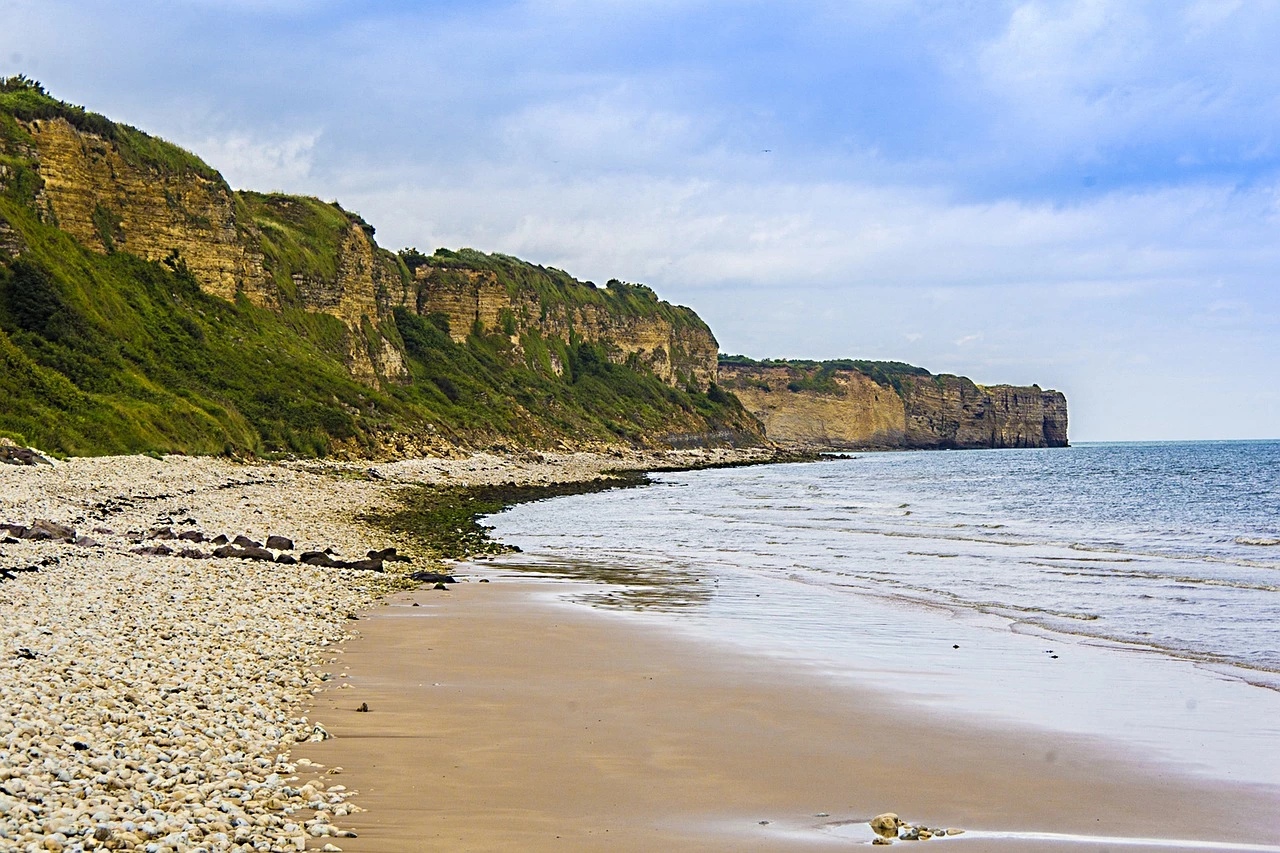
Guided day at the American D-Day sites from Bayeux
A day by minibus with a driver-guide from Bayeux: Sainte-Mère-Église and its paratrooper caught on the church tower, Utah Beach, Pointe du Hoc, Omaha Beach and then the American Cemetery at Colleville-sur-Mer. The highlight: reaching the bluffs above Omaha Beach.
Allow €190 per person on GetYourGuide, with free cancellation up to 24 hours before; the tour is in English. While Pointe du Hoc is under restoration, that stop may be replaced by the Longues-sur-Mer battery.
- 8 hrs
- €190 per person (GetYourGuide price 2026)
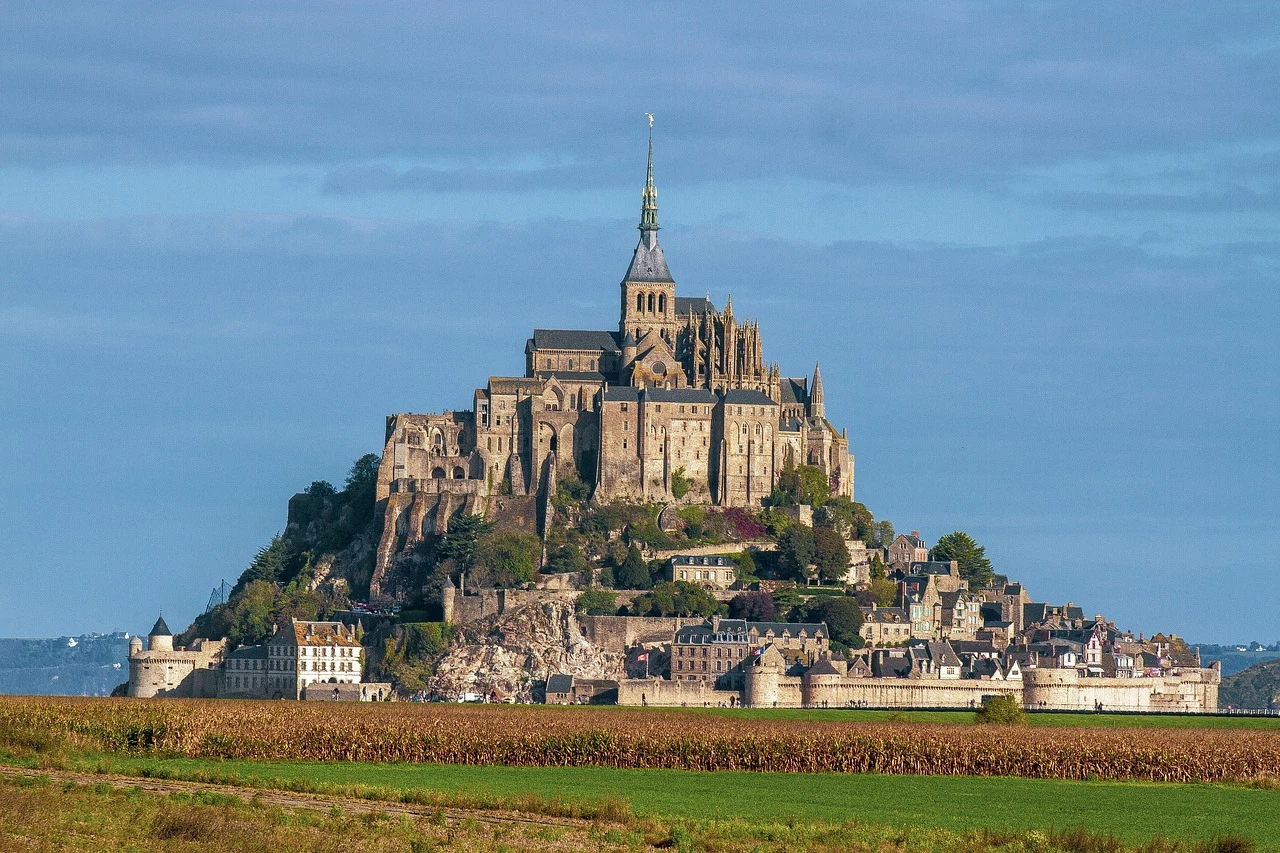
Guided walk across the bay of Mont-Saint-Michel
A loop of about 7 km, barefoot, from the Mont to the rock of Tombelaine, a granite islet that is now a bird reserve. You wade through channels up to your thighs and the guide shows how to get out of quicksand. The highlight: turning back to look at the Mont from the middle of the bay.
Allow €25 per person on GetYourGuide, with free cancellation; the walk is guided in French. Never venture into the bay without a guide: the tide comes in very fast.
- 3 hrs
- €25 per person (GetYourGuide price 2026)
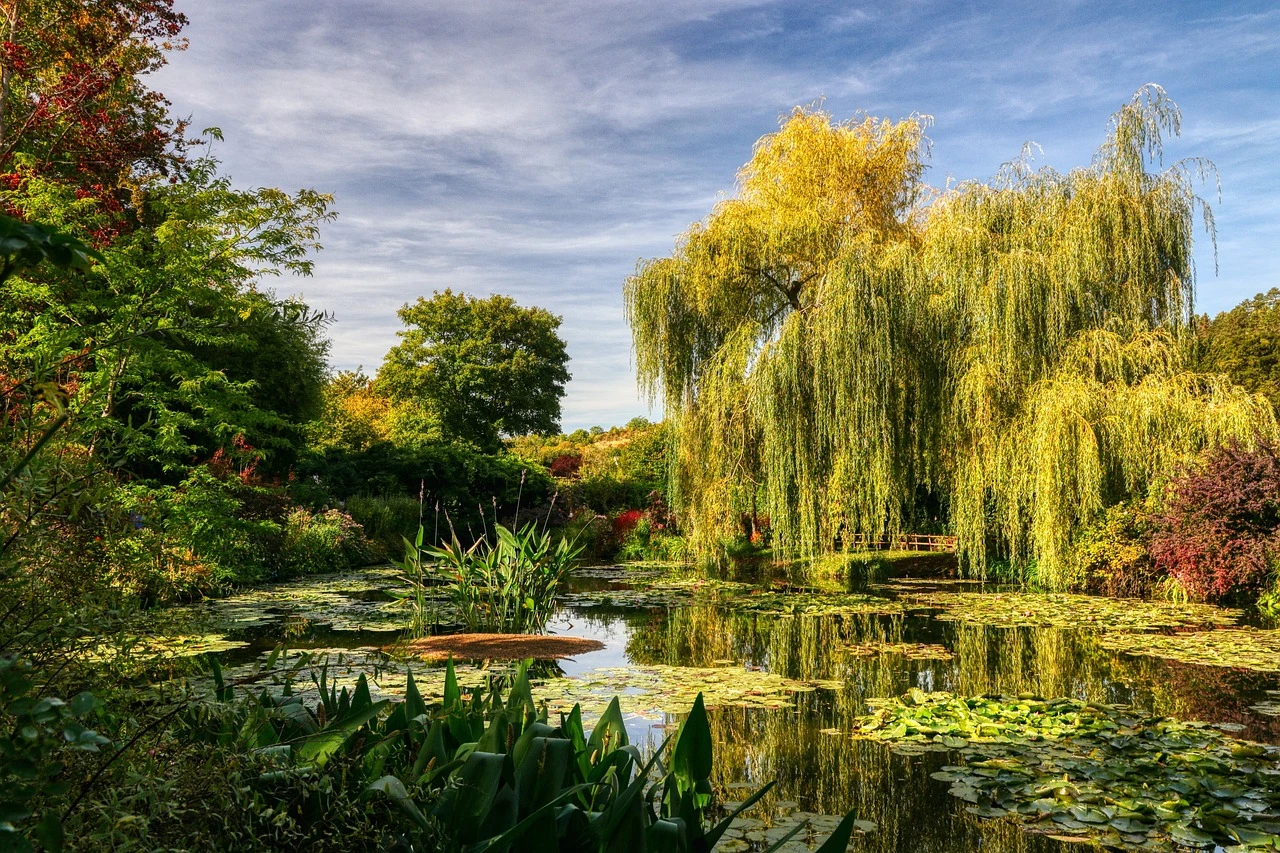
Guided tour of Monet's house and gardens
Two hours in a small group with a guide: first the water garden, its water lilies and the Japanese bridge, then the Clos Normand and the painter's house, with the seasonal flowers and how Monet designed his gardens to paint them. The highlight: the Japanese bridge, with the guide's account of the Water Lilies series.
Allow €59 per person on GetYourGuide, entry tickets included, with free cancellation; the tour is in English. Only from 1 April to 1 November, when the gardens are open.
- 2 hrs
- €59 per person, entry included (GetYourGuide price 2026)
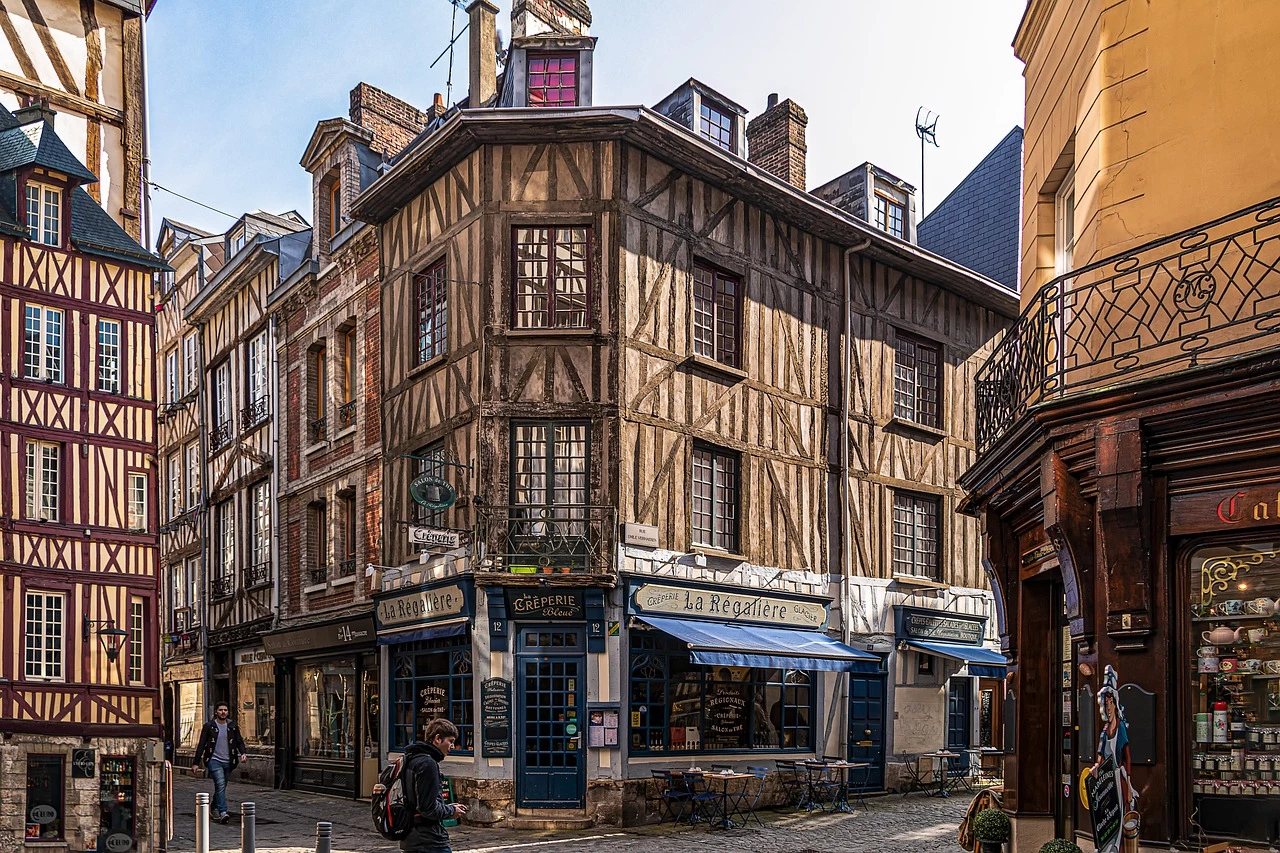
Guided historical tour of old Rouen
Two and a half hours on foot in a small group through central Rouen, from its Roman origins to the dukes of Normandy: the Joan of Arc tower, a remnant of the castle where she was imprisoned, the interior of Notre-Dame cathedral, the Aître Saint-Maclou and the half-timbered streets. The highlight: entering the cathedral after hearing the story of the façade Monet painted.
Allow €28 per person on GetYourGuide, with free cancellation; the tour runs in French or English.
- 2.5 hrs
- €28 per person (GetYourGuide price 2026)
Getting there
From Paris: by car on the A13 (~2-3h depending on destination) or by train from Paris Saint-Lazare (Rouen ~1h15, Caen ~2h, Le Havre ~2h).
By car: the A13 motorway links Paris to Rouen (~2h) and Caen (~2h30-3h). It is the handiest option, as the major sites are scattered across the region.
By train: from Paris Saint-Lazare, allow about 1h15 to Rouen, 2h to Caen and 2h to Le Havre. Handy for reaching a gateway city, but a rental car is strongly advised on the ground for the D-Day beaches, the châteaux and Mont-Saint-Michel.
Getting around
A car is essential to link such spread-out sites; the towns (Rouen, Caen, Honfleur) are walkable, and trains connect the main cities.
Normandy is large and its highlights scattered: between Mont-Saint-Michel (southwest), the D-Day beaches (north-centre), Étretat (northeast) and Giverny (southeast), a car is all but essential for a touring trip. The A13 motorway and coastal roads make connections easy.
The town centres of Rouen, Caen and Honfleur are best on foot. SNCF/TER trains link the main cities (Rouen, Caen, Le Havre, Bayeux), but public-transport access to rural sites (châteaux, beaches) is limited. For Mont-Saint-Michel, park at the mainland car park then take the free shuttle.
What to do
Mont-Saint-Michel and its bay, the D-Day beaches from Bayeux, the cliffs of Étretat and Honfleur, Giverny from April to November, then Rouen and Caen for the heritage of the dukes of Normandy.
A first trip is built around three areas. In the west, Mont-Saint-Michel, its abbey and a guided walk across the bay at low tide. In the centre, the D-Day beaches, from Sainte-Mère-Église to Arromanches, with Bayeux and Caen as bases, plus William the Conqueror's abbeys and castle. In the east, the coast at Étretat and the harbour of Honfleur, then the Seine valley with Rouen and, from April to November, Monet's gardens at Giverny.
The Bayeux Tapestry is on show in London until July 2027; Pointe du Hoc stays open during its restoration, by the west path. For the bay of the Somme further north, see our Bay of the Somme guide.
Food
PDO cheeses (Camembert, Livarot, Pont-l'Évêque, Neufchâtel), cider, pommeau and calvados, mussels and seafood from the coast, teurgoule and apple tart.
Normandy is a land of apples and milk. Four of its cheeses have protected designation of origin: Camembert de Normandie, Livarot, Pont-l'Évêque and Neufchâtel. Apples give cider, pommeau and calvados, a cider brandy aged in casks, mostly made in the Pays d'Auge, between Lisieux and Pont-l'Évêque.
On the coast you eat mussels, scallops in season and oysters from Isigny or the west coast of the Cotentin; near Mont-Saint-Michel, salt-meadow lamb grazes on the salt marshes of the bay. For dessert, teurgoule, cinnamon rice pudding slow-baked in the oven, and Normandy apple tart.
Climate & seasons
When to go to France?
Monthly averages over the past 5 years (Open-Meteo).
Best months
- April
- August
- September
| Jan | Feb | Mar | Apr | May | Jun | Jul | Aug | Sep | Oct | Nov | Dec | |
|---|---|---|---|---|---|---|---|---|---|---|---|---|
| Our take | ||||||||||||
| Weather | ||||||||||||
| High | 8° | 10° | 13° | 15° | 18° | 22° | 23° | 23° | 21° | 17° | 12° | 9° |
| Rain (mm) | 107 | 48 | 66 | 54 | 89 | 81 | 82 | 59 | 79 | 85 | 94 | 90 |
| City sightseeing | City sightseeing February | City sightseeing March | City sightseeing April | City sightseeing May | City sightseeing June | City sightseeing July | City sightseeing August | City sightseeing September | City sightseeing October | City sightseeing November |
What to do by season (autumn)
-
City sightseeing
Pedestrian-friendly most of the year.
When to go
From late spring to early autumn for good weather and full site access; Monet's gardens at Giverny only open from April to November, and the D-Day commemorations take place in early June.
May to September: the best period, mild and bright, ideal for the coast, Étretat and the gardens. April to early November: the only window to visit Monet's gardens at Giverny, closed in winter. Early June: the D-Day commemorations (around 6 June) enliven the beaches — expect crowds and book accommodation early.
The Norman climate is changeable and often damp: bring a windbreaker and rain protection in any season. Autumn offers fine light and fewer people; winter is quiet but several sites (Giverny, some châteaux) close.
Budget
Many highlights are free (beaches, American Cemetery, Étretat cliffs, Caen's churches); allow €13-16 for the Mont-Saint-Michel abbey and €13 for Giverny in 2026.
Several highlights cost nothing: the D-Day beaches, the American Cemetery at Colleville, the Étretat cliff paths, Honfleur's Vieux Bassin, Caen's abbey churches and castle ramparts, and the permanent collection of the Rouen Fine Arts Museum. The main paid entries in 2026: the Mont-Saint-Michel abbey, €16 from April to September and €13 from October to March (free for under-18s), and Monet's house and gardens at Giverny, €13.
The biggest item is the hire car and fuel, as the sites are spread out. For guided tours, allow about €190 for a guided day on the beaches from Bayeux, €25 for the walk across the Mont's bay and €28 for a guided tour of Rouen (GetYourGuide prices 2026).
Where to stay
Bayeux or Caen for the D-Day beaches, Honfleur and the Côte Fleurie for the sea, Rouen for the art city, and near Mont-Saint-Michel to visit it early.
The choice depends on your route. Bayeux and Caen are the best bases for the D-Day beaches and the centre of the region. Honfleur and the Côte Fleurie (Deauville, Trouville) appeal for the seaside and resort charm.
Rouen, reachable by train, is ideal for a cultural stop and the Seine valley towards Giverny. For Mont-Saint-Michel, sleeping nearby (Beauvoir, Pontorson, La Caserne) lets you arrive at opening, ahead of the coaches. Normandy also has many guesthouses and farm inns ideal for a road trip.
Safety
A safe region; the real risks are natural: the incoming tide and quicksand in the bay of Mont-Saint-Michel, rockfalls on the Étretat cliffs. Emergencies: 112.
Normandy poses no particular security problem; the precautions are mostly about nature. In the bay of Mont-Saint-Michel the tide rises fast and quicksand forms near the channels: only go out with an approved guide. At Étretat and along the Alabaster Coast, the chalk cliffs collapse: stay on the paths, away from the edge, and do not settle at the foot of the cliffs.
On the D-Day beaches, dress and behave respectfully in the military cemeteries. Emergency numbers: 112 (European), 15 (medical), 17 (police), 18 (fire), 196 (sea rescue).
Formalities
Schengen area: ID card or passport for EU citizens, visa rules by nationality for others, EES registration at external borders since October 2025; currency is the euro.
Normandy is in France, within the Schengen area. EU, EEA and Swiss nationals enter with a valid identity card or passport. For other nationalities, visa rules depend on the passport: check them before leaving. Since 12 October 2025, the European Entry/Exit System (EES) registers non-European travellers at external borders (photo and fingerprints); the ETIAS travel authorisation is not yet in service and no launch date has been set (September 2026).
The currency is the euro and cards are accepted almost everywhere. Two habits: check the tide times before Mont-Saint-Michel or a walk below the cliffs, and check the seasonal opening of the Giverny gardens (1 April-1 November) and the châteaux.
FAQ
Allow 4 to 6 days by car. The Bayeux Tapestry is in London until July 2027, the Giverny gardens open from April to November (€13) and the Mont abbey costs €13 to €16 depending on the season.
How many days do you need in Normandy?
Allow 4 to 6 days on a road trip to link Mont-Saint-Michel and its bay, the D-Day beaches, Bayeux, the Étretat cliffs, Honfleur, Rouen and Monet's gardens at Giverny without rushing. The region is large and its highlights widely scattered, with the Mont in the south-west, the beaches in the centre-north, Étretat in the north-east and Giverny in the south-east, so a car is close to essential. Bayeux and Caen make the best bases for the central stretch, Rouen for the Seine valley.
What is the best time to visit?
May to September for the weather, a mild, bright stretch that suits the coast, Étretat and the gardens. If Giverny is on your list, the window runs only from April to early November, as the gardens close for winter. In early June, the D-Day commemorations around the 6th bring the beaches to life: book early, as crowds are heavy. Autumn offers beautiful light and fewer people. Normandy's weather stays changeable and often damp, so pack a windproof jacket and rain protection in any season.
How do you get to Normandy from Paris?
Two options. By car, the A13 motorway links Paris to Rouen in about 2 hours and to Caen in 2.5 to 3 hours: the most practical choice, since the major sites are spread across the region. By train, from Paris Saint-Lazare, allow roughly 1h15 to Rouen, 2 hours to Caen and 2 hours to Le Havre. The train drops you in a gateway city, but a rental car is still strongly advised on the ground for the D-Day beaches, the châteaux and Mont-Saint-Michel.
Do you need a car?
Yes, strongly advised. Between Mont-Saint-Michel in the south-west, the D-Day beaches in the centre-north, Étretat in the north-east and Giverny in the south-east, the highlights are widely scattered and public transport to rural sites stays limited. The A13 motorway and the coastal roads make the links easy. SNCF and TER services connect the main cities well, Rouen, Caen, Le Havre and Bayeux, whose centres are walkable, but they will not carry a touring itinerary between châteaux and beaches.
How do you reach Mont-Saint-Michel?
Cars no longer use the causeway. You park at the mainland car park, then reach the Mont on the free 'Le Passeur' shuttle, about 12 minutes, or on foot in roughly 40 minutes. To beat the coach parties, stay nearby at Beauvoir, Pontorson or La Caserne and arrive at opening time. Always check tide times before setting out, a habit that applies equally to walking below the Étretat cliffs. The Mont and its bay are listed as UNESCO world heritage.
Can you see the Bayeux Tapestry?
Not in Normandy for now. The Bayeux Tapestry Museum is closed for renovation and the work is on loan to the British Museum in London, where it is on show from 10 September 2026 to 11 July 2027; it is due back in Bayeux by 1 September 2027 at the latest, for the museum's reopening. Meanwhile you can browse it online, scene by scene, on the museum's website. Bayeux remains a good base for the D-Day beaches, with its cathedral and old town.
Do you need to book for Monet's gardens at Giverny?
Yes, booking online is advisable to skip the queue, especially in spring when the gardens are in bloom. The key point to remember: Monet's gardens open only from April to early November and stay closed in winter, which shapes when to travel if Giverny is on your list. The site lies in the south-east of the region, in the Seine valley, so it pairs well with a stop in Rouen, reachable by train from Paris Saint-Lazare in about 1h15.
Sources
The figures in this guide come from the sources below, checked on the publication date.
Leave a comment
Share your thoughts or travel experience. Your email will not be published.