

Contents 24
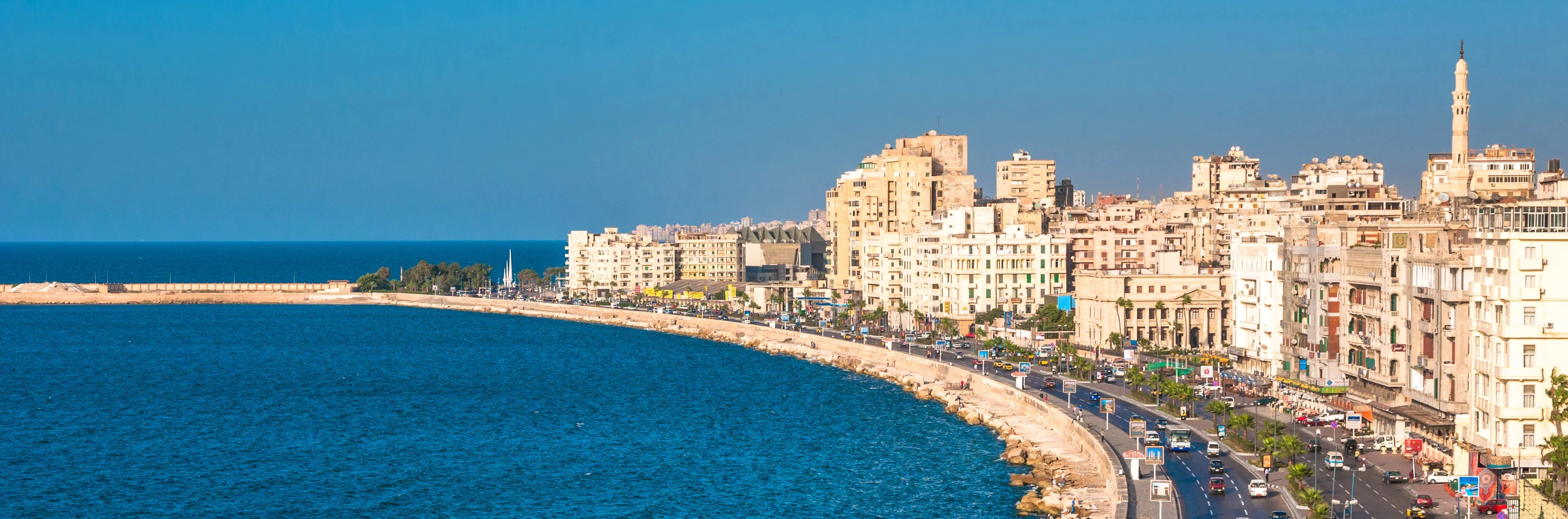
Oran, Algeria's second city, is best discovered from Santa Cruz fort overlooking its bay: below lie the old town of Sidi El Houari, the Bey's palace and the Pasha mosque, then the colonial centre around Place du 1er Novembre. The birthplace of raï, it also comes alive in the evening on the corniche and in summer on the western beaches.
Overview
Oran is Algeria's second city, a Mediterranean port in the north-west known for its Spanish, Ottoman and colonial heritage and as the birthplace of raï.
Oran is Algeria's second city (over 600,000 people in the municipality, about 1.3 million in the metropolitan area) and the great port of the north-west. Its history is written in stone: the Spanish fort of Santa Cruz on Mount Murdjadjo, the Bey's palace and the Pasha mosque from the Ottoman era, the buildings and theatre of the colonial city.
The city is the birthplace of raï, a music born in Oran in the 1920s and inscribed on UNESCO's intangible heritage list in 2022. You wander through the old town of Sidi El Houari, along the seafront and the corniche, between cafés, markets and the western beaches.
10 places to take with you
In the guide's order, ready for Google Maps or your GPS.
Book the activities from this guide
Our picks for Oran, well rated and free to cancel.
-
Book this activity
Guided tour of Oran: heritage and way of life
from €39 per person (GetYourGuide price 2026)
-
Book this activity
Day trip to Tlemcen
from €60 per person (GetYourGuide price 2026, private group)
Affiliate links: Travel Advice earns a commission if you book, at no extra cost to you. Learn more

Santa Cruz Fort
Clinging to the top of Mount Murdjadjo, Santa Cruz fort overlooks the whole bay: it is the silhouette you see from almost every street in Oran.
The Spanish built it between 1577 and 1604 to hold the city and its harbour. Its thick walls and bastions follow the rocky ridge; right next to it stands the Santa Cruz chapel, recognisable by its statue of the Virgin.
You come up for the view: the port, the old town of Sidi El Houari, the seafront and, on a clear day, the coast as far as Mers El Kébir.

Sidi El Houari, the old town
Sloping lanes, Spanish and Ottoman façades, views over the port: Sidi El Houari is "old Oran", where the city began.
The district, once called the Casbah, bears the name of the marabout Sidi El Houari (1350-1439), who is buried here. The old casbah was destroyed by the earthquake of October 1790; what remains are traces of the Spanish, Ottoman and French periods, including the Bey's palace and the Pasha mosque.
You explore on foot, from the saint's mausoleum to the ramparts, watching the lower town merge with the port.

Abdelkader Alloula Regional Theatre
On Place du 1er Novembre, the heart of the city, Oran's regional theatre shows off its early 20th-century façade opposite the tram stop.
Built around 1905, it bears the name of playwright Abdelkader Alloula, a leading figure of Algerian theatre. It hosts plays, concerts and festivals for much of the year.
You stop for the façade and the square, one of the liveliest in Oran, and catch a performance if the programme allows.

Ahmed Zabana National Museum
Oran's main museum brings prehistory, archaeology, fine arts and ethnography of western Algeria under one roof.
It is named after Ahmed Zabana, the first prisoner executed during the war of independence, and stands at 19 Boulevard Zabana, in the new town. Its rooms range from the region's prehistoric remains to Algerian and European paintings and traditional costumes and everyday objects.
Allow an hour or two, ideal when the heat makes walking hard.

Former Sacred Heart Cathedral
With its two towers and monumental façade, the former Sacred Heart cathedral is one of the great buildings of the colonial city, right in central Oran.
Completed in 1913 in a Romano-Byzantine style, it stopped being a place of worship after independence and has housed the regional library since 1984.
You come to see the façade and, during library opening hours, the volume of the nave turned into a reading room.

Bey's Palace (Château-Neuf)
Behind the walls of the old Rozalcazar fortress, the Bey's palace tells the story of the last Ottoman capital of western Algeria.
The fortress, successively called Bordj el-Ahmar, Rozalcazar and then Château-Neuf, goes back to a 14th-century fort taken over by the Spanish. After the 1790 earthquake it became, from 1792, the residence of Bey Mohamed el-Kébir. Restoration work, stepped up in 2025, includes the "Red Keep".
You walk round the outside and enjoy the view over the port.

Pasha Mosque
At the foot of the old town, the Pasha mosque is one of the few major witnesses of Ottoman Oran still standing.
It was completed in 1796 under Bey Mohamed el-Kébir, a few years after the Spanish left. A restoration programme for the mosque and the Bey's palace has been announced.
You view it from outside while walking through the old town; it is a place of worship, not a museum.

Oran Museum of Modern Art (MAMO)
Behind a Haussmann-style façade on Rue Larbi Ben M'hidi, MAMO fills a former department store: a rare place in Algeria devoted to modern art.
The Galeries de France building (1922), renamed Galeries algériennes after independence, was rehabilitated from 2014 and the museum opened on 21 March 2017. Seven levels are arranged around an atrium, with three floors of temporary exhibitions and a terrace.
You discover Algerian modern art and international contemporary art shows.

Madagh Beach
About forty kilometres west of Oran as the crow flies, beyond Les Andalouses, Madagh is the beach people pick to escape the big city beaches.
It splits into two coves: Madagh 1, more developed and busier, and Madagh 2, wilder and backed by wooded hills. Offshore you can see the Habibas islands.
You come to swim in clear water, picnic in the shade of the pines and spend the day far from the corniche.

Canastel Corniche
East of the centre, on the heights of the Canastel district, the corniche is the promenade where Oran's residents come to take the air facing the sea.
The seafront overlooks the Bay of Oran, between green spaces, cafés and restaurants, and comes alive mostly in the late afternoon and on summer evenings.
You walk at sunset, sit down for a tea or grilled fish, and watch the city light up across the bay.
Guided tour of Oran: heritage and way of life
A day with a guide from Oran: Rozalcazar fort, the Bey's palace, the Pasha mosque and a walk through Sidi El Houari, then a drive up to Santa Cruz fort and chapel for the view. The highlight: the whole bay seen from Mount Murdjadjo after the old town.
Tour in French, English or Arabic, pick-up depending on the option and private groups available. From €39 per person on GetYourGuide, free cancellation up to 24 hours before.
- 7 to 8 hrs
- from €39 per person (GetYourGuide price 2026)
Day trip to Tlemcen
Pick-up from your Oran hotel around 8 am, about 2 hours' drive, then Tlemcen with a guide: the ruins of Mansourah, the Mechouar palace and the Sidi Boumediène complex, lunch in a local restaurant, and back via Santa Cruz at the end of the day. The highlight: Sidi Boumediène, a landmark of Hispano-Moorish art.
Private group, French-speaking guide, flexible itinerary. From €60 per person on GetYourGuide, free cancellation up to 24 hours before; lunch is extra.
- 1 day
- from €60 per person (GetYourGuide price 2026, private group)
Beach day on the western corniche
A day heading west along the corniche: Aïn El Turk and its town beaches, Les Andalouses and its wide bay, then wilder Madagh, with its two coves facing the Habibas islands. The highlight: swimming at Madagh 2, backed by wooded hills.
Leave early in summer and go on a weekday, as roads and car parks fill up at weekends. Hire a taxi for the day or a car, and bring water and a picnic for the coves with fewer facilities.
- 1 day
- free (taxi or car needed)
Getting there
Oran is served by Ahmed Ben Bella airport (IATA ORN), about 8.7 km south of the city, with flights to Algiers and several European cities.
The main gateway is Ahmed Ben Bella airport (formerly Es-Sénia, IATA code ORN), about 8.7 km south of the centre, with flights to Algiers and several European cities, including in France. From the airport, take a taxi and agree the fare before setting off.
From Algiers, flying is the option France Diplomatie recommends for long distances: national roads are well maintained but driving on them is dangerous. The train also links the two cities, with a station in the city centre.
Getting around
The centre is walkable, the tram (18.7 km, 32 stops) links Sidi Maarouf with the centre and Es-Sénia, and taxis cover Santa Cruz and the corniche.
The city centre and Sidi El Houari are best explored on foot, from Place du 1er Novembre to the seafront. To cross the city, the tram, opened in 2013, runs one 18.7 km line with 32 stops: from Sidi Maarouf bus station in the east to Place du 1er Novembre, then south to Es-Sénia.
To go up to Santa Cruz or reach Canastel and the western beaches (Aïn El Turk, Les Andalouses, Madagh), take a taxi and agree the fare before setting off, or hire a car, keeping in mind France Diplomatie's warning about driving.
What to do
Climb to Santa Cruz fort, explore Sidi El Houari, the Bey's palace and the Pasha mosque, visit the Zabana museum and MAMO, then end on the corniche.
Start with Santa Cruz fort and its chapel on Mount Murdjadjo to take in the bay at a glance. Head down into the old town of Sidi El Houari, with the Bey's palace (under restoration) and the Pasha mosque, then on to the colonial centre: Place du 1er Novembre, the Abdelkader Alloula theatre, and the former cathedral turned library.
For museums, the Ahmed Zabana National Museum covers prehistory, archaeology and fine arts, and MAMO modern art. In the evening, stroll along the Canastel corniche; in summer, head for the western beaches as far as Madagh. For a day out of town, Tlemcen can be visited on a guided trip.
Itineraries
Day 1: Santa Cruz, Sidi El Houari and the colonial centre; day 2: museums in the morning, the Canastel corniche or the western beaches in the afternoon.
Day 1: go up to Santa Cruz fort early in the morning, then down to Sidi El Houari (Bey's palace, Pasha mosque, old-town lanes). In the afternoon, Place du 1er Novembre, the theatre and the former cathedral, and sunset on the seafront.
Day 2: Ahmed Zabana museum and MAMO in the morning, during the hot hours. In the afternoon, the Canastel corniche or, in summer, a beach at Aïn El Turk, Les Andalouses or Madagh. With a third day, book a guided trip to Tlemcen.
Climate & seasons
When to go to Algeria?
Monthly averages over the past 5 years (Open-Meteo).
Best months
- January
- February
- March
- April
- May
- June
- July
- August
- September
- October
- November
- December
| Jan | Feb | Mar | Apr | May | Jun | Jul | Aug | Sep | Oct | Nov | Dec | |
|---|---|---|---|---|---|---|---|---|---|---|---|---|
| Our take | ||||||||||||
| Weather | ||||||||||||
| High | 17° | 18° | 20° | 22° | 25° | 29° | 32° | 32° | 29° | 27° | 21° | 18° |
| Rain (mm) | 37 | 31 | 51 | 31 | 31 | 11 | 1 | 2 | 23 | 16 | 30 | 32 |
| Beach | Beach May | Beach June | Beach July | Beach August | Beach September | Beach October | ||||||
| City sightseeing | City sightseeing January | City sightseeing February | City sightseeing March | City sightseeing April | City sightseeing May | City sightseeing June | City sightseeing September | City sightseeing October | City sightseeing November | City sightseeing December |
What to do by season (autumn)
-
Beach
Warm air and water, little rain.
-
City sightseeing
Pedestrian-friendly most of the year.
When to go
April-May and October are the best months (22 to 26°C by day); July-August, at 31-32°C and almost dry, are beach season.
Oran has a dry Mediterranean climate: about 400 mm of rain a year, mostly in autumn and winter. The most pleasant months for walking around the city are April-May (22°C highs in April) and October (26°C).
July and August are hot (31 to 32°C highs, 21-22°C at night) and almost dry: beach season on the western corniche, packed with families. In January highs hover around 16°C: ideal for museums and the old town, with an umbrella.
Where to stay
Stay in the city centre to do everything on foot and by tram, or on the western corniche (Aïn El Turk, Les Andalouses) for a beach stay.
The city centre, around Place du 1er Novembre and the seafront, is the most practical base for a first visit: theatre, museums and the old town on foot, the tram on your doorstep.
For a beach stay, the western corniche (Aïn El Turk, Les Andalouses) lines up hotels and holiday flats near the beaches, reached by taxi or car from the centre. In July-August book early: it is peak season for Algerian holidays.
Safety
France Diplomatie rates Oran, like Algiers, at normal vigilance; some inland wilayas and the border areas are advised against.
According to France Diplomatie (updated 15/09/2026), Algiers and Oran are in the normal-vigilance zone (green on the map): security is strong and the level of safety satisfactory, provided basic precautions are respected. Inland wilayas such as Aïn Defla, Batna or Sétif are advised against except for essential travel, and border areas are formally advised against.
On the ground, do not photograph official buildings or embassies; drones, binoculars and GPS devices may only enter Algeria with very restrictive permits. On the road, watch out for the driving of shared taxis, coaches and lorries.
Formalities
French citizens need a visa, applied for in advance at the Algerian consulate where they live; the currency is the Algerian dinar (DZD), which is not convertible.
Visa: according to France Diplomatie, entry into Algeria is subject to a visa requirement, applied for in advance at the Algerian consulate where you live (18 consulates in France). Visas on arrival exist only for organised group tourism in the Sahara, not for Oran. The consulate sets the list of documents; plan on a passport valid for at least 6 months, the usual requirement. Other nationalities should check their own rules.
Money: the Algerian dinar (DZD) is not convertible. Only residents may bring dinars in or out, up to DZD 10,000. Foreign currency must be declared on arrival from €1,000. Keep the declaration, it is requested on departure: it lets you take the declared amounts back out; sums withdrawn from accounts in Algeria are capped at €7,500 per trip. The economy runs mostly on cash.
Tips
Apply for your visa early, declare your currency on arrival, travel with cash, agree taxi fares before getting in and leave the drone at home.
Apply for the visa several weeks before departure and keep the currency declaration filled in on arrival (mandatory from €1,000) at hand: it is requested on departure. On the ground, carry cash: cards are rarely accepted.
In taxis, agree the fare before getting in. Leave drones and binoculars at home, they require a permit. For Sidi El Houari and the Bey's palace, under restoration, a local guide saves time and opens doors.
FAQ
Visa, money, safety, access, the tram and the best season: answers to the most common questions about a trip to Oran.
Do you need a visa to visit Oran?
Yes, French citizens and most travellers do. Apply in advance at the Algerian consulate where you live; there is no tourist visa on arrival for Oran (only organised group tourism in the Sahara qualifies). Plan on a passport valid for at least 6 months.
What currency is used?
The Algerian dinar (DZD), which is not convertible: non-residents may not bring it in. Declare foreign currency on arrival from €1,000 and carry cash, as cards are rarely accepted.
Is Oran safe?
France Diplomatie rates Algiers and Oran at normal vigilance, the lowest level. Two habits: do not photograph official buildings, and do not bring a drone or binoculars without a permit.
How do you get to Oran?
Through Ahmed Ben Bella airport (ORN), about 8.7 km south of the centre. From Algiers, flying is safer than the road; the train is another option.
How do you get around Oran?
On foot in the centre and the old town, by tram (one 18.7 km line with 32 stops between Sidi Maarouf, Place du 1er Novembre and Es-Sénia) and by taxi for Santa Cruz and the corniche.
What languages are spoken?
Arabic and Tamazight are official; Algerian Arabic (Derja) is the everyday language and French is widely spoken.
What is Oran famous for?
For raï, a music born in Oran in the 1920s and inscribed on UNESCO's intangible heritage list in 2022, and for Santa Cruz fort overlooking the bay.
When is the best time to visit?
April-May and October: around 22 to 26°C by day. July-August climb to 31-32°C, for the beach; winter stays mild (16°C in January) but it is the rainy season.
Sources
The figures in this guide come from the sources below, checked on the publication date.
Leave a comment
Share your thoughts or travel experience. Your email will not be published.