

Contents 25
Johannesburg was born of the 1886 gold rush and is still South Africa's largest city. People come for the history of apartheid, told at the Apartheid Museum, in Soweto and at Constitution Hill, and as a stop before a safari. This guide gathers ten visits, day trips to the Cradle of Humankind and Pilanesberg, and the safety rules to know according to France Diplomatie: areas to avoid, guided visits in Soweto, getting around by ride-hailing app or Gautrain.
Overview
South Africa's largest city, born of the 1886 gold rush, Johannesburg is visited for the history of apartheid and as a gateway to safaris.
Johannesburg, "Joburg" or "Jozi", was born of the 1886 gold rush on the Witwatersrand. It is South Africa's largest city and its economic heart, at about 1,750 m above sea level, but not a capital: the government sits in Pretoria, some fifty kilometres north.
People mostly come to understand apartheid, at the Apartheid Museum, in Soweto and at Constitution Hill, and as a stop before a safari. Two to three days cover the essentials; safety means choosing your areas carefully and getting around by vehicle.
10 places to take with you
In the guide's order, ready for Google Maps or your GPS.
Book the activities from this guide
Our picks for Johannesburg, well rated and free to cancel.
-
Book this activity
Soweto and Apartheid Museum day
About €102 per person (GetYourGuide price 2026)
-
Book this activity
Soweto by bike with a local guide
About €46 per person, lunch included (GetYourGuide price 2026)
-
Book this activity
Cradle of Humankind: Sterkfontein and Maropeng
About €115 per person (GetYourGuide price 2026)
Affiliate links: Travel Advice earns a commission if you book, at no extra cost to you. Learn more

The Apartheid Museum
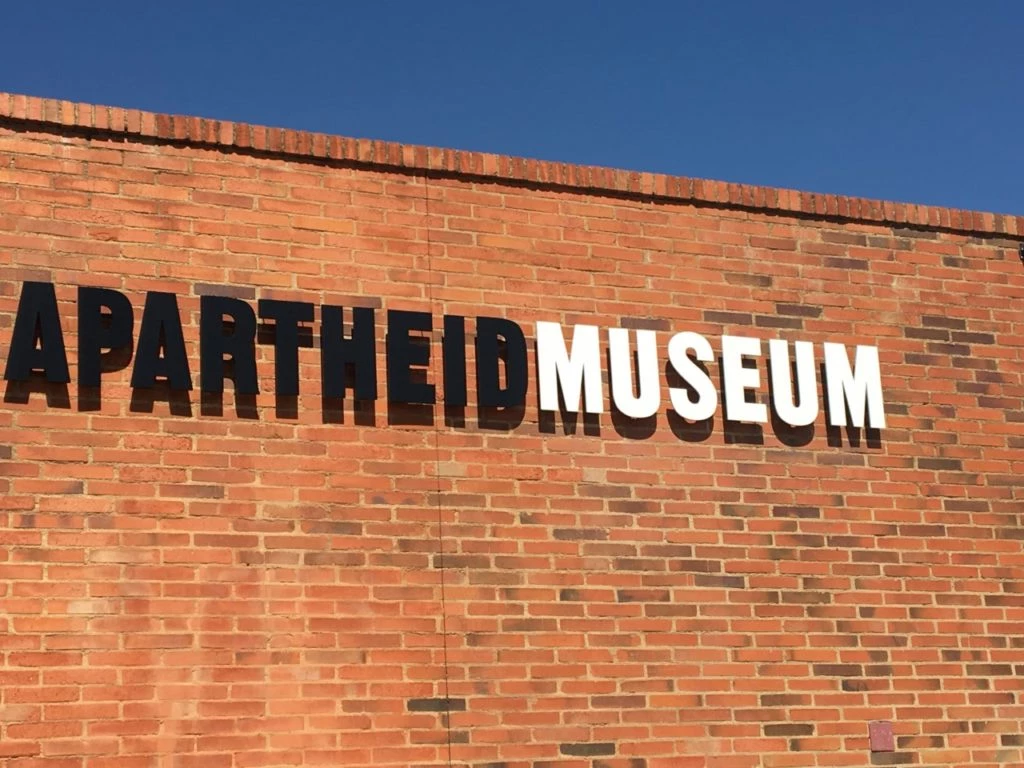
Opened in 2001 in Ormonde, south of the centre and next to Gold Reef City, the Apartheid Museum traces the system of racial segregation in force from 1948 to 1994: the laws, the resistance, the repression, then the transition to democracy. At the entrance, your ticket randomly assigns you a "whites" or "non-whites" door, as under the regime.
Photos, films and archives also follow individual lives. The museum considers its often harsh content unsuitable for children under 11.

Soweto
Soweto, short for "South Western Townships", is the large township south-west of Johannesburg. The students' uprising of 16 June 1976 against compulsory teaching in Afrikaans began here; the Hector Pieterson Memorial and Museum keeps its memory.
On Vilakazi Street, in Orlando West, you can visit the house where Nelson Mandela lived, now a museum, and pass Desmond Tutu's home. Local restaurants and shisa nyama grills liven up the street at weekends.

Constitution Hill
On Braamfontein hill, the Old Fort, the Women's Jail and the "Number Four" block held ordinary criminals and political prisoners for nearly a century, including Gandhi in 1908 and Nelson Mandela in 1962. Conditions of detention depended on skin colour.
Since 2004, South Africa's Constitutional Court has sat on the site, in a building partly made from the bricks of the old awaiting-trial prison.

Cradle of Humankind
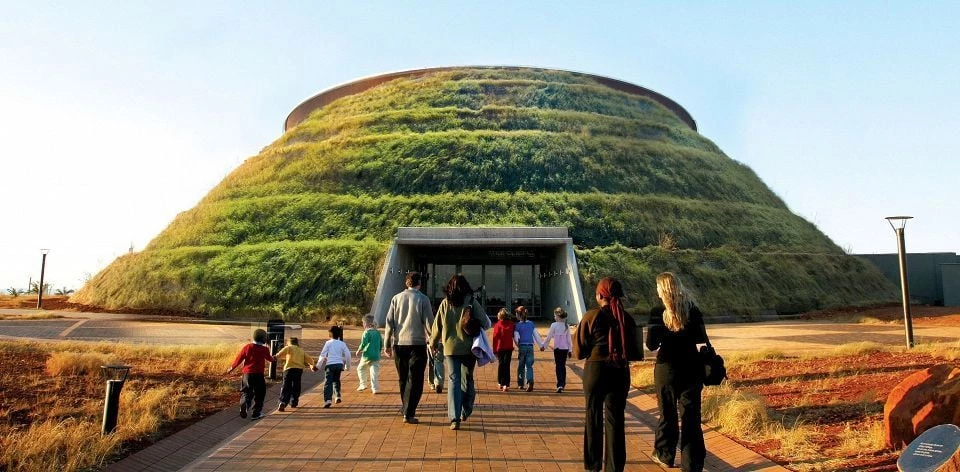
About fifty kilometres north-west of Johannesburg, the Cradle of Humankind has been a UNESCO World Heritage Site since 1999 for its hominid fossil sites. The Sterkfontein Caves yielded the "Mrs Ples" skull (Australopithecus africanus) in 1947, then the "Little Foot" skeleton.
The Maropeng visitor centre presents human evolution through interactive exhibitions. In the same area, the Rising Star cave yielded the Homo naledi fossils in 2013.

Maboneng Precinct
East of the city centre, Maboneng ("place of light" in Sotho) is a former warehouse district redeveloped from 2009 around Arts on Main: artists' studios, galleries, cafés and murals fill the industrial buildings.
The precinct remains an island in a run-down area, and France Diplomatie reports that thefts, sometimes violent, are frequent there.

Lion & Safari Park
Based in Broederstroom since 2016, about an hour north-west of Johannesburg, the Lion & Safari Park is a fenced wildlife park: lions, cheetahs and antelopes are seen from your own car (self-drive) or on a guided safari.
It is not a nature reserve: to see free-roaming wildlife, you need to go on to Pilanesberg, about two hours' drive away.

Montecasino
In Fourways, north of the city, Montecasino is a leisure complex built like a Tuscan village: casino, theatres, cinemas, restaurants and hotels. People mostly come in the evening, for a show or dinner, in an enclosed, guarded complex.

Rosebank markets
In Rosebank, a shopping district served by the Gautrain, two markets complement each other: the African Craft Market, beneath the mall, for crafts from across the continent (masks, beadwork, textiles), and the Sunday market on the Rosebank Mall rooftop, with designers' stalls, second-hand goods and street food.

Johannesburg Botanical Garden
In Emmarentia, the Johannesburg Botanical Garden borders Emmarentia Dam. A rose garden, herb garden, arboretum and wide lawns make it a favourite spot for walks and picnics with locals at weekends.

Johannesburg Zoo
Opened in 1904 on part of Hermann Eckstein's former estate, between Saxonwold and Parkview, Johannesburg Zoo is run by Johannesburg City Parks and Zoo. Large African mammals, primates and birds occupy a vast, wooded site.
The zoo also runs breeding and conservation education programmes.
Soweto and Apartheid Museum day
A guided day with hotel pick-up: Constitution Hill (1.5 hrs), the city centre past Nelson Mandela Bridge, Chancellor House and Gandhi Square, then Soweto with the Mandela House and the Hector Pieterson Memorial, and two hours at the Apartheid Museum. The highlight: going from the Constitution Hill prison to Soweto, which gives the thread of the story.
Allow about €102 per person on GetYourGuide, with free cancellation up to 24 hours before. Guide in French or English; lunch in a local restaurant is optional and paid extra.
- 8 hrs
- About €102 per person (GetYourGuide price 2026)

Soweto by bike with a local guide
Four hours by bike from Vilakazi Espresso in Orlando West: the Hector Pieterson Memorial, the Mzimhlophe women's hostel, Orlando East and its stadium, then lunch on Vilakazi Street and a pass by the homes of Desmond Tutu and Nelson Mandela. The highlight: riding through residential streets, away from the tour-bus stops.
Allow about €46 per person on GetYourGuide, lunch included, with free cancellation up to 24 hours before. Tour in English; the pace is easy, but bring a hat and water.
- 4 hrs
- About €46 per person, lunch included (GetYourGuide price 2026)
Cradle of Humankind: Sterkfontein and Maropeng
A guided half-day with hotel transfers: the descent into the Sterkfontein Caves, where "Mrs Ples" and "Little Foot" were found, then the Maropeng centre and its exhibitions on human evolution. The highlight: the underground chambers of Sterkfontein, where you walk through the layers that yielded the fossils.
Allow about €115 per person on GetYourGuide, with free cancellation up to 24 hours before. Tour in English; closed shoes advised, the passages are low and damp.
- 5 hrs
- About €115 per person (GetYourGuide price 2026)
Day safari in Pilanesberg
Hotel pick-up in Johannesburg or Pretoria between 6 and 6.30 am, two hours on the road, then two game drives in an open vehicle in Pilanesberg reserve (2.5 hrs in the morning, 2 hrs in the afternoon), with a light lunch in between. The highlight: the early morning hours, when the animals are most active.
Allow about €162 per person on GetYourGuide, with free cancellation up to 24 hours before. Groups of ten at most, English-speaking guide; bring a jacket for the morning and binoculars.
- 12 hrs
- About €162 per person, lunch included (GetYourGuide price 2026)
Historic Johannesburg on foot
Three hours on foot with a local guide, from Gandhi Square to Nelson Mandela Bridge: the Carlton Centre, Main Street and its gold-rush architecture, Chancellor House, where Mandela and Oliver Tambo opened their law firm, the Workers' Museum, Mary Fitzgerald Square and the Market Theatre in Newtown. The highlight: seeing, in a group, a city centre you are advised not to wander alone.
Allow about €35 per person on GetYourGuide, with free cancellation up to 24 hours before. Tour in English, by day; leave valuables at the hotel.
- 3 hrs
- About €35 per person (GetYourGuide price 2026)
Getting there
Via OR Tambo airport, then the Gautrain to Sandton, Rosebank or Pretoria, or a booked taxi.
By air: international flights land at OR Tambo International Airport (JNB), east of the city and the country's main hub. Lanseria (HLA) airport, to the north-west, mainly handles domestic flights.
From the airport: France Diplomatie advises using the Gautrain, which links OR Tambo to Sandton in about fifteen minutes and then serves Rosebank and Pretoria, to avoid the roads on arrival. Allow about R230 one way to Sandton, plus the card; check the fare with the calculator on gautrain.co.za. Otherwise, take a radio taxi booked by phone or a ride-hailing car ordered from the terminal, never a taxi hailed on the kerb.
Be alert: France Diplomatie reports a rise in armed robberies linked to OR Tambo airport: keep your luggage and valuables low-key.
Getting around
By ride-hailing app (Uber, Bolt) and Gautrain; rental car for day trips; no minibus taxis.
Ride-hailing
Uber and Bolt are the easiest way to get around door to door, day and night. France Diplomatie advises against informal minibus taxis.
Gautrain
The rapid train links OR Tambo airport, Sandton, Rosebank, Park Station (centre) and Pretoria, with a rechargeable Gautrain card.
Rental car
Useful for the Cradle of Humankind or Pilanesberg. Keep doors locked and bags out of sight at traffic lights; do not drive at night outside built-up areas.
On foot
By day, in busy areas: Rosebank, Sandton, the heart of Maboneng. France Diplomatie advises the greatest caution in Melville: get around by ride-hailing app there, even by day. For Soweto and the historic centre, go with a guided tour.
What to do
Apartheid Museum, guided Soweto, Constitution Hill and the historic centre, then the Cradle of Humankind or a safari in Pilanesberg.
Day one is about history: the Apartheid Museum in the morning, then Soweto with a guide (Vilakazi Street, the Mandela House, the Hector Pieterson Memorial). The next day, Constitution Hill and the historic centre on a guided walk, then Rosebank or Maboneng in the afternoon.
As a day trip: the Cradle of Humankind (Sterkfontein Caves and Maropeng) to the north-west, or a safari in Pilanesberg reserve, about two hours' drive away. Kruger National Park, much further, needs several days.
Food
Braai and shisa nyama, pap and chakalaka, bunny chow; Vilakazi Street in Soweto at lunchtime, 7th Street in Melville in the evening.
South African food is best discovered around the braai, the wood or charcoal barbecue, and the township shisa nyama, where you pick your meat at the counter before it is grilled. It comes with pap, a stiff maize porridge, and chakalaka, a spicy vegetable relish. As snacks: biltong (dried meat), vetkoek (filled fried dough) and bunny chow, a hollowed loaf filled with curry, from Durban.
In Soweto, Vilakazi Street is lined with local restaurants such as Sakhumzi. In the evening, 7th Street in Melville, Rosebank and Sandton are where the bars and restaurants are: get around by ride-hailing app and keep your phone out of sight on the street (France Diplomatie advises the greatest caution in Melville).
Climate & seasons
When to go to South Africa?
Monthly averages over the past 5 years (Open-Meteo).
Best months
- March
- April
- June
- July
- September
- October
| Jan | Feb | Mar | Apr | May | Jun | Jul | Aug | Sep | Oct | Nov | Dec | |
|---|---|---|---|---|---|---|---|---|---|---|---|---|
| Our take | ||||||||||||
| Weather | ||||||||||||
| High | 25° | 25° | 24° | 21° | 20° | 17° | 17° | 21° | 25° | 26° | 25° | 25° |
| Rain (mm) | 121 | 128 | 51 | 66 | 19 | 12 | 2 | 8 | 15 | 44 | 89 | 141 |
| City sightseeing | City sightseeing January | City sightseeing February | City sightseeing March | City sightseeing April | City sightseeing May | City sightseeing June | City sightseeing July | City sightseeing August | City sightseeing September | City sightseeing October | City sightseeing November | City sightseeing December |
What to do by season (autumn)
-
City sightseeing
Pedestrian-friendly most of the year.
When to go
May to September for dry, sunny weather; October for the jacarandas; the southern summer brings late-day storms.
Southern winter (May to September)
Dry season: sunny, mild days and cold nights, sometimes near freezing in June and July because of the altitude. It is the most comfortable time to visit the city, and the best for a safari in the north-east of the country.
Summer (November to March)
Rainy season: the altitude keeps the heat moderate, but short, violent thunderstorms often break out in the late afternoon, sometimes with hail. Plan outdoor visits for the morning.
Shoulder seasons
October and April are good compromises; in October, jacarandas bloom purple in the streets of Johannesburg and Pretoria.
Where to stay
Sandton or Rosebank, on the Gautrain line, or a guesthouse in Melville; the city centre and Maboneng are for daytime visits.
Sandton
The northern business district: large hotels, malls (Sandton City, Nelson Mandela Square) and a Gautrain station to the airport. The simplest choice for a first stay, if not the liveliest.
Rosebank
Smaller and nicer on foot, with its markets, galleries and Gautrain station; chain and boutique hotels.
Melville
Guesthouses and small hotels on tree-lined streets, with bars and restaurants on 7th Street. France Diplomatie advises the greatest caution here: choose a place with secure parking and get around by ride-hailing app, even by day.
The city centre and Maboneng are better visited by day than used as a base, given France Diplomatie's advice.
Safety
Heightened vigilance nationwide: avoid Hillbrow, Berea, Alexandra and Yeoville, visit Soweto on an organised tour, get around by Gautrain or booked vehicle.
France Diplomatie places all of South Africa under heightened vigilance and describes very high crime, which also affects wealthy areas and city centres. Most stays go without incident provided you choose your areas and your transport.
- Areas to avoid: Hillbrow, Berea, Alexandra and Yeoville. The old city centre should be avoided at night and at weekends, except the Newtown area. In Maboneng, thefts, sometimes violent, are frequent: stay very alert. The greatest caution is also advised in Melville and the old centre.
- Soweto: only on an organised tour.
- Transport: no minibus taxis; Gautrain or a booked taxi from the airport; do not drive at night outside built-up areas, and keep doors locked and bags out of sight in town.
- Money: withdraw cash by day, at ATMs in busy places.
Emergencies: police 10111. Reread the France Diplomatie page before and during your stay.
Formalities
Visa-free for up to 90 days for French citizens; passport valid 30 days after departure with two blank pages.
Visa: French passport holders do not need a visa for a tourist stay of less than 90 days.
Passport: it must have two blank pages and remain valid for 30 days after your planned departure from South Africa.
Minors: a minor travelling alone must show a copy of their birth certificate and parental consent letters, translated into English.
Customs: France Diplomatie reports a mandatory customs declaration since 1 July 2026; check the "latest news" section of its South Africa page before you leave.
Health: a yellow fever vaccination certificate, with the jab given at least 10 days before entry, is required of travellers coming from an infected area.
Emergencies: police 10111.
FAQ
Do French citizens need a visa for Johannesburg?
Do French citizens need a visa for Johannesburg?
No. French passport holders do not need a visa for a tourist stay of less than 90 days. The passport must have two blank pages and remain valid 30 days after your planned departure. A minor travelling alone must show a copy of their birth certificate and parental consent letters translated into English. Since 1 July 2026, a customs declaration is mandatory: check the details on France Diplomatie.
Is Johannesburg dangerous?
France Diplomatie places the whole country under heightened vigilance. Hillbrow, Berea, Alexandra and Yeoville are to be avoided, the old centre too at night and at weekends (except Newtown), and you should stay very alert in Maboneng. Get around by Gautrain or booked vehicle, never by minibus taxi, and do not show any valuables.
When is the best time to visit?
The southern winter, May to September, is dry and sunny by day with cold nights: the most comfortable season, which coincides with the best safari period. Summer, November to March, brings late-afternoon thunderstorms, short but intense. The city sits at about 1,750 m, hence the cool nights.
How do you get into town from OR Tambo airport?
The Gautrain, recommended by France Diplomatie, links OR Tambo to Sandton in about fifteen minutes, for about R230 plus the card, and also serves Rosebank and Pretoria. Otherwise, take a booked radio taxi or a ride-hailing car ordered from the terminal, never a taxi hailed on the kerb.
Can you visit Soweto safely?
Yes, on an organised tour, as France Diplomatie recommends. Bike, walking or vehicle tours take in Vilakazi Street, the Mandela House and the Hector Pieterson Memorial, with a guide who provides the historical context.
How many days should you plan?
Two to three days for the Apartheid Museum, Soweto, Constitution Hill and Rosebank or Maboneng. Add a day for the Cradle of Humankind or a safari in Pilanesberg, about two hours' drive away.
Which currency, and can you pay by card?
The currency is the South African rand (ZAR, written R). Bank cards are widely accepted, and some sites such as Constitution Hill take cards only. Keep a little cash for markets and tips, and withdraw money by day, in busy places.
Which language is spoken?
South Africa has twelve official languages, including South African Sign Language since 2023. In Johannesburg, English is the language of transport, museums and tourism; guided tours are mostly in English, sometimes in French.
Sources
The figures in this guide come from the sources below, checked on the publication date.
Leave a comment
Share your thoughts or travel experience. Your email will not be published.