

Contents 30
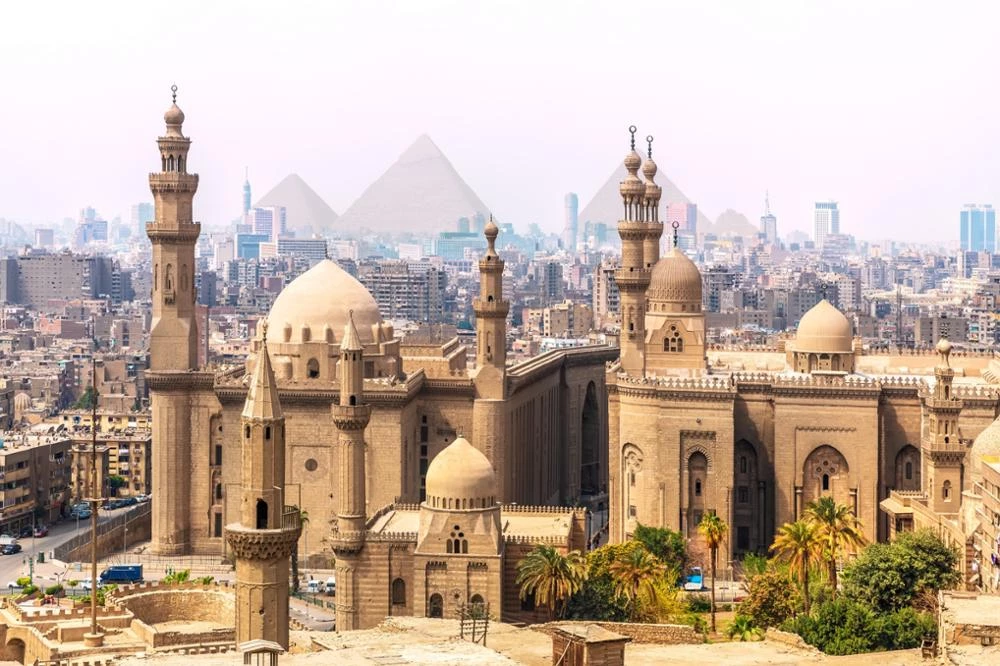
Capital of Egypt and the largest city in the Arab world, Cairo spreads along both banks of the Nile, about twenty kilometres from the Giza plateau. Two of its sites have been on the UNESCO World Heritage list since 1979: the Memphis necropolis, from the Giza pyramids to Saqqara, and Historic Cairo, with its mosques, madrasas and Fatimid gates.
This guide covers the thirteen visits that matter: the Giza pyramids, the Grand Egyptian Museum opened in 2025, the Tahrir museum, Saqqara, the Citadel of Saladin, al-Muizz street, Khan el-Khalili, Coptic Cairo, the City of the Dead, Manial Palace, Al-Azhar Park, Cairo Tower and a felucca ride on the Nile. Prices, access and entry rules are current as of September 2026.
Overview
The capital of Egypt and the largest city in the Arab world, Cairo combines the Giza pyramids, the world's greatest collection of Islamic art and a buzzing urban life on the banks of the Nile.
Cairo, the capital of Egypt and one of the largest cities in Africa and the Arab world, is a megacity where several millennia of history coexist. To the west, on the Giza plateau, stand the pyramids and the Sphinx; in the heart of the city, Islamic Cairo lines up mosques, madrasas and the Khan El Khalili bazaar.
The city also keeps a rich Coptic quarter, the Citadel of Saladin and, now, two complementary major museums: the Grand Egyptian Museum (GEM) at Giza and the historic museum on Tahrir Square. Through it all runs the Nile, around which Cairene life is organised.
Cairo is the classic starting point of a trip to Egypt, often combined with Upper Egypt (Luxor, Aswan) or the Red Sea; Alexandria can be visited in a day by train.
13 places to take with you
In the guide's order, ready for Google Maps or your GPS.
Book the activities from this guide
Our picks for Le Caire, well rated and free to cancel.
-
Book this activity
Giza pyramids, Memphis, Saqqara and Dahshur, à la carte
from €48 per person, entry fees extra, lunch optional or on the VIP option (GetYourGuide price 2026)
-
Book this activity
Citadel, al-Muizz street, Coptic Cairo and Khan el-Khalili with lunch
from €83 per person, lunch included, entry fees optional (GetYourGuide price 2026)
-
Book this activity
Egyptian Museum, Citadel and Old Cairo, à la carte
from €42 per person, entry fees and lunch extra except on the VIP option (GetYourGuide price 2026)
Affiliate links: Travel Advice earns a commission if you book, at no extra cost to you. Learn more

Pyramids of Giza
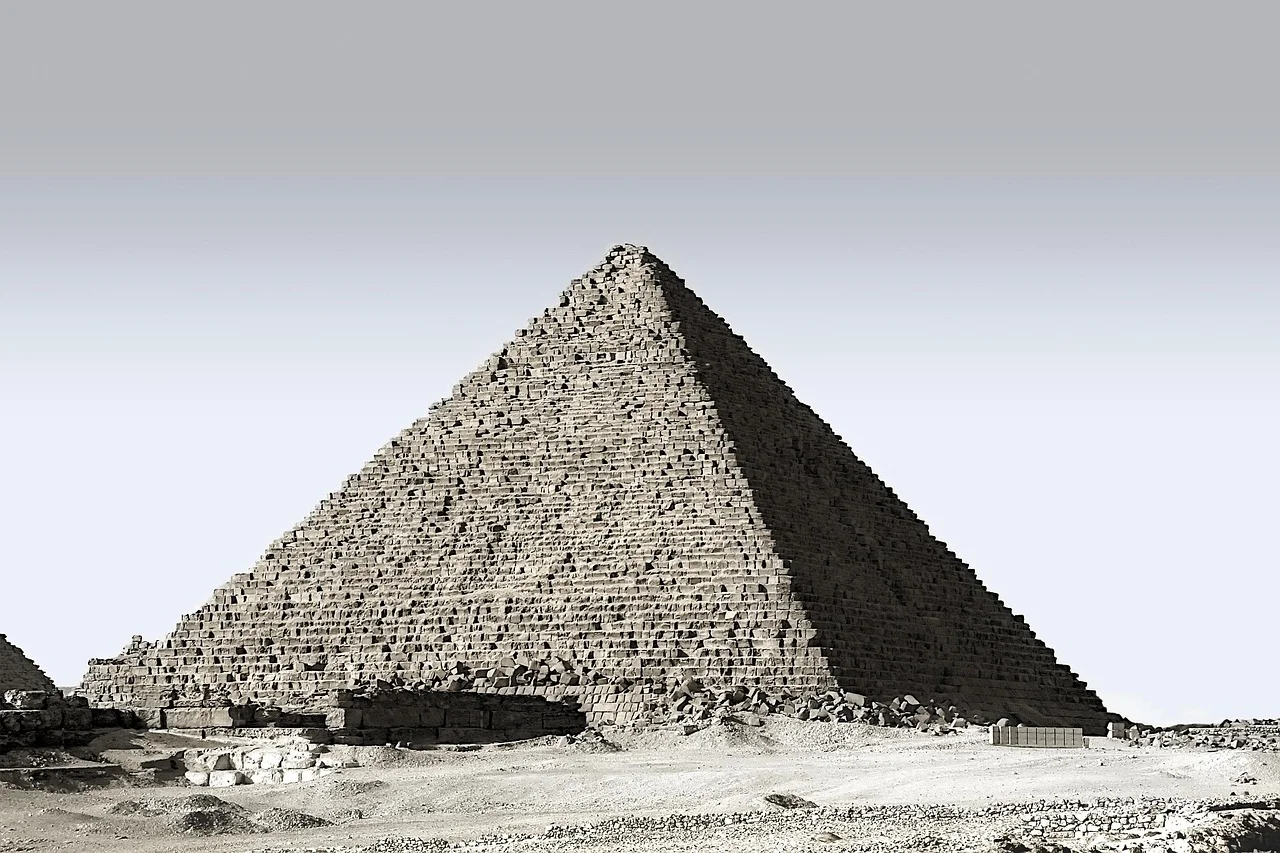
The Pyramids of Giza, the only one of the Seven Wonders of the ancient world still standing, dominate the plateau west of Cairo. The complex brings together the Great Pyramid of Khufu, those of Khafre and Menkaure, and the Great Sphinx, a colossal statue with a lion's body and a pharaoh's head. It is part of the UNESCO site 'Memphis and its Necropolis', inscribed in 1979.
The plateau entry ticket costs EGP 700 for a foreign adult (EGP 350 for students); going inside the Great Pyramid, the pyramids of Khafre and Menkaure and the tomb of Meresankh III requires separate tickets. Card-payment machines complement the ticket offices and the ministry's online sales. Allow half a day, on foot, on horseback or by camel.

Grand Egyptian Museum (GEM)
Inaugurated on 1 November 2025 at Giza, about 2 km from the pyramids, the Grand Egyptian Museum (GEM) is the world's largest archaeological museum devoted to a single civilisation. For the first time it houses the complete Tutankhamun collection, more than 5,000 objects including the gold mask and the gilded shrines, previously only partly shown at the Tahrir museum, as well as Khufu's solar boat.
The visit starts in the atrium with its colossal statue of Ramesses II, then climbs the grand staircase lined with statues up to the chronological galleries, with the pyramids as a backdrop behind the glass wall. Tickets are booked online on the official site visit-gem.com, with a timed entry slot.

Egyptian Museum, Tahrir Square
The Egyptian Museum on Tahrir Square, opened in 1902, is Egypt's oldest major antiquities museum. Since the Grand Egyptian Museum (GEM) opened at Giza, its most famous pieces have moved: the complete Tutankhamun collection is now displayed at the GEM, and the royal mummies moved to the National Museum of Egyptian Civilization (NMEC) in Fustat during the 2021 'Pharaohs' Golden Parade'.
The Tahrir museum remains open and keeps a vast collection of pharaonic and Greco-Roman antiquities in the atmosphere of its historic pink-brick building. Ticketing has switched to electronic payment. Check before visiting which halls are open, as refurbishment continues.

Islamic Cairo and al-Muizz street
Islamic Cairo is the medieval heart of the city, founded in 969 by the Fatimids and inscribed on the UNESCO World Heritage list in 1979 as Historic Cairo. Its backbone is al-Muizz street, running one kilometre from the Bab al-Futuh gate in the north to Bab Zuweila in the south, lined with mosques, madrasas, fountains and Mamluk palaces: the Qalawun complex, al-Aqmar mosque, Beshtak palace, the sabil-kuttab of Abd al-Rahman Katkhuda.
Nearby stand al-Azhar mosque, founded in 970 and seat of one of the world's oldest universities, al-Hakim mosque against the city walls, and further south the Ibn Tulun mosque (9th century), Cairo's largest, with its external spiral minaret. The district is explored on foot; al-Muizz street is free to walk, the ticketed monuments are signposted.

Khan el-Khalili
Khan el-Khalili is the great bazaar of Islamic Cairo, established since the 14th century around al-Hussein mosque, a short walk from al-Azhar. Its covered lanes are lined with goldsmiths, coppersmiths and sellers of spices, perfumes, fabrics and lanterns, with a tourist-oriented section near al-Hussein square and more local streets towards al-Muizz street and the textile souk.
El Fishawy café, open since the 18th century and once frequented by Naguib Mahfouz, is the bazaar's institution. The district comes alive in the evening, when Cairenes come for mint tea or shisha; on Friday mornings many shops stay closed.

Citadel of Saladin and Mohammed Ali Mosque
Founded by Saladin in 1176 on a spur of the Mokattam, the Citadel was the seat of power in Egypt for almost seven centuries, from the Ayyubids to the Ottomans and the dynasty of Mohammed Ali. It overlooks the whole of Islamic Cairo and, on a clear day, reveals the pyramids.
Its flagship monument is the Mohammed Ali Mosque, built between 1830 and 1848 on the model of the great Ottoman mosques of Istanbul, with cascading domes, two slender minarets and alabaster-clad walls. The enclosure also holds the Mamluk mosque of al-Nasir Mohammed (1318), the Gawhara Palace and the military museum. Entry costs EGP 550 for a foreign adult (EGP 275 for students); the site is open daily from 8am to 5pm.

Saqqara and Memphis
About thirty kilometres south of Giza, Saqqara is the necropolis of Memphis, the first capital of unified Egypt. Here stands the Step Pyramid of Djoser, raised around 2650 BC by the architect Imhotep: the world's oldest large stone monument, a century older than the Giza pyramids. Its restored enclosure can be visited together with the burial chamber.
Around it lie the pyramid of Unas with its Pyramid Texts, the mastabas of Ti and Kagemni with remarkably preserved reliefs, the Serapeum with its sarcophagi of Apis bulls, and the Imhotep Museum. At Memphis itself, the open-air museum keeps the recumbent colossus of Ramesses II and an alabaster sphinx. The site belongs to the UNESCO property 'Memphis and its Necropolis'.

Coptic Cairo (Old Cairo)
Coptic Cairo occupies the site of the Roman fortress of Babylon, in the south of the city, where the Nile flowed before shifting westwards. Inside the enclosure stand the Hanging Church (al-Muallaqa), built over the towers of the Roman gate, the church of Saints Sergius and Bacchus, whose crypt is linked to the Holy Family's stay in Egypt, the church of Saint Barbara and the Greek monastery of Saint George.
The Ben Ezra synagogue, where the famous Cairo Geniza was discovered, and the Coptic Museum, home to the world's richest collection of Coptic art, complete the visit. The district is served directly by the metro and takes two to three hours to explore.

Al-Azhar Park
Al-Azhar Park, opened in 2005, covers 30 hectares of a former rubbish dump on Darassa hill, between Islamic Cairo and the City of the Dead. The project, funded by the Aga Khan Trust for Culture, also uncovered and restored a 1.5 km stretch of the 12th-century Ayyubid wall that borders the park to the west.
Palm-lined walks, pools and channels inspired by Islamic gardens, lawns and two restaurants; from the terraces the view takes in the Citadel, the minarets of al-Azhar and, on a clear day, the pyramids. It is one of the few large green spaces in the centre, popular with Cairo families at weekends.

Felucca on the Nile
In Cairo, a Nile outing is mostly an evening affair: a felucca sail at sunset, or a restaurant boat with dinner, music and a dance show. Feluccas moor along the corniche, between Garden City and Zamalek; an hour on the water is enough to watch the city light up.
Not to be confused with the multi-day cruises past the temples of Luxor, Karnak, Edfu, Kom Ombo and Aswan: those take place in Upper Egypt, more than 500 km to the south, and are reached from Cairo by plane or night train.

City of the Dead (Qarafa)
The City of the Dead, al-Qarafa in Arabic, is the vast necropolis stretching at the foot of the Mokattam hills, east of Islamic Cairo, between the Citadel and the al-Azhar district. Its domed Mamluk mausoleums, including those of Sultan Qaitbay and Barquq in the Northern Cemetery, rank among the finest monuments of Islamic architecture in Cairo and belong to the UNESCO site of Historic Cairo.
What makes the place unusual: families have lived here for generations, in the funerary enclosures and caretakers' houses, making it an inhabited district as much as a cemetery. Road-building works have led to demolitions in several sectors since 2020; the Northern Cemetery and its great mausoleums remain accessible.

Manial Palace
Manial Palace, on Roda island, was built between 1899 and 1929 by Prince Mohammed Ali Tewfik, uncle of King Farouk and for a time heir to the throne. The prince mixed, to his own taste, Ottoman, Persian, Moorish and Andalusian styles: a throne room, a reception hall with gilded ceilings, a private mosque, a clock tower and a hunting museum full of stuffed trophies.
The botanical garden surrounding the pavilions, planted with rare species, is one of Cairo's few historic green spaces. The palace is run by the Ministry of Antiquities and takes about an hour and a half to visit; it remains uncrowded.

Cairo Tower
Cairo Tower stands on Gezira island, in the Zamalek district, in the middle of the Nile. Designed by Egyptian architect Naoum Chebib and completed in 1961, it is 187 metres tall: its reinforced-concrete structure is clad in an openwork lattice evoking the lotus stem, the emblematic plant of ancient Egypt.
At the top, an observation deck gives a 360-degree view over the city, from the Giza plateau to the Mokattam hills; a revolving restaurant occupies the floor below. Lit up at night, the tower remains the most convenient viewpoint over the Nile and downtown.

Giza pyramids, Memphis, Saqqara and Dahshur, à la carte
A flexible guided tour of the Memphis necropolis: the Giza pyramids and the Sphinx alone (morning or afternoon, about 3 hours), or combined with Memphis and its colossus of Ramesses II and Saqqara with Djoser's Step Pyramid, or Memphis, Saqqara and Dahshur (Bent and Red pyramids); the private VIP option covers all four sites and ends with a felucca ride on the Nile. The highlight: Djoser's Step Pyramid, the first great stone monument in history.
Guide in French, English, German, Spanish or Italian (VIP option in English only), air-conditioned transport, pick-up in Cairo or Giza and skip-the-line access included; entry tickets paid on the spot, lunch included on the VIP option only or as an add-on on private tours. From €48 per person on GetYourGuide, free cancellation up to 24 hours before.
- 3 to 8 hrs depending on the option
- from €48 per person, entry fees extra, lunch optional or on the VIP option (GetYourGuide price 2026)

Citadel, al-Muizz street, Coptic Cairo and Khan el-Khalili with lunch
Six hours with an Egyptologist guide between the two old Cairos: the Citadel of Saladin and the Mohammed Ali Mosque, then al-Muizz street and its Islamic architecture; lunch in a local restaurant; in the afternoon, Coptic Old Cairo with the Hanging Church and the church of Saints Sergius and Bacchus, and finally the Khan el-Khalili bazaar. The highlight: al-Muizz street, from its madrasas to its Mamluk palaces.
Round-trip pick-up from your accommodation in Cairo or Giza, air-conditioned vehicle, mineral water and lunch included; commentary in French, English, German, Spanish or Italian. Site entry fees are offered as an option at booking. From €83 per person on GetYourGuide, free cancellation up to 24 hours before; not wheelchair accessible.
- 6 hrs
- from €83 per person, lunch included, entry fees optional (GetYourGuide price 2026)
Egyptian Museum, Citadel and Old Cairo, à la carte
A flexible tour of the three downtown classics: the Egyptian Museum on Tahrir Square with its 120,000 objects, the Citadel of Saladin with the Mohammed Ali Mosque and its terraces over the city, and Old Cairo with the Hanging Church and the Ben Ezra synagogue. Choose a single site (museum only, morning or afternoon, about 3 hours), two sites or the full package with all three (6 hours); some options add Khan el-Khalili. The highlight: the Citadel terraces, overlooking the whole city.
Guide in French, English, German, Italian or Spanish, air-conditioned transport and pick-up from your accommodation included; lunch and a felucca ride on the Nile are reserved for the private VIP option (in English), with lunch available as an add-on on private tours. From €42 per person on GetYourGuide, free cancellation up to 24 hours before.
- 3 to 6 hrs depending on the option
- from €42 per person, entry fees and lunch extra except on the VIP option (GetYourGuide price 2026)

Private felucca on the Nile with dinner and entertainment
Two hours sailing on the Nile in Cairo aboard a modernised oriental felucca reserved for your group: views of the city's rooftops, hotels and bridges from the water, a three-course dinner served by a personal waiter, unlimited hot and cold soft drinks, and on-board entertainment (TV, media player, karaoke). The highlight: the Cairo skyline lighting up during the meal.
Meet at the Cafelluca dock in Dokki (look for 'Seekh Mashwy' on Google Maps), 15 minutes before departure; valet parking, but no transfer from your hotel. From €41 per person on GetYourGuide, free cancellation up to 24 hours before; wheelchair accessible.
- 2 hrs
- from €41 per person, 3-course dinner and soft drinks included (GetYourGuide price 2026)
Getting there
Cairo is served by Cairo International Airport (code CAI), Egypt's main hub and the home base of EgyptAir, about 15 km from the centre.
Cairo International Airport (IATA code: CAI) is Egypt's main airport and one of the major hubs in Africa and the Middle East. It is EgyptAir's home base, in Heliopolis, about 15 km from the business district.
Many airlines fly direct from Europe to Cairo. From the airport, take a taxi, ride-hailing (Uber/Careem) or a shuttle into the centre. For Upper Egypt (Luxor, Aswan), domestic flights and night trains leave from Cairo. See the Formalities and Safety sections before you travel.
Getting around
The metro (3 lines, tickets for a few pounds) beats the traffic; Uber and Careem are reliable and cheap for everything else. Agree the fare with white taxis before getting in.
The Cairo metro has three lines and serves several useful stops: Sadat (Tahrir Square and the Egyptian Museum), Mar Girgis (Coptic Cairo), Bab El Shaaria (Islamic Cairo) and, on line 3, a bus connection to the airport. Tickets, sold in stations, cost a few pounds depending on distance; some carriages are reserved for women.
For everything else, Uber and Careem work well and show the fare in advance. White street taxis have meters that are rarely used: agree the price before setting off. For Giza you can also reach the pyramids by metro and bus; for Saqqara, a driver for the day or a tour remains the simplest option. Avoid driving yourself.
What to do
One day for Giza and the GEM, one for Islamic Cairo and the Citadel, half a day for Coptic Cairo, then Saqqara as a day trip and a felucca at sunset.
Spend the first day at Giza: the pyramids at opening time, then the Grand Egyptian Museum in the afternoon on a booked slot. The second day is for Islamic Cairo: the Citadel in the morning, al-Muizz street and Khan el-Khalili late in the day, when the street turns pedestrian. Half a day is enough for Coptic Cairo, reached by metro, extended with Manial Palace.
With one more day, Saqqara and Memphis make a day trip, often with Dahshur; in the evening, a sunset felucca or Cairo Tower for the view. Alexandria is 2.5 hours by train for a day on the Mediterranean.
Food
Koshari (rice, lentils, pasta and tomato sauce), foul and taameya for breakfast, stuffed pigeon and molokheya for dinner; mint tea is drunk at Khan el-Khalili.
The national dish is koshari: rice, lentils, pasta, chickpeas, fried onions and spicy tomato sauce, served for a few dozen pounds at downtown institutions such as Abou Tarek. In the morning, Cairenes eat foul (mashed fava beans) and taameya, the Egyptian fava-bean falafel, in baladi bread.
For dinner, look for stuffed pigeon with rice or green wheat, molokheya (jute-leaf soup) and kofta grills. For something sweet, om ali (a bread-and-milk pudding) and konafa. Mint tea and Turkish coffee are taken at El Fishawy café in Khan el-Khalili; do not drink the tap water.
Itineraries
Day 1: Giza pyramids then the GEM. Day 2: Citadel, al-Muizz street, Khan el-Khalili and a sunset felucca. Day 3: Coptic Cairo, Manial Palace, Tahrir museum; or Saqqara as a day trip.
Day 1: Giza plateau at opening (8am), the Sphinx, then the Grand Egyptian Museum in the afternoon on a booked slot; dinner in Giza facing the pyramids.
Day 2: Citadel of Saladin in the morning, Al-Azhar Park for lunch and the view, al-Muizz street from Bab al-Futuh to Bab Zuweila, Khan el-Khalili in the evening and a sunset felucca from the corniche.
Day 3: Coptic Cairo by metro (Mar Girgis), Manial Palace, then the Egyptian Museum on Tahrir Square and Cairo Tower at sunset. With a fourth day, Saqqara, Memphis and Dahshur as a day trip, or Alexandria by train.
Climate & seasons
When to go to Egypt?
Monthly averages over the past 5 years (Open-Meteo).
Best months
- January
- February
- March
- April
- May
- June
- July
- August
- September
- October
- November
- December
Avoid
- June
- July
- August
- September
| Jan | Feb | Mar | Apr | May | Jun | Jul | Aug | Sep | Oct | Nov | Dec | |
|---|---|---|---|---|---|---|---|---|---|---|---|---|
| Our take | ||||||||||||
| Weather | ||||||||||||
| High | 21° | 21° | 26° | 31° | 35° | 38° | 40° | 39° | 36° | 32° | 27° | 22° |
| Rain (mm) | 4 | 8 | 4 | 1 | 0 | 0 | 0 | 0 | 0 | 2 | 2 | 6 |
| City sightseeing | City sightseeing January | City sightseeing February | City sightseeing March | City sightseeing November | City sightseeing December |
What to do by season (autumn)
-
City sightseeing
Pedestrian-friendly most of the year.
When to go
Autumn (October-November) and spring (March-April) are the best times. Winter is mild but busy, and summer very hot, with temperatures regularly above 35°C.
The best seasons are autumn (October-November) and spring (March-April): hot but bearable days (around 25-32°C), ideal for outdoor sites.
Winter (December-February) is mild by day (18-22°C), cooler in the evening, and is the high tourist season. Summer (June-September) is very hot, often above 35°C: plan visits for early morning, carry plenty of water and take breaks in the shade.
Torn between Egypt and Jordan's Petra? Our Egypt or Jordan comparison for a first trip settles it by season.
Budget
Expect EGP 700 for the Giza plateau, about EGP 1,450 for the GEM and EGP 550 for the Citadel (foreign adult, 2026). With a mid-range hotel, count on €60 to €100 per person per day.
Entry fees are the biggest item: EGP 700 for the Giza plateau (pyramids extra), about EGP 1,450 for the Grand Egyptian Museum (price published by the Cairo governorate, check on visit-gem.com) and EGP 550 for the Citadel, 2026 foreign-adult prices from the official sites; expect EGP 3,000 to 4,000 in entry fees for three days of sightseeing. Card payment is becoming the norm at ticket desks.
The rest is cheap: street food or koshari for a few dozen pounds, an Uber ride across town for a few euros, the metro for a handful of pounds. A mid-range hotel in Zamalek or Downtown costs €40-80 a night. All in, plan on €60 to €100 per person per day including the hotel, more with guided excursions (€42 to €83 on GetYourGuide) and pyramid-view hotels.
Where to stay
Zamalek (a chic, quiet island), Downtown (lively and central) and Giza (to sleep facing the pyramids) are the best bases. Coptic and Islamic Cairo are easy day trips from the centre.
Zamalek, on a Nile island, is the most pleasant district: chic, green and quieter, with good hotels and restaurants. Downtown is lively and central, handy for getting around. Giza lets you sleep facing the pyramids, with some hotels offering direct views.
Residential areas such as Garden City (elegant, near the embassies) or Maadi (calm, popular with expats) are other options. Book ahead in high season (autumn-winter) and favour proximity to a metro station to avoid traffic.
Safety
Cairo, the Nile valley and the classic tourist circuit remain open with normal vigilance. However, north Sinai, the western desert towards Libya and the Sudan border areas are formally advised against (France Diplomatie).
According to France Diplomatie travel advice, Cairo, the Nile valley and the classic tourist circuit (Luxor, Aswan) remain accessible with normal to heightened vigilance: avoid gatherings and demonstrations and very crowded places.
Formally advised against (red zone), however, are: north Sinai (north of the Suez-Taba line), the desert zone towards the Libyan border, the Sudan border areas (including south of Abu Simbel) and Gaza. South Sinai (Sharm el-Sheikh, Dahab) and the western desert oases require heightened vigilance.
Emergency numbers: police 122, ambulance 123, tourist police 126. Check the Egypt page on diplomatie.gouv.fr (updated 21 September 2026) before and during your trip, and follow the advice in force.
Formalities
Visa required for French citizens: on arrival (USD 30 in cash, single entry, USD 60 multiple entry), as an e-visa on visa2egypt.gov.eg or at a consulate. Passport, or ID card with two photos, valid 6 months after the return date.
Visa required for French citizens. It can be obtained on arrival at Cairo airport (USD 30 for single entry, USD 60 for multiple entry, payable in cash, in dollars or euros), online on the Egyptian government's official portal (e-visa, visa2egypt.gov.eg, to apply for before departure) or in advance at an Egyptian consulate.
The passport must be valid for at least 6 months after the return date. The French national ID card is accepted with the same validity provided you bring two passport photos for the visa; ID-card holders cannot extend their stay. Cash above EGP 5,000 or USD 10,000 must be declared.
The currency is the Egyptian pound (EGP); major sites take cards, keep cash for markets and tips. Up-to-date rules on France Diplomatie's travel advice (updated 21 September 2026).
Tips
Carry cash (EGP) and small change for tips, haggle at Khan El Khalili, use Uber/Careem or the metro to avoid traffic, and dress modestly at religious sites.
- Money: pay in Egyptian pounds (EGP); keep small change for tips (baksheesh), expected everywhere. Cards work in big hotels and at the GEM, but cash is essential.
- Transport: traffic is heavy; Uber and Careem are reliable and cheap, and the metro avoids jams at peak hours.
- Haggling: at Khan El Khalili and with street taxis, negotiate — aim for about half the first price.
- Dress: cover shoulders and knees at religious sites; a scarf is useful for women in mosques, and shoes come off.
- Museum tickets: book online in advance for the GEM (visit-gem.com, timed slot; about EGP 1,450, price published by the Cairo governorate); at the pyramids and the Citadel, card-payment machines.
- Day trip: Alexandria is 2h30 away by express train, doable in a day.
FAQ
Visa, where to see Tutankhamun and the mummies, best time to go, length of stay, safety and transport: answers to the most common questions about a trip to Cairo.
Do I need a visa to visit Cairo?
Yes. French and EU citizens need a visa for Egypt: an online e-visa (visa2egypt.gov.eg) or a visa on arrival, USD 30 on arrival for single entry (USD 60 multiple entry). The passport must be valid for at least 6 months after the return date.
Where can I see Tutankhamun's treasures and the royal mummies today?
The complete Tutankhamun collection is now at the Grand Egyptian Museum (GEM) at Giza, inaugurated in November 2025. The royal mummies are at the National Museum of Egyptian Civilization (NMEC) in Fustat, since 2021. The historic Tahrir museum remains open with a vast collection.
When is the best time to visit Cairo?
Autumn (October-November) and spring (March-April), for hot but bearable days. Summer is very hot (often above 35°C).
How many days do I need in Cairo?
Allow 3-4 days: one for Giza and the GEM, one or two for Islamic and Coptic Cairo and the museums, plus time for Khan El Khalili and the Citadel.
Is Cairo safe for tourists?
Cairo and the classic tourist circuit remain accessible with normal vigilance. North Sinai, the desert towards Libya and the Sudan border areas are, however, formally advised against. Check France Diplomatie advice before travelling.
How much does it cost to enter the Giza pyramids?
EGP 700 per foreign adult for the plateau (EGP 350 for students), official 2026 price; going inside the Great Pyramid, the pyramids of Khafre and Menkaure and the tomb of Meresankh III costs extra. The plateau is open from 8am to 4pm. The GEM costs about EGP 1,450 (price published by the Cairo governorate, check on visit-gem.com), the Citadel EGP 550.
How do I get around Cairo?
Uber and Careem are reliable and cheap; the metro avoids traffic at peak hours. For street taxis, agree the fare before getting in.
Sources
The figures in this guide come from the sources below, checked on the publication date.
Leave a comment
Share your thoughts or travel experience. Your email will not be published.