

Contents 30
Overview
Three weeks on Japan's Golden Route — Tokyo, Hakone, Kyoto, Nara, Hiroshima — covers the essentials without rushing: budget roughly €2,000-2,400 per person on a budget, €3,700-3,900 in comfort, flights and trains included.
Japan spans an archipelago of 6,852 islands, but a first trip plays out along a single axis: the 800 kilometres of coastal plain between Tokyo and Hiroshima, which the Tokaido-Sanyo Shinkansen covers in under four hours. This strip of land holds the capital, the former imperial capital, the country's first great bronze Buddha and the peace memorial — Japanese guidebooks call it the Golden Route.
Three weeks changes the nature of the trip. In ten days you tick off monuments; in twenty-one you can afford an unplanned day in Kyoto, a night in a Hakone ryokan and a trip to Miyajima without watching the clock. That's the length at which Japan stops being a checklist and becomes a rhythm.
- Capital: Tokyo (37 million in the metropolitan area)
- Currency: Japanese yen (JPY) — about €1 = ¥186, or US$1 = ¥160, in July 2026
- Language: Japanese; English is read more than spoken, but transport signage is bilingual throughout
- Time zone: JST, UTC+9 — 7 hours ahead of London in summer, 8 in winter; 14 hours ahead of New York
- Flight time: 12-14 hours non-stop from Western Europe, 13-14 from the US East Coast
12 places to take with you
In the guide's order, ready for Google Maps or your GPS.
Book the activities from this guide
Our picks for Japan, well rated and free to cancel.
-
Book this activity
Climb the Fushimi Inari torii at first light
Free per person — train access JPY 150 to 260 (EUR 1 to 1.50) one way
-
Book this activity
Peace Memorial Museum and the Genbaku Dome
JPY 200 (EUR 1.10) per adult, JPY 100 from age 65, free up to middle school
-
Book this activity
Todai-ji and the Nara deer as a day trip
JPY 800 (EUR 4.30) per adult for the Great Buddha, deer biscuits JPY 200
Affiliate links: Travel Advice earns a commission if you book, at no extra cost to you. Learn more

Himeji Castle
It is an almost unreal white, and the coating is not paint: it's a lime plaster applied even over the roof tiles, designed to resist fire.
Himeji is the largest and best-preserved castle in Japan, and the only one of its size never to have been destroyed — not by the civil wars, not by the bombing of 1945, not by the Kobe earthquake of 1995. Its six-storey keep dates from 1609. It became a UNESCO World Heritage Site in 1993, in Japan's first batch, and its silhouette earns it the nickname Shirasagi-jo, the white heron castle.
The visit is physical and remarkably intact: you climb the six floors on steep wooden staircases, under original timbers, past the ishi-otoshi stone-drop chutes and the arrow slits. Allow 1.5-2 hours, admission ¥1,000.
It's the only site on this itinerary where you tour an authentic feudal interior: the keeps at Osaka and Nagoya are concrete reconstructions housing museums.
Arrive at 9 AM opening: the keep is climbed in single file up narrow staircases, and the wait at the foot of the final stairway easily exceeds an hour in the middle of the day and in cherry blossom season.

Mount Fuji (Fujisan)
It appears rarely and always all at once: one second the sky is empty, the next the cone fills a quarter of the horizon, far higher than you had pictured.
An active volcano topping out at 3,776 metres, the highest point in Japan, it has been a UNESCO World Heritage Site since 2013 — not as a natural site but as a sacred place and source of artistic inspiration, a distinction that says everything about its standing in Japanese culture.
From the Golden Route you don't climb it: the ascent is open only from early July to early September and takes two days. You come to see it, from Hakone, Lake Ashi or the Fuji Five Lakes — and that's a matter of weather luck, the mountain staying hidden behind cloud roughly one day in two in summer.
It's the one site on this itinerary that defies planning entirely, which is why it earns two days in Hakone rather than one.
The classic mistake is booking a single day in Hakone: if Fuji is socked in, there's no second chance. Two nights takes your probability of seeing it from about 50% to 75%.

Genbaku Dome and the Peace Memorial Park
The park is oddly quiet for the centre of a city of 1.2 million — a quiet visitors adopt without being asked.
The Genbaku Dome is the former Chamber of Commerce building, left exactly as the explosion of 6 August 1945 left it: 600 metres below the hypocentre, the steel frame of its cupola held where everything around it vanished. It has been a UNESCO World Heritage Site since 1996.
The visit falls into three parts: the museum, whose permanent exhibition retraces the day through objects and survivor testimony; the cenotaph, whose arch deliberately frames the dome in its opening; then the dome itself. The museum costs ¥200 and opens as early as 7:30 AM from March to November.
It's the only site on this itinerary you don't leave the way you arrived: plan time afterwards, not another activity.
At ¥200 admission (¥100 from age 65 on presentation of your passport), price isn't the question — time is: allow 1.5-2 hours for the museum and another hour for the park and the dome.

Fushimi Inari-taisha
You hear the gravel before you see anything: footsteps funnelling under the gates, then the light turning orange because it's passing through lacquered wood.
The head shrine of the cult of Inari, deity of rice and prosperity, it climbs the flank of Mount Inari, 233 metres, beneath roughly 10,000 torii donated by Japanese companies — the black characters carved into the uprights are the donors' names and the dates of their gifts.
You climb in a loop up uneven stairways to the Yotsutsuji junction, which opens onto a panorama over Kyoto after about an hour, and beyond that the path empties almost completely. Access is free and open 24 hours, which is rare for a site of this importance.
It's the only major Kyoto site you can visit at dawn with no opening hours to work around — which makes it the logical first stop on a day in the south of the city.
Get off on the JR Nara line at Inari station — 5 minutes from Kyoto and covered by JR passes — rather than the Keihan line, which adds a 7-minute walk.

Kinkaku-ji, the Golden Pavilion
The first view is head-on and slightly unreal: the pavilion set at the edge of its pond, doubled by its reflection, an image you've seen a thousand times turning out to be accurate.
Once the retirement villa of shogun Ashikaga Yoshimitsu and converted into a Zen temple on his death in 1408, it owes its glow to the pure gold leaf covering its two upper floors. The current building is a 1955 reconstruction, the original having been burned down by a monk in 1950 — an episode Mishima turned into a novel. It is part of the Historic Monuments of Ancient Kyoto, UNESCO-listed in 1994.
The visit is a one-way circuit of about 40 minutes, with no entry into the pavilion itself: you follow the pond, climb to the upper garden, and exit past the tea house. It's short, and that's deliberate.
Unlike Ginkaku-ji or Ryoan-ji, which ask you to sit and look for a long time, Kinkaku-ji gives itself up entirely in a single glance — which is why it pairs well with the dry garden at Ryoan-ji, 20 minutes away by bus.
Since the pavilion faces due south across its pond, morning light hits it head-on and gives the cleanest reflection — in the afternoon you're shooting into the sun.

Senso-ji and Nakamise-dori
The smell reaches you before the temple does: incense in front of the main hall, sesame doughnuts and grilled senbei crackers along the 250 metres of stalls leading up to it.
Founded in 645, Senso-ji is the oldest Buddhist temple in Tokyo. Legend has it that two fishermen pulled a statuette of the goddess Kannon from their nets, and she is still venerated here. The current buildings are post-war reconstructions, the whole complex having been flattened by the bombing of 1945.
You enter through the Kaminarimon gate and its 3.9-metre red lantern, walk up Nakamise-dori — one of Japan's oldest shopping streets — draw an omikuji fortune for ¥100, and pass through the smoke of the incense burner, brushing it over your head for health. Access is free.
It's the exact counterpoint to Shibuya: in the same city, 25 metro minutes apart, the Tokyo of before and the Tokyo of after.
The classic mistake is leaving straight afterwards: Dempo-in street, parallel to Nakamise, and the Kappabashi district 10 minutes away hold the old artisan Tokyo that 90% of visitors miss by staying on the main axis.

Kiyomizu-dera
The terrace juts into empty air and the timber works underfoot: thirteen metres above the hillside, without a single nail in the entire frame.
Founded in 778, before Kyoto even became the capital, the temple owes its name — "temple of pure water" — to the Otowa waterfall running beneath the terrace. Its main hall is a designated National Treasure and the complex is among the Historic Monuments of Ancient Kyoto, UNESCO-listed in 1994. The major restoration of the frame and roof, begun in 2008, finished in 2020: the scaffolding that used to ruin photographs is gone.
You climb the steep Sannenzaka lane, come out onto the terrace and its panorama over Kyoto, then descend to drink at the Otowa waterfall, whose three streams promise longevity, academic success and love — custom says pick one, as drinking from all three marks you as greedy.
It's the only major Kyoto temple you reach along a pedestrian street of wooden houses: the approach is part of the visit, which isn't true of Kinkaku-ji, ringed by coach parks.
Continue on foot to Gion via Sannenzaka, Ninenzaka and Maruyama Park, a 25-minute descent between wooden houses: it's the best walking route in Kyoto, and taking a taxi between the two would be a mistake.

Todai-ji and its Great Buddha
You lose your sense of scale walking through the gate: the hall looks normal until you notice the figures at its base are adults.
The Daibutsuden houses the Daibutsu, the largest bronze Buddha statue in the world — 15 metres, cast in 752 in a campaign that consumed a considerable share of the copper available in the country. The current hall, rebuilt in 1709, is only two-thirds the size of the original and remains one of the largest wooden structures on the planet. The complex became a UNESCO World Heritage Site in 1998 among the Historic Monuments of Ancient Nara.
The visit is an interior loop of about forty minutes: the Buddha, its guardians, a model of the original hall, and a pillar pierced with a hole the size of the statue's nostril — children squeeze through it, custom promising enlightenment to anyone who does. Admission is ¥800.
The temple is never visited alone: it sits inside Nara Park and its 1,000 free-roaming deer, which makes it the best family day out on the whole itinerary.
Shika senbei deer crackers cost ¥200 on site; the classic mistake is waving them in the air, which triggers a shove from several animals at once. Hold them flat on an open palm, and keep bags and maps out of reach: the deer eat paper.

Itsukushima Shrine and its floating torii
At high tide the gate seems to sit on the water with nothing holding it — a perfect illusion, since nothing does: its pillars rest on the seabed under their own weight alone.
A Shinto shrine founded in the 6th century and remodelled in the 12th by Taira no Kiyomori, it is built on stilts above the sea because the entire island was considered sacred: you could not set a temple on the ground without desecrating it. It has been a UNESCO World Heritage Site since 1996.
The whole visit hinges on one variable: the tide. At high tide the torii floats and the shrine reflects in the water; at low tide you walk out to the foot of the gate and touch its barnacle-covered pillars. Both are good, but they are two different visits.
The island throws in free-roaming deer and Mount Misen, reachable by ropeway — enough to fill a day where many people allow only two hours.
Budget ¥100 visitor tax per crossing, collected with your ferry ticket, plus about ¥200 for the ferry itself — covered by JR passes on the JR West Miyajima line, not to be confused with the rival operator at the same berth.

Shibuya Crossing
The lights go red in all five directions at once, the city's noise pauses for a second, then the entire intersection fills in a single movement.
The Shibuya Scramble is the busiest pedestrian crossing in the world: estimates put up to 3,000 people crossing on each light cycle at peak times, and more than 2 million a day passing through the station as a whole. The scramble principle — every vehicle light red simultaneously — was imported from the United States in the 1970s and pushed here to its extreme.
There is nothing to visit and everything to watch: you cross once for the sensation, then get above it — the free walkway at the Magnet mall, the second-floor café at Tsutaya, or the paid Shibuya Sky observatory. Round it off with the statue of Hachiko the dog, at the station exit that bears his name.
It's the best place in Tokyo to physically grasp the scale of the city, which no observation deck conveys.
For the overhead view, the Magnet by Shibuya109 walkway and the Tsutaya café cost the price of a drink, whereas Shibuya Sky asks ¥2,500 and a reservation — the difference in sensation doesn't always justify the difference in price on a first visit.

Arashiyama Bamboo Grove (Sagano)
This is a place you listen to as much as look at: the wind in the canes produces a low, continuous creaking that Japan's Environment Ministry has listed among the hundred soundscapes of Japan to be preserved.
The Sagano bamboo grove occupies north-west Kyoto, on the slopes of Arashiyama, an aristocratic resort district as far back as the 9th-century Heian period. The main path runs about 500 metres between moso canes that can reach 20 metres, held back by traditional woven fencing.
Walking it takes 15-20 minutes — it's brief, and knowing that in advance saves disappointment. So you fold it into a half-day in Arashiyama: the villa and gardens of Tenryu-ji, a UNESCO temple at the head of the path, the Togetsukyo bridge, and the Okochi Sanso garden. Hand-pulled rickshaws work the lane, touristy but photogenic.
Unlike the temples in the centre, all of it is outdoors and free: it's the Kyoto outing that still works under grey skies.
Go straight on to Tenryu-ji (¥500), whose 14th-century pond garden justifies the trip on its own and which most visitors walk past without entering, in a hurry to photograph the bamboo.

Gion district
The paving sounds different here: the lanes are too narrow for cars, and you hear wooden geta sandals before you see who's wearing them.
Gion grew up in the 17th century around Yasaka Shrine to house pilgrims, before becoming Kyoto's principal hanamachi, or geisha district. The latticed wooden facades are machiya, merchant houses narrow at the front and dozens of metres deep. Hanamikoji and Shirakawa streets hold the finest surviving rows.
You walk it in the evening, as the lanterns come on, following the Shirakawa canal lined with cherry trees then cutting across to the Yasaka pagoda. Crossing paths with a geiko or an apprentice maiko heading to an appointment is a matter of chance, between 5:30 and 7 PM.
It's the only district on this itinerary you don't visit so much as pass through — which is why it belongs at the end of a day, after Kiyomizu-dera, rather than as a stop in its own right.
One point of courtesy that matters: photography has been banned in the private lanes off Hanamikoji since 2019, with a ¥10,000 fine, after years of tourists harassing geisha. Never chase a geiko for a shot — the public streets and the Shirakawa canal remain fair game.
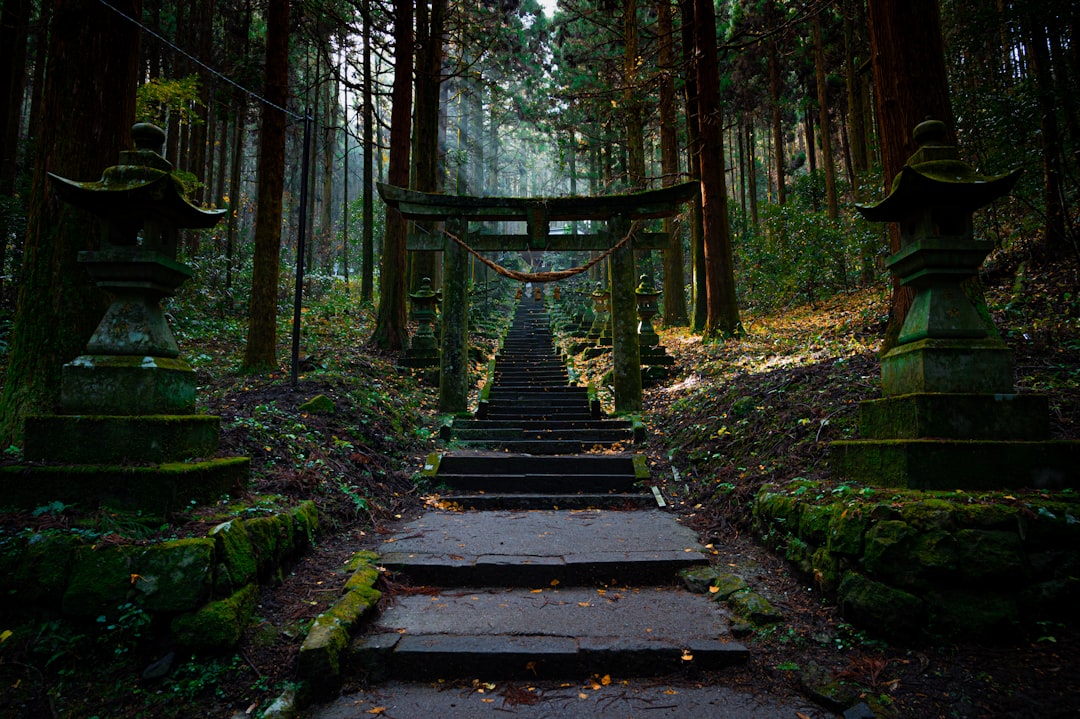
Climb the Fushimi Inari torii at first light
Meet at Inari station before 8 AM, and the climb starts without preamble: the Senbon Torii tunnel first, dense and photogenic, then uneven stairways up the flank of Mount Inari's 233 metres. The high point comes at the Yotsutsuji junction after an hour's effort: Kyoto opens up below and, more to the point, the crowd vanishes at a stroke — 90% of visitors turn back here, and the summit path is walked almost alone.
No technical difficulty but a genuine stair climb: skip the flip-flops, carry water in summer. A stall halfway up sells drinks and snacks. Fine for children who can walk as far as Yotsutsuji, though the full loop is long for them.
- 2 to 3 hrs for the full loop of the mount, 1 hr to the Yotsutsuji viewpoint
- Free per person — train access JPY 150 to 260 (EUR 1 to 1.50) one way
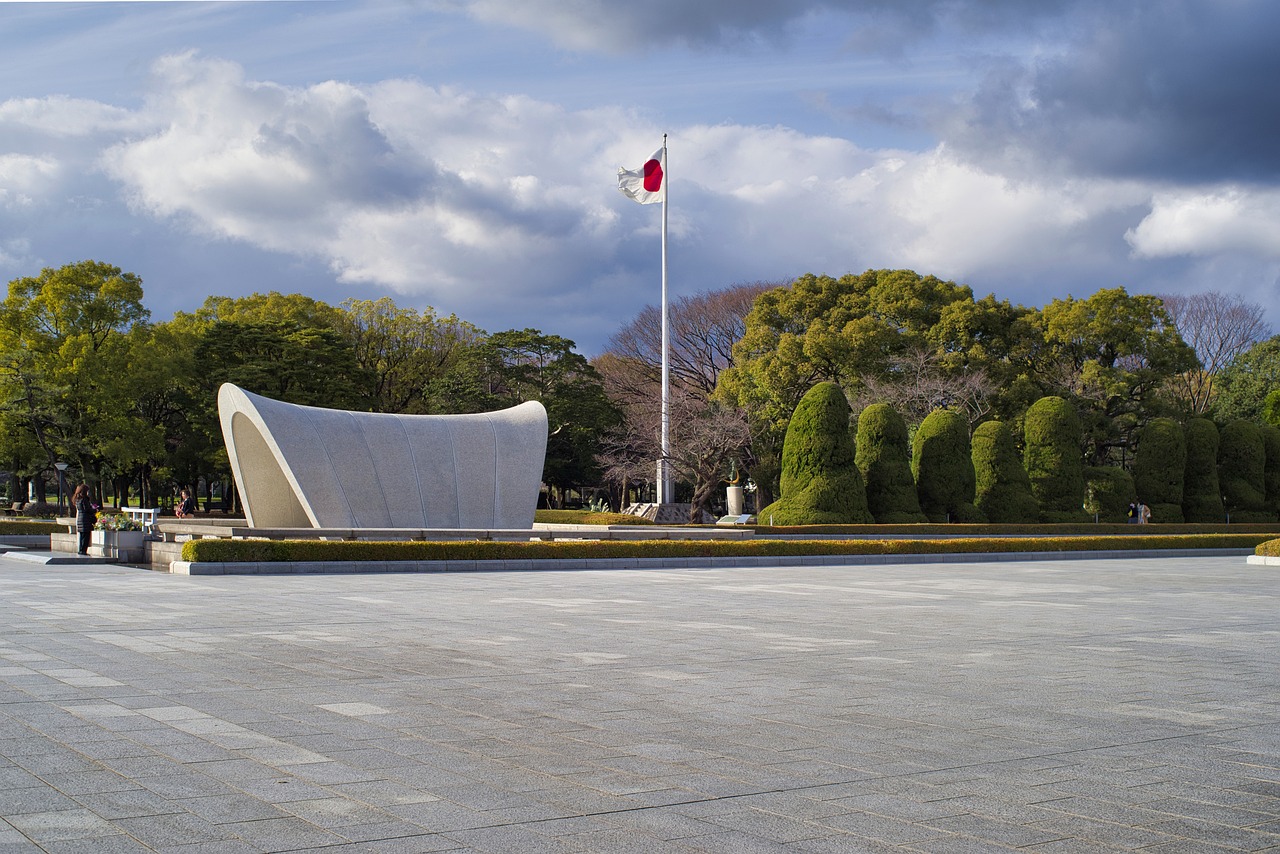
Peace Memorial Museum and the Genbaku Dome
The permanent exhibition retraces 6 August 1945 through objects and survivor testimony: it is direct, restrained and often harrowing — children's clothes, watches stopped at 8:15. You continue on foot through the park to the cenotaph, whose arch deliberately frames the Genbaku Dome left in ruins, then to the dome itself. What stays with you isn't in the museum but just after it, in the quiet of the park.
Suitable for teenagers and adults; some rooms are hard going for young children. Online booking is mandatory for the 7:30-8:30 AM and late-afternoon slots. Plan decompression time afterwards, not another activity.
- 1 hr 30 min to 2 hrs for the museum, 1 hr more for the park and the Dome
- JPY 200 (EUR 1.10) per adult, JPY 100 from age 65, free up to middle school
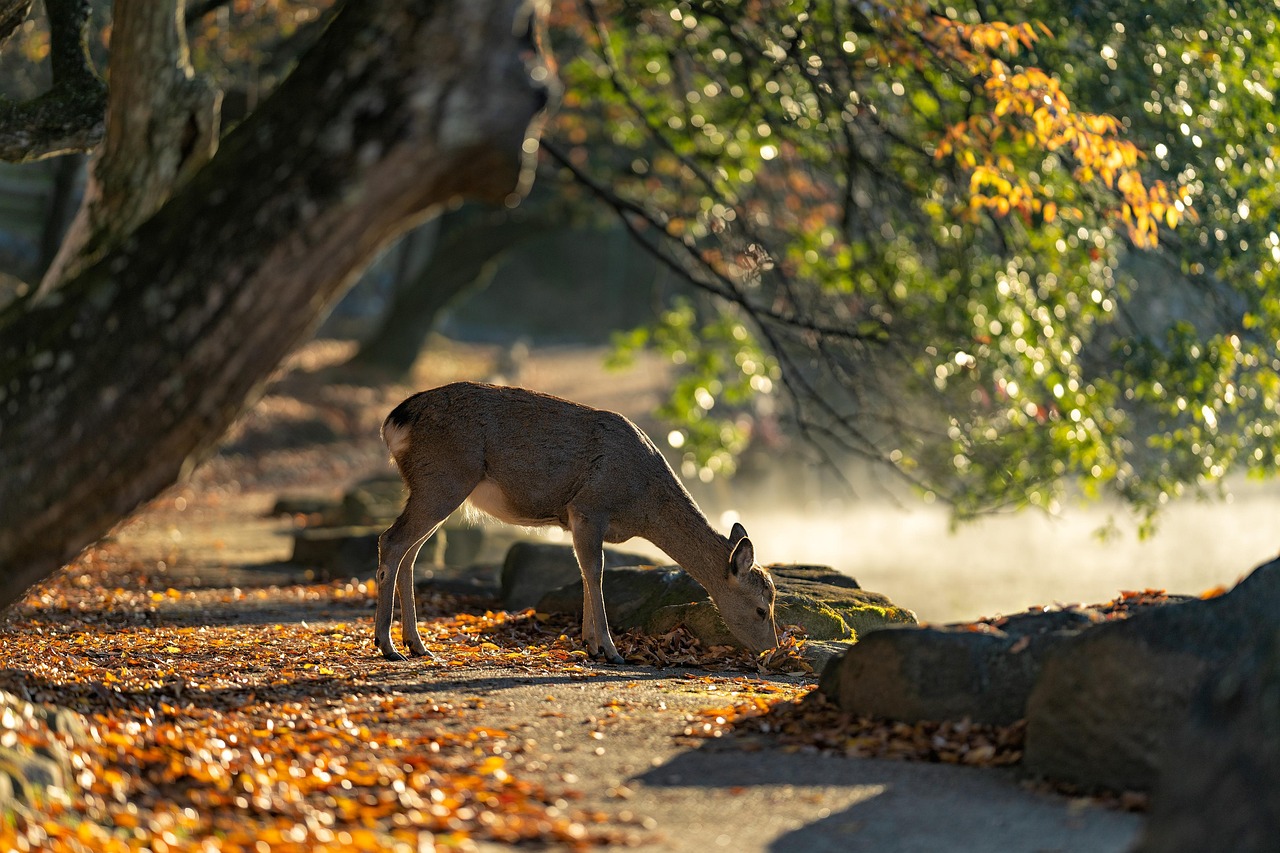
Todai-ji and the Nara deer as a day trip
Leave Kyoto on the JR Nara line around 8 AM, then it's a 20-minute walk from the station through the park — the first deer arrive before the temple does. The Daibutsuden opens at 7:30 AM from April to October: getting in early gives you the hall nearly empty, and the scale of the 15-metre bronze Buddha registers all the more. Round off the afternoon at Kasuga-taisha shrine and its hundreds of stone lanterns under the cedars, 15 minutes away on foot.
This is the best day of the itinerary with children: it's all on foot, all outdoors, and ¥200 of shika senbei crackers keeps the youngest busy for an hour. Hold the crackers flat on an open palm, and put away maps and paper bags — the deer eat them.
- 1 day from Kyoto, including 45 min of train on the way out
- JPY 800 (EUR 4.30) per adult for the Great Buddha, deer biscuits JPY 200
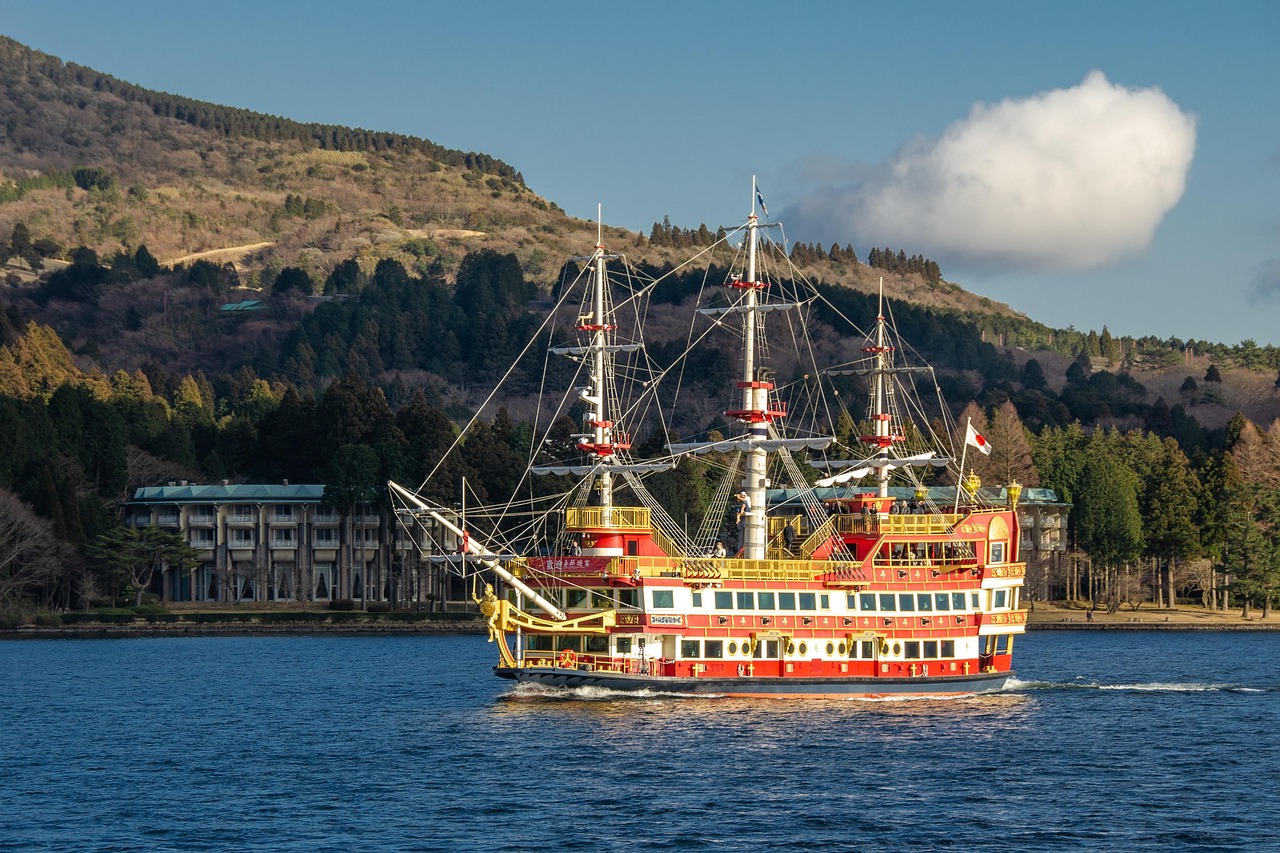
The Hakone loop: mountain railway, ropeway, boat and onsen
The loop connects without ever doubling back, which is the whole point: the Hakone Tozan mountain railway with its zigzag switchbacks, the funicular up to Sounzan, the ropeway over the steaming volcanic valley of Owakudani — where you eat the black eggs boiled in the sulphur springs — then the boat across Lake Ashi. The high point depends on the weather: on a clear day, Mount Fuji fills the frame from the boat deck.
No physical difficulty, frequent connections signposted in English, ideal with family. The Freepass covers everything except the Romancecar supplement and the baths; allow ¥1,000-2,000 for a public onsen. Book the ryokan several weeks ahead — it's the most sought-after night of the itinerary.
- 1 full day, ideally 2 days with a night in a ryokan
- 2-day Hakone Freepass JPY 7,100 (EUR 38) per adult from Shinjuku, JPY 1,600 child 6-11 years
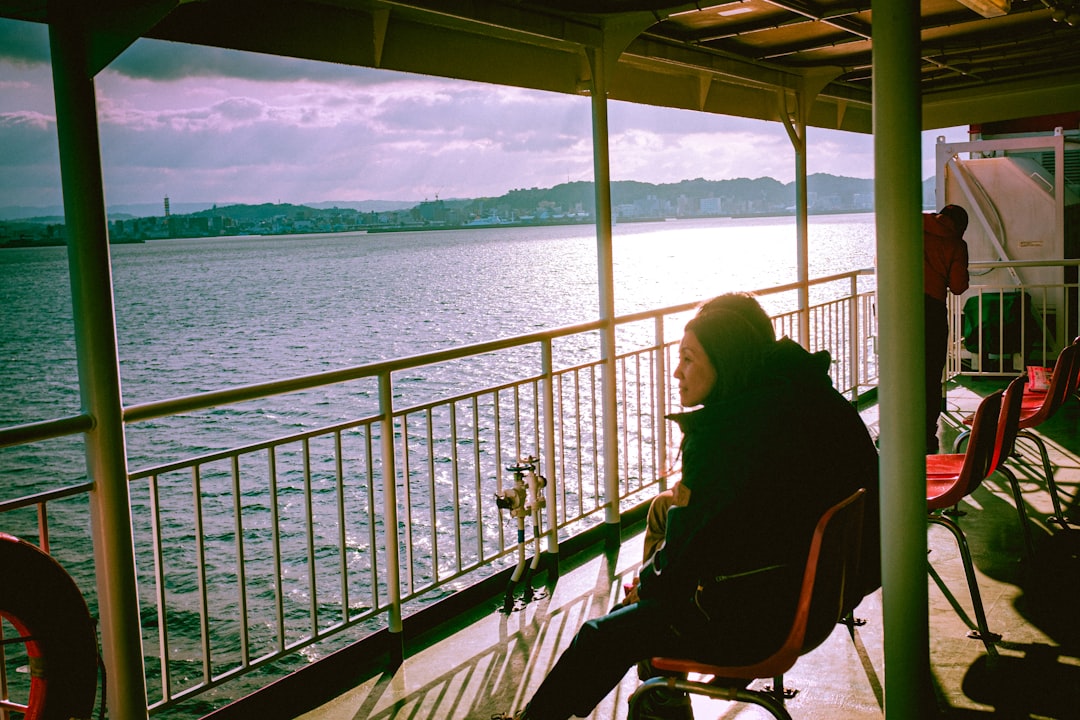
Crossing to Miyajima and the floating torii
The local train takes 25 minutes from Hiroshima to Miyajimaguchi, then the ferry about ten — and the JR West line deliberately frames the great torii on its approach, from the right-hand side of the upper deck. On the island everything organises around the tide: at high tide the gate floats and the stilted shrine reflects in the water, at low tide you walk out to its barnacle-covered pillars. Mount Misen is a 90-minute climb on foot or a ropeway ride, for the view over the Seto Inland Sea.
Easy, family-friendly, with free-roaming deer on the island. Check the tide table before choosing your time: it's the variable that determines your visit. Stay the day and you catch both states, about six hours apart.
- Half a day to 1 day from Hiroshima, including 25 min of train and 10 min of ferry
- JPY 100 visitor tax per crossing + ~JPY 200 of ferry, covered by JR passes
Getting there
Expect 12-14 hours flying to Tokyo Narita or Haneda, from roughly €700-900 return outside peak season.
Four airports serve this itinerary: Tokyo Narita (NRT) and Tokyo Haneda (HND) at the start, Osaka Kansai (KIX) and Hiroshima (HIJ) at the end. Haneda is far better placed — 30 minutes from the centre versus 60-90 from Narita — and is worth the small premium when your dates allow.
One trick shapes the whole itinerary: fly into Tokyo and out of Osaka Kansai on a multi-city ticket rather than a return to Tokyo. You save the Hiroshima-Tokyo leg back, worth ¥19,440 (about €105) and four hours on a train, usually at no extra airfare. It's the one trade-off on this trip that saves money and time.
Since Russian airspace closed, flights route north or via Central Asia, adding one to two hours compared with pre-2022 schedules.
Getting around
The Shinkansen links Tokyo to Kyoto in 2 hr 13 min and Kyoto to Hiroshima in 1 hr 34 min; buy an IC card on arrival for all city travel.
The Shinkansen is the backbone of the trip: Tokyo to Kyoto in 2 hr 13 min on a Nozomi, Kyoto to Hiroshima in 1 hr 34 min. Trains leave every ten minutes during working hours, which means you don't need to plan departure times in advance outside peak periods.
For city travel, an IC card handles everything: metro, buses, station lockers and convenience stores. Good news for 2026 — the global semiconductor shortage that suspended sales of unregistered Suica and Pasmo cards from 2023 is behind us, and these cards have been freely available again since 2025 at station machines, JR ticket offices and airports. Three options: the standard Suica, the Welcome Suica valid 28 days with no deposit, sold at JR East Travel Service Centers and dedicated machines at Haneda and Narita, or mobile Suica on iPhone, which tops up with a foreign card and needs no physical card at all — the simplest route. Check availability for the version you want on the JR East site before you travel, since the line-up has shifted a lot over the past three years.
Two details that cost money if you miss them. A JR fare revision took effect in 2026 on local lines, in the region of 4-5%, but it spared the Tokaido Shinkansen: Tokyo-Kyoto did not change, which keeps the pass calculation below intact. And large-luggage spaces on the Tokaido now require a reservation, which is where takuhaibin below earns its keep.
What to do
Fushimi Inari before 8 AM, the Hiroshima memorial, the Golden Pavilion, Miyajima's floating torii and the Nara deer form the core of the 21 days.
The split that works over three weeks follows rail logic rather than map logic: 6 days in Tokyo to absorb the jet lag and the sheer scale of the city, 2 days in Hakone for Mount Fuji and an onsen, 8 days in Kyoto as your Kansai base, 3 days in Hiroshima and Miyajima, then 2 days of slack for whatever you decide once you're there — reliably the best part of the trip.
The detailed list of sites and activities, ranked by importance, is further down this guide.
Food
Budget ¥2,500-3,500 (€13-19) a day eating at convenience stores, gyudon chains and neighbourhood ramen shops, and book high-end tables weeks ahead.
Eating in Japan costs less than in London or Paris for equivalent quality, and that holds right down to the cheapest end. A konbini — 7-Eleven, FamilyMart, Lawson — sells onigiri rice balls, egg sandwiches and cold noodles that are genuinely good for ¥200-600. A gyudon chain like Yoshinoya fills a bowl with simmered beef for ¥500. Neighbourhood ramen runs ¥900-1,200.
Each stop has its speciality, and following them structures the trip as well as any itinerary: sushi at Tokyo's Toyosu market, yuba tofu skin and shojin ryori temple vegetarian cooking in Kyoto, Hiroshima-style okonomiyaki — layered rather than mixed, with yakisoba noodles — and grilled oysters on Miyajima in winter.
Two customs to know. You don't tip: the gesture causes awkwardness. And you don't eat while walking, except on market streets that explicitly invite it, like Nishiki in Kyoto or Nakamise in Asakusa.
Itineraries
The optimal 21-day split: 6 days in Tokyo, 2 in Hakone, 8 in Kyoto with Nara, Himeji and Osaka as day trips, 3 in Hiroshima and Miyajima, 2 days of slack.
The split that works over 21 days comes down to five numbers: 6 days in Tokyo, 2 in Hakone, 8 in Kyoto, 3 in Hiroshima and Miyajima, 2 days of slack. A three-week itinerary isn't filled, it's measured out, and the principle that prevents exhaustion is few bases, long stays: every hotel change costs half a day in logistics, so four bases with day trips beat ten nights in ten cities.
- Days 1-6 — Tokyo. Asakusa and Senso-ji, Shibuya and Shinjuku, Meiji-jingu, Toyosu market, one museum day. Jet lag bills you for the first two days: keep them light.
- Days 7-8 — Hakone. The loop of mountain railway, cable car, Lake Ashi boat, and a ryokan night with an onsen. Mount Fuji shows itself roughly one day in two in summer, more often in winter.
- Days 9-16 — Kyoto. Fushimi Inari, Kinkaku-ji, Kiyomizu-dera, Gion, Arashiyama, plus three day trips: Nara (45 min), Himeji (1 hr) and Osaka (30 min).
- Days 17-19 — Hiroshima and Miyajima. One day for the memorial, one for the island, one to breathe.
- Days 20-21 — slack. Head back towards Osaka Kansai for your flight, or take the detour you decided on once you were there.
Two extensions tempt most travellers, and both leave the Golden Route: Shirakawa-go with its UNESCO-listed thatched farmhouses, 4 hr 30 min from Kyoto via Nagoya and not on the Shinkansen network, and the Jigokudani snow monkey park in Nagano, which demands a dedicated two-day round trip from Tokyo and only really delivers under snow. Save them for a second trip: squeezing them into three weeks costs two nights and gives up the benefit of long bases.
Climate & seasons
When to go to Japan?
Monthly averages over the past 5 years (Open-Meteo).
Avoid
- May
- June
- July
- August
| Jan | Feb | Mar | Apr | May | Jun | Jul | Aug | Sep | Oct | Nov | Dec | |
|---|---|---|---|---|---|---|---|---|---|---|---|---|
| Our take | ||||||||||||
| Weather | ||||||||||||
| High | 8° | 9° | 13° | 19° | 22° | 26° | 31° | 32° | 29° | 22° | 16° | 10° |
| Rain (mm) | 49 | 62 | 139 | 150 | 221 | 240 | 230 | 214 | 154 | 120 | 90 | 63 |
| Hiking & nature | Hiking & nature October | Hiking & nature November | ||||||||||
| City sightseeing | City sightseeing March | City sightseeing April | City sightseeing October | City sightseeing November | City sightseeing December |
What to do by season (autumn)
-
Hiking & nature
Mild temperatures, stable conditions.
-
City sightseeing
Pedestrian-friendly most of the year.
When to go
Aim for late March to May or October-November: cherry blossoms open around 19 March in Tokyo and 24 March in Kyoto in 2026, and maples peak in Kyoto around 5 December.
Two windows dominate the Japanese calendar, and each lasts only seven to ten days per city. Forecasts for 2026 put the cherry blossom opening around 19 March in Tokyo, full bloom on the 26th, and around 24 March in Kyoto, full bloom on the 31st — three to seven days earlier than average, a mild February having pulled the cycle forward. Autumn delivers the same intensity with less pressure on prices: the maples move south from late September, and Kyoto peaks around 5 December 2026, with the reliable window on the Tokyo-Kyoto axis running from 18 November into early December.
The rest of the year reads as a set of things to avoid. The tsuyu rainy season settles in from early June to mid-July. The summer that follows is punishing: 35 °C with 80% humidity in Kyoto, a city sitting in a basin. Typhoons peak in August and September, with winds that can reach 300 km/h according to Japan Meteorological Agency bulletins.
One calendar trap is worth flagging: from 7 to 16 August 2026, the Obon holiday period, every Nozomi train runs on compulsory reservation with no unreserved cars at all. Travelling that window without a booked seat means staying on the platform.
Budget
Budget €40-60 per person per day on a shoestring, €130 in comfort and €240 at the high end, excluding international flights and long-distance Shinkansen.
Over three weeks, excluding flights and long-distance trains, the useful range is €40-60 a day on a budget, €130 in comfort and €240 or more at the high end, per person. The budget tier breaks down as ¥3,000-5,500 for accommodation, ¥2,500-3,500 for food, ¥800-1,200 for city transport and ¥500-800 for one site entry, or ¥6,800-11,000 a day.
The pleasant surprise is admission prices: they are trivial by European or American standards. Fushimi Inari is free, the Hiroshima Peace Memorial Museum costs ¥200 (€1.10), the Great Buddha at Todai-ji ¥800. The line item that runs away with your budget is never culture — it's rail.
Two new taxes to factor in for 2026: Kyoto's restructured lodging tax from 1 March 2026 (¥400 per person per night in the ¥6,000-19,999 band), and ¥100 visitor tax per crossing to Miyajima, collected with your ferry ticket.
Add it up for the total envelope on a 21-day trip, flights and long-distance trains included: roughly €2,000-2,400 per person on a budget — 21 days at €50-60, so €1,050-1,260, plus €700-900 in airfare, €240 of Shinkansen and about €30 of lodging and crossing taxes — and €3,700-3,900 in comfort. Both assume you avoid the cherry blossom window, when accommodation climbs steeply.
Where to stay
Expect ¥3,000-5,500 (€16-30) in a hostel or capsule hotel, ¥10,000-14,000 (€54-75) in a business hotel, plus one Hakone ryokan night as the trip's splurge.
Japan invented a category Europe doesn't have: the business hotel. A precisely engineered 12 m² room, a moulded one-piece bathroom, faultless bedding, at ¥10,000-14,000 (€54-75) a night with chains like APA, Dormy Inn or Toyoko Inn. It's the best comfort-to-price ratio in the country and the logical backbone of a three-week stay.
On this itinerary, the split that works: 6 nights in Tokyo (one base, Shinjuku or Ueno for connections), 1-2 nights in Hakone in a ryokan with a private onsen — the trip's splurge, ¥25,000-50,000 with a kaiseki dinner — 7 nights in Kyoto, from which Nara, Himeji and Osaka are all day trips, then 2 nights in Hiroshima.
Watch one 2026 change: Kyoto's lodging tax was restructured on 1 March 2026. It now runs from ¥200 per person per night (rooms under ¥6,000) to ¥10,000 (rooms at ¥100,000 and above). For a room between ¥6,000 and ¥19,999 it rose from ¥200 to ¥400 — so seven nights in Kyoto add roughly ¥2,800 (€15) that booking sites don't display.
Safety
Japan is a very safe destination and is not classed as a no-go zone by Western foreign offices, but the country accounts for 20% of the world's most significant earthquakes.
Japan is not classed as a discouraged destination by France Diplomatie, and day-to-day safety is exceptional: assaults are rare, lost property comes back, and a woman travelling alone rides the metro at night without a second thought. Theft targeting tourists does exist around stations, and two Tokyo nightlife districts — Roppongi and Kabukicho — carry documented risks of drink spiking with GHB and of sexual assault. Don't leave a drink unattended in either.
The real issue is seismic. Japan accounts for 20% of the world's most significant earthquakes. That shouldn't put you off — Japanese construction is the best prepared anywhere — but it calls for three habits: install an alert app on arrival, note the emergency exits at each place you stay, and if the ground shakes, take cover under a table before evacuating when the authorities say so.
Typhoon season runs from May to October. During that window, drop mountain, sea and beach plans as soon as a Japan Meteorological Agency bulletin flags one. As of 28 July 2026, France Diplomatie was reporting a magnitude 7.1 earthquake in Kumamoto prefecture with a tsunami warning, several typhoons over Okinawa and the Amami Islands, and a rise in measles cases — three localised alerts, none affecting the Tokyo-Kyoto-Hiroshima axis. Check your own government's travel advice in the week before departure.
Formalities
French and most Western citizens need no visa for up to 90 days of tourism, and JESTA is NOT in force in 2026 — implementation is targeted for fiscal 2028.
Citizens of France, the UK, the US, Canada, Australia and around 70 other countries enter Japan without a visa for short tourist stays, generally up to 90 days, provided they undertake no paid work. A passport valid on your return date is enough — Japan imposes no additional three- or six-month validity rule, unlike many Asian destinations. The passport need not be biometric. Every minor requires their own individual passport. Check your own nationality's terms, as the permitted length varies.
One piece of confusion is circulating widely and deserves a straight answer: JESTA does not exist yet. This electronic travel authorisation was created by a law passed by the Japanese parliament in March 2026, but implementation is targeted for fiscal 2028, meaning between April 2028 and March 2029. No JESTA application is required for a trip in 2026 or 2027, and neither France Diplomatie nor the Japan National Tourism Organization lists it as mandatory.
What does already exist is Visit Japan Web: an online pre-registration of your immigration and customs forms, done before departure. It is recommended and never mandatory, but it turns the arrival queue into a QR code scan. Do it.
On health, no vaccination is compulsory — yellow fever is required only for travellers arriving from an endemic area. Make sure your routine vaccinations are current, particularly measles, with a rise in cases reported in Japan in 2026.
Tips
Forward your luggage by takuhaibin for about ¥1,650 between Tokyo and Kyoto, and only buy the Japan Rail Pass after doing the maths leg by leg.
For about ¥1,650 (€9) between Tokyo and Kyoto at 100 cm size, takuhaibin is the single biggest comfort upgrade of the trip: Yamato Transport collects your suitcase at hotel reception and delivers it to the next one, usually by the following morning. You travel with an overnight backpack and carry nothing up station stairs — decisive in Hakone, where the stations stack whole flights of them.
Three more habits worth their weight in yen:
- Cash still rules outside the cities. ATMs at 7-Eleven stores and post offices accept foreign cards; those at Japanese banks often don't.
- Book high-end restaurants and Hakone ryokan several weeks ahead, and 4-6 months for the cherry blossom window, when accommodation prices climb steeply.
- Carry a small bag for your rubbish. Public bins are almost non-existent, a legacy of the 1995 attacks — you take your litter back to the hotel.
Finally, onsen bathing follows a protocol: you wash sitting on a stool before entering the bath, you never put your towel in the water, and tattoos are still refused at many traditional establishments — ask at reception rather than discovering the rule on the spot.
Torn between Japan and another East Asian country? Our South Korea guide for a first trip follows the same logic, from Seoul to Jeju, on a lighter budget.
FAQ
No visa is required for French, British, American and most Western citizens for up to 90 days of tourism, and JESTA will not take effect before fiscal 2028.
Do I need a visa for Japan in 2026?
No. Citizens of France, the UK, the US, Canada, Australia and around 70 other countries enter without a visa for short tourist stays, generally up to 90 days, provided they do no paid work. Beyond that, a visa becomes mandatory. A passport valid on your return date is enough, and it need not be biometric. Every minor needs their own passport. Permitted stay length varies by nationality, so check your own terms.
Is JESTA mandatory to visit Japan?
No, not in 2026. JESTA was created by a law passed in March 2026, but implementation is targeted for fiscal 2028, meaning between April 2028 and March 2029, at a cost announced at around ¥2,000-3,000. No application is required for a trip in 2026 or 2027. What does exist is Visit Japan Web: an online pre-registration that is recommended, never mandatory.
Is the 21-day Japan Rail Pass worth it for Tokyo-Kyoto-Hiroshima?
No, not for this itinerary. The 21-day ordinary pass costs ¥100,000 (€538) until 30 September 2026, then ¥105,000. The three big hops on the Golden Route total roughly ¥44,600: Tokyo-Kyoto ¥14,170 on a reserved Nozomi, Kyoto-Hiroshima about ¥11,000, Hiroshima-Tokyo ¥19,440. Even adding Hakone and Nara you stay under half the price of the pass. Two underlying reasons: over three weeks, a first trip spends several consecutive days in one city without taking a single long-distance train, and the pass does not cover Nozomi services without a paid supplement.
When is the best time to see the cherry blossoms?
Late March to early April on the Tokyo-Kyoto axis. For 2026, blossoming is forecast around 19 March in Tokyo with full bloom on 26 March, and around 24 March in Kyoto with full bloom on 31 March, three to seven days earlier than average. The useful window lasts only 7-10 days per city, and accommodation prices climb steeply: book 4-6 months ahead.
How much should I budget per day in Japan?
Around €40-60 per person per day on a budget, €130 in comfort and €240 or more at the high end, excluding international flights and long-distance Shinkansen. Over 21 days the total envelope including flights and trains comes to roughly €2,000-2,400 on a budget and €3,700-3,900 in comfort. For 2026, add Kyoto's lodging tax (¥400 per person per night for a room between ¥6,000 and ¥19,999) and ¥100 visitor tax per crossing to Miyajima.
Can you still buy a Suica card in 2026?
Yes. The semiconductor shortage suspended sales of unregistered Suica and Pasmo cards from 2023, but they have been freely available again since 2025 at station machines, JR ticket offices and airports. Three options: the standard Suica, the Welcome Suica valid 28 days with no deposit, or mobile Suica on iPhone, which tops up with a foreign card — the simplest. Since the line-up has changed a lot since 2023, confirm the version you want on the JR East site before travelling.
Do I need vaccinations to travel to Japan?
No vaccination is compulsory to enter Japan from Europe or North America: yellow fever is required only for travellers arriving from an endemic area. Simply keep your routine vaccinations current: diphtheria, tetanus, polio, whooping cough and above all measles, with a rise in cases reported in Japan in 2026. No other health formality applies on entry. On general safety, Japan is not flagged as a destination to avoid and day-to-day security is exceptional, the real issue being earthquake risk.
How do I travel with luggage between Tokyo, Hakone and Kyoto?
Use takuhaibin, the luggage forwarding service. Yamato Transport collects your suitcase at hotel reception and delivers it to the next one, usually by the following morning, for about ¥1,650 at 100 cm size on the Tokyo-Kyoto leg, roughly €9. You then travel with an overnight backpack and carry nothing up station stairs, which is decisive at Hakone, where the stations stack whole flights of them. It also lets you board the Shinkansen light: large-luggage spaces on the Tokaido line now require a reservation.
Sources
The figures in this guide come from the sources below, checked on the publication date.
- www.diplomatie.gouv.fr
- www.diplomatie.gouv.fr
- www.diplomatie.gouv.fr
- www.japan.travel
- global.jr-central.co.jp
- www.westjr.co.jp
- hakonetrip.odakyu-global.com
- www.japan.travel
- www.ecb.europa.eu
- kyoto.travel
- hpmmuseum.jp
- narashikanko.or.jp
- www.japan.travel
- another1000years-miyajima.jp
- whc.unesco.org
- whc.unesco.org
- whc.unesco.org
- whc.unesco.org
- whc.unesco.org
- whc.unesco.org
Leave a comment
Share your thoughts or travel experience. Your email will not be published.