


Contents 27
Overview
Halong Bay, a UNESCO World Heritage Site since 1994, gathers 1,133 karst islands across 65,650 hectares in northern Vietnam.
Halong Bay is one of the most spectacular landscapes in Southeast Asia. Set in the Gulf of Tonkin, about 165 km east of Hanoi, it spreads across 65,650 hectares and counts 1,133 limestone islands and islets rising from an emerald sea.
The site has been inscribed on the UNESCO World Heritage List since 1994, then extended in 2000 and again in 2023 to include the neighbouring Cat Ba archipelago. This extension recognises the area's rich geology and unique biodiversity, with its caves, hidden lagoons, floating villages and tropical forests.
You explore the bay mainly by cruise, aboard traditional junks or modern boats, on trips lasting from one to several nights. Visitors alternate slow sailing between karst pillars, swimming, kayaking in coves and visits to spectacular caves like Sung Sot or Thien Cung.
Beyond the classic cruise, the region also offers Cat Ba Island and its national park, the quieter Lan Ha Bay next door, and the Sun World leisure complex in Halong City. A complete destination, blending nature, culture and downtime.
11 places to take with you
In the guide's order, ready for Google Maps or your GPS.
Book the activities from this guide
Our picks for Ha Long, well rated and free to cancel.
-
Book this activity
Vietnamese Cooking Class Aboard a Junk
EUR 10-20 per person, often included in premium cruises
Affiliate links: Travel Advice earns a commission if you book, at no extra cost to you. Learn more

Cua Van Floating Village
The 175 floating houses painted in blue and pink line up sheltered by the rocks of Va Gia, and only the slap of oars breaks the silence. Cua Van, tucked into a sheltered cove of the central bay, works as a cultural memory centre for Halong's fishing communities and was ranked by Journeyetc.com among the 16 most beautiful ancient villages in the world in 2012. The visit happens in a rowing sampan steered by the village women, about 45 minutes to glide past the floating school, the temple and the fish farm. More authentic than Vung Vieng, more arranged for tourists, Cua Van still keeps a real resident population.

Vung Vieng Floating Village
You pass under a natural stone arch and the village appears, set on the dark water like a raft of yellow houses. Located in Bai Tu Long Bay, away from the classic circuits, Vung Vieng was founded in the 19th century and is home today to about 300 inhabitants who live from fishing, pearl farming and now a little tourism. The rowing-boat visit lasts an hour and includes the pearl farm, where you watch the nucleus inserted into the oyster. Vung Vieng is the pick for travellers who want to skip the Cua Van crowd and prefer raw authenticity to staging.

Classic Halong Bay Cruise
The boat leaves the harbour and, within fifteen minutes, the karst pillars rise from the jade water like a stone army. The bay, a UNESCO World Heritage Site since 1994, spreads its 1,133 islands over 65,650 hectares in northern Vietnam. A 2-day / 1-night cruise stays the gold standard: you alternate slow sailing, swimming off the back deck, kayaking between the cliffs, and a night aboard, anchor dropped in a silent cove. Compared to a same-day round trip from Hanoi, this rhythm lets the landscape breathe instead of just crossing it.

Ti Top Island (Titov)
A crescent of white sand, translucent water, and behind it a jungle-clad sugarloaf calling for the climb. The island, named in 1962 in honour of Soviet cosmonaut Gherman Titov, who was hosted here by Ho Chi Minh, is just 3.7 hectares but concentrates the DNA of the bay. You swim for an hour on the beach, then climb the 400 to 450 steps to the belvedere for a 360° panorama over the karst pillars, the absolute postcard view. It is the only easily accessible high point in the central bay, which is why every cruise stops here.

Sung Sot Cave (Cave of Surprises)
After about a hundred steps under frangipani trees, the vault opens onto a mineral cathedral lit in blue and pink. Discovered by French explorers in 1901, Sung Sot Cave covers more than 10,000 m² on Bo Hon Island, 25 metres above sea level. The route follows a marked 500-metre corridor through two successive halls, the second large enough to hold a football pitch. It is the most spectacular cave in the central bay, more impressive in volume than Thien Cung further west.

Cat Ba Island and its National Park
The ferry docks, you cross the fishing port, then the road dives into a dense jungle where langurs call. Cat Ba is the largest island in the archipelago, included in the 2023 UNESCO extension, and its national park, created in 1986, covers 109 km² of land and 52 km² of sea. It is the only worldwide sanctuary of the golden-headed langur, of which fewer than 70 individuals remain, observable from the marked hiking trails (3 to 5 hours depending on the loop). Unlike a classic cruise where you sleep aboard, Cat Ba lets you mix hiking, beach time and evenings in town.

Lan Ha Bay and Karst Kayaking
The paddle slices through opal-coloured water, you slip between two 80-metre cliffs, and suddenly a hidden lagoon opens up, empty of any boat. South of Halong, Lan Ha lines up more than 400 islets and 139 sand beaches, without the mass tourism of the main bay. The kayak outing lasts 2 to 3 hours and usually goes through the Ba Ham lagoons and the Dark and Bright caves, paddled through when the tide allows. Lan Ha is the choice for those who have already seen Halong in pictures and want the intimate version, with no buses or queues.

Thien Cung Cave (Heavenly Palace)
You enter through a narrow fissure, then the space explodes into three successive chambers where stalactites trace dragons, birds and figures from local mythology. Set on Dau Go Island, 4 km from Bai Chay port and 25 metres above the sea, Thien Cung covers nearly 10,000 m² with ceilings rising to 30 metres. The visit takes about 45 minutes, the time it takes to climb the steep path then cross the three chambers in a ballet of coloured lights. More theatrical than Dau Go right next door, this is the cave you pick for the wow factor with the family.

Sun World Halong Complex and Sun Wheel
The cross-bay cable car lifts two giant gondolas above the channel, and the entire bay suddenly spreads out through the windows. Opened in 2017 on 214 hectares of Ba Deo Hill, Sun World Halong combines amusement park, Japanese garden and the Sun Wheel reaching 215 metres above the sea, with a 20-minute full rotation. You come for the panoramic view over the karst pillars at sunset, more than for the rides themselves. It is the dry-land alternative for travellers who do not want to board a cruise, or the side trip from a night in Bai Chay.

Bo Hon Island
Sometimes called 'Halong in miniature', this island packs the best of the bay into 3.8 km². Bo Hon is home to Sung Sot Cave, Luon Cave that you cross in a rowing boat, the Drum Cave (Trong) and Dong Tien Lake ringed by cliffs. Most cruises spend a full half-day here, alternating the Sung Sot walk and the rowing-boat passage through Luon, a natural tunnel that opens onto a closed lagoon populated by macaques. Bo Hon is the geographic hub of the central bay: if you only have one day, this is where 70% of the highlights are concentrated.

Dau Go Cave (Wooden Stakes Cave)
Natural light filters through the 17-metre-wide entrance, coating the walls with mosses and ferns, a rare sight in a Halong cave. Dau Go covers 5,000 m² on the island that bears its name and takes its name from General Tran Hung Dao, who is said to have hidden here in 1288 the sharpened wooden stakes later planted in the Bach Dang River to trap the Mongol fleet. The visit takes about thirty minutes, on a circular route with a sea-view belvedere on the way out. It is the most botanically alive cave in the bay, where Thien Cung is mineral and theatrical.
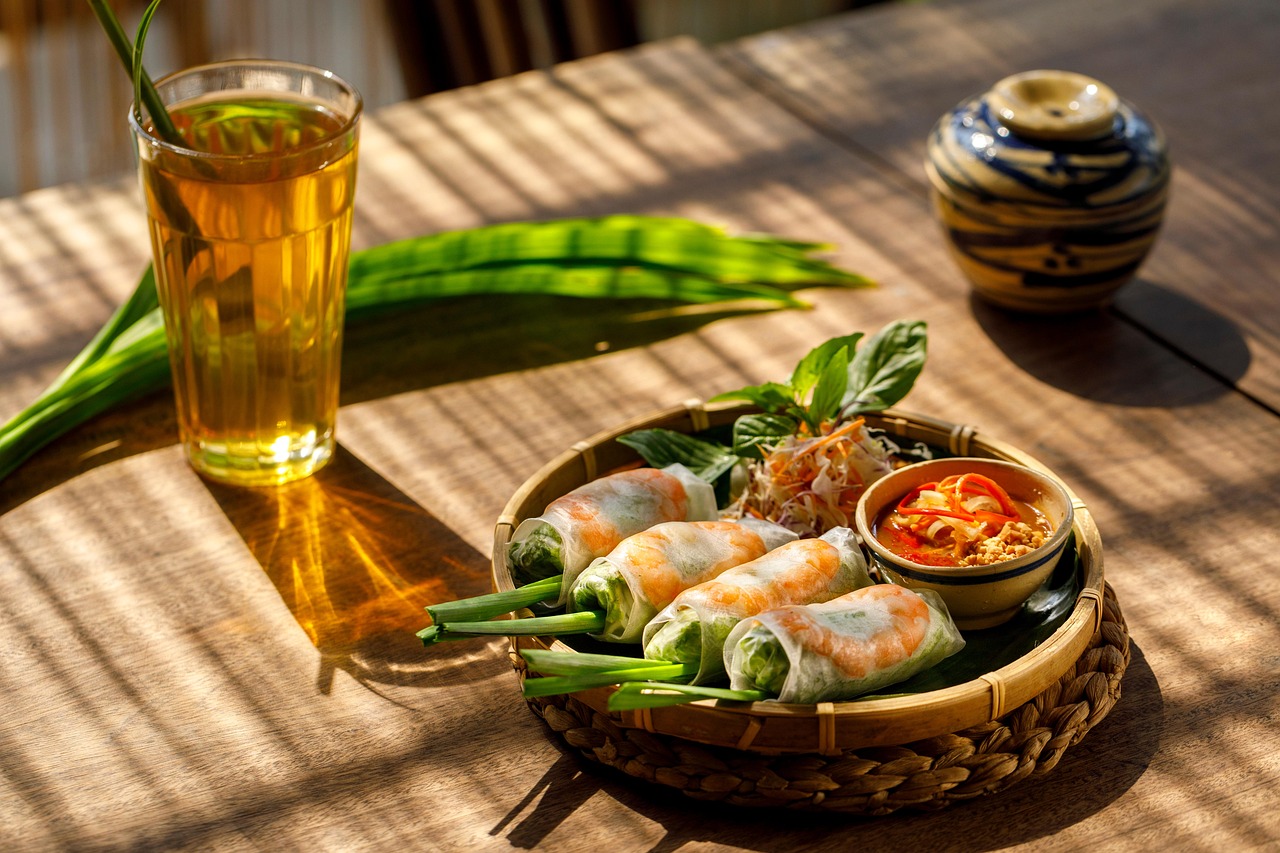
Vietnamese Cooking Class Aboard a Junk
Meet on the back deck around 16:00, after the afternoon stop, around a workstation set up facing the karst pillars. The onboard chef shows the gestures: folding nem, balancing nuoc-mam with sugar and lime, quick-cooking bo bun. Each participant leaves with their own rolls eaten as appetisers, plus the recipe sheet to take home. Ideal for couples and families with teens, ask at cruise booking, some companies offer it, others charge extra.
- 1 hr 30 min including 45 min of practice
- EUR 10-20 per person, often included in premium cruises
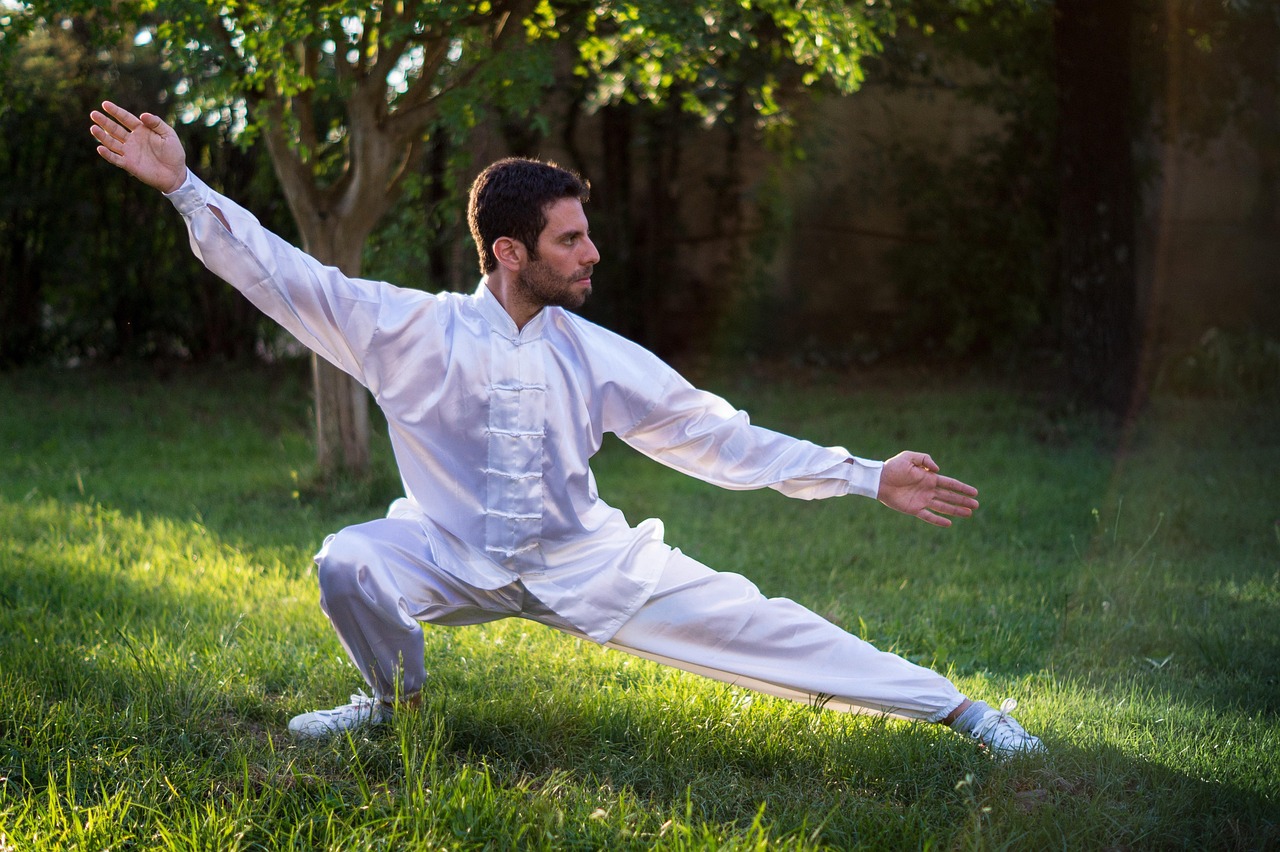
Sunrise Tai Chi on the Upper Deck
Wake up at 6:00, hot tea served on deck, then 45 minutes of slow movements facing the sunrise between the karsts. The onboard instructor guides a sequence accessible to beginners, with no acrobatic poses, focused on breathing and grounding. The high point: the moment when the mist lifts and the bay turns from grey to gold. No booking needed, the schedule is announced the night before at dinner by the crew.
- 45 min
- Included in most 3* to 5* cruises

Climbing and Deep Water Solo in Lan Ha Bay
Meet at 8:30 at the Asia Outdoors office in Cat Ba town, safety briefing, then boat transfer to the limestone cliffs of Lan Ha. On the menu, depending on level: top-rope routes for beginners, or deep water solo, ropeless climbing above the water, where you jump to come back down. Run by certified guides, gear provided, half-day or full day with lunch on the boat. Aimed at adult sporty travellers, book 2-3 days ahead in high season.
- Half day (4 hrs) or full day (8 hrs)
- EUR 55-95 per person, equipment and boat included, lunch included on the full day
Getting there
You reach Halong Bay from Hanoi in 2.5 to 3 hours via the 5B expressway, covering 164 km.
The main gateway is Hanoi Noi Bai International Airport (HAN), served by many direct flights from Paris CDG (about 11h30), with London Heathrow, New York JFK and Los Angeles LAX as common connecting alternatives. Two other airports can help: Hai Phong Cat Bi (HPH) and Van Don (VDO), even closer to the site.
From Hanoi, the trip to Halong is mostly done by road, in 2.5 to 3 hours, thanks to the 5B expressway opened in 2018. Several options exist depending on your budget:
- Express bus from My Dinh station, about 12 EUR (13 USD) per person;
- Private limousine van or shared air-conditioned shuttle, around 25 to 50 EUR per person;
- Private transfer included in most upscale cruise packages.
Departure ports vary by cruise: Bai Chay and Tuan Chau for the classic Halong Bay cruises, Got for Lan Ha and Cat Ba. Double-check the port printed on your ticket before leaving.
Getting around
On site, you move around by cruise tender, inter-island ferry, Grab taxi, or the Sun World cable car in Halong City.
Once you arrive, most movement happens by boat. Cruises include all transfers between port and junk, plus shuttles out to the visited sites (caves, Ti Top Island, floating villages).
To reach Cat Ba Island from Halong City, several daily ferries leave the Tuan Chau port and reach Gia Luan port in about 45 minutes. Another fast link runs between Got and Cai Vieng.
On Cat Ba Island, you ride a rented scooter (5 to 8 EUR a day), a taxi or a local bus to reach the beach, the national park or the fishing village.
In Halong City itself, taxis and the Grab app work very well and cost little. The Sun World cable car, one of the tallest in the world, links Bai Chay to Ba Deo Hill and offers a panoramic view over the bay. A solid plan B if your cruise gets cancelled.
What to do
Cruises, karst caves, kayaking, floating villages, Ti Top Island and Cat Ba park make up the eleven highlights of the bay.
Halong Bay is best lived on a cruise, mixing slow sailing, swims and day excursions. But the area also offers more active experiences: kayaking in lagoons, jungle hiking, swimming on hidden beaches and visits to stilted fishing villages.
Here are the eleven flagship experiences detailed further down the list:
- The classic junk cruise in the main bay;
- Sung Sot Cave, the largest and most impressive;
- Thien Cung Cave, the so-called Heavenly Palace;
- Dau Go Cave, rich in history;
- Ti Top Island, its beach and viewpoint;
- Cua Van Floating Village;
- Vung Vieng Floating Village, more authentic;
- Cat Ba Island and its national park;
- Kayaking in Lan Ha Bay;
- Bo Hon Island, a bird haven;
- The Sun World Halong complex and its giant Ferris wheel.
See the detailed list further down for all the practical info on each site.
Food
Halong cuisine showcases seafood, cha muc (squid sausage) and the local tu hai clams.
Local food logically revolves around the sea. Halong and Cat Ba are active fishing ports, and the freshness of the catch is remarkable.
A few specialties to try without fail:
- Cha muc: the famous pounded-and-fried squid sausage, crispy outside and tender inside, served with sticky rice or in a banh mi;
- Bun be be: noodle soup with mantis shrimp, a Halong classic;
- Tu hai: large local clams grilled over fire, dressed with fish sauce or served in soup;
- Sa sung: dried sea worm, the secret ingredient of regional pho broth;
- Crab, tiger prawns and grilled fish, bought straight from floating farms.
To try these dishes, two solid spots: the Bai Chay night market, lively and affordable, and the floating restaurants of Cat Ba where you pick your fish live from the tanks. On the drinks side, the local Ha Long beer pairs perfectly with a seafood platter.
Itineraries
Plan 2 days for the basics, 3 days to add Cat Ba and Lan Ha, or 5 days to combine Halong with Hanoi.
Three field-tested itineraries, depending on the time you have.
2 days / 1 night, classic cruise
- Day 1: Hanoi-Halong transfer in the morning, boarding at Tuan Chau, lunch on board, visit to Sung Sot Cave and Ti Top Island, sunset and dinner on deck;
- Day 2: tai chi at sunrise, kayaking at Cua Van Floating Village, brunch, return to port and transfer back to Hanoi.
3 days / 2 nights, Halong + Lan Ha + Cat Ba
- Day 1: Halong Bay cruise, Thien Cung and Dau Go caves, Ti Top Island;
- Day 2: cross over to Lan Ha, kayak between karst pillars, swim and stop at Vung Vieng Floating Village;
- Day 3: Cat Ba Island, hike in the national park, return to Hanoi.
5 days, Hanoi + Halong combo
- Days 1-2: Hanoi Old Quarter, Hoan Kiem Lake, Temple of Literature;
- Days 3-4: 2-day / 1-night Halong Bay cruise;
- Day 5: Sun World Halong, cable car and Ferris wheel before flying home.
The bay works best as one leg of a longer trip: our Vietnam travel guide from north to south lays out the full route from Hanoi to the Mekong Delta, along with entry formalities and budget.
Climate & seasons
When to go to Vietnam?
Monthly averages over the past 5 years (Open-Meteo).
Best months
- January
- February
- March
- November
- December
Avoid
- June
- July
- August
- September
| Jan | Feb | Mar | Apr | May | Jun | Jul | Aug | Sep | Oct | Nov | Dec | |
|---|---|---|---|---|---|---|---|---|---|---|---|---|
| Our take | ||||||||||||
| Weather | ||||||||||||
| High | 20° | 20° | 23° | 27° | 29° | 31° | 31° | 31° | 30° | 28° | 26° | 22° |
| Rain (mm) | 37 | 54 | 38 | 84 | 180 | 297 | 308 | 382 | 388 | 143 | 35 | 11 |
| Beach | Beach April | Beach November | ||||||||||
| Hiking & nature | Hiking & nature January | Hiking & nature February | Hiking & nature March | Hiking & nature November | Hiking & nature December | |||||||
| City sightseeing | City sightseeing January | City sightseeing February | City sightseeing March | City sightseeing April | City sightseeing October | City sightseeing November | City sightseeing December |
What to do by season (autumn)
-
Beach
Warm air and water, little rain.
-
Hiking & nature
Mild temperatures, stable conditions.
-
City sightseeing
Pedestrian-friendly most of the year.
When to go
The best months to visit Halong Bay are March, April, May, October and November, with dry weather and a calm sea.
Halong Bay can be visited year-round, but some periods are clearly more pleasant than others. The months from March to May bring mild weather, good visibility and little rain, ideal for photography and kayaking.
October and November form the other prime window. Temperatures stay comfortable, around 22 to 26°C, the sky clears and domestic tourism slows after the Vietnamese back-to-school period.
Conversely, July and August are best avoided. This window matches the typhoon season in the South China Sea: cruises can be cancelled without notice by local authorities, sometimes for several days in a row. Heat and humidity are also taxing.
Winter, from December to February, remains workable but is often misty and cool (15 to 18°C). The fog creates a mysterious, very photogenic atmosphere, but cuts down on swimming and some water activities. Book early in the spring high season, since the best junks fill up fast.
Budget
Expect about 35 EUR (38 USD) a day on a backpacker budget, 90 EUR mid-range, and 220 EUR per day at the high end in Halong.
The Halong budget mostly hinges on the type of cruise you pick, which is the main expense of the stay.
- Backpacker (~35 EUR / day, ~38 USD): dorm or guesthouse on Cat Ba, street food, day trip on a shared boat;
- Mid-range (~90 EUR / day, ~98 USD): 3-star hotel or 3-star junk full board, transfers included, a few paid visits;
- Comfort (~220 EUR / day, ~240 USD): 5-star junk with a private balcony cabin, refined meals, private limousine transfer from Hanoi.
For the 2-day / 1-night cruise, plan on 100 to 150 USD per person in 3-star and 250 to 400 USD in 5-star. Prices generally cover meals, the Hanoi shuttle and onboard activities (kayak, tai chi, cooking demo).
The local currency is the Vietnamese dong (VND). Bank cards work in hotels and on cruise ships, but keep cash for markets, taxis and tips.
Work out your budget
Backpacker
€245
€35 per person per day
Mid-range
€630
€90 per person per day
Upscale
€1,540
€220 per person per day
On-the-ground estimate, international flights excluded unless stated. Prices vary by season and how early you book. Figures updated on 11/09/2026.
Where to stay
You sleep either aboard a cruise junk, in Halong City (Bai Chay), or on Cat Ba Island.
The most iconic accommodation is, of course, a night aboard a junk. Two-day / one-night or three-day / two-night cruises let you admire the bay at sunrise, far from the day boats. Expect 100 to 150 USD per person for a 3-star junk, and 250 to 400 USD for a fully comfortable 5-star.
To stay on land, two main bases are open to you:
- Bai Chay (Halong City): a tourist district with international hotels, restaurants, a night market and direct access to the Sun World cable car;
- Cat Ba Island: more nature-focused, ideal to combine national park hikes, beaches and trips out to Lan Ha Bay.
Tuan Chau, the island linked to Halong City by a bridge, also offers family resorts. For tight budgets, Cat Ba guesthouses start around 15 EUR a night. Book ahead from April to May and in October.
Safety
Vietnam is rated as requiring increased vigilance by France Diplomatie and the US State Department, with no formally restricted area in Halong.
Halong Bay is a broadly safe destination for travellers. Vietnam is listed under increased vigilance by the French Ministry of Europe and Foreign Affairs and at Level 1 (normal precautions) by the US State Department, with no formally restricted area in the Halong region.
The main risks stay minor and easy to anticipate:
- Petty pickpocketing in the busiest tourist zones of Halong City and at the night market;
- Road accidents on the Hanoi-Halong corridor, used by many heavy trucks: stick to well-known bus operators;
- Boat-related risks: check that your junk has life jackets and a valid certification, and steer clear of suspiciously cheap operators;
- Typhoons between July and September, which can lead to cruise cancellations.
Standard advice: keep a digital copy of your passport, watch out for taxi scams in Hanoi, and take out travel insurance that covers water sports. The tourist police can be reached on 113 if anything goes wrong.
Formalities
French citizens enjoy a 45-day visa exemption since 15 August 2023; other nationalities need an e-visa, with passport valid 6 months.
Good news for French travellers: since 15 August 2023, French passport holders are visa-exempt for any tourist stay in Vietnam of up to 45 days. The scheme has been extended and runs until August 2028. Other nationalities (US, UK, Australia, Canada, New Zealand) need an e-visa or visa-on-arrival; the e-visa now allows stays of up to 90 days with single or multiple entries.
To enter the country, your passport must be valid at least 6 months after the planned entry date and have at least two blank pages. An onward ticket may be requested at boarding.
For a longer stay, or if you plan multiple entries, go for the official e-visa, valid for a 90-day stay with single or multiple entries, requested online at evisa.gov.vn (the only official portal). Count 25 USD for a single entry, 50 USD for multiple entries, and 3 working days for processing.
On the health side, no vaccine is mandatory, but DTP, hepatitis A and B, plus typhoid are strongly recommended. There is no malaria risk in Halong Bay. Take out travel insurance covering repatriation and water sports.
Tips
Pick a cruise of at least 2 days, leave from Got for Lan Ha, and shoot the bay at sunrise.
A few concrete, field-tested tips to nail your visit.
- Choose your cruise carefully: read recent reviews of the junks, check for a private balcony and the passenger-to-cabin ratio. A solid 4-star is often better than a low-cost 5-star;
- Favour 2 nights aboard rather than just one. The second day takes you into less-frequented zones, away from day-trip routes;
- Choose your departure port: Bai Chay and Tuan Chau for the classic, more touristy bay; Got port for Lan Ha and Cat Ba, wilder and more photogenic;
- Shoot early: the sunrise light between 5:30 and 7:00 gives the most beautiful colours, with no boats in the frame;
- Pack a power bank, cash in VND, closed-toe shoes for the caves (slippery floors) and a windbreaker for the upper deck;
- Avoid weekends from May to July, very busy with domestic tourism.
FAQ
Here are the answers to the most common traveller questions about Halong Bay, its visit, budget and formalities.
When is the best time to visit Halong Bay?
The most pleasant months are March, April, May, October and November. The sea is calm, the sky clear and temperatures mild. Avoid July and August, the typhoon season, and weekends in the local high season.
How many days do you need to visit Halong Bay?
Plan at least 2 days and 1 night for a classic cruise. To enjoy the bay, Lan Ha and Cat Ba in full, allow 3 days and 2 nights. Five days lets you combine Halong with Hanoi at a relaxed pace.
Do you need a visa for Halong Bay?
French citizens are visa-exempt for 45 days since 15 August 2023. Travellers from the US, UK, Canada, Australia and New Zealand need an e-visa, valid up to 90 days. Your passport must be valid at least 6 months after the entry date.
What budget should I plan for 3 days in Halong Bay?
For 3 days, plan around 250 EUR backpacker style, 600 EUR mid-range and 1,200 EUR high-end per person. The cruise, usually 100 to 400 USD, is the main spending item.
Which cruise should I choose in Halong?
Pick a 4 or 5-star junk with a private balcony and 2 nights aboard to escape the busiest zones. Check recent reviews and the safety certification. Lan Ha shows wilder landscapes than the main bay.
Halong or Cat Ba, which one to choose?
The classic Halong Bay impresses with its scenery but stays very touristy. Cat Ba and Lan Ha are quieter and mix sea, hiking and beaches. The ideal move is to combine both over 3 days for a complete experience.
Can you visit Halong Bay as a day trip from Hanoi?
Yes, day excursions exist, with a round-trip bus and 4 hours of sailing. But the format remains tiring (10 hours of road in total) and far less immersive than a night aboard. Avoid if possible.
Is Halong Bay suitable for children?
Yes, most cruises welcome families and offer suitable activities (kayak, swimming, cooking class). Check minimum-age policies, sometimes set at 6 or 8 on premium junks. Bring child-sized life jackets.
Sources
The figures in this guide come from the sources below, checked on the publication date.
- whc.unesco.org
- www.diplomatie.gouv.fr
- www.diplomatie.gouv.fr
- en.wikipedia.org
- vinpearl.com
- vietnamdiscovery.com
- vinpearl.com
- vinpearl.com
- vinpearl.com
- www.insidethetravellab.com
- en.wikipedia.org
- vietnamdiscovery.com
- www.bestpricetravel.com
- bhayacruises.com
- bhayacruises.com
- bhayacruises.com
- www.bestpricetravel.com
Leave a comment
Share your thoughts or travel experience. Your email will not be published.