

Contents 26
Venice, built on the lagoon and threaded with canals, is best explored on foot and by vaporetto, among St Mark's Square, the Grand Canal and the Rialto Bridge. This guide gathers the city's 9 must-sees and its islands, with the practical tips — gondolas, vaporettos, access fee and best seasons — to plan your stay.
Overview
Built on 118 islets linked by bridges and canals, Venice is explored on foot and by vaporetto; two to three days cover the essentials.
Overview
Built on more than a hundred islets linked by bridges and threaded with canals, Venice is a car-free city where you get around on foot and by boat. The historic centre, a UNESCO World Heritage site together with its lagoon, packs in St Mark's Square, the Grand Canal and the Rialto Bridge, while the lagoon holds Murano, Burano and Torcello.
Two to three days are enough for the essentials plus an island escape. Walking is the best way to discover the alleys; the vaporetto links the rest. Note the day-tripper access fee charged on certain days (see Formalities). To combine Venice with the rest of northern Italy, see our guides to the Dolomites and the Cinque Terre.
9 places to take with you
In the guide's order, ready for Google Maps or your GPS.
Book the activities from this guide
Our picks for Venise, well rated and free to cancel.
-
Book this activity
Doge's Palace, prisons and basilica with a guide
€79-99 per person depending on the option (GetYourGuide price 2026)
-
Book this activity
Murano and Burano by boat, with a glass demonstration
€44 per person (GetYourGuide price 2026)
-
Book this activity
Bacaro crawl and cicchetti with a local guide
€48 per person (GetYourGuide price 2026)
Affiliate links: Travel Advice earns a commission if you book, at no extra cost to you. Learn more

St Mark's Basilica
On St Mark's Square, St Mark's Basilica blends Byzantine architecture with Venetian influences, recognisable by its five domes and richly ornate façade. The first church, raised in the 9th century to house the relics of St Mark brought from Alexandria, gave way to the present building consecrated in 1094. Inside, golden mosaics cover the vaults and domes, while the Pala d'Oro, a gold altarpiece set with precious stones, adorns the high altar. Entry to the church is ticketed; the treasury, the loggia and its Horses of St Mark are visited separately.

St Mark's Square and the Campanile
The heart of Venice, St Mark's Square gathers the basilica and its domes, the Doge's Palace, the Clock Tower with its astronomical dial, the Procuratie and the Museo Correr. Historic cafés such as Florian, open since 1720, line the arcades. Prone to acqua alta, the square is covered with raised walkways during the high tides of autumn and winter.
The 98.6 m campanile collapsed in 1902 and was rebuilt to the same design in 1912. A lift climbs to the bell chamber: the view sweeps over the lagoon, the basilica's domes and, on a clear day, the Dolomites. Early morning or evening, once the crowds thin, the square regains its full sweep.

The Doge's Palace
A masterpiece of Venetian Gothic, the Doge's Palace was for centuries the seat of the government of the Republic of Venice. Behind its filigree arcades, the Grand Council Chamber astonishes with its scale and with Tintoretto's "Paradise". The Bridge of Sighs links the palace to the old prisons, which a route lets you cross, revealing cells and corridors. The "Secret Itineraries" tour also opens the hidden offices and interrogation rooms of the Venetian administration.

The Grand Canal
The Grand Canal snakes through Venice in an S of nearly four kilometres, from Santa Lucia station to St Mark's basin. Its banks line up more than 150 palaces built between the 12th and 18th centuries: the Ca' d'Oro with its lace-like Gothic façade, the Ca' Rezzonico, the Palazzo Venier dei Leoni (Peggy Guggenheim Collection) and, at its mouth, the basilica of Santa Maria della Salute. Only four bridges cross it: Rialto, Accademia, Scalzi and Costituzione.
You travel it by vaporetto (line 1, the slow all-stops route, or the faster line 2), standing at the bow if you can, or by gondola for a few dozen minutes at water level. The Ca' d'Oro can be visited (Galleria Franchetti); most other palaces are admired from the canal only. At sunset, the view from the Accademia bridge towards the Salute is the most photographed in the city.

The Rialto Bridge
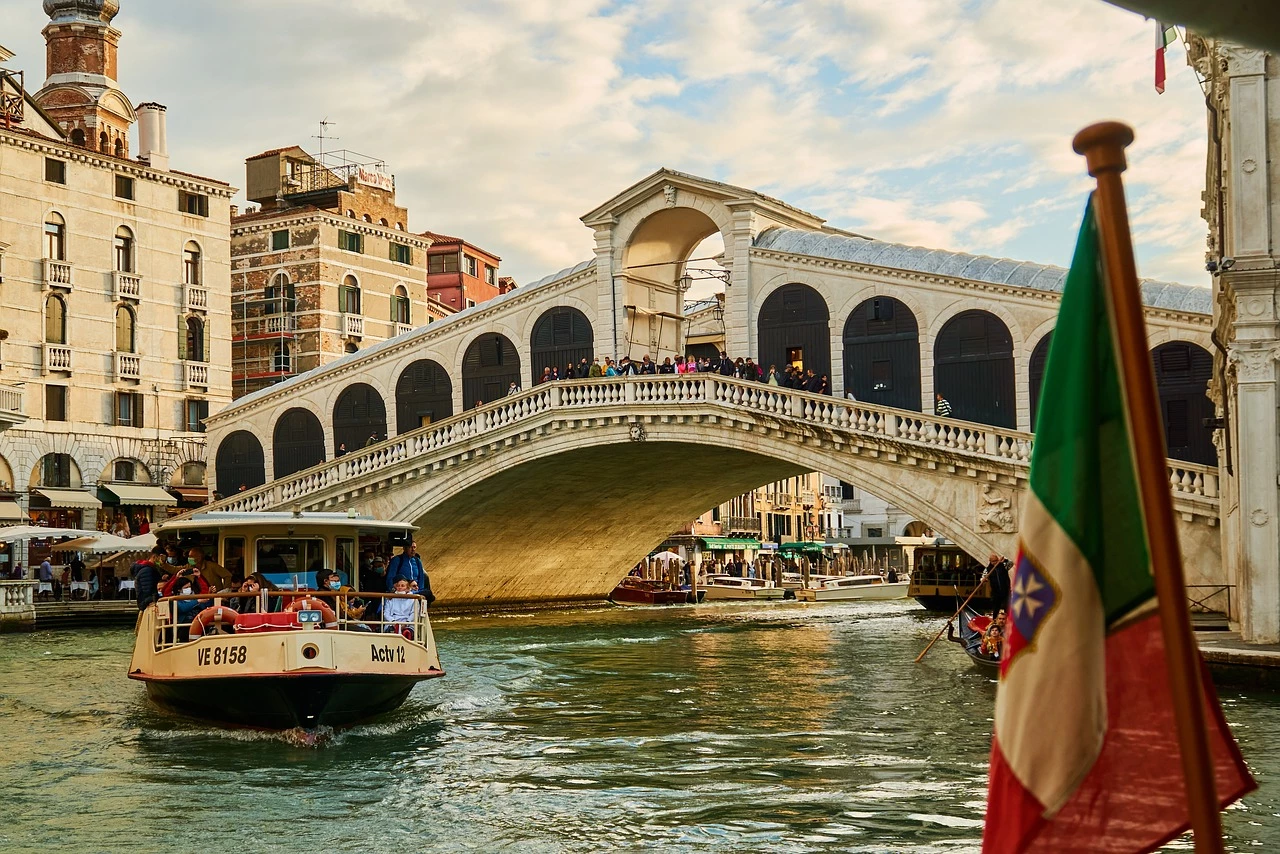
Spanning the Grand Canal, the Rialto Bridge links the San Marco and San Polo districts. The present stone bridge, completed in the late 16th century, replaced earlier wooden structures and carries two rows of shops beneath its arcades. From its crown, the view opens onto the coming and going of gondolas and vaporettos. Right nearby, on the San Polo side, the Rialto market enlivens the mornings. It's one of the busiest spots in the city: early morning or evening, you enjoy it more calmly.

Murano, Burano and Torcello
The lagoon holds several islands easily reached by vaporetto. Murano is known for its glassworks, where you can watch the glassblowers at work; Burano charms with its brightly coloured houses and its lace-making tradition; Torcello, wilder, keeps the cathedral of Santa Maria Assunta and its mosaics. The Lido, for its part, lines up beaches and hosts the film festival. A half-day to a day is enough to string two or three together and shift mood from the centre.

The Gallerie dell'Accademia
On the Dorsoduro bank, at the foot of the Accademia bridge, the Gallerie dell'Accademia hold the largest collection of Venetian painting, from the 14th to the 18th century: Bellini, Carpaccio and his St Ursula cycle, Giorgione and his Tempest, Titian, Tintoretto, Veronese and his vast Feast in the House of Levi, through to Tiepolo and Canaletto. The museum occupies the former Scuola Grande della Carità and its church.
Leonardo da Vinci's Vitruvian Man belongs to the museum but, being fragile, is shown only on rare occasions. Allow two hours for the essentials. A few minutes' walk away, the Peggy Guggenheim Collection and the Punta della Dogana continue the visit on the modern-art side.

La Fenice opera house
Opened in 1792, La Fenice is one of Europe's great opera houses: Rossini, Bellini and Verdi premiered operas here, including La Traviata in 1853. True to its name ("the phoenix"), the theatre burned down twice, in 1836 and 1996, and reopened in 2003, rebuilt "as it was, where it was", with its red-and-gold hall and five tiers of boxes.
By day, the hall, the foyers and the royal box can be toured with an audioguide; in the evening, the programme alternates operas, ballets and symphony concerts. Baroque concerts held in the city's churches, often around Vivaldi, a son of Venice, round off the musical offer.

The Venice Ghetto
In the Cannaregio sestiere, the Ghetto Nuovo is the oldest ghetto in the world: the Republic confined Venice's Jews here from 1516, and the word itself comes from the foundry ("geto") that once occupied the islet. Short of space, the houses grew upwards to seven or eight low-ceilinged storeys, which gives the campo its unusual look. Five synagogues, three of them hidden in the upper floors of ordinary buildings, were built here in the 16th century.
The district is still alive, with a community, kosher bakeries and the Museo Ebraico, which runs the guided tours of the synagogues. From the campo, the Cannaregio fondamenta (Misericordia, Ormesini) line up bacari and terraces along quiet canals, far from the San Marco-Rialto axis.
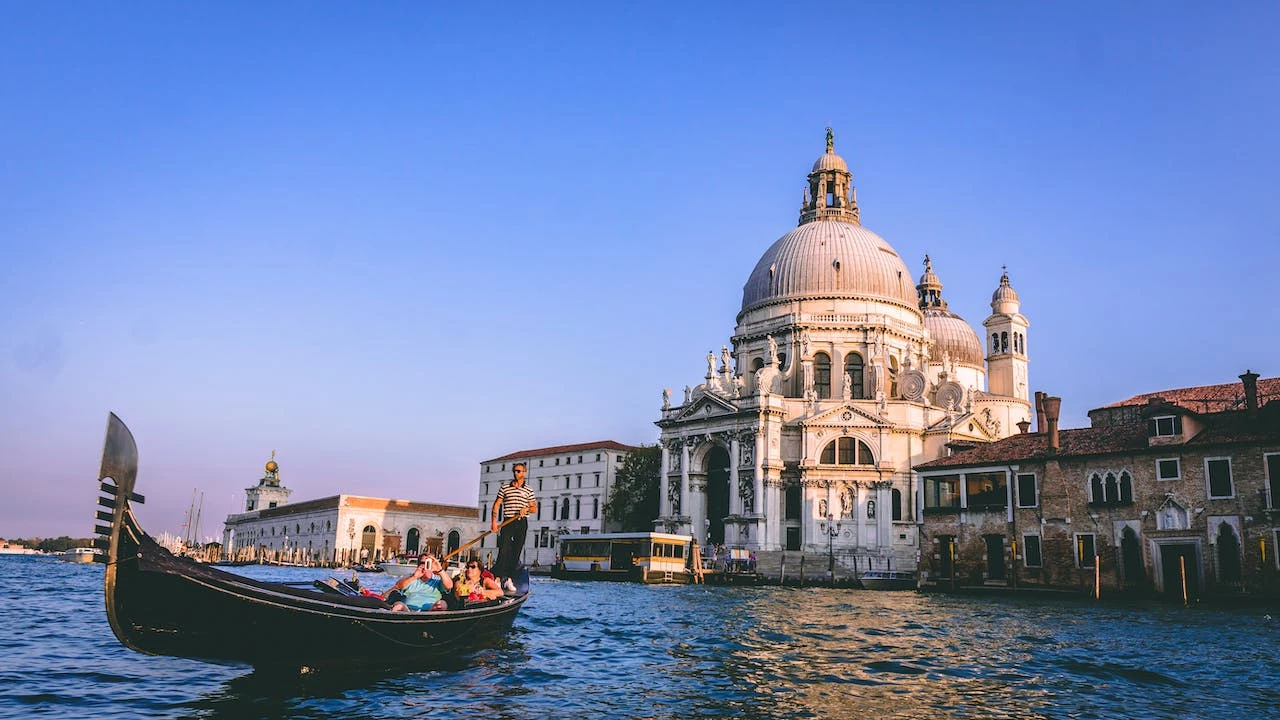
Gondola ride at the official fare
Thirty minutes at water level, rowed through the small canals where no vaporetto goes: the gondolier skims the façades, slips under bridges and, depending on the landing, reaches the Grand Canal or the Bridge of Sighs. The highlight is the silence of the canals of San Polo or Castello, far from St Mark's basin.
For everyone, up to five per gondola: the fare is set by the City and posted at every landing, so there is nothing to haggle over or book. Pick a landing away from San Marco (Santa Maria del Giglio, San Tomà, Ca' Rezzonico) and share the ride to split the price.
- 30 min
- €90 per gondola for 30 min by day, €110 for 35 min in the evening (official City fare 2026)
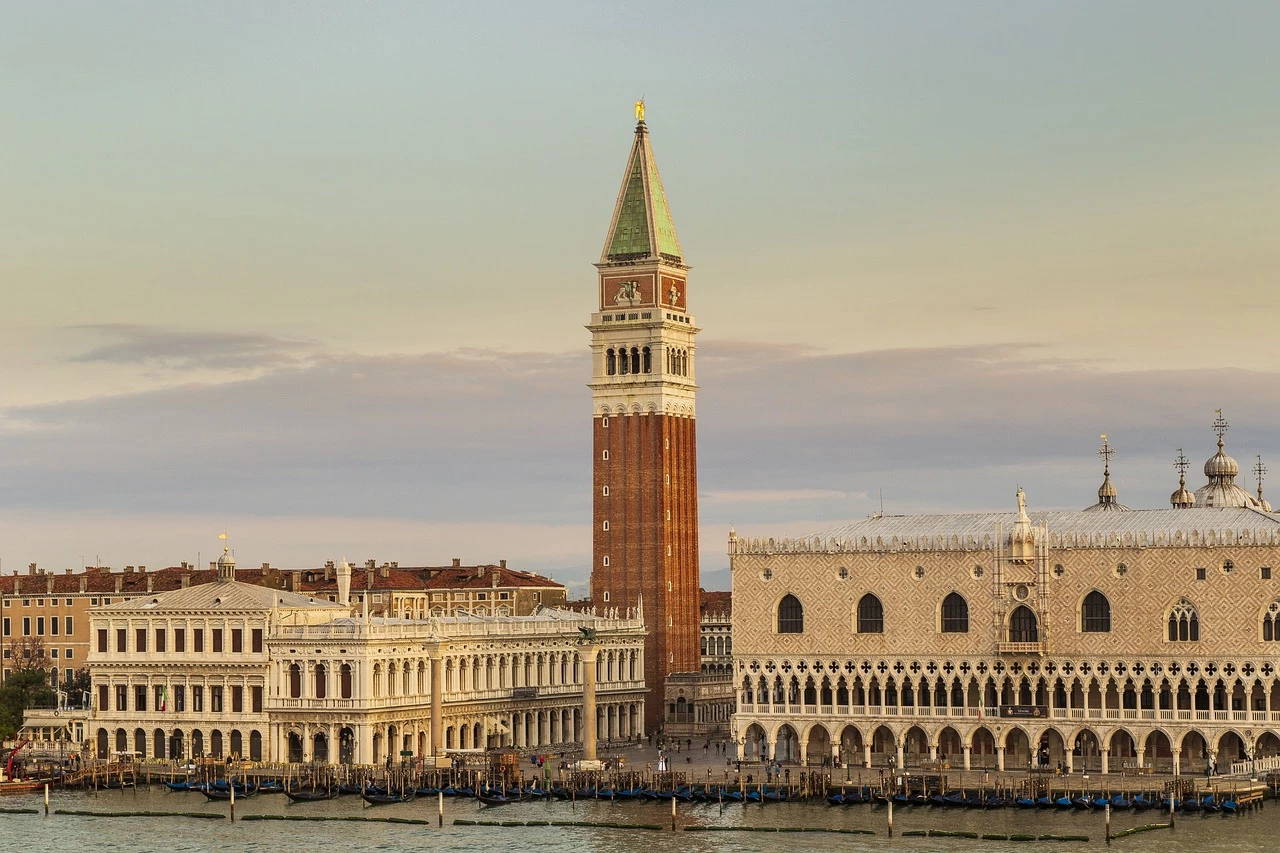
Doge's Palace, prisons and basilica with a guide
Skip-the-line guided tour of the Doge's Palace, the New Prisons and St Mark's Basilica, in a small or private group depending on the option: the Council and Senate chambers, Tintoretto's "Paradise" in the Grand Council Hall, then the Bridge of Sighs crossed from the inside down to the cells of the New Prisons. The basilica and its golden mosaics are part of the route; check on the listing what your option includes (entries, Pala d'Oro).
For a first stay, when you want to understand how the Republic worked rather than rush through the rooms. Book online with free cancellation; dress code applies in the basilica (shoulders and knees covered), large bags refused.
- 2-3 hrs
- €79-99 per person depending on the option (GetYourGuide price 2026)
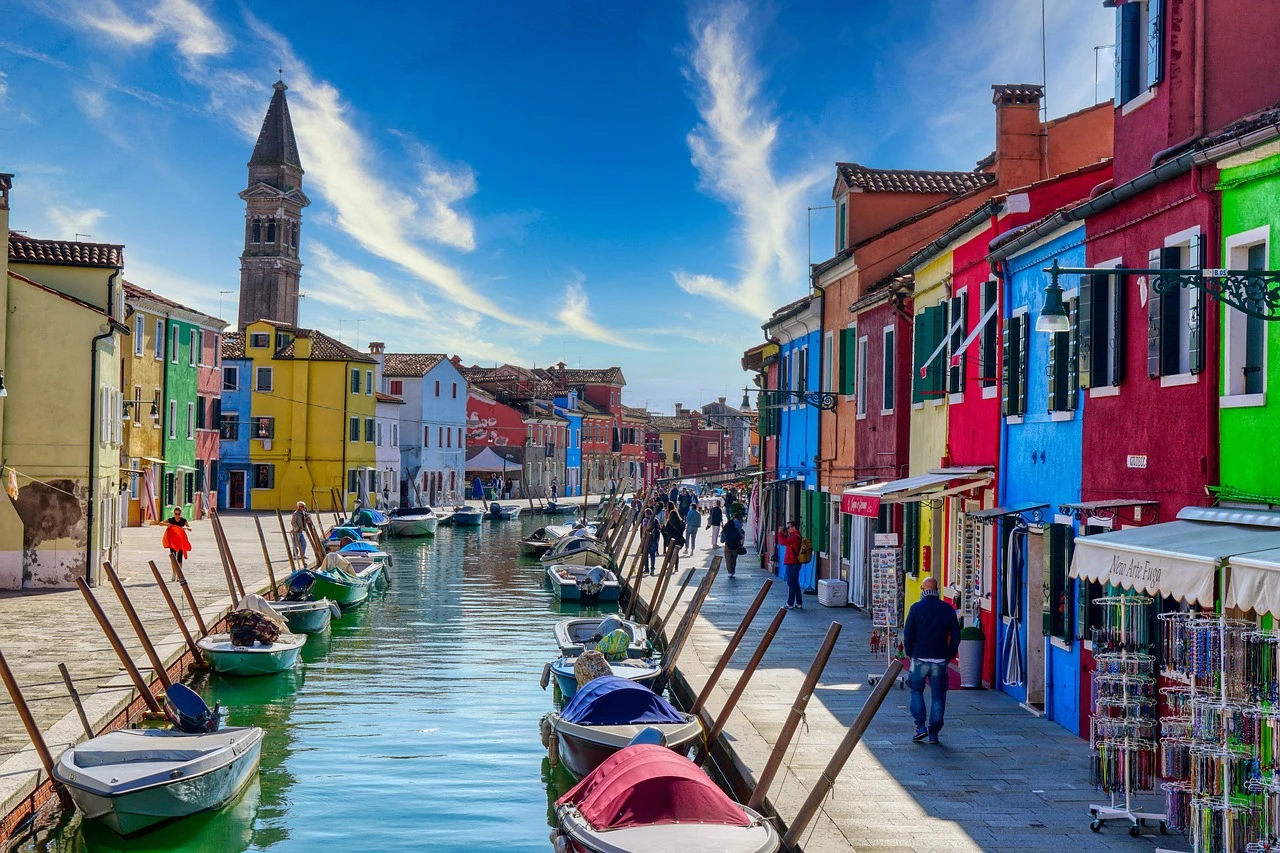
Murano and Burano by boat, with a glass demonstration
Departure on a boat reserved for the group from central Venice to Murano, where a master glassblower shapes a piece in front of you in a glassworks, then Burano and its coloured houses, with free time for the alleys, the lace and a bussolà biscuit. The highlight is the crossing of the lagoon, with the islands and Burano's leaning campanile on the horizon.
More comfortable than the packed vaporetto 12 when you only have half a day for the islands; the return is to the centre. Book online with free cancellation; Torcello is not on the programme, take the vaporetto from Burano if you want to add it.
- 5 hrs
- €44 per person (GetYourGuide price 2026)
Bacaro crawl and cicchetti with a local guide
Two and a half hours on foot with a Venetian guide, from bacaro to bacaro, learning to order cicchetti at the counter: creamed cod, sarde in saor, meatballs, with an ombra of wine or a spritz at each stop. The highlight is the walk through the Rialto market and its San Polo alleys, far from the tourist menus of San Marco.
For those who want to eat like Venetians from the first evening; tastings included, but not a full meal. Book online with free cancellation; mention allergies when booking, as many of the bites are fish-based.
- 2.5 hrs
- €48 per person (GetYourGuide price 2026)
Getting there
Reach Venice by train to Santa Lucia station, or from Marco Polo airport by Alilaguna boat or bus to Piazzale Roma.
How to get there
As Venice is car-free, any vehicle is left at Piazzale Roma or Tronchetto, the gateways to the historic centre.
By train
The simplest option: trains arrive at Venezia Santa Lucia station on the Grand Canal, from where the vaporetto or walking takes over. Venice links to Milan, Florence, Rome and the rest of Italy by high-speed train.
By air
- Marco Polo (VCE): the Alilaguna boat to San Marco, Rialto or the station (€18 one way, €32 return); or a bus (ACTV Aerobus, €10, and ATVO express) to Piazzale Roma, then vaporetto.
- Treviso (TSF): ATVO express bus to Piazzale Roma, about 1 hr, timed with low-cost flights.
Getting around
On foot and by ACTV vaporetto (single ride €9.50, 24/48/72h passes); gondolas and water taxis for the experience, traghetto to cross the Grand Canal.
Getting around
Venice is built on water and entirely pedestrian: no cars, no metro.
On foot
The main way to get around. Most sights are close together; follow the yellow signs to navigate between San Marco and Rialto.
Vaporetto (water bus)
Public transport, run by ACTV. A single ride is €9.50 (valid 75 min); for several trips, choose a tourist pass (24, 48, 72h or 7 days). Essential for the Grand Canal and the islands.
Gondola, traghetto and water taxi
The gondola is an experience (City-set fare), not transport. The traghetto, a shared gondola, crosses the Grand Canal for a few euros where there's no bridge. Private water taxis are fast but pricey.
What to do
The nine places in this guide, plus the Museo Correr, the Scuola Grande di San Rocco, the Peggy Guggenheim Collection, a vaporetto ride down the Grand Canal and the Rialto market early in the morning.
The nine places above cover the essentials: St Mark's Square and its basilica, the Doge's Palace, the Grand Canal, the Rialto, the Accademia, the Ghetto, La Fenice and the islands. For a second stay, add the Museo Correr (included in the St Mark's Square museums ticket), the Scuola Grande di San Rocco with its Tintoretto canvases, the Peggy Guggenheim Collection and the Frari church, where Titian is buried.
The activities below are the ones we pick for a first stay: a gondola at the official fare, a guided tour of the Doge's Palace with the prisons, a boat trip to Murano and Burano and a bacaro crawl. Free options: the Rialto market before 9am, a traghetto crossing, sunset on the Zattere and the alleys of Castello behind the Arsenale.
Food
Cicchetti at the counter of a bacaro with a spritz or an ombra of wine, sarde in saor, creamed cod, fish risotto, Venetian-style liver and bussolai biscuits from Burano.
Venetian cooking comes from the lagoon and the Adriatic. The local custom is the bacaro: a wine bar where you eat cicchetti standing up, small bites laid out on the counter (creamed cod on polenta, sarde in saor with onions and raisins, meatballs, crostini), with an ombra of wine or a spritz made with Select or Aperol. The best places cluster around the Rialto market, in Cannaregio along the Fondamenta della Misericordia and in Dorsoduro.
At the table, look for risotto al nero di seppia, spaghetti alle vongole, fegato alla veneziana (liver with onions) and moeche, small soft-shell crabs fried in spring and autumn. For dessert, cornmeal zaeti and bussolai biscuits from Burano. Venetians eat early for Italy, around 7:30-8:30pm, and many kitchens close before 10pm. Avoid the tourist menus displayed in six languages around San Marco: a cover charge (coperto) of a few euros is normal, an unannounced "service" surcharge is not.
Itineraries
One day: San Marco, the Doge's Palace, the Rialto and the Grand Canal; two days: add the Accademia, Dorsoduro and a gondola; three days: Murano, Burano and Torcello, the Ghetto and Cannaregio.
One day
St Mark's Square at opening time, the basilica then the Doge's Palace on pre-booked tickets, the campanile if the queue is short. A cicchetti lunch near the Rialto, cross the bridge and see the market, then back towards San Marco on vaporetto line 1 along the Grand Canal. Sunset from the Accademia bridge.
Two days
Add a morning at the Gallerie dell'Accademia and the Peggy Guggenheim Collection, lunch on the Zattere and an afternoon in the alleys of Dorsoduro and San Polo as far as the Frari and the Scuola Grande di San Rocco. A gondola at the end of the day from a landing away from San Marco, an evening at La Fenice if the programme suits.
Three days
A day in the lagoon: vaporetto 12 from Fondamente Nove to Murano (glassworks), Burano (coloured houses, lace) and Torcello (cathedral and its mosaics). Return via Cannaregio: the Ghetto, then the Fondamenta della Misericordia at spritz time. With a fourth day, head for the Dolomites or take the train to Rome in under 4 hours.
Climate & seasons
When to go to Italy?
Monthly averages over the past 5 years (Open-Meteo).
Best months
- June
| Jan | Feb | Mar | Apr | May | Jun | Jul | Aug | Sep | Oct | Nov | Dec | |
|---|---|---|---|---|---|---|---|---|---|---|---|---|
| Our take | ||||||||||||
| Weather | ||||||||||||
| High | 8° | 10° | 13° | 16° | 21° | 27° | 29° | 29° | 24° | 19° | 13° | 9° |
| Rain (mm) | 73 | 49 | 77 | 85 | 149 | 57 | 84 | 74 | 116 | 104 | 85 | 57 |
| City sightseeing | City sightseeing February | City sightseeing March | City sightseeing April | City sightseeing May | City sightseeing June | City sightseeing July | City sightseeing August | City sightseeing September | City sightseeing October | City sightseeing November |
What to do by season (autumn)
-
City sightseeing
Pedestrian-friendly most of the year.
When to go
Spring and autumn offer mild weather and moderate crowds; summer is hot and packed, winter quiet but prone to acqua alta.
When to go
The season to choose depends on your tolerance for crowds and heat.
Spring (March to May)
Often the best window: mild temperatures, lengthening days and fewer crowds than summer. Ideal for wandering the alleys and reaching the islands.
Summer (June to August)
Hot and very busy, especially July-August, with cruise passengers and festivals. Book everything ahead and visit sites early in the morning.
Autumn (September to November)
Still-mild temperatures and thinning crowds, but acqua alta returns: bring suitable shoes and watch the tide forecasts.
Winter (December to February)
Quiet and atmospheric, punctuated by the festive season and then Carnival (January-February), when masks and costumes fill the city. Cool and damp.
In practice, spring and autumn best combine pleasant weather with reasonable crowds.
Budget
Allow about €100-130 per day per person on a tight budget, €200-280 mid-range and €400 and up for comfort, with accommodation the item that changes everything.
Venice is one of Italy's most expensive cities, and accommodation weighs more than everything else. A budget double room (hostel, guesthouse in Mestre or Cannaregio) generally costs €70-110, a mid-range one €150-250 and a boutique hotel with canal view €350 and well beyond, with peaks at Carnival, the Biennale and the May long weekends. The tourist tax comes on top, a few euros per night per person depending on the category.
On that basis, allow per day per person, sharing a double room: €100-130 on a tight budget (cicchetti and pizza by the slice, single vaporetto rides, one paid site), €200-280 mid-range (two sit-down meals, vaporetto pass, one or two museums, a shared gondola) and €400 and up for comfort. Fixed reference points: vaporetto €9.50 a ride or €25 for 24h, gondola €90 per half hour per boat, Alilaguna €18 from the airport, Accademia €15, access fee €5-10 if you come for the day. A spritz at the counter costs €3-4, ten times less than on the terrace of an orchestra café on St Mark's Square.
Where to stay
San Marco to be among the sights, Cannaregio and Dorsoduro for a more local, affordable feel; staying overnight exempts you from the access fee.
Where to stay
The district matters as much as the type of lodging, and staying overnight in the municipality exempts you from the day-tripper access fee (the tourist tax still applies).
Among the sights
- San Marco: central, at the foot of the square and basilica, but the priciest.
- Castello: just east, more authentic and less busy.
More local and affordable
- Cannaregio: a lively residential area with gently priced restaurants, near the station.
- Dorsoduro: galleries, university and bacari, a relaxed feel.
- Santa Croce / Giudecca: handy near Piazzale Roma, or quieter with a view of Venice from the Giudecca.
In high season, book as early as possible.
Safety
Venice is a safe city; the only common risks are pickpockets on crowded vaporettos and at the Rialto, fake-ticket scams and padded bills.
Venice is a safe city, at night too, where the only real risk comes from pickpockets on crowded vaporettos (lines 1 and 2), on the Rialto Bridge and in the crush of St Mark's Square. Keep wallet and phone in front of you, especially when boarding and leaving boats. Never buy a vaporetto, "skip-the-line" or gondola ticket from a tout: official fares are posted at the landings and ACTV tickets are sold at machines and ticket offices.
The other annoyances are financial: terraces with an orchestra surcharge, menus without prices, water taxis at whatever price they name. Ask the fare before boarding. The City fines certain behaviour: sitting on the steps of bridges and monuments, picnicking on St Mark's Square, swimming in the canals, feeding the pigeons. During acqua alta, sirens sound a few hours before the tide; follow the walkways and the City's forecasts. Emergencies: 112.
Formalities
Italy = Schengen and euro: ID card for Europeans, 90 days in 180 visa-free for non-EU, ETIAS not yet in service. Day visitors pay €5-10 on certain days from April to July (cda.ve.it).
Italy is part of the Schengen Area and uses the euro (€). EU nationals enter with a valid identity card or passport; non-EU travellers can generally stay up to 90 days within 180 visa-free for tourism. Since 10 April 2026, the EU Entry/Exit System (EES) registers non-EU short-stay travellers at the border, with a photo and fingerprints, instead of a stamp. The ETIAS authorisation is not yet in service and no launch date has been set (September 2026). The European emergency number is 112; EU nationals can use their European Health Insurance Card, and travel insurance is advisable for others.
Venice access fee (contributo di accesso). Day visitors (without an overnight stay in the municipality) must pay it on certain designated days, around weekends and long weekends from April to July, 8:30am-4pm: €5 when booked ahead, €10 for late booking (2026 scale). Exemptions include under-14s, people staying in accommodation within the municipality (they pay the tourist tax instead) and residents of the Veneto. Registration, payment and the official calendar of the days concerned are on the cda.ve.it portal; keep the QR code, as checks take place at the access points.
Tips
Stay overnight rather than day-tripping, book the basilica and the Doge's Palace online, buy a vaporetto pass, see San Marco before 9am and the Rialto at market time, and check the tide calendar.
- Sleeping within the municipality (centre, Lido, Giudecca or even Mestre) exempts you from the access fee and lets you see the city emptied of day visitors, before 9am and after 7pm.
- Book online for St Mark's Basilica (named ticket), the Doge's Palace and the Accademia: midday queues last an hour in season.
- Vaporetto pass from three rides a day; the single ticket (€9.50) is the dearest in Italy. Validate at every boarding.
- Luggage: wheeled suitcases over the bridges are an ordeal; official porters and the left-luggage offices at the station and Piazzale Roma exist for that.
- Tides: from October to January, check the City's forecasts (comune.venezia.it, maree section); boots are enough for most episodes.
- Water: public fountains are drinkable, no need to buy bottles.
- Maps: offline maps are essential, GPS loses itself in the calli; the yellow "Per Rialto" and "Per San Marco" signs remain the most reliable landmark.
FAQ
Day visitors pay €5-10 on certain days from April to July, two to three days cover the essentials, you get around on foot and by vaporetto, and a gondola costs €90 per half hour for up to five people.
Do you have to pay to enter Venice?
Only if you come for the day, without an overnight stay in the municipality, on one of the designated days (around weekends and long weekends from April to July, 8:30am-4pm): €5 booked ahead, €10 otherwise. People staying overnight locally, under-14s and Veneto residents are exempt. Register at cda.ve.it.
How much does a gondola cost?
The fare is set by the City: €90 for 30 min by day, €110 for 35 min in the evening, per gondola and for up to five passengers. There is nothing to haggle over; share the ride to split the price.
How many days do you need in Venice?
Two to three days cover St Mark's Square, the basilica, the Doge's Palace, the Rialto and the Accademia, plus a half-day for Murano and Burano.
When is the best time to go?
Spring and autumn, for mild weather and moderate crowds. Summer is hot and packed; winter is quiet but prone to acqua alta, and Carnival (January-February) pushes prices up.
How do you get around Venice?
On foot and by ACTV vaporetto (single ride €9.50, 24/48/72h passes). The gondola and water taxi are an experience; the traghetto crosses the Grand Canal for a few euros.
What is acqua alta?
It's the seasonal high water (mainly October to January) that floods low areas such as St Mark's Square for a few hours. Raised walkways are set up and the City publishes tide forecasts; the MOSE barrier system now holds back the strongest tides.
Do you need a visa or ETIAS for Italy?
Europeans enter with an ID card; many non-Europeans are visa-exempt for 90 days in 180. ETIAS is not yet in service and no date has been set (September 2026).
What can you see near Venice if you extend the trip?
Venice is the main gateway to the Dolomites, about 2 hours' drive from Marco Polo airport: see our complete Dolomites guide. Lake Como is about 3 hours by train via Milan.
Sources
The figures in this guide come from the sources below, checked on the publication date.
Leave a comment
Share your thoughts or travel experience. Your email will not be published.