

Contents 24
Hvar stretches along the Dalmatian coast, south of Split. Greek settlers from Paros founded Pharos, today's Stari Grad, there in 384 BC; Hvar Town, its St Stephen's Square and the Fortica fortress date mostly from the Venetian period. This guide covers the island's 10 highlights, from the old town to the Pakleni Islands, the UNESCO-listed Stari Grad Plain and the Blue Cave on Biševo, then access, budget, entry requirements and safety.
Overview
Hvar is a long, sun-soaked island off the Dalmatian coast, famous for its Venetian old town, the Pakleni Islands and its glamorous summer scene.
Hvar is one of the longest islands in the Adriatic, stretching off the Dalmatian coast south of Split. Greek colonists from Paros founded Pharos (today's Stari Grad) here in 384 BC, and the island later passed through Venetian, Austrian and French hands — a layered history you read in its stone towns.
The lively, glamorous side centres on Hvar town, with its marble main square, the Fortica fortress above the rooftops and the Pakleni Islands just offshore. The quieter side lies inland and east: Stari Grad and its UNESCO-listed Greek field plain, the wine villages of the south slopes, and the lavender fields of Velo Grablje.
Most visitors stay 3 to 5 days, combining the old town and beaches with a boat trip to the Pakleni Islands or the Blue Cave and a tasting of the island's Plavac Mali wines.
10 places to take with you
In the guide's order, ready for Google Maps or your GPS.
Book the activities from this guide
Our picks for Hvar, well rated and free to cancel.
-
Book this activity
Yacht trip to the Pakleni Islands
€85 per person (GetYourGuide price 2026)
-
Book this activity
Blue Cave, Green Cave and 5 islands by speedboat
€105 per person (GetYourGuide price 2026)
-
Book this activity
Island tour with wine and olive oil tasting at Duboković
€120 per person (GetYourGuide price 2026)
Affiliate links: Travel Advice earns a commission if you book, at no extra cost to you. Learn more

Hvar Old Town
The old town spreads around St Stephen's Square (Trg svetog Stjepana), a large paved square running down to the small harbour. St Stephen's Cathedral closes it off at the far end; on the sea side, the Venetian Arsenal carries the 1612 communal theatre on its upper floor, one of the oldest public theatres in Europe.
On both sides of the square, stepped lanes climb between stone houses, palaces and churches. The Riva, the palm-lined quay, links the harbour to the coves west of town.

Fortica Fortress (Španjola)
The Fortica, also called Španjola, overlooks Hvar Town and its harbour from its hilltop. Built under Venetian rule in the 16th century, it was struck by lightning in 1579: the explosion of its powder magazine damaged both the fortress and the town. It was then rebuilt and strengthened.
From the ramparts, the view drops onto Hvar's rooftops, the marina and the Pakleni Islands lined up in the channel. You walk up the stepped lanes from the main square in 15 to 20 minutes.

Hvar's beaches
Hvar's beaches are mostly pebble coves. Near town, Pokonji Dol, to the east, is a large pebble beach with restaurants and bars. Further along the south coast, Dubovica, below the old road to Stari Grad, is a sheltered cove with turquoise water, and the bays of Zaraće are wilder.
The best swimming is on the Pakleni Islands facing town, such as Stipanska Bay on Marinkovac. Near Jelsa on the north coast, Grebišće beach suits families.

Stari Grad and its plain
Stari Grad, at the end of a long bay on the north coast, is the ancient Pharos founded by Greeks from Paros in 384 BC. In the old town, the Tvrdalj, the fortified 16th-century home of the poet Petar Hektorović, surrounds a seawater fishpond.
Just to the east, the Stari Grad Plain, inscribed on the UNESCO World Heritage List in 2008, preserves the field layout drawn by the Greek settlers, with its dry-stone walls, vines and olive trees.

Blue Cave on Biševo
The Blue Cave (Modra špilja) opens on the islet of Biševo, near Vis. When the sun is high, light enters through an underwater opening and turns the water and walls a glowing blue; the visit is by small boat, for a few minutes inside.
From Hvar you go on a day trip by speedboat, often combined with the Green Cave on the islet of Ravnik, Stiniva cove on Vis and the Pakleni Islands on the way back.

Pakleni Islands and nearby islands
Facing Hvar Town, the Pakleni archipelago lines up a chain of wooded islets. Sveti Klement, the largest, is home to Palmižana bay, its marina and the Meneghello botanical garden; Jerolim is known for its naturist beaches and Marinkovac for Stipanska Bay and its beach club.
Further out, day trips head to Vis and Stiniva cove, the Blue Cave on Biševo, and to Brač, whose Zlatni Rat beach at Bol faces Hvar's north coast.

Hvar wineries
The steep slopes of the south coast produce some of Croatia's best-known reds from Plavac Mali, an indigenous Dalmatian grape, while the local white is Bogdanuša.
A few wineries welcome visitors: Zlatan Otok, founded in 1986 by Zlatan Plenković in Sveta Nedjelja, below vines clinging above the sea; Tomić (Bastijana) in Jelsa, for its Plavac Mali; and Duboković, a small family winery in Jelsa set in a traditional konoba.

Hvar nightlife
In July-August, Hvar Town is one of the party hubs of the Croatian coast, with a crowd of yachters and international travellers. Nights centre on the harbour and the nearby bays.
Carpe Diem runs a cocktail bar on the Riva and a beach club in Stipanska Bay on the island of Marinkovac, linked by shuttle boat. West of town, the Hula Hula Beach Bar is the sunset spot; the old-town bars take over late into the night.

Velo Grablje lavender fields
Hvar was long the island of lavender: the essential oil was distilled here for export. The fields are concentrated on the uplands between Hvar and Stari Grad, around the almost deserted village of Velo Grablje and Brusje, among dry-stone walls.
Flowering peaks in late June and early July. The Velo Grablje Lavender Festival, whose 18th edition ran from 2 to 4 July 2026, offers harvesting in the fields, distillation demonstrations, local produce and concerts.

Diving and snorkelling in Hvar
Hvar's clear waters are good for snorkelling from the shore, especially in Milna bay, east of town, and in the coves of the Pakleni Islands, where the rocky seabed shelters fish and seagrass.
For diving, centres in Hvar Town and Jelsa offer try dives, courses and trips to the coast's drop-offs, caves and wrecks.
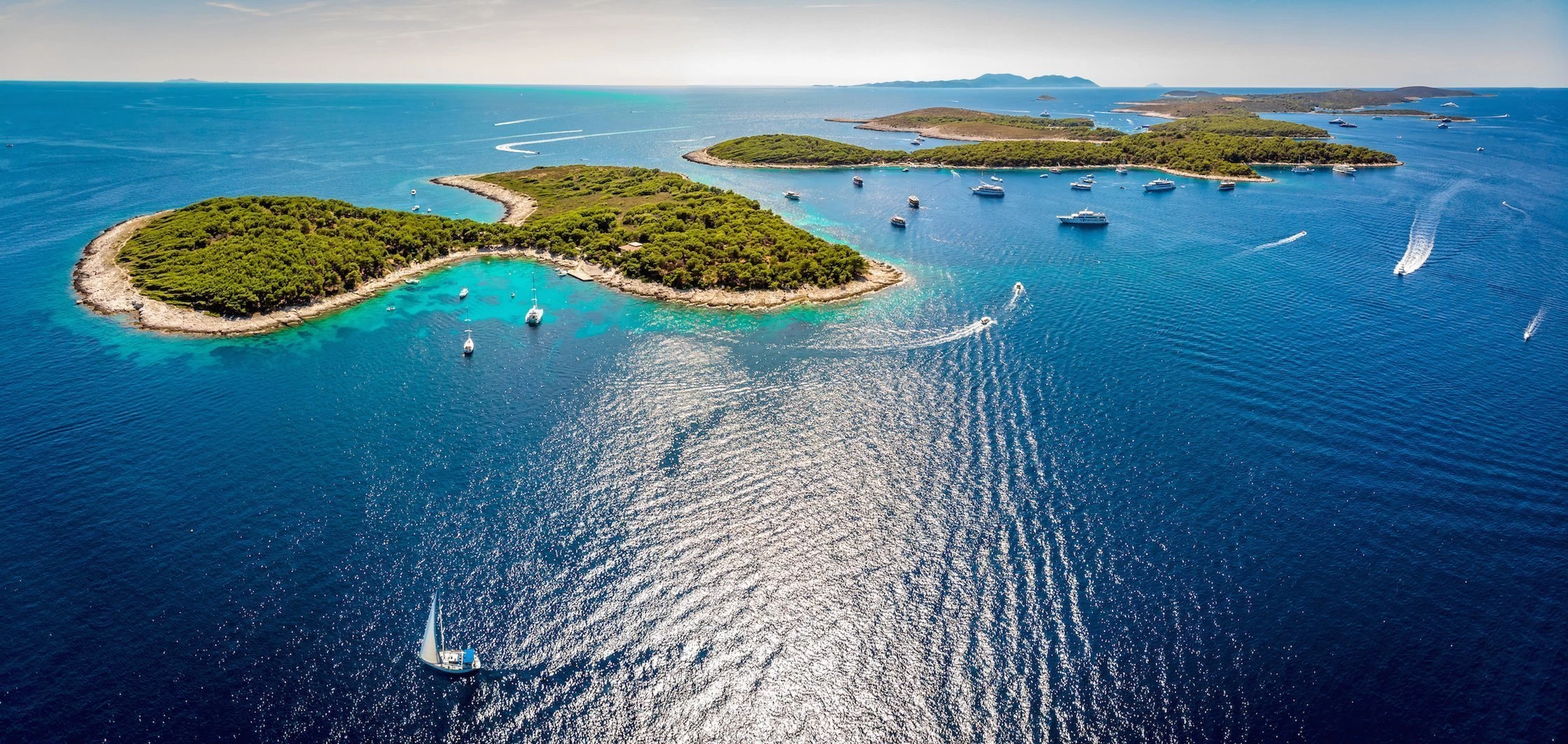
Yacht trip to the Pakleni Islands
Four hours on a yacht from the Riva in Hvar Town, with two anchor stops in Pakleni Islands bays chosen according to the weather, for swimming, snorkelling and paddleboarding. The highlight: the clear water of the Pakleni coves, away from the quay, with a skipper who knows the sheltered bays.
Allow €85 per person on GetYourGuide, with free cancellation up to 24 hours before; morning or afternoon slot, shared or private. Your own drinks can be kept cold on board at no extra cost.
- 4 hrs
- €85 per person (GetYourGuide price 2026)
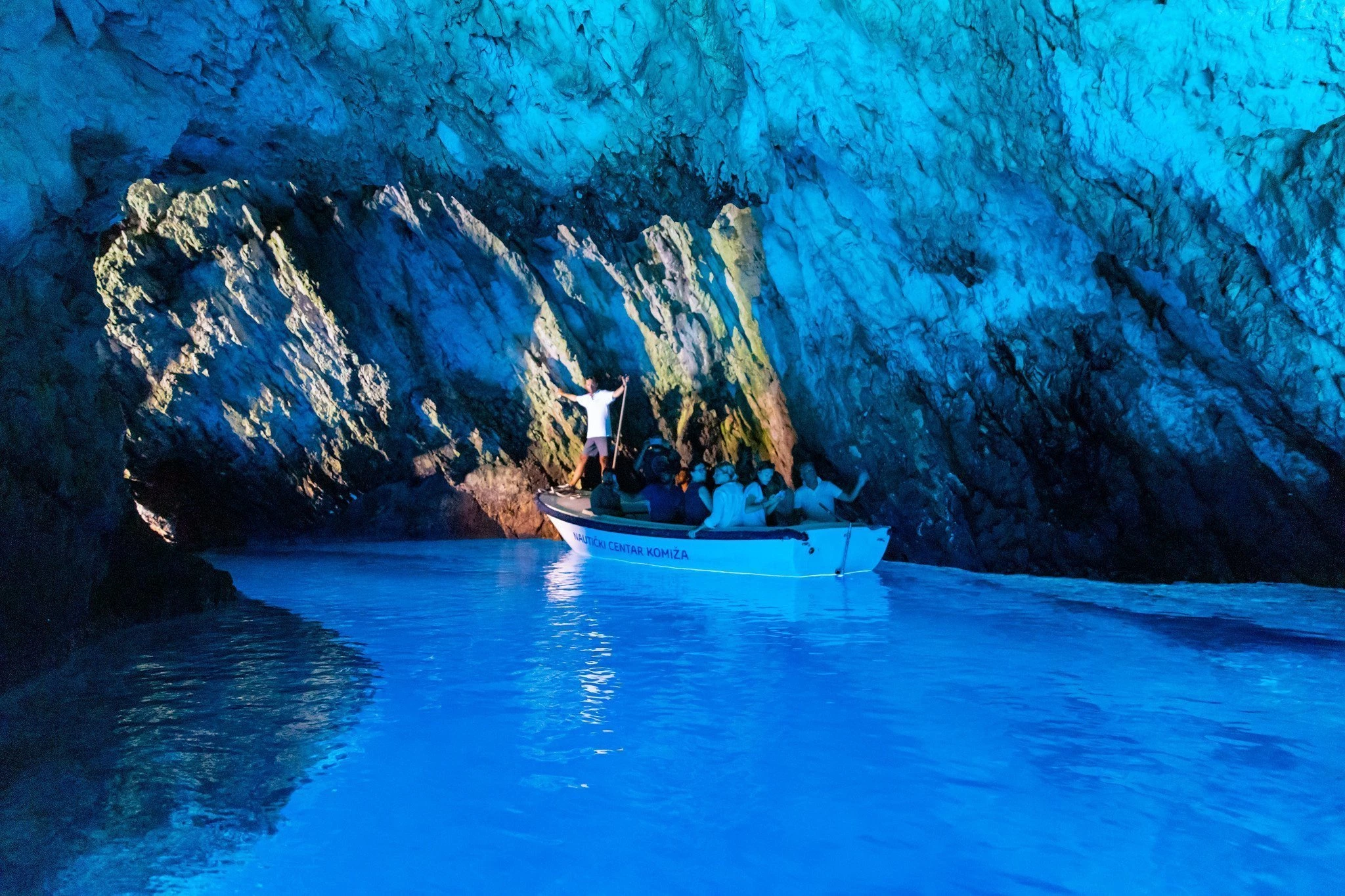
Blue Cave, Green Cave and 5 islands by speedboat
A speedboat day from Hvar in a small group of 12 at most: the Blue Cave on Biševo, the Green Cave, Stiniva cove on Vis and a loop around the Pakleni Islands on the way back, with swimming and snorkelling stops. The highlight: the blue light inside the cave when the sun is high.
Allow €105 per person on GetYourGuide, with free cancellation; tour in English. Check whether the Blue Cave entry (€18 to €24 depending on the season) is included. In rough seas, the guide adapts the route.
- 7.5 hrs
- €105 per person (GetYourGuide price 2026)
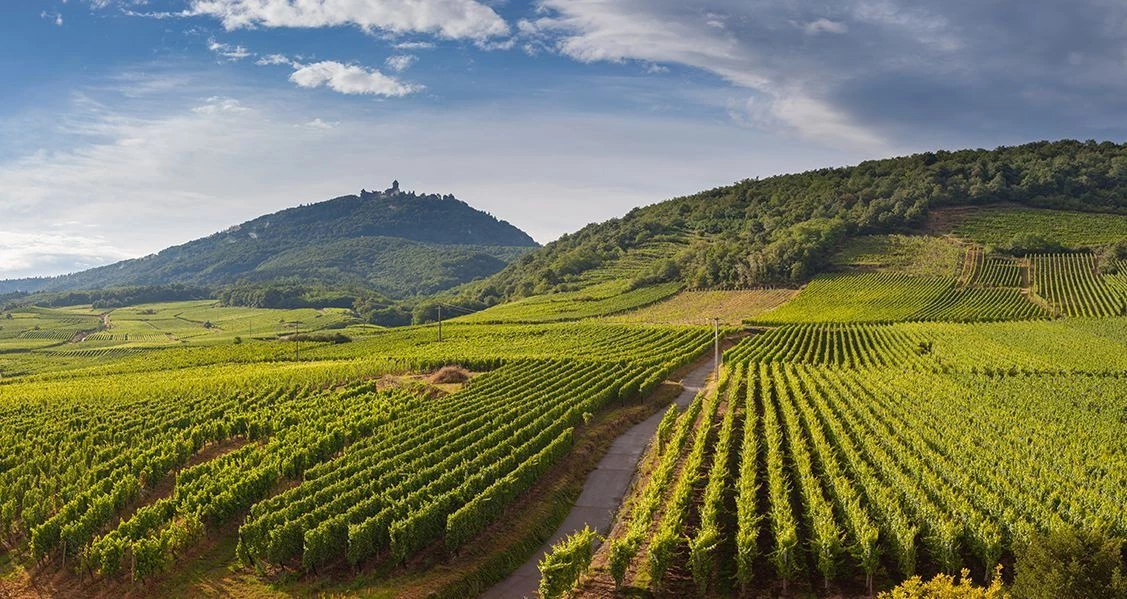
Island tour with wine and olive oil tasting at Duboković
Three hours by minibus, 8 people at most: up to the Napoleon Fortress, 250 m above town, along the old road to the centre of the island, then St Roch's chapel with its view over the Stari Grad Plain. The highlight: the tasting with Ivo Duboković in his konoba in Jelsa, with his wines and flavoured olive oils.
Allow €120 per person on GetYourGuide, with free cancellation; hotel pick-up and drop-off included, tour in English. Book early in summer, as places are few.
- 3 hrs
- €120 per person (GetYourGuide price 2026)
Self-guided kayak day to the Pakleni Islands
A day's rental of a sit-on-top kayak in Hvar Town, with a map, a safety briefing and the operator's tips on which bays to aim for depending on the weather, to paddle to the coves of the coast and the Pakleni Islands. The highlight: bays where boats don't stop, to explore at your own pace.
Allow €51 per person on GetYourGuide, with free cancellation; if the weather rules out paddling, the operator lets you know a day or two ahead. Set off early, before the wind and boat traffic pick up in the channel.
- 1 day
- €51 per person (GetYourGuide price 2026)
Getting there
From Split: a Jadrolinija car ferry to Stari Grad (~2 h) or a fast catamaran straight to Hvar town (~1 h, foot passengers only).
Hvar has no commercial airport; you reach it via Split (the nearest airport and the main ferry port) or, less often, Dubrovnik.
From Split there are two options. The Jadrolinija car ferry goes to Stari Grad in about 2 hours — the only choice if you are bringing a vehicle. Fast catamarans (Krilo/Kapetan Luka and Jadrolinija) go straight to Hvar Town in about an hour, foot passengers only; Krilo lists €25 one way Split-Hvar in 2026. Book online in summer, as sailings sell out fast.
From Stari Grad port, buses cover the twenty or so kilometres to Hvar Town.
The crossing is covered in detail here: Hvar to Split by ferry without a car, and which port to pick. If you spend a night on the mainland, see our Split guide.
Getting around
Hvar town is walkable and car-free; use buses and water taxis between towns, a boat for the islands, and a car only to reach the inland villages.
The old town of Hvar is compact and closed to cars, so you explore on foot. Local buses link Hvar town, Stari Grad and Jelsa, though timetables thin out off-season.
Water taxis from the Riva are the way to the Pakleni Islands and nearby beaches. To reach secluded beaches, the south-slope wineries and inland villages you'll want a car or scooter — rentals are available in Hvar town and Stari Grad. For the Blue Cave and Vis, take an organised boat tour.
What to do
Wander the Venetian old town and climb the Fortica, island-hop the Pakleni Islands, swim the pebble coves, tour the Blue Cave and taste Plavac Mali wines.
Hvar's highlights fall into three groups. The old town and its history: St Stephen's Square, the 1612 theatre, the Fortica fortress for the sunset view, and Stari Grad with its UNESCO-listed Greek plain. The sea: the Pakleni Islands by boat or kayak, the pebble coves of Dubovica and Pokonji Dol, and a speedboat day to the Blue Cave on Biševo. And the island's flavours: Plavac Mali and Bogdanuša wines and the lavender fields of Velo Grablje.
The list below details the 10 highlights, followed by four bookable activities: a yacht trip to the Pakleni Islands, the Blue Cave and five islands, a winery tour with tasting, and a self-guided kayak day.
Climate & seasons
When to go to Croatia?
Monthly averages over the past 5 years (Open-Meteo).
Best months
- June
- July
- August
- October
| Jan | Feb | Mar | Apr | May | Jun | Jul | Aug | Sep | Oct | Nov | Dec | |
|---|---|---|---|---|---|---|---|---|---|---|---|---|
| Our take | ||||||||||||
| Weather | ||||||||||||
| High | 12° | 13° | 15° | 18° | 23° | 29° | 31° | 31° | 26° | 22° | 17° | 14° |
| Rain (mm) | 110 | 65 | 98 | 81 | 84 | 38 | 24 | 55 | 81 | 55 | 200 | 136 |
| Beach | Beach June | Beach July | Beach August | Beach September | ||||||||
| City sightseeing | City sightseeing January | City sightseeing February | City sightseeing March | City sightseeing April | City sightseeing May | City sightseeing June | City sightseeing September | City sightseeing October | City sightseeing December |
What to do by season (autumn)
-
Beach
Warm air and water, little rain.
-
City sightseeing
Pedestrian-friendly most of the year.
When to go
May-June and September are the sweet spot: warm sea, fewer crowds and lower prices than the July-August peak.
July-August is high season: hot, lively and expensive, nightlife is in full swing and accommodation is booked months ahead.
May-June and September are the best months — the sea is warm enough to swim, the towns are pleasant rather than packed and prices drop. Lavender blooms in late June and early July, at the time of the Velo Grablje Lavender Festival (2 to 4 July in 2026).
April and October are mild and quiet, ideal for hiking and the Stari Grad Plain, though some beach bars and excursion boats run at a slower pace. In winter, many places close and the island returns to a village pace.
Budget
Hvar is one of Croatia's most expensive islands; allow about €70-100 a day at mid-range, more in July-August (Fortica €12, catamaran from Split €25 in 2026).
Hvar is one of Croatia's most expensive islands, especially at the height of summer. As a rough guide, at mid-range level allow about €70-100 per person per day (3-star room, two restaurant meals, a few activities), far more for boutique hotels and beach-club days.
A few prices noted in 2026: the Krilo Split-Hvar catamaran €25 one way; Fortica entry €12 (combined ticket €15); a speedboat day to the Blue Cave from €105 on GetYourGuide, plus the cave entry, €18 to €24 depending on the season if not included; a 4-hour yacht trip to the Pakleni Islands €85. The budget trap is beach-club drinks, far pricier than at a café in town.
To cost out a full stay, we broke down the budget for a week on Hvar, line by line.
Where to stay
Hvar town for buzz and nightlife, Stari Grad and Jelsa for a calmer and cheaper base, Vrboska or Maslinica for quiet.
Hvar town puts you in the middle of the action — restaurants, the harbour, the nightlife — with everything from luxury hotels to family guesthouses, at the island's highest prices.
Stari Grad and Jelsa make calmer, often cheaper bases, well placed for the wineries and the Stari Grad Plain. Vrboska, the "little Venice" of Hvar, and the secluded bay of Maslinica suit travellers who want quiet. Book well ahead for July and August, when the island fills up.
Safety
Hvar is a safe island; the main risks are the sea, inland roads and nightlife excesses. Emergency number: 112.
Hvar poses no particular risk to travellers. Take care on the inland roads, narrow and winding, especially by scooter, and when kayaking or paddleboarding in the Pakleni channel, which is busy with boats in summer. In July-August, Hvar Town's nights draw big crowds: watch your belongings and your drink.
Useful numbers in Croatia: European emergency number 112, police 192, fire brigade 193, ambulance 194, sea search and rescue 195.
Formalities
Croatia is in the Schengen area and uses the euro (both since 1 January 2023); EU citizens need only an ID card, others follow the 90/180-day rule.
Croatia joined the Schengen Area on 1 January 2023: there are no more internal border checks when arriving by land or sea from another Schengen country. EU/EEA nationals enter with an ID card or passport; non-EU travellers follow the Schengen rule of 90 days in any 180-day period — check whether your nationality needs a visa. Since 10 April 2026, the EES Entry/Exit System records their biometric data at the Schengen external border. The ETIAS travel authorisation is not yet in operation and no launch date has been set (September 2026). Neither EES nor ETIAS applies to EU citizens.
The currency is the euro (EUR), also since 1 January 2023; the old kuna has been withdrawn. Cards are widely accepted, but keep some cash for the small konobas on the islands and for water taxis.
FAQ
How do you get to Hvar from Split?Take the Jadrolinija car ferry to Stari Grad (~2 hrs) if you have a vehicle, or a fast catamaran (Krilo or Jadrolinija) straight to Hvar Town (~1 hr, foot passengers only; €25 one way with Krilo in 2026). Book online in summer.Do you need a visa, and what currency is used?Croatia is in the Schengen Area and uses the euro, both since 1 January 2023.
How do you get to Hvar from Split?
Take the Jadrolinija car ferry to Stari Grad (~2 hrs) if you have a vehicle, or a fast catamaran (Krilo or Jadrolinija) straight to Hvar Town (~1 hr, foot passengers only; €25 one way with Krilo in 2026). Book online in summer.
Do you need a visa, and what currency is used?
Croatia is in the Schengen Area and uses the euro, both since 1 January 2023. EU nationals enter with an ID card; non-EU travellers follow the Schengen 90-in-180-days rule and EES registration.
When does the lavender bloom on Hvar?
In late June and early July, especially around Velo Grablje and Brusje. The Velo Grablje Lavender Festival took place from 2 to 4 July in 2026.
How much does the Blue Cave cost?
Entry costs €24 per adult from 20 June to 10 September and €18 from 1 April to 19 June and 11 September to 31 October (operator's 2025 price list, check for 2026), on top of the boat trip from Hvar, from about €105. Check whether your trip includes the ticket.
How much does the Fortica fortress cost?
€12 for an adult and €8 reduced in 2026, or €15 with the combined ticket that includes the theatre and Arsenal. It is open 9 am to 8 pm.
How many days should you spend on Hvar?
Most travellers stay 3 to 5 days, enough to combine the old town and beaches with a trip to the Pakleni Islands and a winery or Blue Cave day.
Is Hvar expensive?
It is one of Croatia's most expensive islands. Allow about €70-100 per person per day at mid-range, more in July-August; beach-club drinks are the main budget trap.
Sources
The figures in this guide come from the sources below, checked on the publication date.
Leave a comment
Share your thoughts or travel experience. Your email will not be published.