

Contents 25
In southern Dalmatia, Dubrovnik grew around a walled Old Town, a UNESCO World Heritage site since 1979: palaces, Baroque churches, monasteries and the Stradun, its pedestrian main street, all fit inside the 1,940-metre circuit of walls.
Above the city, the cable car climbs to the summit of Mount Srđ (412 m); offshore, the wooded island of Lokrum and the Elaphiti Islands are reached by boat. This guide gathers the must-sees, from the walls to Trsteno Arboretum, with the activities to book and the practical information for two to three days.
Overview
Dubrovnik is a walled city in southern Dalmatia, Croatia, whose Old Town has been a UNESCO World Heritage site since 1979.
Dubrovnik lies at the far south of Croatia, in southern Dalmatia, on a narrow coastal strip along the Adriatic Sea. The former capital of the maritime Republic of Ragusa, it thrived from the 14th to the 19th century through trade and shrewd diplomacy.
Its heart, the walled Old Town (Stari Grad), is fully pedestrian and ringed by walls about 1,940 metres long. Palaces, Baroque churches, monasteries and the Stradun thoroughfare form a remarkably preserved medieval and Renaissance ensemble, on the UNESCO World Heritage list since 1979.
Beyond the walls, Mount Srdj rises 412 metres above the city, while the wooded island of Lokrum and the Elaphiti Islands extend the visit out to sea. Between heritage, swimming and excursions, Dubrovnik is best explored over two to three days.
10 places to take with you
In the guide's order, ready for Google Maps or your GPS.
Book the activities from this guide
Our picks for Dubrovnik, well rated and free to cancel.
-
Book this activity
Game of Thrones filming locations
From €22 per person, Lokrum ferry and fort extra (GetYourGuide price 2026)
-
Book this activity
Guided walk on the walls early morning or at sunset
From €25 per person, City Walls entry extra (GetYourGuide price 2026)
-
Book this activity
Sea kayaking along the walls and Betina Cave
From €34 per person (GetYourGuide price 2026)
Affiliate links: Travel Advice earns a commission if you book, at no extra cost to you. Learn more

The Walls of Dubrovnik
Dubrovnik's walls encircle the entire Old Town over 1,940 metres, with sixteen towers and three fortresses, and reach 25 metres in places on the landward side. Built and strengthened mainly between the 13th and 17th centuries, they protected the Republic of Ragusa; the Society of Friends of Dubrovnik Antiquities manages them today.
The wall walk goes all the way round the city, from the Minčeta Tower, the highest point, to the bastions facing the sea, with red-tiled roofs on one side and the Adriatic on the other.

The Old Town (Stari Grad)
The Old Town (Stari Grad) fits entirely inside the walls. You enter through the Pile Gate to the west or the Ploče Gate to the east, linked by the Stradun, a main street paved in polished limestone and lined with houses rebuilt after the 1667 earthquake.
Around it cluster the Rector's Palace, the cathedral, the Franciscan monastery, St Blaise's Church and a web of stepped lanes climbing towards the walls. The town is pedestrian and has been UNESCO-listed since 1979.

Dubrovnik Gondola
The Dubrovnik Cable Car links the foot of the Old Town to the summit of Mount Srdj (412 m) in under five minutes. From the top, the panorama takes in the walled Old Town, the Adriatic Sea and surrounding islands, Fort Imperial and the Homeland War Museum. Sunset is especially popular.

The Rector's Palace
From the 14th century until 1808, the Rector's Palace (Knežev dvor) was the seat of the Rector of the Republic of Ragusa, of the Minor Council and of the administration; it also housed the armoury, the powder magazine and a prison. Rebuilt in the 15th century in Gothic style, it later gained Renaissance features, including its columned portico.
Today it houses the Cultural History Museum, with the rooms of the Republic, and its arcaded courtyard serves as a stage for summer concerts.

Fort Lovrijenac
Perched on a rock 37 metres above the sea outside the western wall, Fort Lovrijenac (St Lawrence), nicknamed "Dubrovnik's Gibraltar", watches over both entrances to the city, by land and by sea. According to the chronicles of Ragusa, it was built in three months in the early 11th century to beat the Venetians, who wanted to build a fort on the same spot.
Its courtyard serves as an open-air theatre in summer, and the fort was a Game of Thrones filming location for King's Landing.

Lokrum Island
600 metres from the Old Town, the wooded island of Lokrum is a nature reserve served by a regular ferry from the Old Port. Trails cross the pine forest to the ruins of a Benedictine monastery, a botanical garden and Fort Royal at the summit.
On the shore, you swim from the rocks or in the small saltwater lake known as the "Dead Sea". A legend credits the Benedictines expelled from the island with a curse on its successive owners.

The Franciscan Monastery
Just inside the Pile Gate, at the start of the Stradun, the Franciscan monastery surrounds a Romanesque cloister with paired columns, planted with orange trees and palms. Its library keeps old manuscripts and its museum liturgical objects.
The monastery pharmacy, founded in 1317, is among the oldest in Europe still in operation: creams and remedies are still sold there.

Banje Beach
A few minutes' walk from the Ploče Gate, Banje Beach faces the Old Town and Lokrum island: it is the closest beach to the centre, with a direct view of the walls from the water. The bottom is pebbly and the sea gets deep quickly.
For more calm, Sveti Jakov beach, further east, is reached by a stairway; those in Lapad Bay, to the west, have shallow water and a promenade.

The Cathedral of the Assumption
The Cathedral of the Assumption was rebuilt between 1671 and 1713 in Baroque style, after the great earthquake of 1667 destroyed the Romanesque church. It stands between the Rector's Palace and the Old Port.
Its Treasury (Riznica) holds a collection of reliquaries and sacred goldwork, including those of St Blaise, the city's patron saint.

Trsteno Arboretum
Trsteno Arboretum is a historic botanical garden about 20 km northwest of Dubrovnik, managed by the Croatian Academy of Sciences and Arts (HAZU). Laid out from the late 15th century, the 28-hectare estate holds more than 300 Mediterranean and exotic species.
Highlights include Renaissance and Baroque gardens, an aqueduct, a Neptune fountain and centuries-old plane trees. The site doubled as the palace gardens of King's Landing in Game of Thrones.
It makes a fine half-day trip for lovers of botany, history and coastal scenery.
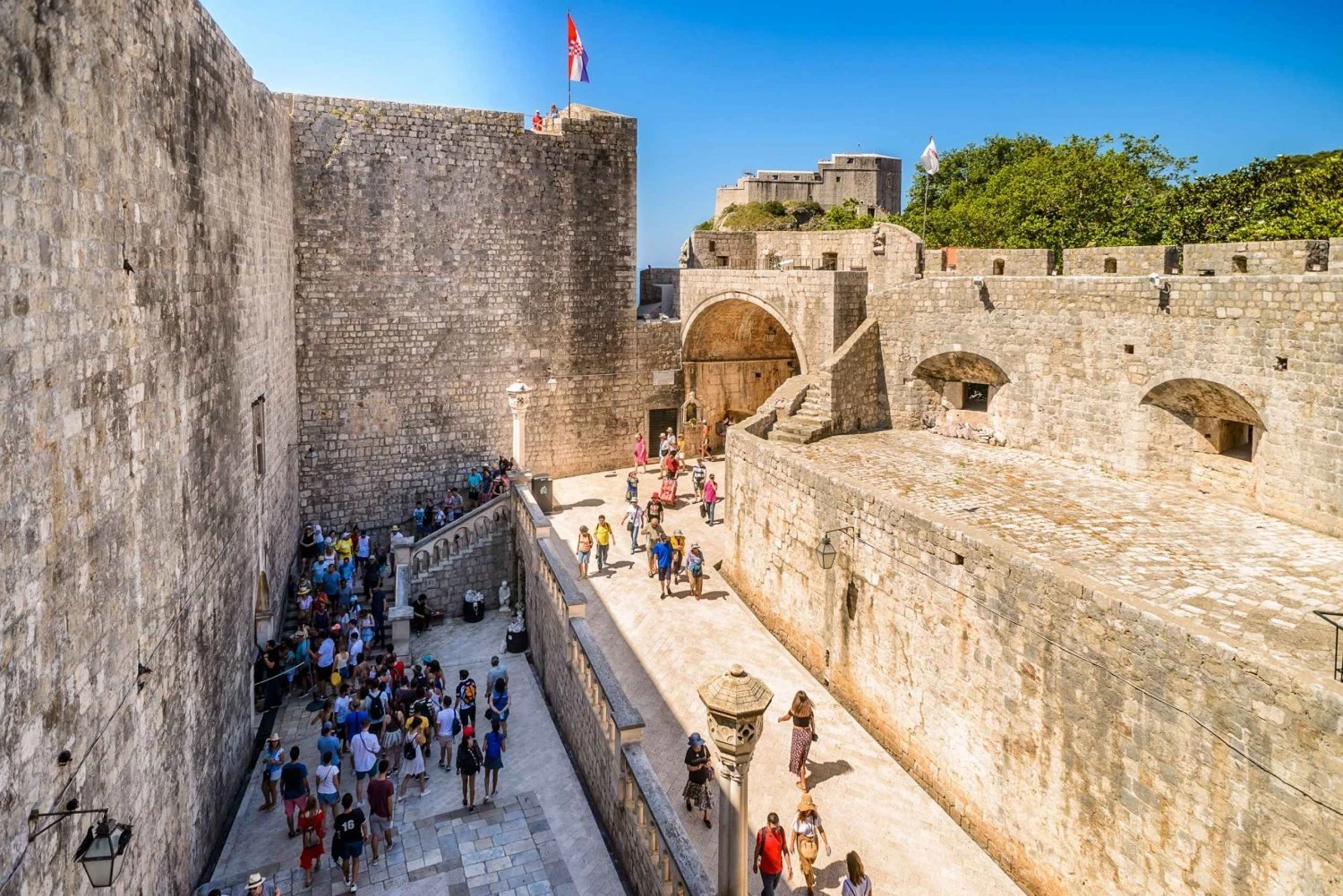
Game of Thrones filming locations
A walking tour with a licensed guide of the King's Landing filming locations: the west bay and Fort Lovrijenac (the Red Keep), the Pile Gate, the Stradun and the Jesuit Stairs, where Cersei's walk of atonement began. The longest option adds the ferry to Lokrum and a photo with the official Iron Throne, on the island.
Allow from €22 per person on GetYourGuide depending on the option (1.5 to 3 hours), in English or German, free cancellation up to 24 hours before. Fort entry and the Lokrum ferry are paid on top.
- 1.5 to 3 hrs
- From €22 per person, Lokrum ferry and fort extra (GetYourGuide price 2026)
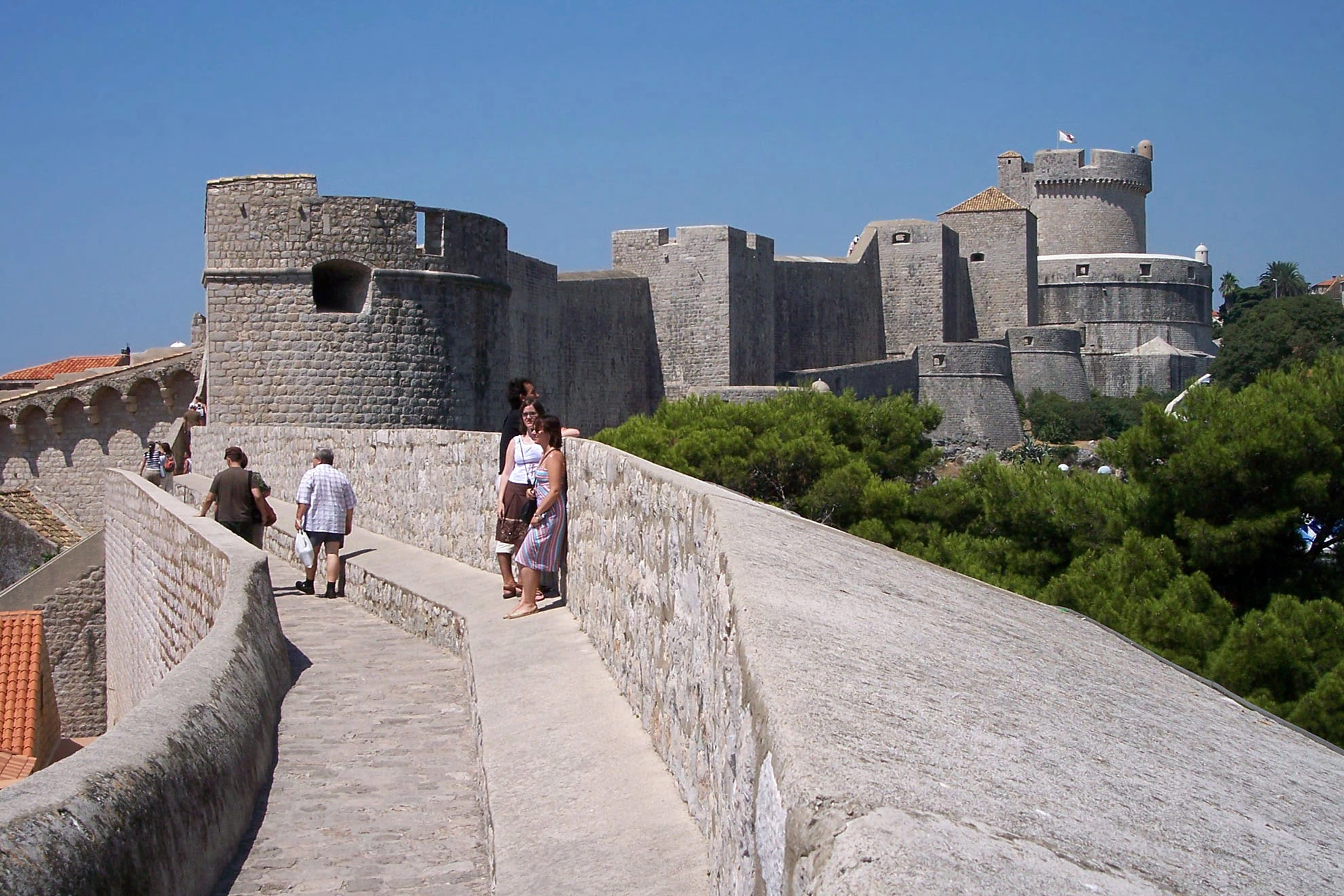
Guided walk on the walls early morning or at sunset
Two hours on the wall walk with a licensed guide, starting in front of the Pile Gate: the Stradun seen from above, Bokar Fortress facing the sea, then the Minčeta Tower, the highest point of the circuit, with explanations of how the Republic of Ragusa defended itself. The highlight: the Old Town roofs at sunrise or sunset, away from the midday heat.
Allow from €25 per person on GetYourGuide, tour available in French or English, small group, free cancellation up to 24 hours before. The City Walls entry ticket (€40 adult in 2026) is extra.
- 2 hrs
- From €25 per person, City Walls entry extra (GetYourGuide price 2026)
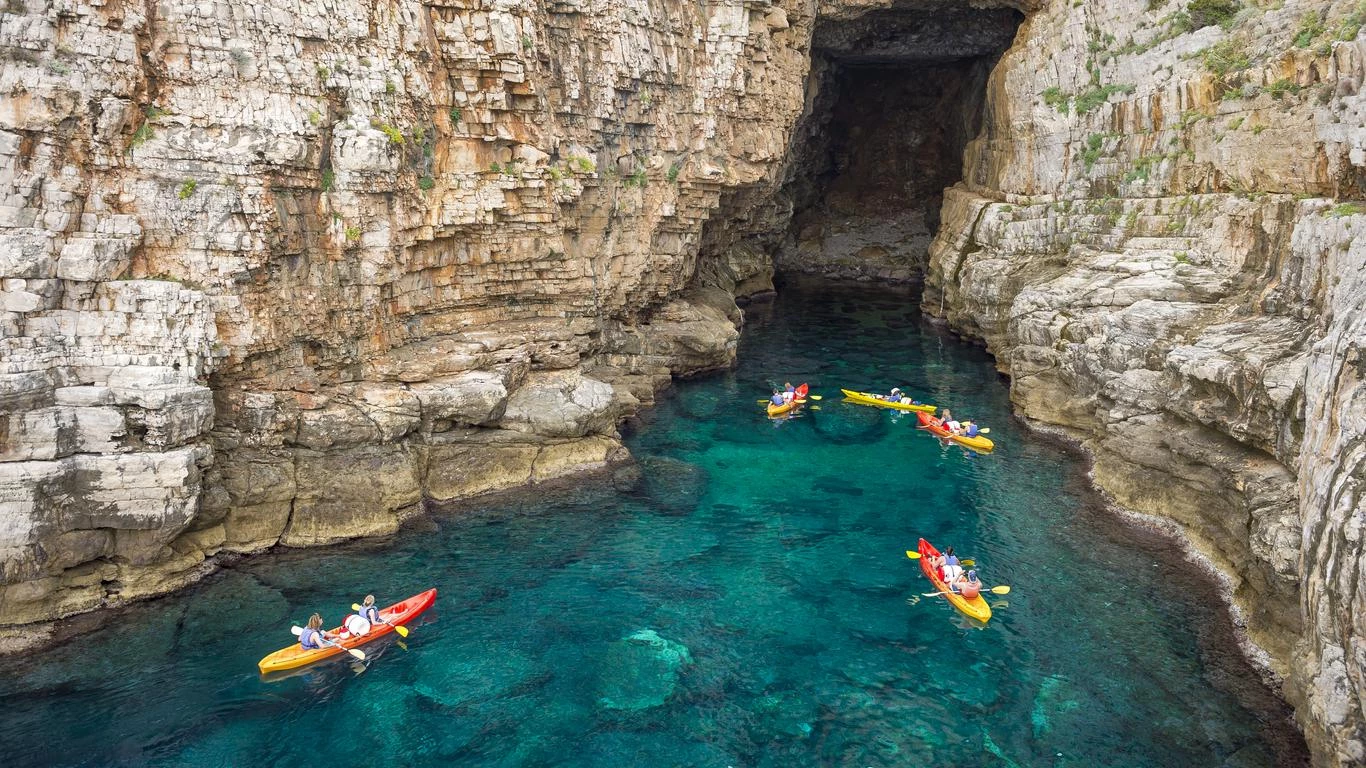
Sea kayaking along the walls and Betina Cave
A 4 km guided sea-kayak outing from the beach below the Pile Gate: you paddle along the sea side of the walls, round towards Lokrum island, then take a 30-minute swim and snorkel break in Betina Cave, reachable only from the sea. The highlight: the walls seen from water level.
Allow from €34 per person on GetYourGuide, in a small group with an English-speaking guide, dry bag provided, daytime or sunset departures, free cancellation up to 24 hours before. Check the wind the day before: the outing can be cancelled in bad weather.
- 2 hrs
- From €34 per person (GetYourGuide price 2026)
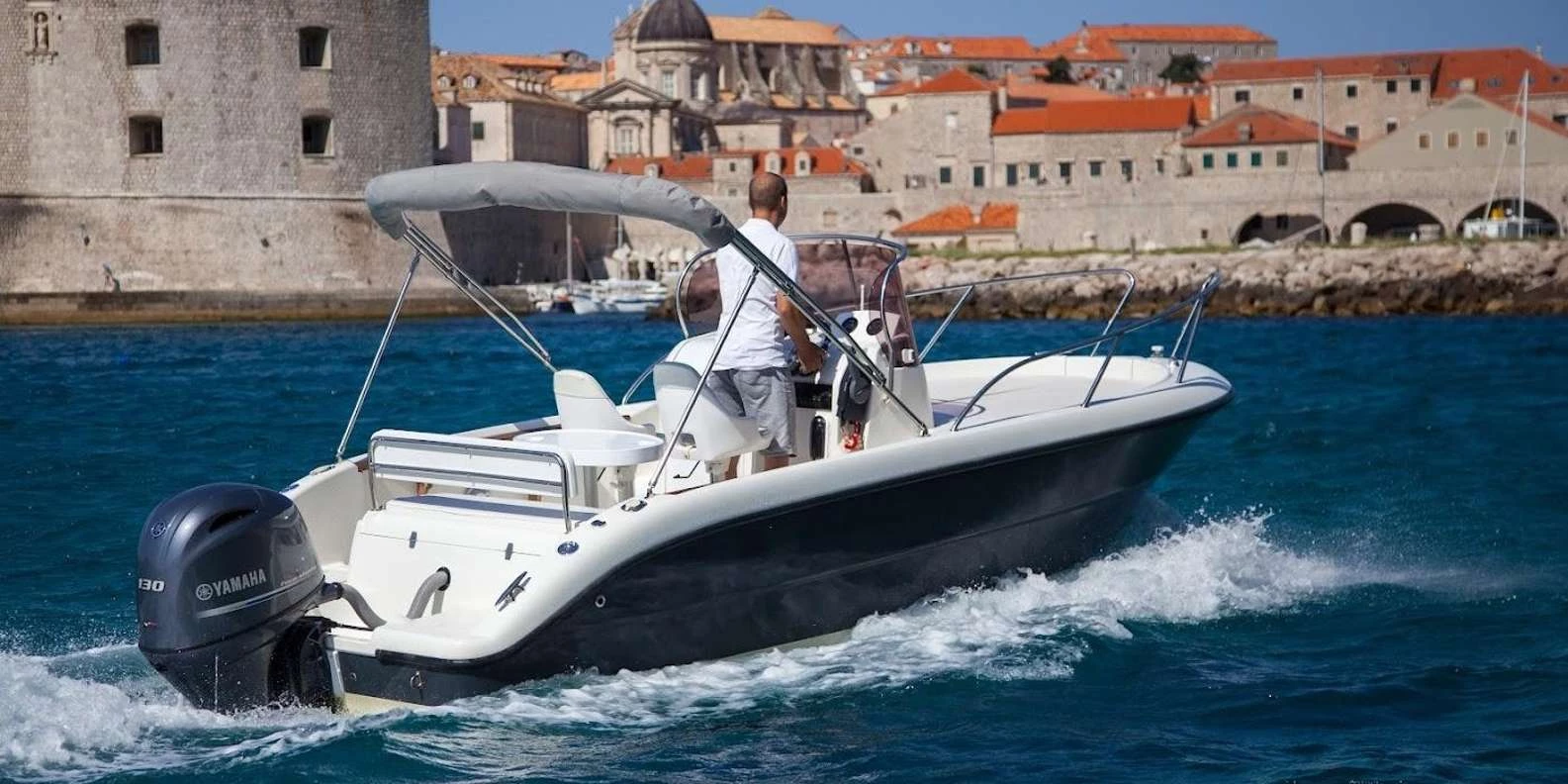
Elaphiti Islands cruise: Koločep, Šipan and Lopud
A day by boat in the Elaphiti archipelago, north-west of Dubrovnik: a swimming stop at Koločep, with the island's Blue Cave as an option, then the village of Šipan and a long stop on Lopud for lunch and the beach. The highlight: the free afternoon on Lopud, whose Šunj beach is one of the few sandy beaches in the area.
Allow from €40 per person on GetYourGuide, unlimited drinks and lunch depending on the option, hotel pickup available, free cancellation up to 24 hours before. The Blue Cave is extra.
- 8 hrs
- From €40 per person, drinks included, lunch optional (GetYourGuide price 2026)
Getting there
Most visitors arrive at Dubrovnik Airport (Cilipi), about 20 km southeast, linked to the centre by the official Platanus shuttle (around 10 EUR one-way).
By air: Dubrovnik Airport (DBV) at Cilipi is about 20 km southeast of the city. The official Platanus shuttle reaches the Ploce Gate (Old Town) and then Gruz bus station in roughly 30 minutes, for about 10 EUR one-way (15 EUR return). Taxis and private transfers are also available.
By bus: Dubrovnik is connected by coach to Split, Zagreb and neighbouring countries; buses arrive at Gruz bus station.
By sea: ferries and catamarans serve Gruz harbour from Split, Hvar, Korcula and Bari (Italy). Cruise ships also dock at Gruz.
Entry: Croatia is part of the Schengen Area and has used the euro since 1 January 2023.
Many travellers pair Dubrovnik with central Dalmatia: see our Split guide, and the complete Croatia guide for the wider route.
Getting around
The Old Town is walked on foot only; for outer districts the Libertas bus (1-hour ticket 1.73 EUR) is the simplest option.
On foot: the walled Old Town is fully pedestrian; cobbled lanes and stairs are best explored on foot.
Bus: the Libertas city network serves Lapad, Babin Kuk, Gruz and the Pile Gate. A one-hour ticket costs 1.73 EUR from kiosks (more on board). The Dubrovnik Pass includes bus rides.
Taxi and rideshare: taxis and Uber operate in town; fares can be high at peak times.
Boat: ferries and water taxis leave from the Old Port (Lokrum) and Gruz (Elaphiti, Mljet).
Car: useful for the Dalmatian coast but pointless in the Old Town (no cars allowed); parking is expensive and scarce in tourist areas.
What to do
The walls at opening time, the Old Town and the Rector's Palace, the Srđ cable car at sunset; then Lokrum, kayaking along the walls and a day in the Elaphiti Islands.
The first day is spent inside the walls: the wall walk at opening time, then the Stradun, the Franciscan monastery, the Rector's Palace and the cathedral, before taking the cable car up Mount Srđ for sunset. The next day, take the Old Port ferry to Lokrum, or kayak along the walls to Betina Cave.
A third day goes to the sea (an Elaphiti Islands cruise) or to Trsteno Arboretum. In July and August, the Dubrovnik Summer Festival stages open-air concerts and theatre in the Rector's Palace courtyard, at Fort Lovrijenac and in the squares of the Old Town: book tickets and accommodation early.
Food
Dubrovnik food is Dalmatian and Mediterranean: fish and seafood, Ston oysters, and the local octopus stew (brodet).
Dubrovnik's cuisine is firmly Mediterranean and sea-focused.
- Fish and seafood: catch of the day grilled, squid, black cuttlefish-ink risotto, brodet (fish or octopus stew).
- Ston oysters and mussels: farmed in Mali Ston bay, about an hour's drive away.
- Dalmatian specialities: peka (meat or octopus slow-cooked under a bell of embers), pasticada, prsut ham and Pag cheese.
- Local wines: whites and reds from the Peljesac peninsula and Dalmatia.
- Sweets: rozata, the local caramel custard.
Old Town restaurants are convenient but pricier; Gruz and Lapad often offer better value.
Climate & seasons
When to go to Croatia?
Monthly averages over the past 5 years (Open-Meteo).
Best months
- June
- July
Avoid
- January
- November
- December
| Jan | Feb | Mar | Apr | May | Jun | Jul | Aug | Sep | Oct | Nov | Dec | |
|---|---|---|---|---|---|---|---|---|---|---|---|---|
| Our take | ||||||||||||
| Weather | ||||||||||||
| High | 12° | 13° | 15° | 17° | 22° | 28° | 31° | 31° | 26° | 22° | 17° | 14° |
| Rain (mm) | 221 | 137 | 194 | 126 | 141 | 37 | 39 | 63 | 136 | 153 | 362 | 202 |
| Beach | Beach June | Beach July | Beach August | |||||||||
| City sightseeing | City sightseeing February | City sightseeing April | City sightseeing May | City sightseeing June | City sightseeing September |
What to do by season (autumn)
-
City sightseeing
Pedestrian-friendly most of the year.
When to go
May, September and early October offer the best balance: pleasant weather, the sea still swimmable, and fewer cruise crowds than July-August.
Dubrovnik can be visited year-round, but each season has its own character.
- Spring (April-June): mild and sunny (15-25 °C), ideal for walking the walls, with fewer people and lower prices than summer.
- Summer (July-August): hot (often around 28 °C), the liveliest but also busiest and priciest time; the Old Town is packed from mid-morning to mid-afternoon on cruise days.
- Autumn (September-October): pleasant temperatures, the sea still warm, smaller crowds: one of the best times.
- Winter (November-March): cooler (5-15 °C) and wetter, quiet city and low rates; note the Mount Srdj cable car is closed January-March and in December.
Budget
Dubrovnik is one of Croatia's priciest cities; the Dubrovnik Pass (40 EUR for a day) quickly pays off on walls and museums.
Dubrovnik is among the country's most expensive destinations, especially for the headline sights.
- City Walls: 40 EUR adult, 15 EUR for ages 7 to 18 (official ticket office, September 2026); ticket includes Fort Lovrijenac.
- Mount Srdj cable car: 30 EUR adult return.
- Rector's Palace: 15 EUR (or 10-Museums ticket at 20 EUR).
- Dubrovnik Pass: 1 day 40 EUR, 3 days 50 EUR, 7 days 60 EUR; includes the walls, several museums and bus rides, quickly worthwhile if you visit several sites.
- Libertas bus: 1.73 EUR for a one-hour ticket.
Where to stay
The Old Town (Stari Grad) gives the most immersion; Ploce and Lapad combine quiet, beaches and good access to the centre.
- Old Town (Stari Grad): at the heart of the heritage, ideal for doing everything on foot; boutique hotels and old apartments, medieval atmosphere.
- Ploce: just east, upscale hotels with views of the walls and sea, and Banje Beach nearby.
- Lapad: green peninsula to the west, great for families, with beaches, a promenade and varied lodging.
- Babin Kuk: quiet hotel area with resorts and direct beach access.
- Gruz: the port district, more affordable, handy for island ferries.
Safety
Dubrovnik poses no particular risk; the precautions concern the heat, slippery stairs and cruise-day crowds. Emergencies: 112.
Dubrovnik poses no particular risk to travellers. In summer, the heat on the shadeless walls is the main difficulty: set off early with water. The limestone paving of the Stradun and the stairways turn slippery in the rain, and the crowds on cruise days encourage pickpocketing.
At sea, stay within the marked swimming areas and skip kayaking or paddleboarding in strong wind. Useful numbers in Croatia: European emergency number 112, police 192, fire brigade 193, ambulance 194, sea search and rescue 195.
Formalities
Croatia is in the Schengen Area and has used the euro since 1 January 2023; visa-exempt nationals may stay 90 days within any 180.
Currency: the euro (EUR), adopted on 1 January 2023 in place of the kuna.
Schengen Area: Croatia joined Schengen on 1 January 2023. EU/EEA nationals enter with a valid ID card or passport; non-EU travellers follow the Schengen rule of 90 days in any 180-day period — check whether your nationality needs a visa.
Since 10 April 2026, the EES Entry/Exit System records the biometric data of non-European travellers at the Schengen external border, for example at Dubrovnik airport or when arriving from Montenegro or Bosnia and Herzegovina. The ETIAS travel authorisation is not yet in operation and no launch date has been set (September 2026). Neither EES nor ETIAS applies to EU citizens.
FAQ
Currency: euro since 2023. Visa: 90 days in 180 for visa-exempt nationals (Schengen). Ideal length: 2 to 3 days.
What currency does Dubrovnik use?
The euro (EUR). Croatia adopted the euro on 1 January 2023, replacing the kuna.
Do I need a visa?
Croatia is in the Schengen Area: visa-exempt nationals (EU, UK, US, Canada, Australia...) may stay 90 days within 180; other nationalities need a Schengen visa.
How do I get from the airport to the city?
The official Platanus shuttle links the airport (~20 km away) to the Ploce Gate and Gruz in about 30 minutes, for roughly 10 EUR one-way (15 EUR return).
How many days do I need?
Two to three days cover the Old Town, the walls, the cable car and a Lokrum day trip.
How much are the City Walls?
40 EUR for an adult and 15 EUR for ages 7 to 18, free up to 6 (official ticket office, September 2026); the ticket also covers Fort Lovrijenac.
Where were the Game of Thrones scenes filmed?
The Old Town and walls served as King's Landing, Fort Lovrijenac as the Red Keep and Trsteno Arboretum as the palace gardens.
When is the best time to visit?
May, September and early October: good weather, the sea still swimmable and fewer crowds than July-August.
How do I get to Lokrum?
By the official ferry from the Old Port (~10-15 min); the return ticket includes the reserve entrance fee. Service runs roughly April-October.
What are the emergency numbers in Croatia?
112 (European number), police 192, fire brigade 193, ambulance 194 and sea rescue 195.
Sources
The figures in this guide come from the sources below, checked on the publication date.
Leave a comment
Share your thoughts or travel experience. Your email will not be published.