

For a first trip to Central Asia, Uzbekistan is the easier choice: a direct flight from Europe, eight UNESCO World Heritage properties, fast trains between the major cities and two good seasons a year. Kyrgyzstan is for travellers who come for the mountains and accept a connecting flight, rough overland transport and a single departure window, from July to September.
The two countries are neighbours and combine well on one trip. But if you have to pick one, the real question isn't "culture or nature" — it's when you can travel, and how much comfort you're willing to give up.
Visas: both countries now grant 30 days
French nationals enter both countries visa-free for 30 days. This is the most poorly documented point on the French-language web, and the one that can cost you most. Travellers on other passports should check their own foreign ministry, as allowances differ widely by nationality.
On the Uzbek side the rule is stable: no visa is required for a stay not exceeding 30 days, according to France Diplomatie (page updated 30 June 2026). Beyond 72 hours in the country you must be registered with the OVIR — in practice your hotel handles this and hands you a small slip to keep until you leave.
On the Kyrgyz side the rule changed on 1 January 2026, and many websites — visa agencies included — still show the old one. The visa-free allowance dropped from 60 to 30 days, with an extra constraint that Uzbekistan does not impose: after 30 days in the country, you must wait 30 days before returning visa-free (France Diplomatie, updated 27 July 2026). That cooling-off period matters if you plan a side trip to a neighbouring country mid-journey.
In both cases your passport must be valid for at least six months beyond the end of your stay. If you read anywhere that Kyrgyzstan grants 60 days, the information is out of date — always check the official page before booking. Our detailed articles on the Uzbek visa and paying in Uzbekistan cover this further.
Getting there: the sharpest difference
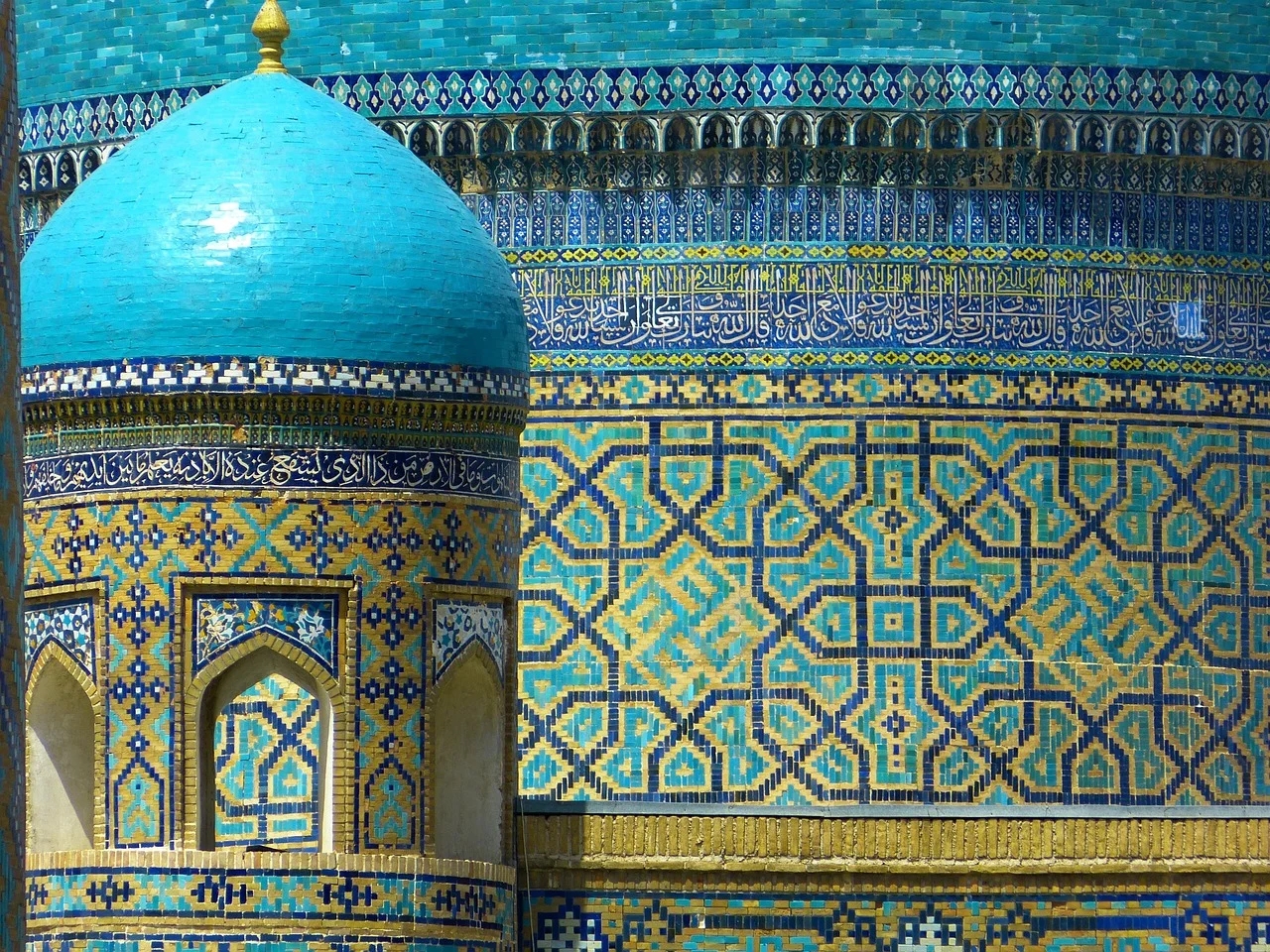
This is where the two countries stop being comparable. Tashkent has a direct flight from Paris, operated by Uzbekistan Airways out of Paris-Charles-de-Gaulle, over a distance of roughly 5,130 km. Bishkek has no direct flight from France at all: every routing involves a connection, most often through Istanbul.
In practice, Uzbekistan is an overnight flight away, while Kyrgyzstan demands a connection and half a day of extra travel. On a ten-day holiday, that gap matters. Frequencies on the direct Paris–Tashkent service vary by season: check the airline's own schedule rather than a comparison site, as published data is contradictory.
Good news if you're still torn: regional links are multiplying. Aero Nomad Airlines opened a twice-weekly Bishkek–Tashkent route in August 2026, and Centrum Air connects Tashkent to Osh in southern Kyrgyzstan. Combining both countries on one trip has never been simpler.
Getting around: high-speed rail versus mountain 4x4
Uzbekistan has the best rail network in Central Asia. The Afrosiyob trains (Spanish-built Talgo 250 sets) link Tashkent to Samarkand in a little over two hours, and continue to Bukhara in three and a half to four hours. Three classes, booking opening sixty days ahead on the official site eticket.railway.uz, foreign bank cards accepted. You move from one museum city to the next without renting a car or haggling over a taxi.
In Kyrgyzstan, trains are of no use to travellers. You get around by marshrutka (shared minibus), shared taxi, and 4x4 with a driver as soon as the tarmac ends — which happens quickly. Distances look short on the map and take twice as long as advertised. That isn't a flaw in the country: it's the price of reaching landscapes no paved road serves.
One to watch in 2026: Uzbekistan has announced a high-speed service between Tashkent and Khiva that would cut that journey from about fourteen hours to seven hours forty. Confirm it is actually running before building an itinerary around it.
Heritage: eight UNESCO sites versus three
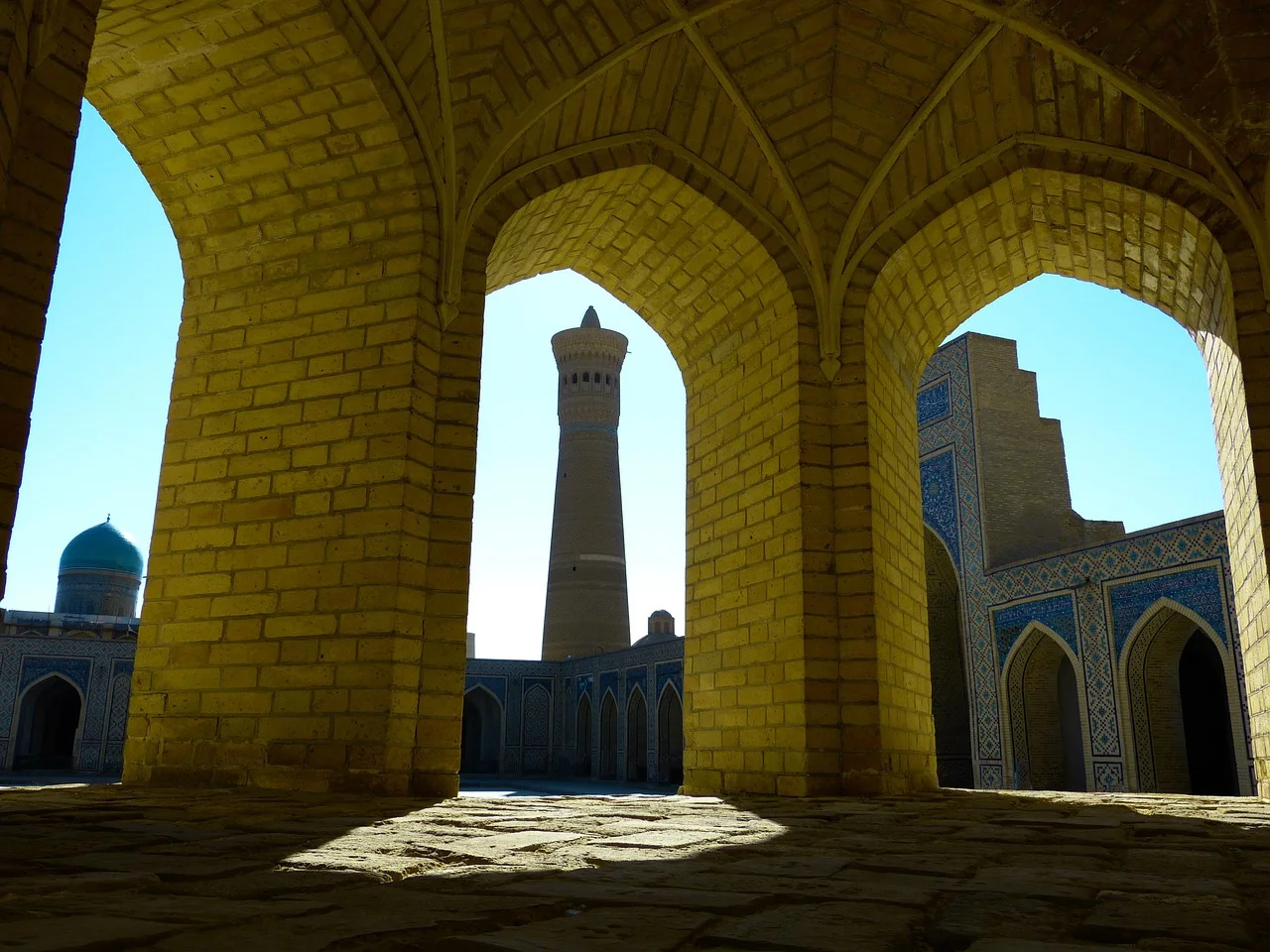
Uzbekistan has eight World Heritage properties, Kyrgyzstan three. The gap reflects a historical reality: the great caravan cities of the Silk Road — Samarkand, Bukhara, Khiva, Shakhrisabz — all sit on Uzbek soil.
The Registan in Samarkand, the walls of Khiva and Bukhara's Kalon minaret form a triangle you can cover in a week, trains included. New in July 2026: UNESCO inscribed Tashkent's modernist architecture at its 48th session — ten buildings raised after the 1966 earthquake, among them the Palace of People's Friendship, the Chorsu bazaar and the Kosmonavtlar metro station. Finally a reason to linger in a capital many used to pass straight through.
Kyrgyzstan plays a different game: the sacred mountain of Sulaiman-Too at Osh, the Chang'an–Tian Shan corridor network, and Western Tian Shan, which it shares with Uzbekistan and Kazakhstan. Its heritage is living rather than monumental — feltmaking, eagle hunting, life on the summer pastures. You don't tour it, you share in it. See the full list of Uzbek and Kyrgyz properties.
The season often decides for you
This is the most underestimated constraint of the two destinations, and it is asymmetric. Uzbekistan has two good seasons; Kyrgyzstan has only one, and it is narrow.
In Uzbekistan, spring and autumn are the ideal windows. Summer is punishing in the desert: in Bukhara and Khiva, July afternoons make sightseeing in open sun genuinely difficult. Winter is cold but clear, and the great monuments stay open.
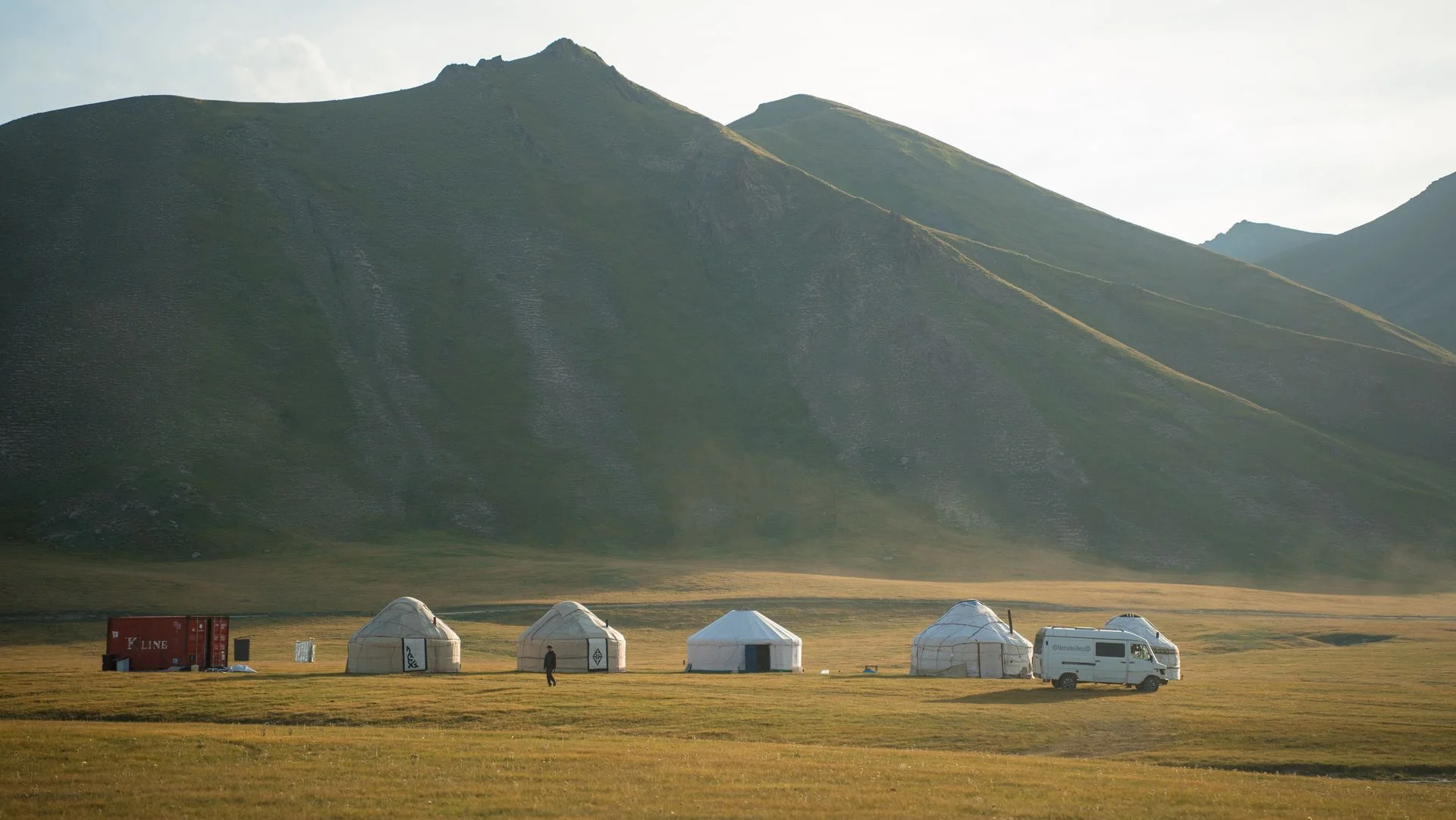
In Kyrgyzstan, everything that makes the country worth the trip sits at altitude, and therefore under snow for most of the year. Song-Kul lake, at 3,016 m, is only reachable by road for a few summer months, and the yurt camps on the jailoo pastures follow the same calendar. The sensible window runs from July to September — and expect possible snow even at the height of summer at that altitude.
The consequence is arithmetic: if you can only travel in April, May or October, the choice is already made. It will be Uzbekistan.
Budget: a smaller gap than you're told
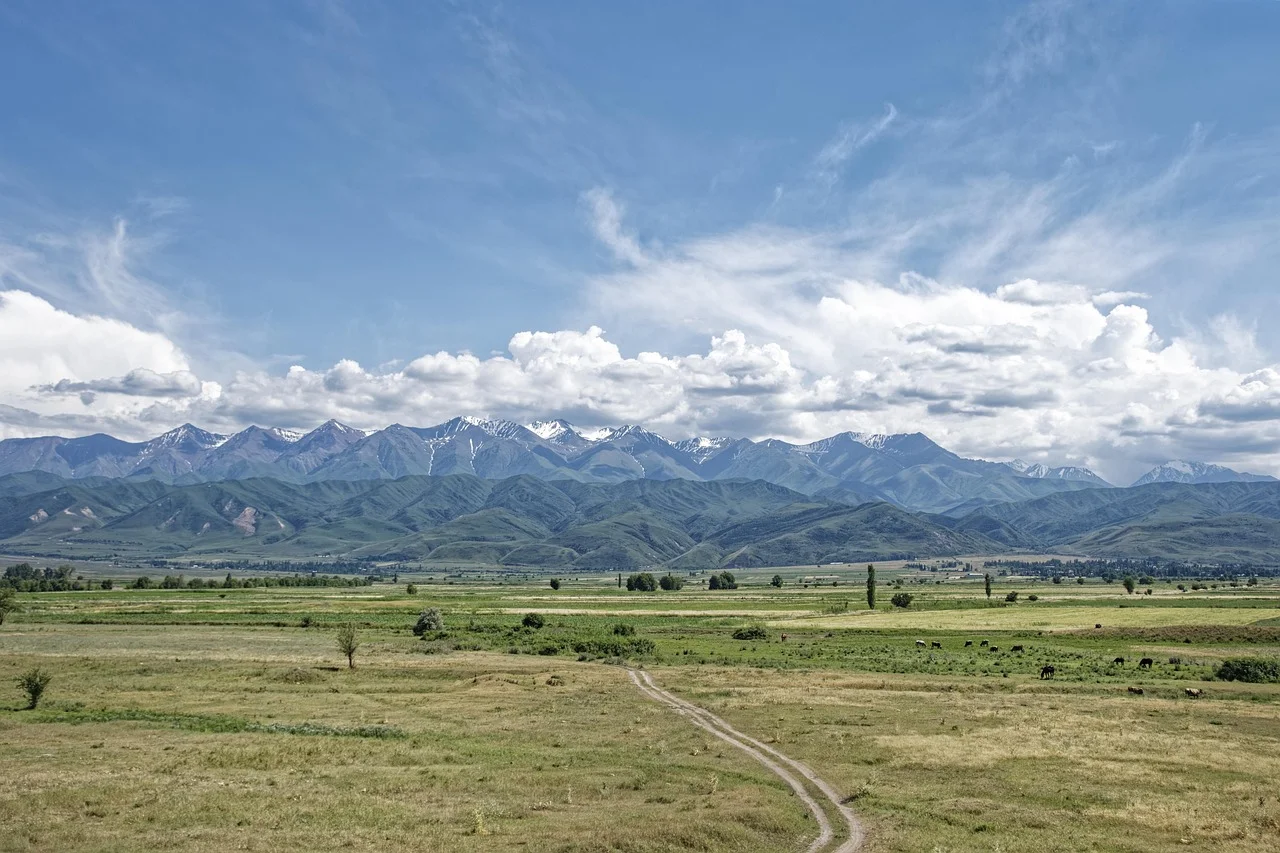
You'll often read that Kyrgyzstan is markedly cheaper. That needs qualifying. In 2024, GDP per capita stood at US$3,337 in Uzbekistan against US$2,515 in Kyrgyzstan, according to the World Bank — a real gap, but a modest one. Both countries remain inexpensive for a European or North American traveller, without either one undercutting the other dramatically.
Where the difference really shows is in the structure of your spending. In Uzbekistan, trains, hotels and site admissions are fixed, predictable costs you can book online. In Kyrgyzstan, transport dominates: hiring a 4x4 and driver to reach the high-altitude lakes can swallow half a small group's budget on its own, and it is negotiated locally.
Carry cash in Kyrgyzstan as soon as you leave Bishkek: outside the capital and the main resorts, card payment is not guaranteed, particularly at guesthouses and yurt camps. The local currency is the Kyrgyz som (KGS), not to be confused with the Uzbek som (UZS) — two separate currencies on very different scales.
« The entire territory of Kyrgyzstan is placed under heightened vigilance. »
Safety and on-the-ground formalities
Both countries are rated "heightened vigilance" across their whole territory by the French foreign ministry — the standard level for much of the world. No part of Kyrgyzstan is classed as advise-against. In Uzbekistan, only the Afghan border strip, Termez included, is formally advised against except on imperative grounds, and it appears on no standard tourist itinerary. Samarkand, Bukhara, Khiva and Tashkent present no particular difficulty.
Two caveats specific to Kyrgyzstan deserve your attention. First, the mountains: France Diplomatie stresses avalanches, rockfall, the rapid onset of acute mountain sickness and inadequate rescue capacity. Deaths are recorded every year on peaks above 7,000 m, particularly on Lenin Peak. Insurance that explicitly covers high-altitude trekking and evacuation is not a luxury here.
Second, the restricted border zones. Several spectacular sites — Kel-Suu lake, the Enylchek glacier, the approaches to Lenin Peak — lie in areas near the Chinese or Tajik borders that require a permit issued by the border guard service and checked at military checkpoints. Processing times and procedures are documented only by the agencies that sell these permits, so have the process confirmed by a local operator before building an itinerary around those destinations. Allow several weeks.
The border with Tajikistan, closed since May 2021, has been "officially open again since the signing of a delimitation treaty on 13 March 2025" according to France Diplomatie — useful if you're considering a wider regional loop. Only one crossing is fully open to all travellers, however.
So which one should you choose?
Choose Uzbekistan if this is your first trip to Central Asia, if you're coming for architecture and history, if you're travelling with children or older parents, if you only have a week, or if your dates fall in spring or autumn. The direct flight, the fast trains and the density of sites make it a remarkably easy destination for a country that sounds remote.
Choose Kyrgyzstan if you're travelling between July and September, if hiking, horses or nights in a yurt are the whole point of the trip, if you accept long days on dirt roads and variable comfort, and if you'd rather meet people than tour monuments. It's the more spectacular of the two, at the cost of tougher logistics.
And if you have three weeks: do both. Fly into Tashkent, work up the Silk Road to Samarkand and Bukhara, then hop over to Osh or Bishkek by air. You'll see both faces of Central Asia — the blue cities of the desert and the pastures of the Tian Shan — without ever feeling you're repeating the same trip.
Leave a comment
Share your thoughts or travel experience. Your email will not be published.