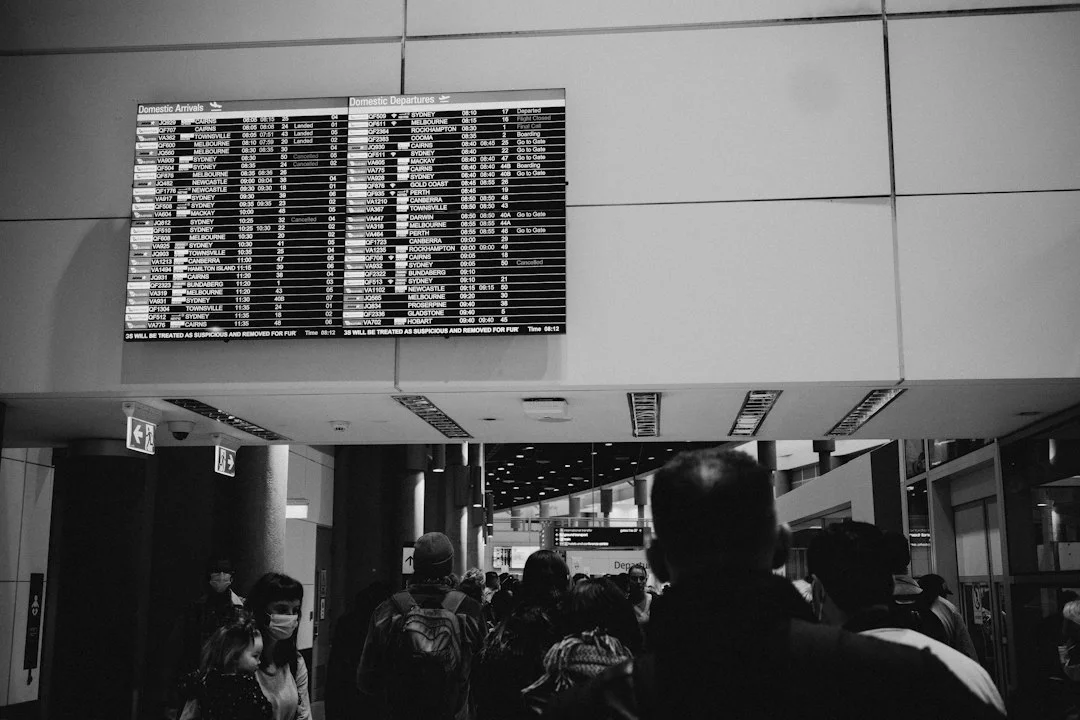


The refusal happens at the check-in desk, not at the border. A valid passport guarantees nothing: for the twenty or so destinations reviewed here, you also need an authorisation obtained online before departure. Without it, the airline denies boarding, and nobody can fix that at the airport.
The number one cause of these refusals isn't carelessness. It's the confusion between three regimes that look nothing alike. The first, the eTA-style prior authorisation, is the trickiest: your passport is enough to enter the country, but without the form filled in beforehand, you don't get on the plane. The second, the e-visa, is a real visa applied for online, with a processing time. The third, the standard embassy visa, is still slow and sometimes handled by hand.
This article walks through those three regimes destination by destination, with costs and lead times verified on 13 August 2026. One detail that matters: the rules quoted here apply the same way whatever passport you hold. None of them is reserved for a particular nationality.
Why a simple online authorisation can leave you on the ground
A prior authorisation isn't a visa, and that's exactly why it catches out so many travellers. The destination country doesn't ask you for a visa: your passport is enough to cross the border. But it requires the airline to check, at check-in, that you hold the matching electronic authorisation.
The mechanism is simple. The state pushes the control upstream, onto the carrier. Airlines apply the rule to the letter, because they pay fines when they board a non-compliant passenger, and because they have to fly them home at their own expense. So an agent at the desk has no room to negotiate.
The habit that's missing
Here's where the trap closes. When you read "no visa required", you naturally conclude there's nothing to do. You get the passport ready, the ticket, the accommodation, and you show up at the airport. The authorisation, though, is applied for on an official portal, often in fifteen minutes, but it needs a processing window. Fifteen minutes of paperwork, two to three days of waiting: that gap is what costs people entire flights.
Something else worth keeping in mind: these authorisations change price and conditions several times a year. Undated information goes stale silently. Always check the official portal before you book, not just before you leave.

Quelles destinations exigent une autorisation avant l'embarquement ?
Quatre destinations illustrent parfaitement ce régime au 13 août 2026 : le Kenya, le Suriname, Saint-Kitts-et-Nevis et la Côte d'Ivoire. Dans les quatre cas, la règle est la même pour tous les passeports non-nationaux, et dans les quatre cas c'est la compagnie aérienne qui bloque, pas la police des frontières.
Suriname : le cas le plus parlant
Le Suriname n'impose pas une eTA mais une e-Tourist Card, assortie d'un droit d'entrée de 54 USD (environ 52 EUR). Le détail décisif date du 15 janvier 2024 : depuis cette date, le justificatif de paiement est contrôlé par la compagnie aérienne à l'enregistrement. Pas à l'arrivée à Paramaribo. Le séjour touristique autorisé va jusqu'à 90 jours. Un voyageur qui arrive au comptoir sans ce reçu ne prend pas son vol, même avec un passeport impeccable.
Kenya : 72 heures sur le papier, deux semaines en pratique
Le Kenya exige une eTA à 30 USD, demandée sur etakenya.go.ke. Le délai officiel de traitement est de 72 heures, mais les autorités conseillent de déposer le dossier deux semaines avant le départ. Un mot sur une confusion fréquente : les exemptions annoncées en 2025 (Legal Notice No. 93 du 30 mai 2025) existent bien, mais elles concernent uniquement des pays africains et caribéens. Aucune extension aux voyageurs occidentaux.
Saint-Kitts-et-Nevis : y compris les bébés
Ici, l'eTA s'applique à tout détenteur d'un passeport non-national, y compris les nationalités dispensées de visa. Le tarif est passé à 17 USD le 2 septembre 2025, après un lancement à 8,50 USD le 26 mai 2025. L'autorisation est valable 90 jours. Les seuls exonérés : les ressortissants de la CARICOM, les diplomates en mission et les enfants de moins de 2 ans. Au-delà de deux ans, un enfant a besoin de sa propre eTA.
Côte d'Ivoire : une démarche en deux temps
La Côte d'Ivoire fonctionne en deux étapes. Un pré-enrôlement en ligne obligatoire sur le portail SNEDAI avant le départ, puis un enrôlement biométrique à l'arrivée à Abidjan. Seuls les ressortissants de la CEDEAO en sont dispensés. Le FCDO britannique recommande de déposer la demande au moins dix jours ouvrés avant le voyage. Aucun tarif officiel n'est publiquement confirmé, donc mieux vaut se fier au montant affiché sur le portail au moment de la demande plutôt qu'à un chiffre trouvé ailleurs.
Which destinations require an authorisation before boarding?
Four destinations illustrate this regime perfectly as of 13 August 2026: Kenya, Suriname, Saint Kitts and Nevis, and Côte d'Ivoire. In all four cases the rule is the same for every non-national passport, and in all four cases it's the airline that blocks you, not the border police.
Suriname: the clearest case
Suriname doesn't require an eTA but an e-Tourist Card, along with an entry fee of 54 USD (about 52 EUR). The decisive detail dates from 15 January 2024: since then, proof of payment is checked by the airline at check-in. Not on arrival in Paramaribo. The permitted tourist stay runs up to 90 days. A traveller who reaches the desk without that receipt doesn't take the flight, even with a flawless passport.
Kenya: 72 hours on paper, two weeks in practice
Kenya requires an eTA costing 30 USD, applied for at etakenya.go.ke. Official processing time is 72 hours, but the authorities advise filing two weeks before departure. A word on a common confusion: the exemptions announced in 2025 (Legal Notice No. 93 of 30 May 2025) do exist, but they only cover African and Caribbean countries. No extension to Western travellers.
Saint Kitts and Nevis: babies included
Here the eTA applies to every holder of a non-national passport, including visa-exempt nationalities. The fee rose to 17 USD on 2 September 2025, after launching at 8.50 USD on 26 May 2025. The authorisation is valid for 90 days. The only people exempt: CARICOM nationals, diplomats on mission, and children under 2. Past the age of two, a child needs their own eTA.
Côte d'Ivoire: a two-step process
Côte d'Ivoire works in two stages. A mandatory online pre-enrolment on the SNEDAI portal before departure, then biometric enrolment on arrival in Abidjan. Only ECOWAS nationals are exempt. The British FCDO recommends applying at least ten working days before the trip. No official fee is publicly confirmed, so it's better to trust the amount shown on the portal at the time you apply than a figure found elsewhere.

Les e-visas destination par destination
Cinq destinations méritent un examen détaillé : l'Inde, le Pakistan, le Nigeria, l'Azerbaïdjan et le Bhoutan. Deux d'entre elles ont modifié leurs règles récemment, et l'information périmée circule encore beaucoup. Voici l'état des lieux au 13 août 2026, portails officiels à l'appui.
Inde : le visa ne suffit plus
L'e-Tourist visa indien coûte 25 USD pour 30 jours de juillet à mars, et 10 USD d'avril à juin. Comptez 40 USD pour la version un an, 80 USD pour cinq ans. Le délai minimum est de quatre jours avant le départ. Le portail officiel est indianvisaonline.gov.in.
Le point que peu de voyageurs connaissent : une carte d'arrivée en ligne, l'e-arrival card, est désormais exigée en plus du visa. Elle se remplit jusqu'à 72 heures avant l'arrivée. Avoir son e-visa validé ne dispense donc plus de cette seconde démarche, et c'est une source de blocage nouvelle pour des gens qui pensaient être en règle.
Pakistan : un mythe à corriger
Non, le Pakistan n'a pas supprimé le visa pour 126 pays. L'annonce de 2024-2025, largement mal reprise, portait sur une gratuité des frais dans le cadre du dispositif « Visa Prior to Arrival », pas sur une exemption. Et ce dispositif a été suspendu le 1er janvier 2026 : l'e-visa est redevenu payant. La demande se fait sur visa.nadra.gov.pk. Le tarif exact n'étant pas confirmé par une source officielle stable, référez-vous au montant affiché sur le portail.
Nigeria : le visa à l'arrivée n'existe plus
Depuis le 1er mai 2025, le visa à l'arrivée est supprimé au Nigeria. Tout passe par portal.immigration.gov.ng, avec un délai d'environ 48 heures. De nouvelles cartes d'entrée et de sortie numériques sont également obligatoires, en plus du visa. Là encore, aucun tarif officiel confirmé à citer.
Azerbaïdjan : simple, rapide, et entouré de faux sites
L'e-visa ASAN coûte 25 USD au total, soit 20 USD de frais d'État et 5 USD de frais de service. Il autorise 30 jours de séjour et s'obtient en trois jours ouvrés. Le site officiel est evisa.gov.az. L'e-visa doit être imprimé, une version sur téléphone ne suffit pas toujours au contrôle. C'est aussi la destination où le risque d'intermédiaire est le plus élevé, et on y revient dans la section suivante.
Bhoutan : le visa est simple, la taxe fait le prix
Le visa bhoutanais est pré-approuvé en ligne sur visit.doi.gov.bt pour 40 USD. Le vrai coût vient d'ailleurs : une taxe de développement durable de 100 USD par personne et par nuit. Une semaine sur place représente donc 700 USD de taxe par voyageur, avant même l'hébergement. Contrairement à une idée très répandue, passer par un tour-opérateur n'est pas obligatoire.
E-visas destination by destination
Five destinations deserve a closer look: India, Pakistan, Nigeria, Azerbaijan and Bhutan. Two of them changed their rules recently, and out-of-date information is still circulating widely. Here's the state of play as of 13 August 2026, official portals to back it up.
India: the visa is no longer enough
The Indian e-Tourist visa costs 25 USD for 30 days from July to March, and 10 USD from April to June. Budget 40 USD for the one-year version, 80 USD for five years. The minimum lead time is four days before departure. The official portal is indianvisaonline.gov.in.
The point few travellers know about: an online arrival card, the e-arrival card, is now required on top of the visa. It can be filled in up to 72 hours before arrival. Having your e-visa approved therefore no longer exempts you from this second step, and it's a new source of trouble for people who thought they were compliant.
Pakistan: a myth to correct
No, Pakistan hasn't scrapped visas for 126 countries. The 2024-2025 announcement, widely misreported, was about a fee waiver under the "Visa Prior to Arrival" scheme, not an exemption. And that scheme was suspended on 1 January 2026: the e-visa is paid again. Applications go through visa.nadra.gov.pk. Since the exact fee isn't confirmed by a stable official source, go by the amount shown on the portal.
Nigeria: visa on arrival no longer exists
Since 1 May 2025, visa on arrival has been abolished in Nigeria. Everything goes through portal.immigration.gov.ng, with a lead time of around 48 hours. New digital entry and exit cards are also mandatory, on top of the visa. Here too, no confirmed official fee to quote.
Azerbaijan: simple, fast, and surrounded by fake sites
The ASAN e-visa costs 25 USD in total, made up of 20 USD in state fees and 5 USD in service fees. It allows a 30-day stay and comes through in three working days. The official site is evisa.gov.az. The e-visa has to be printed; a version on your phone isn't always enough at the check. It's also the destination where the risk of running into a middleman is highest, and we come back to that in the next section.
Bhutan: the visa is simple, the tax sets the price
The Bhutanese visa is pre-approved online at visit.doi.gov.bt for 40 USD. The real cost comes from elsewhere: a sustainable development fee of 100 USD per person and per night. A week on the ground therefore means 700 USD in tax per traveller, before accommodation. Contrary to a very widespread belief, going through a tour operator isn't compulsory.
How do you spot a fake visa application site?
Check the domain character by character before entering any data at all. Fake visa portals aren't crude sites: they're often legal middlemen who buy domain names resembling the official portals, genuinely process your application, and charge a multiple of the real fee.
The Azerbaijan case, a practical manual
Azerbaijan offers the clearest example. The official portal is evisa.gov.az. Middlemen run addresses like evisa.govt.az, with a single "t" added. The design mimics the public site, the form is identical, and the e-visa you receive is sometimes genuine. The difference shows up on your bank statement: 25 USD expected on the official portal, a far higher amount debited. Some travellers never notice.
The problem goes beyond the extra cost. A poorly equipped middleman can enter wrong data, miss a deadline, or vanish without processing the file. You find out at the check-in desk.
Four checks that are enough
- The domain suffix. Official portals use a government extension: .gov.az, .go.ke, .gov.in, .gouv.ml. A commercial extension or an added letter should stop you dead.
- Where the link came from. Start from your country's foreign ministry website, or the destination's official immigration site. Never from a sponsored search result, or a link in a forum.
- The advertised amount. Compare it with the fee published on the public portal: any significant gap should stop you.
- "Service fees" appearing at the end. An official portal shows its price from the start. A surcharge that turns up at the payment step is a clear signal.
A middleman isn't illegal in itself, and some provide a genuine service. But you're paying for a form you could have filled in yourself in fifteen minutes.
Les nuances qui empêchent de généraliser
« Visa obligatoire, aucune exception » est presque toujours une simplification. Deux exemples le montrent bien : l'Algérie, où un visa peut être délivré à l'arrivée dans un cadre précis, et le Mali, où la démarche s'est entièrement dématérialisée. Les articles qui affirment le contraire sont simplement périmés.
Algérie : le dispositif du Grand Sud
Le visa algérien est obligatoire. Mais il existe un dispositif officiel de visa de régularisation délivré à l'arrivée, pour les voyageurs se rendant dans le Grand Sud, soit 24 wilayas, dans le cadre d'un voyage organisé par une agence agréée. La condition est stricte, l'agence agréée n'est pas optionnelle, et ça ne concerne pas un séjour à Alger. Dire « aucune exception » serait pourtant faux.
Mali : plus besoin d'aller à l'ambassade
Le visa malien reste obligatoire, mais la demande se fait désormais à 100 % en ligne sur diplomatiemdc.gouv.ml. Le déplacement au consulat n'est plus nécessaire. Beaucoup de contenus en ligne décrivent encore l'ancienne procédure, ce qui pousse des voyageurs à prévoir des semaines de délai inutiles, ou à renoncer.
Et l'Europe ?
Les règles européennes suivent une logique différente et méritent leur propre traitement : EES, règle des 90 jours et ETIAS : les règles européennes sont traitées ici.
La leçon est la même partout : une règle de visa se vérifie à une date. Celles de cet article ont été contrôlées le 13 août 2026 sur des sources officielles. Si vous lisez ces lignes plusieurs mois plus tard, considérez-les comme un point de départ, pas comme une réponse définitive.
The nuances that stop you generalising
"Visa required, no exceptions" is almost always a simplification. Two examples show it clearly: Algeria, where a visa can be issued on arrival within a specific framework, and Mali, where the process has gone fully digital. Articles claiming otherwise are simply out of date.
Algeria: the Grand Sud scheme
The Algerian visa is required. But there is an official regularisation visa issued on arrival, for travellers heading to the Grand Sud, that is 24 wilayas, as part of a trip organised by an approved agency. The condition is strict, the approved agency isn't optional, and it doesn't cover a stay in Algiers. Saying "no exceptions" would still be wrong.
Mali: no more trips to the embassy
The Malian visa is still required, but applications are now made 100% online at diplomatiemdc.gouv.ml. A trip to the consulate is no longer necessary. Plenty of online content still describes the old procedure, which pushes travellers to allow weeks of pointless delay, or to give up.
What about Europe?
The European rules follow a different logic and deserve their own treatment: EES, the 90-day rule and ETIAS: the European rules are covered here.
The lesson is the same everywhere: a visa rule is only ever verified as of a date. The ones in this article were checked on 13 August 2026 against official sources. If you're reading this several months later, treat them as a starting point, not a final answer.
Leave a comment
Share your thoughts or travel experience. Your email will not be published.