

Contents 28
Overview
In a single trip, Colombia links the colonial Caribbean of Cartagena with the green Andes of the coffee region — a rare contrast you can cover in two weeks, mixing domestic flights and road legs.
Long overlooked, Colombia has become one of South America's rising destinations. This road trip follows a clear thread: start in the colonial heat of the Caribbean coast, dive into the energy of Medellín, then settle into the coffee hills of the Andes.
We're honest about the logistics here: linking the coast to the Zona Cafetera is done by plane (roughly a 1-hour flight versus 15 to 18 hours by road), while the local loops — Guatapé, Salento, Cocora, Filandia — are done by bus, Willys jeep and shuttle.
- Capital: Bogotá (outside this itinerary, it deserves a trip of its own)
- Currency: Colombian peso (COP)
- Language: Spanish
- Time difference: -6h in summer, -7h in winter (versus Paris); -5h/-6h versus London
- Recommended duration: 12 to 16 days
11 places to take with you
In the guide's order, ready for Google Maps or your GPS.
Book the activities from this guide
Our picks for Colombia, well rated and free to cancel.
-
Book this activity
Comuna 13 guided street art tour
EUR 15–30 per person, guide and transport included
-
Book this activity
Cocora valley hike
EUR 10–20 per person, Willys jeep and entry included
Affiliate links: Travel Advice earns a commission if you book, at no extra cost to you. Learn more

Ciudad Perdida (Teyuna)
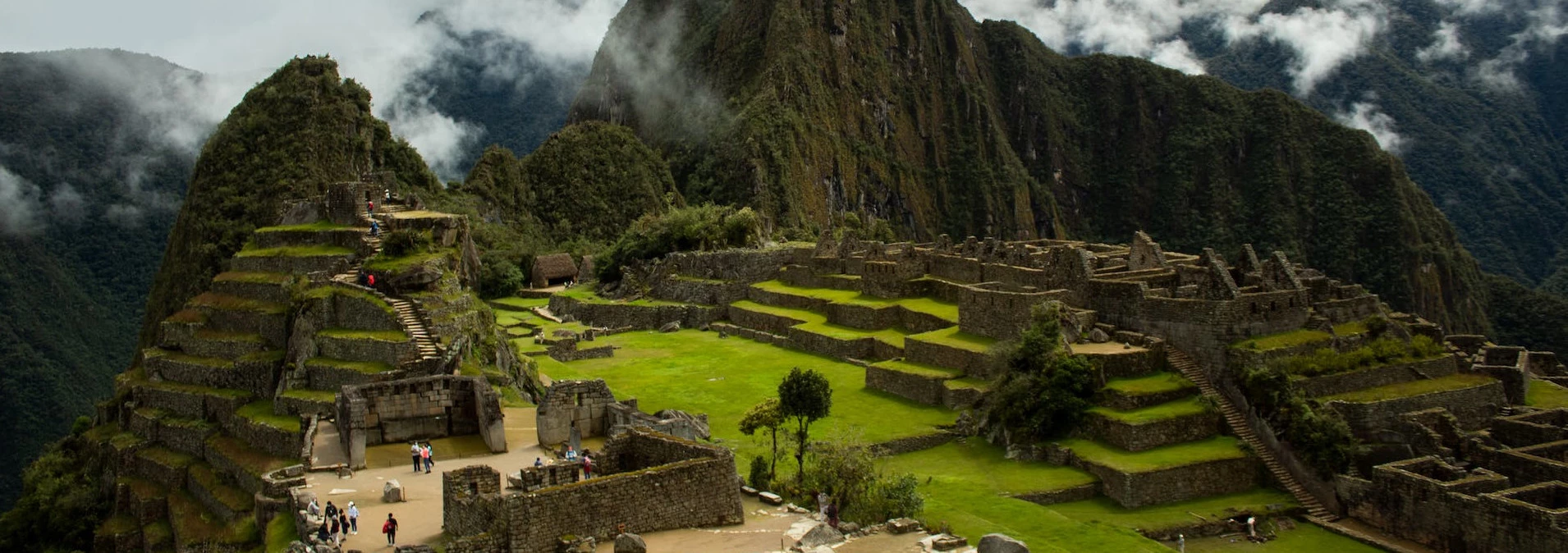
After days of walking through the jungle, you emerge onto moss-covered stone terraces, guarded by the silence and mist of the Sierra Nevada.
This sacred Tayrona city, perched at around 1,200m, predates Machu Picchu by several centuries.
You can only reach it after a 4-to-5-day trek (about 55km) with a licensed agency from Santa Marta, through rivers, campsites and indigenous villages.
It's the great adventure of the Caribbean coast, for those who want to swap the beach for effort and the road less travelled.
Plan for the yellow fever vaccine, well-worn shoes, and gear to handle constant heat and humidity.

Coffee finca
The smell of damp earth and green coffee drifts between the rows of plants; you leave with fingers stained red by the ripe cherries.
At the heart of the Coffee Cultural Landscape listed by UNESCO in 2011, the fincas open up their plantations to walk you through the whole chain, from cherry to cup.
You pick the cherries, watch the drying and roasting, then taste one of the best arabicas in the world, learning to savour it like a wine.
It's the experience that gives meaning to the whole Zona Cafetera, best lived on a small family-run farm.
Book the day before: small fincas limit the number of visitors per slot.

Walled old town of Cartagena de Indias
The moment you pass through the Torre del Reloj, the heat, the ochre façades and the din of agua de coco vendors sweep you up: Cartagena plays a tropical tune all its own.
This ciudad amurallada has been a UNESCO World Heritage Site since 1984 and is protected by the largest system of Spanish fortifications in South America.
You wander without a map between the upscale Centro, San Diego and bohemian Getsemaní covered in murals, climb the ramparts to walk at sunset, then grab a drink facing the sea before dinner.
It's the obvious starting point of the trip: nowhere else is the colonial Caribbean this concentrated and photogenic.
Steer clear of the dark centre lanes late at night, and politely turn down the touts pushing island tours.

Tayrona National Natural Park
Here the thick jungle of the Sierra Nevada tumbles down to golden sand, and howler monkeys answer the crash of Caribbean waves.
The park protects several spectacular beaches such as Cabo San Juan del Guía and La Piscina, along with remains of the Tayrona culture.
You walk one to two hours on tropical trails before reaching the coves, where you can swim (mind the currents on some beaches) and sleep in a hammock facing the ocean.
It's the finest slice of Caribbean nature reachable from the coast, less than an hour from Santa Marta.
Check the park's annual closure dates (ecological rest) and bring your yellow fever vaccination certificate.

Medellín – Comuna 13 and the metrocable
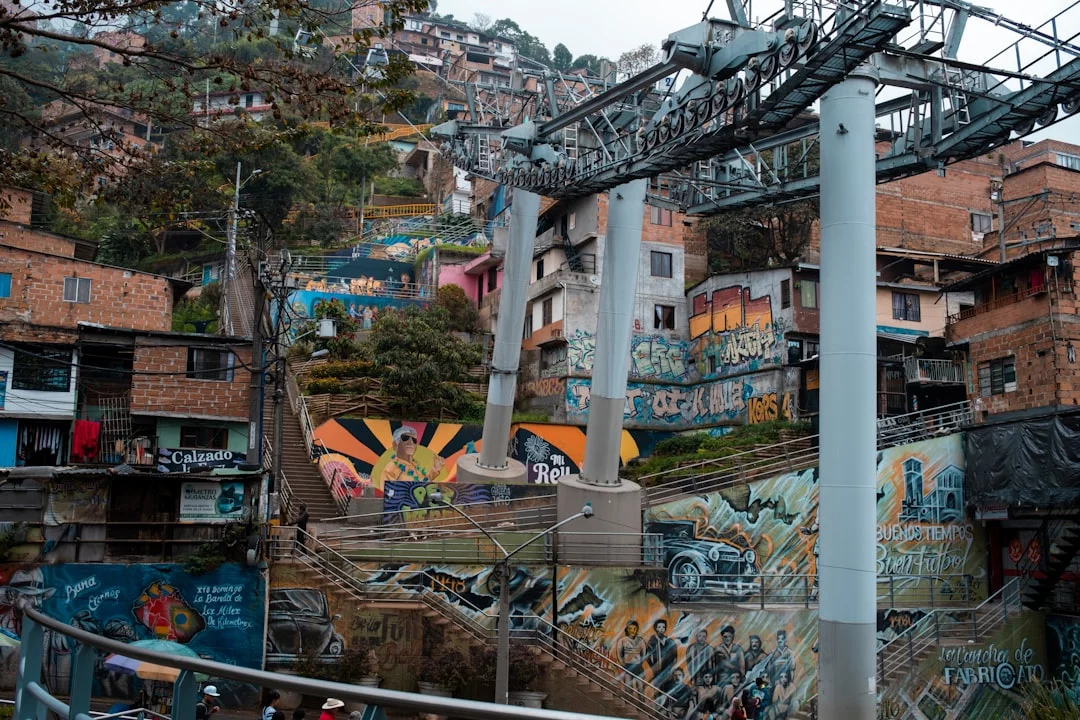
Reggaeton music, spray cans, open-air escalators: Comuna 13 brims with an energy nothing hinted at twenty years ago.
Once one of the most violent neighbourhoods in the world, it has become the symbol of the resilience of Medellín, the "city of eternal spring".
You follow a local guide — often a former resident — past murals, hip-hop shows and viewpoints, then ride the metrocable, a one-of-a-kind urban cable car gliding over the brick hills.
No other Colombian city tells the story of its social transformation this loudly.
Combine it with metrocable line J from San Javier station for the sweeping view over the city.

Cocora Valley
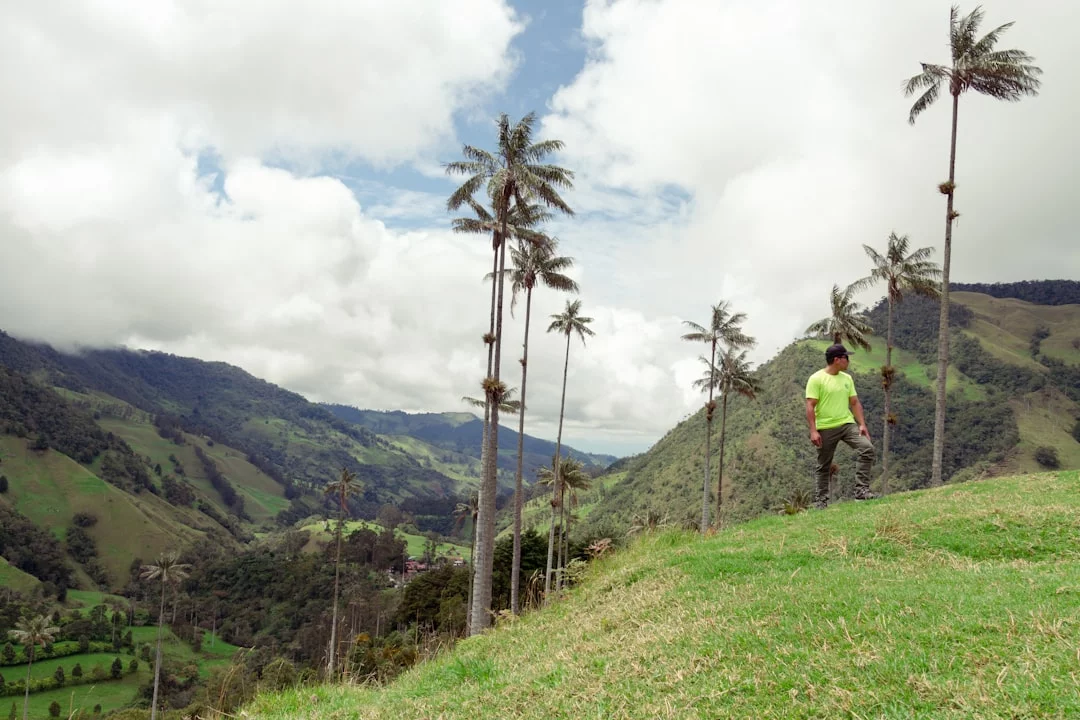
You look up and can't quite believe it: the wax palms soar more than 50m into the mist, a leafy cathedral set on emerald-green hills.
The Ceroxylon quindiuense, the tallest palm in the world, has been Colombia's national tree since 1985; the valley climbs between 1,800 and 2,400m.
You walk a five-to-six-hour loop through cloud forest, suspension bridges and rivers, with the option of a detour to the Casa de los Colibríes to watch hummingbirds.
It's the most iconic image of the Zona Cafetera, impossible to find anywhere else in the country.
Bring good shoes and a windbreaker: the trails are often muddy and the weather changes fast.

Salento
Wooden balconies painted red, blue and yellow, Willys jeeps parked at odd angles, games of tejo cracking in the yards: Salento breathes coffee-country life.
Founded in 1842, it's the oldest village in the Zona Cafetera, at the heart of the Coffee Cultural Landscape listed by UNESCO in 2011.
You stroll along the Calle Real lined with craft stalls, climb to the Mirador de Salento for the view over the cordillera, and use it as a base for Cocora and the surrounding fincas.
Livelier and more colourful than its neighbours, it packs the soul of the coffee triangle into a single street.
Then try tejo, the national game played with explosive powder, in a village bar — the round is free if you buy a drink.

Guatapé and the Piedra del Peñol
At the top of its roughly 700 steps, breathless, you discover a maze of turquoise lakes and green islands stretching as far as the eye can see.
The Piedra del Peñol is a 220m monolith rising above a vast reservoir, about 75km from Medellín.
At the foot of the rock, the village of Guatapé competes in colour with its zócalos, the painted bas-reliefs decorating the base of every façade; round off the day with a boat ride on the lake.
It's the most spectacular day trip from Medellín, between a vertiginous panorama and a postcard village.
Avoid weekends if you can — they're very busy with Colombians from the region.

Filandia
No tourist buses or selfie shops here: Filandia offers the peaceful, authentic version of the coffee village.
Also listed in UNESCO's Coffee Cultural Landscape, it lines up multicoloured façades and ornate balconies around a quiet square.
You climb to the Mirador Colina Iluminada for a 360° panorama over the coffee hills, and wander between basket-weaving workshops and speciality cafés, without the crush of Salento.
It's the pick for travellers after the charm of the Quindío far from the crowds.
Stay for dinner: Filandia's restaurants are more authentic and better value than Salento's.

Santa Marta and its historic centre
Sea air, white façades and cathedral bells: Santa Marta has the laid-back charm of a Caribbean old town facing the sea.
Founded in 1525, it's the oldest city in Colombia and the gateway to Tayrona Park and the Sierra Nevada.
You stroll through the restored centre, dine around the Parque de los Novios, and use it as a base to reach Tayrona (about 1 hour) and the mountain village of Minca.
Less spectacular than Cartagena, it's livelier, more affordable, and perfectly placed for the Caribbean coast.
The centre comes alive in the evening around the Parque de los Novios, safe and pleasant for dinner.

Castillo San Felipe de Barajas
Massive and sun-gilded, the fort's ramps climb towards the sky like a stone pyramid above Cartagena.
San Felipe de Barajas is the largest Spanish fortress in South America and the centrepiece of the city's UNESCO fortifications.
You explore a maze of tunnels and bastions built to repel English sieges, with a panoramic view over the old town and the bay.
It's the perfect historical complement to a wander through the colonial lanes, best done on the same day.
Rent an audio guide at the entrance to make sense of the tunnel network, otherwise the visit stays very visual.
Comuna 13 guided street art tour
Meet at San Javier metro station, then head up through the neighbourhood along the escalators, past murals and green-mango stalls. The highlight: a breakdance or rap demonstration on a small square, narrated by a guide who grew up here.
Open to everyone, but it's a climb: bring good shoes, water and sunscreen. Book the day before online or through your hostel, and go in the morning to dodge the afternoon heat and crowds.
- 3 to 4 hrs on foot
- EUR 15–30 per person, guide and transport included
Cocora valley hike
Set off by Willys jeep from Salento's square, then a five-to-six-hour loop climbing between rivers, suspension bridges and cloud forest up to the ridges covered in wax palms. The highlight: emerging onto the plateau where the 50m giants stand out against the green hills.
A good level of walking fitness is needed (ascent, frequent mud); optional detour to the Casa de los Colibríes. Set off early in the morning to avoid the mist and bring a windbreaker, as the weather changes fast at altitude.
- 5 to 6 hours of walking
- EUR 10–20 per person, Willys jeep and entry included

Finca tour and coffee tasting
A guided tour of a family farm in the coffee triangle: picking the cherry, pulping, drying, roasting, then a guided tasting to learn to spot aromas and acidity. The highlight: the first sip of a coffee you've watched go from branch to cup.
Suitable for everyone, families included; some fincas offer the tour in English. Book the day before, especially for the small farms that limit the number of visitors per slot.
- 2 to 3 hrs
- EUR 10–25 per person, tasting included
Ciudad Perdida trek
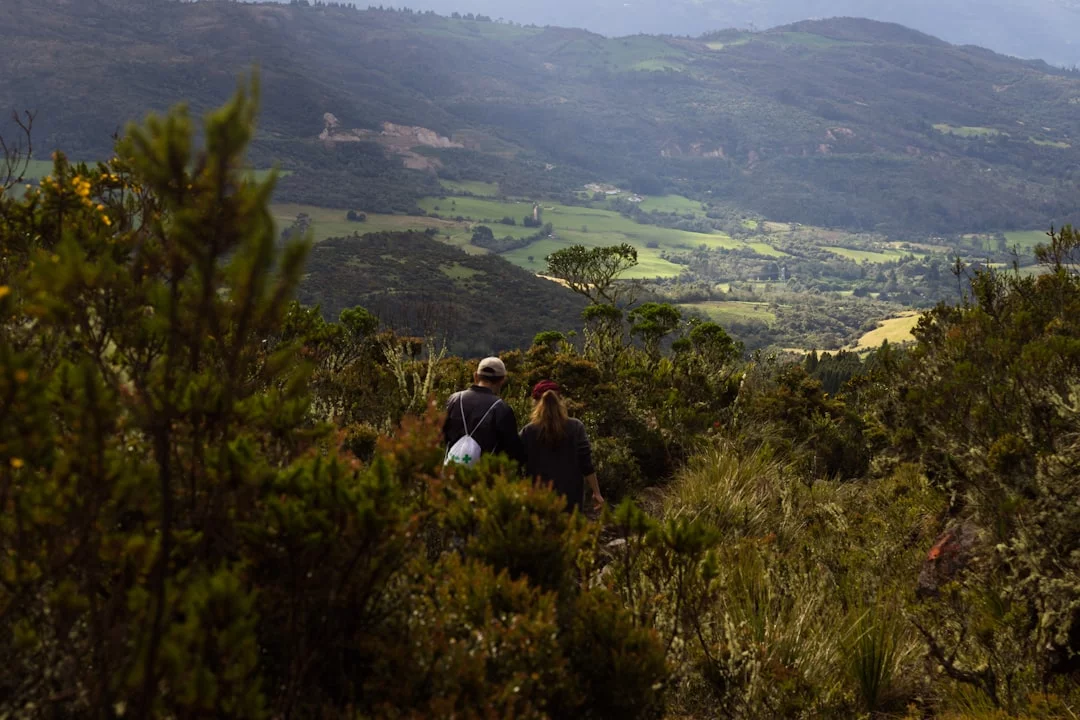
A 4-to-5-day hike (about 55km) from Santa Marta, through the jungle of the Sierra Nevada, with river crossings, nights in campsites and encounters with indigenous communities. The highlight: climbing the final 1,200 steps up to the stone terraces of the Tayrona city of Teyuna.
For walkers in good physical shape, ready to face heat, humidity and rustic comfort. The trek must be done with a licensed agency, booked several days ahead; plan for the yellow fever vaccine.
- 4 to 5 days
- EUR 350–450 per person, all inclusive
Getting there
There are no direct flights from Europe: expect one stopover (Bogotá, Madrid, Panama or Atlanta) to reach Cartagena (CTG) or Medellín (MDE), from around €700 to €900 (roughly £600–£770 / $760–$980) return.
There is no direct flight from Paris to Colombia (nor from London). The simplest routings go via Bogotá (Avianca via Madrid, Air France via Bogotá), Madrid (Iberia, Avianca), Panama (Copa) or Atlanta (Delta). For this road trip, fly in via Cartagena (CTG) and out via Pereira (PEI) or Medellín (MDE) to avoid backtracking.
If you arrive by air, complete the free official Check-Mig form between 72 hours and 1 hour before each flight to or from Colombia, on the Migración Colombia website.
Getting around
This road trip combines low-cost domestic flights for the long distances (Avianca, LATAM, Wingo) with buses, Willys jeeps and shuttles for the local loops.
The Caribbean coast to Medellín or the Zona Cafetera leg is done by plane (about 1 hour versus 15 to 18 hours by road): Avianca, LATAM and low-cost Wingo serve CTG, MDE, EOH and PEI cheaply if you book ahead.
On the ground, everything works without a car: comfortable long-distance buses (Berlinas, Expreso Brasilia) cover Cartagena–Santa Marta in 4 hours, colectivos link mid-sized towns, iconic Willys jeeps climb up to the Cocora valley, and Medellín has the country's only metro, complete with its cable-car (metrocable).
- Take taxis through an app only (Uber, Cabify, InDrive) or booked by your hotel — never hailed on the street
- Car rental is not advised for long mountain distances; it's useful only for a local Salento–Filandia loop
What to do
Wander walled Cartagena, swim at Tayrona Park, explore Medellín's Comuna 13, climb the Piedra del Peñol and walk beneath the wax palms of Cocora: five highlights of this road trip.
This trip strings together very different moods: pastel Caribbean lanes, jungle beaches, urban street art, coffee villages and a cathedral of giant palms. You'll find the detailed pick of points of interest below, ranked by importance, along with the activities worth booking on the spot.
Food
Colombian cooking runs from the grilled fish and seafood cocktails of the coast to the bandeja paisa and arepa of the Andes, all washed down with some of the best coffee in the world.
On the coast, try fried fish with patacones and coconut rice, prawn cocktails (cócteles de camarón) and tropical fruit juices (lulo, maracuyá, guanábana). In Medellín and the Zona Cafetera, it's all about the bandeja paisa, a generous platter of beans, rice, egg, avocado, chorizo and chicharrón.
The arepa goes with everything, and a freshly roasted finca coffee is served everywhere for a few hundred pesos. The comida corriente, a set lunch at €3 to €5, is still the best value in the country.
Itineraries
A balanced 14-day route: 4 days on the Caribbean coast, 3 days in Medellín and Guatapé, then 4 days in the Zona Cafetera, linked by two domestic flights.
Days 1 to 4 — Caribbean coast. Cartagena and its walled old town, San Felipe castle, a night in Santa Marta, then a day of swimming and jungle at Tayrona Park.
Days 5 to 7 — Medellín. Domestic flight from Cartagena, guided tour of Comuna 13 and the metrocable, a day trip to Guatapé and the Piedra del Peñol.
Days 8 to 11 — Zona Cafetera. Flight or bus to Pereira, settle in Salento, hike the Cocora valley, tour a finca with a coffee tasting, and pop over to the village of Filandia.
Add 4 to 5 days for the Ciudad Perdida trek from Santa Marta if your schedule and fitness allow.
Climate & seasons
When to go to Colombia?
Monthly averages over the past 5 years (Open-Meteo).
Avoid
- February
- March
- April
- May
- June
- July
- August
- September
- October
- November
- December
| Jan | Feb | Mar | Apr | May | Jun | Jul | Aug | Sep | Oct | Nov | Dec | |
|---|---|---|---|---|---|---|---|---|---|---|---|---|
| Our take | ||||||||||||
| Weather | ||||||||||||
| High | 17° | 17° | 17° | 17° | 17° | 17° | 18° | 17° | 18° | 17° | 16° | 17° |
| Rain (mm) | 187 | 265 | 356 | 378 | 437 | 371 | 278 | 309 | 267 | 384 | 318 | 212 |
When to go
The best time for this road trip is the dry season, from December to March, with a shorter second window in July and August.
The dry season from December to March is ideal: a warm, sunny Caribbean coast (24 to 31°C) and clear Andes for the Cocora hike. It's also high season, so book your hotels in Cartagena and Salento early.
July and August offer a second dry window, busier with Colombians on holiday. Avoid April–May and October–November, the wettest months, when mountain trails turn muddy and mist hides the wax palms by mid-day.
Budget
Budget around €35/day as a backpacker, €70/day mid-range and €130+ in comfort, per person and excluding international flights.
Living costs are roughly 40% lower than in France. A set lunch runs about €3 to €5, a hostel night €12 to €20, a Cartagena–Santa Marta bus around ten euros. It's the domestic flights (€30 to €80 a leg) and guided activities (treks, fincas, Comuna 13) that push the total up.
As of 1 July 2026, €1 is worth roughly 3,850 to 4,000 COP — a volatile rate that climbed as high as 4,500 COP in late 2025. Pay by card in the cities, but always keep cash for the fincas, Cocora and the Willys jeeps.
Where to stay
Expect €12–20 per night in a hostel, €30–90 in a mid-range hotel, and €120+ in a charming finca or boutique hotel.
Colombia covers every budget. In Cartagena, stay in Getsemaní (bohemian and lively) rather than the seaside Bocagrande district. In Medellín, Laureles and El Poblado hold the safe hostels and boutique hotels.
In the Zona Cafetera, the signature experience is a night in a coffee finca among the plantations, around €40 to €90 for a double room. Salento and Filandia are full of colourful guesthouses; book 1 to 2 days ahead, more in high season and at weekends.
Safety
The Cartagena-to-coffee-region route covers the country's most touristy and broadly safe areas, but stay alert in the cities and never leave a drink unattended.
This itinerary avoids the regions travel authorities advise against (the Venezuela, Panama and Ecuador borders, Chocó, Cauca, Nariño, remote Amazon). Cartagena, Santa Marta, the Zona Cafetera and Medellín's tourist districts (El Poblado, Laureles) are considered areas to visit with heightened caution rather than avoid, according to French government travel advice (check your own country's guidance too).
The local rule "no dar papaya" sums it up: don't flash your phone, jewellery or cash. Officials report a sharp rise in scopolamine ("burundanga") attacks: never eat or drink anything left unattended, be wary of meetings arranged through apps, take taxis only through an app, and avoid overnight road journeys.
Formalities
No visa is required for a 90-day tourist stay: a PIP permit is issued on arrival, and a passport valid for 6 months beyond your departure is enough.
French citizens (and many other nationalities, including UK, US and EU travellers) need no visa for a tourist stay — always check your own nationality's requirements before booking. On arrival, immigration issues a PIP (Permiso de Ingreso y Permanencia) valid for 90 days, extendable once up to 180 days per year. Proof of onward travel may be requested.
Your passport must be valid for at least 6 months beyond your planned departure date. If you arrive by air, complete the free Check-Mig form between 72 hours and 1 hour before the flight, on the Migración Colombia website.
On health: no vaccine is compulsory to enter from Europe, but since April 2025 a yellow fever vaccination certificate has been required to access most national parks (Sierra Nevada, Amazon). A single dose 10 to 15 days before departure gives lifelong protection; DTP and hepatitis A/B are recommended. Check the latest requirements with your national travel-health authority and the official travel advice for Colombia.
Tips
Book domestic flights early, keep cash for the countryside, get your yellow fever shot 10 days ahead, and settle into Colombia's relaxed pace.
A few habits that change the trip: buy your domestic flights several weeks ahead (Wingo is the cheapest), download Uber, Cabify and InDrive before you arrive, and pack a Type A/B adapter (US-style plugs, 110V).
- Get your yellow fever shot at least 10 to 15 days before departure: the certificate is requested at most national parks since April 2025
- Learn a few words of Spanish: English is rare outside tourist areas
- Withdraw cash from ATMs located inside shopping malls
- Pack a light jumper: Medellín, Salento and Cocora are cool in the evening
FAQ
Many nationalities need no visa for a 90-day tourist stay in Colombia, and the Cartagena-to-coffee route is among the country's safest regions.
Is Colombia safe for this road trip in 2026?
Yes, with common sense. The Cartagena–Zona Cafetera route covers the country's most touristy and broadly safe areas, flagged for heightened caution rather than avoidance by travel authorities. Stay alert in the cities, never leave a drink unattended (scopolamine risk), use app-based taxis only, and avoid travelling at night.
Do I need a visa for Colombia?
For most nationalities (including UK, US and EU citizens), no. You get a visa exemption for a 90-day tourist stay (PIP permit issued on arrival), extendable up to 180 days per year. Your passport must be valid for 6 months beyond departure, and the free Check-Mig form must be filled in if you arrive by air. Always confirm your own nationality's rules before booking.
How long do I need for this trip?
Allow 12 to 16 days for a comfortable pace: 3 to 4 days on the Caribbean coast, 3 days around Medellín and Guatapé, 3 to 4 days in the Zona Cafetera. Add 4 to 5 days if you do the Ciudad Perdida trek.
Should I rent a car or take domestic flights?
This road trip mostly combines domestic flights and road legs. Linking the Caribbean coast to Medellín or the Zona Cafetera is done by plane (1 hour versus 15 to 18 hours by road). Car rental is not advised for long mountain distances, but it can be handy for a local loop around Salento and Filandia.
Is altitude sickness a problem?
On this route, the altitude stays moderate: Medellín sits at around 1,500m, Salento and the Cocora valley between 1,800 and 2,400m. The risk of severe soroche is low; you might feel slightly out of breath at Cocora. Stay hydrated and take it easy on the first day.
Is the yellow fever vaccine compulsory?
It isn't required to enter Colombia from Europe, but since April 2025 the certificate has been requested for most national parks and at-risk areas (Sierra Nevada, Amazon). Tayrona doesn't strictly enforce it in 2026, but the vaccine is strongly recommended: a single dose at least 10 to 15 days before departure gives lifelong protection.
What daily budget should I plan for?
Around €35/day as a backpacker, €70/day mid-range and €130+ in comfort, per person and excluding international flights. Living costs are roughly 40% lower than in France, but domestic flights and guided activities push the total up.
Sources
The figures in this guide come from the sources below, checked on the publication date.
Leave a comment
Share your thoughts or travel experience. Your email will not be published.