

Contents 34
Lisbon, the capital of Portugal, climbs seven hills above the Tagus estuary. The Manueline monuments of Belém, the tower and the Jerónimos Monastery, UNESCO-listed in 1983, recall the Age of Discovery; Alfama, São Jorge Castle and the miradouros tell of the Moorish and medieval city; the Baixa rebuilt after the 1755 earthquake, Chiado and Bairro Alto form the centre where the evenings happen.
This guide gathers 16 must-sees, from Belém to Sintra, from the Oceanário to LX Factory, followed by the practical essentials: arriving from the airport, transport and the navegante card, where to stay, food, budget, entry formalities and frequently asked questions.
Overview
Portugal's capital, set on seven hills above the Tagus, blends Age-of-Discovery heritage, lived-in neighbourhoods such as Alfama and a modern cultural scene.
Portugal's capital, Lisbon spreads across seven hills above the Tagus estuary. The city carries the legacy of the Age of Discovery everywhere, with Belém Tower and the Jerónimos Monastery UNESCO-listed since 1983, while keeping a contemporary energy, from the MAAT to LX Factory.
You come to wander Alfama's lanes to the sound of fado, climb the miradouros for the evening light, ride tram 28 and eat a still-warm pastel de nata. Mild year-round and cheaper than other Western European capitals, Lisbon is explored over three to four days, on foot and by public transport, with a day for Sintra or Cascais. To carry on, the Algarve is 2.5 hours away by train and Madeira a 1 h 45 flight.
16 places to take with you
In the guide's order, ready for Google Maps or your GPS.
Book the activities from this guide
Our picks for Lisbonne, well rated and free to cancel.
-
Book this activity
Day trip to Sintra, Cabo da Roca and Cascais
€44 per person, palace tickets optional (GetYourGuide price 2026)
-
Book this activity
Guided tour of Belém and the Jerónimos Monastery with ticket
€69 per person, monastery entry and pastel included (GetYourGuide price 2026)
-
Book this activity
Sunset catamaran trip on the Tagus
€28 per person, one drink included (GetYourGuide price 2026)
Affiliate links: Travel Advice earns a commission if you book, at no extra cost to you. Learn more

Belém Tower (Torre de Belém)
Built between 1514 and 1520 under Manuel I to guard the harbour entrance, Belém Tower is the Manueline monument par excellence: carved ropes, armillary spheres, crosses of the Order of Christ and a rhinoceros sculpted under a turret, a memento of the one given to the king in 1515. It once stood on an islet in the Tagus; the river has since shifted and the tower almost touches the bank.
The visit runs through the bastion casemates, the governor's room, the kings' hall and the chapel, then up to the top terrace by a spiral staircase so narrow that a traffic light regulates the way up and down. Together with the neighbouring Jerónimos Monastery it has been a UNESCO World Heritage Site since 1983.

Jerónimos Monastery (Mosteiro dos Jerónimos)
Begun on 6 January 1501 under Manuel I and funded by the "vintena da pimenta", a 5% tax on the spice trade, the Jerónimos Monastery is the masterpiece of the Manueline style, a late Gothic laden with maritime motifs. Conceived as the necropolis of the Aviz dynasty, it holds the tombs of Manuel I and João III and, since 1880, those of Vasco da Gama and the poet Camões at the entrance to the church of Santa Maria.
The two-storey cloister, carved from top to bottom, is the centrepiece of the visit and requires a ticket, whereas the church, with its chiselled pillars and ribbed vault, is free to enter. The site has been UNESCO-listed since 1983; the National Archaeology Museum and the Navy Museum occupy the western wings of the building.

Alfama and its miradouros
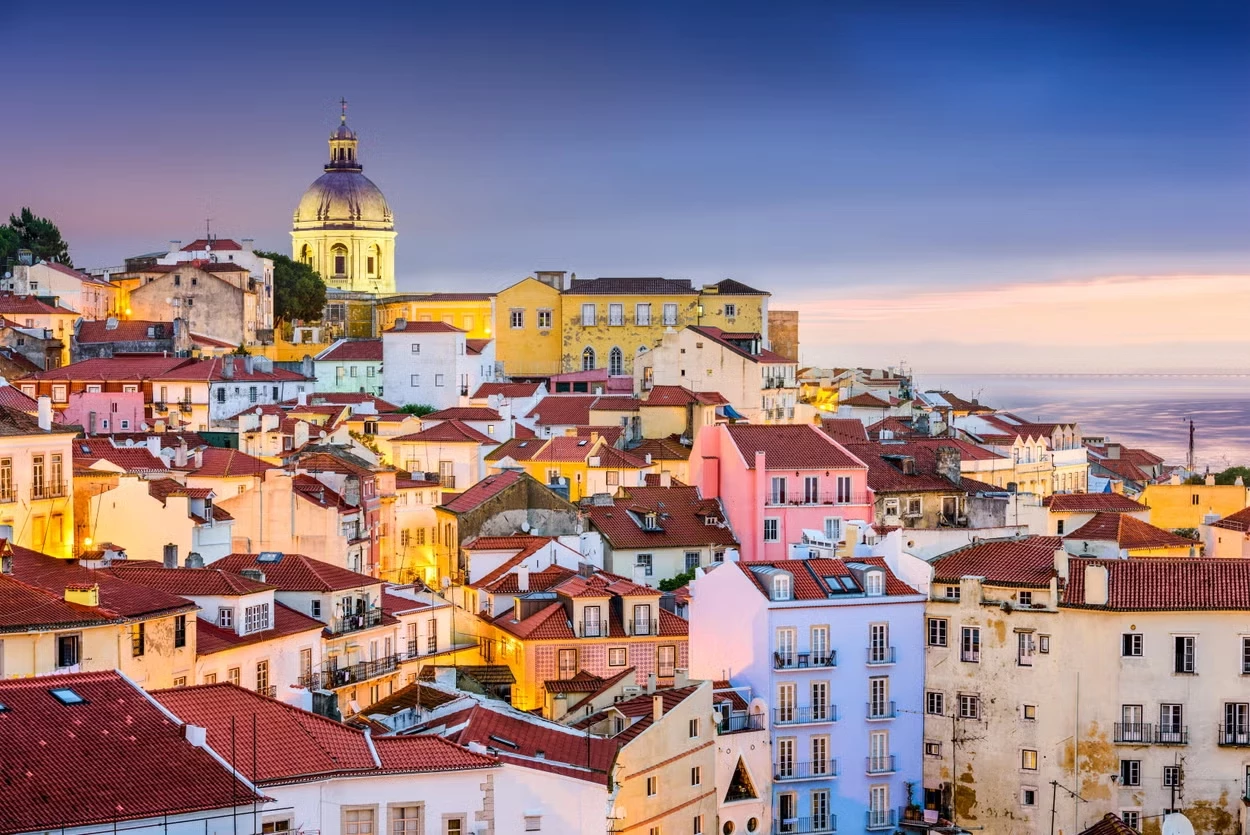
Alfama is Lisbon's oldest district, the one that survived the 1755 earthquake because it stands on the castle rock. Its stepped lanes tumble from São Jorge down to the Tagus between tiled façades, washing at the windows and small squares where sardines are grilled in June during the St Anthony festivities. The Sé cathedral, begun in 1147 after the city's reconquest, marks its entrance on the Baixa side.
Two viewpoints sum up the view: the Santa Luzia miradouro, with its pergola and azulejo panels, and Portas do Sol just above it, from which the eye runs over the rooftops, the dome of the Pantheon and the river. The district is also home to the Fado Museum and, on Tuesdays and Saturdays, the Feira da Ladra flea market on Campo de Santa Clara.

São Jorge Castle (Castelo de São Jorge)
São Jorge Castle crowns the highest hill in the centre. The Moors built the fortress in the 11th century; Afonso I of Portugal took it in 1147 with the help of crusaders, and it served as a royal residence until the 16th century before falling into ruin. The ramparts and eleven towers you walk today were largely restored in the 1940s.
The visit comes down to three pleasures: the wall walk, the gardens where peacocks roam and above all the viewing terrace, the most complete view of the Baixa, the Tagus and the 25 de Abril Bridge. A small museum shows the site's excavations, from the Iron Age to the Moorish quarter (temporarily closed for works in 2026), and a camera obscura in the Tower of Ulysses projects the city in real time.

Tram 28, from Martim Moniz to Campo de Ourique
Tram 28E is an ordinary Carris route that became an attraction: its yellow 1930s "remodelado" cars are the only ones able to handle the gradients and tight bends of the route. In about 45 minutes it links Martim Moniz to Campo de Ourique through Graça, Alfama below the castle, the Sé, the Baixa, Chiado and Estrela with its basilica.
The most spectacular stretch is between Graça and the Sé, where the tram brushes the house fronts of Alfama's lanes. It is also the busiest: the tram runs full there, and pickpockets are common.

Commerce Square (Praça do Comércio)
Commerce Square stands on the site of the royal palace swallowed by the earthquake, tsunami and fire of 1 November 1755, hence its other name, Terreiro do Paço. The Marquis of Pombal had it rebuilt as a U open to the Tagus, lined with yellow arcades; in the centre the equestrian statue of José I (1775) faces the river, and to the north the Rua Augusta arch, completed in 1873, opens onto the grid of the Baixa.
This is where King Carlos I was assassinated in 1908 and where the Republic was proclaimed two years later. The Cais das Colunas, two columns at the water's edge, marks the old royal landing stage; ferries to Cacilhas leave from the terminal next door.

Pastéis de Belém, the historic bakery
Two hundred metres from the monastery, the Fábrica dos Pastéis de Belém has been making its custard tarts since 1837 to a secret recipe that came from the Hieronymite monks: after the convents were closed in 1834, they sold it to the neighbouring sugar refinery. Only this house may use the name "Pastéis de Belém"; everywhere else they are called pastéis de nata.
The azulejo-tiled rooms run back to a surprising depth, and you can watch the pastry cooks at work behind a window. The tarts come out of the oven continuously and are eaten warm, dusted with cinnamon and icing sugar.

Sintra and the Pena Palace
Thirty kilometres north-west of Lisbon, Sintra sits on a wooded serra whose cool air drew kings and aristocrats from the Middle Ages onwards; its cultural landscape has been UNESCO-listed since 1995. The Pena Palace, bought in 1838 by Ferdinand of Saxe-Coburg and built from 1842 on a former monastery, is its emblem: ochre and red towers, a Moorish dome, terraces clinging to the summit, a Romantic blend of every style above the clouds.
The rest of the day is split between the Quinta da Regaleira and its spiral initiation well, the Moorish castle on the opposite ridge, the National Palace of Sintra in the village centre with its two conical chimneys and, further out, Monserrate Palace and Cabo da Roca.

Santa Justa Lift
The Santa Justa Lift has linked the Baixa to Largo do Carmo, 45 m higher, since 1902. Designed by Raoul Mesnier du Ponsard, a Portuguese engineer trained in Gustave Eiffel's school, it is Lisbon's last vertical lift still in service and the only one in neo-Gothic cast iron: two panelled cabins, a metal walkway to the Carmo and a viewing platform at the very top.
From the terrace you take in Rossio square, the grid of the Baixa, São Jorge Castle on its hill and the Tagus. The lift has been a national monument since 2002 and is run by Carris, like the trams.

Bairro Alto and Chiado
Bairro Alto is the grid of streets laid out in the 16th century on the hill above the Baixa. Quiet by day, shutters closed and washing on the balconies, it changes after 10pm: dozens of tiny bars serve into the street, and the terraces of Chiado below take over for dinner. The São Pedro de Alcântara miradouro at its northern end has one of the finest views of the castle and the Baixa.
Chiado, rebuilt after the 1988 fire by architect Álvaro Siza, lines up bookshops, theatres, the Brasileira café with its statue of Fernando Pessoa and the Gothic ruins of the Carmo Convent, left open to the sky since the 1755 earthquake. Between the two districts, the Glória funicular climbs from the Restauradores.

Oceanário de Lisboa
Built for the 1998 World Expo on the theme of the oceans, the Oceanário de Lisboa is one of the largest aquariums in Europe. Its 5-million-litre central tank, viewed on two levels, brings together sharks, rays, tuna and a sunfish; around it, four habitats recreate the North Atlantic with its puffins, the Antarctic with its penguins, the temperate Pacific with its sea otters and the tropical Indian Ocean.
It stands in the Parque das Nações, the modern Expo 98 district on the Tagus, with the cable car along the river, Santiago Calatrava's Oriente station and the Vasco da Gama Bridge, one of the longest in Europe (12.3 km).

Fado Museum (Museu do Fado)
The Fado Museum occupies the former pumping station on Largo do Chafariz de Dentro, at the foot of Alfama, the district where this song was born in 19th-century taverns. The route tells two centuries of fado with Portuguese guitars, posters, recordings and portraits of its figures, from Maria Severa to Amália Rodrigues and today's voices; an audio guide lets you hear the songs mentioned.
Fado, inscribed on UNESCO's intangible heritage list in 2011, is then lived in the evening in the casas de fado of Alfama and Mouraria: dinner or just a drink, unamplified singing with a twelve-string Portuguese guitar and a classical guitar, silence expected during the songs.

National Azulejo Museum
Housed in the Madre de Deus convent, founded in 1509 by Queen Leonor, the National Azulejo Museum traces five centuries of glazed tiles, from 15th-century Hispano-Moorish patterns to contemporary work. You follow the technique and the fashions: 17th-century blue and white, 18th-century hunting and feast scenes, 20th-century advertising panels and Art Nouveau.
The centrepiece is the Great Panorama of Lisbon, 23 m of tiles painted around 1700 showing the city as it was before the 1755 earthquake. The convent church, lined with gilt and blue panels, and the Mannerist cloister are part of the route.

Cascais and the Boca do Inferno
A former fishing village turned royal seaside resort in the late 19th century, Cascais lies 30 km west of Lisbon at the end of the railway line that follows the Tagus and then the Atlantic. The pedestrian centre gathers the citadel, the marina, the small Rainha and Conceição beaches and the Condes de Castro Guimarães museum, a neo-Gothic palace set on a cove.
Two kilometres along the corniche, the Boca do Inferno is a cliff chasm into which the ocean crashes in rough weather. Further on, the coast road leads to Guincho beach, windswept and popular with surfers, then to Cabo da Roca, the westernmost point of mainland Europe.

LX Factory
Under the deck of the 25 de Abril Bridge, in Alcântara, LX Factory occupies an 1846 textile mill that became a printworks and then lay derelict. Since 2008 its brick sheds have housed designers' studios, agencies, restaurants, bars and the Ler Devagar bookshop, set in the old press hall with three levels of shelving and a flying bicycle hanging from the ceiling.
The place is visited like a neighbourhood: street-art murals on the façades, a rooftop with a view of the bridge, a makers' market on Sundays. It is the natural stop between the centre and Belém, a short walk from the MAAT and the Santo Amaro docks.

National Pantheon (Panteão Nacional)
The church of Santa Engrácia, begun in 1682 on a Greek-cross plan, only got its dome in 1966, hence the Portuguese expression "obras de Santa Engrácia" for a never-ending building project. Converted into the National Pantheon that same year, it holds the tombs or cenotaphs of national figures: Amália Rodrigues, the voice of fado, footballer Eusébio, writer Almeida Garrett, and cenotaphs of Vasco da Gama and Henry the Navigator.
The Baroque interior in polychrome marble is impressive, but the terrace at the foot of the dome is what justifies the visit: a 360° view over Alfama, the Tagus, Santa Apolónia station and the Vasco da Gama Bridge, far less crowded than the miradouros.
Day trip to Sintra, Cabo da Roca and Cascais
Nine hours by minibus with a certified local guide, leaving at 8am from outside Rossio station: the village of Sintra and the Pena Palace (palace visit optional), the Quinta da Regaleira and its initiation well (optional), then the coast, Cabo da Roca, the westernmost point of Europe, Guincho beach and free time in Cascais. The highlight: the Pena terraces above the clouds, as the mist lifts off the serra.
Allow €44 per person on GetYourGuide, transport and guide included; Pena Palace and Regaleira tickets are added to the booking as options, meals are not included. Free cancellation up to 24 hours before. It is Lisbon's most-reviewed Sintra tour, handy for skipping the train plus bus 434 logistics.
- 9 hrs
- €44 per person, palace tickets optional (GetYourGuide price 2026)
Guided tour of Belém and the Jerónimos Monastery with ticket
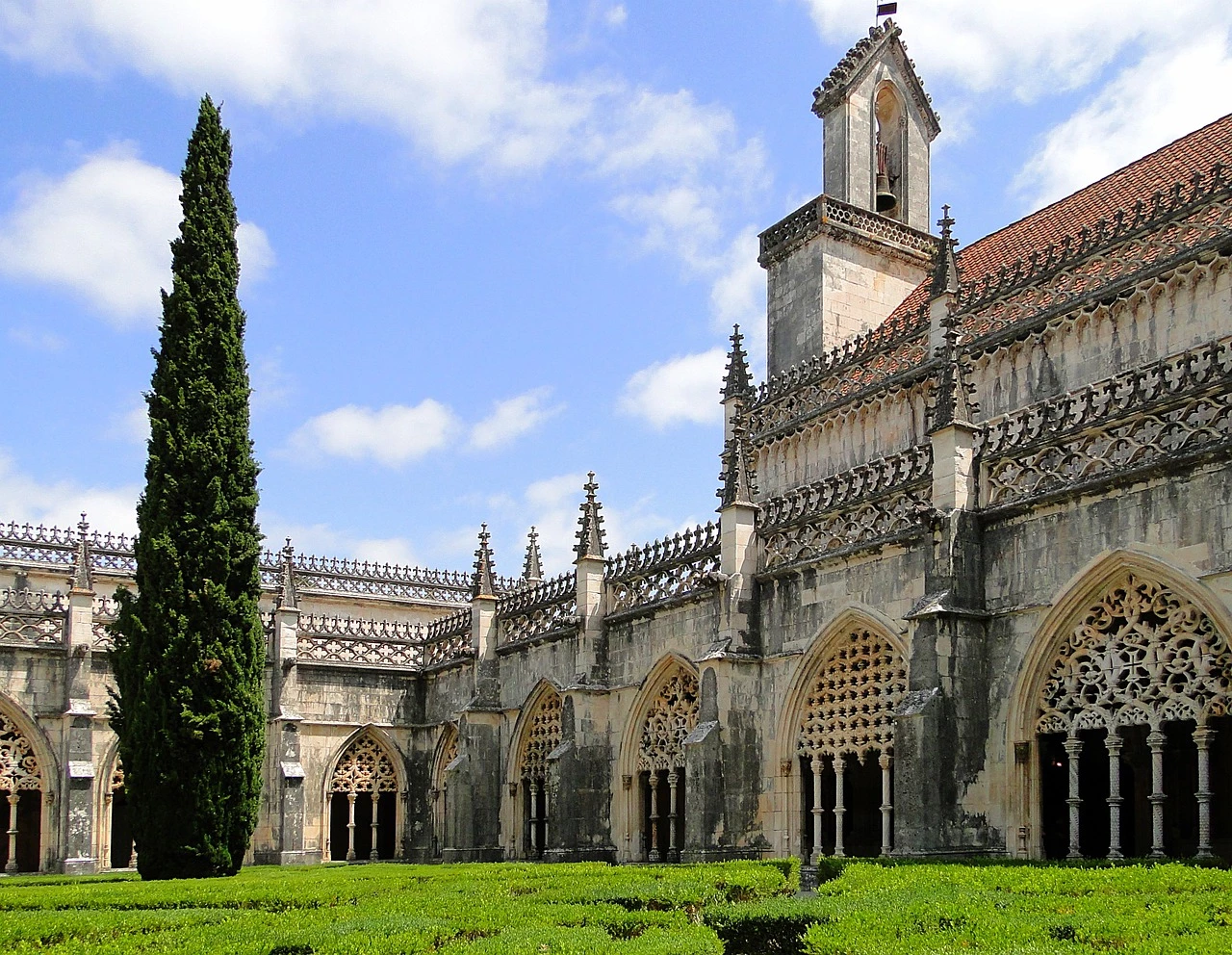
Three hours on foot around Belém in a small group: entry to the Jerónimos Monastery with a guide who decodes the Manueline cloister and the tombs of Vasco da Gama and Camões, the church of Santa Maria, then the Monument to the Discoveries and the façade of Belém Tower, with a tasting of the original pastel de Belém. The highlight: the fully carved two-storey cloister, seen without the queue.
Allow €69 per person on GetYourGuide, monastery ticket, guided visit and pastel included; entry to Belém Tower and the boat trip are paid options. Free cancellation up to 24 hours before. No departures on Mondays, when the monastery is closed.
- 3 hrs
- €69 per person, monastery entry and pastel included (GetYourGuide price 2026)
Sunset catamaran trip on the Tagus
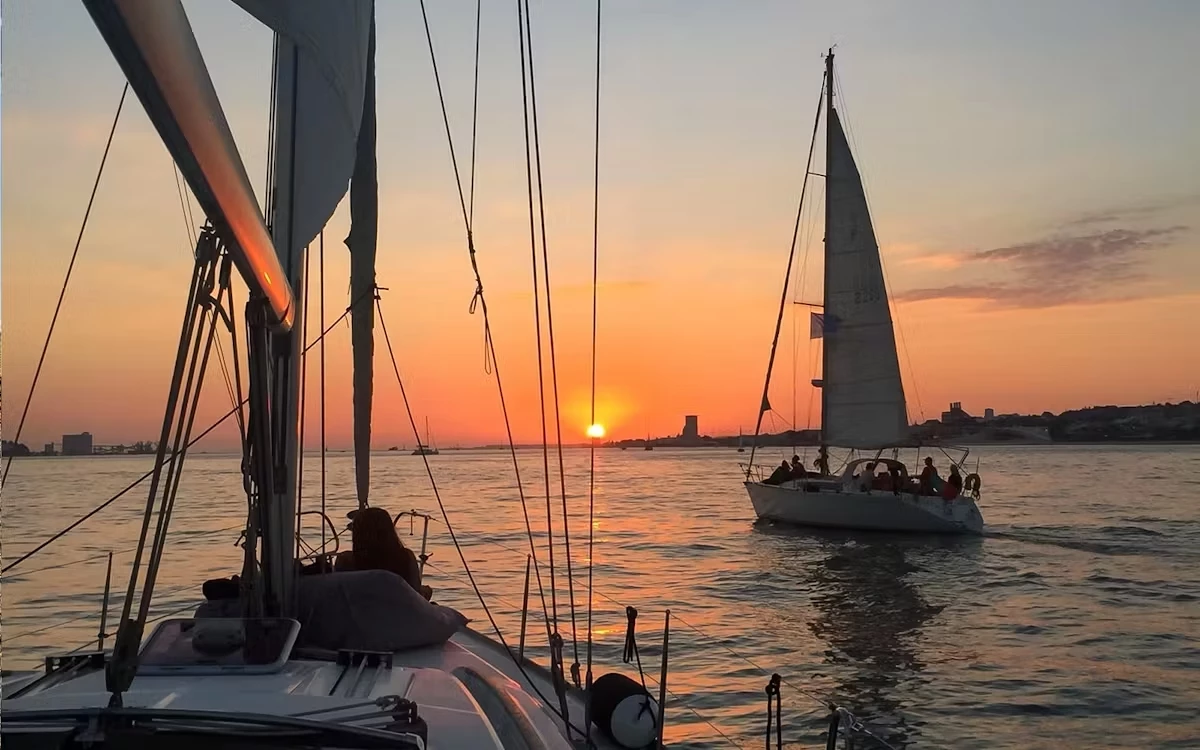
An hour and a half on the Tagus from the Doca de Santo Amaro, under the 25 de Abril Bridge: the Cristo Rei on the far bank, the Champalimaud Foundation, Belém Tower, the Monument to the Discoveries and the Jerónimos Monastery seen from the water, then the MAAT, with music on board, a welcome drink and, in summer, swimming breaks. The highlight: passing under the bridge as the sun touches the horizon.
Allow €28 per person on GetYourGuide, trip, one drink and return hotel pickup included, paid bar on board, free cancellation up to 24 hours before. Meeting point at the Doca de Santo Amaro (GetYourGuide listing). Bring a jacket: the wind picks up on the estuary as soon as the sun goes down.
- 1.5 hrs
- €28 per person, one drink included (GetYourGuide price 2026)
Fado show with a glass of wine
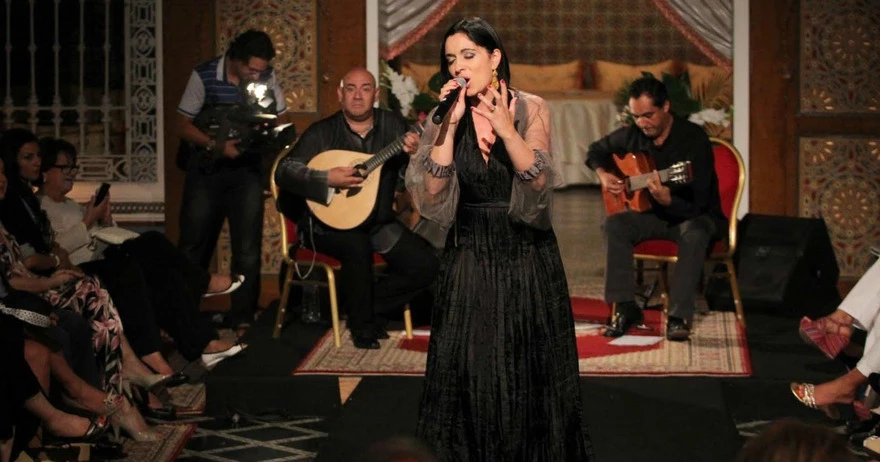
Fifty minutes of fado in a small room, near the Sé or in the Baixa depending on the session: a singer accompanied by a Portuguese guitar and a classical guitar, with a few words between songs on the history of fado and the meaning of each piece, a glass of Portuguese wine in hand. The highlight: the silence in the room on the last note, that saudade fado never quite translates.
Allow €22 per person on GetYourGuide, show and one drink included, no dinner, free cancellation up to 24 hours before; no children under 6. Ideal for discovering fado before a full evening in a casa de fado, or if you would rather not pay for a dinner show.
- 50 min
- €22 per person, one drink included (GetYourGuide price 2026)
Walking tour of Rossio, Chiado and Alfama with tastings
Three hours on foot with a local guide, from Rossio and the Restauradores to Largo do Carmo and Chiado, then through the Pombaline Baixa and the Sé into the lanes of Alfama, ending on Commerce Square: the story of the 1755 earthquake, of fado and of azulejos told on the spot, with a pastel de nata, a snack and a glass of wine along the way. The highlight: the viewpoint above Chiado, then the walk down the Alfama stairways towards the river.
Allow €22 per person on GetYourGuide, tour and tastings included, free cancellation up to 24 hours before. Meet at the statue of Pedro IV on Rossio square. A good first half-day to get your bearings; flat shoes, the cobbles are steep and slippery.
- 3 hrs
- €22 per person, pastel de nata, snack and wine included (GetYourGuide price 2026)
Getting there
Humberto Delgado Airport is 7 km from the centre, served directly by the metro Red line (~20 min). Many direct flights from France.
Humberto Delgado Airport (LIS) lies about 7 km from the centre and receives many direct flights from Paris and other French cities. On arrival, the metro Red line serves the airport directly: allow around 20 minutes to the centre with one transfer (Saldanha in ~16 min). A taxi or ride-hail reaches the Baixa in 15 to 20 minutes.
Note: the Aerobus shuttle no longer runs — use the metro or a taxi instead. Pick up a Navegante card at the airport for your city journeys.
Getting around
Metro (4 lines), historic trams (line 28), buses, funiculars and lifts for the hills, plus CP trains to Cascais and Sintra. One rechargeable Navegante card covers everything.
Lisbon is easy to cover on foot and by public transport. The metro has 4 lines (blue, yellow, green, red); the famous yellow trams, including line 28, cross the historic districts; an extensive bus network fills the gaps. Because of the hills, funiculars (Glória, Bica, Lavra) and the Santa Justa Lift ease the climbs.
Get the rechargeable Navegante card (which replaced the old Viva Viagem / 7 Colinas): it works on the metro, trams, buses, funiculars and the CP suburban trains to Cascais (from Cais do Sodré) and Sintra (from Rossio). Lisbon is also a pleasure to explore on foot — bring good shoes for the steep cobblestones.
What to do
Lisbon comes in three parts: Belém and its Manueline monuments; the hills of the centre, Alfama, São Jorge Castle, Baixa, Chiado and Bairro Alto; then the Parque das Nações, LX Factory, a fado evening, a boat trip on the Tagus and a day in Sintra or Cascais.
Belém first: the Jerónimos Monastery at opening time, Belém Tower, the Monument to the Discoveries, the Pastéis de Belém bakery and, for contemporary art, the MAAT and the Belém Cultural Centre. Half a day, closed on Mondays for both monuments.
The hills next: São Jorge Castle in late afternoon, the walk down through Alfama via the Santa Luzia and Portas do Sol viewpoints, the Sé, Commerce Square and the Rua Augusta arch, the Santa Justa Lift, Chiado and Bairro Alto in the evening. Tram 28 links them all.
Beyond: the National Pantheon and the Feira da Ladra, the National Azulejo Museum, the Oceanário in the Parque das Nações, LX Factory under the 25 de Abril Bridge, an evening in a casa de fado, a sunset boat trip on the Tagus, and a day in Sintra for the Pena Palace or in Cascais for the ocean. With more time, the Algarve and Madeira extend the trip.
Food
Cod in every form, grilled sardines in June, bifana (pork sandwich), caldo verde, amêijoas à Bulhão Pato and pastéis de nata, washed down with vinho verde or ginjinha. You eat well and cheaply in the neighbourhood tascas, away from the Baixa terraces.
The dishes: bacalhau (salt cod) as bacalhau à Brás (shredded with eggs and straw potatoes) or com natas (baked in cream), sardinhas assadas grilled on the pavement during the June festivities, amêijoas à Bulhão Pato (clams with garlic and coriander), arroz de marisco, polvo à lagareiro (octopus roasted in olive oil) and, for a quick lunch, the bifana, a marinated pork sandwich, or the beef prego. To start, caldo verde, a cabbage and chorizo soup. The couvert (bread, olives, cheese) placed on the table is charged if you touch it.
Sweets and drinks: the pastel de nata of course, but also bolo de arroz and Sintra's queijadas. Drink a bica (espresso) at the counter, a ginjinha (sour-cherry liqueur) standing in the tiny bars off Rossio, chilled vinho verde with fish and a Sagres or Super Bock beer.
Where to eat: the tascas of Mouraria, Graça and Campo de Ourique serve the dish of the day cheaply; the Time Out Market at Cais do Sodré gathers the city's top chefs in counter format under one roof; cervejarias such as Ramiro (Intendente) are the address for seafood. Avoid the touts on Rua Augusta and in Bairro Alto.
Itineraries
Two days for Belém and the hills of the centre; three to add the Parque das Nações or LX Factory and a fado evening; five for Sintra and Cascais, or an escape to the Algarve.
2 days: the essentials
Day 1, the hills: Commerce Square and the Rua Augusta arch, the Santa Justa Lift and the Carmo ruins, Chiado; tram 28 up to Graça, São Jorge Castle in late afternoon, the walk down through Alfama via the viewpoints; dinner and fado in Alfama.
Day 2, Belém (not a Monday): Jerónimos Monastery at opening time, Pastéis de Belém, the Monument to the Discoveries, Belém Tower; back via LX Factory and the Time Out Market; sunset on the Tagus by boat or from the São Pedro de Alcântara viewpoint, evening in Bairro Alto.
3 days: the whole city
Add a day 3: the National Pantheon and the Feira da Ladra (Tuesday or Saturday), the National Azulejo Museum, then the Oceanário and the Parque das Nações cable car; or, more quietly, Estrela, Campo de Ourique and the botanical garden.
5 days: with Sintra and the ocean
Day 4: Sintra by train from Rossio, the Pena Palace on a booked slot, the Quinta da Regaleira, back by bus 1624 via Cabo da Roca to Cascais, or straight back by train.
Day 5: Cascais and the Boca do Inferno by bike, Guincho beach, or the far bank of the Tagus: ferry to Cacilhas, Cristo Rei and the beaches of Costa da Caparica. To carry on, the Algarve is 2.5 hours by train from Oriente and Madeira a 1 h 45 flight.
Climate & seasons
When to go to Portugal?
Monthly averages over the past 5 years (Open-Meteo).
Best months
- April
- May
- June
- July
- August
- September
| Jan | Feb | Mar | Apr | May | Jun | Jul | Aug | Sep | Oct | Nov | Dec | |
|---|---|---|---|---|---|---|---|---|---|---|---|---|
| Our take | ||||||||||||
| Weather | ||||||||||||
| High | 15° | 17° | 18° | 20° | 23° | 26° | 29° | 29° | 26° | 24° | 19° | 16° |
| Rain (mm) | 78 | 77 | 84 | 59 | 18 | 22 | 3 | 0 | 48 | 91 | 83 | 110 |
| City sightseeing | City sightseeing January | City sightseeing February | City sightseeing March | City sightseeing April | City sightseeing May | City sightseeing June | City sightseeing July | City sightseeing August | City sightseeing September | City sightseeing October | City sightseeing November | City sightseeing December |
What to do by season (autumn)
-
City sightseeing
Pedestrian-friendly most of the year.
When to go
Spring (March-May) and autumn (September-October) are ideal: mild, sunny weather and moderate crowds. Summer is hot and very touristy, winter mild but wetter.
Spring (March to May) and autumn (September to October) are the best times: mild temperatures, sunny days and reasonable crowds. Gardens bloom in spring; the harvest enlivens the countryside in autumn.
Summer (June to August): high season, hot sunny days and a festive mood (the Lisbon Festivities around St Anthony's Day on 13 June) but dense crowds and higher prices; the beaches of Cascais and the coast are very popular then.
Winter (December to February): mild but wetter, with occasional showers; it is the quietest period, with more affordable accommodation and the city dressed up for Christmas.
Budget
Reckon, as a guide, on €80 to €110 per person per day on a budget (hostel, tascas, public transport), €160 to €240 in a 3-4 star hotel with restaurants and sights, more in the boutique hotels of Chiado or Alfama. São Jorge Castle costs €17; the Belém monuments are ticketed, their church is free.
The figures below are orders of magnitude noted in 2026; only the castle price comes from an official ticket office.
- Accommodation: hostel bed €25 to €45; 3-star hotel or guesthouse €90 to €150 for a double; 4-5 star boutique hotel in Chiado, Alfama or on Avenida da Liberdade €200 to €400. Prices climb in June (St Anthony festivities), in summer and for New Year. A municipal tourist tax per night and per person is added to the rate.
- Meals: dish of the day in a tasca €10 to €14; dinner in a neighbourhood restaurant €20 to €35; bica €1, pastel de nata €1.30 to €1.60, draught beer €2.50 to €4.
- Transport: the rechargeable navegante card (a few tens of cents) then single fares or a 24-hour pass valid on metro, trams, buses, funiculars and ferries; CP trains to Sintra and Cascais are loaded onto the same card.
- Sights: São Jorge Castle €17 (2026, official ticket office); Jerónimos Monastery (cloister), Belém Tower, Pena Palace, Oceanário, Pantheon, Azulejo Museum: ticketed, in the €10 to €25 range each, check the official sites. Miradouros, Commerce Square, LX Factory and the Jerónimos church are free. The Lisboa Card (24, 48 or 72 hours) includes transport and many entries; it only pays off with at least two major sites a day.
Pay by card, accepted almost everywhere; withdraw cash from bank Multibanco ATMs rather than the Euronet machines in the centre.
Where to stay
Baixa/Rossio to do everything on foot, Alfama for authentic charm, Chiado/Bairro Alto for buzz, Belém or Parque das Nações for calm and modern.
Baixa and Rossio — lively historic heart, picturesque squares, ideal for exploring on foot. Alfama — authentic lanes and Tagus views, but plenty of climbs. Chiado and Bairro Alto — shops, cafés and nightlife, perfect for night owls.
Avenida da Liberdade — elegant avenue, upscale hotels. Belém — quieter, near the iconic monuments, a little out of the centre. Parque das Nações — modern Expo 98 district by the Tagus, handy for the airport. Choose according to your budget and the pace you want.
Safety
Lisbon is a safe capital. The usual risks are pickpockets on tram 28, in the Baixa and Alfama, the pushy drug sellers on Rua Augusta and slippery cobbles. Emergency number: 112.
Violent crime is rare and the tourist districts stay lively late. Sensible precautions:
- Pickpockets: trams 28 and 15E, the Santa Justa Lift, the Baixa, Alfama and crowded viewpoints. Bag closed and in front of you, phone put away when the tram is full.
- Rua Augusta and Bairro Alto: touts offer "drugs" (usually fake) to passers-by; a firm no is enough, never follow anyone.
- Cobbles and slopes: the calçada portuguesa is slippery when damp, especially in Alfama and Bairro Alto; shoes with grip.
- Car: pointless in town; if you rent one for Sintra, leave nothing visible, break-ins happen in tourist car parks.
- Swimming: the beaches of Cascais and above all Guincho have strong currents; respect the flags.
- Emergencies: 112. The EHIC is accepted in public hospitals (Santa Maria, São José); pharmacies display the duty pharmacy.
Formalities
Portugal is in the EU and the Schengen area: a valid ID card or passport is enough for French and EU citizens, minors included, with no visa or ETIAS. Currency: the euro. Lisbon is one hour behind Paris.
Portugal is a member of the European Union and the Schengen area. French and other EU citizens, minors included, enter freely with a valid passport or national identity card; no visa is required (France Diplomatie, entry section re-read in September 2026). A birth certificate or family record book is not a travel document. French ID cards with extended validity (10 + 5 years) are accepted by Portugal but sometimes refused at boarding by airlines: travel with a document whose printed date has not passed.
Visa-exempt travellers from outside the EU go through the European Entry/Exit System (EES), fully operational since 10 April 2026. As of September 2026, the ETIAS authorisation is not yet in service and no launch date has been set; it will not apply to EU citizens. British visitors need a passport.
The currency is the euro. The European Health Insurance Card (EHIC) covers public healthcare; travel insurance is still advisable. Portuguese is the official language, English is widely spoken in tourist areas. Time zone: Lisbon is one hour behind France all year round.
Tips
Book the castle, the Belém monuments and the Pena Palace online, avoid Belém on Mondays, board tram 28 at the terminus early in the morning, load a navegante card at the airport and eat in the tascas rather than on Rua Augusta.
- Mondays: the Jerónimos Monastery, Belém Tower, Azulejo Museum, Pantheon and Fado Museum are closed; keep that day for the castle, Sintra, Cascais or the Oceanário.
- Tickets: São Jorge Castle on castelodesaojorge.pt, Pena Palace on parquesdesintra.pt (time slot), Belém monuments online to avoid hour-long queues.
- Navegante card: buy it at the airport metro and load it with "zapping" credit or a 24-hour pass; it also works on the Sintra and Cascais trains and the Cacilhas ferry.
- Hills: the Glória, Bica and Lavra funiculars and the free public lifts (Castelo, from Rua dos Fanqueiros) save a lot of steps.
- Tuk-tuks: handy but expensive; agree the price before boarding or book online.
- Fado: book a small house in Alfama or Mouraria rather than a big dinner show; silence during the songs.
- June: the St Anthony festivities (night of 12 to 13 June) turn Alfama into a street party with grilled sardines; book accommodation very early.
- Language: "bom dia", "obrigado/obrigada" and "uma bica, por favor" open many doors; English is widely spoken.
FAQ
Three to four days cover Belém, Alfama, the castle and a day trip to Sintra. An ID card is enough for EU citizens, the currency is the euro, the metro links the airport to the centre and the Belém monuments close on Mondays.
How many days do you need in Lisbon?
Three to four days are enough to see the essentials (Baixa, Alfama, Belém, Bairro Alto) and soak up the atmosphere, keeping one day for Sintra or Cascais.
What is the best time to visit?
Spring (March-May) and autumn (September-October) offer mild, sunny weather with fewer crowds than summer.
Do you need a visa to visit Lisbon?
No. Portugal is in the Schengen area: a valid ID card or passport is enough for French and other EU citizens, minors included. No visa or ETIAS for EU citizens.
How do you get from the airport to the centre?
The metro Red line serves the airport directly (about 20 minutes to the centre with one transfer). By taxi or ride-hail, allow 15 to 20 minutes.
Are the Belém monuments open on Mondays?
No. The Jerónimos Monastery and Belém Tower close on Mondays and open Tuesday to Sunday from 9:30am to 5:30pm (official site, 2026). The monastery church is free; the cloister and the tower are ticketed.
How much is São Jorge Castle?
€17 for adults, €8.50 for ages 13-25 and €14 from 65 (official ticket office, 2026). It is open daily, until 9pm from March to October.
Can you do Sintra as a day trip?
Yes. The CP train from Rossio reaches Sintra in about 40 minutes; the Pena Palace is visited on a timed ticket booked online, and the Quinta da Regaleira rounds off the day.
Where can you eat the best pastéis de nata?
In Belém, the historic Pastéis de Belém shop (since 1837); in the centre, Manteigaria. Eat them warm with a little cinnamon.
Sources
The figures in this guide come from the sources below, checked on the publication date.
Leave a comment
Share your thoughts or travel experience. Your email will not be published.