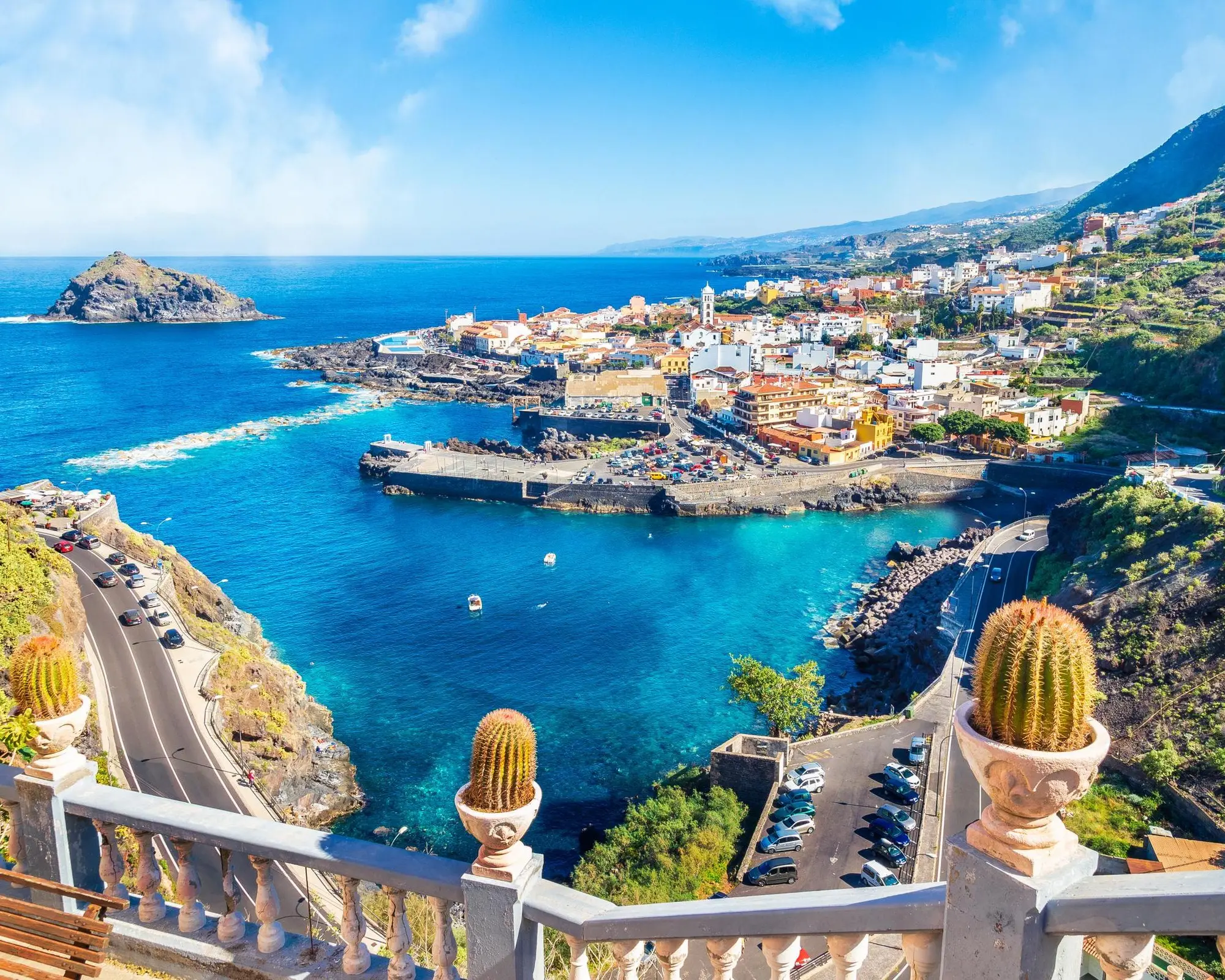

Contents 29
The Albanian Riviera follows the Ionian coast of southern Albania, from Vlorë to Saranda, over the Llogara pass road. This guide covers its 13 must-sees, from the beaches of Ksamil and Jale to the villages of Vuno and Qeparo, from Butrint to Porto Palermo castle, then the practical side: access, getting around, budget in lek, entry rules and safety.
Overview
The Albanian Riviera is the Ionian coast of southern Albania, from Vlorë to Saranda: pebble beaches and turquoise water, stone villages and, within day-trip range, Butrint and Gjirokastër, both UNESCO-listed.
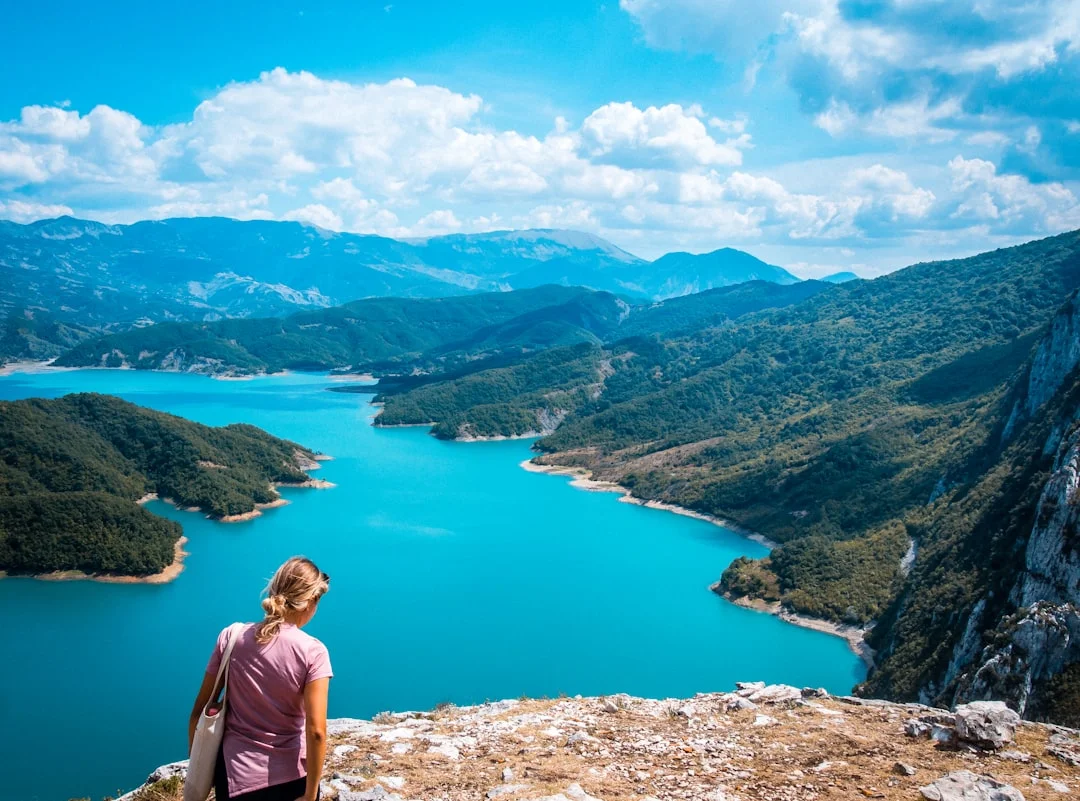
The Albanian Riviera is the Ionian coast of southern Albania, from Vlorë in the north to Saranda and Ksamil in the south. The SH8 road runs along it below the Ceraunian mountains, after crossing the Llogara pass (1,027 m).
It alternates pebble beaches and clear water (Dhërmi, Jale, Borsh, Ksamil), stone villages clinging to the mountains (Vuno, Qeparo, Himarë) and historic sites: Butrint, UNESCO-listed in 1992, Porto Palermo castle and, inland, Gjirokastër. Long off the mass-tourism map, the coast is being built up fast; July-August are very busy.
13 places to take with you
In the guide's order, ready for Google Maps or your GPS.
Book the activities from this guide
Our picks for Saranda, well rated and free to cancel.
-
Book this activity
Guided tour of Butrint with a historian
€35 per person, site entry not included (GetYourGuide price 2026)
-
Book this activity
Blue Eye and Gjirokastër day trip from Saranda
€32 per person (GetYourGuide price 2026)
-
Book this activity
Sea caves and coves by boat from Himarë
€40 per person (GetYourGuide price 2026)
Affiliate links: Travel Advice earns a commission if you book, at no extra cost to you. Learn more

Saranda
Saranda is the main resort town of the southern Riviera, facing the Greek island of Corfu. Its seafront promenade is lined with hotels, cafés and fish restaurants; above the town, Lëkurësi castle gives a wide view over the bay and Corfu.
Above all it is the best base for the southern day trips: the ancient site of Butrint 14 km away, the beaches of Ksamil, the Blue Eye and Gjirokastër inland. Hydrofoils reach Corfu in about thirty minutes, which also makes it a gateway from Greece.

Butrint
Fourteen kilometres south of Saranda, Butrint is the Riviera's great archaeological site, a UNESCO World Heritage Site since 1992. On a wooded peninsula between a lagoon and the Vivari channel lie layers of a Greek city, a Roman colony founded under Caesar in 44 BC, a Byzantine town, and Venetian then Ottoman fortifications.
The route takes in the theatre, the mosaic-floored baptistery, the great basilica, the Lion Gate and the Venetian tower, up to the museum in the castle at the top of the site. Allow two to three hours under the trees.

Ksamil
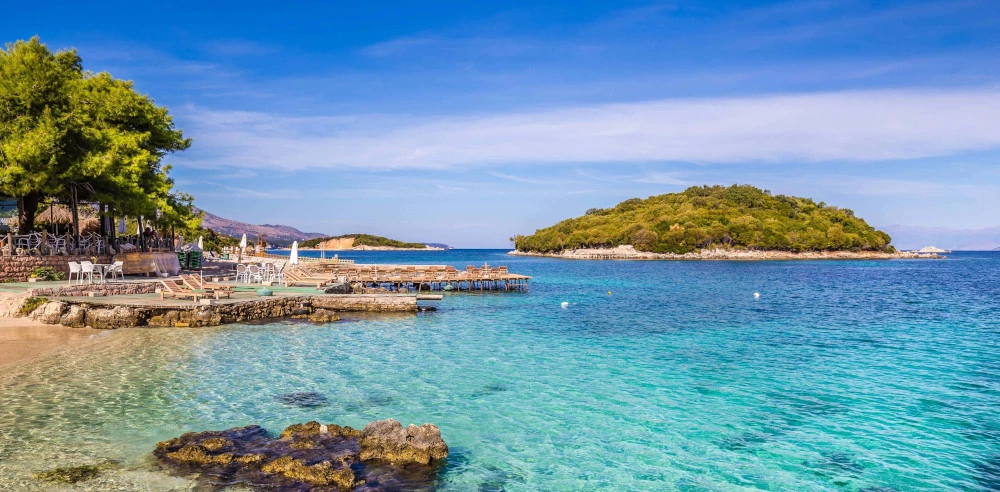
Ksamil, about fifteen kilometres south of Saranda, owes its fame to its small sandy beaches and the shallow turquoise water around them. Just offshore, a few wooded islets can be reached by boat, pedalo or kayak, and strong swimmers swim across.
The village has grown fast in recent years and its beaches are packed in July-August. Its location is still ideal: Butrint is minutes away, and the coast is good for snorkelling.

Dhermi
Dhërmi is a village clinging to the foothills of the Ceraunian mountains above the Ionian Sea, on the SH8 coast road south of the Llogara pass. The old village climbs the slope, while the pebble beach stretches below, reached by a hairpin road.
It is one of the Riviera's highlights: Drymades beach to the north, the canyon and cove of Gjipe to the south, and coves reachable by boat. The mood is livelier in summer than in the neighbouring villages.

Himara
Himarë is a small town in the middle of the Riviera, on the SH8 between the Llogara pass to the north and Saranda to the south. It is split between the seafront, with its beach and fishing harbour, and the fortified old town on the hill, whose castle overlooks the coast.
It makes a handy base: Livadhi and Jale beaches, Porto Palermo castle a few kilometres south, Qeparo and Gjipe. Boat trips to the caves and coves along the coast leave from Himarë's quay.

Blue Eye (Syri i Kaltër)
The Blue Eye (Syri i Kaltër) is a karst spring near the village of Muzinë, about 25 km north-east of Saranda on the road to Gjirokastër. The water wells up from a shaft more than 50 metres deep, deep blue ringed with turquoise, and stays at 10-13 °C all year.
The protected site is reached by a path under oaks and plane trees to a platform above the spring. Allow an hour; it is a natural stop on the way to Gjirokastër.

Vlora
Vlorë (Vlora) is a large port city and the northern gateway to the Riviera. Albania's independence was proclaimed here in 1912, which gives it a special place in the country's history. Beyond its seafront promenade and town beaches, it is the starting point for boat trips to Sazan island and the Karaburun peninsula.
South of the city begins the Riviera's spectacular road, which crosses the Llogara pass (1,027 m) before dropping to Dhërmi and Himarë: the natural start of a road trip to Saranda.

Jale Beach
Jale beach is a cove of white pebbles and turquoise water between Dhërmi and Himarë, below the village of Vuno. It is one of the Riviera's most popular beaches in summer, with beach bars and campsites.
Quieter in spring and autumn, Jale is good for swimming, paddleboarding and snorkelling. A small road leads down from the SH8 near Vuno; boat trips from Himarë often stop here.

Qeparo
Qeparo has two parts: the old village, a maze of cobbled lanes and stone houses clinging to the hillside, and the coastal part, with its pebble beach on the Ionian Sea. The contrast between the partly abandoned old settlement and the seafront is what makes it special.
It is one of the calmest villages on the Riviera, away from the crowds of Dhërmi or Ksamil. People come for the quiet, the coastal views and a few family-run tavernas.

Gjirokastër
Gjirokastër, the "stone city", lies in the Drino valley, about an hour's drive inland from Saranda. It is not a Riviera stop but the essential cultural day trip from the coast: the town has been a UNESCO World Heritage Site since 2005, a listing shared with Berat as the "Historic Centres of Berat and Gjirokastra".
Come for its Ottoman tower houses with stone-slab roofs, its old bazaar and its castle overlooking the valley. Enver Hoxha's birthplace now houses the ethnographic museum.

Porto Palermo Castle
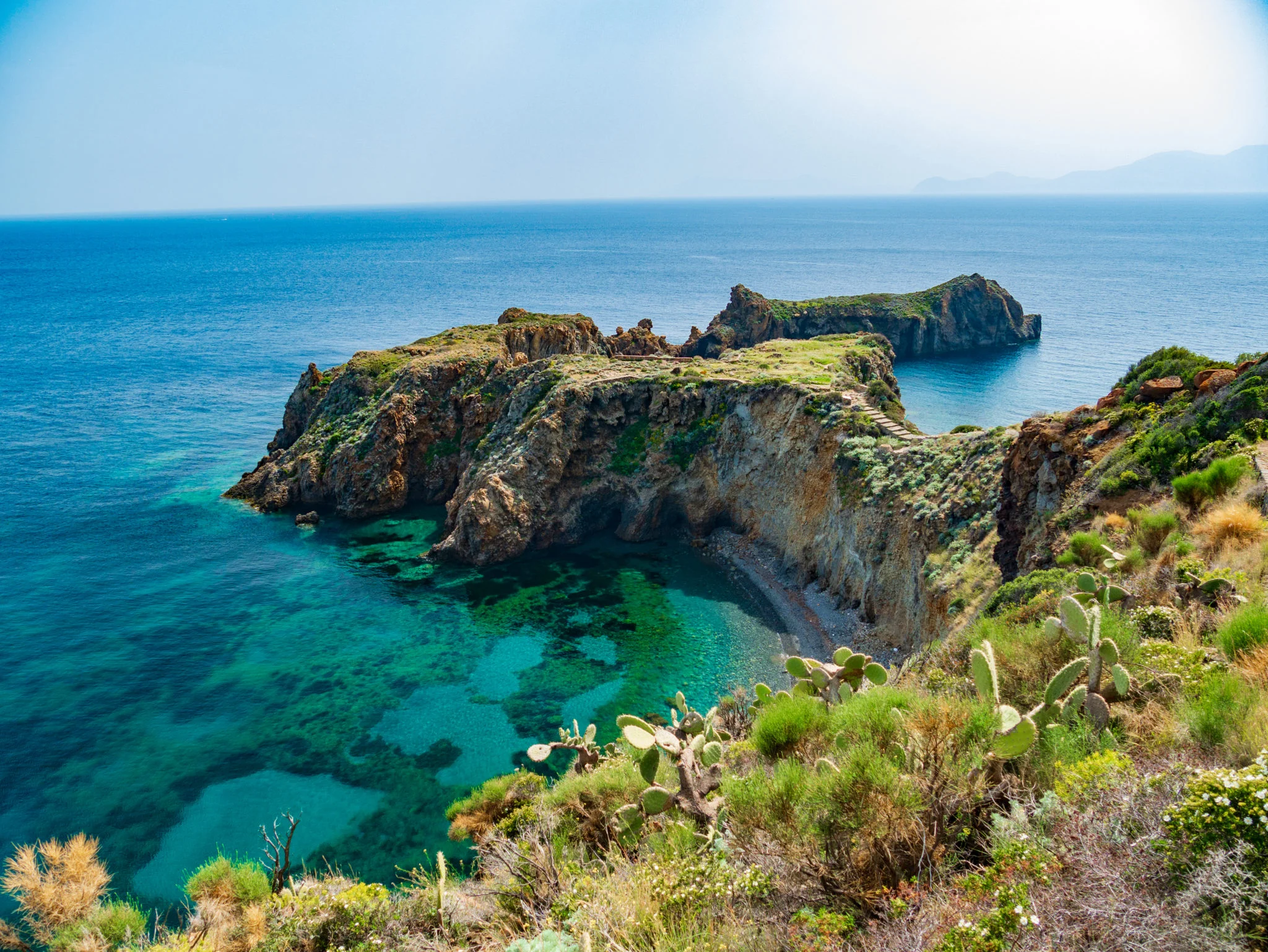
A few kilometres south of Himarë, Porto Palermo castle sits on a peninsula at the head of a sheltered bay. It was built in the early 19th century for Ali Pasha of Tepelena; an inscription above the entrance dates it to 1804 and credits French engineers. The site was originally a small island, later joined to the shore by landfill.
The three-sided fortress, with three large corner bastions, is open to visitors: walk through its vaulted rooms and onto its terrace, with views over the turquoise bay and the coast.

Vuno
Vuno is a small stone village clinging to the mountainside along the SH8 between Dhërmi and Himarë. Its narrow lanes and traditional houses look down on the Ionian coast.
The village is mainly a starting point for Jale beach below and the Gjipe canyon. It is a stop for anyone wanting to see a coastal village that has stayed away from the beach bustle, over a coffee on the square.

Apollonia
Apollonia is an ancient city near the village of Pojan, in the Fier area, north of the Riviera. Founded by Greek colonists around 600 BC, it prospered under the Roman Empire. You can see the portico with niches, the odeon, the bouleuterion and the Byzantine monastery of St Mary, which houses a museum.
It is not a beach stop but an archaeological detour, best done on the way to or from Tirana. The large, little-visited site takes a relaxed two hours.
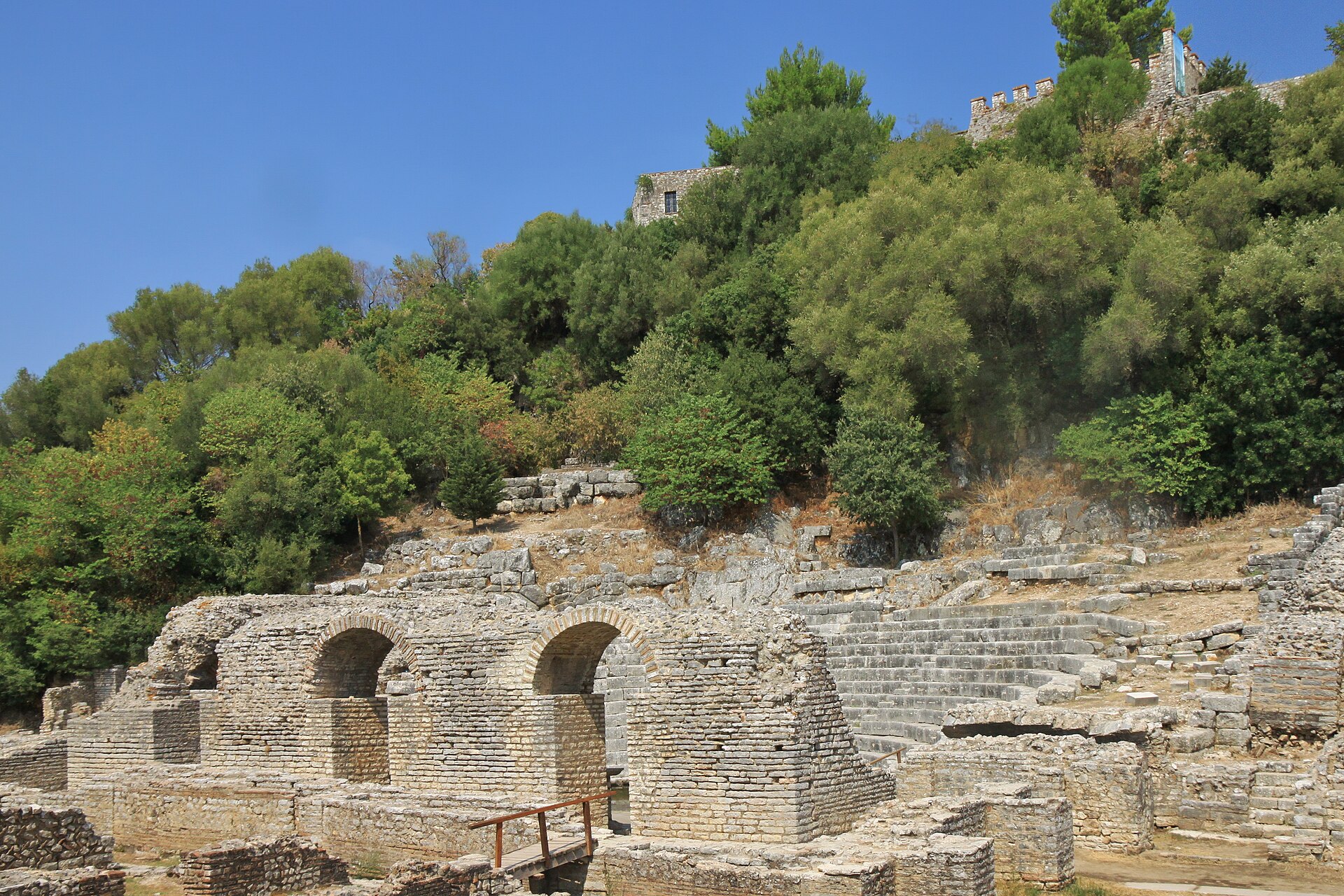
Guided tour of Butrint with a historian
Three hours at Butrint with a historian guide, in a small group of no more than eight, with transfer from Saranda or Ksamil included. The route follows the site's layers: Greek theatre, Roman forum, mosaic-floored baptistery, great basilica and Venetian towers, then the archaeological museum. The highlight: understanding, stone by stone, how one peninsula lived through 3,000 years of history.
Allow €35 per person on GetYourGuide, with a tasting of Albanian dishes and free cancellation up to 24 hours before; the site ticket (1,000 lek) is extra. A tour focused on Butrint, with few reviews so far.
- 3 hrs
- €35 per person, site entry not included (GetYourGuide price 2026)
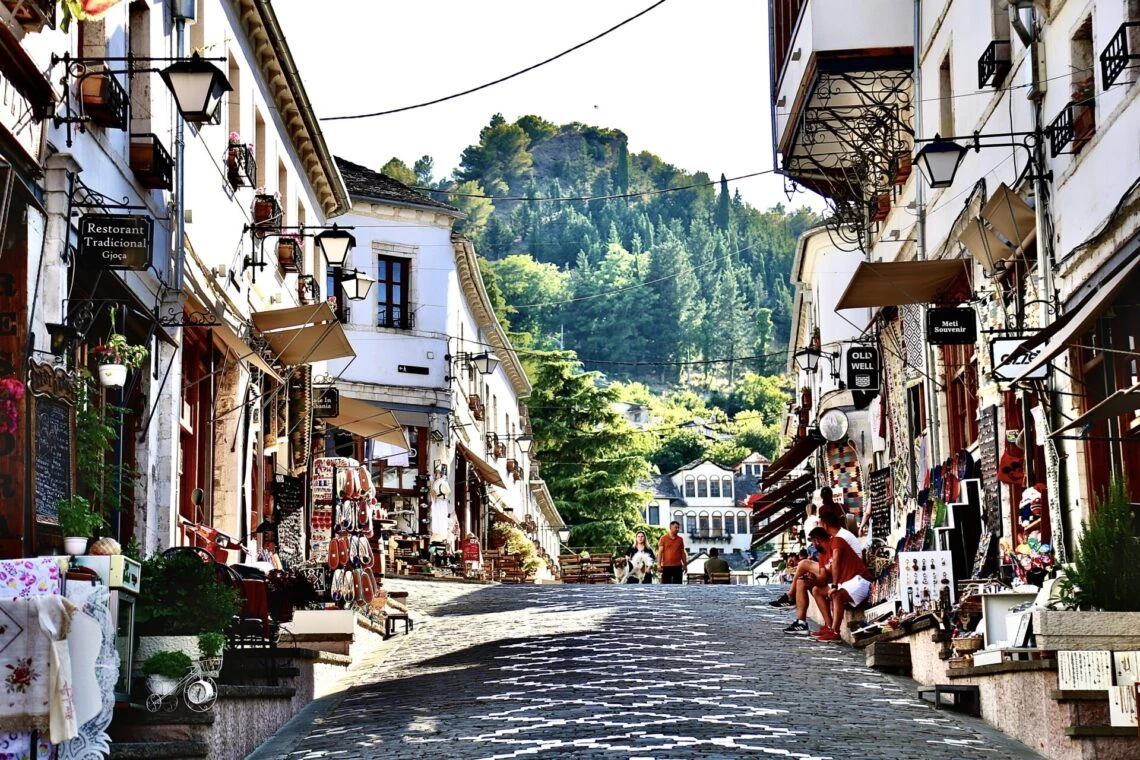
Blue Eye and Gjirokastër day trip from Saranda
A day by minibus from Saranda or Ksamil: a stop at St Nicholas monastery, two hours at the Blue Eye, then three hours in Gjirokastër, between the bazaar, tower houses and castle. The return goes via Lëkurësi castle above Saranda. The highlight: the colour of the spring, seen from the footbridge, before the midday crowds.
Allow €32 per person on GetYourGuide, with pick-up included and free cancellation. Bring cash in lek for entry fees and good shoes for Gjirokastër's lanes.
- 8 hrs
- €32 per person (GetYourGuide price 2026)
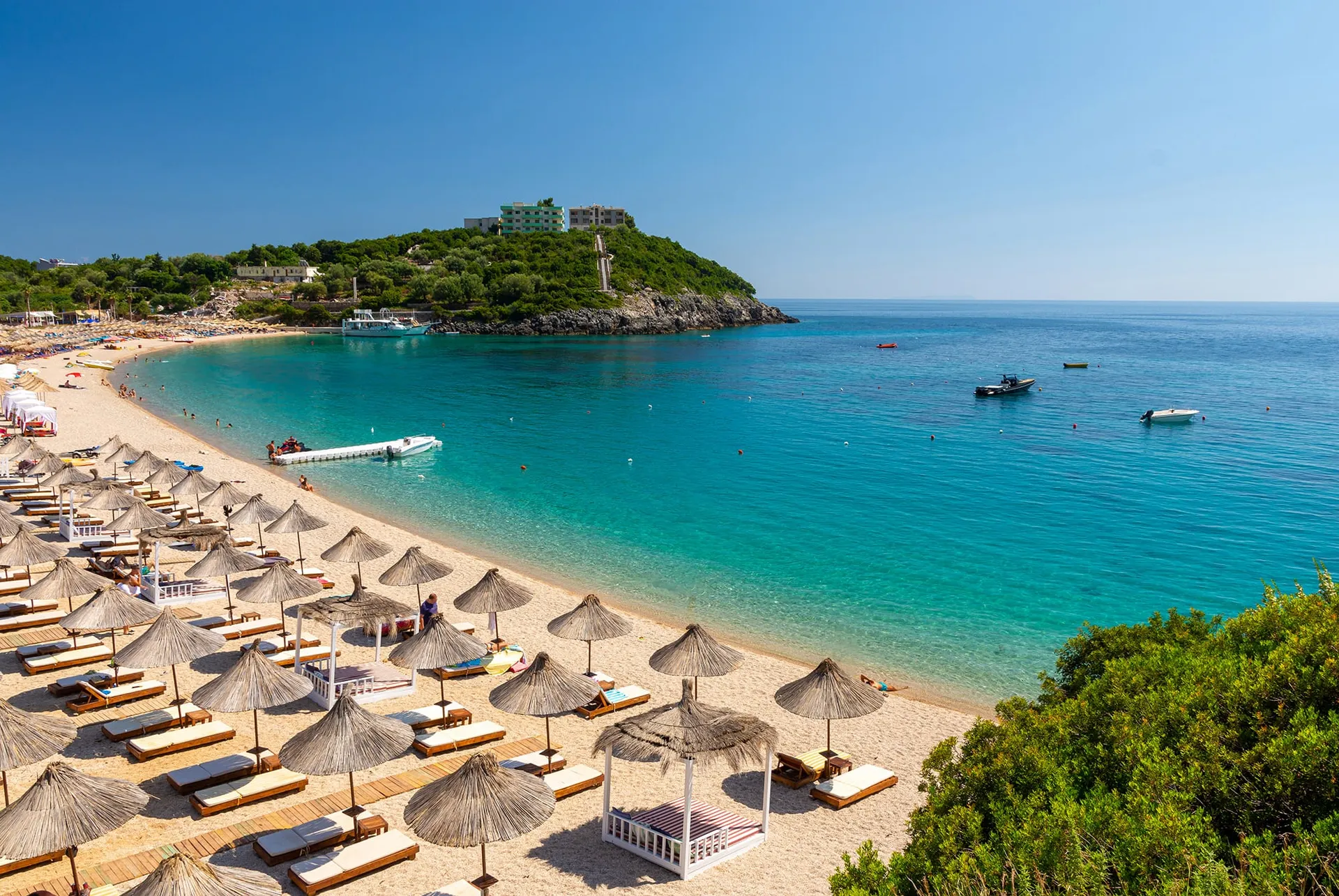
Sea caves and coves by boat from Himarë
Leaving Himarë's small quay for three hours along the coast: Livadhi beach, Jale beach, the Gjipe canyon, Pigeon Cave and Pirate Cave, with several swimming and snorkelling stops. The captain tells the coast's history and legends between stops. The highlight: swimming in coves the road never reaches.
Allow €40 per person on GetYourGuide, with masks and life vests provided and free cancellation up to 24 hours before. Book the morning departure, when the sea is calmest.
- 3 hrs
- €40 per person (GetYourGuide price 2026)
Sazan island, Haxhi Ali cave and Karaburun from Vlorë
Five hours by speedboat from Vlorë: a forty-minute stop on Sazan island, a visit into Haxhi Ali cave, named after a legendary pirate, then two and a half hours of swimming on the Karaburun peninsula, a wild coast with no road. The highlight: the boat nosing into the cave, open to the sea.
Allow €40 per person on GetYourGuide, with free cancellation up to 24 hours before. Bring a mask and snorkel, water and sunscreen: there are no services at Karaburun.
- 5 hrs
- €40 per person (GetYourGuide price 2026)
Getting there
Via Tirana airport and then by road (3 to 4 hours to Vlorë, about 5 to Saranda), or via Corfu: the hydrofoil reaches Saranda in about thirty minutes.
The main arrival point is Tirana International Airport (TIA). From there, allow about 3 to 4 hours by road to Vlorë, the Riviera's northern gateway, and about 5 hours to Saranda. Buses and minibuses (furgon) serve Vlorë and Saranda from Tirana.
From Greece, Corfu is the other gateway: fast hydrofoils reach Saranda in about thirty minutes (€23 to €29 one way), conventional ferries in 70 to 90 minutes, with up to 6 sailings a day in summer.
Getting around
A hire car is the most practical way to follow the SH8 coast road; buses and furgons link the towns, with boats and taxis for the rest.
A hire car is by far the most practical: it lets you stop at every cove along the SH8. The road is generally good but winding, especially over the Llogara pass.
- Buses and minibuses (furgon): cheap, linking Tirana, Vlorë, Himarë, Saranda and the villages, with limited timetables.
- Boat: trips to coves and caves from Vlorë, Himarë, Saranda and Ksamil.
- Taxi: handy for short hops; agree the fare before getting in.
What to do
The beaches of Ksamil, Jale and Dhërmi, boat trips from Himarë and Vlorë, Butrint and Porto Palermo castle; inland, the Blue Eye and Gjirokastër.
The coast is lived mostly in the water: Ksamil's beaches in the south, the coves of Jale, Gjipe and Dhërmi in the middle, boat trips to the caves from Himarë or to Sazan island and Karaburun from Vlorë.
For history, Butrint and Porto Palermo castle take a few hours each; the Blue Eye and Gjirokastër, inland, fill a day from Saranda. Apollonia, further north, is best kept for the drive to Tirana.
Food
Grilled fish and seafood, salad with feta, byrek, lamb and southern olive oil, in family tavernas at still affordable prices.
Riviera food is Mediterranean: grilled fish and seafood, tomato, cucumber and feta salad, byrek (filled pastry), lamb, olive oil and southern citrus. Family tavernas serve simple, fresh cooking, cheaper than in Western Europe. Meals come with a local wine or a raki, the traditional spirit.
Climate & seasons
When to go to Albania?
Monthly averages over the past 5 years (Open-Meteo).
Best months
- June
- July
- August
Avoid
- January
- November
- December
| Jan | Feb | Mar | Apr | May | Jun | Jul | Aug | Sep | Oct | Nov | Dec | |
|---|---|---|---|---|---|---|---|---|---|---|---|---|
| Our take | ||||||||||||
| Weather | ||||||||||||
| High | 13° | 14° | 15° | 18° | 23° | 29° | 32° | 31° | 27° | 22° | 18° | 15° |
| Rain (mm) | 326 | 184 | 159 | 114 | 96 | 33 | 6 | 46 | 102 | 174 | 372 | 223 |
| Beach | Beach June | Beach July | Beach August | |||||||||
| City sightseeing | City sightseeing April | City sightseeing May | City sightseeing June | City sightseeing September |
What to do by season (autumn)
-
City sightseeing
Pedestrian-friendly most of the year.
When to go
June to September for swimming; June and September offer a pleasant sea with fewer people, while July-August are the hottest and busiest.
The beach season runs from June to September, when the sea is warm and every service is open.
- May-June and September: the best window to avoid crowds and high prices while enjoying a pleasant sea.
- July-August: peak season, crowded beaches, high prices, booking essential; intense heat and a wildfire risk flagged by the French foreign ministry in 2026.
- November-March: a very quiet coast and mild climate, but many places closed.
Budget
Allow 1,000 lek for Butrint, 50 lek for the Blue Eye (plus parking), €23 to €29 one way by hydrofoil to Corfu and €35 to €50 for a boat trip; pay in lek.
The currency is the lek (ALL); the euro is not official tender and is not accepted everywhere. Some 2026 benchmarks:
- Butrint: 1,000 lek (about €10).
- Blue Eye: 50 lek entry, about 300 lek parking for up to three hours.
- Saranda-Corfu hydrofoil: €23 to €29 one way.
- Boat trips (Himarë, Vlorë, Saranda): €35 to €50 per person on GetYourGuide.
Prices rise in July-August in the tourist areas. Withdraw cash from town ATMs and keep some on you: car parks, entry fees and small shops often do not take cards.
Where to stay
Saranda and Ksamil hold most of the options in the south, Himarë is a central base, Dhërmi, Borsh and Qeparo are quieter; book early for July-August.
- Saranda: a lively resort town, the most practical base for Butrint, the Blue Eye, Gjirokastër and the Corfu boat.
- Ksamil: beaches and islets, next to Butrint, very busy in high season.
- Himarë: a central base between Vlorë and Saranda, with a harbour, beach and old town.
- Dhërmi and Drymades: beautiful beaches and a livelier summer scene.
- Qeparo, Borsh, Lukovë, Vuno: quieter villages away from the crowds.
Safety
The Riviera is generally safe; the main risks are the mountain road, currents at some coves and, in summer, wildfires. Emergency number: 112.
Crime against travellers is low on the coast; the usual precautions against petty theft are enough. The real points of caution lie elsewhere:
- The road: hairpins over the Llogara pass and along the SH8, and sometimes abrupt local driving.
- Swimming: few coves have lifeguards, and currents build in strong wind.
- Wildfires: in August 2026 the French foreign ministry flagged a high fire risk due to drought and heatwaves.
In an emergency, dial 112.
Formalities
French citizens enter without a visa for 90 days in any six months, with an ID card or passport valid for at least 3 months after the return date; an "extended" French ID card is not recognised.
According to the French foreign ministry, French nationals holding a valid national ID card or passport are visa-exempt for stays of 90 days within a six-month period. The document must be valid for at least 3 months after the planned return date.
Note: Albania does not recognise the five-year extension of French ID cards; only the date printed on the card counts. An unaccompanied minor must also carry parental authorisation. Citizens of other EU countries also enter visa-free; US citizens can stay up to a year.
Tips
Rent a car, pay in lek, book early in high season and combine the beaches with Butrint, the Blue Eye and Gjirokastër from Saranda.
- Rent a car to explore the coast road at your own pace.
- Pay in lek and keep cash for car parks and small shops.
- Book early for accommodation in July-August.
- Combine beaches and culture: Butrint, the Blue Eye and Gjirokastër are all within a day trip of Saranda.
- Visit sites early in the morning to beat the heat and the tour coaches.
Want to get off the beaten track elsewhere in the country? See off-the-beaten-path Albania — Berat, the Vjosa valley and the Albanian Alps.
FAQ
Best time, visas, currency, getting around, crossing to Greece and cultural sites: the essentials before heading to the Albanian Riviera.
When is the best time to visit the Albanian Riviera?
June to September for swimming. June and September offer a pleasant sea with fewer people; July and August are the hottest and busiest, with peak prices.
Do I need a visa for Albania?
Not as a French or EU citizen: visa-free entry for 90 days in six months, with an ID card or passport valid for at least 3 months after the return date. A French ID card whose validity was "extended" by five years is not recognised.
Which currency should I use?
The Albanian lek (ALL). The euro is not official tender and is not accepted everywhere: pay in lek, withdraw from ATMs and keep cash for car parks and entry fees.
How do I get around the Riviera?
A hire car is the most practical way to follow the SH8 coast road. Buses and furgons link the towns on limited timetables; boat trips leave from Vlorë, Himarë, Saranda and Ksamil.
Can I go to Corfu from the Riviera?
Yes: hydrofoils link Saranda and Corfu in about thirty minutes, for €23 to €29 one way, all year round (up to 6 sailings a day in summer, 1 to 2 in winter). Bring a passport or ID card.
Which cultural sites are near the beaches?
Butrint (UNESCO, 14 km south of Saranda), Porto Palermo castle near Himarë, the Blue Eye (a karst spring near Muzinë) and Gjirokastër (UNESCO-listed stone town, an hour from the coast) each take half a day or a day.
Sources
The figures in this guide come from the sources below, checked on the publication date.
Leave a comment
Share your thoughts or travel experience. Your email will not be published.