
Contents 32
Copenhagen, the capital of Denmark, is a city of water and bicycles: the inner harbour, the canals of Christianshavn and the old Nyhavn basin shape a compact centre you can cross in twenty minutes of pedalling. Around the Strøget pedestrian street cluster the royal palaces — Amalienborg, Christiansborg, Rosenborg —, the 17th-century Rundetaarn and two major museums, the Nationalmuseet and the Ny Carlsberg Glyptotek; Tivoli, the amusement park of 1843, opens its gates opposite the central station.
This guide covers fourteen places, including the freetown of Christiania and the Louisiana museum in Humlebæk, with 2026 prices in Danish kroner, how the Copenhagen Card works and the activities worth booking. Copenhagen is also a gateway to the rest of Scandinavia: Stockholm is five hours away by train, Norway and the Faroe Islands a short flight.
Overview
Copenhagen is the capital of Denmark, a waterfront Scandinavian city known for its canals, design and quality of life.
Copenhagen, the capital of Denmark, is a Scandinavian metropolis built by the water, on the Øresund strait, facing Sweden. Known for its canals, cycle paths and design, it combines royal heritage with contemporary architecture.
The city is easy to explore on foot or by bike: the historic centre (Indre By) gathers the Strøget pedestrian street, squares and gardens, while the Vesterbro, Nørrebro and Christianshavn districts offer a lively cultural and food scene. Copenhagen is also the birthplace of New Nordic cuisine.
Compact, safe and focused on sustainability, it’s an ideal destination for a weekend or an urban break in any season.
14 places to take with you
In the guide's order, ready for Google Maps or your GPS.
Book the activities from this guide
Our picks for Copenhague, well rated and free to cancel.
-
Book this activity
Guided canal cruise
from €19 per person (GetYourGuide 2026 price)
-
Book this activity
Tivoli Gardens entry ticket
from €27 per person, rides extra (GetYourGuide 2026 price)
-
Book this activity
Guided bike tour of Copenhagen
from €53 per person (GetYourGuide 2026 price)
Affiliate links: Travel Advice earns a commission if you book, at no extra cost to you. Learn more

Nyhavn
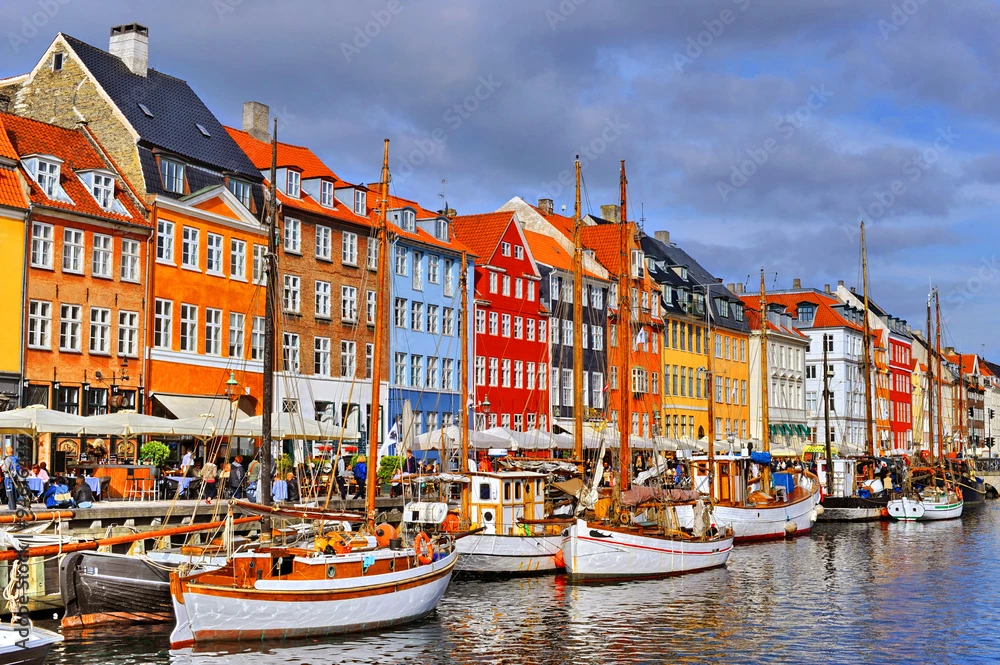
Nyhavn, the "new harbour", is a canal dug between 1670 and 1673 under Christian V to link Kongens Nytorv square to the port. Its 17th- and 18th-century gabled houses, painted red, ochre and blue, once housed sailors, taverns and brothels; Hans Christian Andersen lived at numbers 18, 20 and 67, where he wrote his first tales.
The sunny (north) side lines up restaurant terraces; the quieter south quay runs past the old wooden sailing ships moored there and the memorial anchor to sailors killed in the Second World War. Canal cruise boats leave from the head of the basin, on the Kongens Nytorv side, and the Inderhavnsbroen bridge, for bikes and pedestrians only, links the quay to Christianshavn.

Tivoli Gardens
Opened on 15 August 1843 by Georg Carstensen on the former ramparts, opposite today's central station, Tivoli is the world's second-oldest amusement park still in operation. Its 8 hectares mix gardens, a lake, a Chinese pagoda from 1900, the Moorish palace of the Nimb hotel, a pantomime theatre and an open-air stage hosting free concerts on summer Friday nights.
The rides range from the Rutschebanen, a 1914 wooden roller coaster still braked by hand, to the 80-metre Star Flyer and the Demon. The park opens by season only — summer, Halloween (2 October-1 November 2026) and Christmas — and is transformed each time, pumpkins or fir trees and lights. It inspired Walt Disney on his 1951 visit.

The Little Mermaid
The Little Mermaid (“Den Lille Havfrue” in Danish) is a famous statue in Copenhagen, perched on a rock in the harbour near the Langelinie promenade. It depicts the character from Hans Christian Andersen’s fairy tale.
Unveiled in 1913, it was created by sculptor Edvard Eriksen. The mermaid sits on her rock gazing out to sea, echoing the tale’s theme: the search for an immortal soul and true love.
Despite its small size (about 1.25 m), it is one of the city’s most photographed attractions and a cultural icon of Denmark.

Rundetaarn (The Round Tower)
The Rundetaarn, or Round Tower, is a historic building in central Copenhagen. Completed in 1642, it was built as an astronomical observatory for the University of Copenhagen.
Its distinctive feature is a spiral ramp that leads almost to the top without stairs — an engineering feat for its time. The observatory played an important role in the development of astronomy.
Today the tower offers panoramic views of the city from its platform and houses an exhibition space.

Amalienborg Palace
Amalienborg Palace is the home of the Danish monarchy in Copenhagen. The complex consists of four separate palaces arranged around an octagonal square, forming a harmonious neoclassical ensemble.
Built in the 18th century for wealthy families, the palaces were acquired by the royal family after the old Christiansborg Palace burned down in 1794. Their design is attributed to architect Nicolai Eigtved.
Visitors can watch the changing of the guard, which takes place daily at noon, and explore the Amalienborg Museum dedicated to Danish royal history.

National Museum of Denmark
The National Museum of Denmark (Nationalmuseet) occupies the Prince's Mansion, an 18th-century rococo townhouse a short walk from Christiansborg. It is the country's main museum of cultural history: Danish prehistory is told through the Trundholm Sun Chariot, bronze lurs and the Egtved Girl, a Bronze Age young woman preserved with her woollen clothes for 3,400 years.
The Viking rooms display silver hoards, rune stones and weapons; the upper floors cover the Middle Ages, the Renaissance, the ethnographic collections (Greenland, the Arctic, Africa, Asia) and a section on 20th-century Denmark. A children's museum, with a Viking ship to climb on, occupies the ground floor.

Christiansborg Palace
Christiansborg Palace, on the islet of Slotsholmen, is the seat of the Danish Parliament (Folketinget), the Supreme Court and the Prime Minister’s Office — a rare building housing all three branches of government.
It also contains the royal reception rooms, the royal stables and, in the basement, the ruins of the medieval castles that preceded it.
Its tower, the tallest in Copenhagen, offers panoramic city views and is free to visit.

Louisiana Museum of Modern Art (Humlebæk)
35 km north of Copenhagen, on the Øresund coast facing Sweden, the Louisiana is Denmark's most visited modern art museum. Opened in 1958 by Knud W. Jensen around a 19th-century villa, it lines up glass and white-brick pavilions linked by galleries that follow the slope down to the sea; the sculpture park — Calder, Henry Moore, Richard Serra, Miró — runs in lawns down to the beach.
The permanent collection includes Giacometti, Picasso, Warhol, Yves Klein, Asger Jorn and the CoBrA artists, and the temporary exhibitions draw visitors from across the country. The children's wing offers workshops included with the ticket; the café, with its terrace over the sea, is worth staying for lunch. Allow half a day, travel included.

Rosenborg Castle and gardens
Built by Christian IV between 1606 and 1624 as a summer pavilion, Rosenborg is Copenhagen's finest Renaissance castle: red brick, pale sandstone, turrets and green spires in the middle of Kongens Have, the "King's Garden", the city's oldest royal park. The apartments keep their painted ceilings, tapestries and porcelain cabinet; the Great Hall on the top floor lines up the coronation thrones guarded by three silver lions.
The treasury in the basement displays the Danish crown jewels and regalia: the crowns of Christian IV and Christian V, the sword of state, emeralds and diamonds still worn by the queen on grand occasions. The garden, free of charge, is locals' favourite picnic spot; the royal guard has its barracks here and marches out every day around 11:30 for Amalienborg.

Ny Carlsberg Glyptotek
Founded in 1888 by the brewer Carl Jacobsen, son of Carlsberg's creator, the Glyptotek houses his collection of sculpture and antiquities in a brick palace by Vilhelm Dahlerup (1897) extended by Hack Kampmann's wing (1906) and Henning Larsen's addition (1996), right behind Tivoli. The central winter garden, under a glass dome, shelters palms and a pool.
The collections range from Egyptian sarcophagi and Roman portraits — one of northern Europe's richest series — to Greek marbles, then French painting: Gauguin (some forty works), Monet, Cézanne, Van Gogh and a set of bronzes by Degas and Rodin. The Danish Golden Age (Eckersberg, Købke) completes the route.

Copenhagen Opera House
The Copenhagen Opera House (Operaen) opened on 15 January 2005 on the island of Holmen, exactly on the axis of Amalienborg Palace and the Marble Church, across the harbour. Designed by Henning Larsen and funded by the A.P. Møller (Maersk) foundation, it cost about DKK 2.5 billion; its flat roof cantilevered 32 metres over the forecourt has become its signature.
The main auditorium, with maple balconies and a gold-leaf ceiling, seats about 1,700; a second stage, Takkelloftet, hosts contemporary work. The Royal Danish Opera and the Royal Danish Ballet perform here from August to June. Reach it by harbour bus 991/992 from Nyhavn or on foot over the Christianshavn bridges.

Freetown Christiania
On a former Christianshavn barracks squatted in 1971, Christiania is a self-governing community of about 34 hectares and a thousand residents: hand-built houses, workshops, galleries, vegetarian cafés, the Loppen concert hall and paths along the 17th-century ramparts and moats. The yellow flag with three red dots flies at the main entrance on Prinsessegade, under the sign "You are now entering the EU" on the back of the gate.
Pusher Street, the hash-market street, was dismantled by the residents themselves in April 2024, cobbles torn up, after years of gang violence; the area has since been calmer and police patrol it. The local rules are still posted at the entrance: no running, no weapons, no hard drugs, no cars. Allow an hour's stroll, more if you stop by the lake for a coffee.

Torvehallerne
Torvehallerne is a food market in Copenhagen, located near Nørreport station. Known for its lively atmosphere, it brings together more than 60 stalls in two glass halls: fresh produce, fish, cheese, pastries, coffee and prepared dishes. It’s an ideal stop for food lovers and a great taste of Danish gastronomy.

Copenhagen Zoo
Founded in 1859 by the ornithologist Niels Kjærbølling on Frederiksberg hill, Copenhagen Zoo is one of Europe's oldest; its 11 hectares house some 4,000 animals of 260 species. Norman Foster's Elephant House (2008), with its two glass domes, and the tropical house are its most visited buildings.
The route passes the African savannah (giraffes, zebras, rhinos), the Arctic Ring where polar bears are watched underwater, the Panda House designed by Bjarke Ingels (2019) and a children's zoo with goats and ponies. The 43-metre observation tower of 1905 overlooks Frederiksberg Have, the free neighbouring park.
Guided canal cruise
The open-top boat leaves Gammel Strand or Nyhavn and packs into one hour what would take a day on foot: the low bridges of Christianshavn, the Church of Our Saviour and its spiral spire, the Opera House, Amalienborg seen from the harbour, the Royal Library's "Black Diamond" and the Little Mermaid from the water. The guide narrates in English and Danish. The highlight: ducking under the Christianshavn bridges.
For a first contact with the city, from day one. Departures year-round, several an hour in summer; book online to choose your time, early morning or late afternoon for the light. Free cancellation up to 24 hours before; the cruise is also included in the Copenhagen Card.
- 1 hr
- from €19 per person (GetYourGuide 2026 price)
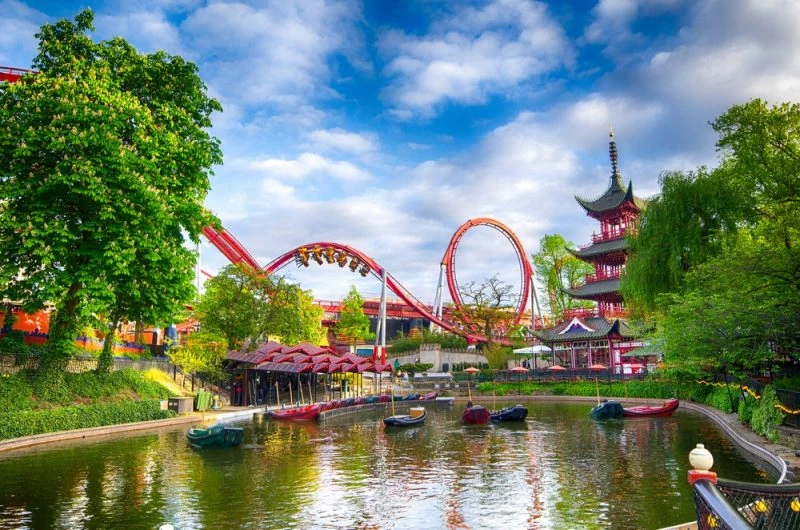
Tivoli Gardens entry ticket
The ticket admits you to the 1843 park: gardens, lake, Chinese pagoda, the Moorish palace of the Nimb hotel, open-air stage and Friday-night summer concerts. The rides — the 1914 wooden roller coaster, the Demon, the 80-metre Star Flyer — are paid separately, by tickets or ride pass. The highlight: the lights at dusk, then fireworks on summer and Christmas evenings.
For families and anyone who wants to see Copenhagen sparkle at night. The park opens by season only (summer, Halloween, Christmas): check the dates before buying. Book a dated slot online; free cancellation up to 24 hours before. Entry is also included in the Copenhagen Card.
- half day or evening
- from €27 per person, rides extra (GetYourGuide 2026 price)
Guided bike tour of Copenhagen
Three hours in the saddle with a local guide, in the world's most bike-friendly city: Nyhavn, Amalienborg, the Little Mermaid and Kastellet, then the bridges to Christianshavn and Christiania, the Black Diamond and back through the royal gardens. Along the way you learn the lane codes: raised hand, outstretched arm, never stop on the lane. The highlight: crossing the harbour cycle bridges, Inderhavnsbroen and Lille Langebro, reserved for bikes and pedestrians.
For those who want to cover the city like locals and get beyond the centre; bike and helmet provided. Suitable for teenagers comfortable on a bike. Book online, free cancellation up to 24 hours before; bring a windbreaker, even in summer.
- 3 hrs
- from €53 per person (GetYourGuide 2026 price)
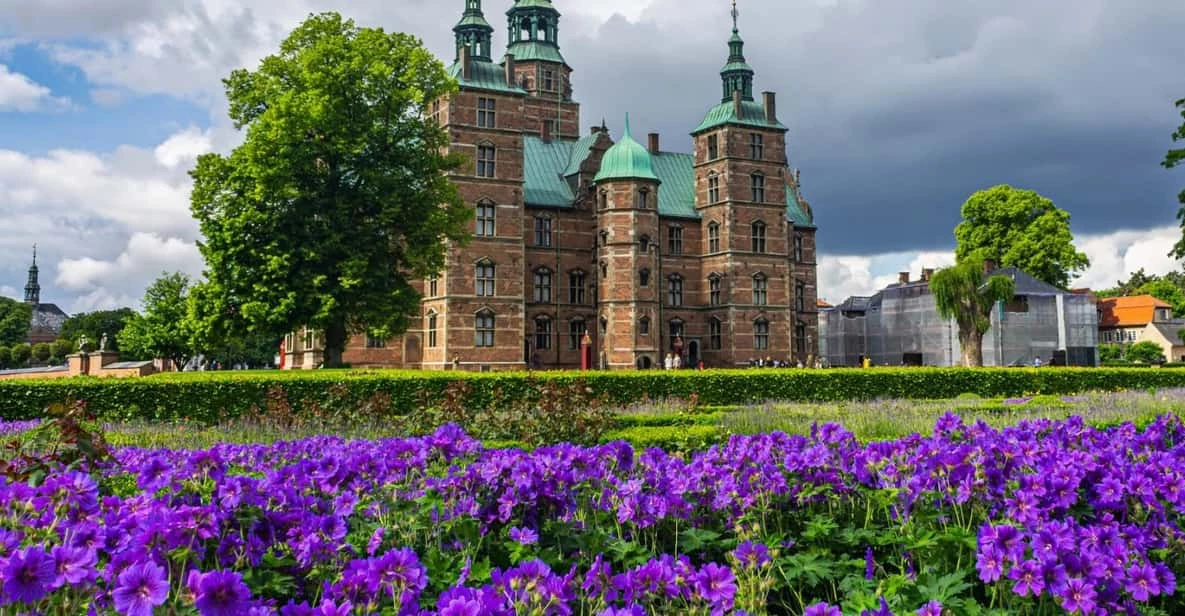
Rosenborg Castle entry ticket
The timed ticket opens the three floors of Christian IV's castle: the winter room with its painted panelling, the mirror cabinet, the porcelain cabinet, the Great Hall with its three silver lions and tapestries of Danish victories. The route ends in the vaulted treasury cellars, in front of the crowns and the sword of state. The highlight: the crown jewels, still worn by the queen at New Year.
For lovers of royal history and the Renaissance; children enjoy the treasury and the lions. The castle is small and admits a limited number of visitors per slot: book ahead in summer. Free cancellation up to 24 hours before; entry included in the Copenhagen Card.
- 1.5 hrs
- about €20 per person (GetYourGuide 2026 price)
Guided walking tour in French
A French-speaking guide tells the story of the historic centre in two and a half hours: City Hall Square, Strøget, Gammeltorv and its fountain, the Rundetaarn, Rosenborg and Kongens Have, Nyhavn, then Amalienborg and the Marble Church. You learn who Christian IV was, why the Danes kept their krone and what "hygge" means. The highlight: reaching Amalienborg for the noon changing of the guard when the schedule allows.
For a first day, with family or friends, without the language effort. Small groups, departures several times a week; book online, free cancellation up to 24 hours before. The route is flat; comfortable shoes recommended.
- 2.5 hrs
- from €49 per person (GetYourGuide 2026 price)
Getting there
Copenhagen Airport (CPH, Kastrup) is linked to the centre in about 13-15 min by the M2 metro, and 15 min by train.
Most travellers arrive via Copenhagen Airport (CPH), in Kastrup, Northern Europe’s main air hub.
- M2 metro: from Terminal 3, it reaches the centre in about 13-15 min (Kongens Nytorv ~13 min, Nørreport ~15 min), every 4 to 6 min during the day.
- Train: DSB trains link the airport to Central Station in 15 min; they also cross the Øresund Bridge to Malmö, Sweden (~35 min, ID check).
Copenhagen is also reachable by train from the rest of Europe (via Hamburg) and well served by international connections.
Copenhagen is also the gateway to the North Atlantic: from here Atlantic Airways flies to Vágar in 2 h 15 if you continue to the Faroe Islands.
Getting around
Metro (M1, M2, M3 Cityringen, M4), buses, trains and harbour buses share the same ticketing; cycling and walking remain the best way around the centre.
Copenhagen has an efficient public transport network.
- Metro: four lines — M1, M2, M3 (Cityringen, a loop) and M4 — all interchanging at Kongens Nytorv; automated and frequent, including at night.
- Buses, suburban trains (S-tog) and harbour buses (havnebus 991/992) share the same ticketing.
- Tickets: rechargeable Rejsekort card, or an unlimited City Pass (24 to 120 h); the “Small” pass covers zones 1-4, airport included.
- Cycling: Copenhagen is one of the most bike-friendly cities in the world, with dedicated lanes everywhere.
In the centre, walking and cycling are often the fastest and most enjoyable options.
What to do
Stroll Nyhavn, enjoy Tivoli, see the Little Mermaid and Amalienborg, climb the Rundetaarn, visit the museums and try Nordic cuisine.
Start at Nyhavn and board at the end of the basin for a one-hour canal cruise that passes under the Christianshavn bridges, past the Opera House and the Little Mermaid. Then on foot: the changing of the guard at Amalienborg at noon, the free tower of Christiansborg, the ramp of the Rundetaarn and the crown jewels at Rosenborg. Book your Rosenborg slots and Tivoli entries ahead in high season.
In the afternoon or evening, Tivoli for its rides and lights, or the museums: Nationalmuseet, Glyptotek and, with half a day, the Louisiana in Humlebæk facing the sea. Christiania is best visited in the late afternoon, on foot or by bike, before a smørrebrød dinner at Torvehallerne or in Kødbyen. With children, add the zoo and, in summer, Amager Strandpark beach.
The activities below list verified offers for the cruise, Tivoli, Rosenborg, a bike tour and a guided walk in French.
Food
Smørrebrød (open sandwiches), New Nordic cuisine, Danish pastries (wienerbrød) and street sausages (pølser) are the essentials.
Copenhagen is a celebrated food capital.
- Smørrebrød: open-faced rye-bread sandwiches, a classic Danish lunch.
- New Nordic cuisine: a movement launched in 2004 (Claus Meyer, René Redzepi), embodied by the restaurant Noma.
- Pastries: the famous “wienerbrød” (Danish pastries).
- Street food: the pølser (sausages) from street carts, a century-old institution.
The covered market of Torvehallerne is an excellent place to start tasting it all.
Itineraries
One day: Nyhavn, cruise, Amalienborg at noon, Rundetaarn, Tivoli in the evening. Three days: add Rosenborg, Christiansborg, the museums, Christiania and Vesterbro. Five days: Louisiana and Kronborg, then Malmö or Roskilde.
One day: Nyhavn at sunrise, a one-hour canal cruise, walk to Amalienborg for the noon changing of the guard and the Marble Church, then the Little Mermaid via Kastellet. Smørrebrød lunch, climb the Rundetaarn, stroll Strøget, and Tivoli at dusk for the lights.
Three days: day 1 as above. Day 2: Rosenborg and its jewels at 10am, Nationalmuseet or Glyptotek, the free Christiansborg tower, then Christianshavn and Christiania in the late afternoon, dinner in Kødbyen. Day 3: cycling through Nørrebro (Superkilen, Assistens cemetery, Jægersborggade), Torvehallerne, afternoon at the Opera House or, in summer, the Islands Brygge harbour bath.
Five days: add a day on the north coast, Louisiana in Humlebæk and Kronborg Castle in Helsingør (Hamlet's castle), and a day of your choice: Roskilde and its Viking Ship Museum, or Malmö in Sweden across the Øresund bridge (35 min by train, ID required). To carry on north, Stockholm is five hours away by direct train.
Climate & seasons
When to go to Denmark?
Monthly averages over the past 5 years (Open-Meteo).
Best months
- May
- June
- July
- August
- September
Avoid
- January
- February
| Jan | Feb | Mar | Apr | May | Jun | Jul | Aug | Sep | Oct | Nov | Dec | |
|---|---|---|---|---|---|---|---|---|---|---|---|---|
| Our take | ||||||||||||
| Weather | ||||||||||||
| High | 4° | 5° | 7° | 10° | 15° | 19° | 21° | 20° | 18° | 13° | 8° | 5° |
| Rain (mm) | 68 | 53 | 35 | 39 | 47 | 39 | 79 | 60 | 54 | 78 | 56 | 56 |
| City sightseeing | City sightseeing April | City sightseeing May | City sightseeing June | City sightseeing July | City sightseeing August | City sightseeing September | City sightseeing October |
What to do by season (autumn)
-
City sightseeing
Pedestrian-friendly most of the year.
When to go
Summer (June to August) brings warmth and long days; May and September are quieter and cheaper; winter is cold but festive.
Copenhagen can be visited year-round, with a mild climate for Scandinavia.
- Summer (June-August): the best time for weather (about 16-21°C in July) and very long days; peak season, festivals (Copenhagen Jazz Festival).
- Spring (March-May) and autumn (September-November): mild temperatures, fewer crowds and more affordable rates.
- Winter (December-February): cold (around 0-4°C) and short days, but a cosy “hygge” atmosphere, lights and Christmas markets.
For a good balance of pleasant weather and reasonable crowds, aim for May or September.
On the calendar: Tivoli opens only by season (summer from April to September, Halloween 2 October to 1 November 2026, then Christmas), the Copenhagen Jazz Festival fills ten days in early July, and the beaches of Amager Strandpark or Bellevue fill up as soon as the thermometer passes 20°C. In winter, open-air ice rinks and sea dips followed by a sauna are part of locals' routine.
Budget
Copenhagen is expensive: DKK 900-1,200 a day on a tight budget, DKK 2,000-2,800 in comfort. The Copenhagen Card (around DKK 570/24h) covers 80+ attractions and transport; the transport-only City Pass starts at DKK 80/24h.
Copenhagen is among Europe's most expensive cities; prices are in Danish kroner (DKK, about 7.45 to €1). Accommodation: hostel bed DKK 250-400, decent double room DKK 1,200-2,000 in the centre, more in summer; no tourist tax.
Sights: Rundetaarn DKK 60, Rosenborg paid ticket (price on denkongeligesamling.dk), Tivoli around thirty euros for entry alone (variable pricing) plus rides, Nationalmuseet chargeable for adults (free under 18), canal cruise from €19 on GetYourGuide. The Copenhagen Card Discover includes 80+ attractions (Tivoli and Louisiana among them) and transport, airport included; expect around DKK 570 for 24 h (2026 price read in July, tiers up to 120 h) and make it pay with two or three ticketed sights a day. The City Pass covers transport only, from DKK 80 for 24 h (zones 1-4).
Meals: smørrebrød DKK 60-120, pølser DKK 40-50, market lunch DKK 100-150, restaurant dinner DKK 300-500, draught beer DKK 60-80. All told, DKK 900-1,200 a day (€120-160) on a tight budget, DKK 2,000-2,800 (€270-375) in comfort, excluding flights. Free sights — Nyhavn, the Christiansborg tower, the royal gardens, Christiania, the Little Mermaid — lighten the bill considerably.
If you continue to northern Scandinavia, our Norway travel guide costs out the fjords and the Lofoten line by line; Stockholm is in the same price bracket.
Where to stay
Indre By to be among the sights, Vesterbro for a hip vibe, Nørrebro for food, Østerbro for quiet family stays, Christianshavn for the canals.
Your choice of neighbourhood depends on your travel style.
- Indre By (centre): among the sights (Nyhavn, Tivoli, Strøget), ideal for a first visit.
- Vesterbro: trendy district with nightlife and restaurants, especially in Kødbyen.
- Nørrebro: multicultural and creative, with an excellent food scene.
- Østerbro: residential, green and quiet, good for families (Fælledparken).
- Christianshavn: colourful houses and canals, a short walk from the centre.
Book ahead, especially in summer: accommodation is expensive and fills up fast.
Safety
A very safe capital; watch for pickpockets at the central station, Nørreport and Strøget, for bike lanes you should never cross without looking, and for the harbour water. Emergencies: 112.
Copenhagen is one of Europe's safest capitals; violent crime against tourists is exceptional. The few complaints concern pickpocketing around the central station, Nørreport, Strøget and the bars of Vesterbro late at night. Bike lanes are wide and fast: never stop in them, look right before stepping off a bus and wait for the pedestrian light.
Christiania: since Pusher Street was dismantled in April 2024 the area is calm, but cannabis remains illegal in Denmark and police issue fines; do not photograph people without consent. Harbour and canals: swimming is allowed only in the harbour baths (Islands Brygge, Sluseholmen), never from the quays; the water is cold year-round.
Emergency number 112 (police, fire, ambulance), non-emergency police 114, out-of-hours doctor 1813 in the capital region. The European Health Insurance Card gives access to public care; duty pharmacies (apotek) are posted in shop windows. Type K sockets (European type C plugs fit).
Formalities
Denmark is in the EU and the Schengen area but keeps the Danish krone (DKK), not the euro. French citizens need neither a visa nor ETIAS: a valid ID card or passport. Cards everywhere.
Denmark is part of the European Union and the Schengen area. Entry: French and EU/EEA citizens travel visa-free with a valid national ID card or passport, including minors. Visa-exempt non-EU travellers get 90 days in any 180; their crossings are recorded by the EES system, fully operational since 10 April 2026. ETIAS, the travel authorisation that will apply to them, is not yet in service and no launch date has been set (September 2026); it will never apply to EU citizens.
Currency: the Danish krone (DKK), not the euro (about DKK 7.45 to €1, a near-fixed rate). Denmark kept its currency under an opt-out; shops are not obliged to accept euros. Payment: bank cards are accepted almost everywhere, even for a coffee; cash is becoming rare and some shops refuse it. Denmark levies no municipal tourist tax.
Tips
Pay by card, book Rosenborg and Tivoli online, check Tivoli's seasons, rent a bike, catch the changing of the guard at noon, eat at the market and keep half a day for the Louisiana.
- Cards everywhere: no need to withdraw kroner, except a few coins for public toilets; decline the euro conversion offered by terminals.
- Bookings: Rosenborg sells slots every ten minutes, Tivoli uses variable prices locked in online; buy before you leave in high season and for the Christmas period.
- Tivoli seasons: the park is closed between its three seasons; check the calendar before building your programme.
- Changing of the guard: the guard leaves Rosenborg around 11:30 and reaches Amalienborg at noon; follow it on foot through the streets for the best view.
- Bike: daily rental from shops or bike-share; ride on the right, raise a hand to stop, stretch an arm to turn, and never park on the lane.
- Transport: a zones 1-4 ticket covers the airport; check in and out with the Rejsekort, or the maximum fare applies.
- Meals: lunch on smørrebrød or at Torvehallerne market, dine early (kitchens close around 9:30pm); service is included, tipping optional.
- Louisiana: half a day of train and sea; combine it with Kronborg Castle in Helsingør, ten minutes further north.
- Sundays: many shops close; museums and Tivoli stay open.
FAQ
Currency in DKK, English widely spoken, airport reached in 15 min, a very bike-friendly city: here are answers to the most common questions.
What is the currency in Copenhagen?
The Danish krone (DKK), not the euro: about DKK 7.45 to €1. Denmark is an EU member but kept its krone; shops are not obliged to accept euros. Cards are accepted almost everywhere.
Do French citizens need a visa?
No: a valid ID card or passport is enough. ETIAS is not yet in service and has no launch date (September 2026); it will in any case only apply to visa-exempt non-EU travellers.
Is English spoken in Copenhagen?
Yes, English is very widely spoken; you get by without a word of Danish.
How do you get to the centre from the airport?
The M2 metro leaves from Terminal 3 and reaches the centre in 13-15 min (every 4 to 6 min); a DSB train also links the central station in 15 min. A zones 1-4 ticket covers the trip.
Is the Copenhagen Card worth it?
The Discover card gives access to 80+ attractions (Tivoli, Rosenborg, Christiansborg, Louisiana, canal cruise) and to transport, airport included. It pays off from two or three ticketed sights a day.
Is Tivoli open all year?
No: three seasons, summer (April-September), Halloween (2 October-1 November 2026) and Christmas (November-December). The park is closed between seasons; exact dates on tivoli.dk.
Can you take photos in Christiania?
Since Pusher Street was dismantled in April 2024, photos are tolerated in most of the area, but never close-ups of residents without their consent; local signs take precedence.
When is the best time to visit?
Summer (June-August, about 21°C in July) for warmth and long days; May and September for fewer crowds and lower prices; December for an illuminated Tivoli and the Christmas markets.
Sources
The figures in this guide come from the sources below, checked on the publication date.
Leave a comment
Share your thoughts or travel experience. Your email will not be published.