

Contents 24
Cancún stretches between the Caribbean Sea and the Nichupté lagoon, on the north-east tip of the Yucatán Peninsula. This guide covers its 9 highlights, from the Hotel Zone beaches to Isla Mujeres, the Puerto Morelos reef and Chichén Itzá, followed by the practical side: getting there, entry rules and Visitax, sargassum season, budget and safety. For the coast further south, see our Tulum guide.
Overview
Cancún, on the north-east tip of the Yucatán, combines a Hotel Zone of beaches between sea and lagoon, a more local downtown and easy access to Isla Mujeres, reefs, cenotes and Maya sites.
Cancún sits on the north-east tip of the Yucatán Peninsula, in the state of Quintana Roo. The city is split between the Hotel Zone, a strip of sand between the Caribbean Sea and the Nichupté lagoon lined with hotels and beaches, and downtown (El Centro), where locals live.
Beyond the beaches, Cancún is a base for Isla Mujeres, the Puerto Morelos reef, the MUSA underwater museum, the inland cenotes and the major Maya sites: Chichén Itzá to the west, Tulum and Coba to the south, covered in our Tulum guide.
9 places to take with you
In the guide's order, ready for Google Maps or your GPS.
Book the activities from this guide
Our picks for Cancún, well rated and free to cancel.
-
Book this activity
Day trip to Chichén Itzá, a cenote and Valladolid from Cancún
€50 per person (GetYourGuide price 2026)
-
Book this activity
Catamaran cruise to Isla Mujeres
€87 per person (GetYourGuide price 2026)
-
Book this activity
Snorkelling at MUSA and the Manchones reef
€44 per person (GetYourGuide price 2026)
Affiliate links: Travel Advice earns a commission if you book, at no extra cost to you. Learn more

Chichén Itzá
About 200 km west of Cancún, a 2.5 to 3-hour drive, Chichén Itzá is the great Maya city of the Yucatán, a UNESCO World Heritage Site since 1988 and one of the New Seven Wonders of the World. Highlights are the Pyramid of Kukulcán (El Castillo), the Great Ball Court, the Temple of the Warriors, the Group of a Thousand Columns and the El Caracol observatory.
You can get there by hire car, ADO bus or organised tour, often combined with a cenote and the colonial town of Valladolid.

Hotel Zone beaches
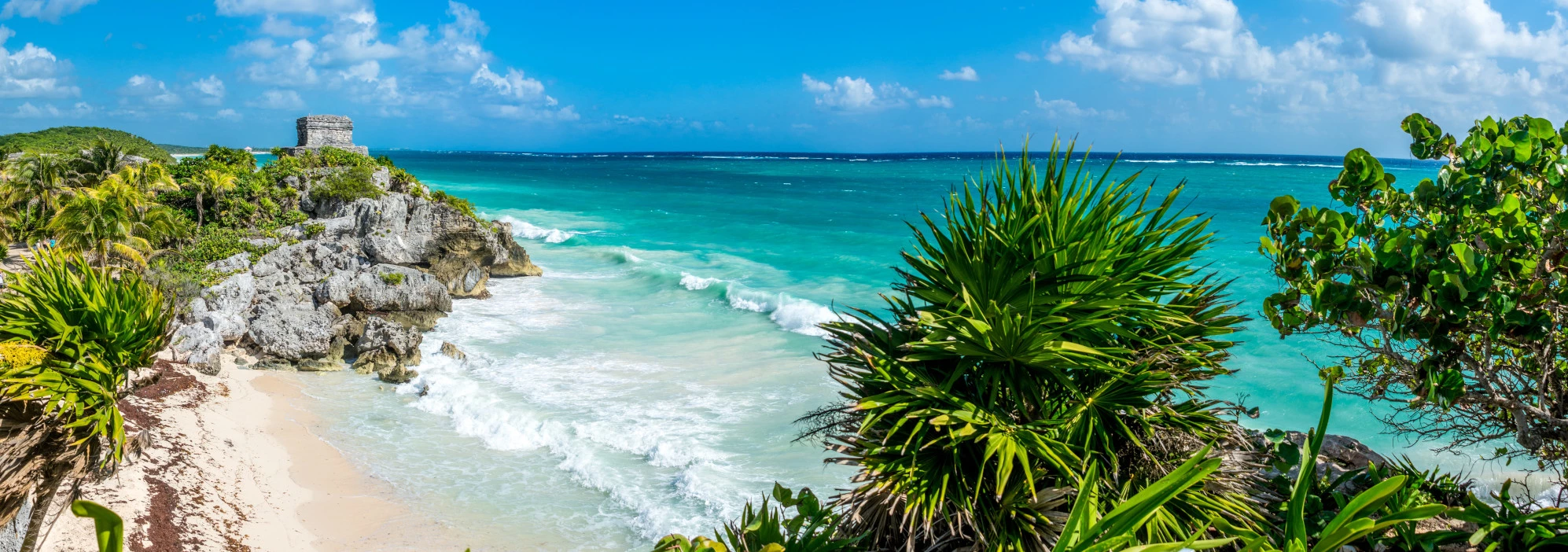
The Hotel Zone is a narrow strip of sand between the Caribbean Sea and the Nichupté lagoon, lined with hotels and white-sand beaches. On the north shore, facing Isla Mujeres, Playa Tortugas, Playa Caracol and Playa Langosta usually have calm water that suits children; on the east shore, from Playa Chac Mool to Playa Delfines, the beach takes the open-sea swell.
Playa Delfines, with its lookout and the big « Cancún » letters, is one of the few large beaches without a hotel behind it. All beaches in Mexico are public, including those in front of the resorts.

Isla Mujeres
Isla Mujeres is a narrow island off Cancún, reached by Ultramar ferries from Puerto Juárez in twenty minutes to half an hour. You get around it by golf cart or bike: Playa Norte in the north with its shallow water, the town and its seafood restaurants, then Punta Sur and its cliffs above the sea at the southern tip.
The island is also the starting point for snorkelling trips to MUSA and the Manchones reef.
Ruta de los Cenotes (Puerto Morelos)
From Puerto Morelos a road heads inland through the jungle to a string of cenotes open to visitors, including Siete Bocas and its seven openings, as well as adventure parks with zip lines. Cenotes are natural freshwater sinkholes in the limestone, typical of the Yucatán; some were sacred to the Maya.
Further south, Gran Cenote and Casa Cenote are covered in our Tulum guide.

Puerto Morelos reef
About half an hour south of Cancún, the fishing village of Puerto Morelos faces a coral reef protected as a national marine park, a few hundred metres offshore. Trips leave the harbour in small boats, with two snorkelling stops over the coral among reef fish, rays and sometimes turtles.
The sea is often calm, which makes it a good first trip for beginners and families.

Underwater Museum of Art (MUSA)
MUSA (Museo Subacuático de Arte) holds about 500 sculptures in three galleries submerged 3 to 6 metres deep, inside the national marine park that runs from the west coast of Isla Mujeres to Punta Cancún and Punta Nizuc. Started in 2009 and opened in 2010, it works as an artificial reef that draws divers away from the natural reefs nearby.
You can see it snorkelling, diving or from a glass-bottom boat, often with a stop at the Manchones reef.

Las Coloradas and Río Lagartos
On the north coast of the Yucatán, about 3 to 3.5 hours' drive from Cancún, the salt-works ponds of Las Coloradas turn pink because of micro-organisms in the very salty water. A few kilometres away, the fishing village of Río Lagartos is the starting point for boat trips into the Ría Lagartos Biosphere Reserve, through mangroves home to flamingos, pelicans and herons.
The two combine into one long day.

Nichupté Lagoon
Behind the Hotel Zone, the Nichupté lagoon is a system of mangrove-fringed lagoons between the city and the strip of beaches. You can explore it by kayak, paddleboard or guided boat; herons, pelicans and crocodiles live along its shores.
At sunset, from the Hotel Zone jetties, it is the quietest corner of Cancún.

Punta Cancún, the party district
At the bend of the Hotel Zone, Punta Cancún is where the city's big nightclubs and bars are, including Coco Bongo, half club and half acrobatic show. Nights run until dawn, especially in high season and during American college spring break.
France Diplomatie advises particular vigilance in Cancún's nightlife venues.
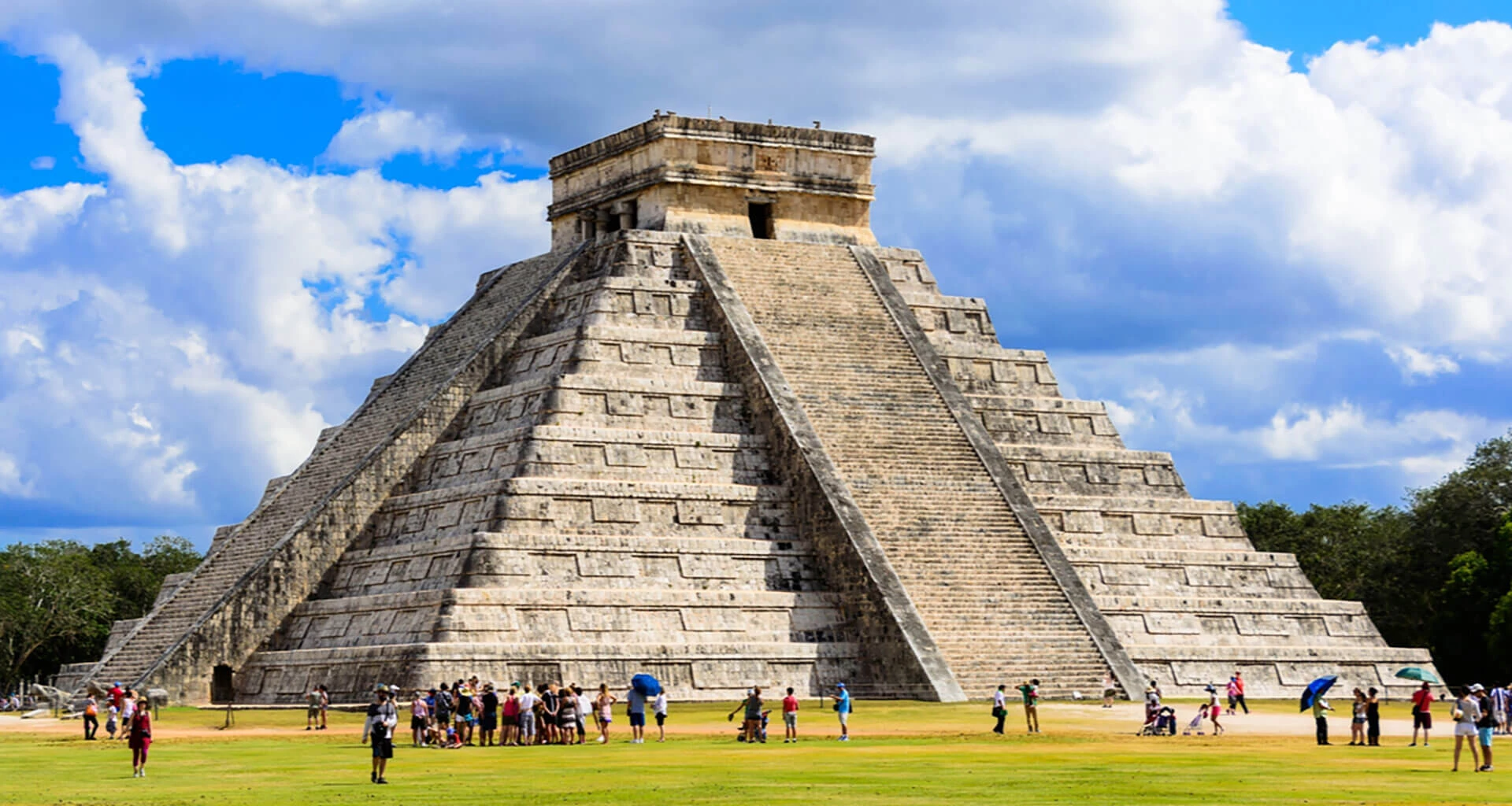
Day trip to Chichén Itzá, a cenote and Valladolid from Cancún
A guided day from Cancún or the Riviera Maya: a tour of Chichén Itzá and the Pyramid of Kukulcán, a swim in a cenote, a buffet lunch and tequila tasting depending on the option, then a stroll through the colonial streets of Valladolid. The highlight: walking out onto the esplanade in front of El Castillo.
From €50 per person on GetYourGuide, with free cancellation; check what your option includes (transfer, lunch, entry fees). Early start, back in the evening.
- 12 hrs
- €50 per person (GetYourGuide price 2026)
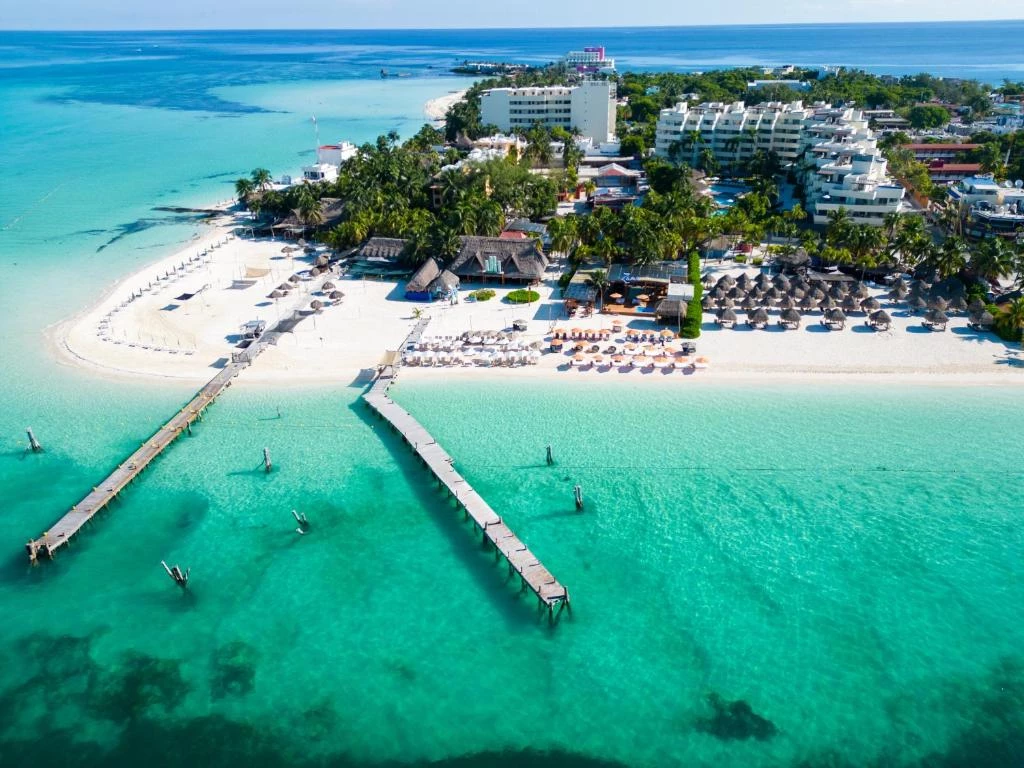
Catamaran cruise to Isla Mujeres
Seven hours on a three-deck catamaran from Cancún, with three stops: snorkelling on a reef, a swim in the sea and free time on Isla Mujeres. On board, a DJ, a water slide and diving boards, with food and drinks included.
From €87 per person on GetYourGuide, with free cancellation. It is a party atmosphere: for a quiet day on the island, the ferry from Puerto Juárez is the alternative.
- 7 hrs
- €87 per person (GetYourGuide price 2026)
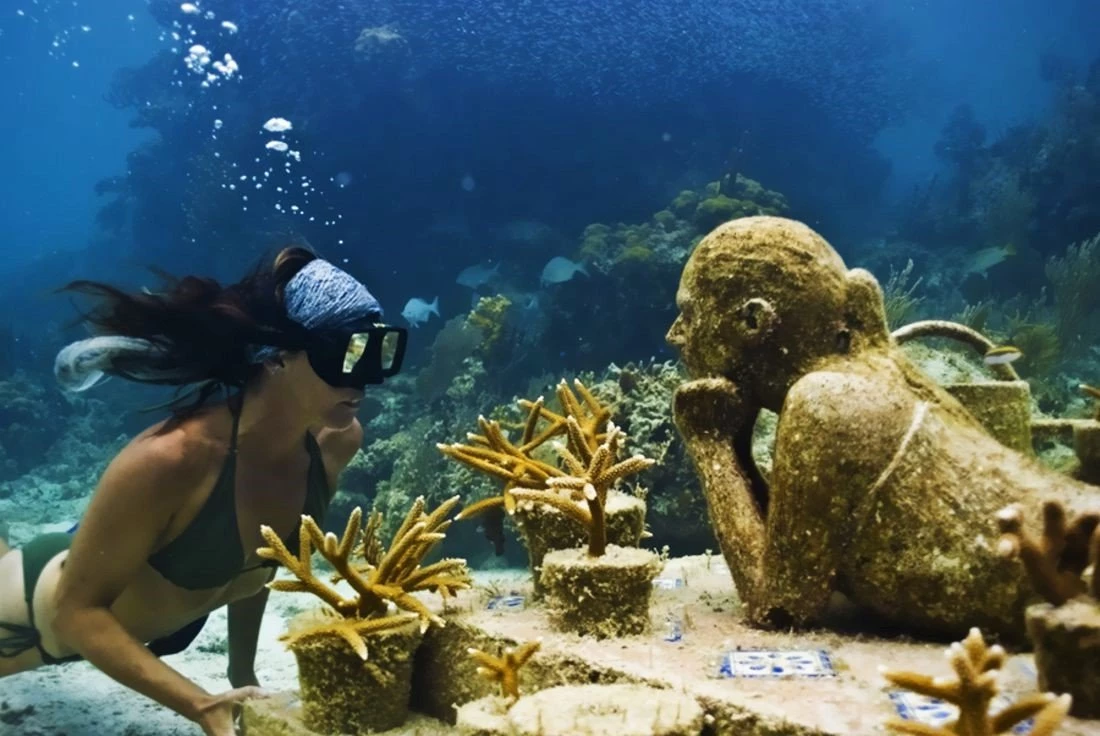
Snorkelling at MUSA and the Manchones reef
From Isla Mujeres, a four-hour boat trip with the Pocna dive centre to two sites: the submerged sculptures of MUSA, then the natural Manchones reef, with snacks on board. It suits beginners as well as confident swimmers.
From €44 per person on GetYourGuide, with free cancellation; if you are staying in Cancún, check whether the ferry to Isla Mujeres is included.
- 4 hrs
- €44 per person (GetYourGuide price 2026)
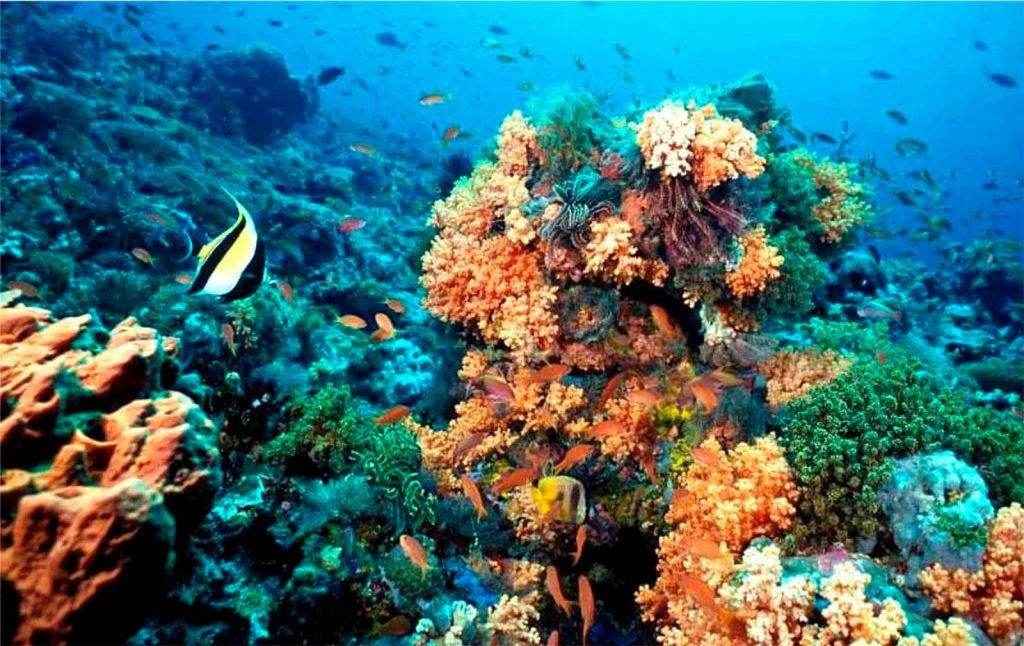
Guided snorkelling on the Puerto Morelos reef
Two hours with a guide at two spots on the Puerto Morelos reef, with equipment and access fees included. Coral, reef fish and, with luck, turtles: the trip suits all levels, in a usually calm sea.
From €31 per person on GetYourGuide, with free cancellation; the meeting point is in Puerto Morelos, about half an hour from Cancún, so check whether a transfer is offered.
- 2 hrs
- €31 per person (GetYourGuide price 2026)
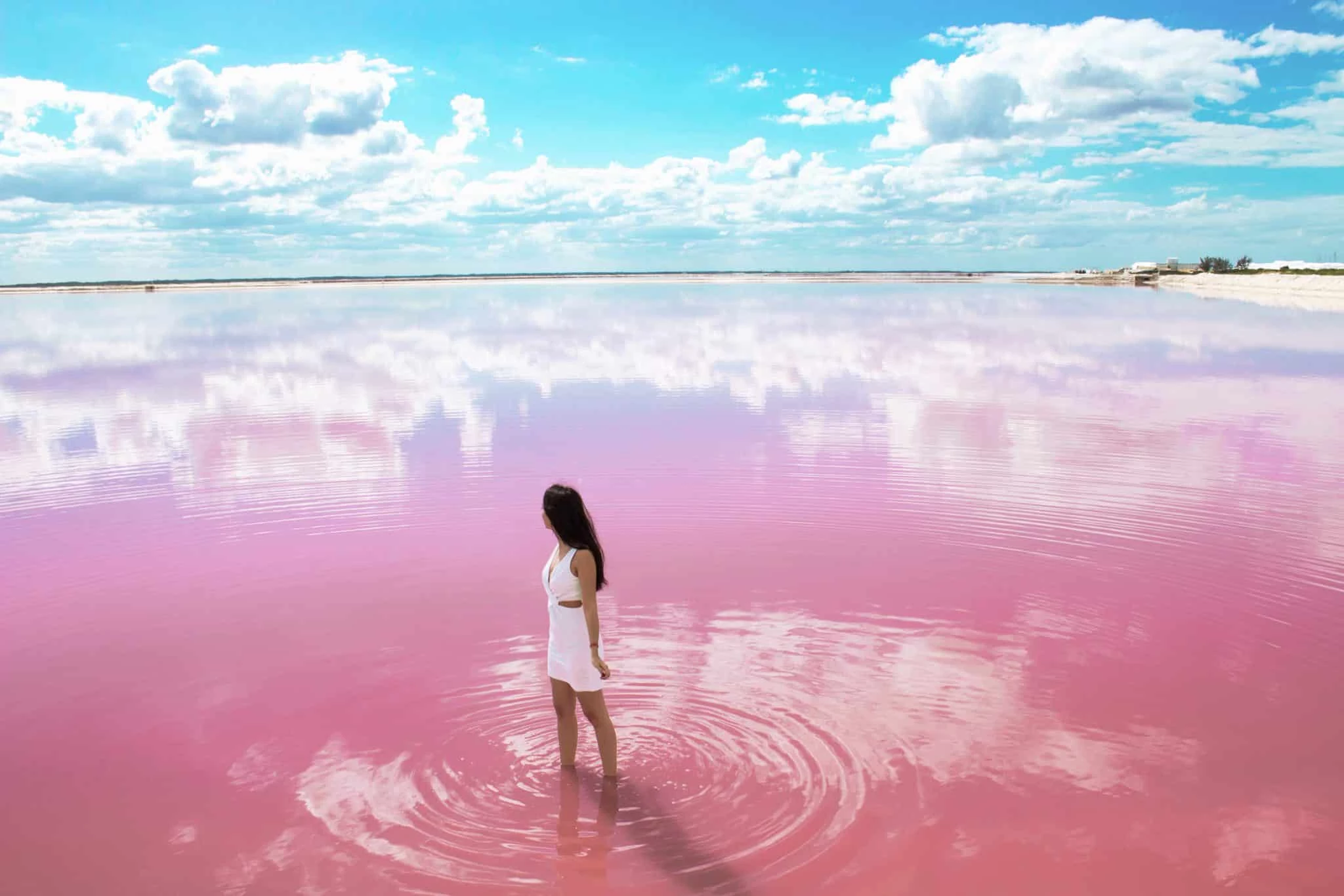
Río Lagartos and Las Coloradas day trip from Cancún
A day from Cancún: a boat trip through the mangroves of the Río Lagartos reserve looking for flamingos, a traditional mud bath, a stop at the pink ponds of Las Coloradas, then free time on a beach and lunch. The highlight: the flamingos in the mangrove channels.
From €118 per person on GetYourGuide, with free cancellation; very early start, as the drive takes over three hours each way.
- 12 hrs
- €118 per person (GetYourGuide price 2026)
Getting there
Most travellers arrive at Cancún International Airport (CUN), south of the Hotel Zone, linked to the city by ADO buses, shuttles and private transfers.
Cancún International Airport (CUN) is the main gateway to the Yucatán Peninsula for long-haul flights, about twenty kilometres south-west of the Hotel Zone. On arrival, immigration is often cleared through an electronic gate (E-gate).
- ADO bus: the cheapest option, to downtown (ADO terminal) and Playa del Carmen.
- Private transfer or shared shuttle: about 25 minutes to the Hotel Zone; book ahead.
- Tren Maya: the train links Cancún with Playa del Carmen, Tulum, Valladolid, Chichén Itzá and Mérida.
Ignore the touts offering transport or « gifts » in the arrivals hall: they are usually timeshare sales.
Getting around
City buses link downtown with the whole Hotel Zone cheaply; taxis and ride-hailing fill the gaps, and a hire car is useful for the cenotes and Chichén Itzá.
City buses: very cheap, they run all day between downtown and the full length of the Hotel Zone; pay in pesos with small change.
Taxis and ride-hailing: taxis have no meter, so agree the fare before getting in; Uber and Didi operate in the city.
Hire car: handy for the Ruta de los Cenotes, Chichén Itzá or Las Coloradas. France Diplomatie urges great care on the road and never paying a fine directly to a police officer.
Ferries: to Isla Mujeres from Puerto Juárez.
What to do
Morning beach in the Hotel Zone, Isla Mujeres and MUSA by boat, snorkelling at Puerto Morelos, inland cenotes, Chichén Itzá and Las Coloradas as day trips.
Beach days are spent in the Hotel Zone, on the north shore for calm water. By boat: Isla Mujeres, the MUSA sculptures and the Manchones reef; further south, the Puerto Morelos reef and the cenotes of the Ruta de los Cenotes.
For bigger day trips: Chichén Itzá and Valladolid to the west, Las Coloradas and Río Lagartos on the north coast of the Yucatán, Tulum and Coba to the south (see our Tulum guide). In the evening, Punta Cancún for partying, downtown for cheap Mexican dinners.
Climate & seasons
When to go to Mexico?
Monthly averages over the past 5 years (Open-Meteo).
Best months
- February
- March
- April
- May
Avoid
- June
| Jan | Feb | Mar | Apr | May | Jun | Jul | Aug | Sep | Oct | Nov | Dec | |
|---|---|---|---|---|---|---|---|---|---|---|---|---|
| Our take | ||||||||||||
| Weather | ||||||||||||
| High | 27° | 27° | 29° | 30° | 31° | 30° | 31° | 32° | 31° | 30° | 28° | 27° |
| Rain (mm) | 82 | 52 | 37 | 34 | 59 | 220 | 113 | 136 | 181 | 129 | 120 | 98 |
| Beach | Beach January | Beach February | Beach March | Beach April | Beach May | Beach December |
When to go
The best time is the dry season, December to April. Sargassum reaches the coast from April to October according to Mexico's Navy, and hurricane season runs from June to November.
Dry season (December-April): clear skies, lower humidity, usually calm sea; this is high season, the most expensive, with peaks at Christmas and during spring break.
Rainy season (May-October): humid heat, showers often late in the day, lower prices. The Atlantic hurricane season runs from 1 June to 30 November; if an alert is issued, follow local instructions.
Sargassum: according to Mexico's Navy (Secretaría de Marina), the cycle of this seaweed on the Quintana Roo coast runs from April to October. It does not reach cenotes or Maya sites; beaches on the north shore, facing Isla Mujeres, are often less exposed than those on the east shore.
Good compromise: November and early December, after the rains and before the crowds.
Budget
The currency is the Mexican peso (MXN), but US dollars are widely accepted in tourist areas. Carry cash for cenotes and small cooperatives.
The local currency is the Mexican peso (MXN); US dollars are accepted in most Hotel Zone tourist businesses, often at a poor rate—pay in pesos where you can.
Rough daily cost (per person)
- Budget: ~30-70 USD (downtown hotels, buses, street food).
- Comfort: ~150-260 USD (Hotel Zone hotel, restaurants, excursions).
- Luxury / all-inclusive: 400 USD and well beyond.
Tips: keep peso cash for cenotes, snorkeling cooperatives and tips (10-15% at restaurants); prefer bank ATMs (BBVA, Santander) over the 'Euronet' machines in tourist areas, which charge more.
Where to stay
The Hotel Zone for the beach and resorts, downtown for tight budgets and local life, Isla Mujeres for peace and quiet.
- Hotel Zone: beachfront hotels and all-inclusive resorts; the north shore has calmer water, the east shore longer beaches. The nightclubs are here too, around Punta Cancún.
- Downtown (El Centro): cheaper hotels and hostels, Mexican restaurants, markets and the ADO terminal; the beaches are 20-30 minutes away by bus.
- Isla Mujeres: for a quieter feel, half an hour away by ferry.
In high season (December-April), book early.
Safety
France Diplomatie places Quintana Roo under enhanced vigilance, with particular care in nightlife venues; emergencies on 911.
France Diplomatie places Quintana Roo, including Cancún, under enhanced vigilance (advice updated on 15 September 2026). It asks travellers to be particularly careful in places popular with tourists, especially nightlife venues, where clashes between criminal gangs have taken place near the hotel zones, and to stay away from any drugs. Pickpocketing is common on beaches and in bars.
Never pay a fine to a lone officer who cannot give a receipt: call 911, the national emergency number. At sea, follow the beach flags; during hurricane season (June-November), follow local instructions.
Formalities
French citizens need no visa for a tourist stay of up to 180 days; keep your passport and proof of entry on you, and the Quintana Roo Visitax is compulsory for foreign visitors.
Visa: French citizens need no visa for a tourist stay of up to 180 days; the length granted is set by the immigration officer on arrival, so check it. Any work, paid or voluntary, is forbidden on a tourist entry.
Documents to carry: your passport and proof of legal stay (entry stamp, the ticket issued by the E-gate or the electronic FMM migration form), as originals; checks are frequent, especially on buses.
Visitax: the state of Quintana Roo (Cancún, Isla Mujeres, Playa del Carmen, Tulum) charges foreign tourists a visitor tax. It is paid online on the official visitax.gob.mx portal, before or during your stay, and the receipt is checked when you leave the country.
FAQ
Visa, best time to go, safety, sargassum, currency, getting to Chichén Itzá and Isla Mujeres: the key answers before you leave for Cancún.
Do French citizens need a visa for Cancún?
No. For a tourist stay of up to 180 days, a passport is enough. Every foreign visitor must, however, pay the Quintana Roo Visitax online, before or during the stay; the receipt is checked on departure.
When is the best time to go to Cancún?
The dry season, December to April: clear skies, lower humidity and a usually calm sea. November is a good compromise. Hurricane season runs from 1 June to 30 November.
When is sargassum season in Cancún?
According to Mexico's Navy (Secretaría de Marina), the sargassum cycle on the Quintana Roo coast runs from April to October. From November to March the beaches are generally clear.
Is Cancún safe?
France Diplomatie places Quintana Roo under enhanced vigilance and asks for particular care in Cancún's nightlife venues. Never pay a « fine » to a lone officer and call 911 if there is a problem.
How do you get to Chichén Itzá from Cancún?
The site is about 200 km west, a 2.5 to 3-hour drive, by hire car, ADO bus or organised tour. Arrive at the 8 am opening.
Which currency should I use?
The Mexican peso (MXN). US dollars are accepted in many tourist shops, often at a poor rate: pay in pesos and keep cash for cenotes and cooperatives.
How do I get to Isla Mujeres?
By Ultramar ferry from Puerto Juárez, north of the city: a crossing of twenty minutes to half an hour, with departures about every 30 minutes.
Sources
The figures in this guide come from the sources below, checked on the publication date.
Leave a comment
Share your thoughts or travel experience. Your email will not be published.